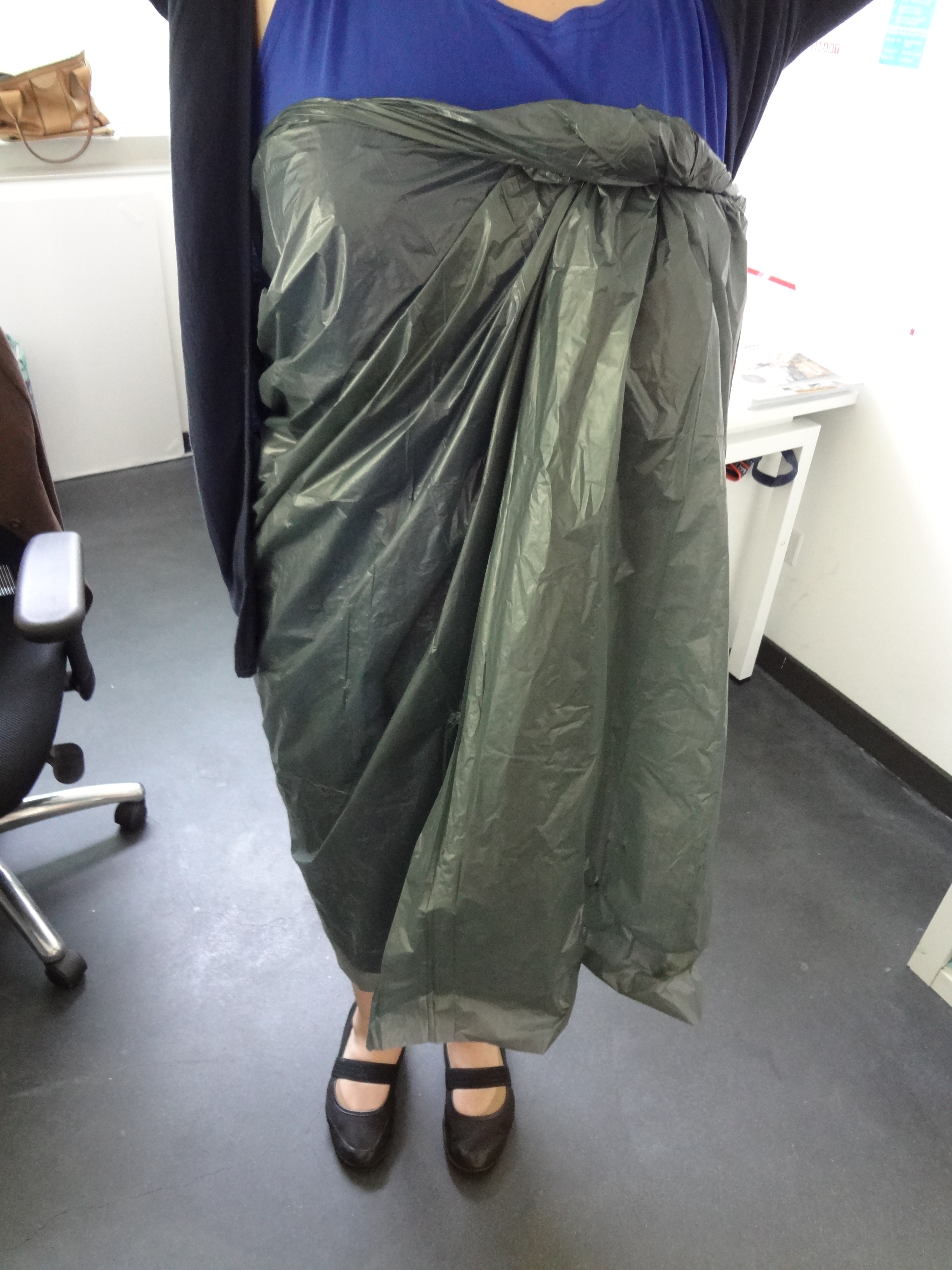
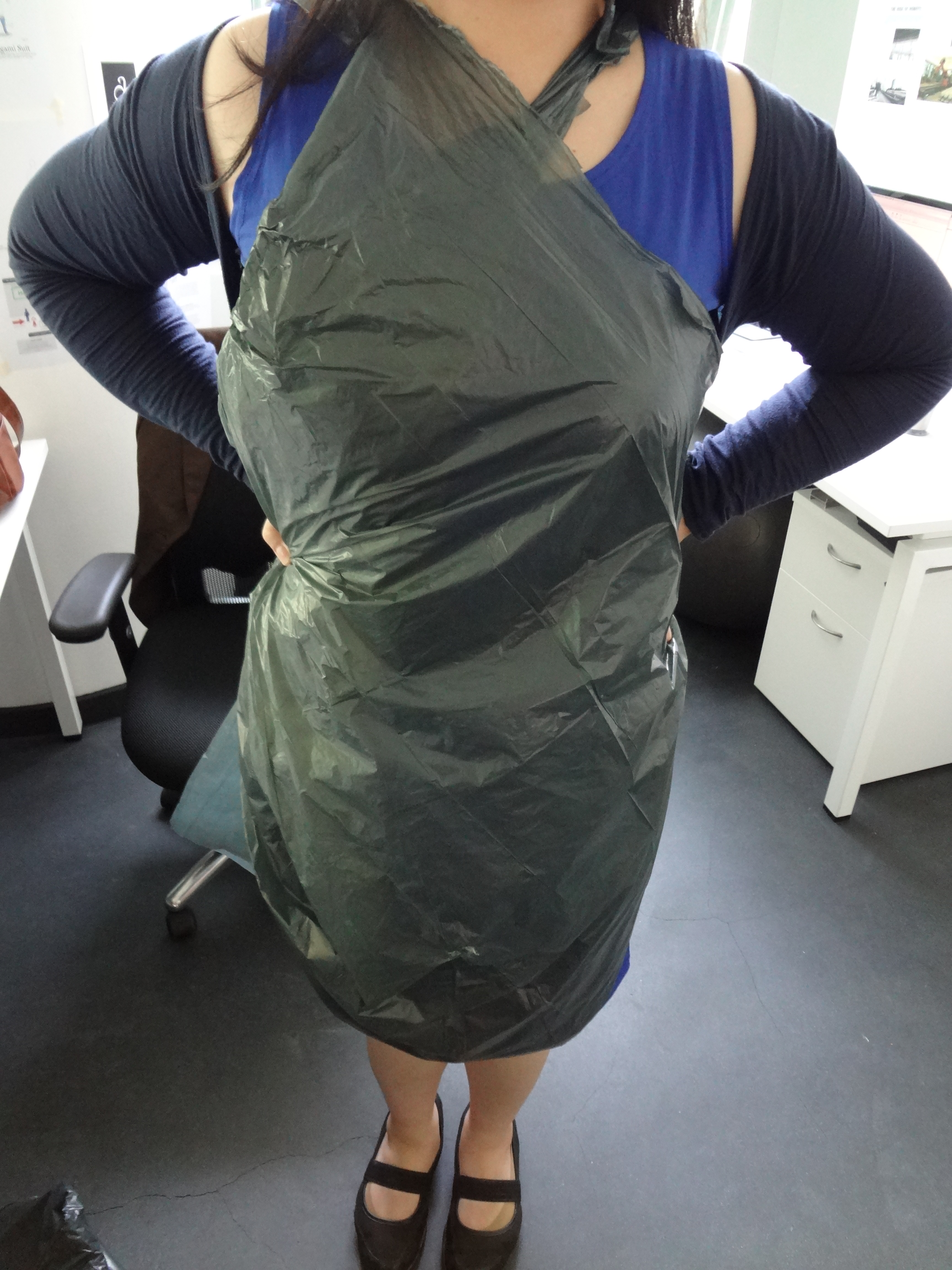
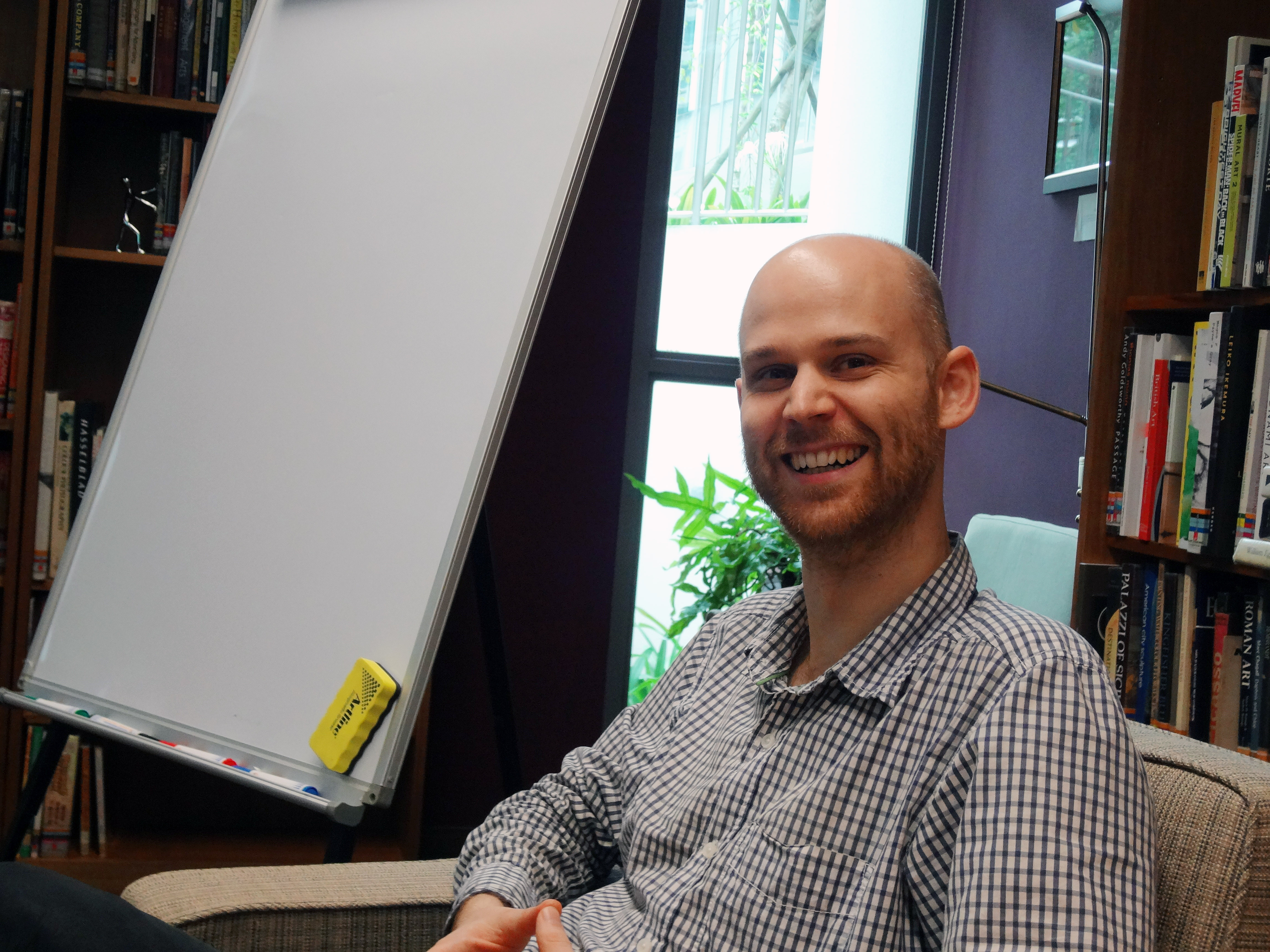
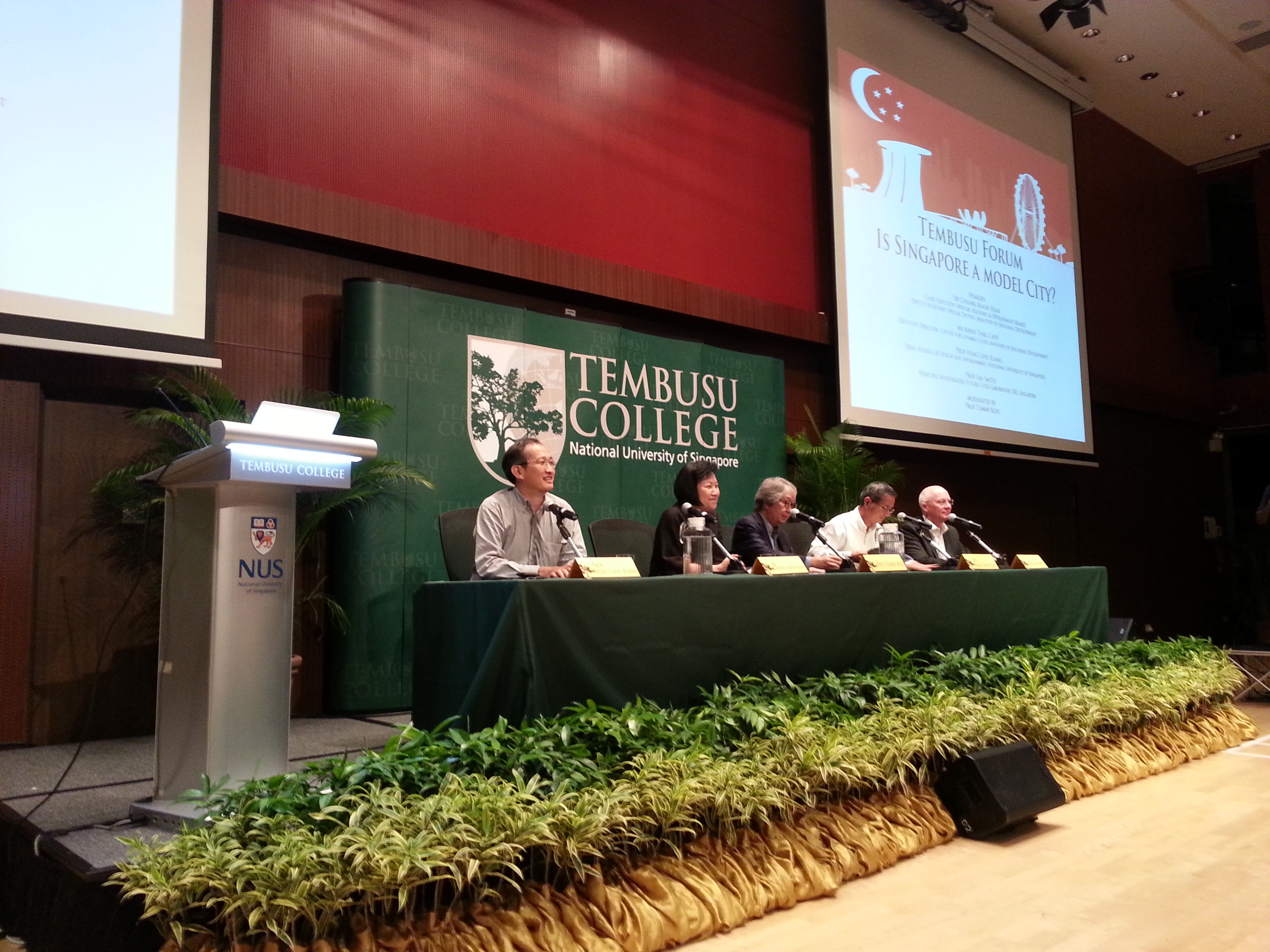
The Apocalypse Workshops that I held last week at Tembusu College, National University of Singapore yielded some very interesting results as to how young people view climate change nowadays. For this part, I asked them to pick a favorite place and describe in great detail how climate change will affect it 50 years hence.

Below are some results. Check out the future site of The Apocalypse Project here.
AdelineChang

Adeline Chang:

One of my current favourite places to be in the open air lift lobby in the Tembusu College building —on the 14th level. I go there at night, when I need to peace out or think or feel the coldness of the wind against my body. In the darkness all I can see are the faint outlines of treetops, and twinkling out of them are lights —staring eyes and the corners of a generous, comforting smile that engulfs me and my troubles. The lights of the buildings shine in the distance far, far behind the trees, and the air is fresh and cold. At half past 2 in the morning, there isn’t a soul around me, and calm falls over me like the softest blanket as the automatic corridor lighting clicks off. I breathe deep once, then once more.

50 years later I sneak back to that spot, my spot, on the 14th floor. I gaze out at the phantoms of trees past; my eyes glitter with the barest trace of tears. My mind runs free and in ecstasy, conjuring up the face that has kept me company through nights of intimate conversations, cup noodles, somber inner ramblings, the pure bliss of wind, sensation and being alive. But there are only glass towers now, beautiful and cold and hard and ugly and out of place. The wind I loved so is no more, it is warm today, too warm. As my eyes blur it becomes easier to pretend it is tears that shroud my vision—and not the haze of change.

AmandaTan

Amanda Tan Ying Shyuan:

Place: ocean
Climate problem: full-blown freezing of the top of the ocean waters

ArjunSaha

Arjun Saha:

Mt. Faber view point
Sunspots superheated

AuYongShiYa

Au Yong Shi Ya:

Botanical Gardens Pavilion in the midst of fallen leaves and dead trees

CarminaCastro

Carmina Castro:

My favorite place: Headspace > change drastically > Climate change pushes technological developments

50 years from now > 2063 > Projected year around which “singularity” will occur: 2040 > Post-singularity: no one knows, but logical that robots / humans with robot brains would use crazy advanced technology to solve climate change > People become more rational beings > Solve human problems which are barriers to climate change > Technology evolves exponentially

Greatest change that could occur is inside head.

Human apocalypse? since moving to post-human.

CassandraTeo

CassandraTeo2

Cassandra Teo:

2063 view:

Evening, it is warm. The wind is hotter, the sunlight shines through dust. This will be the view outside Tembusu, if it still will be there.

ChanSzeHow

Chan Sze How:

This image is a location in the Cameron Highlands, Malaysia. 50 years on, with changing climatic conditions, poor harvests (characterised by the black outlines on the slopes of the mountains) and the abandoned town is obsessed. This place relies heavily on subsistence farming which explains why the place is abandoned due to poor crop yield.

CherlynTan

Cherlyn Tan:

This is the rough layout of my home. I live in a HDB flat on the 20th storey in the Eastern part of Singapore. I love my home. Being on the 20th floor means that I get to enjoy the nice breeze and a bird’s eye view of everything—when I look out of the window in my room, I see the sea and the many ships and vessels of all shapes and sizes. I see aeroplanes preparing to land (my home is near Changi Airport), I see part of the MRT track and the good old (most-of-the-time trustworthy) train moving along, and I see cars, all sorts, and hear them, too.

In 50 years, if climate change has revealed its tipping point, I imagine that the heat will be unbearable. So unbearable that the air-conditioning would have to be left on 24/7 (leaving us with the guilt that we may be making things worse, but yet not knowing how else to cope with the heat). The air will be heavy with the smell of burnt and melting rubber and plastic as a result of [increase] in UV rays reaching the Earth’s surface. Aeroplanes carrying tourists will be replaced with government aircrafts to distribute supplies and monitor environmental conditions.

GeorgiaTam

Georgia Tam:

Oxford

GermaineGoh

Germaine Goh:

In 50 years, I imagine my house to be my little safe haven, whereby life will be unbearable without aircon (as see by the increase in number of air-conditioner present). Furthermore, my plants will have to be indoor plants for the heat will be unbearable under the hot sun. Trees will not survive (fallen leaves) and the land will be bare (no plants can grow) in the garden outside my house. My safe haven will have my piano still. 🙂JaredKoh

Jared Koh:

Neo-Atlantis

JonathanT

Jonathan T:

This is what used to be my favorite field. They are building a car park on it already. In fifty years it’ll be hot and swampy. Mangroves and moss will grow where there is grass and flowers. There will be lots of flies. Because the field is surrounded by residences, people will still have to commute through future-swamp. So they will build a stilt walkway through it. The monsoon drain next to the swamp will be perpetually full. Strange and smelly things will grow in there.

LamYuenKei

Lam Yuen Kei:

Location: The High Court where justice is meted out for perpetuators of climate change

[Shown: people who are hanged for stealing water]

LeeYingLin

Lee Ying Lin:

50 years later… I’m imagining how it would be like in my dream retirement farm. In my imagination, climate change will make the summers in Australia even warmer than now, but maybe the effects would change it into a tropical climate, that is evergreen throughout the year. Picnics, horse-riding can still carry on.

LyciaHo

Lycia Ho:

This is a horrible picture of a window seat on the airplane. It’s my favourite place in the world because of the way it makes me feel, a reminder that I am but a tiny speck in the vast unknown. In 50 years’ time there may possibly be whiter clouds, given the progress of geoengineering. Somehow, I imagine the skies to be darker, perhaps more rain. I won’t see clearly because of the haze but I imagine myself still feeling excited about travel. In 50 years’ time there will still be too much of the world I need to see, but with climate change there will also be places that will be gone forever.

NaomiNebh

RachelLee

Rachel Lee:

One of my favourite places is the rooftop garden at Orchard Central. It is especially magical at night, when the greenery is a deep dark green and the silhouettes of the water lilies are reflected in the fish pond. THere are lanterns switched on sometimes, and their warm glow battles the garden, creating a mystical and almost fairytale-like atmosphere.

In 50 year’s time, I imagine that the garden will no longer be an open-air one. The effects of global warming might have led the management to encase the garden in a plastic bubble, a greenhouse of sorts, to keep out unwanted UV rays, etc. The atmosphere in the garden will thus be a very sterilized one, lacking fresh air and the cool night breeze that I have come to love about it. I believe that it will be vastly different staring out at the vast expanse of the midnight-blue sky through a layer of plastic, compared to the unobstructed view that I enjoy now. The artificiality and the feeling of being in a controlled environment where nature is even more domesticated than it is now (the garden is currently man0made in itself) will be rather off-putting, and I fear that the mystical allure of the garden will be lost forever.

SarahLim

Sarah Lim Shu Hui

SonjaChua

Sonja Chua:

Images and sounds:
– Children consistently coughing due to persistent asthma attacks > must be the air
-The elderly have their eyes constantly watering due to the dust.
– Sound of the air purifier and air conditioning (not that helps).

Smells:
– Air is more polluted that it was.
– Finally able to get salmon after so long because of shortages of salmon and sky rocket prices.

Touch:
– Furniture full of dust from pollutants
– Unbearable heat in the day
– Global warming

Taste:
– Water seems a bit more sour than normal > must be the acid rain.
– Food doesn’t taste that nice anymore > probably because of the pollutants.

TayYingYing

Tay Ying Ying:

The Death of NatureVictoriaEr

Victoria Er:

Betws-y-Coed, Wales, is my favorite place on earth because it is so scenic, nature there is so untouched, the air is always clean and fresh, and the people are so kind and loving. I remember meeting two strangers in Wales who were so generous to me, giving me lunch and sharing with me about their lives so openly. These two people are Father Damien and Dylan.

In 50 years, as climate change affects it, the mountains can perhaps not be visible due to haze. The air would be either too cold or too hot. There may not as as many trees and plantations and it would be a ruined place. Could I get back to Betws-y-Coed and it’s neighboring village Llanrwst? Maybe not. There may not be any more nature as we know it now! And it saddens my heart to think that Dylan will no longer be able to take those lovely walks up in the mountains with his dogs, in the very mountains which he calls home, in which is finds his refuge and strength.

What about the lovely Swallow Falls? Will there still be the lovely sounds and peaceful calm of water falling onto the bed of rocks? Or would it flood or dry up?

And the beautiful blue skies will be grey and perhaps never see the light of the beautiful sun.

ZoeBezpalko

Zoe Bezpalko, environmental engineer:

Papassus, my grandparents’ farm, southwest of France

In Papassus, the climate change already affected the environment, the seasons don’t change, spring and autumn disappeared. Animals like glow-in-the-dark worms disappear whereas some developed and spread like rats and cats. With climate catastrophes, I see poverty coming. I image the energy demands raining so much that pipe lines will be built everywhere and people will chop down the forest. Biodiversity of trees, animals and landscape will change to be a very monotonous view. We will have only one type of agriculture. Robots will take out all jobs forcing people to live in poverty and trying to survive in an artificial world. Very rich people will be locked down in fake paradises with no notion of local, sustainable resources, always demanding more.

Every single “virgin” natural place will be polluted by wastes. At my grandparents’ place a community of optimistic people decided to settle down and live in an autonomous society.

This week, I got two groups of students from Tembusu College here at the National University of Singapore, to voluntarily participate in my Apocalypse Workshop. The goal was for them to imagine a climate change apocalypse.

TembusuWorkshop.035

The first activity was called My Apocalypse. These were my instructions:

Name and describe your favorite place in 50 years as climate change affects it. (Write about it and draw it.) This could be a city landmark, the family farm, your apartment building, your favorite cafe, or any other place you feel like speculating on. Please be as specific as possible. Scenarios can be positive or negative. (Some questions to ponder, but please don’t limit yourself to these: What does it smell like? What plants and/or animals are present, if any? How hot or cold will it be when you are sitting there? How will you get there? Can you see clearly? Will your pet be happy living there? What is the color you see when you look up? Are there walls, and what are they made of?)

I asked them to name the actual place (and not just write, “the world” or “the city”) because I wanted them to be as specific and detailed as possible. The participants were also more likely to choose different places and thus provide a wider range of descriptions.

TembusuWorkshop.038

The second activity was called Superpowers for the End of the World. These were the details:

If you had a superpower to navigate through what you described in Activity 1, what would it be?
Examples of superpowers can be the ability to: smell an incoming tsunami, be invisible to animals, turn into ice during a heatwave, or anything that your current senses and abilities can’t let you do right now. It can be an extension of your biological abilities, or a device that performs it. You can list more than one superpower.

I wanted to frame it in this way so that people will find it more fun and exciting and really think outside the box when it comes to climate change. Nothing like superpowers to get the creative juices flowing!

TembusuWorkshop.040

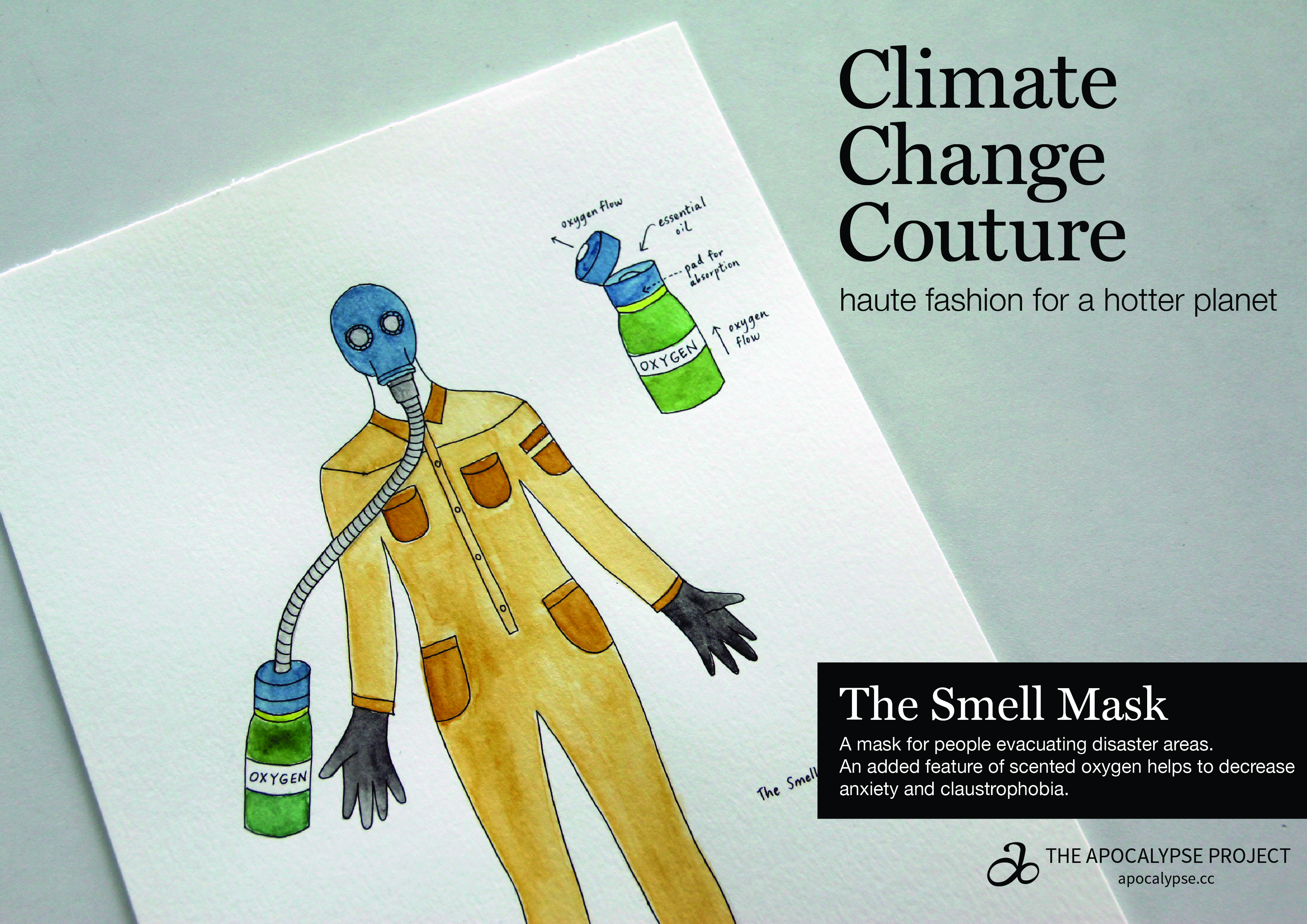
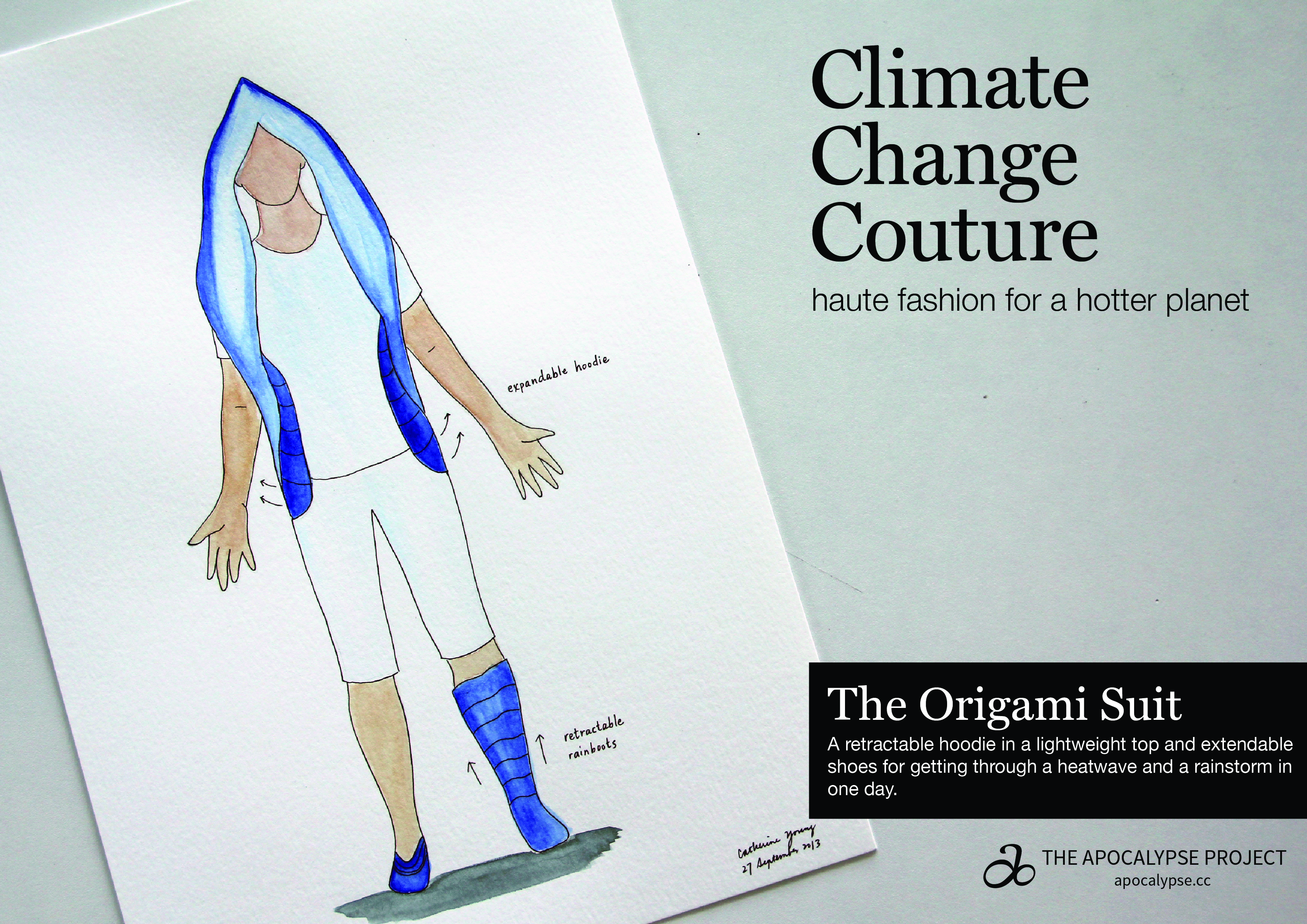
The last activity was called The Apocalypse Lookbook, where I gave them fashion design templates:

What will you wear to the apocalypse? Use the templates provided. Define the function of each wearable.

TembusuWorkshop.042

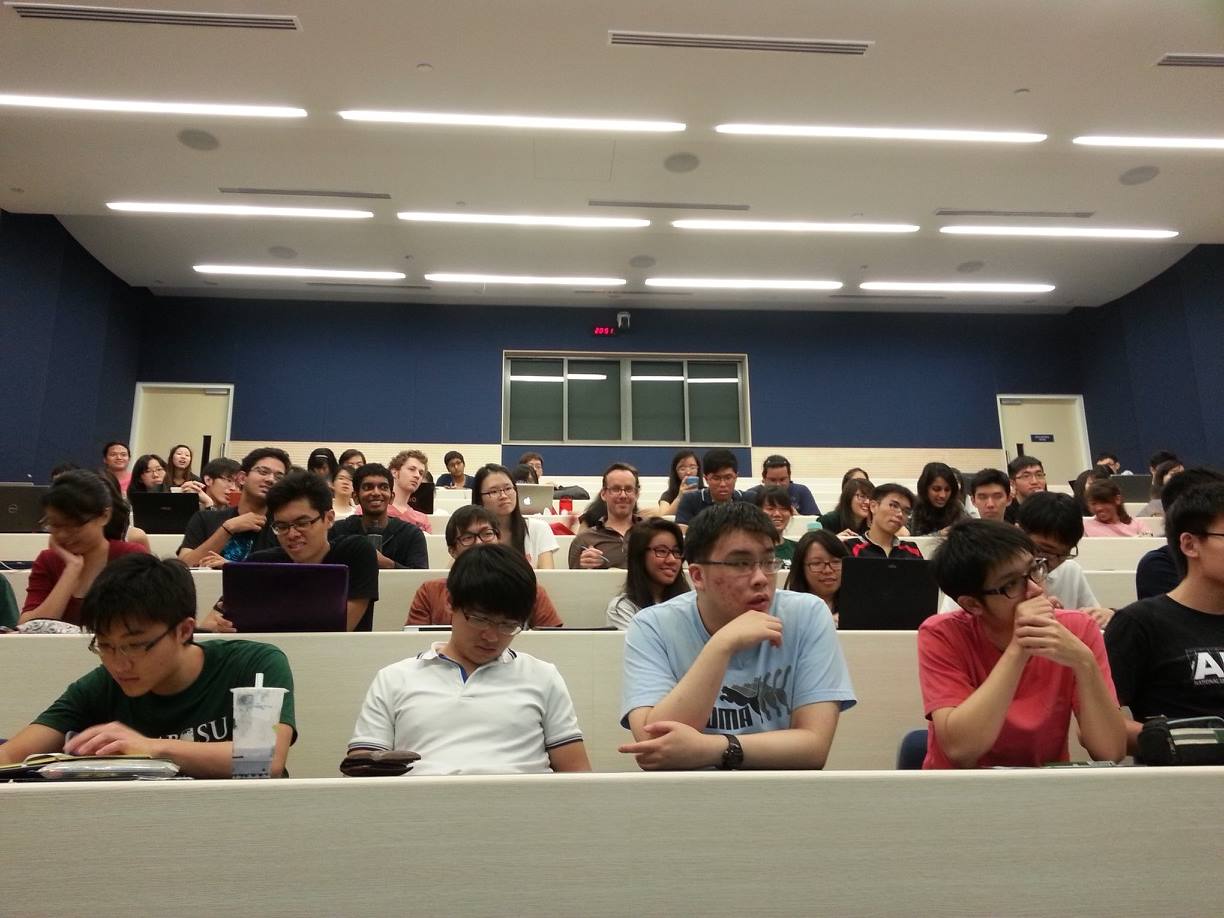
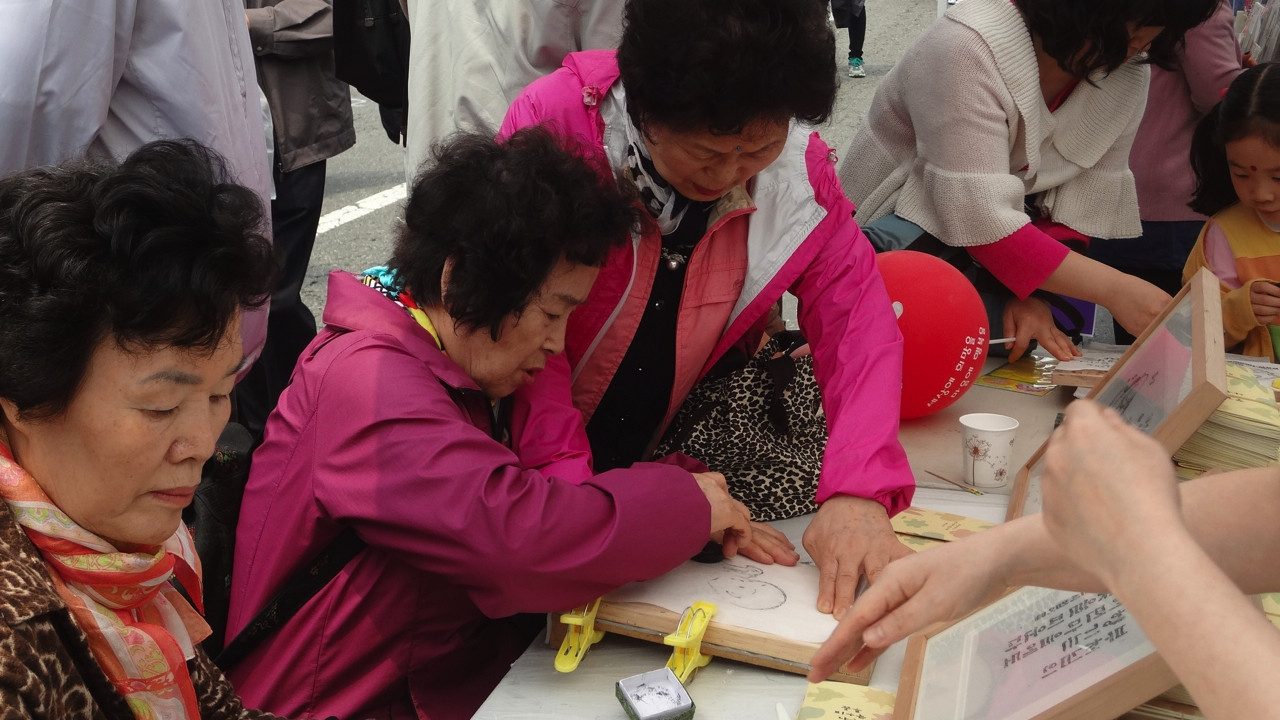
I let them do each activity for twenty minutes, and afterwards, they shared what they made to the  group. These university students all had taken a class on climate change, or were in the middle of one.  They came from business, economics, engineering, and communication majors. I also had one participant who is a professional environmental engineer.

Here are some photos from the sessions:

DSC08956 DSC08958 DSC08959 DSC08973_A DSC08984 DSC08991 DSC08998 DSC09008 DSC09013

I’ve given lots of workshops in the past few years—this definitely yielded among the most imaginative results. I’ll be sharing those soon. Thanks to all the participants, and also to those from all over the world who sent their answers online!

The first few weeks in Singapore, apart from battling a tropical superflu, one other war I was waging was contextualizing climate change in a way that was, well, less boring for people.

Put it this way, during the beginning of this residency, I was reading up on UN documents on the environment and we all know how enjoyable that is. I was beginning to be afraid that this project will be the most boring one I’ve ever done. When finally, it hit me.

Climate change has a branding problem. Not that I didn’t think so before, but it’s different when you are doing a project that is supposed to get people to want to act on climate change. My initial responses for my project were, well, meh. I felt like people were humoring me because I was a guest in their lab / college / country. I don’t blame them. People think climate change is too dry and inaccessible. Or more precisely, I believe it is seen as something separate from other concerns, when I think environmental “mindfulness” should be integrated in our lifestyles.

When I see climate change campaigns in schools and organizations, it’s mostly about recycling. Don’t get me wrong—recycling is important and we all should do it. I just don’t think that it is the cure-all for all our environmental woes. Climate change-related events are getting bigger and more serious—it’s critical to think beyond our current solutions.

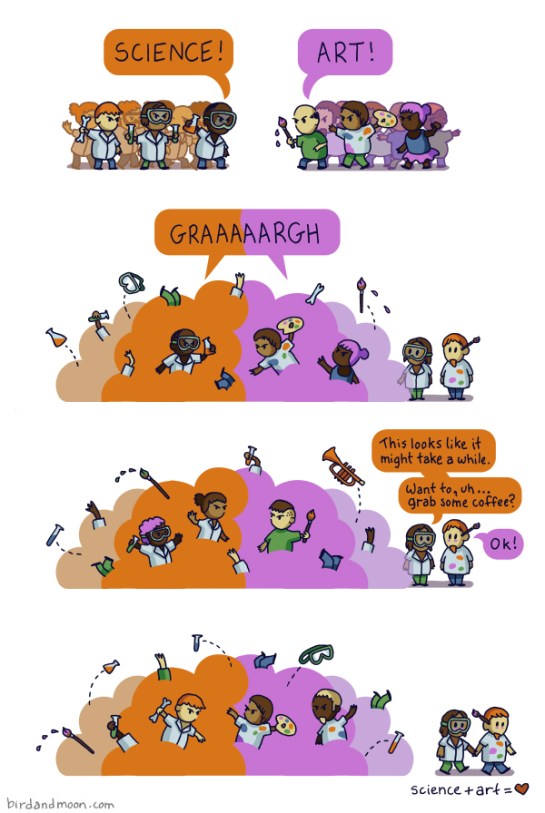
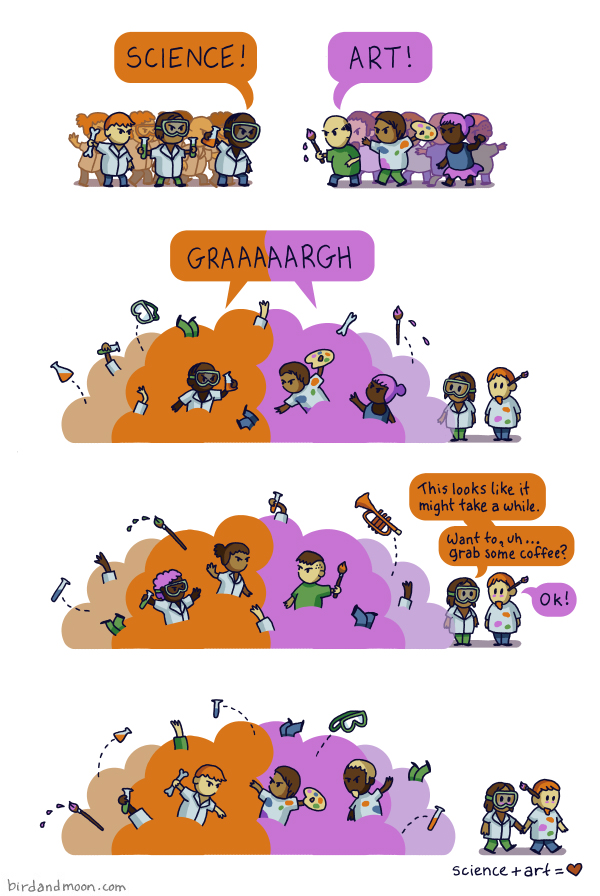
Another field having a branding problem with respect to climate change is art. I think for the most part, people see it as frivolous. “Oh that’s nice,” but thinking “but let the important people do the important work” type of attitude. Again, I don’t blame them. The ivory towers and walls that distance disciplines from each other have served to alienate. (I also think that this is a one of the causes of professional burn-out, but that’s another post for another day.)

I need to get people in a state of “play” so that they will think outside the box. Hence the formation of this Apocalypse Project. It’s tricky to turn something as serious as climate change as something “fun,” but I believe that making it so will get people to start thinking beyond the box.  Dystopias and apocalypses pave the way for that. We already have these ingrained in literature and pop culture. But beyond that, ideas that seemed crazy in the beginning sometimes become the best solutions. Science fiction becomes speculative fiction and eventually reality, doesn’t it? As an example, just check out this TED talk by Steve Ramirez and Xu Liu on manipulated memories. 

Stay tuned for the next post on The Apocalypse Workshop, when the very creative minds of students here at NUS’ Tembusu college take a stab at thinking about a climate change apocalypse.

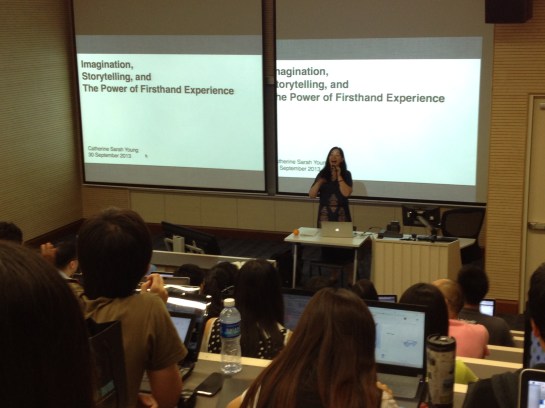
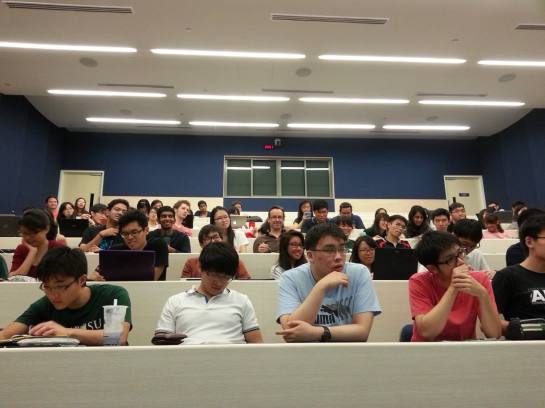
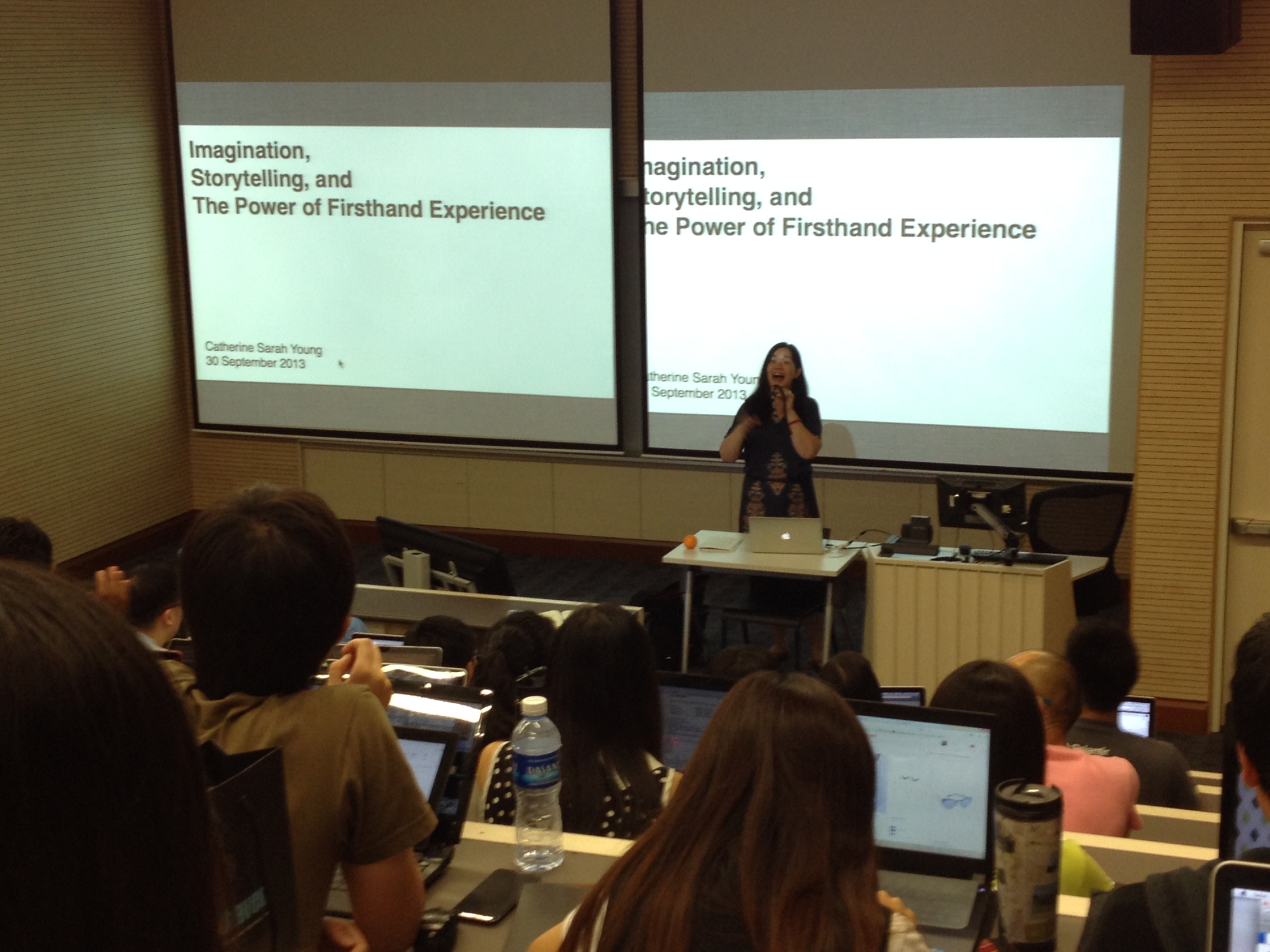
Here at my art residency in Singapore, I’m busy this week giving workshops to students at Tembusu College, National University of Singapore. Before the workshop, I gave a short intro talk on The Importance of Talking to Strangers.

Having done participatory art for years now, I discovered that it’s imperative to engage people in these kinds of activities (workshops, experiments, etc) in the development of a project. The things that come out of these things are always insightful.

TembusuWorkshop.002

For this week, I didn’t want to give another artist talk, as I wasn’t going to be the artist for the night. Instead, I talked about the things I learned while talking to strangers. Because these students are, after all, strangers to me. I gave two example projects and the lessons I learned from them.

The first project is Rorsketch. This project became more enlightening for me because strangers saw things I did not see. (Visit the project site here.)

TembusuWorkshop.003

(Yes, the never-ending drawing-what-you-see-in-clouds project.)

TembusuWorkshop.005

From this, which was initially something I did for myself, expanding it to include other people. Asking four people what they saw in this image will yield four different interpretations. I ended up embracing the inclusivity of the project—nothing was right or wrong.

TembusuWorkshop.012 TembusuWorkshop.016 TembusuWorkshop.017

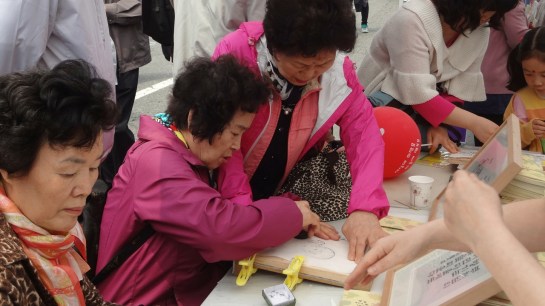
For the second project, I learned that strangers can extend my project beyond what I set out to do.

TembusuWorkshop.019

I tried, but this project just won’t die. Viva drawing your happiness! Check out DrawHappy’s site here.

TembusuWorkshop.021

Beyond the sketches people have sent me, what became additionally interesting were the comments left on the site, most of which are submitted months or years after I uploaded the drawings—a good case for putting everything online. I was already emotionally finished with the project, or was I? These comments made me think otherwise.

Here is one that made me think DrawHappy should be turned to DateHappy:TembusuWorkshop.030

And here is another that made me think of Craigslist Missed Connections (names are protected because by now, I’ve learned that the world is so small):

TembusuWorkshop.032

As the one who actually administers the site and monitors and publishes the comments, I can’t tell you how I had to pick up my jaw from the floor when I get notified by email. I can’t wait what this apocalypse project gives me. Stay tuned.

Late this week, I had a chance to attend the mid-term exhibition of the Singapore-ETH Future Cities Laboratory, which is hosting me for the duration of my residency program here in Singapore. It was wonderful to see all the work from different modules—Low Exergy, Architecture and Construction, Digital Fabrication, Transforming and Mining Urban Stocks, Housing, Architecture and Urban Design, Urban Design Strategies and Resources, Urban Sociology, Territorial Organisation, Landscape Ecology, Architecture and Territory, Mobility and Transportation Planning, and Simulation Platform.

Below are some photos I took from the event.

One of the many exhibition tables:

DSC08950

Singapore Tropicana:

DSC08948

Researcher Marcel Bruelisauer of the Low Exergy module after explaining his design solution for cooling systems:

20130905_170730

Professor Kees Christiaanse, Programme Leader and Module Leader, speaks at the book launch. Lots of books were introduced that day, including one of the coolest things I’ve heard of, Flight Assembled Architecture by Professor Fabio Gramazio, Professor Matthias Kohler, and Raffaello D’Andrea (see the monitor on the right).

20130905_173321

Some very cool things made by robots:

20130905_190245#1

Doctoral researcher Norman Hack in front of his module’s exhibition. Behind him are beautiful 3D pieces.

20130905_191755

An unmanned aerial vehicle (UAV) used for dengue research:

20130905_164247

A panel discussion on Simulation, Modeling, and Measuring, moderated by Dr. Matthias Berger (standing, on the right):

20130906_140434I wish more people (non-architects / designers / computer scientists / urban planners) could visit it. It’s one of the coolest labs in the world! Check out the laboratory website here.

While researching for my residency project on climate change, I came across a dialogue between Emma Maris, environmental writer and reporter,  and Erle Ellis, Professor of Geography and Environmental Systems, in which they discuss a very thought-provoking question, “Is the Anthropocene…Beautiful?”

Because of the apocalyptic nature of my project, when I think of the Anthropocene, it’s hard not to be a curmudgeon. It’s hard not to dislike our species. But on the other hand, there is no question that our species can make beautiful things, although I suppose the notion of beauty is subjective.

I think back on Seoul43, which is the project that made me want to do this, my first intentionally environmental project. I remember the ones with physical evidence of Korea’s history—the eunuch cemetery, the fortress, the centuries-old temple. But these are human interventions that are seen through rose-colored glasses because of their age. As one who hiked past them all, I found it interesting to trek through these unwitting museums of a country’s past. If they were to be built today, perhaps they will be met with resistance. But because they are relics from the past, they are instead seen as something to be preserved. From personal experience, I found the centuries-old fortress on one mountain to be charming, but the modern apartment building on another to be jarring—the former contributed to my experience while the latter hindered it. I wonder if, centuries from now, if someone from the future encounters this present-day apartment and sees it as a relic of architecture?

Watch the video below:

Seoul43 has given me a lot of moments to reflect on the impact of humanity on nature. This, of course, was not my initial intention. I wanted to climb all these mountains as a personal challenge. A city with mountains—how wonderful! I still believe it is one of the reasons that I found Seoul to be a clean city, compared to the other capitals I have been to. Before Korea, I had hiked only one mountain in the Philippines. It was a disastrous and traumatic experience—I nearly fell off of the peak, slipped many times on our descent, and slowed everyone down. I was, in chemistry terms, our group’s limiting reagent.

44 - Bukhansan

My second intention was to get people to share my experience. This is why I brought the soil from these mountains so that people can plant with them and then bring them back. “Borrowing” instead of “taking” the soil was an important part. It has always been my view that no one is exempt from environmental responsibility, artists/scientists/explorers/designers included. The tasks I asked people to do were also deliberately chosen. I wanted to ensure that this project had some positive environmental and cultural impact.

What I didn’t expect, aside from the extreme fatigue, were my unique experiences for each mountain. Many pushed me to my limits, some nearly killed me, others were places I found so fascinating that I want to revisit them. A number disappointed me for their smallness (This is it? Really?) while others made me ask a lot of questions.

As these are mountains in a bustling capital, one thing I found consistent about them was human activity. If Seoul’s mountains were a system that ensured the coexistence of nature and humanity, then it was determined by these parts:

First, there were the modern city officials, or whoever governing bodies that mandated which trails should be open to the public and what was allowed to be done. They were the ones who permitted the landscaping and gardening of these mountains, who added trails, tennis courts, exercise machines, trail signs, and other things that make them “usable” to the public.

exercise ajumma - Ansan

Second, there were the citizens and tourists, both young and old, who use these mountains everyday. Hiking is an everyday activity for many Seoulites. Although I always hiked alone (which was a stupid idea, but I couldn’t find anyone who wanted to come with me), I was never really alone—there were always groups of ajusshi, ajumma, or young people who were also on the trails and giving me a hand. For the smaller mountains that served as neighborhood parks, it was the residents’ way of getting away from urban noise. Indeed, I could not help but think of these mountains as refuge in a city whose aging population is affected greatly by Korea’s rapid change.

lonely old man - Achasan

Finally, and no less importantly, are the people from Seoul’s past—the historical figures who added fortresses, cemeteries, and many a Buddhist temple to these mountains, turning them into rich canvasses that illustrate a city’s past and provide interesting questions as to how they fit into contemporary culture.

temple - Suraksan

The historical and cultural value that these manmade structures add undoubtedly “elevates” the status of a  mountain to something more than just a park. The exercise machines and other sports amenities added in recent years add utilitarian value for the citizens who make physical fitness a priority. These make me pause to think, because as a naturalist, one would balk at mankind altering nature, and yet, adding something of historical and utilitarian value perhaps encourages the city to preserve it better.

Because Korea is a very mountainous country and one that rapidly urbanized, I observed that: 1) Many mountains that used to be bigger have been “broken” into smaller ones because of apartment buildings, schools, etc. that found their homes in the lower areas, and 2) Some mountains seem to have all but disappeared because the buildings were right on top of them. Is it alright to do this to make room for city dwellers and businesses, as the country has so many? Indeed, as the official list I obtained from Korea’s Forest Service dates back to 2006-2007, I think that 43 will not be the number once they review the list once more. It will be interesting to see how the face of a city changes and how modernization affects these natural structures that are as old as time.

Originally posted on the Seoul43 site.

As I recover from the flu, allow me a bit of hallucinatory storytelling from the highly entertaining 2013 Singapore Kite Festival last week.

Once upon a time, there was a yellow smiley faced kite named Jack.
DSC08779

He liked to fly.

DSC08814

So off he went. Doot doot!

DSC08815

He flew to the city, where there were very tall buildings. Woo!

DSC08797

He met a lot of friends of different sizes…

DSC08798

…shapes, and colors.

DSC08780

One day, Jack was recruited by the Penguin…

DSC08804

…who worked for Kung Fu Panda…

DSC08805

They wanted him to join their kite army to go against a great villain, who wanted to take over the skies.

DSC08801

Jack said yes, so off they went.

DSC08837

Jack was scared and excited at the mission. They patrolled the skies in search of the great villain.

DSC08838

Then finally, Captain Squid screeched, “Chaargggee!!!” 

DSC08843

Sure enough, Spiderman was just around the corner.

DSC08854

And the kite wars began.

DSC08829

It raged for two hours, and finally it stopped. And they won.

DSC08860

Hurray.

DSC08865

Afterwards, Jack went off on his own.

DSC08814

And met a girl.

DSC08817

They dated and lived happily ever after.

DSC08818

And made kite babies.

DSC08819

The end.

This week, apart from getting over the bad case of the flu, I spent some time refining my residency project in Singapore. Climate change is a huge, huge, HUGE subject, and it’s easy to beyond the scope of what I came here to do. I sat down to be specific about whom I wanted to involve, what my intentions were, which specific questions I am to ask (especially with the workshops I’ll be doing next week), and potential formats my exhibit will have. Here is the wall of Post-Its:

DSC08941

Below are details of it:

DSC08947

DSC08943

DSC08944

DSC08945

DSC08946

Depending on how it goes, this could either be the most hopeful or the most depressing project I will have in my life.