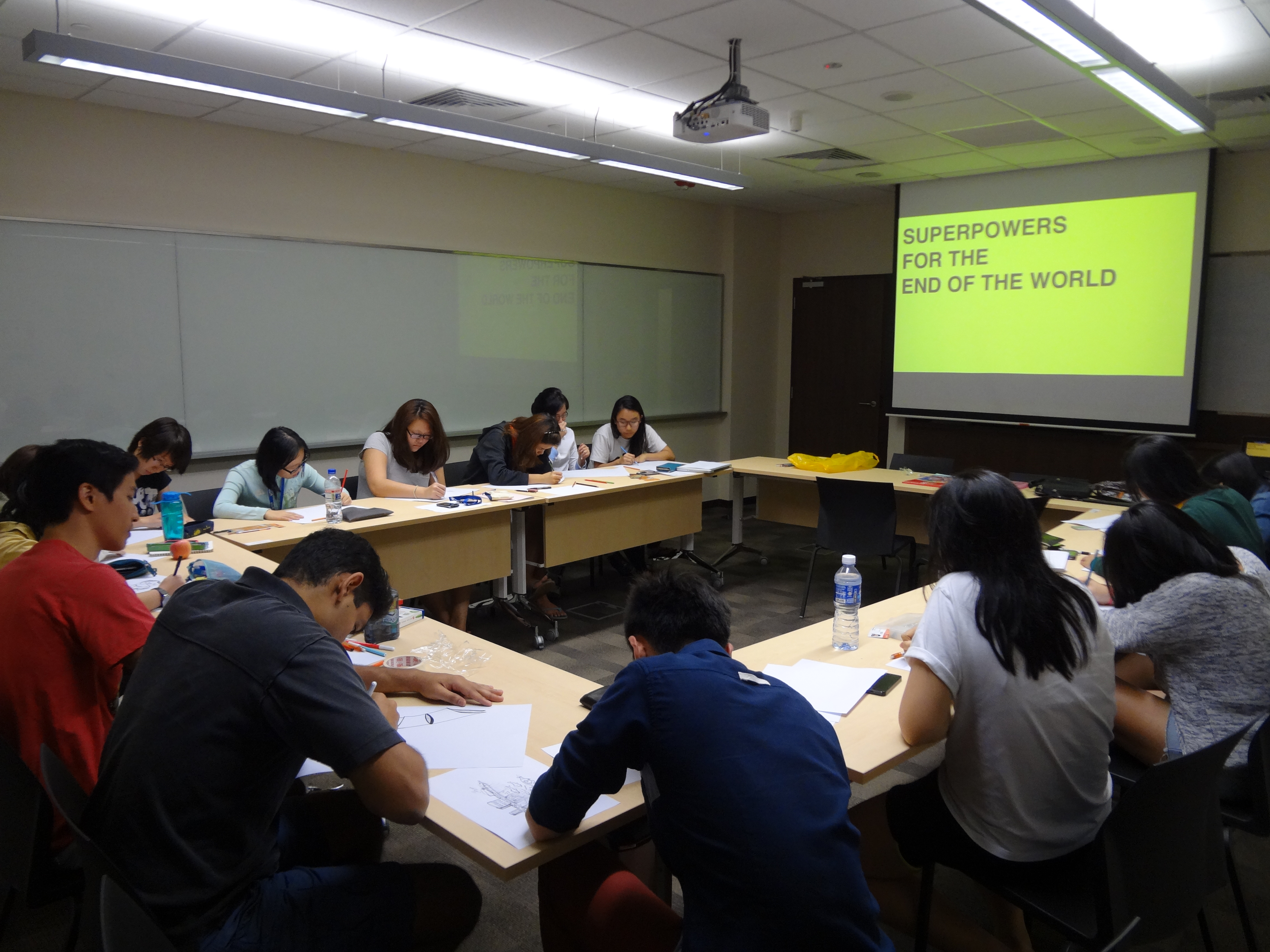
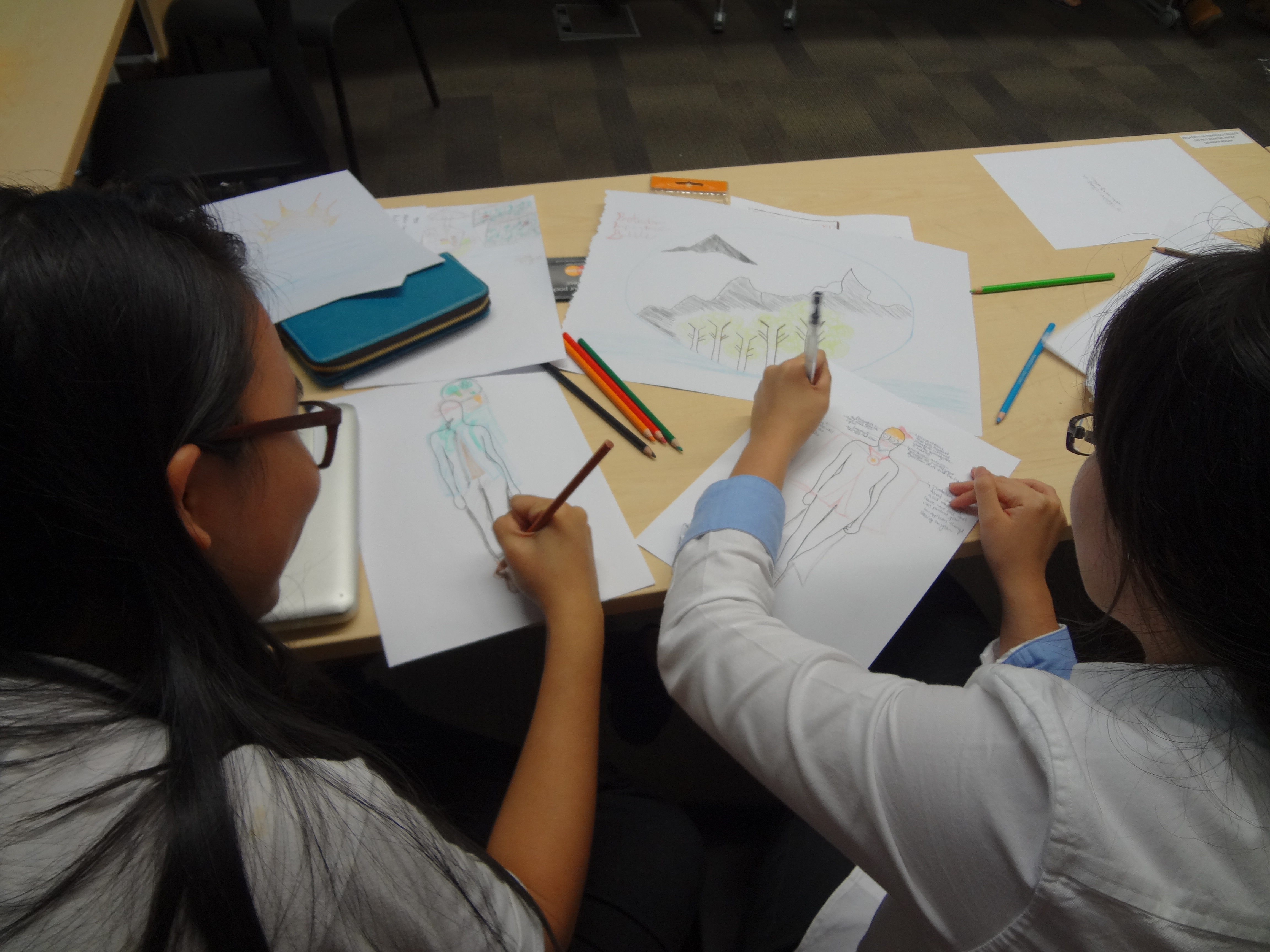
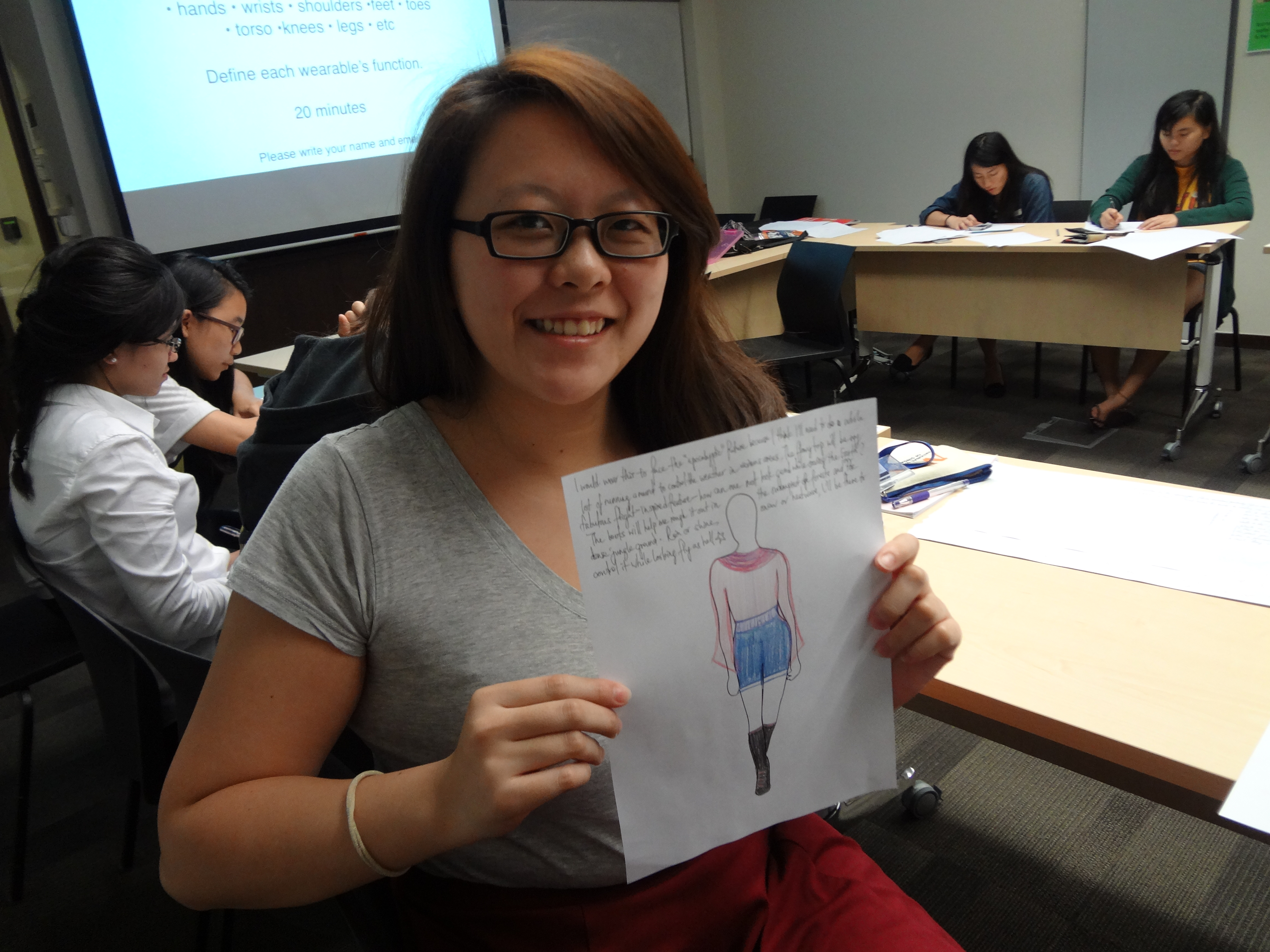
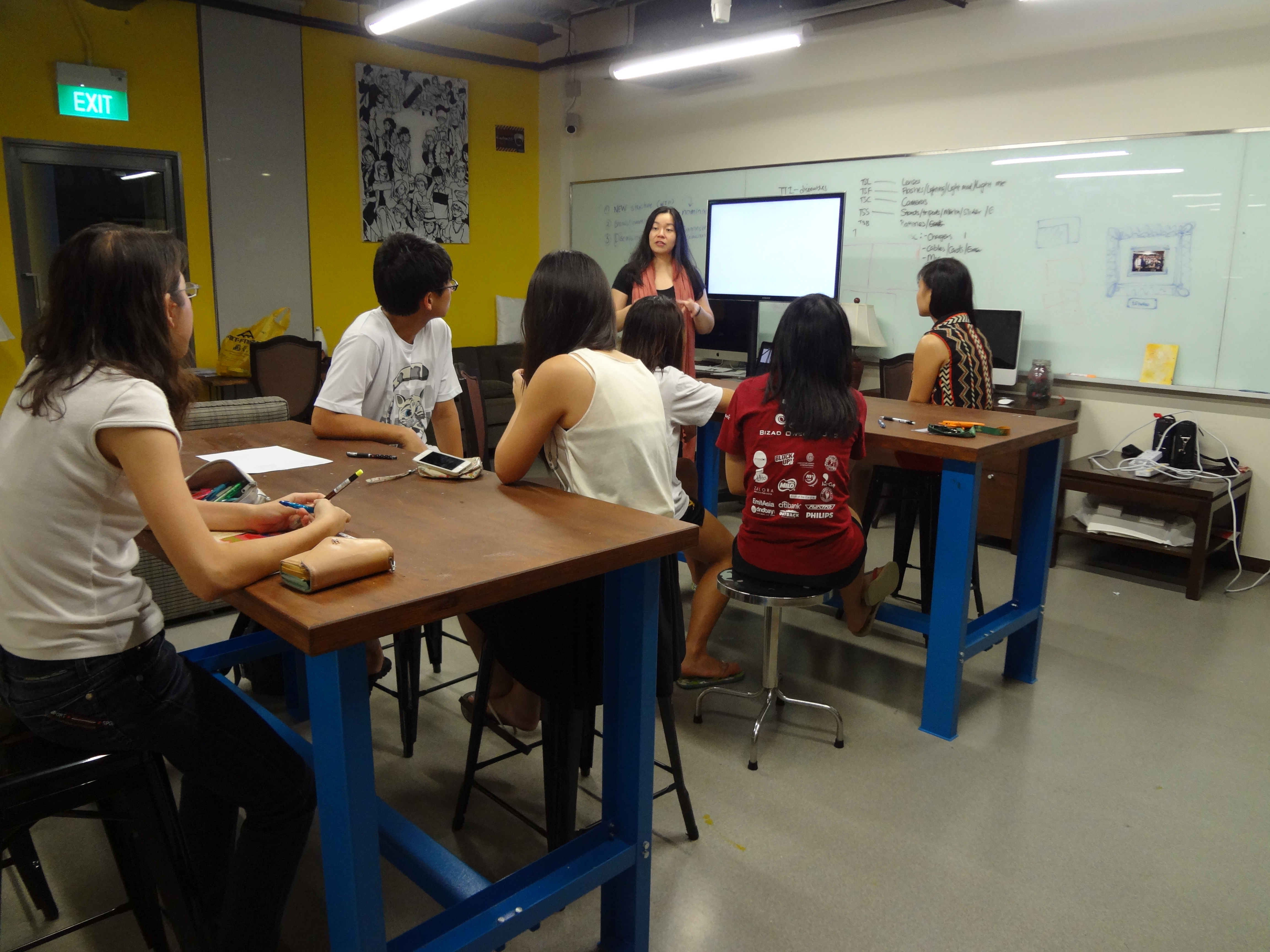
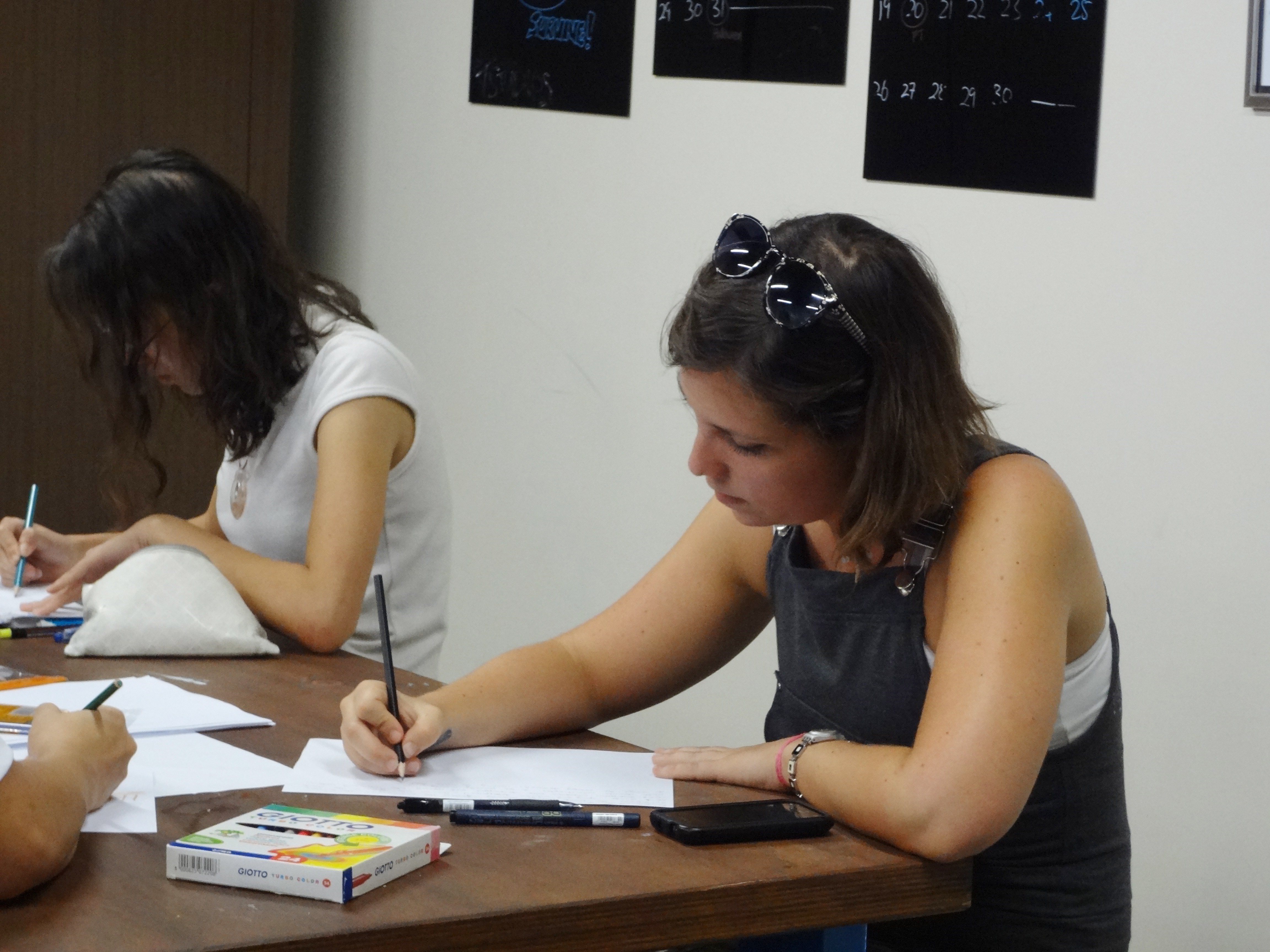
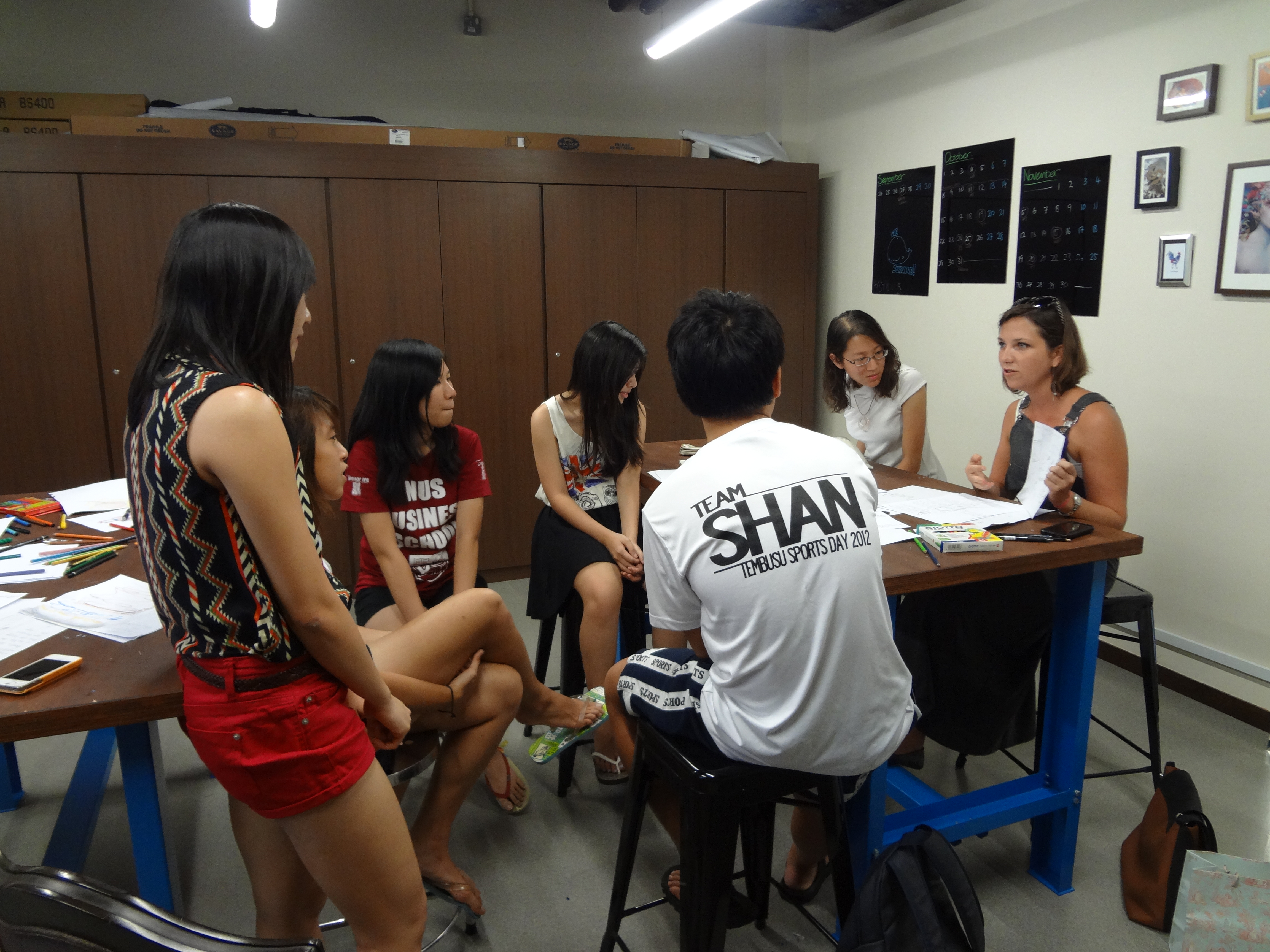
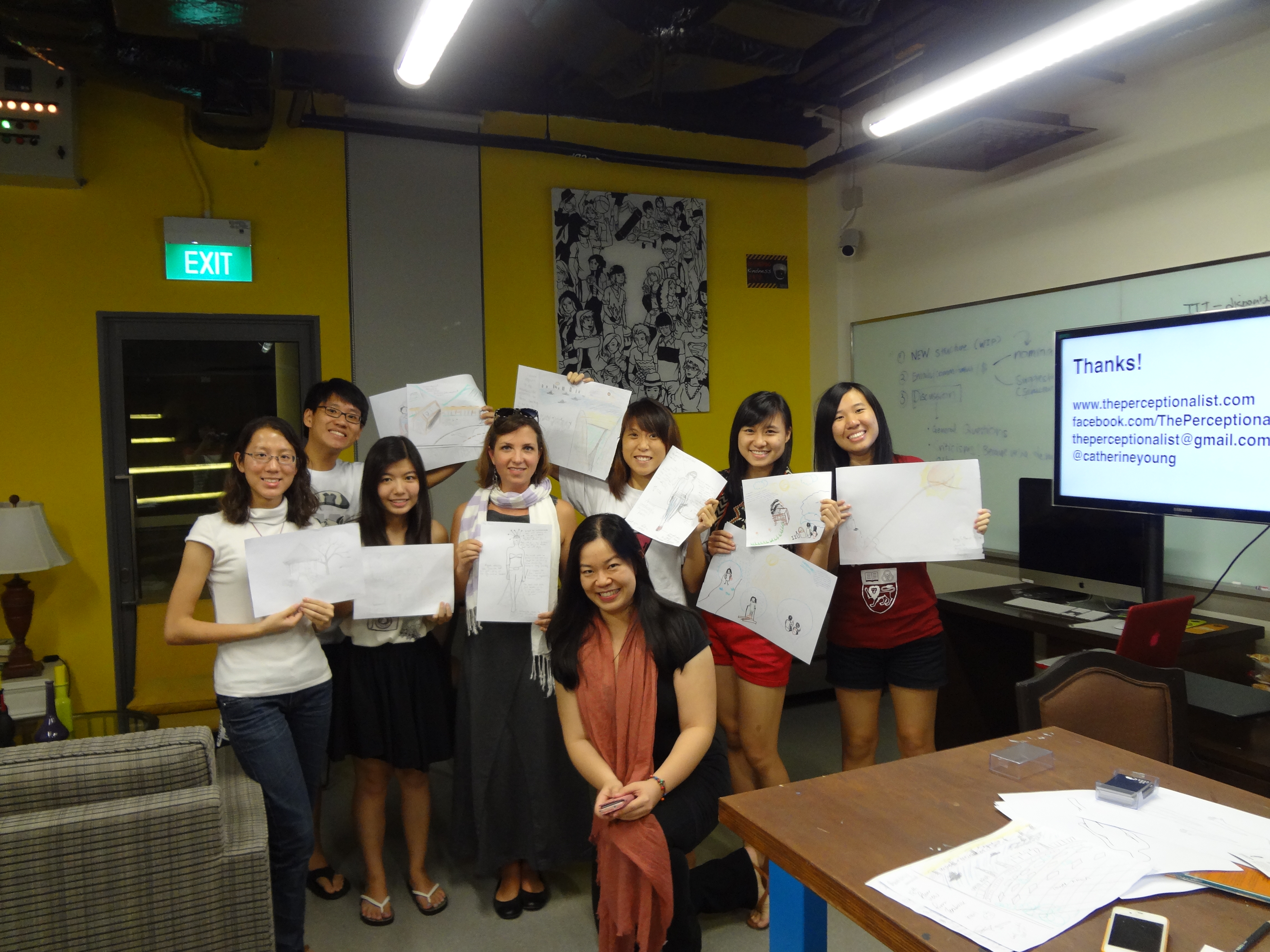
The Apocalypse Workshops that I held last week at Tembusu College, National University of Singapore yielded some very interesting results as to how young people view climate change nowadays. For this part, I asked them to pick a favorite place and describe in great detail how climate change will affect it 50 years hence.
Below are some results. Check out the future site of The Apocalypse Project here.

Adeline Chang:
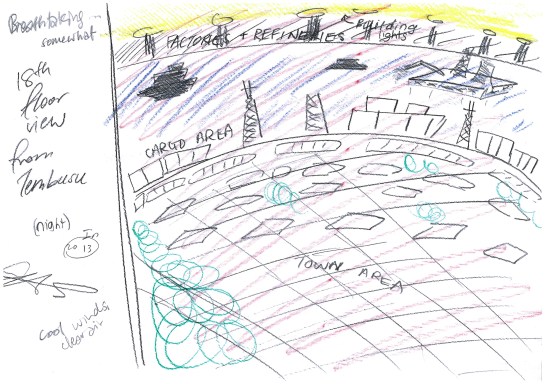
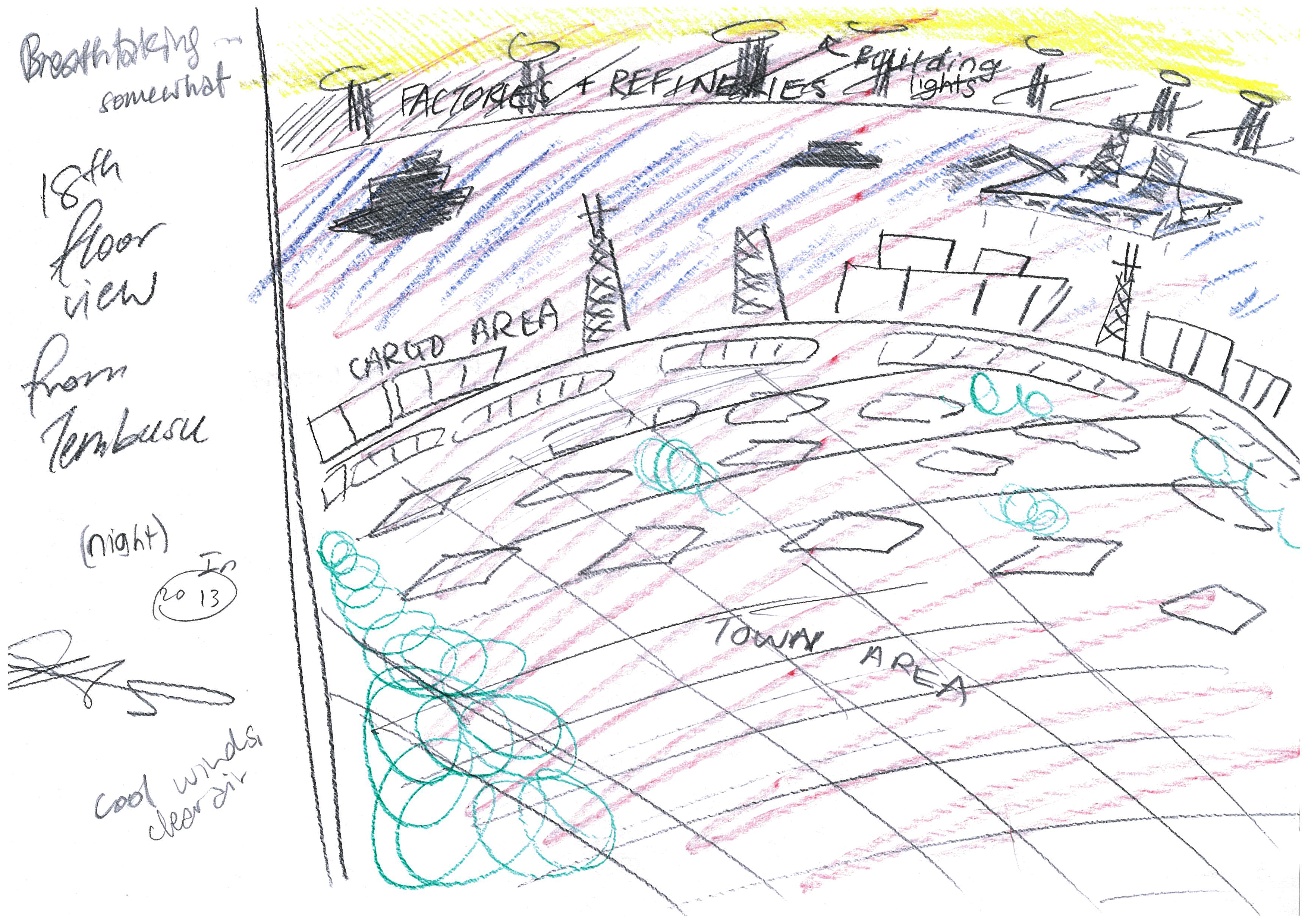
One of my current favourite places to be in the open air lift lobby in the Tembusu College building —on the 14th level. I go there at night, when I need to peace out or think or feel the coldness of the wind against my body. In the darkness all I can see are the faint outlines of treetops, and twinkling out of them are lights —staring eyes and the corners of a generous, comforting smile that engulfs me and my troubles. The lights of the buildings shine in the distance far, far behind the trees, and the air is fresh and cold. At half past 2 in the morning, there isn’t a soul around me, and calm falls over me like the softest blanket as the automatic corridor lighting clicks off. I breathe deep once, then once more.
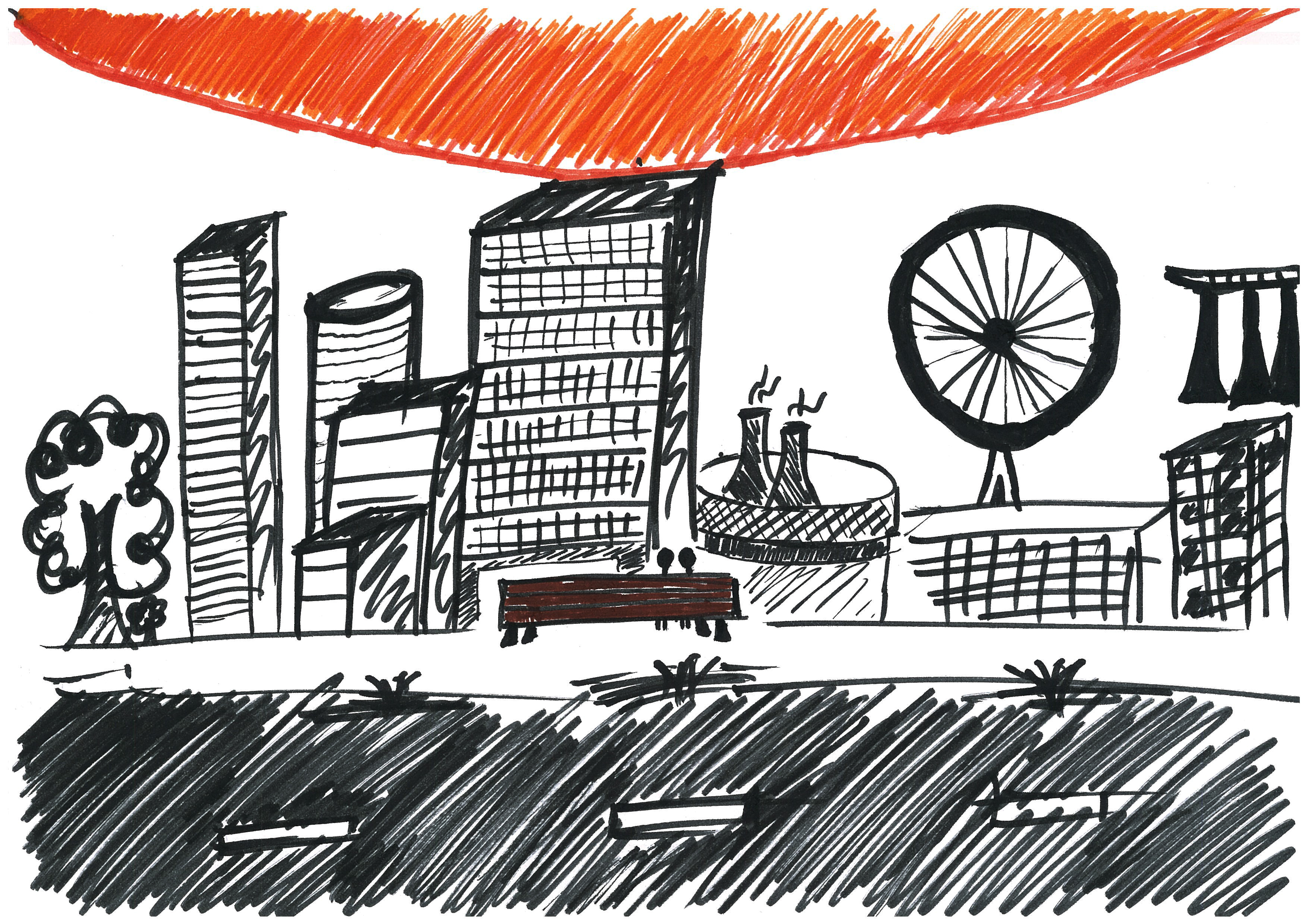
50 years later I sneak back to that spot, my spot, on the 14th floor. I gaze out at the phantoms of trees past; my eyes glitter with the barest trace of tears. My mind runs free and in ecstasy, conjuring up the face that has kept me company through nights of intimate conversations, cup noodles, somber inner ramblings, the pure bliss of wind, sensation and being alive. But there are only glass towers now, beautiful and cold and hard and ugly and out of place. The wind I loved so is no more, it is warm today, too warm. As my eyes blur it becomes easier to pretend it is tears that shroud my vision—and not the haze of change.
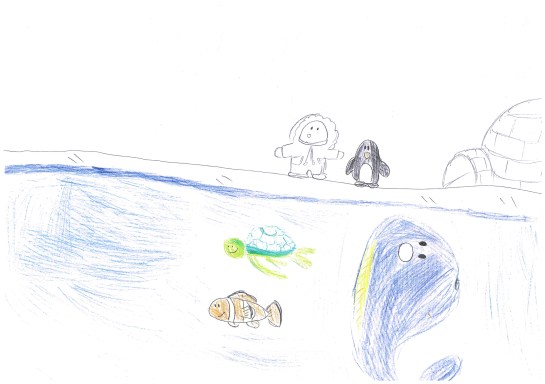
Amanda Tan Ying Shyuan:
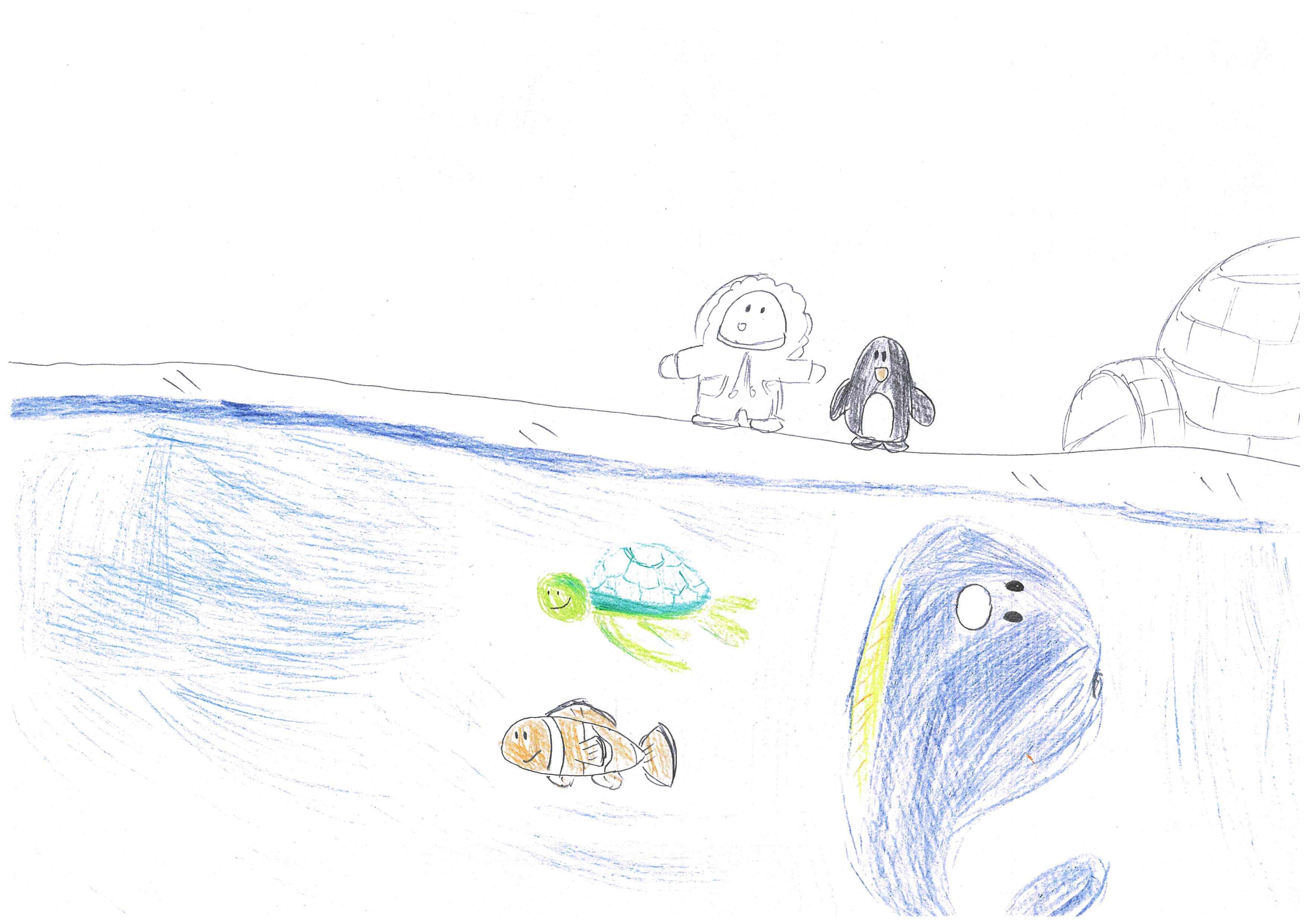
Place: ocean
Climate problem: full-blown freezing of the top of the ocean waters
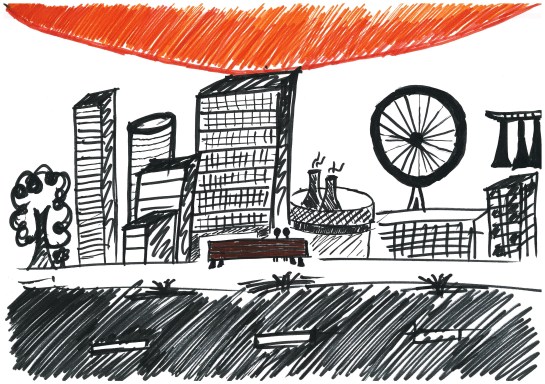
Arjun Saha:
Mt. Faber view point
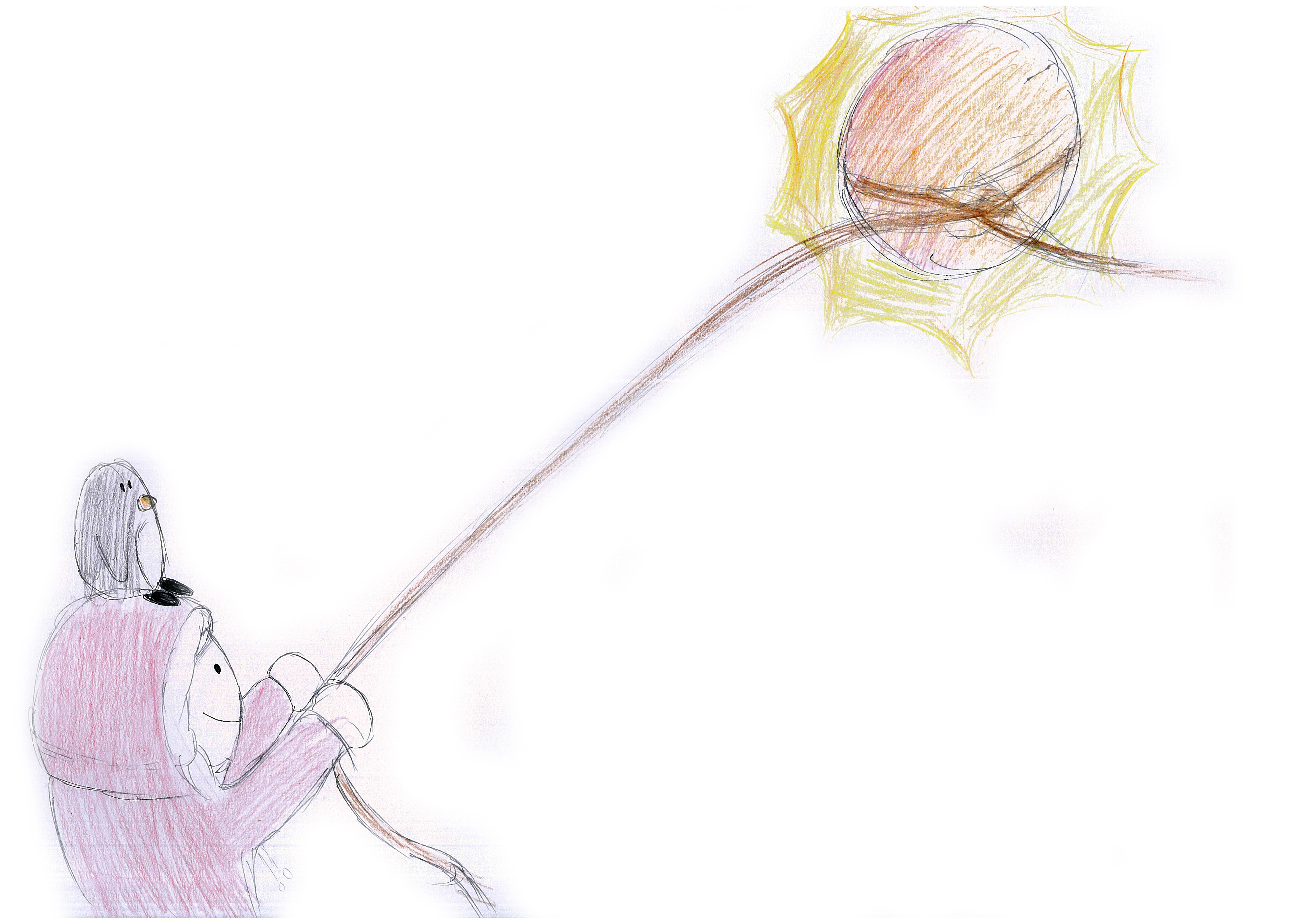
Sunspots superheated
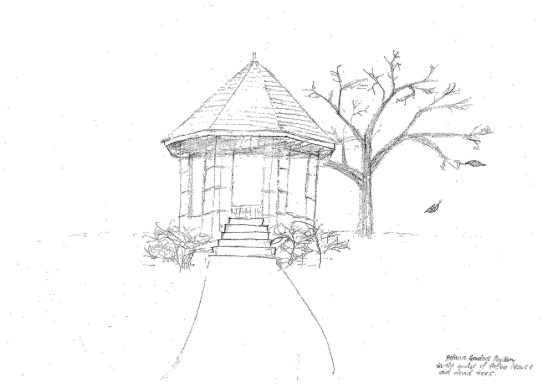
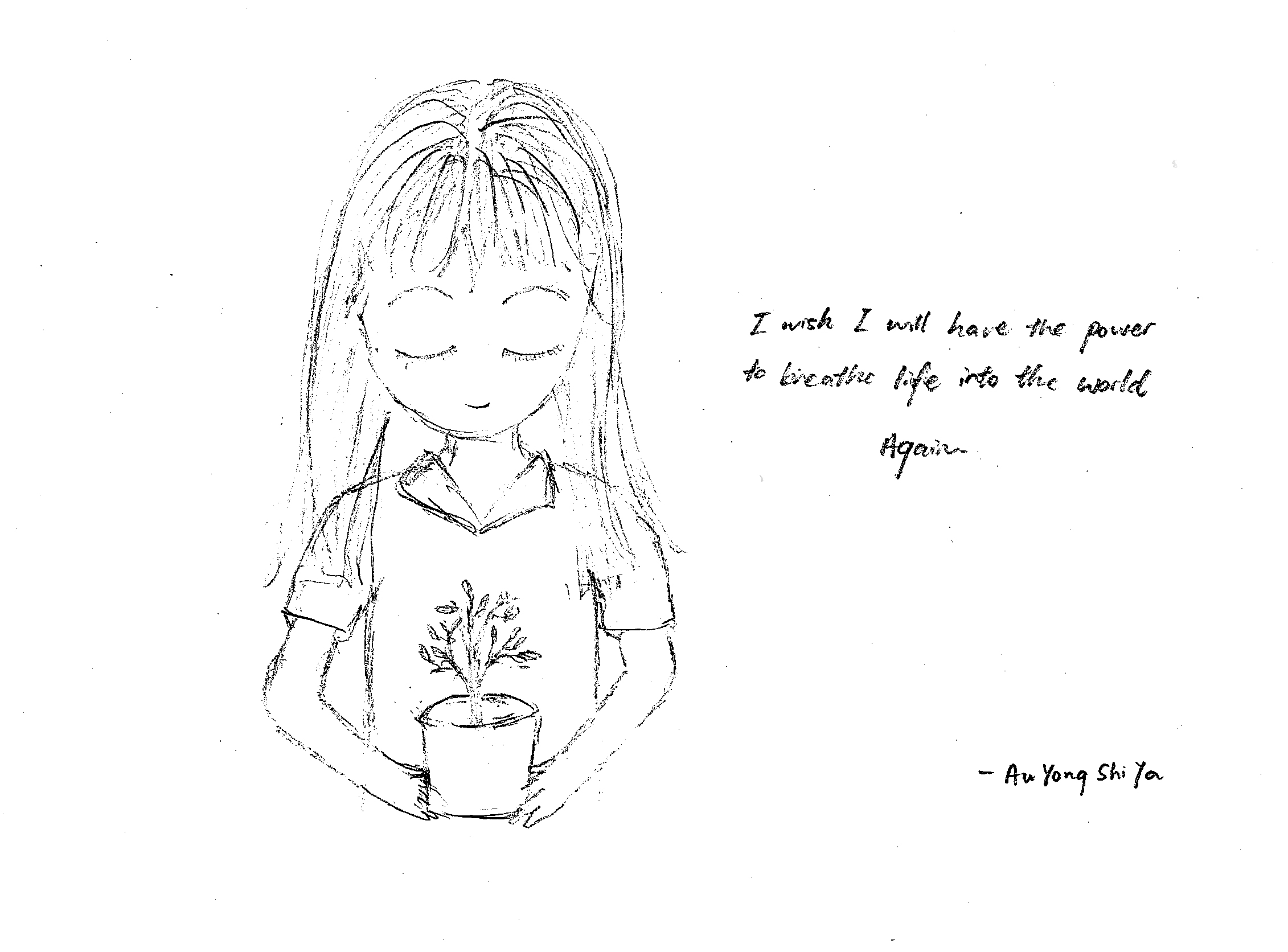
Au Yong Shi Ya:
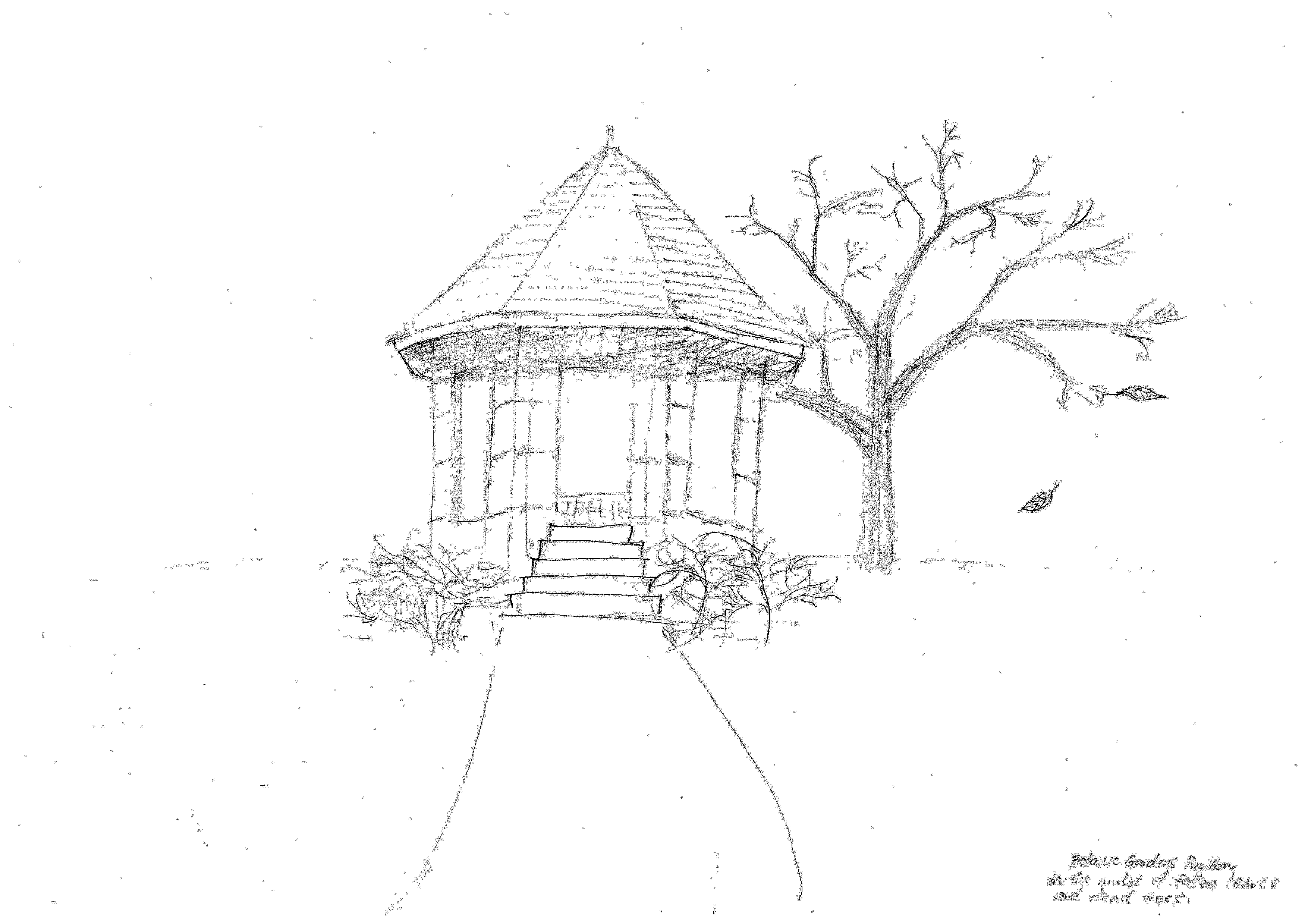
Botanical Gardens Pavilion in the midst of fallen leaves and dead trees
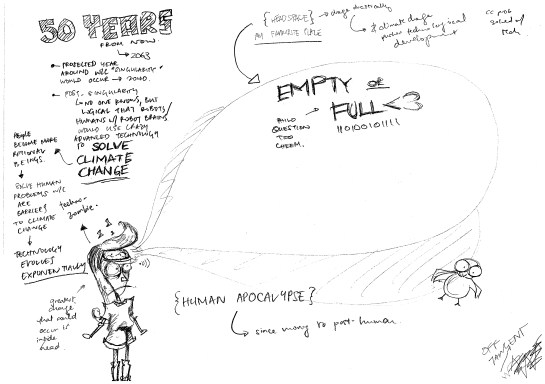
Carmina Castro:
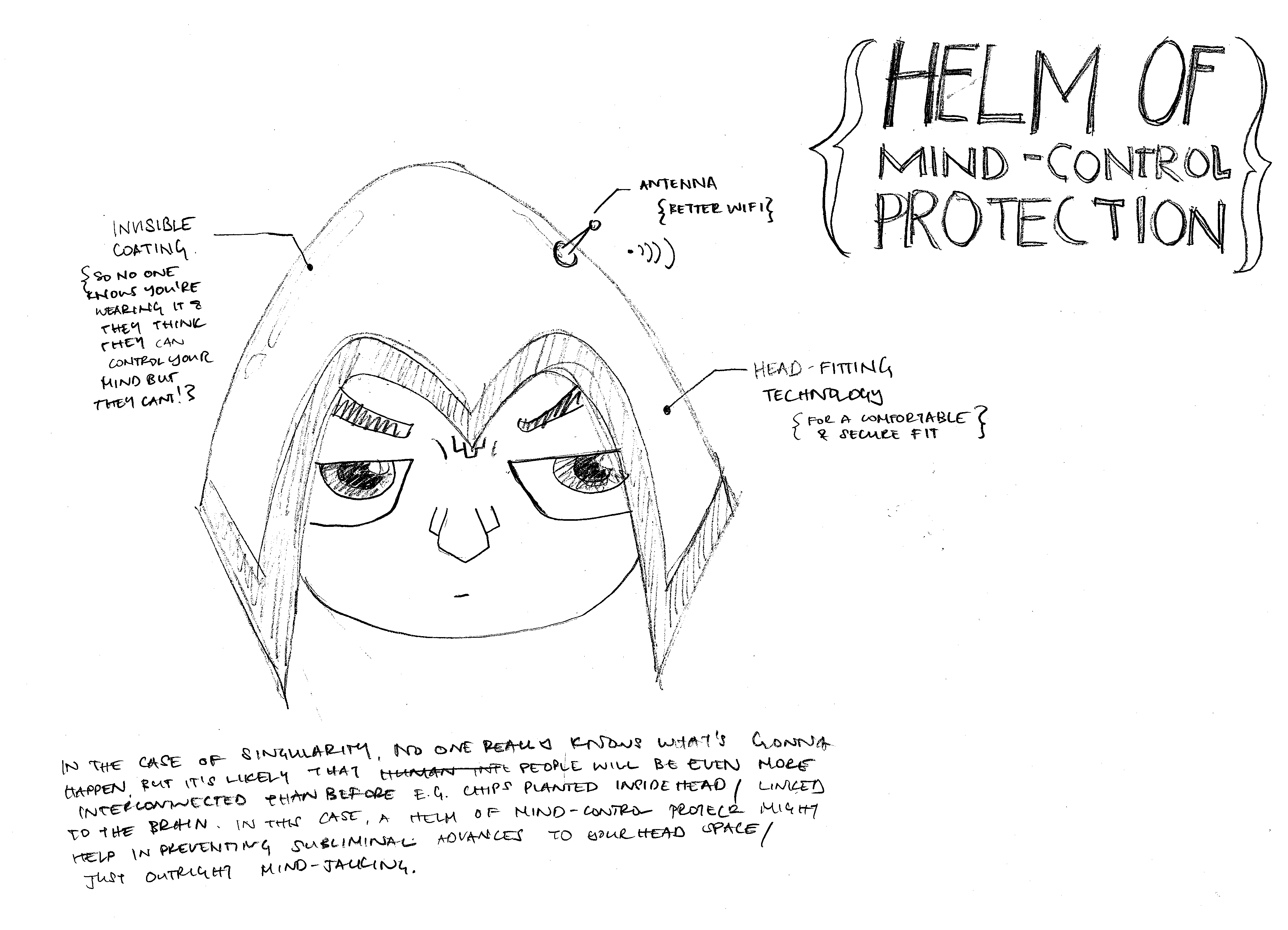
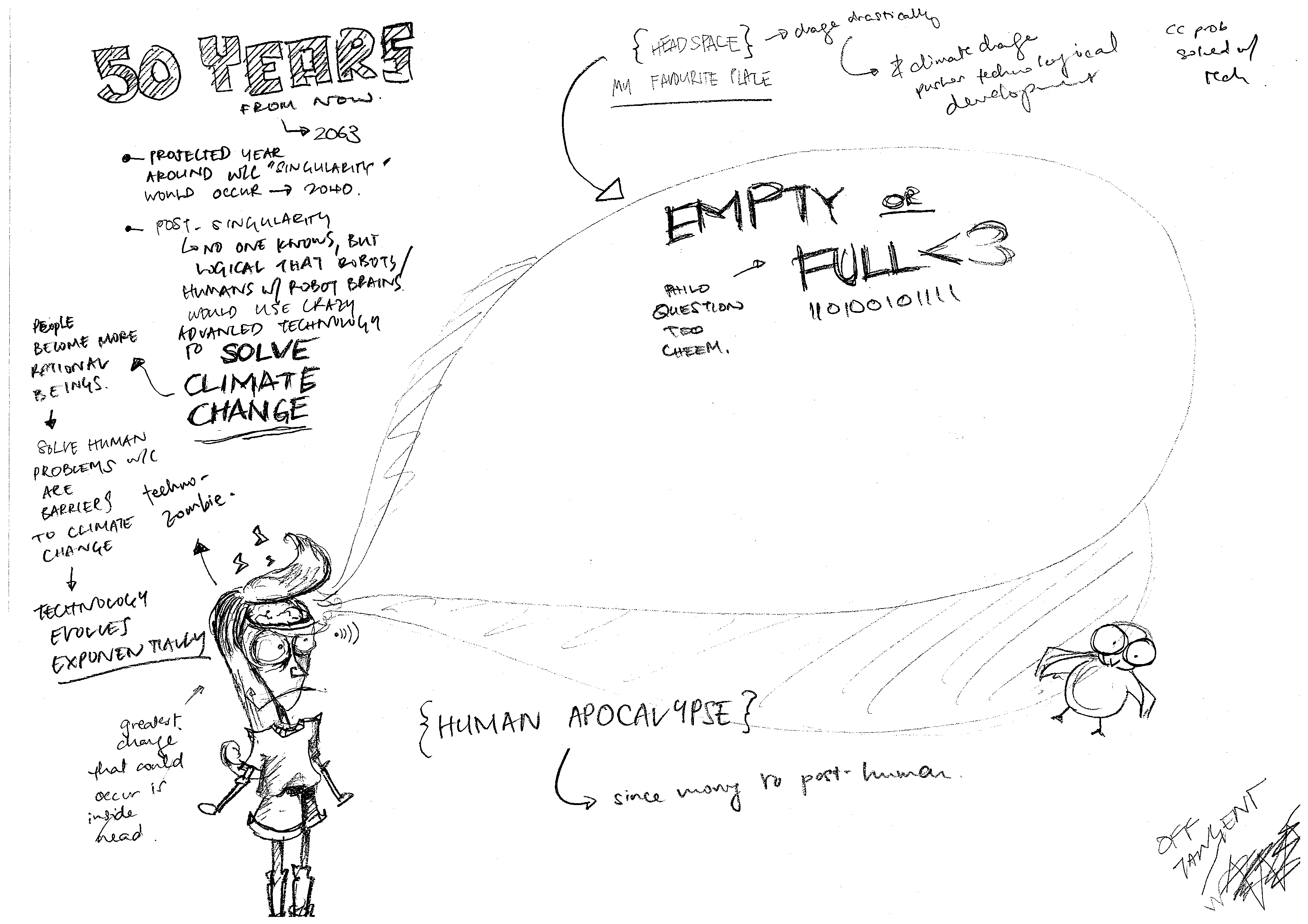
My favorite place: Headspace > change drastically > Climate change pushes technological developments
50 years from now > 2063 > Projected year around which “singularity” will occur: 2040 > Post-singularity: no one knows, but logical that robots / humans with robot brains would use crazy advanced technology to solve climate change > People become more rational beings > Solve human problems which are barriers to climate change > Technology evolves exponentially
Greatest change that could occur is inside head.
Human apocalypse? since moving to post-human.
Cassandra Teo:
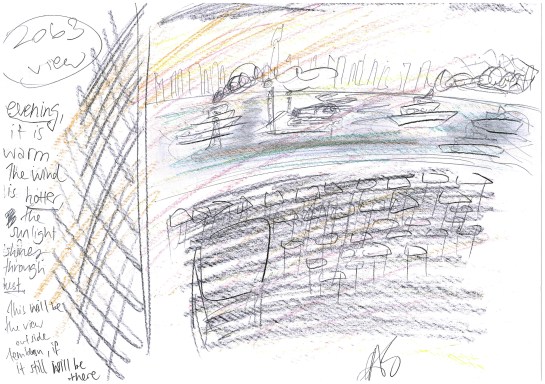
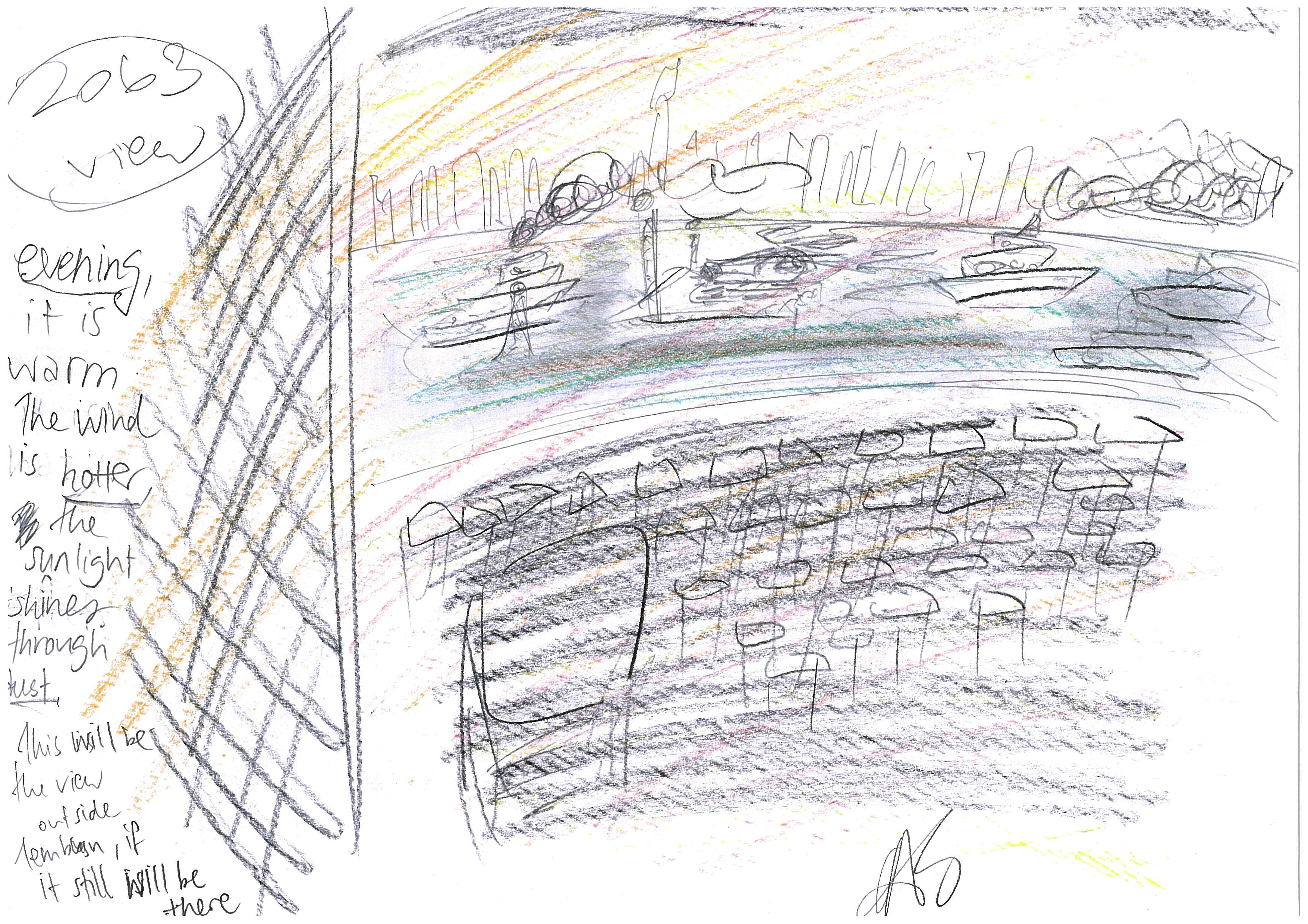
2063 view:
Evening, it is warm. The wind is hotter, the sunlight shines through dust. This will be the view outside Tembusu, if it still will be there.
Chan Sze How:
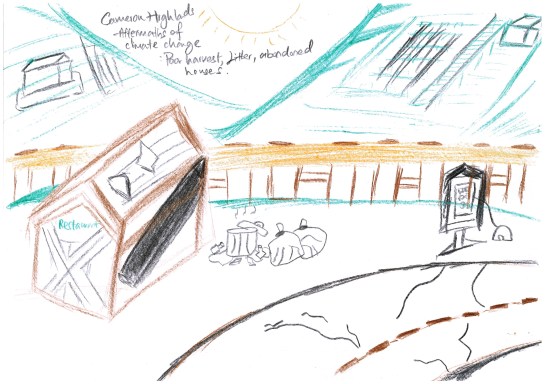
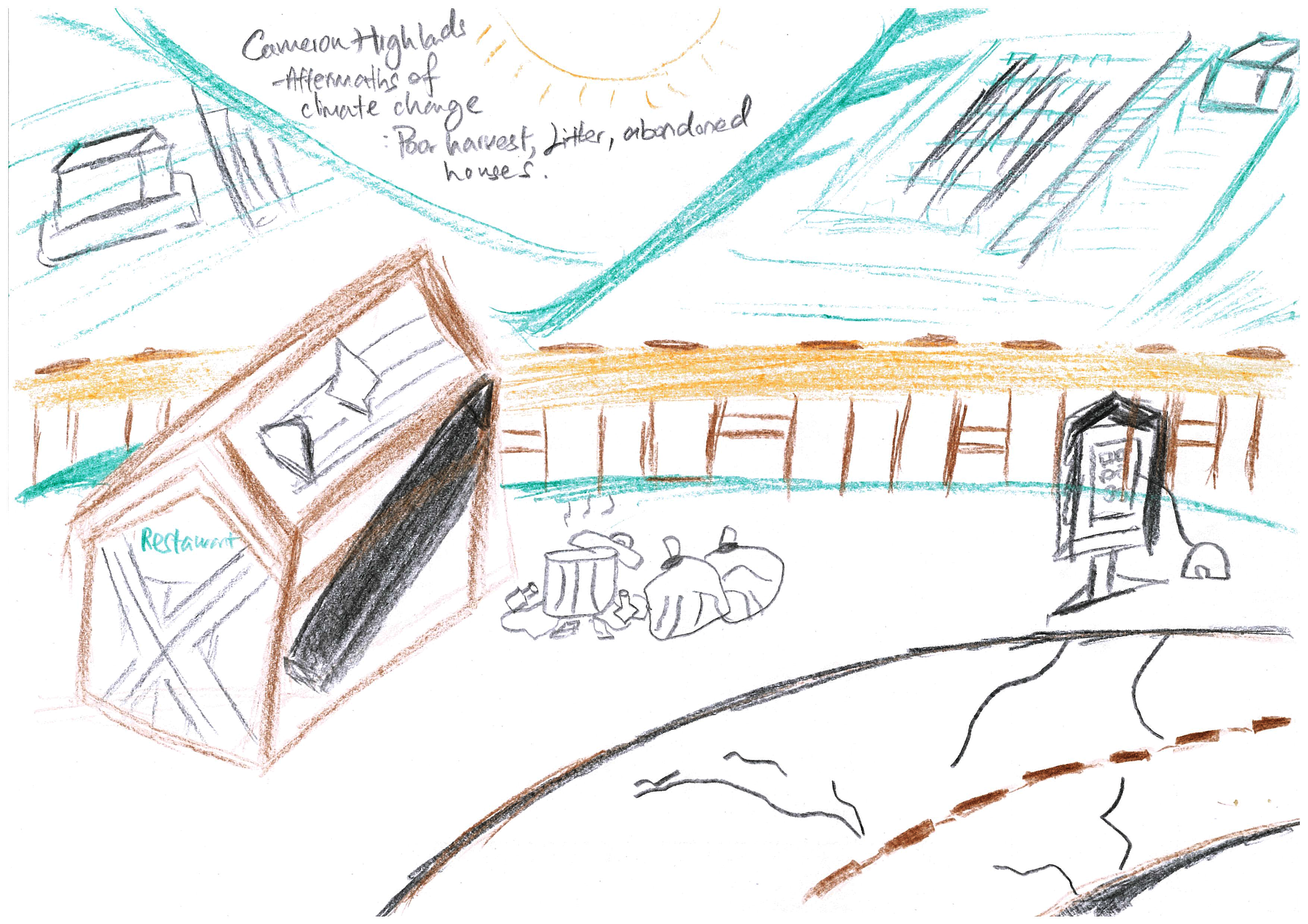
This image is a location in the Cameron Highlands, Malaysia. 50 years on, with changing climatic conditions, poor harvests (characterised by the black outlines on the slopes of the mountains) and the abandoned town is obsessed. This place relies heavily on subsistence farming which explains why the place is abandoned due to poor crop yield.
Cherlyn Tan:
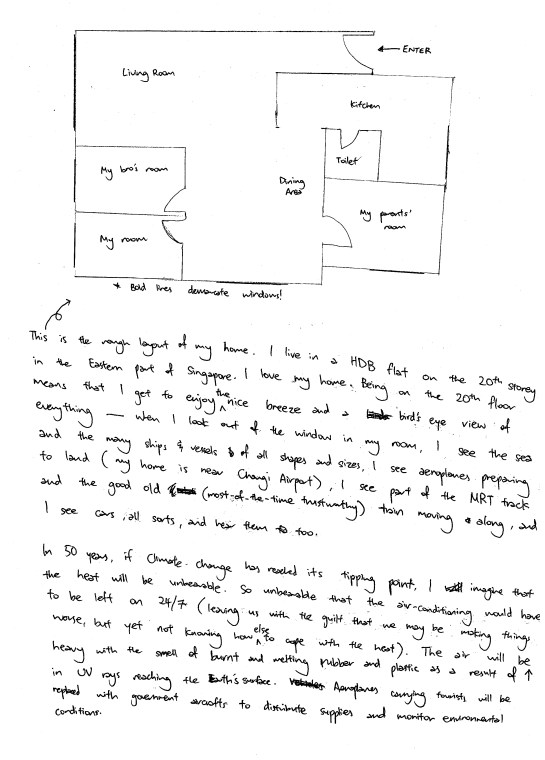
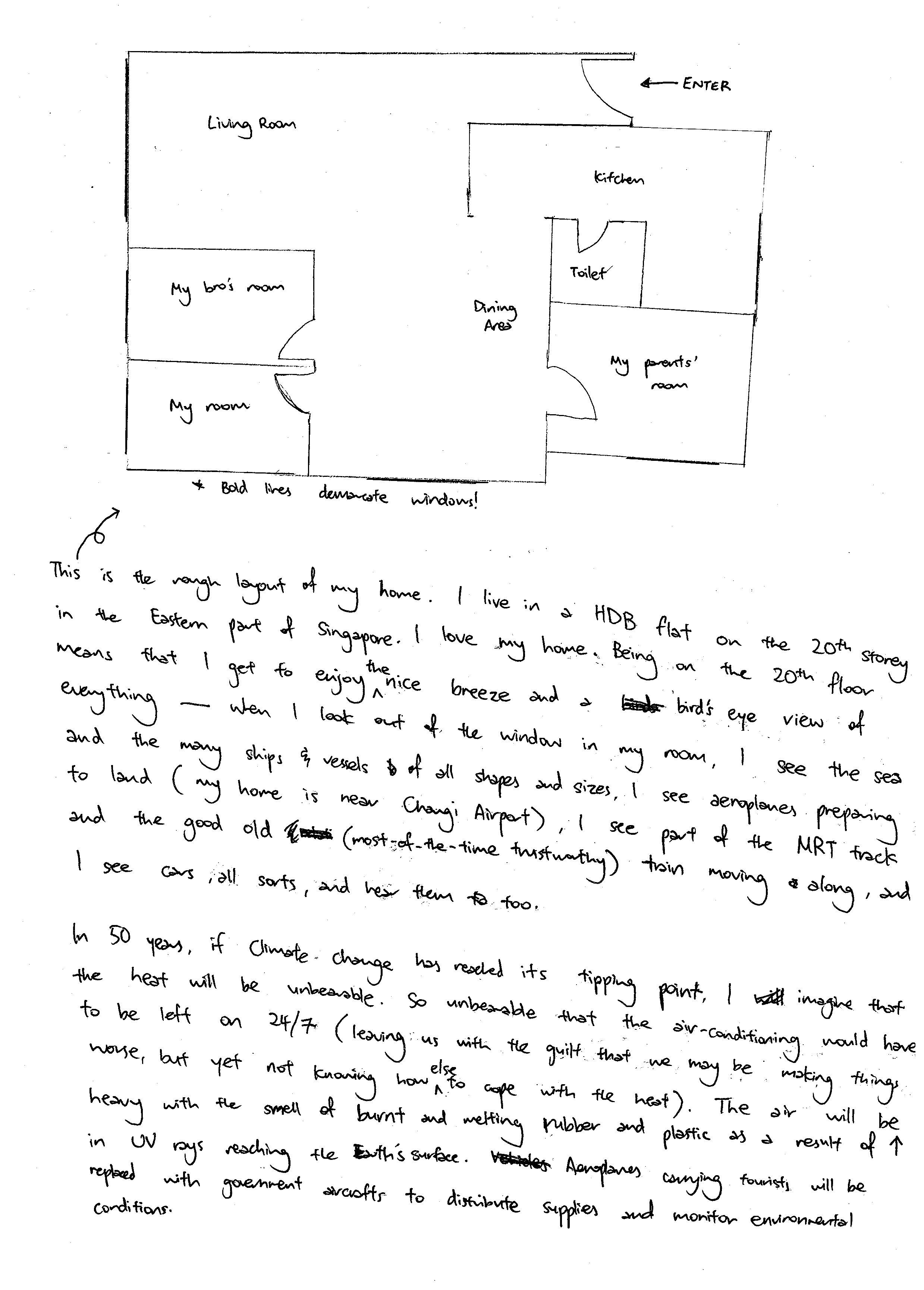
This is the rough layout of my home. I live in a HDB flat on the 20th storey in the Eastern part of Singapore. I love my home. Being on the 20th floor means that I get to enjoy the nice breeze and a bird’s eye view of everything—when I look out of the window in my room, I see the sea and the many ships and vessels of all shapes and sizes. I see aeroplanes preparing to land (my home is near Changi Airport), I see part of the MRT track and the good old (most-of-the-time trustworthy) train moving along, and I see cars, all sorts, and hear them, too.
In 50 years, if climate change has revealed its tipping point, I imagine that the heat will be unbearable. So unbearable that the air-conditioning would have to be left on 24/7 (leaving us with the guilt that we may be making things worse, but yet not knowing how else to cope with the heat). The air will be heavy with the smell of burnt and melting rubber and plastic as a result of [increase] in UV rays reaching the Earth’s surface. Aeroplanes carrying tourists will be replaced with government aircrafts to distribute supplies and monitor environmental conditions.
Georgia Tam:
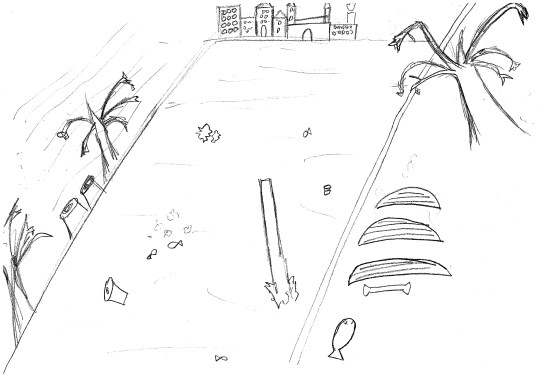
Oxford
Germaine Goh:
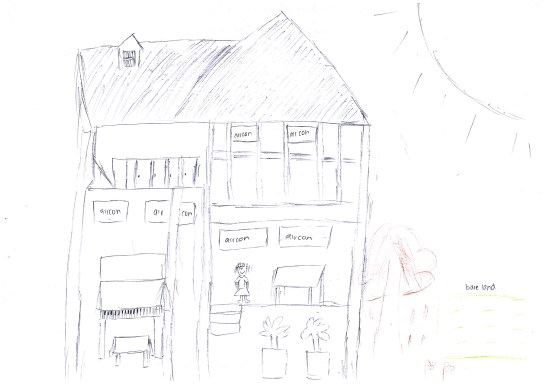
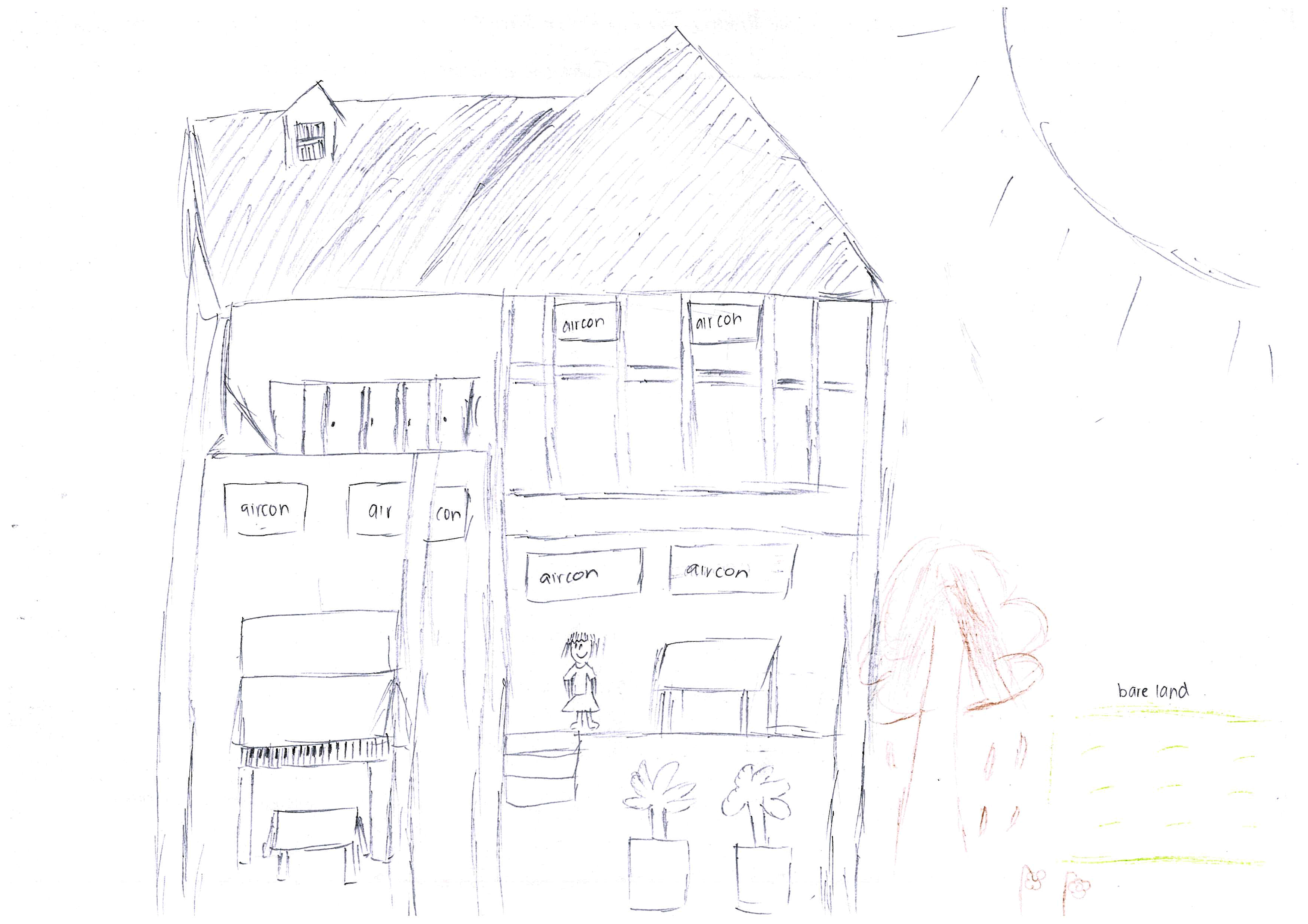
In 50 years, I imagine my house to be my little safe haven, whereby life will be unbearable without aircon (as see by the increase in number of air-conditioner present). Furthermore, my plants will have to be indoor plants for the heat will be unbearable under the hot sun. Trees will not survive (fallen leaves) and the land will be bare (no plants can grow) in the garden outside my house. My safe haven will have my piano still. 🙂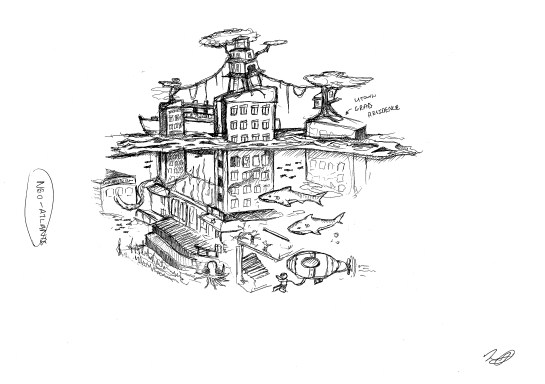
Jared Koh:
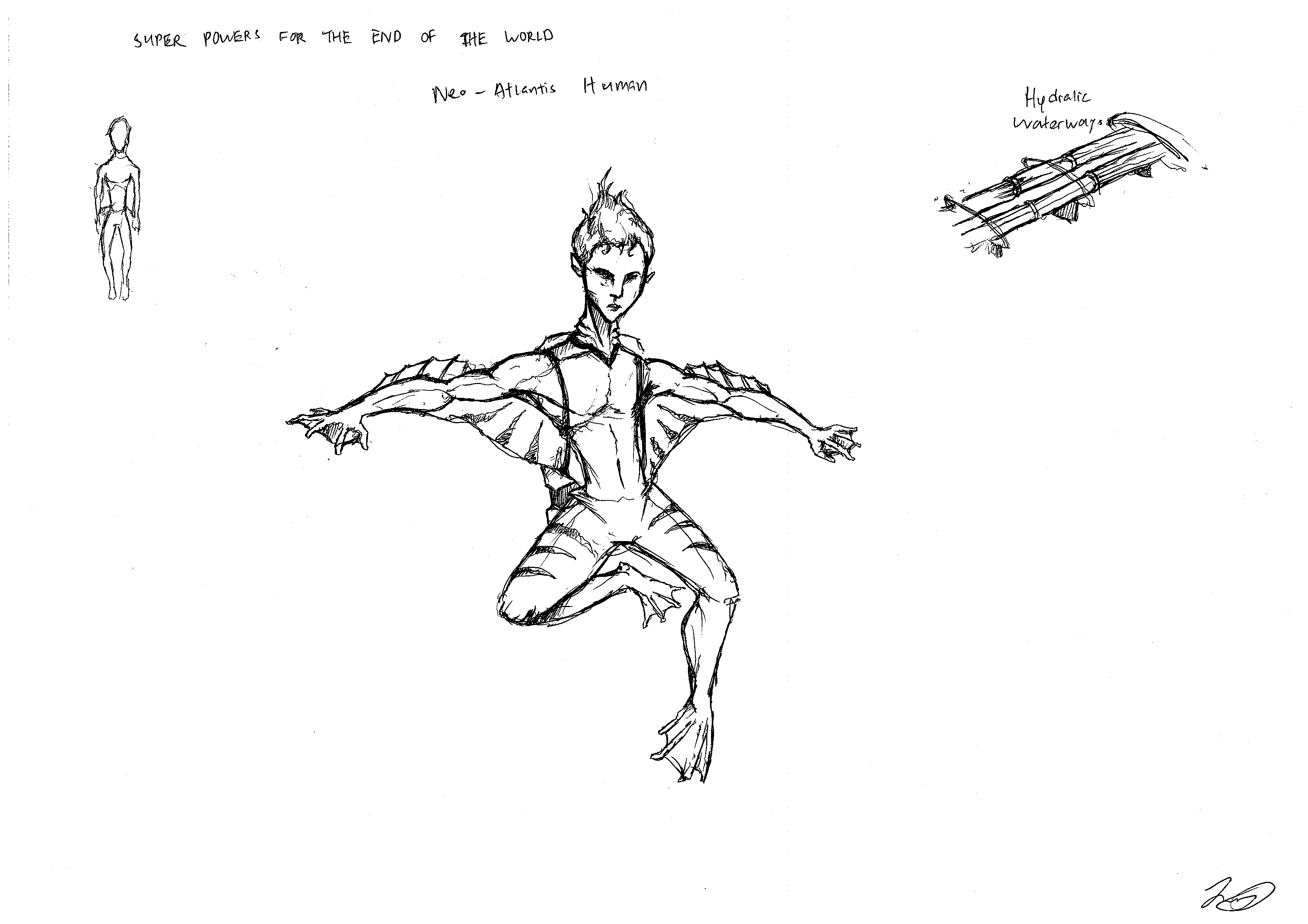
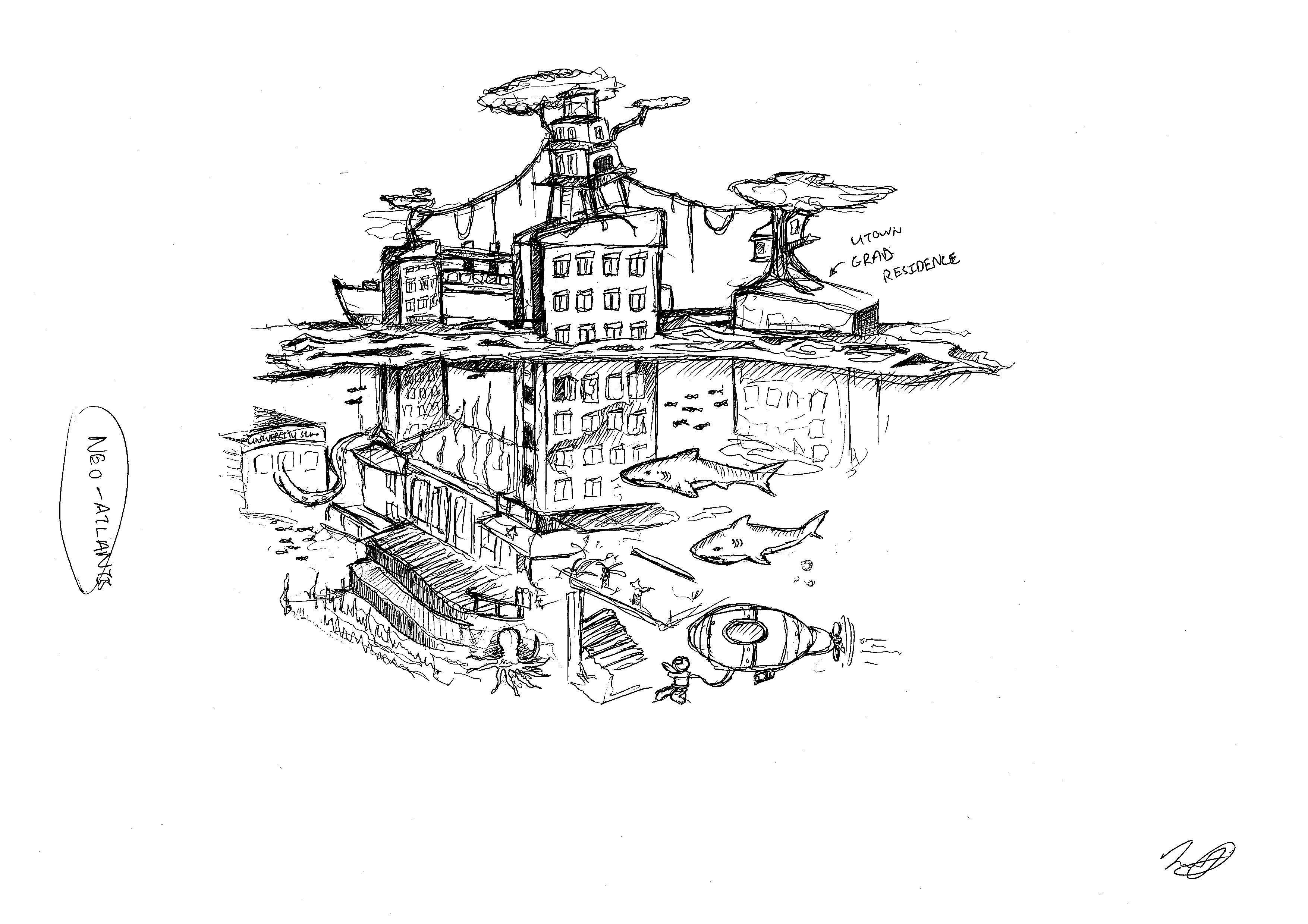
Neo-Atlantis
Jonathan T:
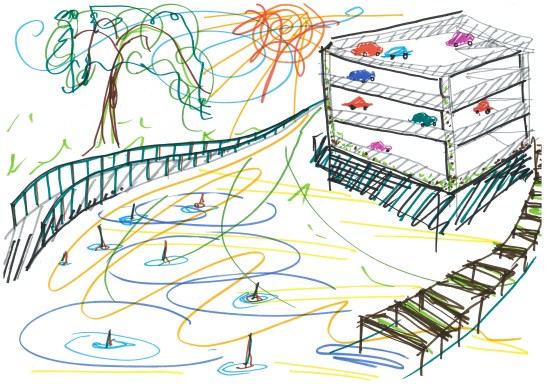
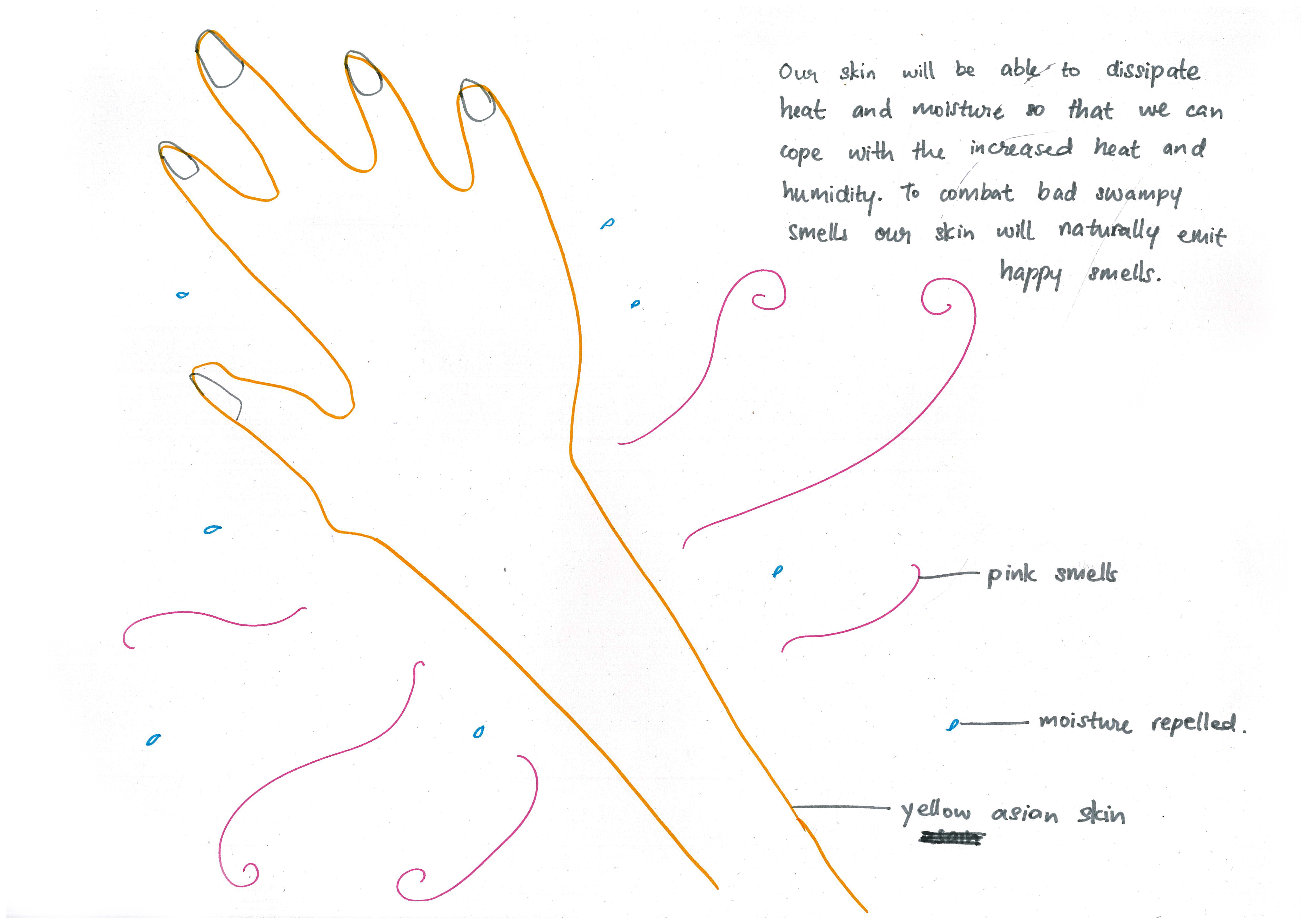
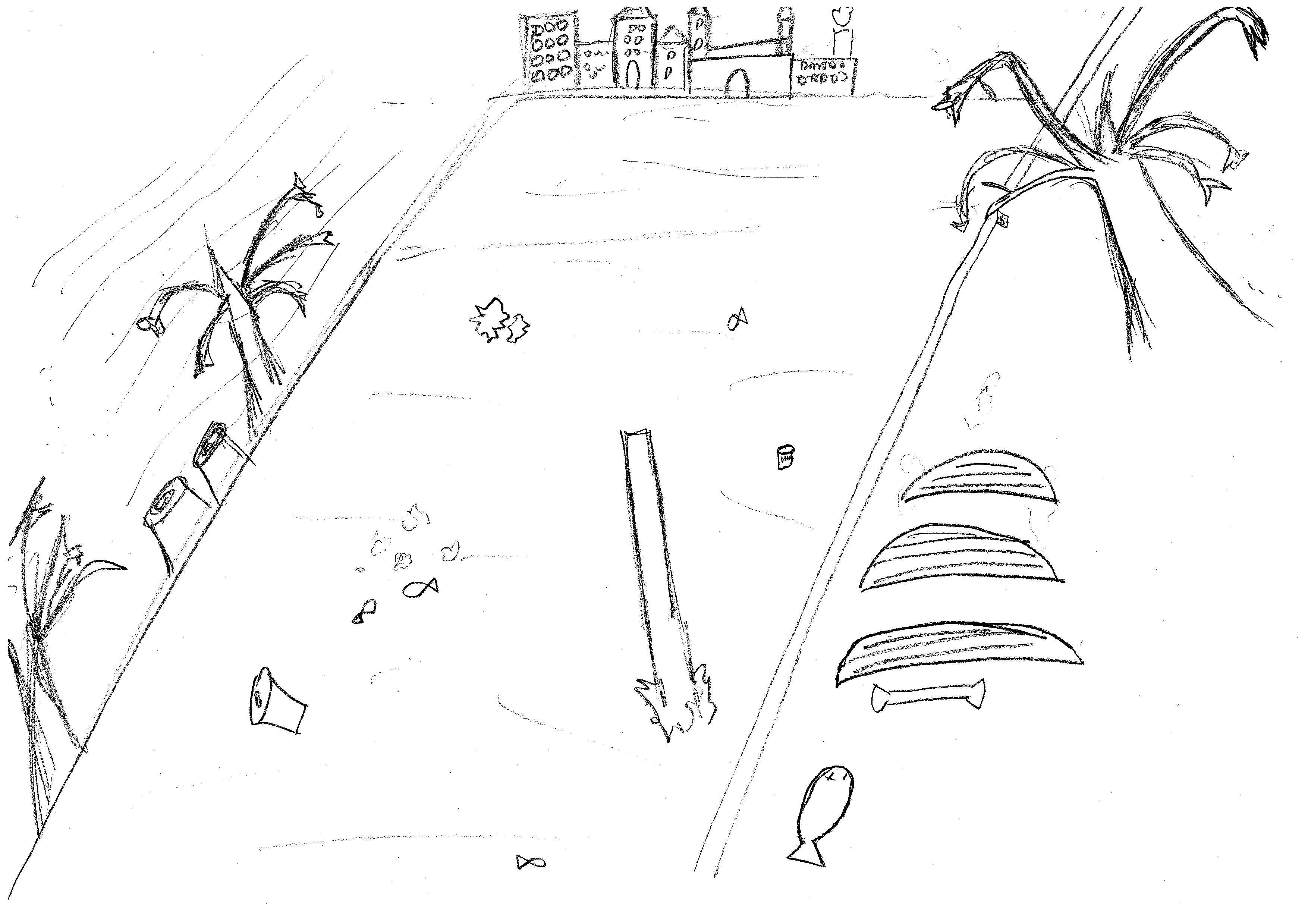
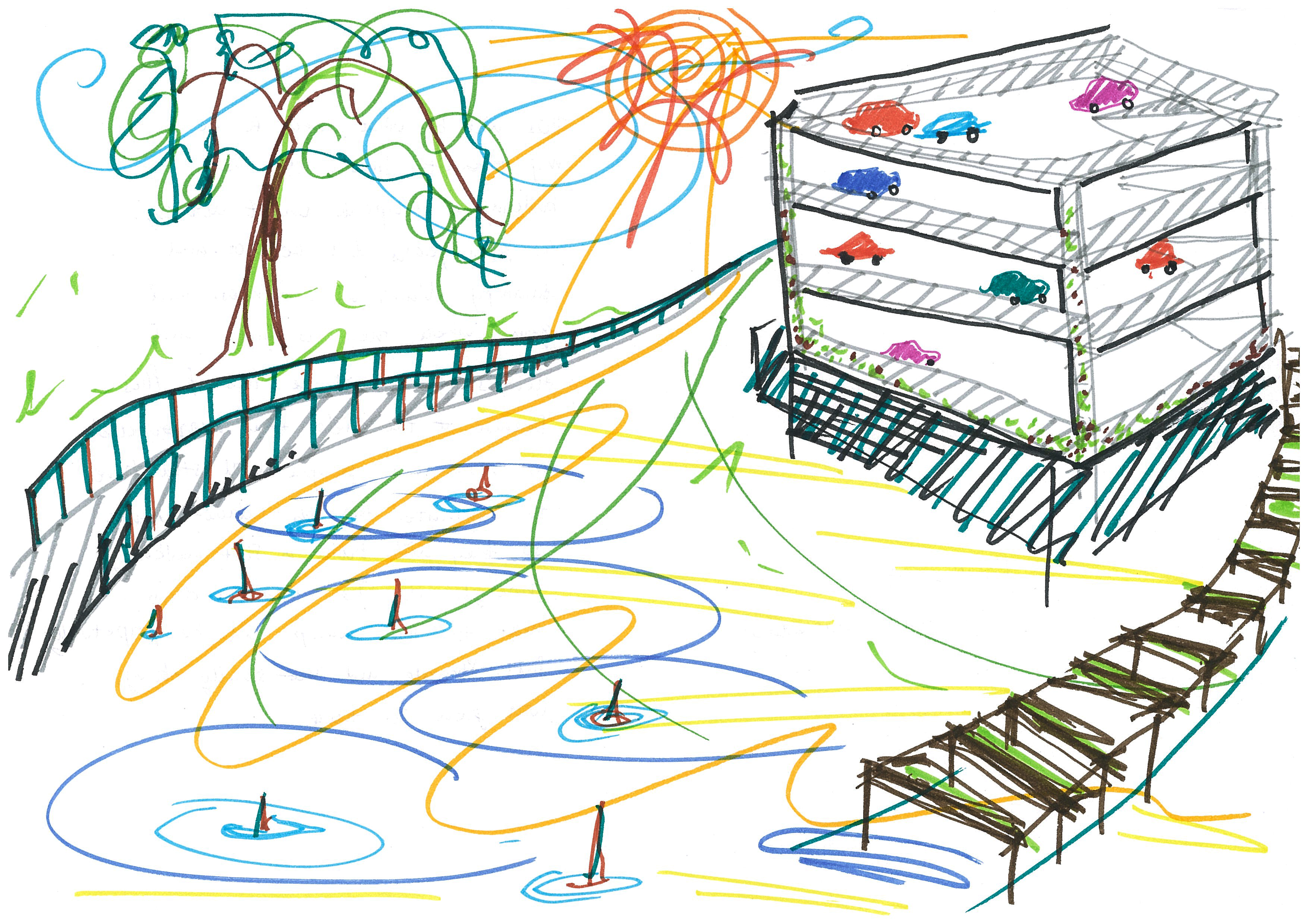
This is what used to be my favorite field. They are building a car park on it already. In fifty years it’ll be hot and swampy. Mangroves and moss will grow where there is grass and flowers. There will be lots of flies. Because the field is surrounded by residences, people will still have to commute through future-swamp. So they will build a stilt walkway through it. The monsoon drain next to the swamp will be perpetually full. Strange and smelly things will grow in there.
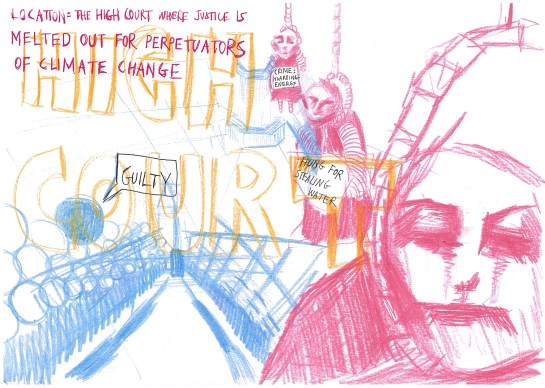
Lam Yuen Kei:
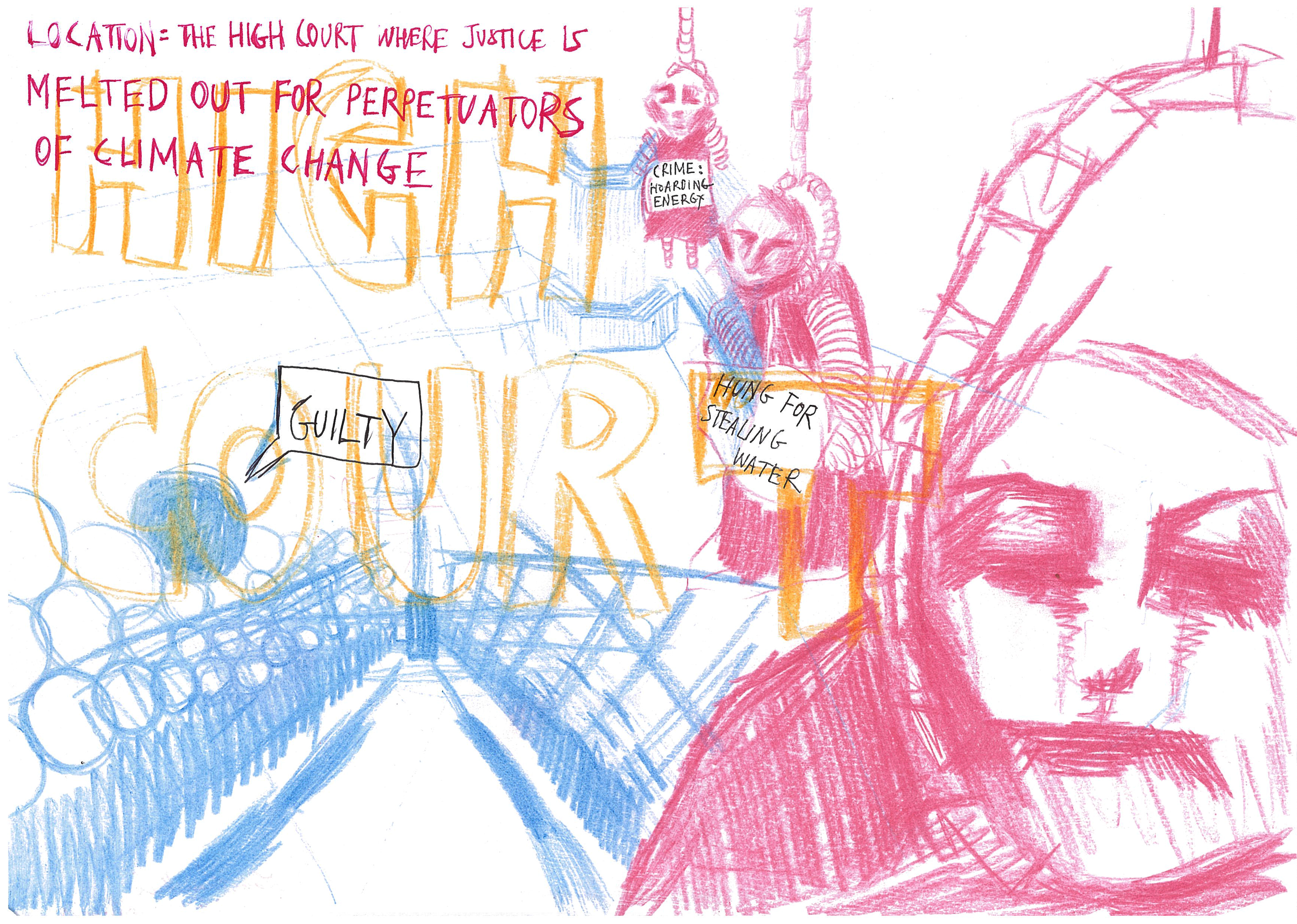
Location: The High Court where justice is meted out for perpetuators of climate change
[Shown: people who are hanged for stealing water]
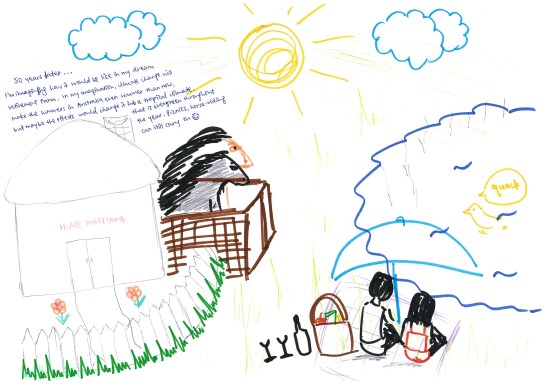
Lee Ying Lin:
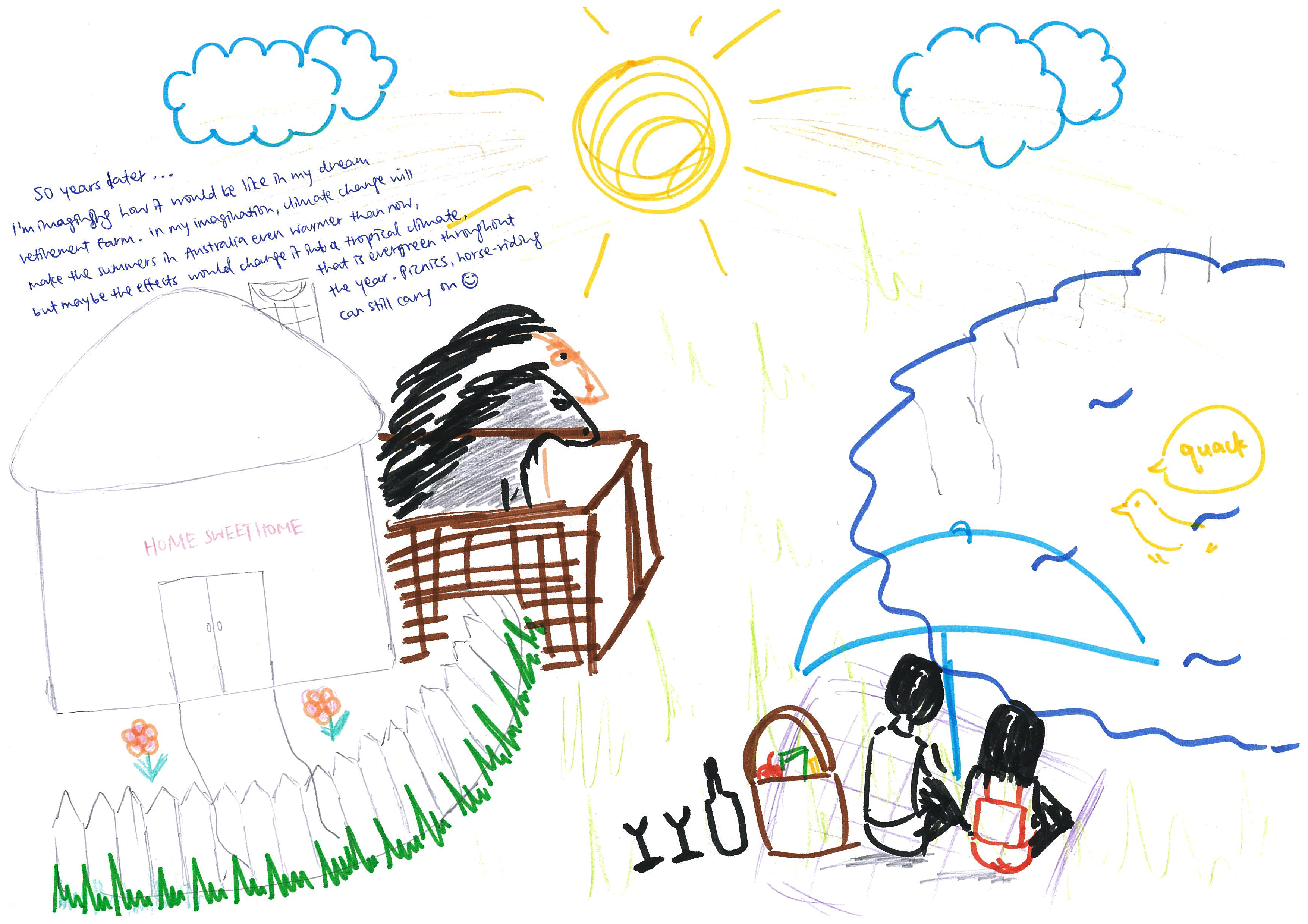
50 years later… I’m imagining how it would be like in my dream retirement farm. In my imagination, climate change will make the summers in Australia even warmer than now, but maybe the effects would change it into a tropical climate, that is evergreen throughout the year. Picnics, horse-riding can still carry on.
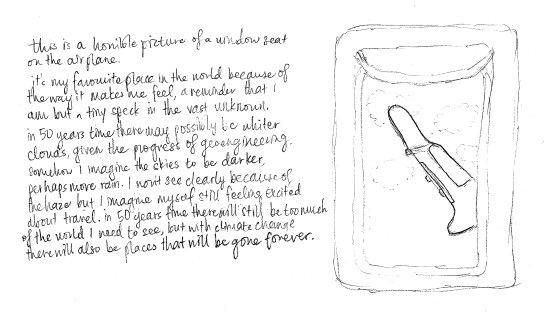
Lycia Ho:
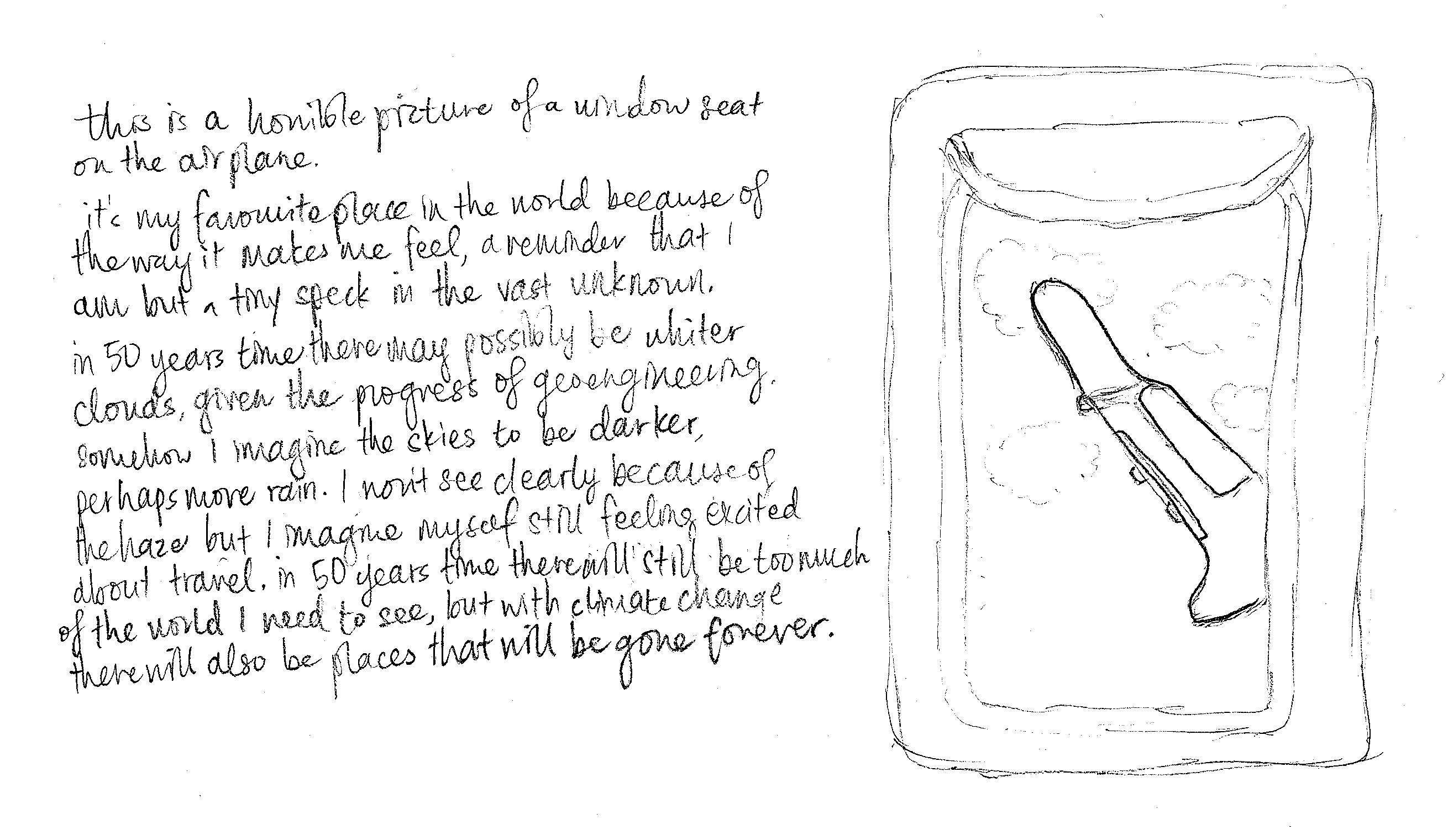
This is a horrible picture of a window seat on the airplane. It’s my favourite place in the world because of the way it makes me feel, a reminder that I am but a tiny speck in the vast unknown. In 50 years’ time there may possibly be whiter clouds, given the progress of geoengineering. Somehow, I imagine the skies to be darker, perhaps more rain. I won’t see clearly because of the haze but I imagine myself still feeling excited about travel. In 50 years’ time there will still be too much of the world I need to see, but with climate change there will also be places that will be gone forever.
Rachel Lee:
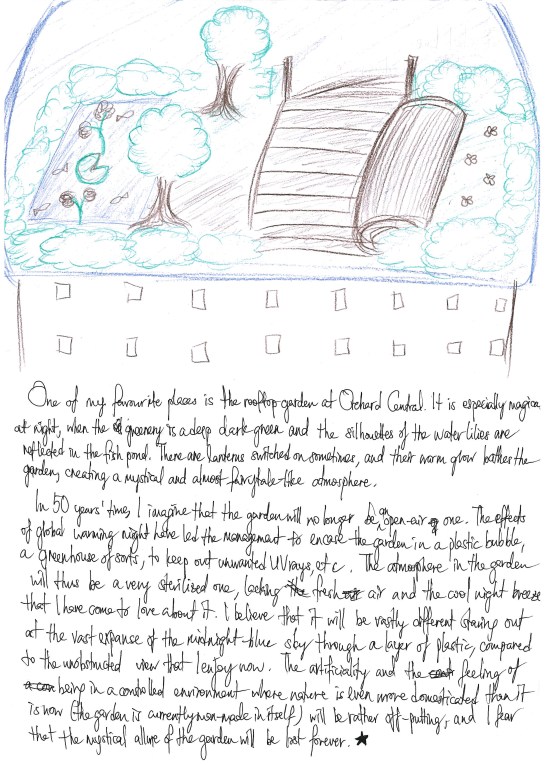
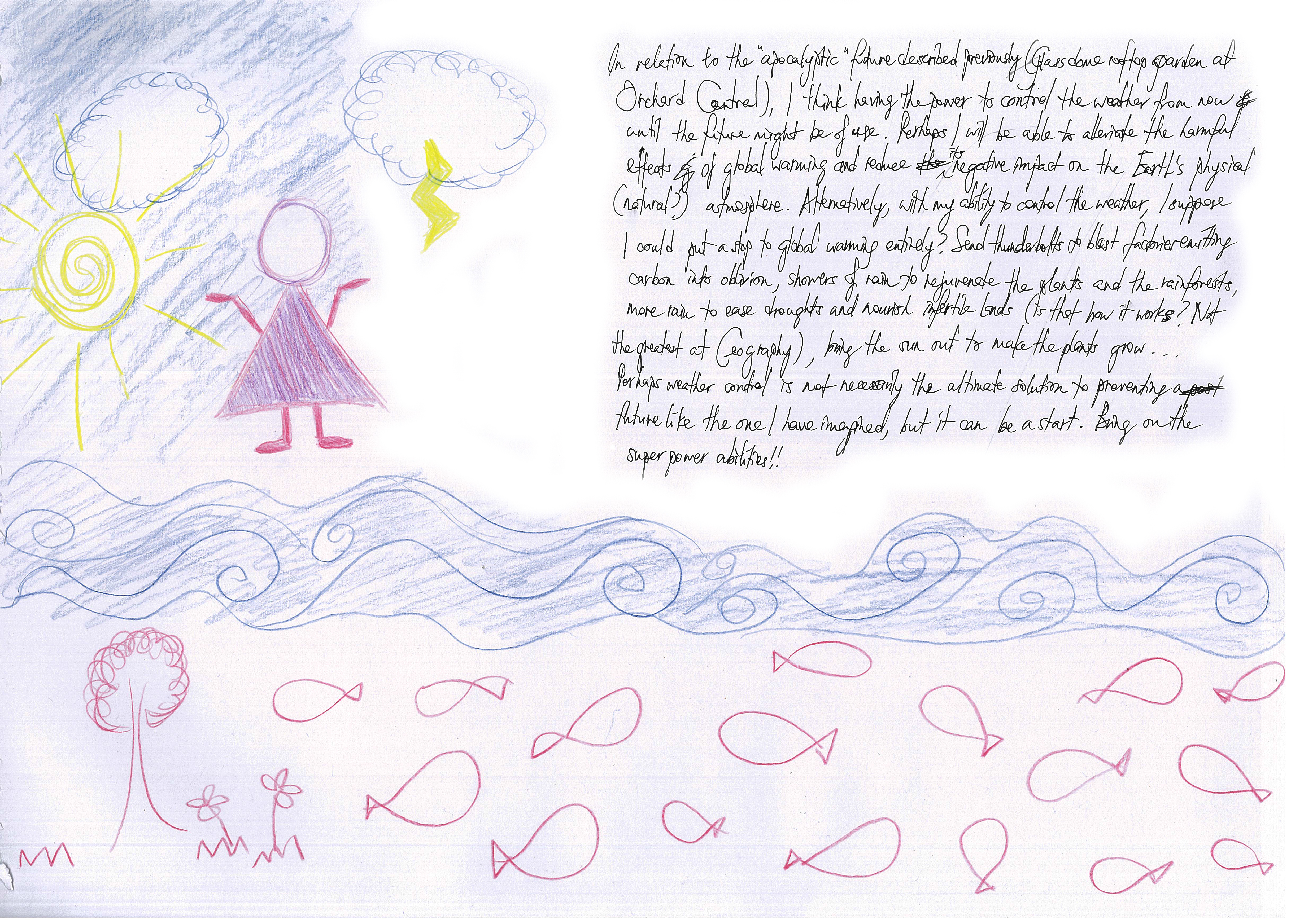
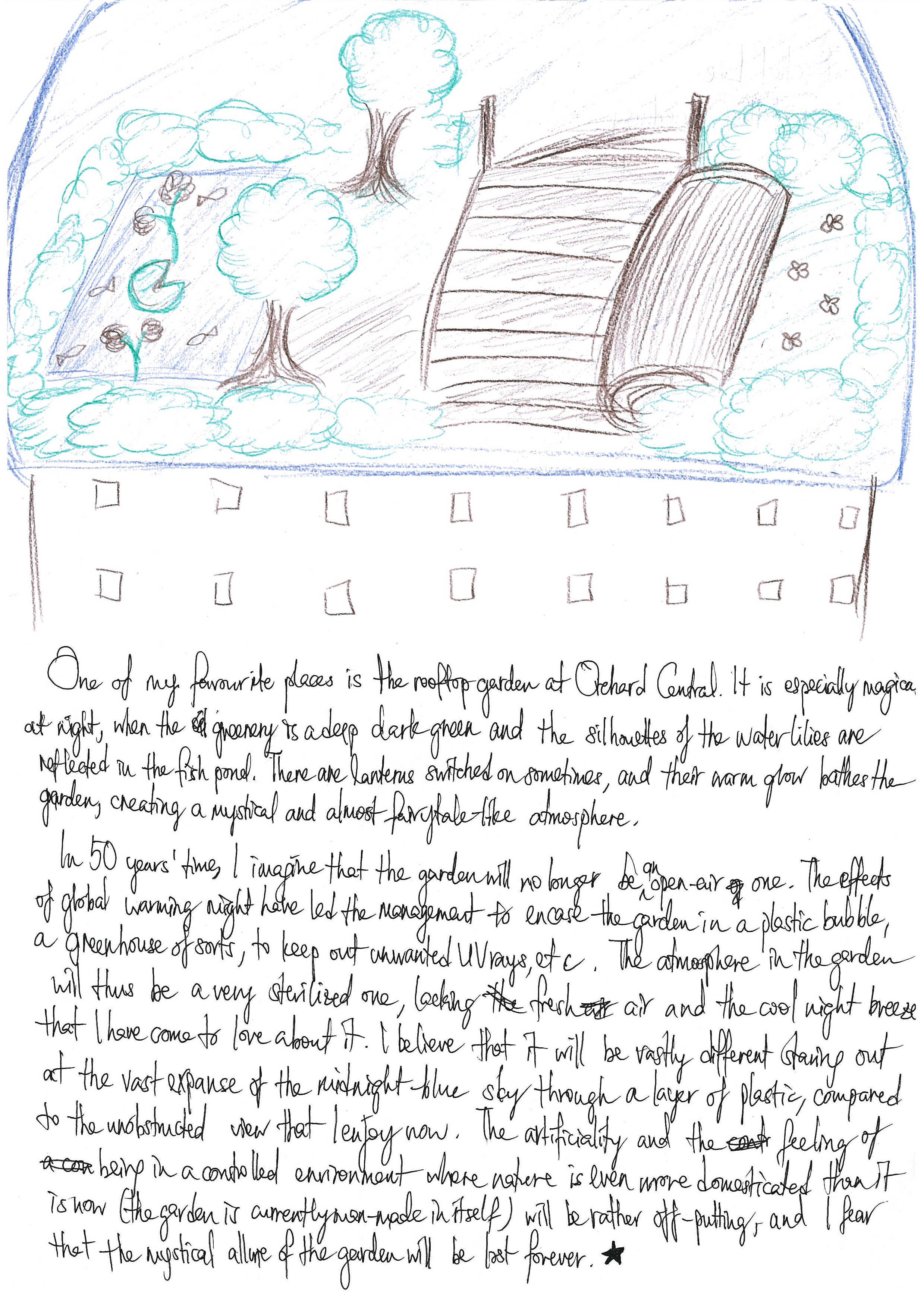
One of my favourite places is the rooftop garden at Orchard Central. It is especially magical at night, when the greenery is a deep dark green and the silhouettes of the water lilies are reflected in the fish pond. THere are lanterns switched on sometimes, and their warm glow battles the garden, creating a mystical and almost fairytale-like atmosphere.
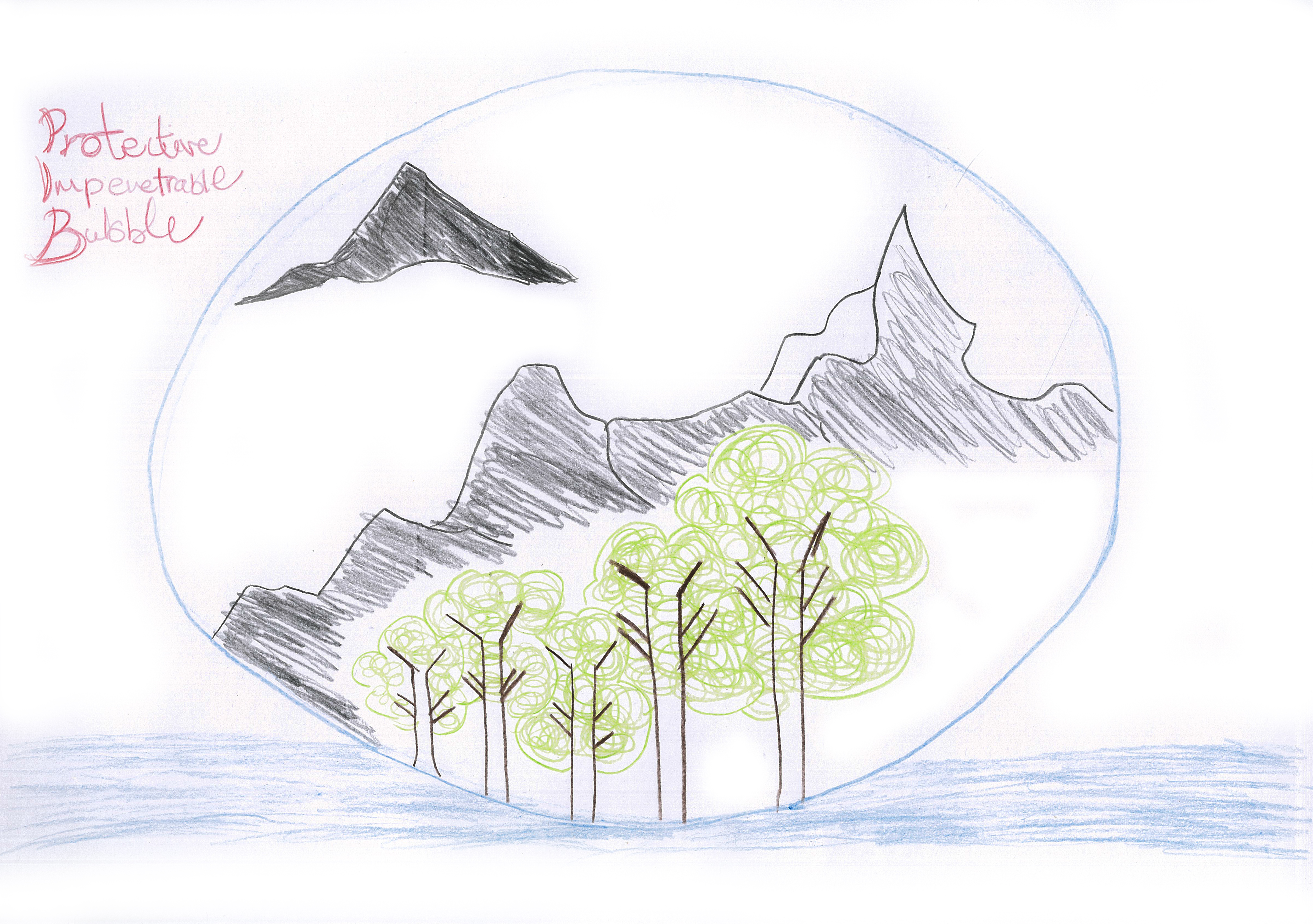
In 50 year’s time, I imagine that the garden will no longer be an open-air one. The effects of global warming might have led the management to encase the garden in a plastic bubble, a greenhouse of sorts, to keep out unwanted UV rays, etc. The atmosphere in the garden will thus be a very sterilized one, lacking fresh air and the cool night breeze that I have come to love about it. I believe that it will be vastly different staring out at the vast expanse of the midnight-blue sky through a layer of plastic, compared to the unobstructed view that I enjoy now. The artificiality and the feeling of being in a controlled environment where nature is even more domesticated than it is now (the garden is currently man0made in itself) will be rather off-putting, and I fear that the mystical allure of the garden will be lost forever.
Sarah Lim Shu Hui
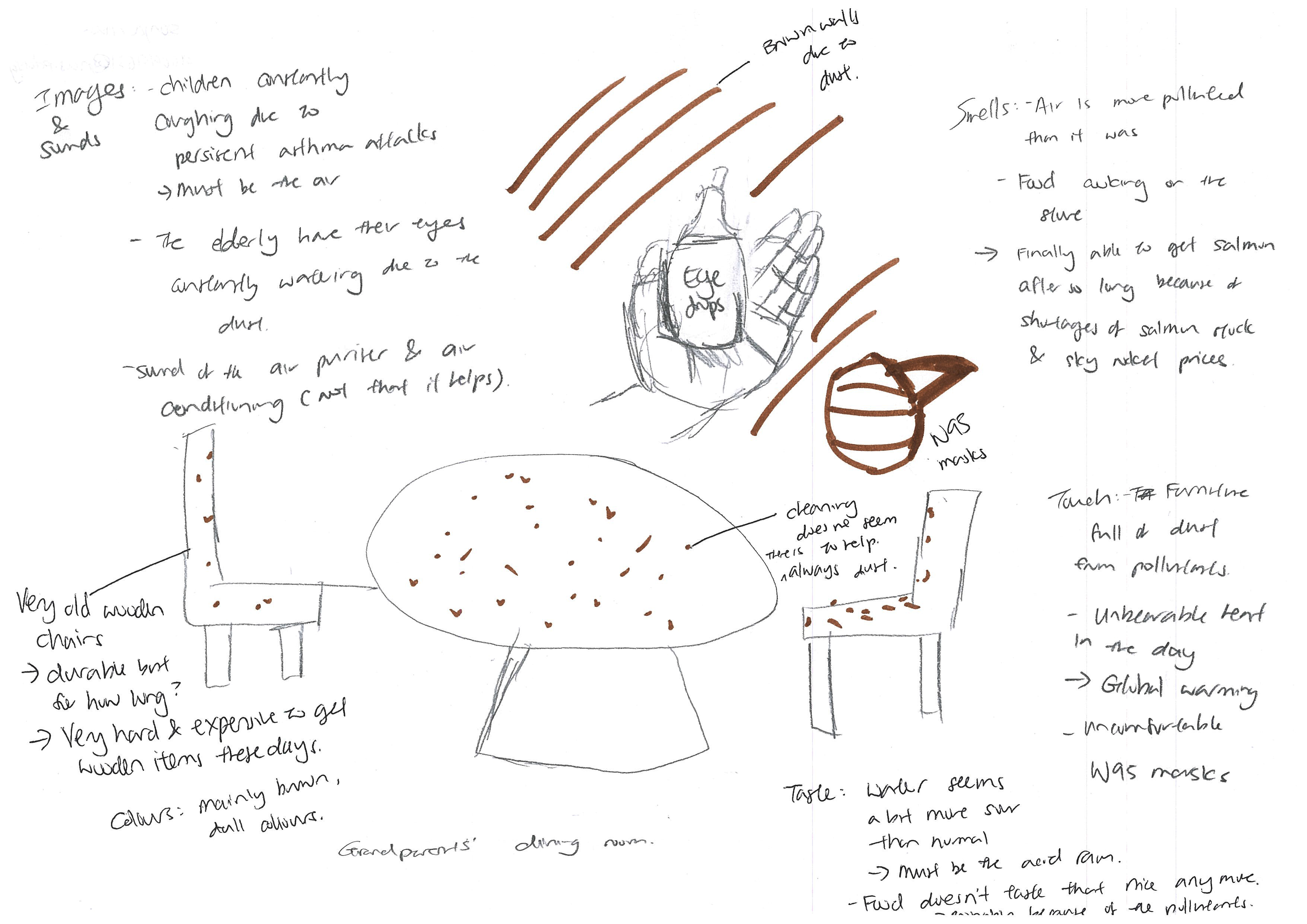
Sonja Chua:
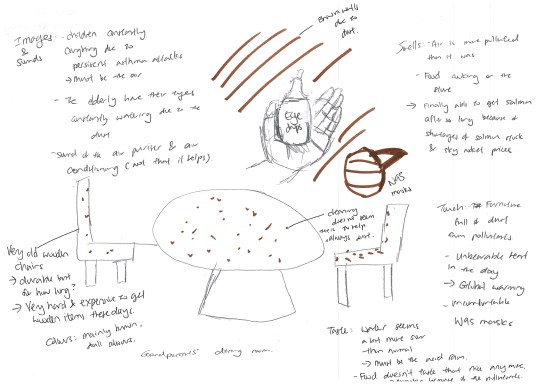
Images and sounds:
– Children consistently coughing due to persistent asthma attacks > must be the air
-The elderly have their eyes constantly watering due to the dust.
– Sound of the air purifier and air conditioning (not that helps).
Smells:
– Air is more polluted that it was.
– Finally able to get salmon after so long because of shortages of salmon and sky rocket prices.
Touch:
– Furniture full of dust from pollutants
– Unbearable heat in the day
– Global warming
Taste:
– Water seems a bit more sour than normal > must be the acid rain.
– Food doesn’t taste that nice anymore > probably because of the pollutants.
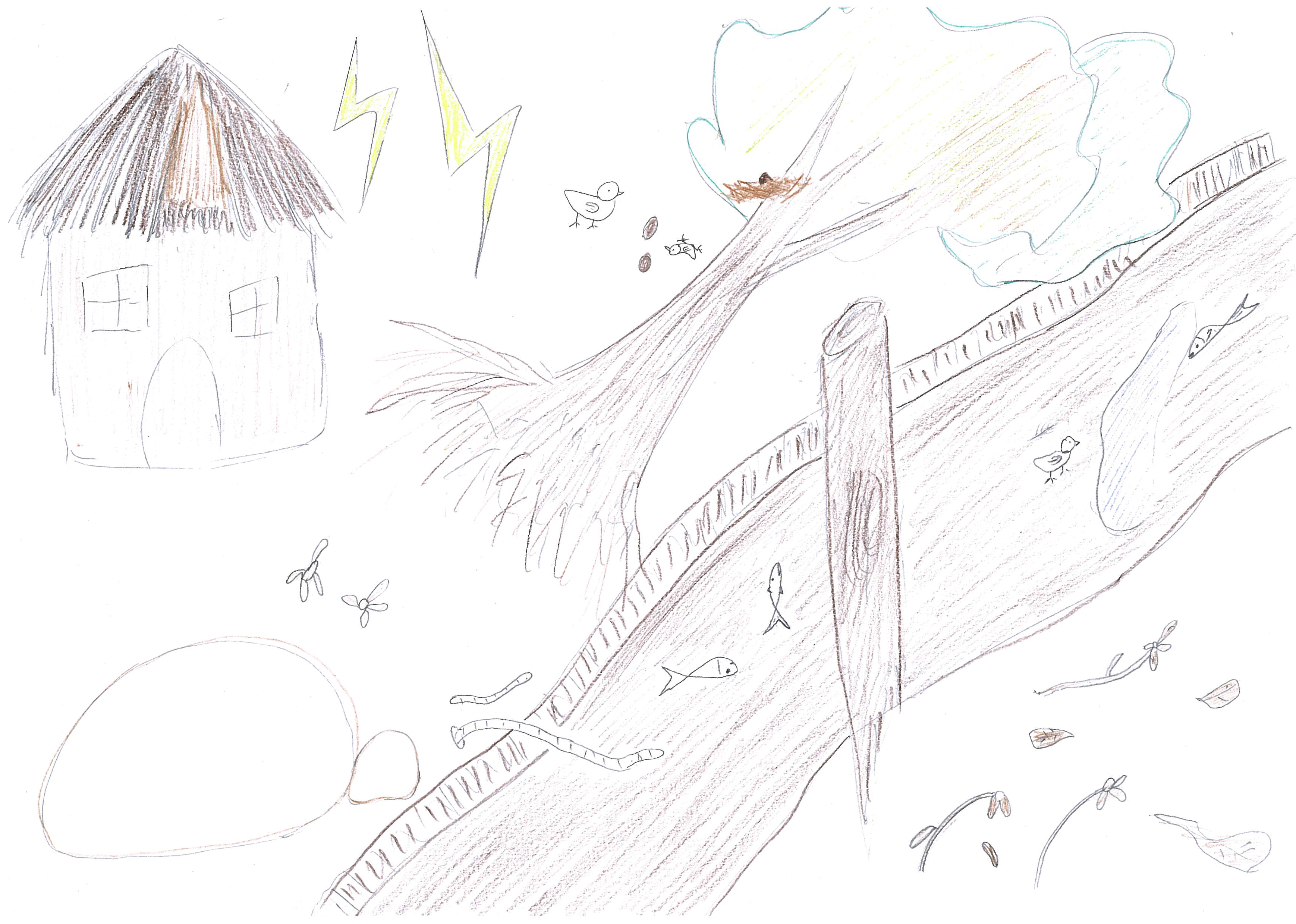
Tay Ying Ying:
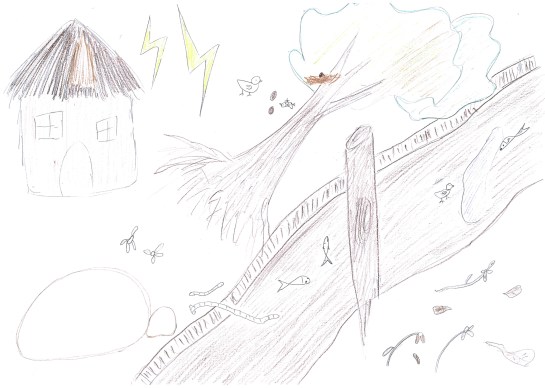
The Death of Nature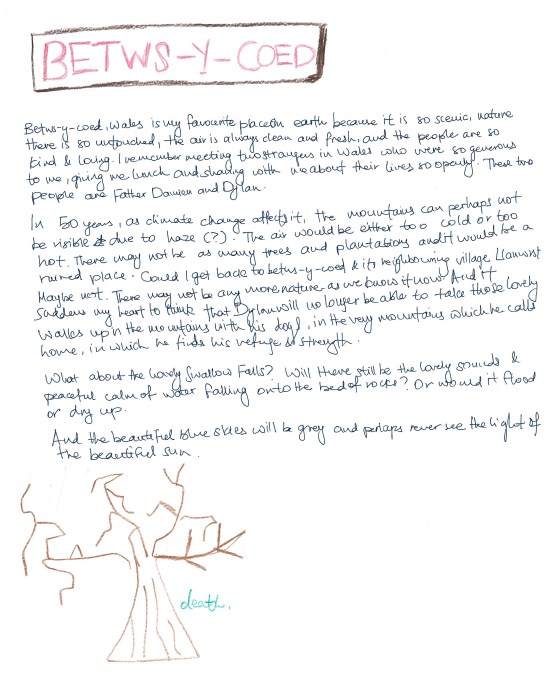
Victoria Er:
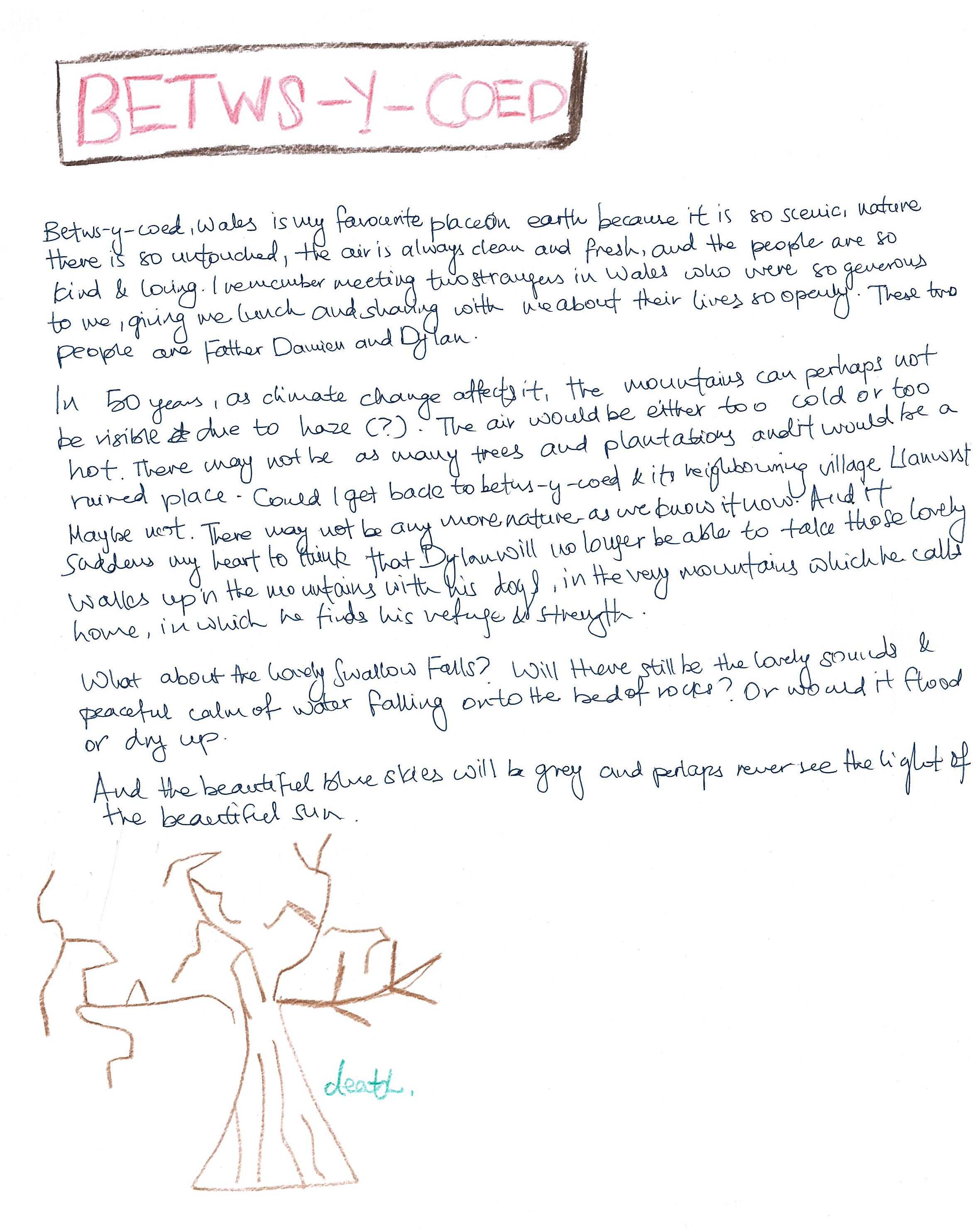
Betws-y-Coed, Wales, is my favorite place on earth because it is so scenic, nature there is so untouched, the air is always clean and fresh, and the people are so kind and loving. I remember meeting two strangers in Wales who were so generous to me, giving me lunch and sharing with me about their lives so openly. These two people are Father Damien and Dylan.
In 50 years, as climate change affects it, the mountains can perhaps not be visible due to haze. The air would be either too cold or too hot. There may not as as many trees and plantations and it would be a ruined place. Could I get back to Betws-y-Coed and it’s neighboring village Llanrwst? Maybe not. There may not be any more nature as we know it now! And it saddens my heart to think that Dylan will no longer be able to take those lovely walks up in the mountains with his dogs, in the very mountains which he calls home, in which is finds his refuge and strength.
What about the lovely Swallow Falls? Will there still be the lovely sounds and peaceful calm of water falling onto the bed of rocks? Or would it flood or dry up?
And the beautiful blue skies will be grey and perhaps never see the light of the beautiful sun.
Zoe Bezpalko, environmental engineer:
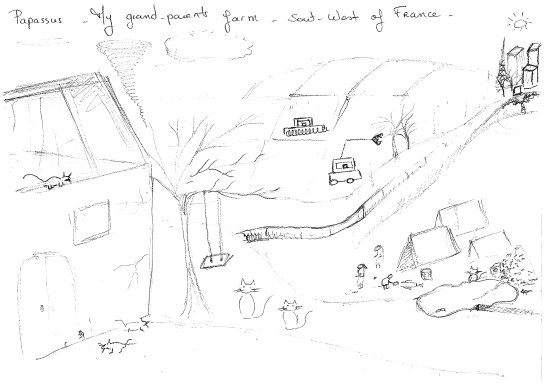
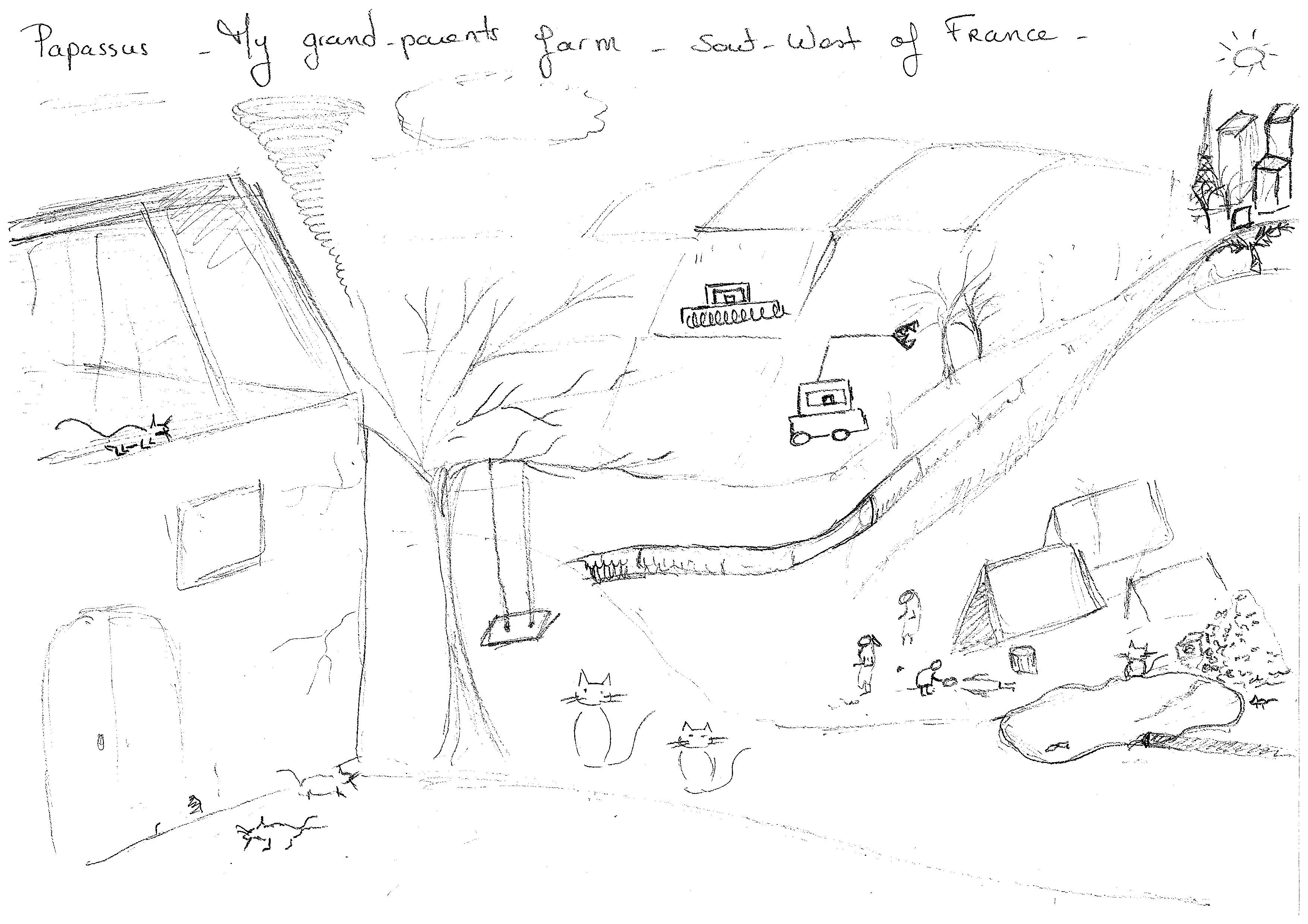
Papassus, my grandparents’ farm, southwest of France
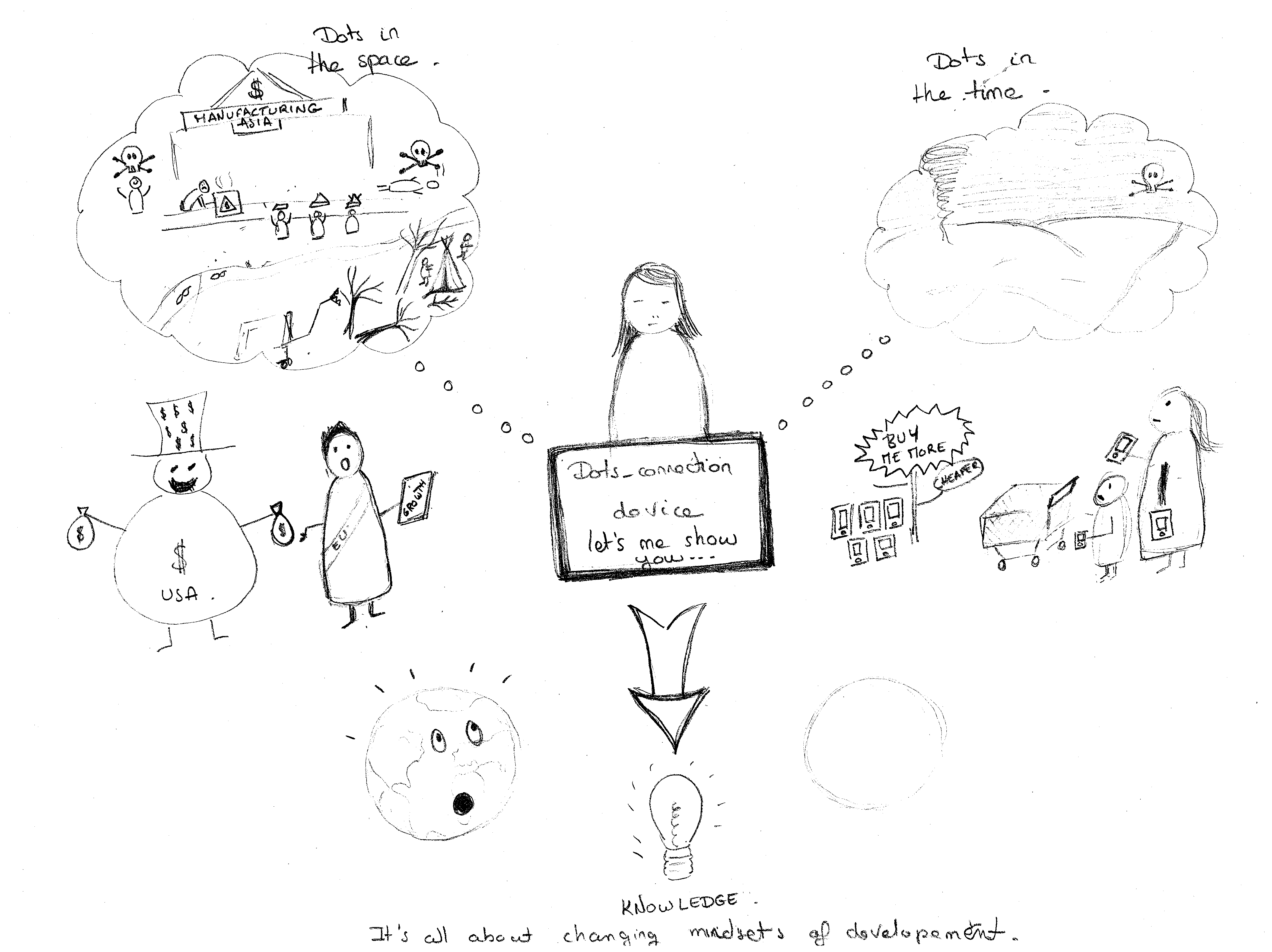
In Papassus, the climate change already affected the environment, the seasons don’t change, spring and autumn disappeared. Animals like glow-in-the-dark worms disappear whereas some developed and spread like rats and cats. With climate catastrophes, I see poverty coming. I image the energy demands raining so much that pipe lines will be built everywhere and people will chop down the forest. Biodiversity of trees, animals and landscape will change to be a very monotonous view. We will have only one type of agriculture. Robots will take out all jobs forcing people to live in poverty and trying to survive in an artificial world. Very rich people will be locked down in fake paradises with no notion of local, sustainable resources, always demanding more.
Every single “virgin” natural place will be polluted by wastes. At my grandparents’ place a community of optimistic people decided to settle down and live in an autonomous society.


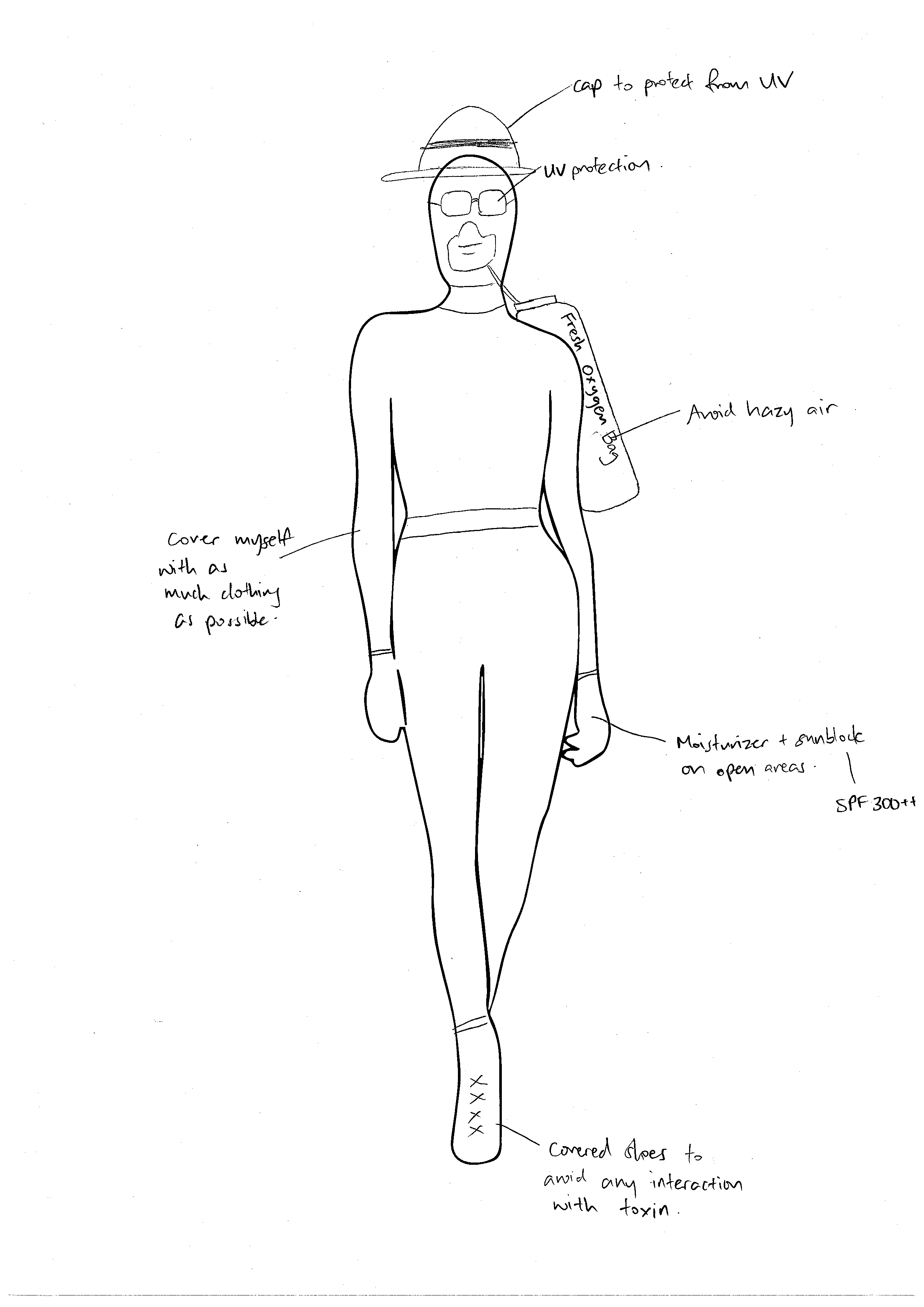
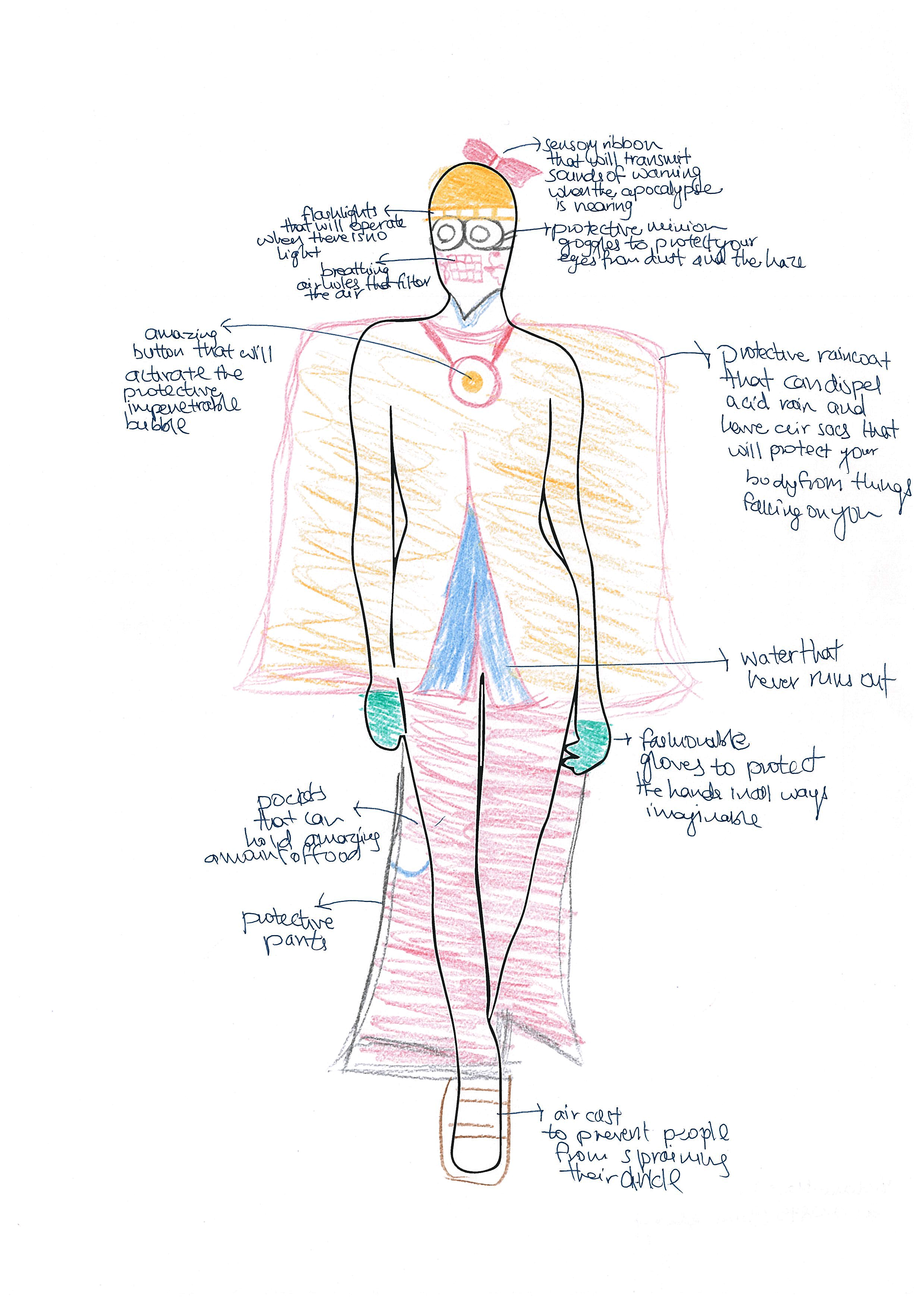
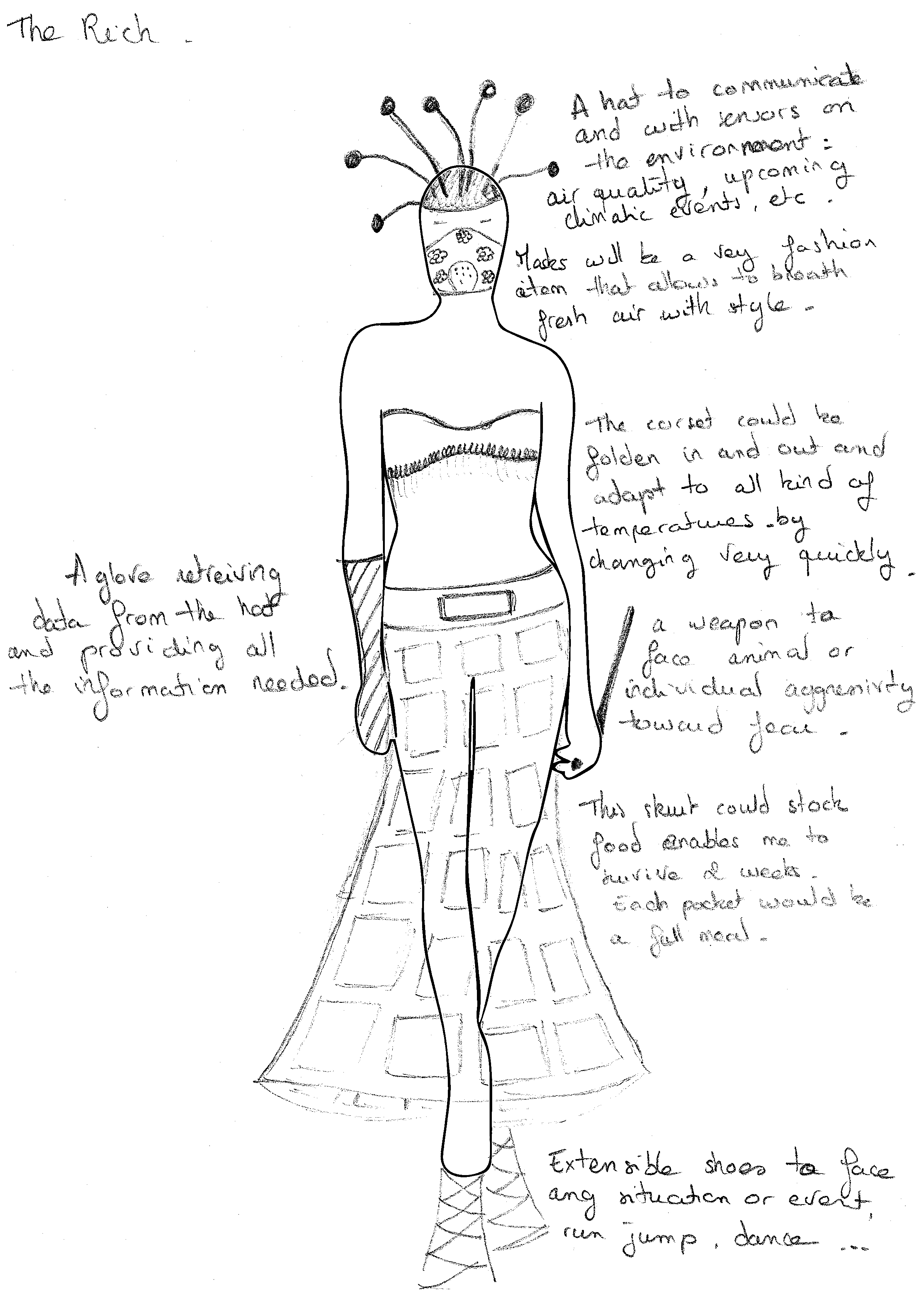
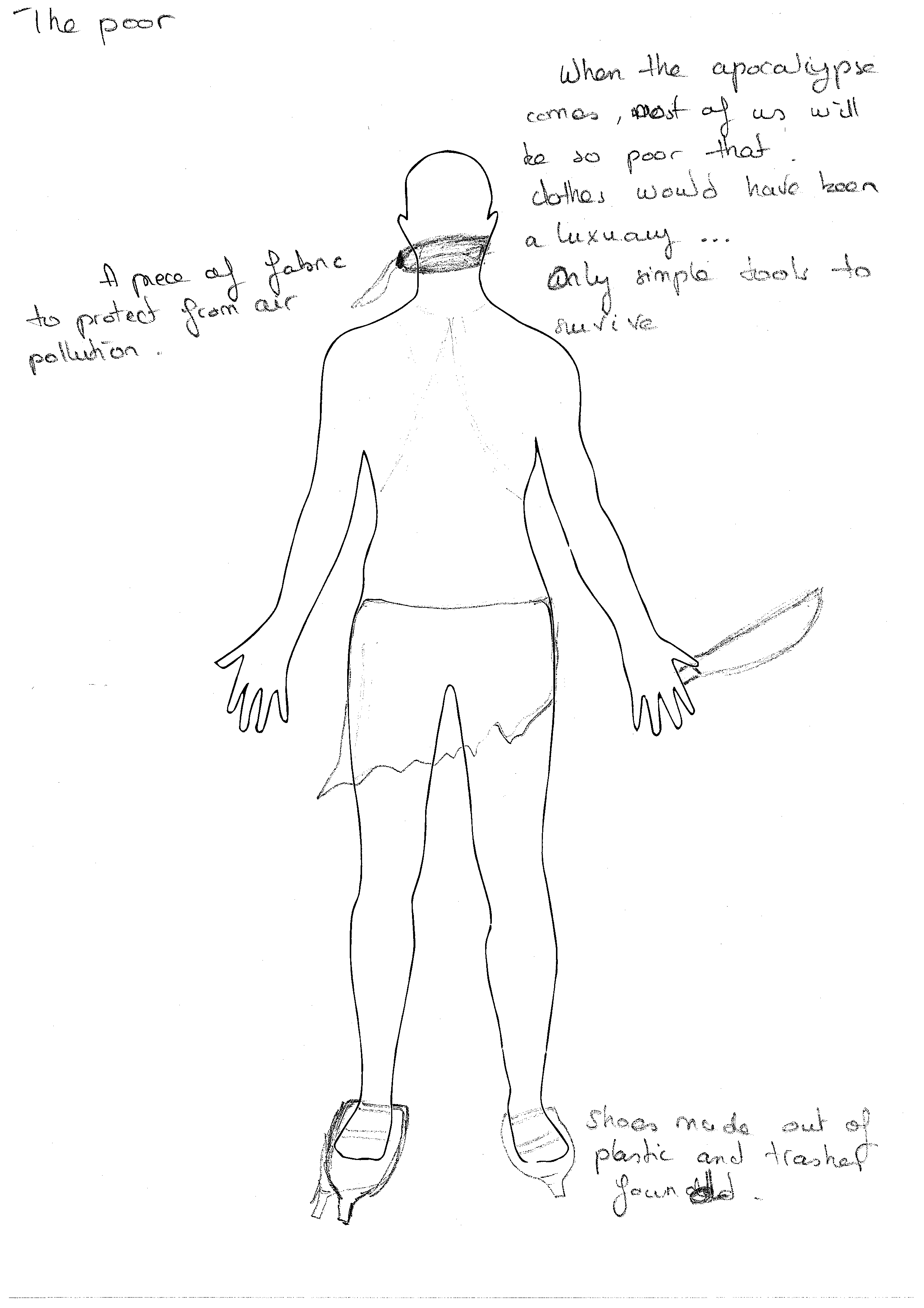
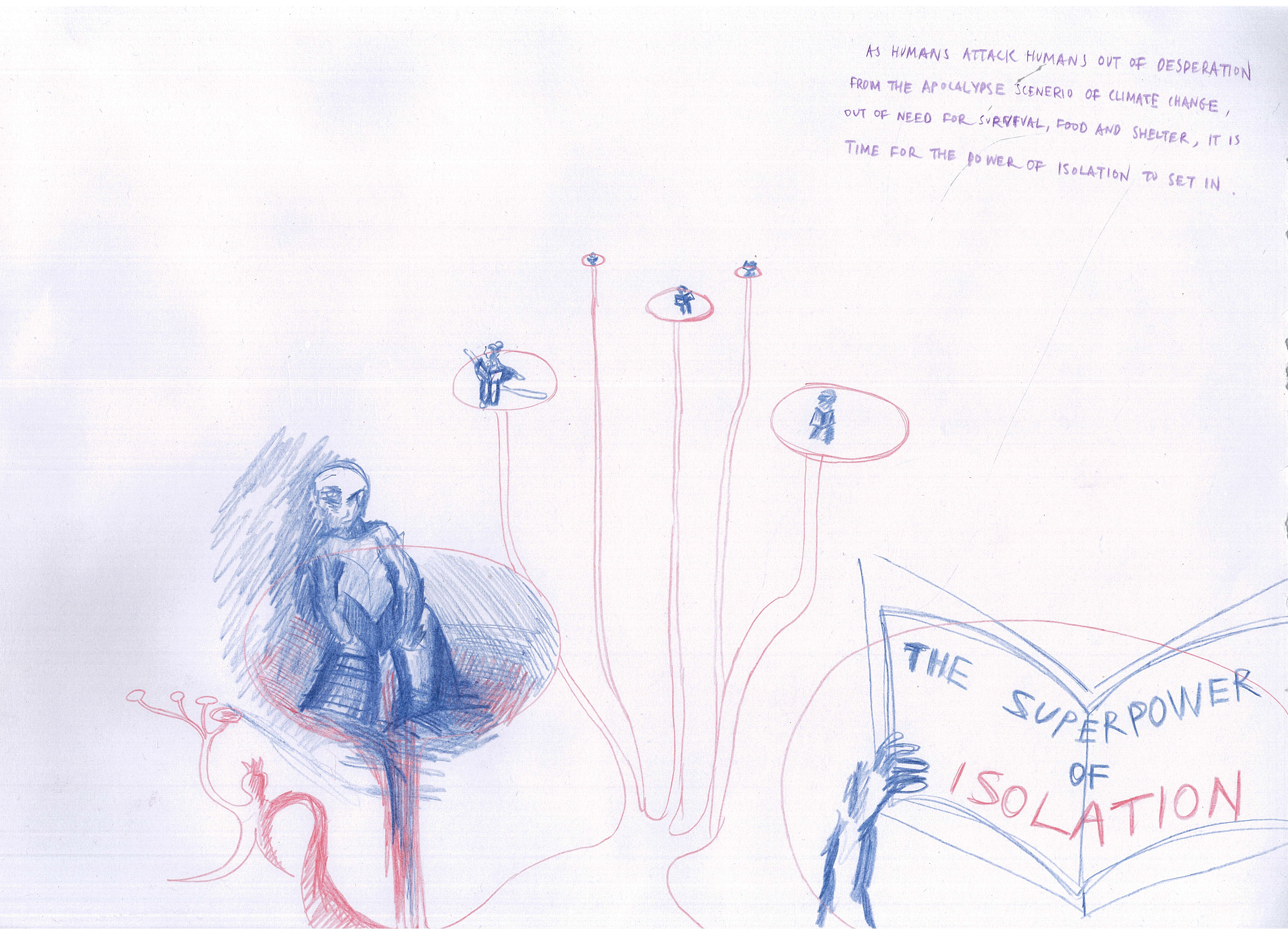
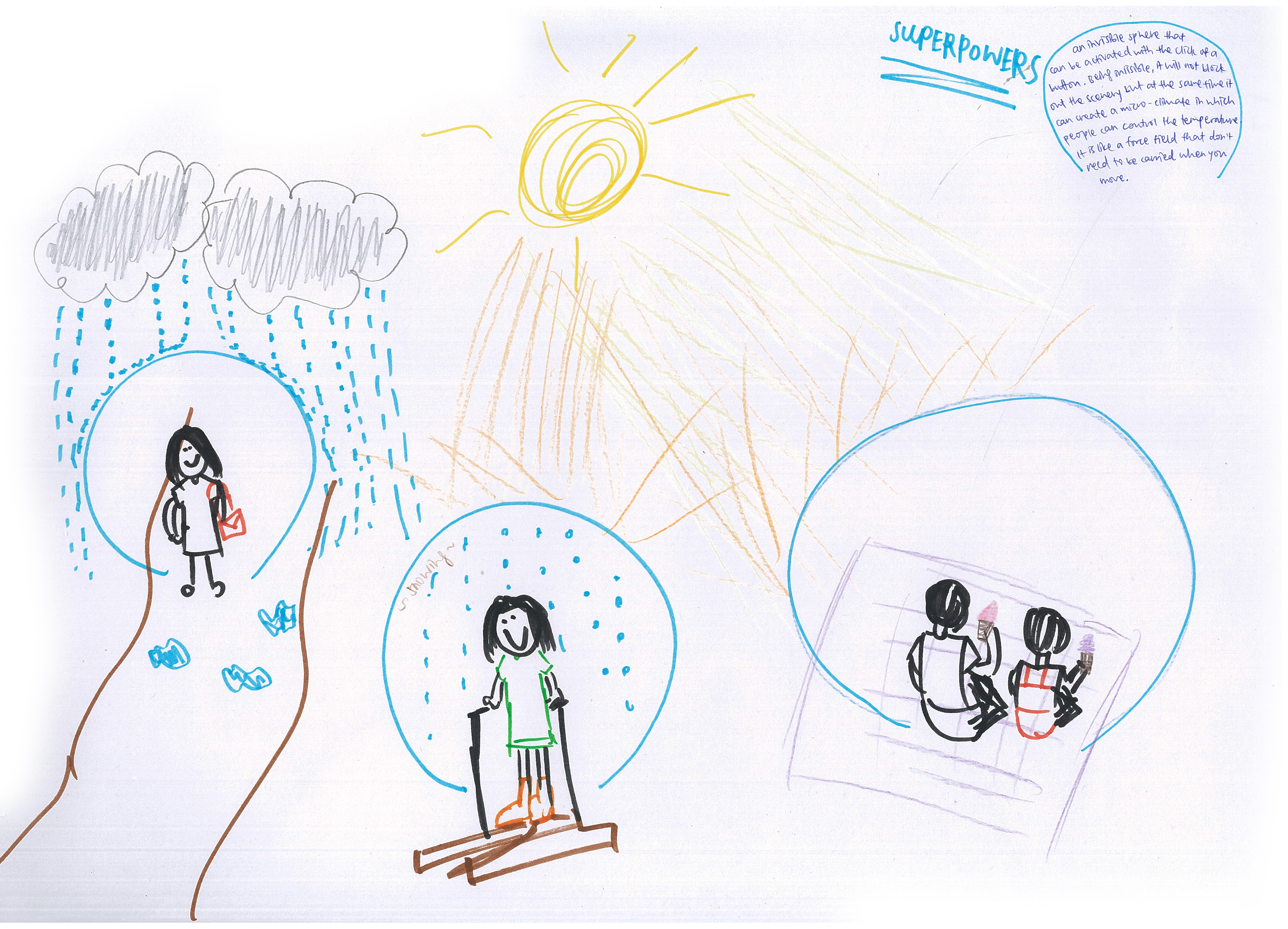
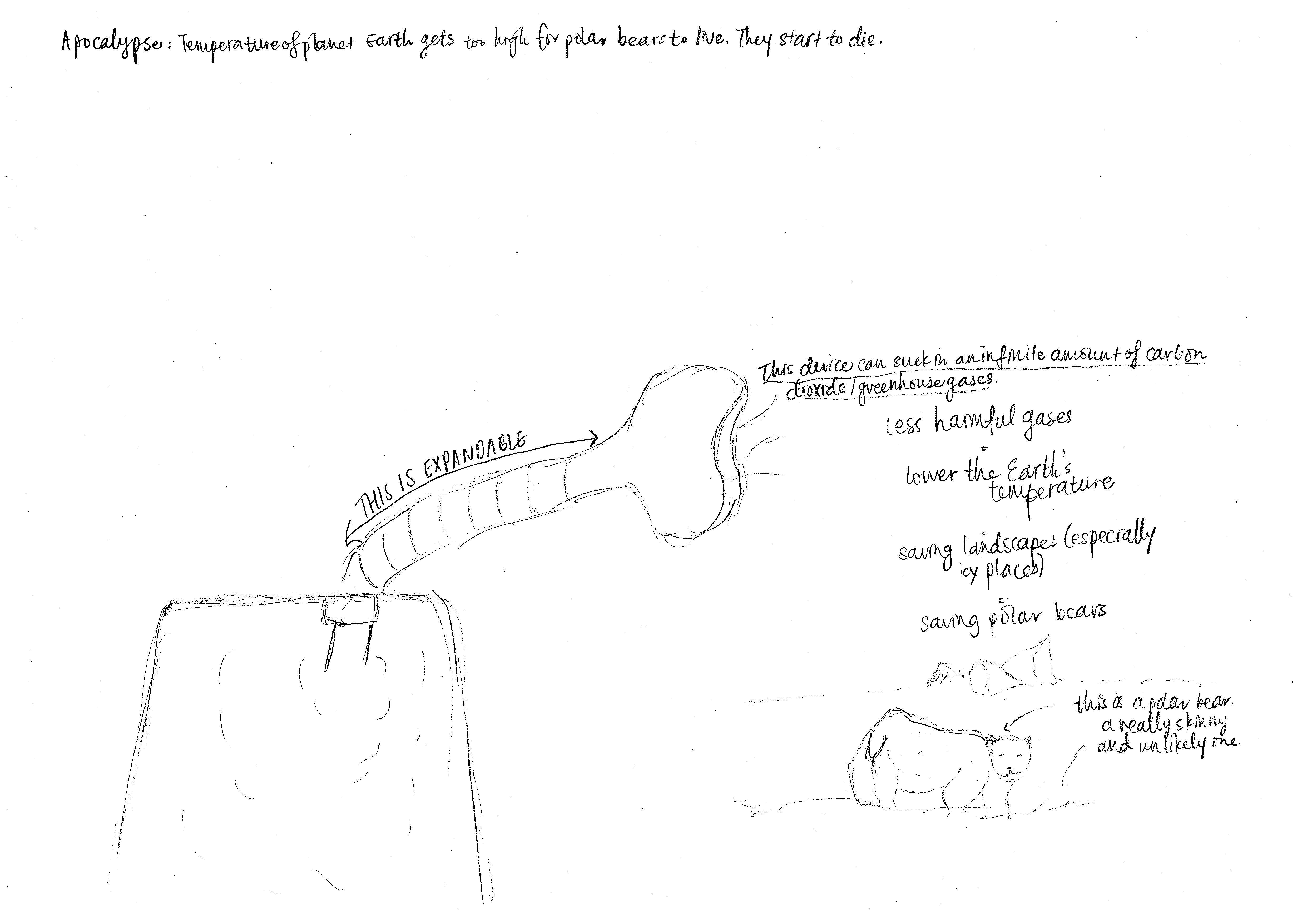
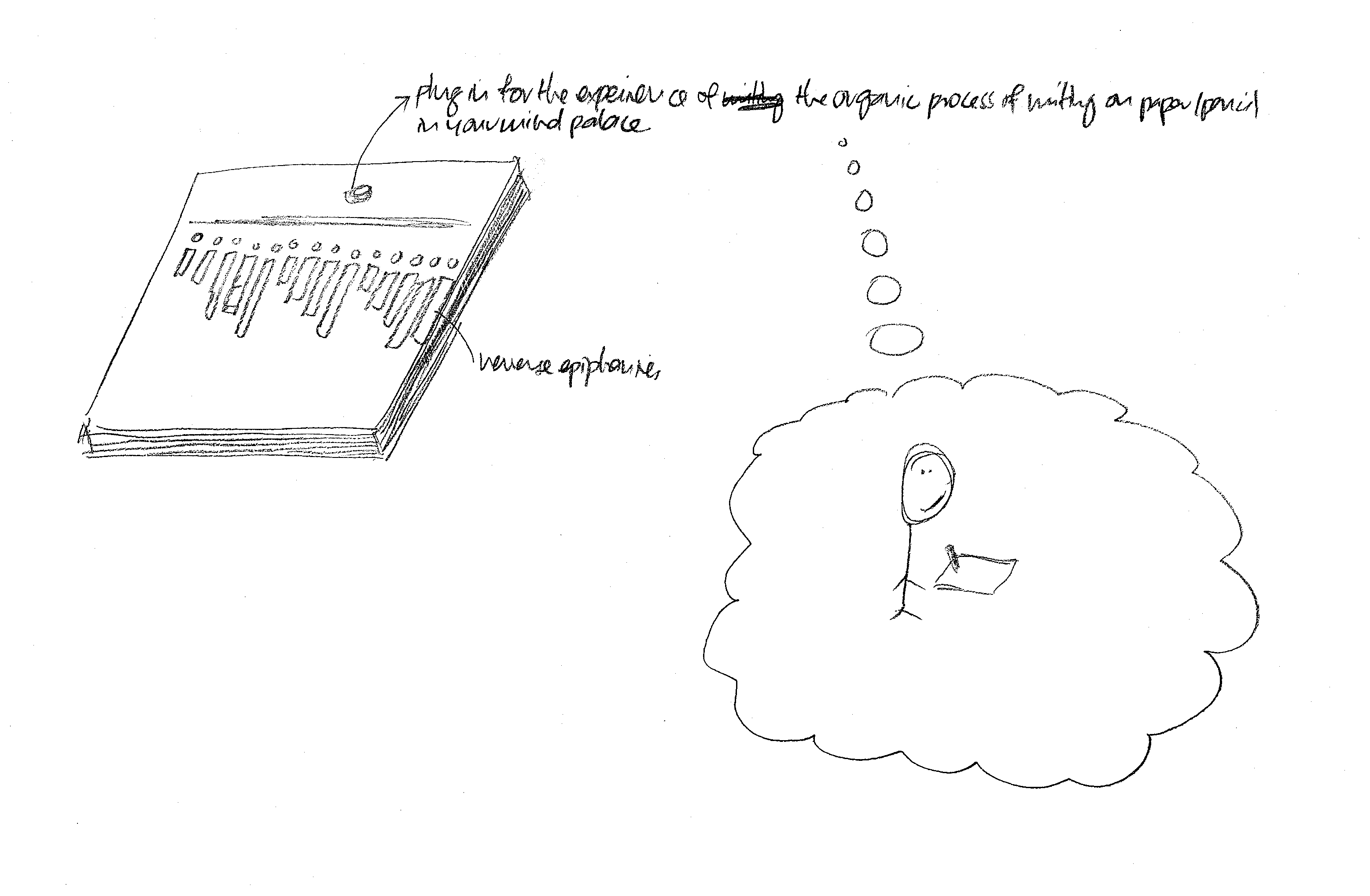


























 Catherine Sarah Young