What graduate school, TEDx, and speaking up have taught me about creativity, empathy, and the ego

Lessons on Creativity from TEDx and Grad School, page G4, Learning section, Philippine Daily Inquirer.

There are many types of makers, but alas, I am a reclusive one. My dream house will likely resemble the Bat Cave, with wifi and a martial arts room. I can work in yoga or taekwondo pants the whole week. I have gone for days without speaking to a soul.
The agony of the Powerpoint

In the School of Visual Arts, where I attended graduate school, I was notorious for taking over the back room, where I would spend hours working on projects. Occasionally, I would come out, corner one of my colleagues, and squeal, “Guess what I made?” One of them said I was like a crazy scientist.

I grew up loathing Powerpoint presentations. And so it wasn’t without biblical agony that we had to keep giving them in all my classes at SVA.

In the beginning, my slides were admittedly very simple. Coming from a very scientific upbringing, I grew up thinking that presentation was secondary.

Slides as currency

But like it or not, slides and videos are the currency of today’s digital world. It is, according to a friend of mine, a way to figure out what is going through my head, so that one does not exist in a vacuum.

Graduate school is an exercise in, among other things, humility. And so I sucked it up and improved myself, one Powerpoint presentation at a time. I concentrated on making my images pretty and my fonts well thought out. One time, my classmate Benjamin sat me down and made me redo all my slides for a final project in class. It was late in the evening, but I gritted my teeth, silently wished him evil thoughts, and worked on the feedback that he gave.

Taking feedback

Speaking in public was also an ordeal I learned to get over. Graduate school critiques tend to be overly, well, critical and skeptical, as they are supposed to. It’s easy to be wounded by comments from your professors and classmates who just want your projects to reach their full potential. I learned to take feedback with a grain of salt, listening politely and acting on the things I agreed with and ignoring those I didn’t.
Pay-offs

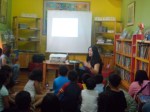
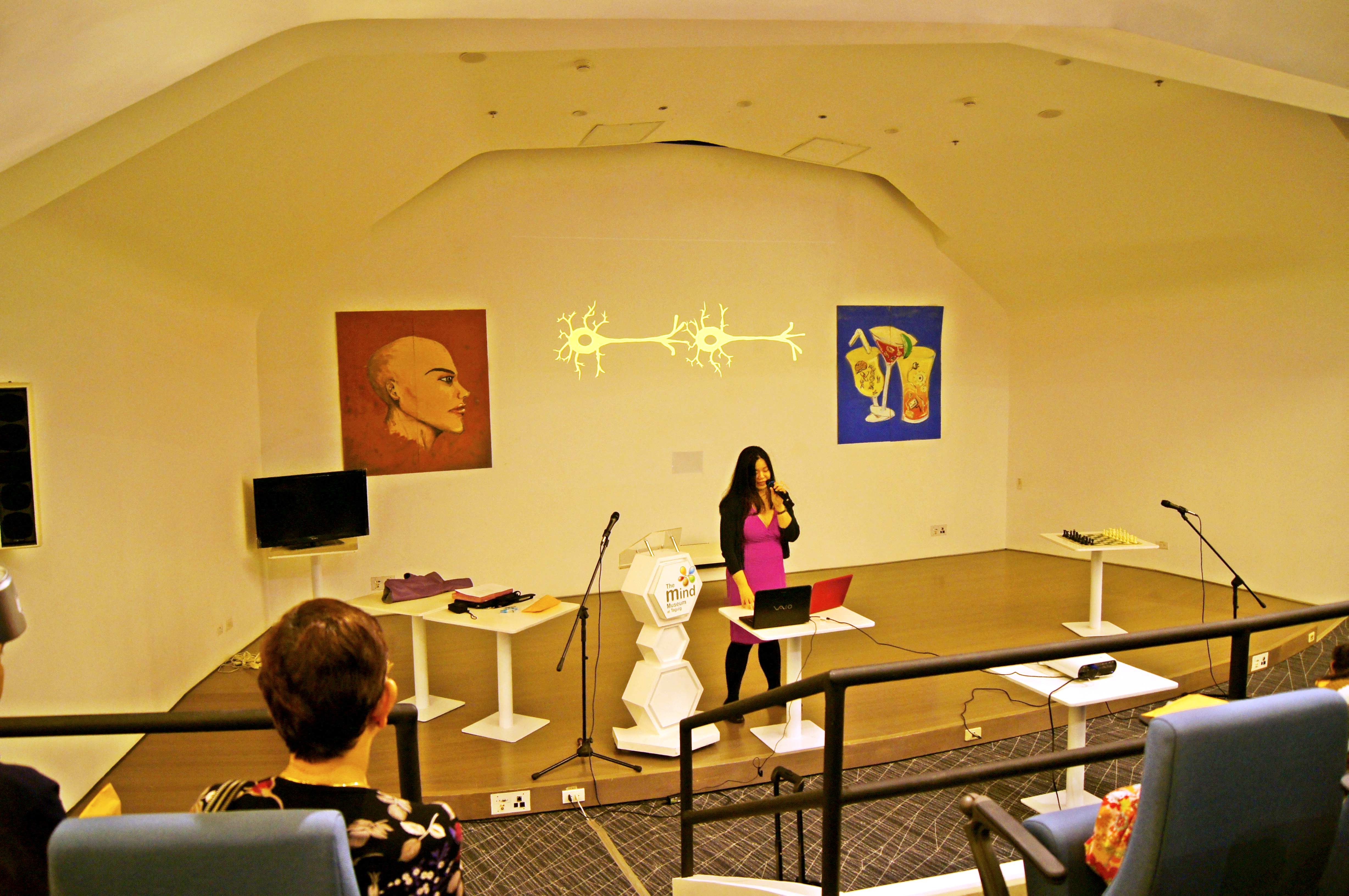
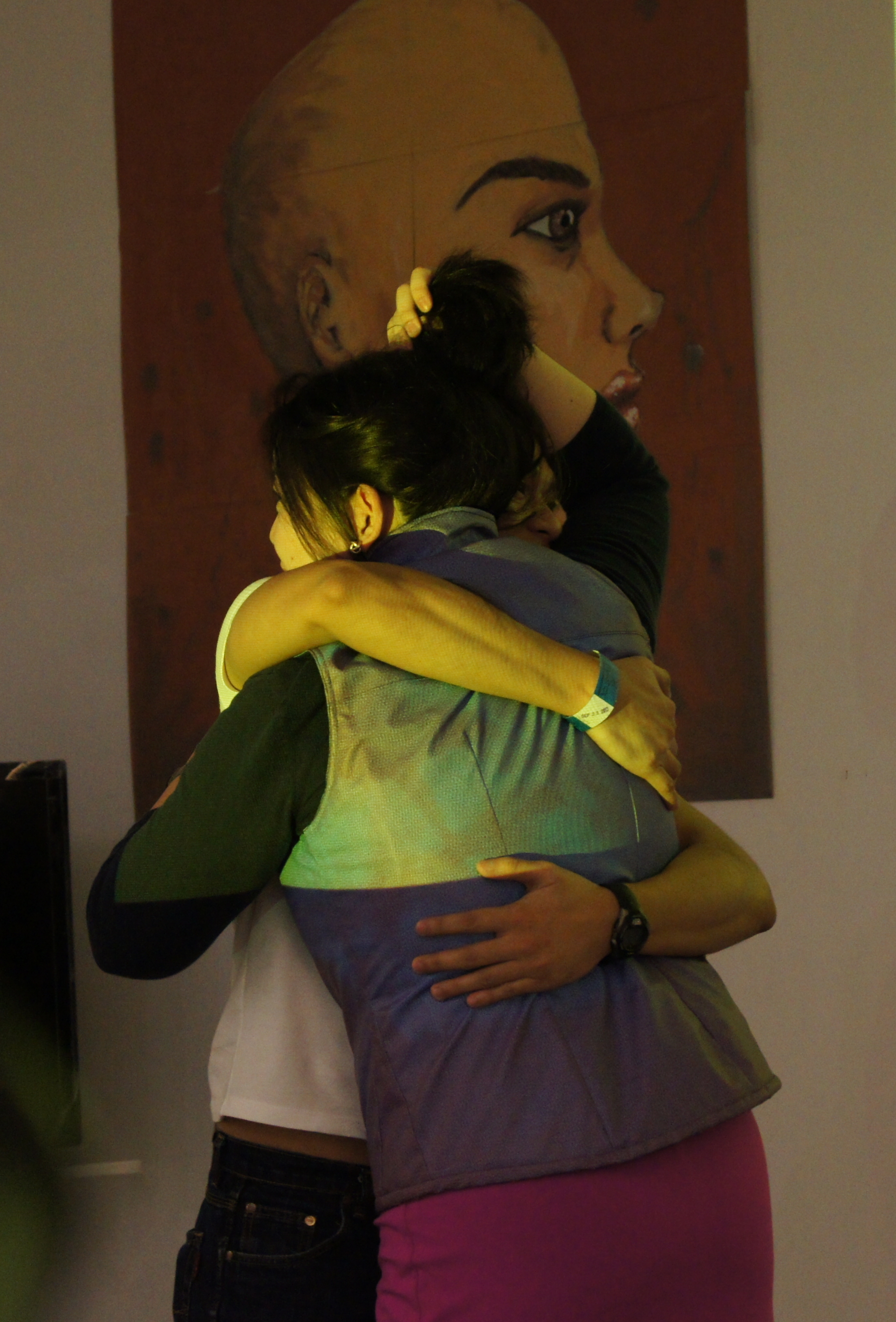
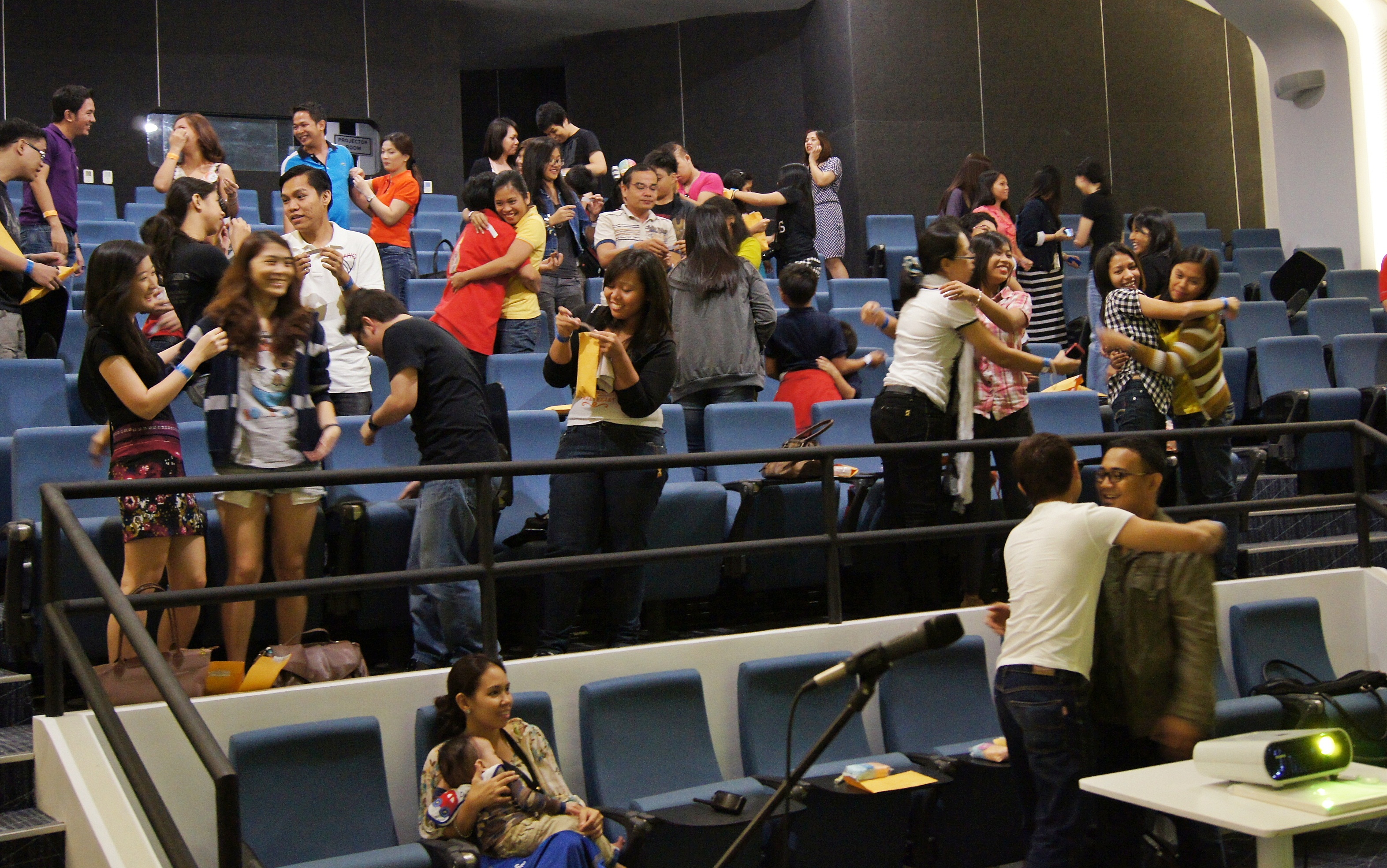
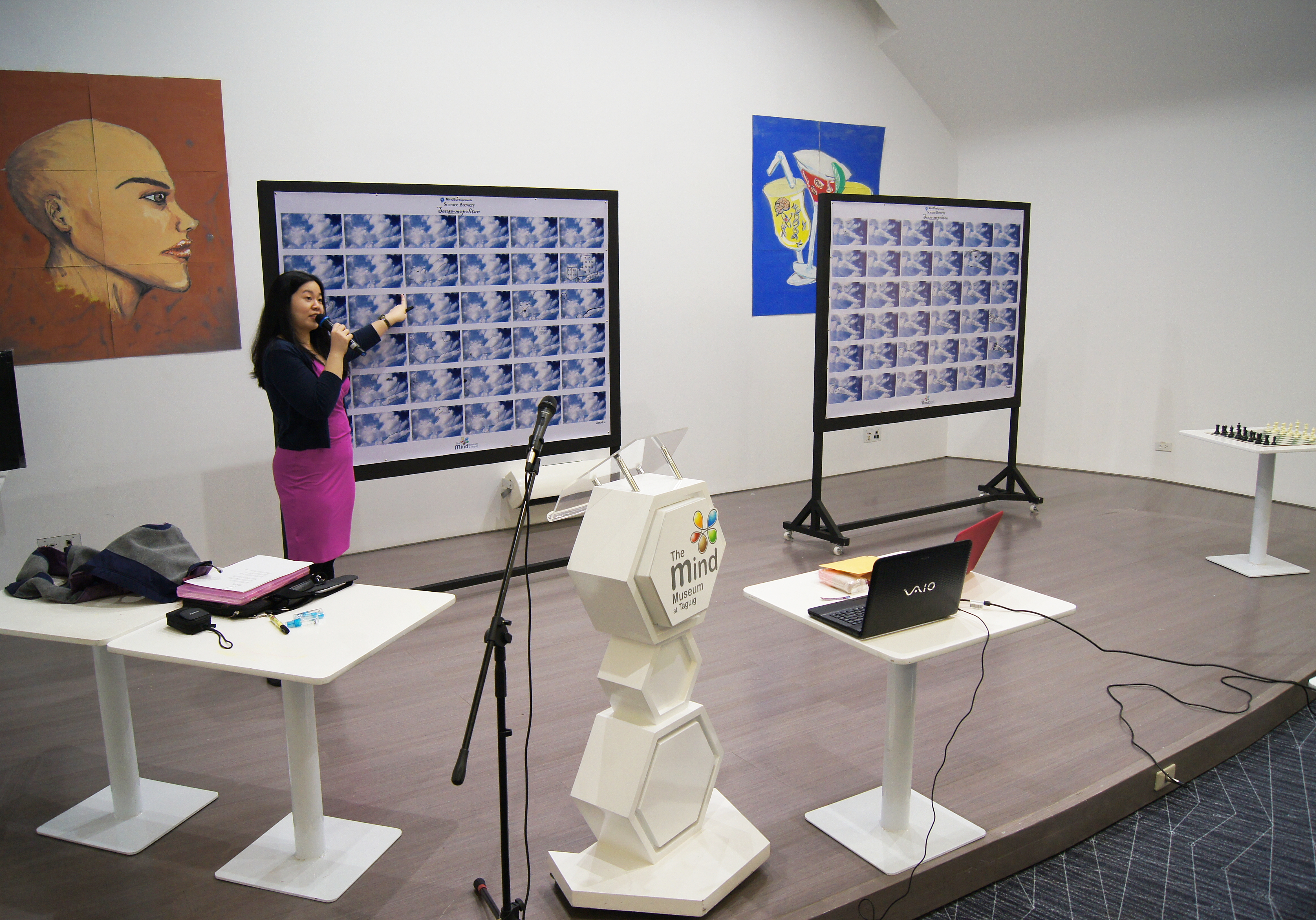
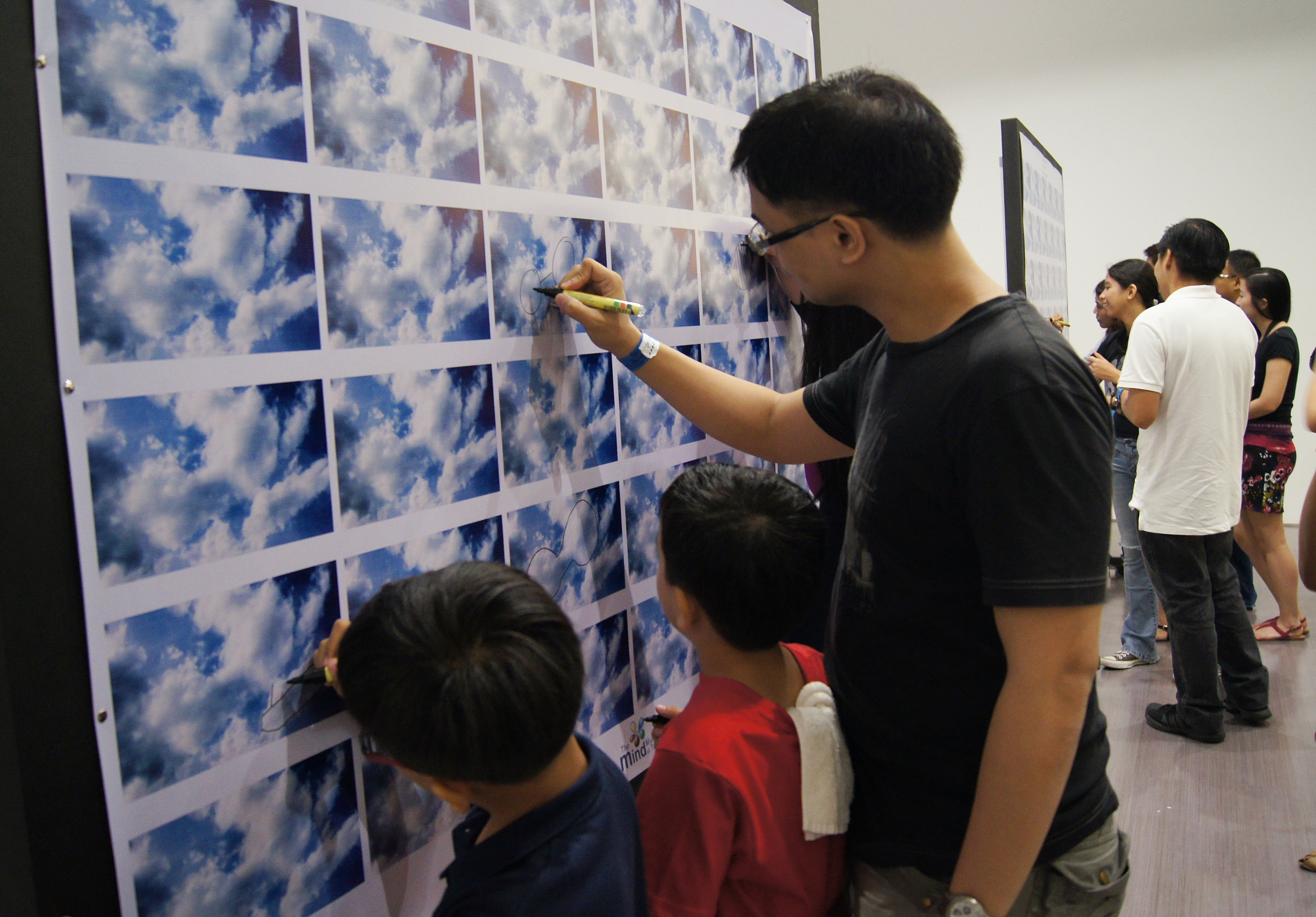
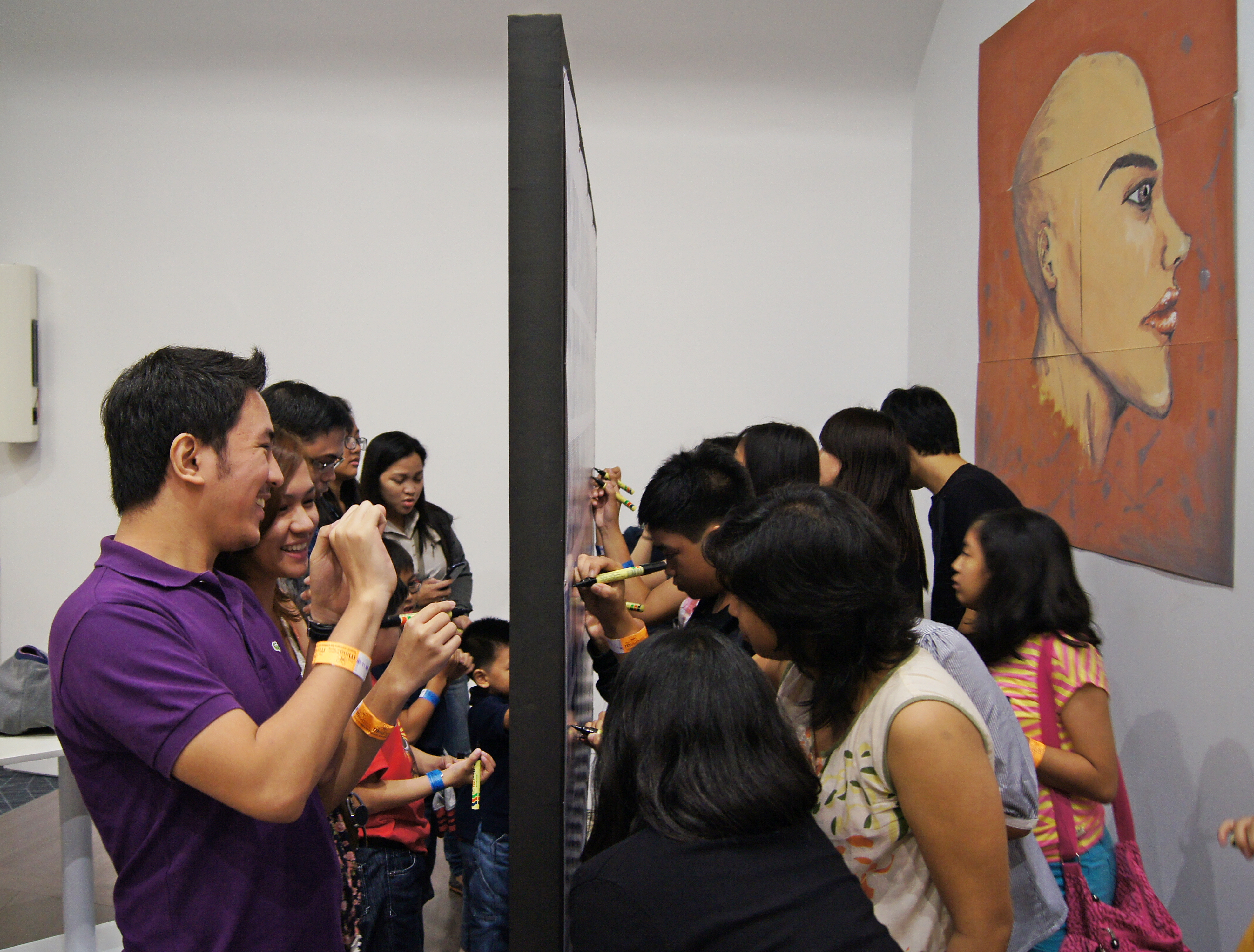
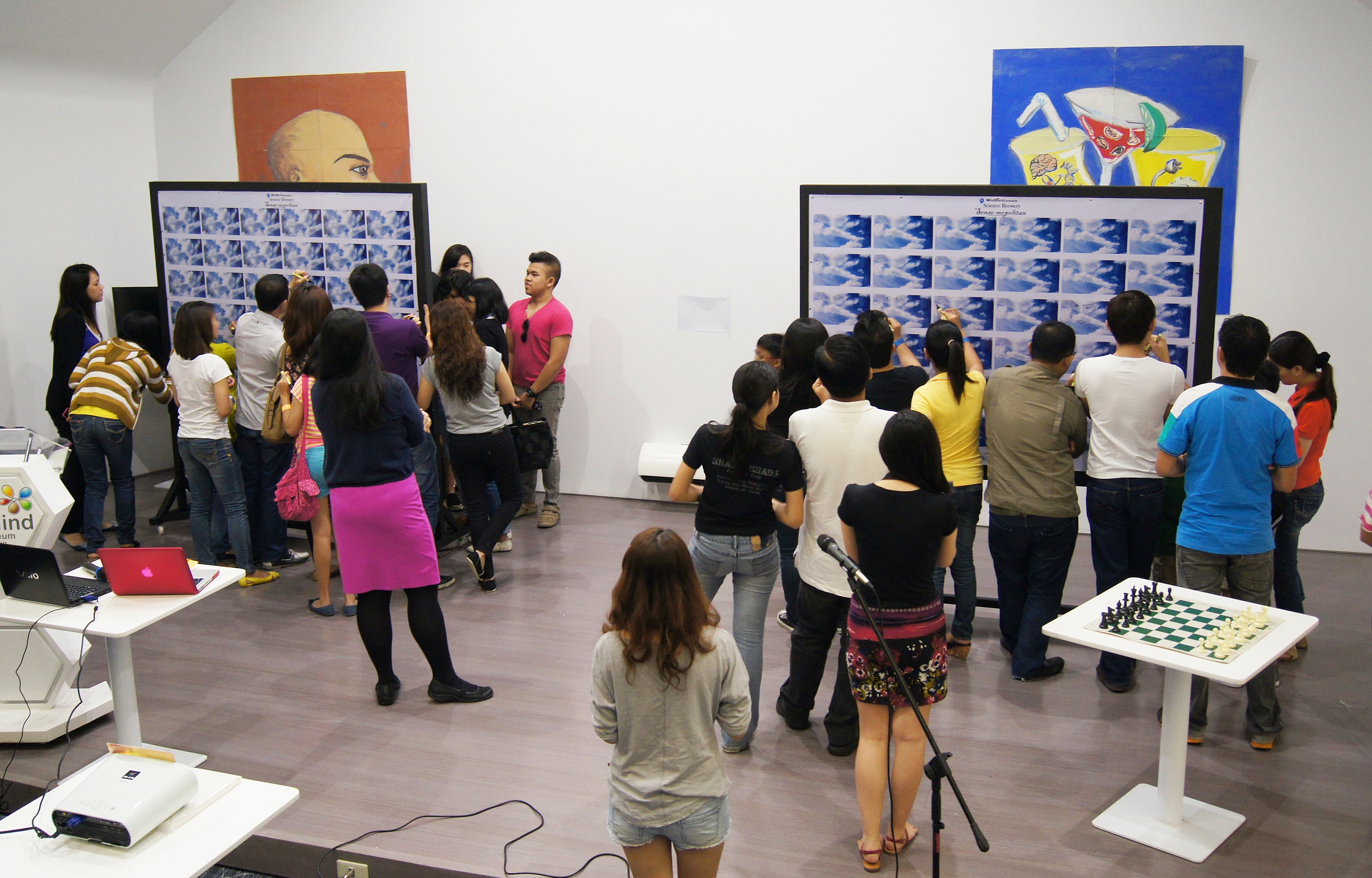
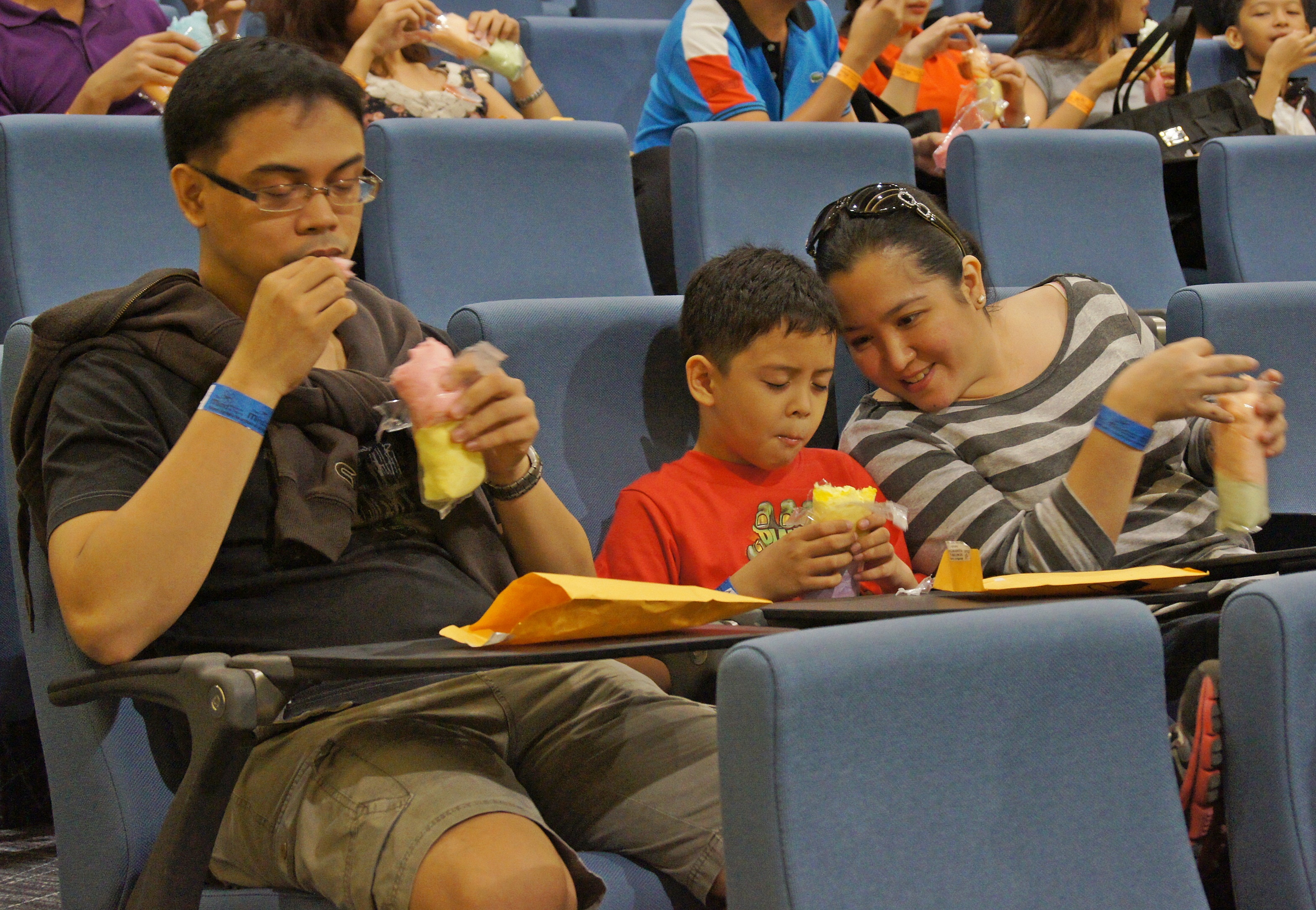
Towards the end of the two years, I realized something. I actually like giving talks. Because my work tends to be interactive, each presentation I give leads to the audience doing something. I have hugged people, drawn on clouds, recited poetry, and fed people candy on many different occasions. It’s quite fun.

I also learned to be able to do these talks under extreme stress. Right after my thesis defense, I had to hop on a train to Connecticut to speak at TEDxNewHaven the very next day. It was a test of not passing out and still looking alive and peppy, since I had four talks to give throughout the day. One of my fellow speakers told me that she thought I was very brave, “having four interactive talks while I have one memorized talk.” “Oh sweetie, if you only knew I was dying inside,” I said silently through my frozen smile.

Presos as performance

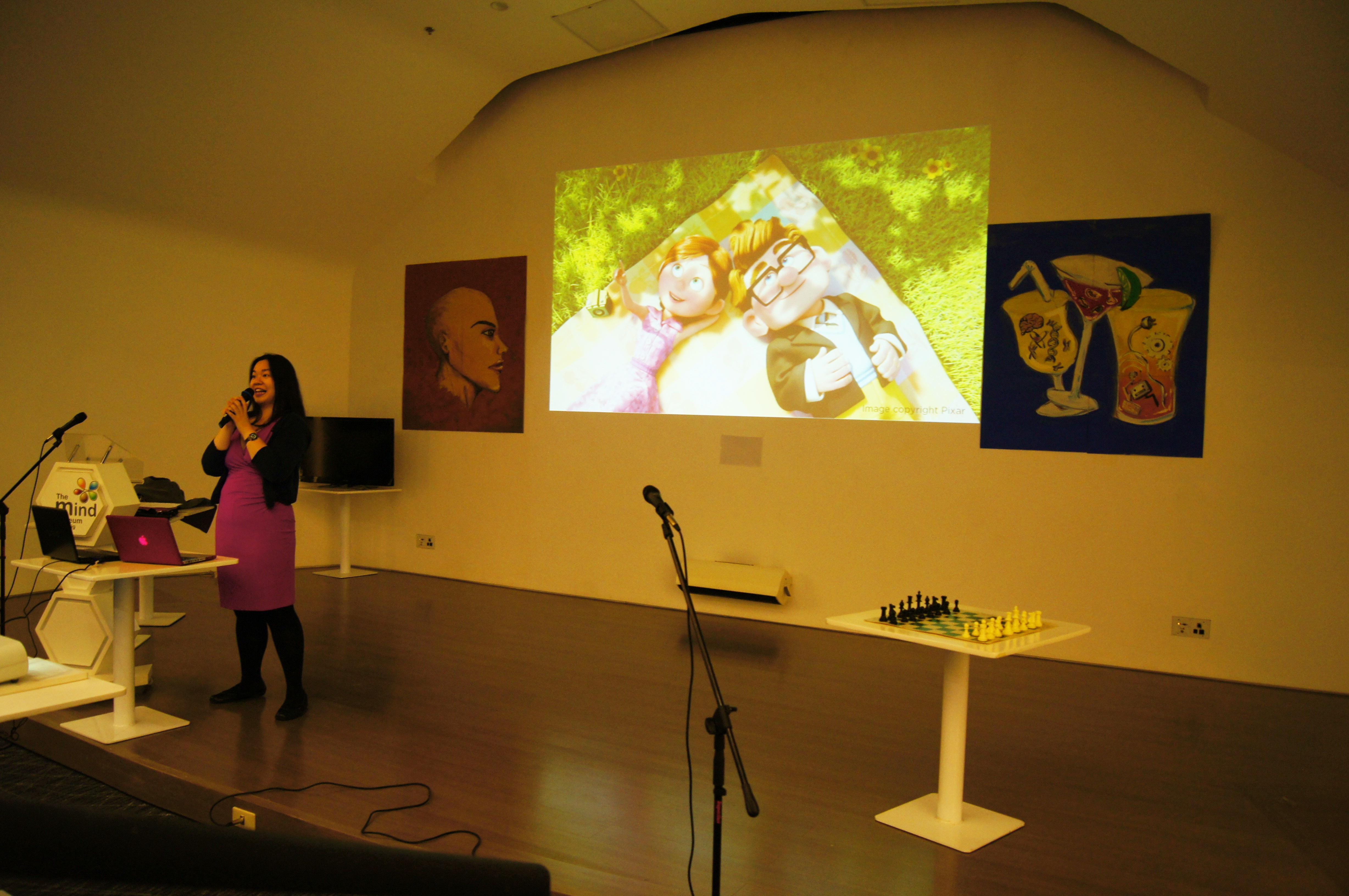
A slide presentation is just like theater. The audience matters just as much as your talk. The times when I felt most alive while clicking through a Powerpoint were when the audience was warm and receptive. I would feel joyous when I saw that my work, which I did primarily out of curiosity, actually touched another human being. I learned that I didn’t have to talk as though I were on a home TV shopping channel, and that I can engage the audience in an actual meaningful conversation. Slowly, I finally got out of my hermetic shell.
Finally, it is important to involve your friends. I think that 80% of the work should be done before you even go onstage, and my friends have always been silently in the background. Thankfully, I have friends who know more about styling one’s hair and clothes than I do, and this will likely be something I will always entrust to them.

I suppose my department at SVA was relieved when I finally switched fully to a Mac, using Keynote instead of Powerpoint. (Actually, I am, too!)

But I still hate using flashy animations.

For everyone who has helped, listened, and critiqued. 

An edited version of this essay appeared as “Lessons in Creativity from TEDx, grad school,” on page G4 of the Learning section of the Philippine Daily Inquirer on 3 September 2012. It also appears in its online edition on 2 September 2012 here

What the clouds can teach you about imagination and everyday things

A fever, a cold, and a hot afternoon on a New York heat wave aren’t usually a recipe for a good day. But bedridden and staring out my window, I had no idea I was about to give birth to another project.

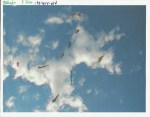
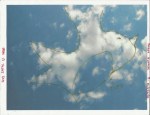
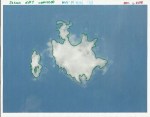
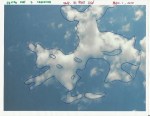
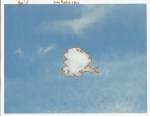
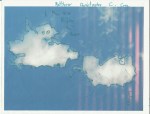
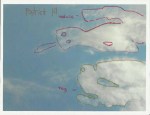
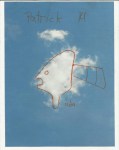
Looking at the sky, I started to wonder at the forms the clouds were making. Although they were white and formless, they started to remind me of the fantastical shapes, such as dragons, whales, and other creatures. It’s not unlike that scene from the Pixar movie, Up!, where Carl and Ellie were lying down on the grass and pointing out what the clouds looked like.

Cloud pareidolia

It’s a manifestation of pareidolia, where a random stimulus (such as the shape and shadows formed by clouds) is perceived as significant. This is why we see faces in places and things, religious figures on burnt toast, etc. Our brains are hardwired to find patterns; it helps us see things as a whole. Without pattern recognition, every experience would be new to us and we wouldn’t be able to make sense of the world or solve problems.

Rorschach test

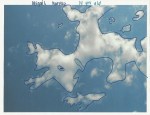
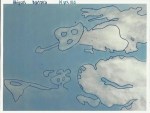
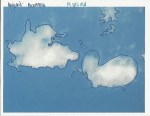
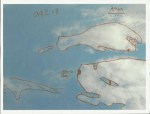
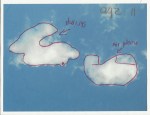
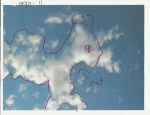
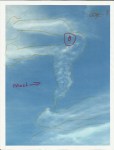
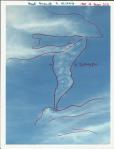
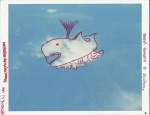
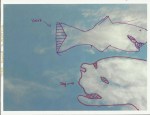
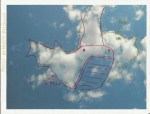
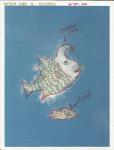
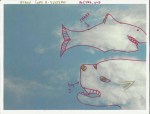
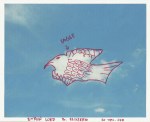
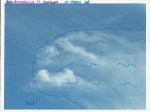
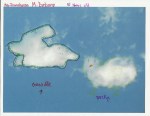
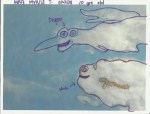
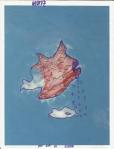
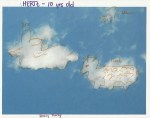
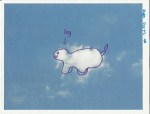
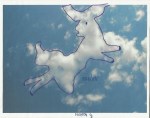
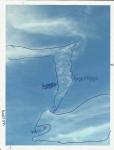
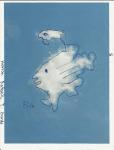
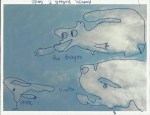
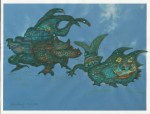
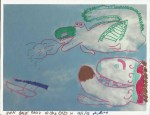
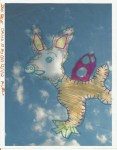
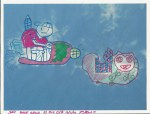
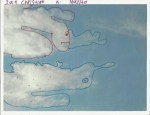
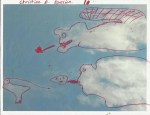
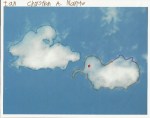
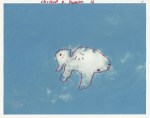
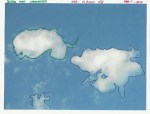
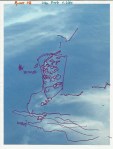
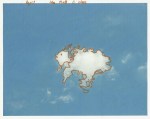
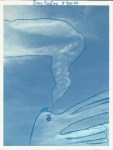
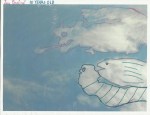
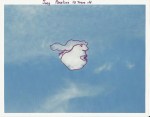
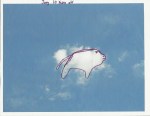
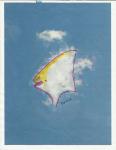
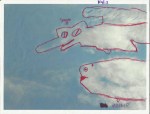
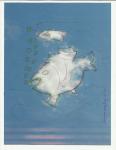
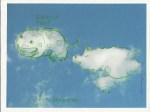
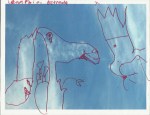
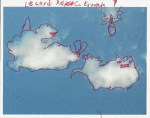
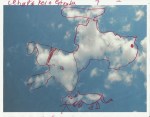
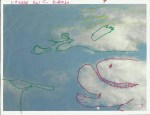
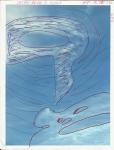
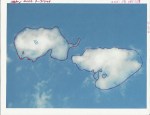
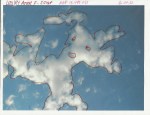
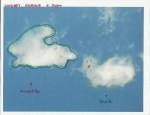
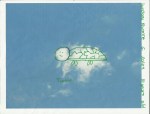
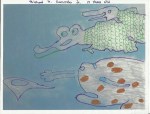
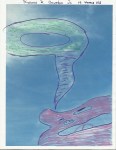
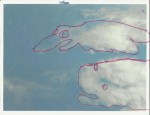
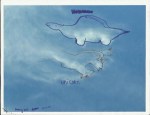
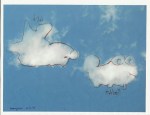
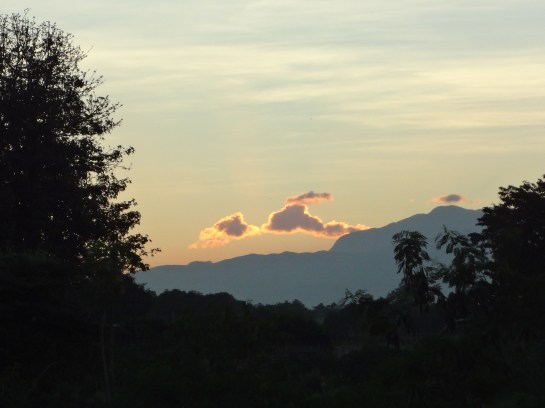
During that summer, I was frankly getting burned out from school and my internships, and initially decided, just for kicks, to take photos of clouds and draw what I saw in them. Over the next several months, I religiously uploaded them online, and the endeavor has evolved into a project called Rorsketch. The name itself comes from Rorschach tests, which have been used by psychologists to determine their subjects’ personality characteristics and emotional functioning. In this case, I realize that I see a lot of animals in clouds, as well as strange and often unrealistic scenes.

Geography of thought

When I show the cloud photos and sketches to others, people immediately tell me what they see, which is often different from my interpretations. Professions and culture have a lot to do with this. For example, researchers have determined, unsurprisingly, that Asians and Westerners perceive the world differently. Given a scene, Westerners will usually focus on the main subject while Asians will often take the entire scene in.

More than 100 sketches later, I’ve given talks and workshops on how we see. Occasionally, people send me “re-interpretations” of my cloud photos. I find it funny how one afternoon that summer has led to a project I’m still doing a year later. It has helped me learn about how other people see the world, and has given me a platform to celebrate this diversity of visual perception. It helps me find stories in the skies—a great thing to do when looking for inspiration. It was also part of my MFA thesis, and has thus even helped me graduate.

Wonder in the everyday

The best thing I learned about this project is that it doesn’t take much to be creative. It’s easy to fall into the trap of pining for expensive gadgets one doesn’t have, thinking they will somehow make us get over creative humps. Instead, looking at seemingly ordinary objects in a different light can unleash and sharpen our sometimes tethered imaginations.

Visit and participate in the project at http://www.rorsketch.com or tweet @rorsketch.

This article first appeared in the Philippine Daily Inquirer’s Learning section, 20 August 2012, page H4. With thanks to my editor! Full text in their digital edition here.


A winter sky in Reykjavik, Iceland

First, a thank you to science. The researchers who have, by the scientific method, concluded that travel is indeed good for creativity. Pop the champagne! It’s not just the coincidence of people like Hemingway, Stein, Picasso and company who produced creative work while having well-stamped passports.

In 2009, William Maddux of the business school INSEAD and Adam Galinsky of the Kellogg School of Management, reported their results in the Personality and Social Psychology Bulletin. They subjected 155 American business students and 55 foreign ones studying in the US to a creativity test called the Duncker candle problem. These students were given a candle, matches, and a box of drawing pins. They were then asked to attach the candle to a cardboard wall such that no wax would drip on the floor when the candle was lit. Maddux and Galinsky found that 60% of students who had lived abroad solved the problem, while only 42% of those who had not lived abroad did so.

For the past eight years, I have lived abroad. I have moved countries and changed lives for a total of six times. It does not get any easier, for goodbyes are never something I look forward to. It does, however, get more routine. It is a cycle that I think will repeat itself ad nauseum for most of my adult life.

For me, it is important to use travel for creative purposes. It’s the only way I can justify the price of a plane ticket and rising rent; I must use that time to further my projects. And so I try to make each trip count, making sure I have more to show for my trip other than photos to be uploaded online. The professions I now claim are many—one can read scientist, journalist, editor, visual artist, poet, student, communications director, graphic and interaction designer in my increasingly eclectic resume. Perhaps because one word can mean a variety of things in different countries, I have long been wary of labels and instead choose to tell stories about the projects I have run. (An example of which is DrawHappy, which will be in the Learning section every Monday. Go draw!)

Naturally, a thank you to the cities. I can recall stories, experiences, mishaps, and projects in in every one of them. Manila, Barcelona, and New York—places I have lived long enough to call home—are all port cities. They have been among the intersections of migratory or trading routes of humanity. All have very diverse cultures and colorful histories. Each time I return, I find that many things have changed. The dissolving streets, weather, landmarks, and people have all, in their minuscule ways, contributed to my worldview and identity. Each city’s definition of beauty has given me the impetus to compare and contrast their sunsets, cloud formations, art, and architecture. It is difficult to be a traveler without reading and rereading Italo Calvino (Invisible Cities), Jorge Luis Borges (everything), and Sun Tzu (The Art of War) as though they would give me a refresher course on the world, as though they were operating manuals for a life on the road.

Third, thank you to the cities’ inhabitants, particularly those who have opened their hearts and homes to someone who occasionally did not speak their language or understand their ways. The first time I traveled, I was more acutely aware of how different they were from how I was raised, from the food to the accents, the government, and the customs. My notions of what was “right” and “acceptable” were gutted and destroyed. Each city and country has the same familiar struggles and questions about government, national identity, and race. The more I traveled, the more I realized that human beings are more similar than different. Today, some of my best friends include those whose communications with me have necessitated dictionaries and Google Translate. Language and culture stop becoming barriers and instead become bridges.

But thank you, too, to the ones who have made me feel like I was “The Other.” The ones who have made me feel ostracized and have made me uncomfortable. It has taught me endurance, humility, and patience. I think the best way to judge a person’s character is how he treats you when he underestimates you. It has taught me to be grateful for everything I have and accomplished, and to focus on the important things.

Thank you to the grants, schools, and organizations that have given me purpose. I always hit the ground running once the plane has landed in order to accomplish the things I promised the powers-that-be I would do. My most recent stint was to do my MFA in Interaction Design at the School of Visual Arts, which was made possible by a generous grant from Fulbright. I learned to work through bad weather, sickness, ungodly hours, and alternate time zones. To this day it’s difficult for me to be idle. Creative travel, especially those involving contracts, has taught me accountability, responsibility, and a heightened sense of time.

Thank you, too, for all the things that have gone wrong. When you are out of your comfort zone, the things you fear will go wrong often will. I have taken detours, lost friends, and given up significant things for the choices I have made. Everything becomes a tool for teaching me something, whether it’s something as small as an iffy Internet connection, or something more devastating as losing relationships. It has taught me to let go of material things, because many are just too darn hard to pack.

While I can’t say that traveling is constantly great and wonderful, I know that I have always been changed by it, and that I would never have reached this level of personal and professional growth had I chosen to be anchored in one place. Not all travelers are creative, and not all creative people are travelers. (And that’s ok.) But for me, traveling has taken me outside of myself and opened worlds I never knew existed. It has been kind so far; it has taught me that the world is my home.

__

Five Ways to be A Creative Traveler (Passport not always required)

1. Try something new everyday. It doesn’t need an expensive plane ticket to have the mindset of a traveler. Even the office that you have been walking into for the past ten years can be a venue for personal growth. Try a new spot to work in, a different flavor of cereal, or a new email password. The fact that your mind is jolted to the newness can trigger your creativity.

2. Learn a new language. Last March, the New York Times reported that people who know more than one language have been shown to be smarter. While I suppose multilingualism is inherent for most Filipinos, I guarantee your mind will be squeezed (in a good way) when you try a language that is far removed from what you usually know. Try Russian, Hebrew, German, Bisaya, or any language with an unfamiliar pattern. You will learn not just grammar and vocabulary, but also the culture of a people in that way.

3. Reserve at least 15 minutes of your day for a creative habit. I would strongly recommend using the same medium, such as writing, drawing, photography, etc. That way, if you look back at your work after a month, you would realize that these small multiples add up to an awesome project. Put them all on a blog and help inspire other people, too.

4. Read everything. Don’t limit yourself to a certain genre. If you like science fiction, read the occasional children’s book. If you read novels, make time for a biography. Books are the windows to the world—past, present, and future. The more possibilities you realize, the more you will break through creative blocks.

5. Have a conversation with a stranger. While you’re at it, don’t limit yourself to the same type of people you spend time with. Make friends with those whose daily routines are radically different from yours. If you are usually stuck in the office all day, have coffee with someone who is always on his feet and outdoors. If you have conservative beliefs, talk to someone whose worldview is the complete opposite. You will discover that there is so much more to life than the things you are accustomed to.

An edited version of this article first appeared in the Philippine Daily Inquirer Learning Section, page H4, on 6 August 2012, and on their online edition on 5 August 2012. 

This week, something unexpected happened; I’m a published print journalist once again. Pop the champagne! It’s nothing I haven’t already wrote or spoke about before—I wrote about DrawHappy (full article below) for the readers of the Philippine Daily Inquirer. This is the first print article about the project, and I hope to write about my other projects, too.

DrawHappy in the Philippine Daily Inquirer’s Learning section

How did this happen? Last week, I had coffee with my former editor, whom I hadn’t seen in eight years and who now runs the Learning section. She was kind enough to listen to the projects I am running. That was on a Wednesday; my first article ran five days later. I have been through enough to be grateful for paths of least resistance. It’s pretty much the same routine of me looking at all submissions, except that whatever I send to my editor will exist in print first, then this blog.

Why this newspaper? Well, I used to write for them. While I was rarely in their offices—the consequence of the Internet—I did meet my editor, the president, and the chairperson once, and they’re quite lovely people whom I respect. I have quite fond memories of assignments involving me as a zookeeper, a magician’s assistant, a mascot, a sushi chef, as well as the requisite book and movie reviews. The Philippine Daily Inquirer also has the widest readership in the Philippines. Because it exists in print as well as online media, I hope my projects reach even those who can’t afford technology.

Back in the day, I was what they would call a youth correspondent, and I was just out of high school. (No need for gasps of ageist-related awe; there were people younger than I was, and trust me, the differences in depth of writing among them were vast.) During college I wrote over 100 articles until I moved to New York.

I am very thankful for those years with the Inquirer because it taught me to be able to write about anything with the tightest of deadlines and with the barest of writing instruments and technology. It has taught me to take criticism, hate mail, and the occasional death threat with as much poise and dignity as possible. Going back to those old articles has always made me smile and wince at the same time. What one writes when she is 29 years old is quite different when she was 17.

It’s also funny because, as someone who was always taught that writing is no way to make a living, it has been helping me pay the bills in the almost-two months I’ve been finished with my Fulbright. Back in those days, I deposited all my writing-related paychecks in a couple of local bank accounts that I promptly forgot when I left to travel. It’s not much, but hey, guess who just paid herself while she gets her projects off the ground? Oh, the irony.

Below is the article, with the link to PDI’s website here.

What Makes the World Happy

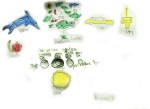
DrawHappy: A global art project on drawing your happiness

“Happiness is not something ready made. It comes from your own actions.”

—Dalai Lama

Perhaps it was a nagging curiosity, perhaps it was restlessness, but for one reason or another, I found myself in the mysterious and sometimes mystical country of Iceland. It wasn’t just the need to get away from the mania of New York City. I went there on a hunch. For years, I have been fascinated with happiness—its arbitrariness as well as our insistence on studying it as though it were quantifiable. Iceland happens to rank consistently as one of the happiest places in the world. And so off I went.

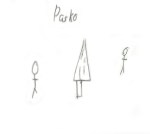
I wanted to ask these people what made them happy, but ah, how do I get them to show it? I realized that one of the most universal and clearest ways to record their responses was to ask them to draw their happiness. Drawing is one of the earliest skills we learn; its basic elements are comprehensible to people of all ages, cultures, and nations. I reasoned that if people knew that they were happy, they should be able to identify the source and moreover, visually embody this joy.

Kindness is first

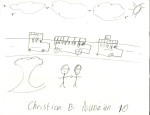
I vividly remember the first time I asked someone to draw. It was in a diner, a short pit stop on the way back to Reykjavik after spending time in the black beaches of Vik. The young man, Arnar, who worked the register and couldn’t be more than 17 years old, was such a warm an genuine character that I knew I had to ask him.

When you have a project in your head, the initial step is always one of uncertainty and awkwardness. I didn’t have a name for the project yet. I felt foolish for even asking. But I was immensely touched when he drew something that I never thought would be the first sketch. “When I see people do an act of kindness, that makes me feel truly happy,” he said. Kindness! In a world that’s often depicted as materialistic and disconnected! Perhaps there was something to this after all.

A one-woman happiness machine

That first encounter made it easier for the succeeding ones. I became a one-woman happiness machine right afterwards, asking everyone in my path. Even a particularly cold and windy day (in Iceland, “windy” means “being swept off your feet”) didn’t stop me—I went through the entire street of Laugavegur, the primary commercial street in Reykjavik, and asked every single person who would listen to me. Some turned me away, but many took my offered pencil and drew, which they confessed they hadn’t done in years. Some told me that no one ever asked them this question before, which made me do a double-take (Seriously?) and a cartwheel (Yes! About time!).

I set my goal for the Iceland trip to 100 drawings, a big yet manageable number since my trip lasted around two weeks, with half of the time spent chasing waterfalls, volcanoes, and the Northern Lights. But I persisted, even asking people on the plane with me en route to New York. Upon returning, I reviewed the sketches I had, reflected on why I was even interested in doing this to begin with, and decided to put everything online and continue the project.

Drawings as data

My teachers and classmates at the Interaction Design program at the School of Visual Arts, where I received my MFA this May, helped me a lot in tightening up my story and clarifying my intentions with DrawHappy. A final project for my Data Visualization class led to me creating an infographic about the sketches I had. I began treating the drawings as actual data, categorizing the countries where people came from and what they drew. I think doing this helped me understand why people chose to draw what they did.

Until now, I ask people to give their name, age, country of origin, and profession. They don’t have to, but I encourage it because I think it’s important to own up to your happiness and it gives me a way to see how it is defined by people of their demographic. I also ask them about what they were doing right before they made the drawing; I think our notion of happiness is contextual and affected by the things that surround us. How a person views happiness also changes through time, and occasionally, I get another submission from a previous participant, whose definition of happy has evolved.

Going global

It has been more than a year since Iceland. The project has since received submissions from 47 countries. Even now, my heart would skip a beat every time I get an email from a complete stranger, wanting to participate in the project. I have smiled, laughed, wondered at, and cried at the stories I have gotten from people I may never meet. DrawHappy has been a window into our shared humanity, one that is universal and timeless. I hope to run this project forever; I think it has sustained me as well as the people who have supported it.

Lessons on happiness

DrawHappy has also made me understand happiness in a deeper way. Happiness is a paradox. To quantify it, as I have found, is less interesting to me than to qualify it by what people have chosen to draw. Happiness is also a way of life, not an end. How we are happy, that is, whether we can see the little joys in the day, matters more than the bigger payoffs of life. Finally, I now believe that happiness is something that can be cultivated or practiced every single day. I hope that in getting people to draw, they will be reminded of their happiness and that they take steps to pursue it.

Parts of this article have appeared in the project’s site, http://www.DrawHappy.org as well as my personal blog, http://www.ThePerceptionalist.com. Follow the project at http://www.DrawHappy.org or @idrawhappy.

Starting today, we will be accepting DrawHappy submissions from all PDI readers! Visit http://www.DrawHappy.org/submit for submission guidelines  and terms, and email drawhappyproject@gmail.com with the subject line “DrawHappy PDI.” We will feature a drawing every week in Inquirer Learning, and will post them online at http://www.DrawHappy.org. If you wish to hold a DrawHappy event in your school, company, or organization, please email me as well.

One afternoon, I accidentally got off the wrong floor of my East Village apartment. Each floor in the building looked exactly the same, and yet, for some reason, I felt that something was amiss. Wait, it smells different, I thought.

Smell, the most underestimated and underappreciated of our senses, is everywhere. In Chandler Burr’s The Emperor of Scent, he tells the story of a woman to whom everything smelled vile. The condition, cacosmia, kept her indoors for years, until a doctor diagnosed her to have a form of epilepsy that was interfering with her olfactory bulb. Once given the proper medication, the woman could recall the specific moment when her sense of smell started to become normal. The room she was in started to change in perspective, as though it were moving. It seems that smell affects our sense of space.

Curiously, things that we may not immediately attribute smells actually give off odors. Here are some examples:

1. Rain

Can you smell when a storm is coming?

You know when you (or animals) can “smell” that rain might come? Well, it turns out that you’re not imagining it. Rain does give off a smell; three of them, in fact. These are ozone, petrichor, and damp earth, according to Daisy Yuhas of Scientific American.

(HT @sciam)

2. Space

Space can remind astronauts of steak, metal and welding fumes, among other things.

Perhaps “ordinary” isn’t the word I would use for space, but it’s quite fascinating that something that primarily awes us visually can also smell otherworldly. Megan Garber of The Atlantic reports that astronauts describe the smell of space in various ways, such as “seared steak,” “hot metal,” and “welding fumes.”

3. Tumors

Dogs as cancer detectors

Dogs, whose sense of smell is 100,000 times more sensitive than that of humans. Last year, German researchers reported that dogs can detect the smell of cancer, specifically lung cancer. When cells start to mutate because of the disease, they give off volatile odors that dogs can detect.

Hacking into olfaction

Scientists are increasingly finding ways to elucidate the complex process of olfaction. In 2010, Harvard scientists engineered mice that were capable of “smelling light.” The same year, German scientists also engineered flies that were capable of perceiving light for unpleasant smells.

“You’re 29? You look so much younger!” one of the teenagers in my taekwondo class exclaims, incredulous. (As I’ve discussed before, more kids get into martial arts at a younger age in Asia. Whenever I train in the western world, I’m always one of the youngest, but back here in Manila, I always feel like their token geezer.)

We live in a world where we are judged by numbers. We are obsessed with stats—the number of miles we ran or biked, our waistline, the number of wrinkles on our faces, our credit score, the number of exes, how many times we get a retweet—the list goes on. There’s probably a smartphone app to track each one of them.

These are numbers we can improve upon, manipulate, transform. But there’s one that is universal and irreversible: birthdays. The passage of time. The number of candles on a cake that signals another 365 days have gone by.

From my experience, it’s considered rude to ask someone’s age in America. In Asia, people can ask quite directly, though it’s a question I believe people secretly don’t like once they hit 25. The question, “How old are you?” almost becomes accusatory, and the answer is usually followed up with “Do I look it?”

Consider some of the articles that have recently had so much discussion. “Why Women Still Can’t Have It All” by Anne-Marie Slaughter, “The Busy Trap” by Tim Kreider, and to a lesser, but no less important, extent, “Friends of a Certain Age” by Alex Williams. Among obvious issues the articles are primarily about, such as feminism, work values, etc., lie a crucial factor that unwittingly drives our questions of achievement and meaning: time, and whether we have enough of it to do all that we, in our limited existence in the world, desire to do.

We feel that time is a resource we are constantly running out of, and then comes the inevitable question we ask ourselves: “What have you got to show for it?” Where is the book you’ve promised yourself you were going to write? Have you gone on that big trip you said you would? Did you learn that second language, get that graduate degree, make that movie? Why are you single, separated, or divorced?

Perhaps some of us go through time hoping we can pause it. Please, hold off until I catch up. There are way too many decisions to make, hurdles to overcome, and relationships to manage to be able to check things off of our personal bucket lists. But time is like a cab ride; the meter keeps going until your journey is over.

Time impacts everything we sense. In The New Yorker’s profile of neuroscientist David Eagleman, who studies time perception and synesthesia, he says:

“But the interesting thing about time is that there is no spot. It’s a distributed property. It’s metasensory; it rides on top of all the [other senses].”

With regards to birthdays, it seems that age does affect our perception of time. Burkhard Bilger, who wrote Eagleman’s profile, elaborates in the article:

“One of the seats of emotion and memory in the brain is the amygdala, [Eagleman] explained. When something threatens your life, this area seems to kick into overdrive, recording every last detail of the experience. The more detailed the memory, the longer the moment seems to last. ‘This explains why we think that time speeds up when we grow older,’ Eagleman said—why childhood summers seem to go on forever, while old age slips by while we’re dozing. The more familiar the world becomes, the less information your brain writes down, and the more quickly time seems to pass.”

Many people try to cheat time by compromising. The hear the ringing of what I’ve heard called, rather amusingly, “marriage-o-clock,” according to Kate Bolick of The Atlantic. They set themselves a deadline for getting married and having kids. Or they choose and stay with jobs they secretly don’t love. The older we get, the less options we supposedly have, and no one wants to feel like they didn’t “make it” and that their time was a waste.

For as long as I can remember, I have always been guilty of  judging myself for what I have done in the time I was allotted. In my mental timeline of my slowly-disappearing twenties, I can narrate the past decade by the things I have achieved, such as exhibitions, degrees, residencies, personal projects, travel, and friendships I’ve made and developed. I’ve seen them as significant milestones, because each has provided me with a type of personal growth that I think is unachievable if I tried to live otherwise. I suppose that subconsciously, I do this partly in the hopes that I’ll never have to lie or feel embarrassed about my age, as the months slowly encroach into my thirtieth year, when I will ask myself whether I made excellent use of the time I had and if I feel the need to withhold the year of my birthday.

So back to my interrogation. “How long have you been doing taekwondo?” presses my gregarious young friend.

“Since I was thirteen.”

“Really? But you’re still good!”

Oh, bless you, my child. I think.

There is nothing like a heatwave that will make you wonder about things that are cold. Seriously, with some of the warmest temperatures hitting North America, it’s time to think about natural structures that will likely disappear in time. Here are two of my favorite artists and their pieces on ice:

1. Camille Seaman

In her project, “The Last Iceberg,” photographer Camille Seaman captures breathtaking portraits of these colossal structures. “They are like humans in that each one reacts to its environment and its circumstances in its own way,” says the 42-year-old artist in an interview with the New York Times. “There’s a sadness to them.”

I think they’re hauntingly beautiful; it feels like they’ve been around forever and have the history of the earth etched on their faces.

Svalbard, 2008. Image copyright by Camille Seaman via NYTimes

(via NYTimes)

2. Katie Paterson

One of my favorite artists, Katie Paterson, has a lovely piece called “Langjökull, Snæfellsjökull, Solheimajökull.” These are the names of three Icelandic glaciers from which she obtained sound recordings, pressed them into three records, cast, frozen with meltwater from each of the glaciers, and played until melted.

Langjökull, Snæfellsjökull, Solheimajökull. Image copyright by Katie Paterson via the artist’s website.

I’m so happy artists are able to create these beautiful pieces that sadly may outlast their subjects. While you’re at it, check out Project Pressure, an organization that aims to document the world’s changing glaciers.  (via The Guardian)

You know you’re home when old projects haunt you like spirits.

While my work is primarily about the “intersections of science and art,” I do, from time to time, do design work for things I care a lot about. Here are two of them that have appeared on my radar, physically and online, almost as if to say, “Hi! Remember me? Look at me now!”

It’s as though they were orphans I raised and gave to caring homes.

So, here are the children I gave away:

1. A logo for the Philippine Taekwondo Association 

As my friends and colleagues know, taekwondo is something that’s really important to me, but not in a competitive way. I think it has helped me a lot personally and professionally. I wanted to give back, not through competing (which I assure you, does not suit me) but through something else—design. Around 2008, I reached out to my old teacher, Coach Jobet Morales, a former medalist and currently the Philippines’ national coach, who said that coincidentally, they needed a new logo. I already had something in mind, but I also met with Coach Morales and Grandmaster Sun Chong Hong who discussed what they needed. (I remember that day! It was lunchtime and I thought that being with these two black belts was the safest place in the world. We had Korean bibimbap.)

The logo they approved has the association’s initials, rendered in the colors of the Philippine flag. The blue letter has the profile of a bird, symbolic of the Philippine eagle. The red letter is a roundhouse kick, which was a compromise because I initially suggested a side kick (better suited with the T shape), though was told that roundhouse kicks were more frequent in taekwondo (actually, true). The yellow letter has a sun from the Philippine flag.

Now it’s 2012 and, training at the central taekwondo headquarters in Manila, I keep seeing it all the time. On certificates, belts, chest guards, banners, etc. It’s quite an honor, and I’m thrilled they’re still using it.

2. A poster for Carlos Celdran’s Intramuros tour

My friend Carlos, who does these awesome tours in Manila, tagged me on this photo emailed to him by some European tourists and newlyweds. The poster on the right was my first graphic design poster, which Carlos gives away on his tours. I did this around the same time as the taekwondo project, and both remain among the graphic design projects closest to my heart. What he has done for the Philippines is fantastic, and while his tours are primarily performance art, it has contributed to the discourse of critical issues in the country.

(To the people in this photo, shoot me an email if you’d like to be identified. And thank you so much! You made my day. Oh, and congrats!)

A Disclaimer

I did these projects without any graphic design education at the time. The only things I had experience in were molecular biology and journalism. I was just a girl with a curiosity for Adobe Illustrator and a thing about “making the world a better place.” Years have passed and I’m done with an art residency and an MFA in Interaction Design, and looking at back at these projects made me both smile at the exuberance of youth and cringe at some tiny mistakes. (The kerning! Rats. I need to fix that.) But my friends / clients still seem happy about them, so I suppose that’s what counts. That brief time I was in Manila, I just loved their work and what they’ve done for me, and I thought that this was the best way to help them out. I may never be in the Olympics or Games of any sort, but at least my logo will! And helping cultural gems like Carlos’s work is something that’s always rewarding to do.

I have a cold. And this is probably why I’m sentimental.

Each time I open an email from The Listserve, I want to reply.

Oftentimes, I wonder what would happen if I did. Most of these people actually left a email address, as well as their location. I wonder if it would add any serendipity to their lives if someone sent a hello. I imagine many already have. In the emails I’ve received, few have chosen to remain anonymous.

I wonder what made them choose to write what they did. I think all human beings want to be heard at some point. To have such a large audience instantly available—what character will you inhabit? What intentions will you have?

It’s the digital version of sending a message in a bottle off to sea, only you’re guaranteed readers.

Some of them wrote short pieces of advice that would, in another context, sound like a daily horoscope, or from a very grandmotherly sounding inspirational app. “Do something fun.” “Forgive.” “Be generous.” “Don’t be afraid.”

Others had short anecdotes about their travels. A visit to Vietnam. India. Crete. Albania.

They send tales about people and things. I learned about Patrick of Ireland. The joy of beekeeping. It’s like getting an email from Wikipedia.

There are interesting essays. An encounter with a one-armed frog. A parrot named Bagel. A recipe for a good Bloody Mary, or a love potion.

I love the miscellany. Book recommendations. International cooking projects. Lists. Words in other languages. The things they did that changed their lives.

It’s like someone’s library exploded and we were emailed fragments of it.

It’s also wonderfully free. Go sign up now.

Opening up your online DNA results is, ironically, almost like cracking open a fortune cookie.

Genetics is something I’ve lived with all my life. My mom was a genetics professor, and my undergraduate degree is in molecular biology. And so I knew that even though I was presented with the “science of myself,” I had to take it with a grain of salt. In addition to our genes, the environment plays a role, too. For example, not being at risk for heart disease is great, but eating foods chockful of saturated fat can kill you eventually.

So over a year ago, I had my DNA done. (You know, it’s like getting your nails done. Kidding.) I used two services, 23andMe and National Geographic’s Genographic Project. The former required you to spit in a tube, while the latter asked for a cheek swab. 23andMe yields a more personalized profile of health and ancestry, while the Genographic Project is a research project that aims to map the migratory history of the human race. Both are very affordable; I wouldn’t have done them if they cost several hundred dollars. I was able to get a 23andMe kit for $99 during a Black Friday sale, and a Genographic kit costs $99.95.

The results are fascinating and intriguing. Sometimes, I wasn’t sure what they could mean. Will I have a different (or perhaps deeper) sense of identity, now that I have a better idea of ancestry? Will I turn into a hypochondriac if I see that I’m at risk for certain diseases?

Some things about me that I already know: I was born and raised in Manila, the Philippines, to a Filipina mother and a Chinese father. I suppose both are mixed at some point, especially considering the Philippines’ long colonial history. I’m pescetarian, a non-smoker, and rarely drink. Because of all the years living in different countries, my immunization requirements (a must for getting your student or exchange visas) are complete. On average, I do 5 to 9 hours of taekwondo a week. (Yes, I realize this makes for a very boring dating profile.)

Here are some highlights of my results:

23andMe

The homepage of your 23andMe profile shows updates to research results. On the left is the menu where you can check out your health and ancestry profiles.

Health

1. I could die from a heart attack. Bummer. Of all the increased disease risks, “atrial fibrillation” topped the chart. This wasn’t much of a surprise. Once or twice a year I end up with an irregular heartbeat; my heart beats harder than normal for several minutes. I would stop and breathe slowly, and my heart beat would eventually normalize. My ECG has always been ok.

2. I have decreased risks of Type 2 diabetes, breast cancer and Parkinson’s disease. Oh happy day.

3. I am lactose intolerant. At this point I started to doubt whether they processed the right sample, because I’ve been drinking milk all my life and I love it. The fine print did say that I “may still be lactose tolerant for environmental reasons.”

Ancestry

1. Based on my maternal haplogroup, I am closely related to East Asians, particularly Japanese, followed by Siberians and South Americans. It wasn’t particularly revelatory; I’ve always had very pale skin. It used to be a joke that I was “whiter than white people.”

2. I am labeled Eurasian, though the Asian-ness greatly surpasses the Euro-ness. My friends surmise the latter is responsible for my height. I’m 5’9″, which is quite gigantic by Asian women’s standards. I do think that I’ve met so many Asian women just as tall, if not taller, so perhaps it’s due to a shift in nutrition as well. (All that milk, I suppose.)

3. Clicking on “Relative Finder,” I see that I have potential distant cousins who also used the service and whom I can contact. The likelihood of me sending them a message is close to null. I think I would rather reach out to another human being because of similar interests instead of genes. It’s fun to know that I have distant relatives from all over the world, though.

The Genographic Project

Among the results you get from The Genographic Project is a map showing the migratory pattern of your ancestors’ DNA.

There are similarities between my results from The Genographic Project and my ancestry results for 23andMe, which made me more confident in their results. Highlights of my ancestral journey include (starting from Africa, where we all came from) countries in the Middle East, and then Asia. I would love to do a project where I can travel through all these countries with this in mind. Note that for both services, I would get more information if I compared my results with those of a male relative, as I, being female, do not have a Y chromosome.

Now What?

Do I recommend getting your DNA tested? Of course! I think human beings will always be interested in different facets of their identities. Unlike other, dubious diagnostics such as personality tests, horoscopes, etc., this gives you insight into your actual biological past (and present) and can allow you to make important decisions, especially health-wise, about your future.

Will it affect me significantly? Not really. It was interesting to see where my ancestors came from, but in the end, I’m more interested in where I have been myself. My “cultural DNA”—the languages I speak, the places I live in, the habits I acquire, the people I call my friends—will likely make more of an impact on me. As for health, I think I already lead a pretty healthy lifestyle, but it’s good to know what I’m at risk for and what I’m not. At the end of the day, everyone dies.