Hi all! I and my friends at the National Art Studio of Korea will be part of the International Sculpture Festa 2013 at the Hangaram Museum of Art in Seoul Arts Center.

It opens tomorrow, May 4, with art talks by yours truly and other international artists.

via ISF 2013 Facebook page

via ISF 2013 Facebook page

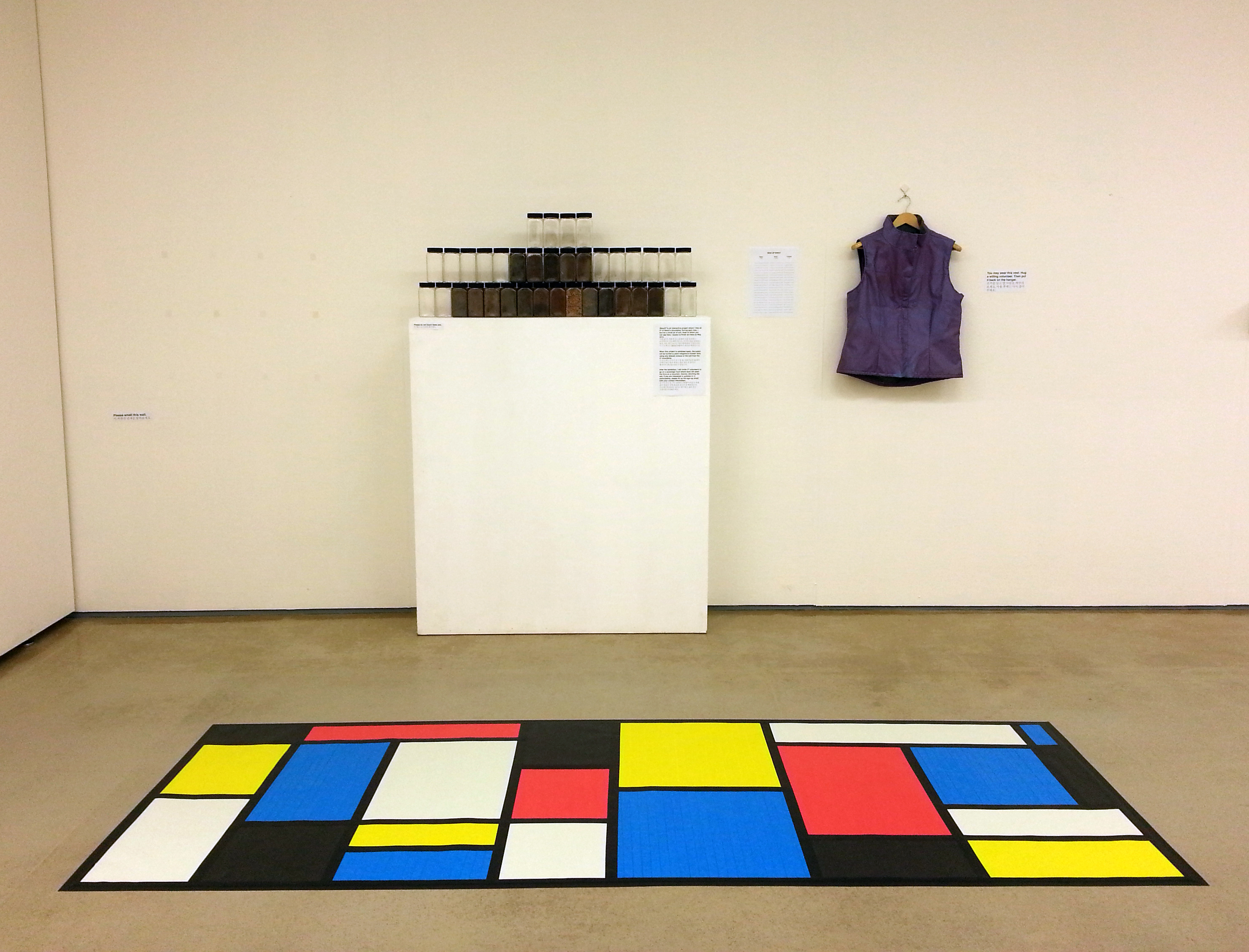
We installed today, and here’s how mine looks, on the second floor.

Installation view

Installation view

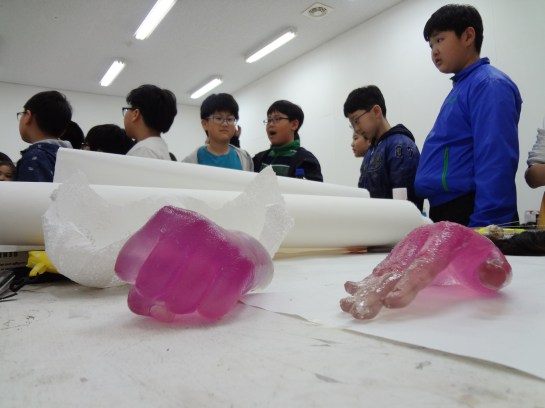
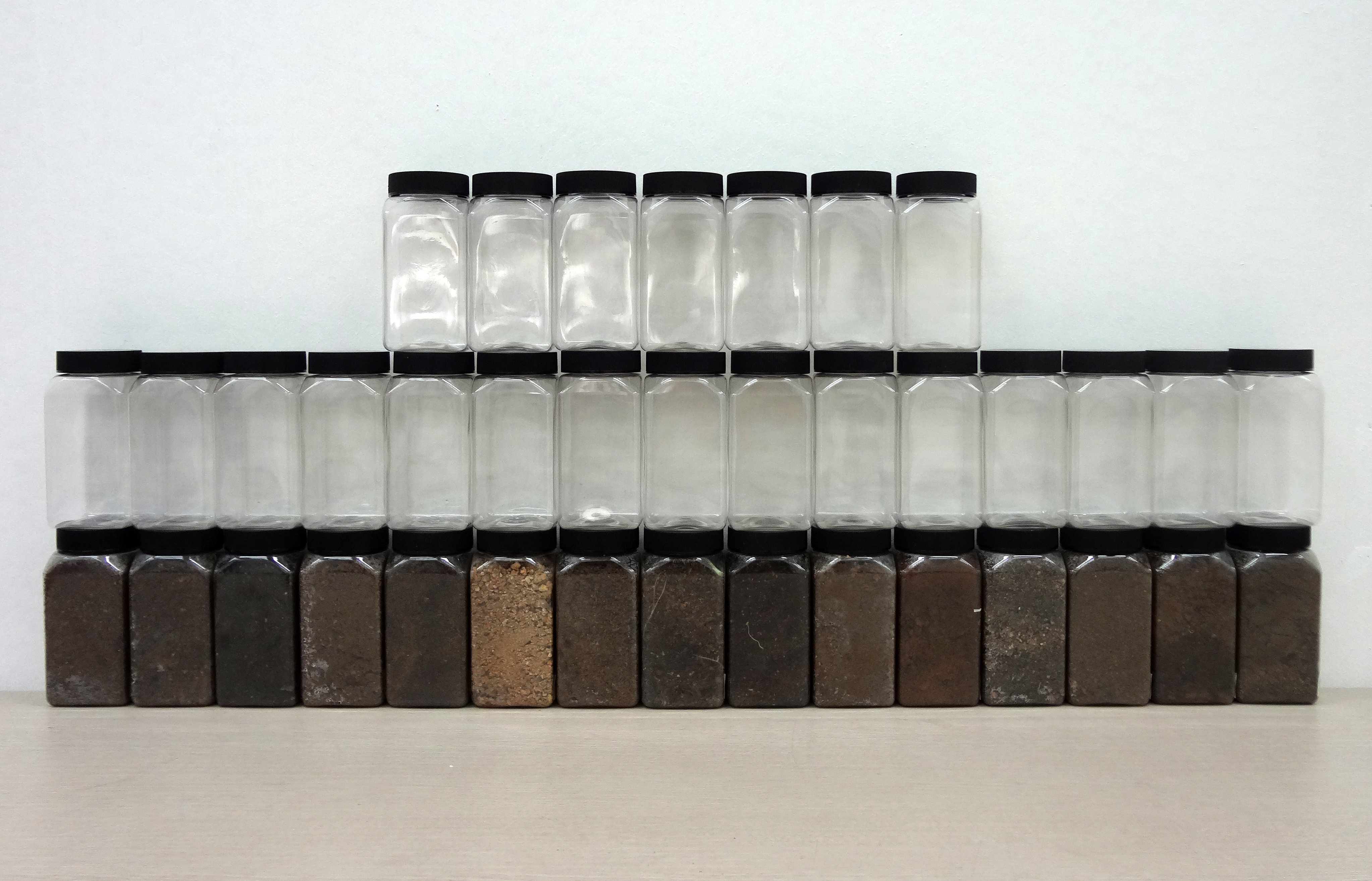
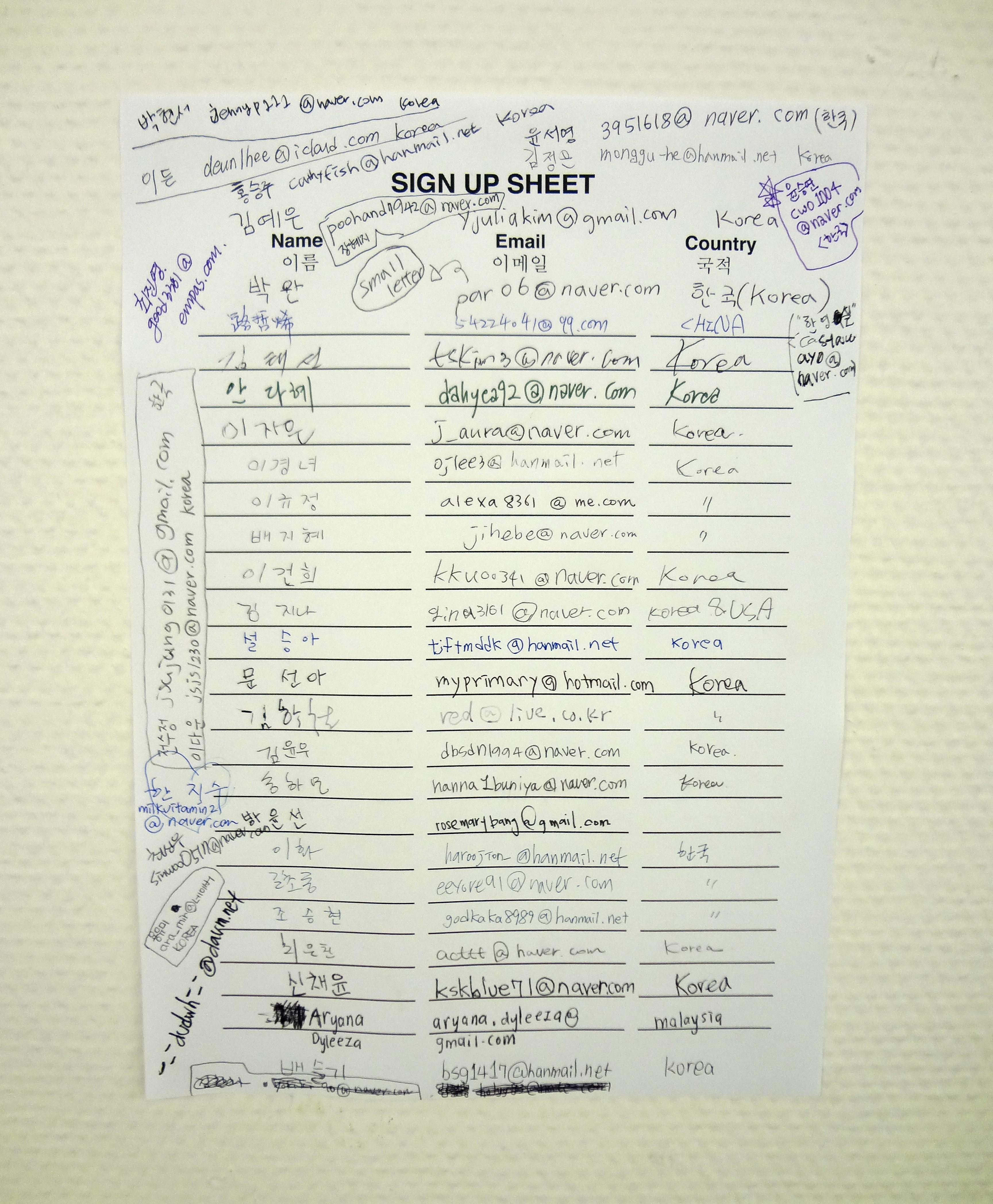
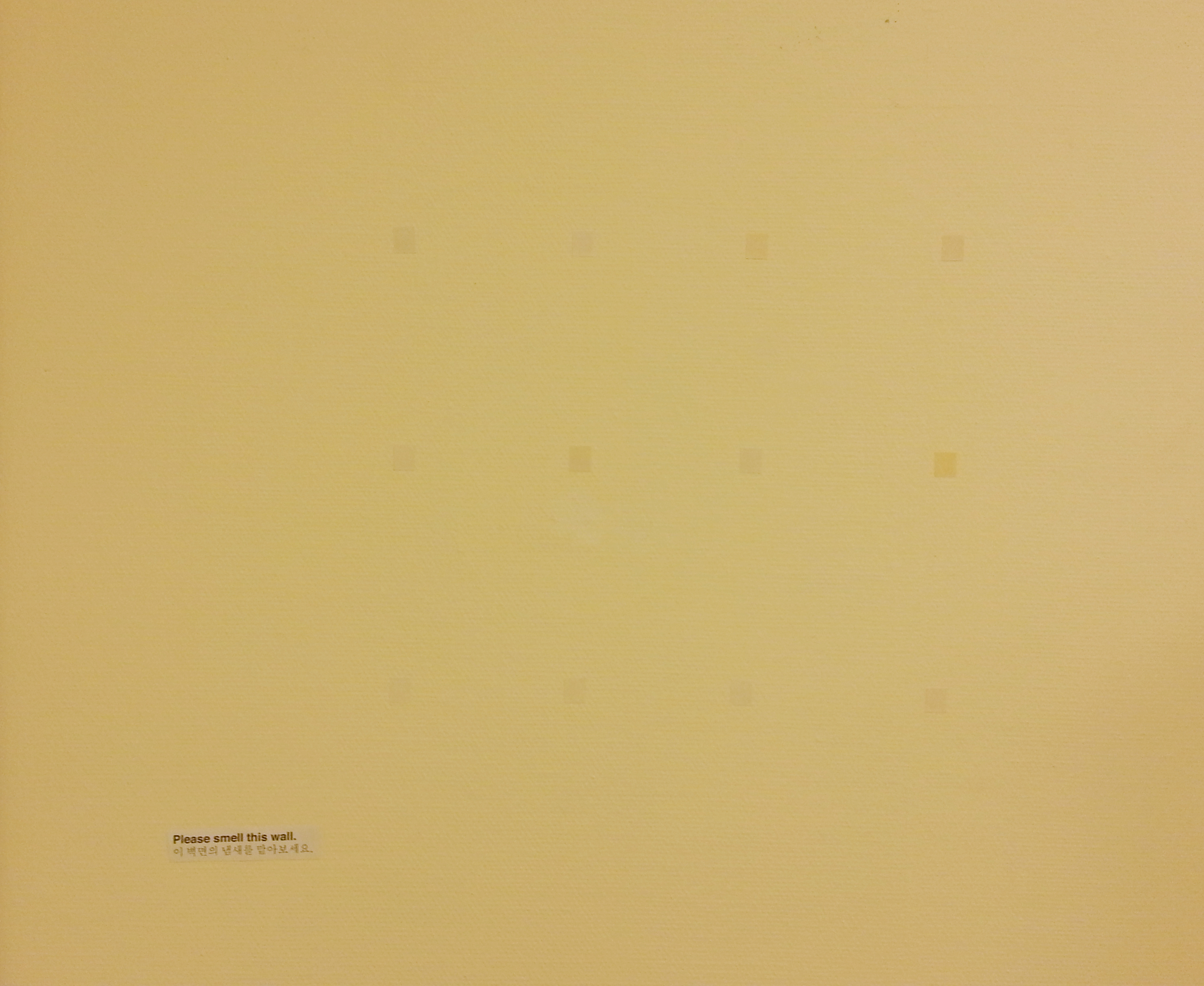
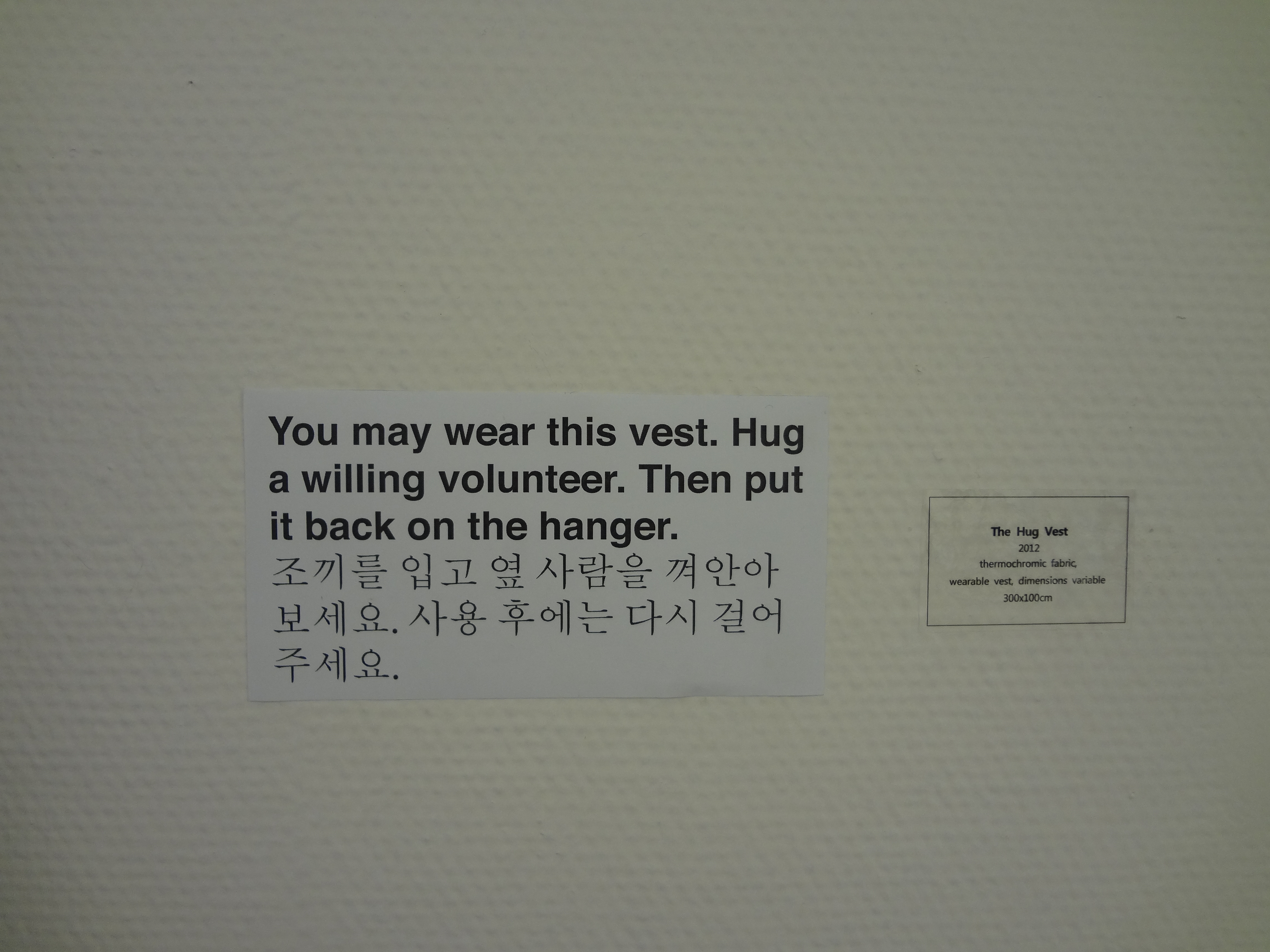
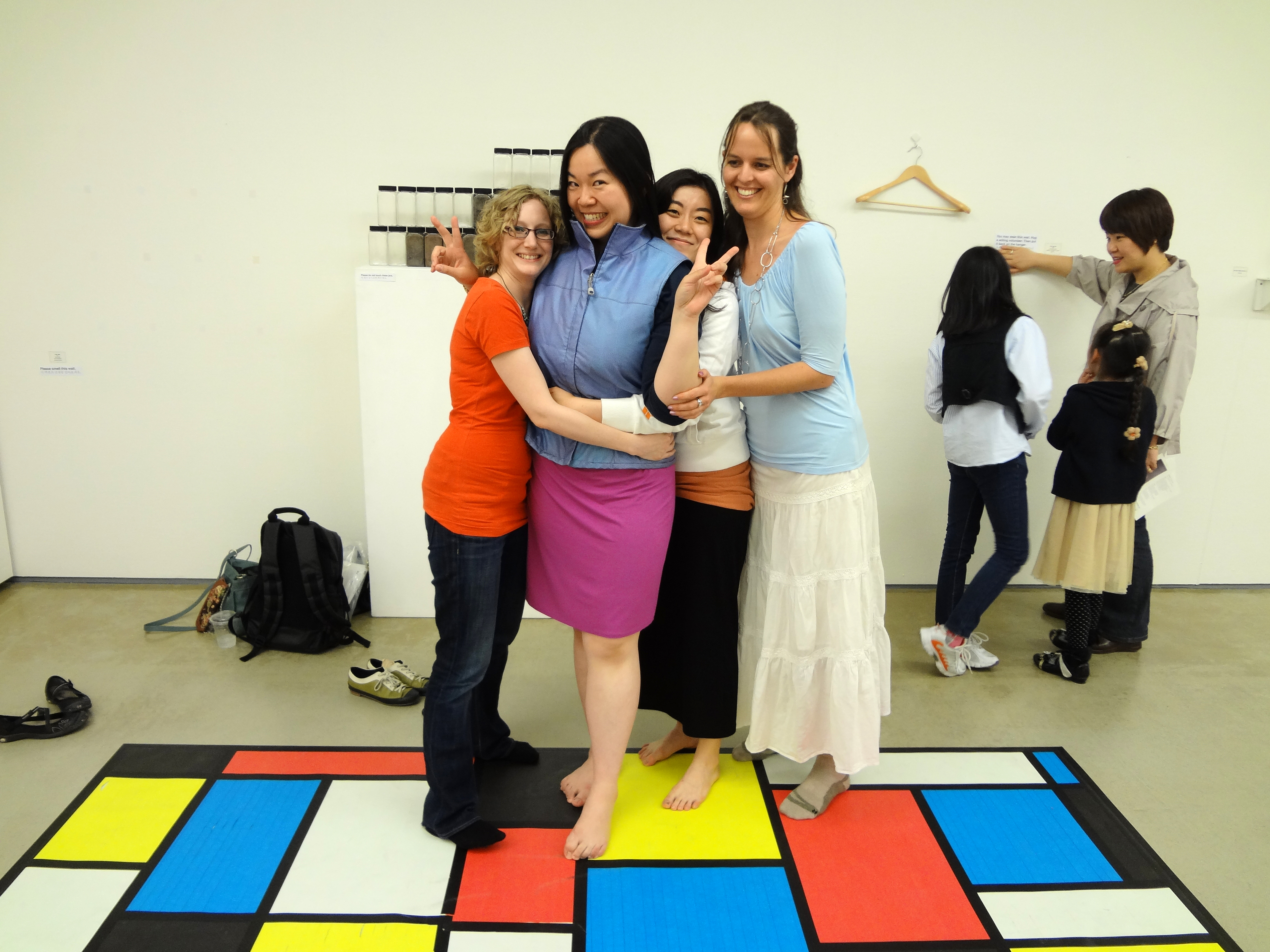
As an interactive and perceptual artist, I’m placed in the category, “What Can Sculpture Be?” I have four pieces: a wall with microencapsulated odors you can smell, The Hug Vest that you can wear, a Mondrian Hopscotch board you can play with, and 37 jars that are and yet to be filled with soil from all 37 mountains of Seoul that I’ve hiked. The last one is to be exhibited again in the National Art Studio in June, when I’ve finished all the hikes and get willing participants to join me on an interactive project afterwards.

Check out the festival website here.

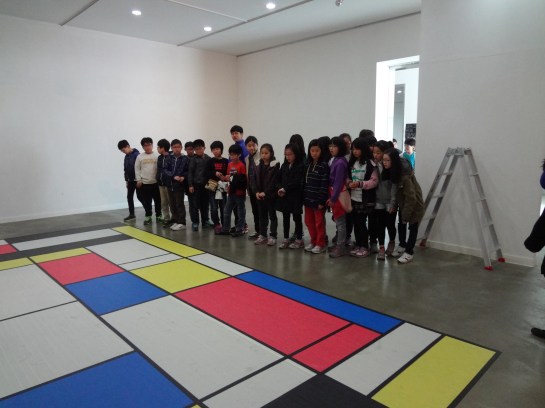
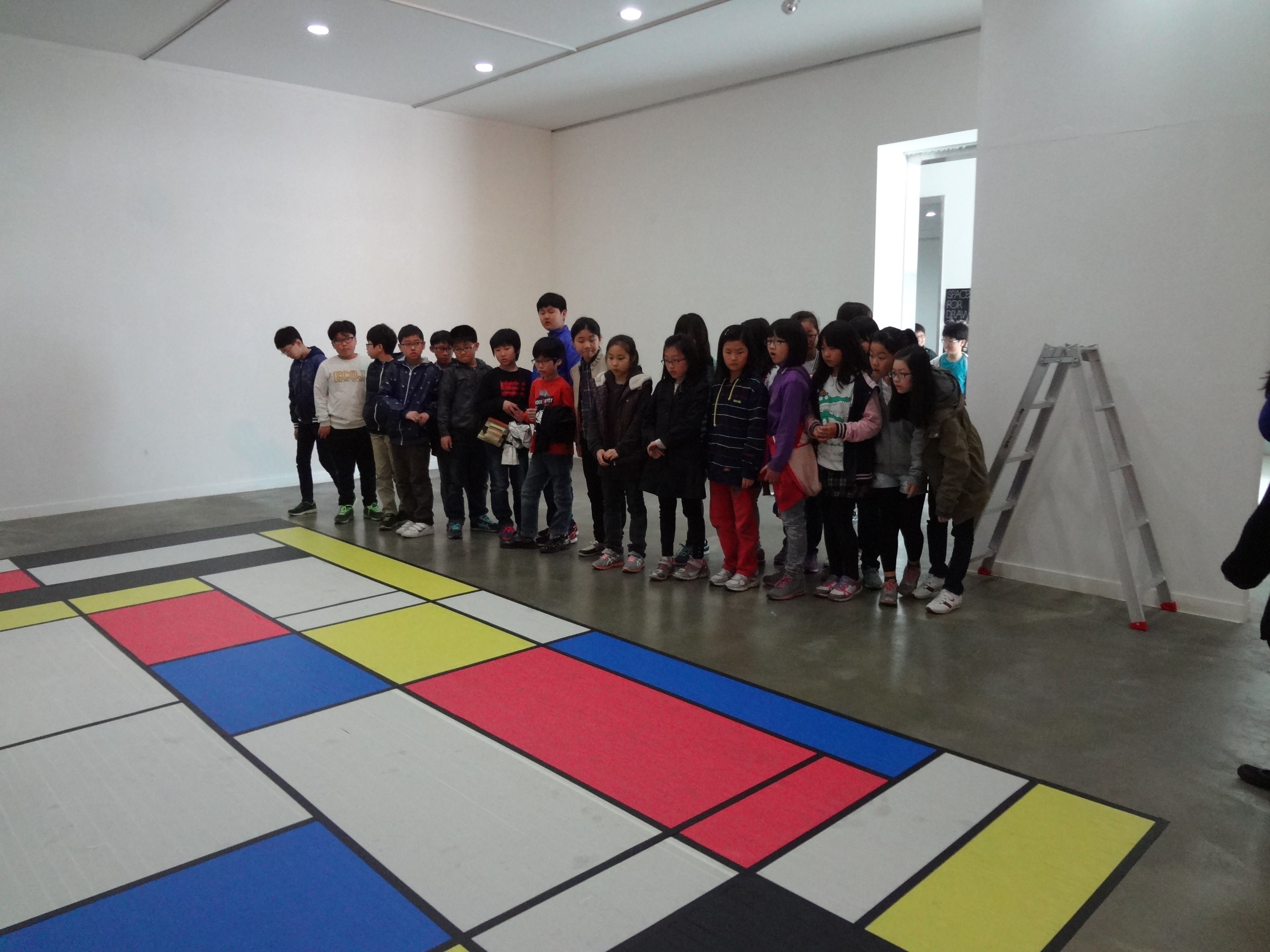
Mondrian Hopscotch I

Mondrian Hopscotch I

Child’s Play: Mondrian Hopscotch I
April 2013
installation
140 x 300 inches (3.6 x 7.6 meters)
tape

Can we play with art? In this piece, I explore this idea by creating a hopscotch board using the aesthetic of Piet Mondrian, one of my favorite painters. The primary intention was similar to The Grid, in that I wanted the participant to create his own interaction with it. The secondary intention was to use a well known art aesthetic and extend the idea of “viewing” the art (such as one would do with an actual painting of Mondrian’s), and instead be required to touch it (or jump on it) to have the experience.

The material I used was tape. It was a decision based on utility—since people will be jumping on it, I needed a material that can withstand all the footsteps. It was also a decision based on culture; in Korea, Mondrian’s aesthetic reminds me of the stripes on Korean hanbok, and looking closely, each square is made of several tape “stripes.”

DSC03500

DSC03501


DSC04083

I am intrigued by the idea of having the audience be a part of the art to complete the piece, not unlike most of new media art, but here, using the cheapest of materials.

DSC04009

DSC03996

Here is a short video showing a person interacting with it.

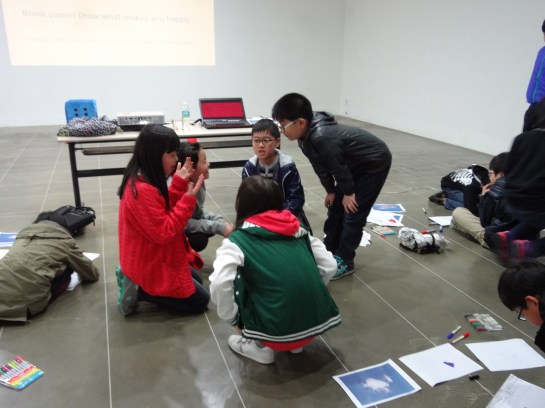
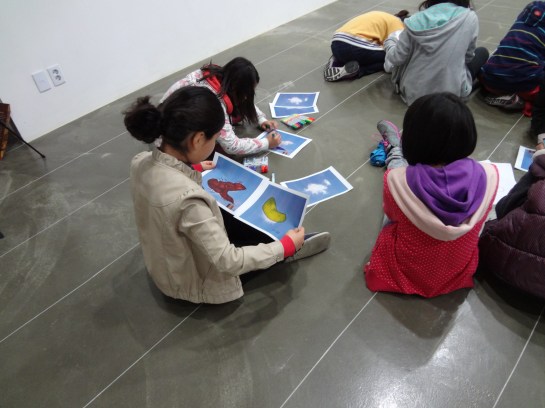
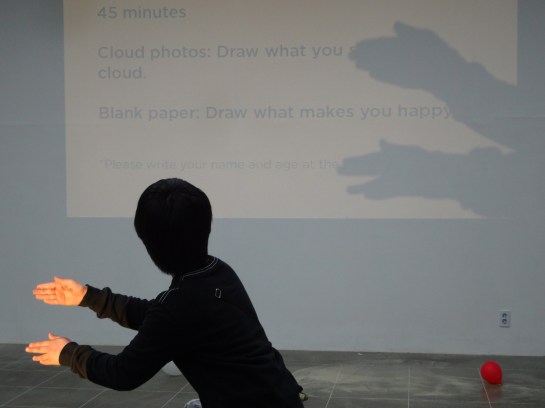
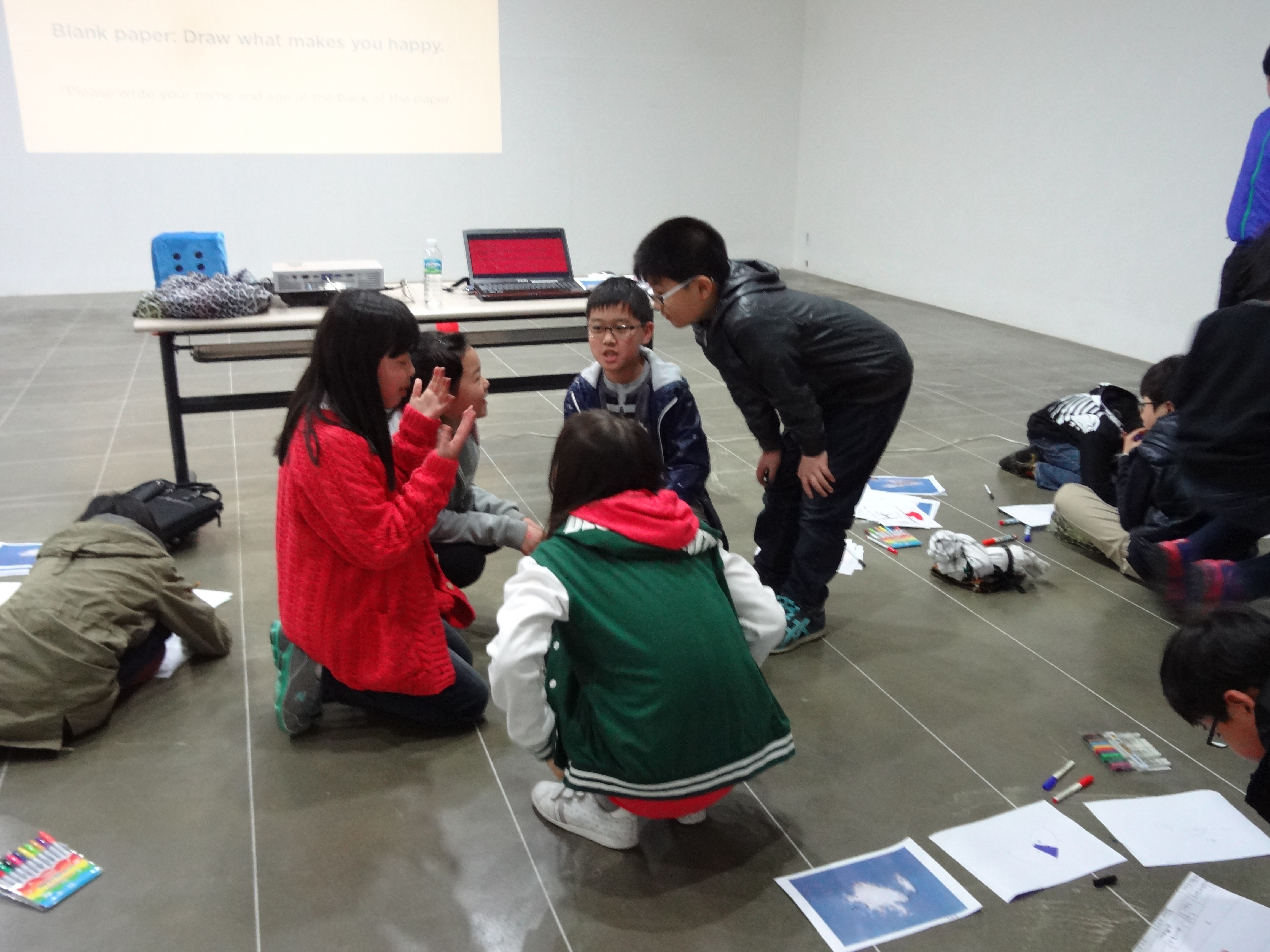
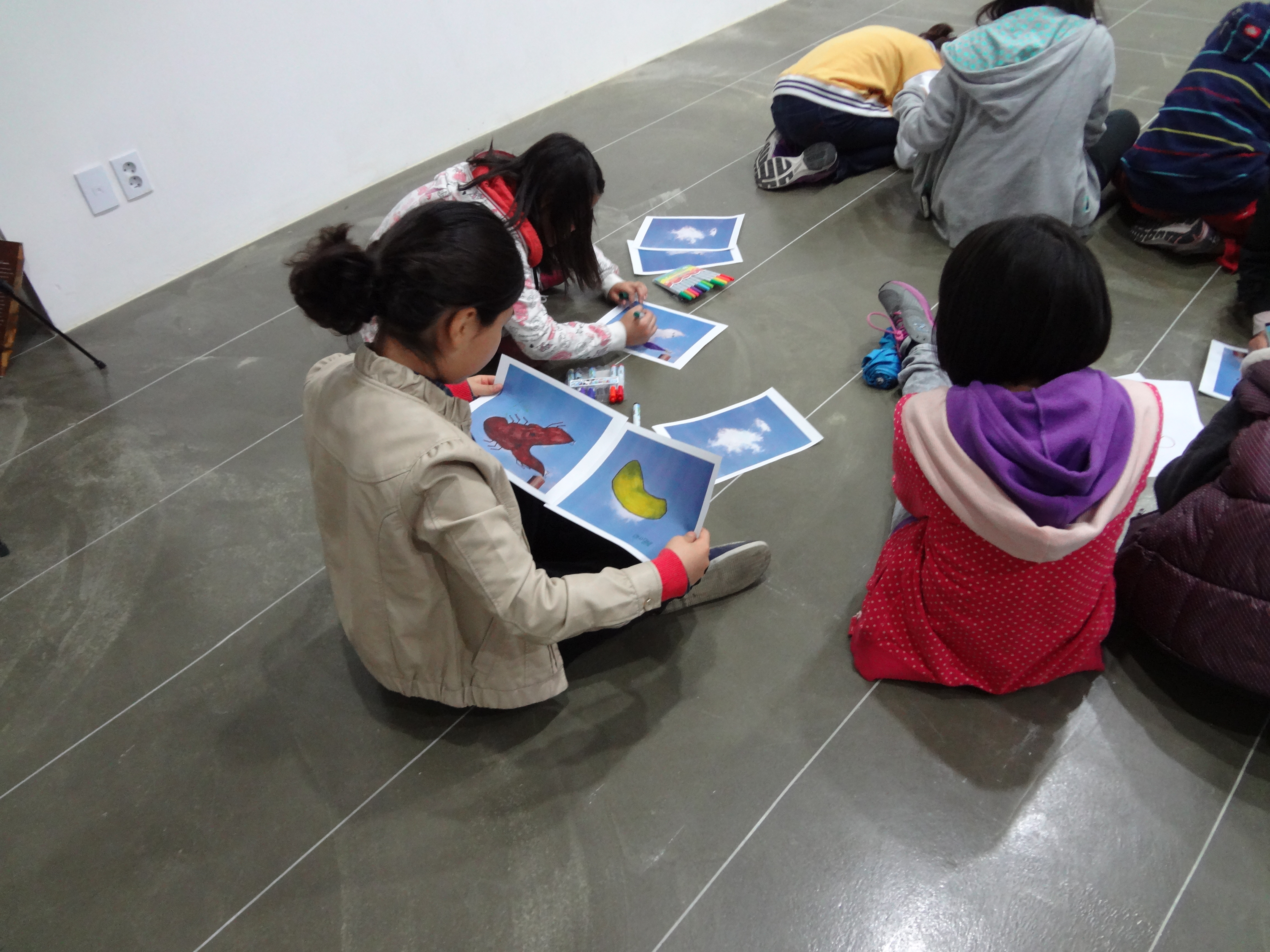
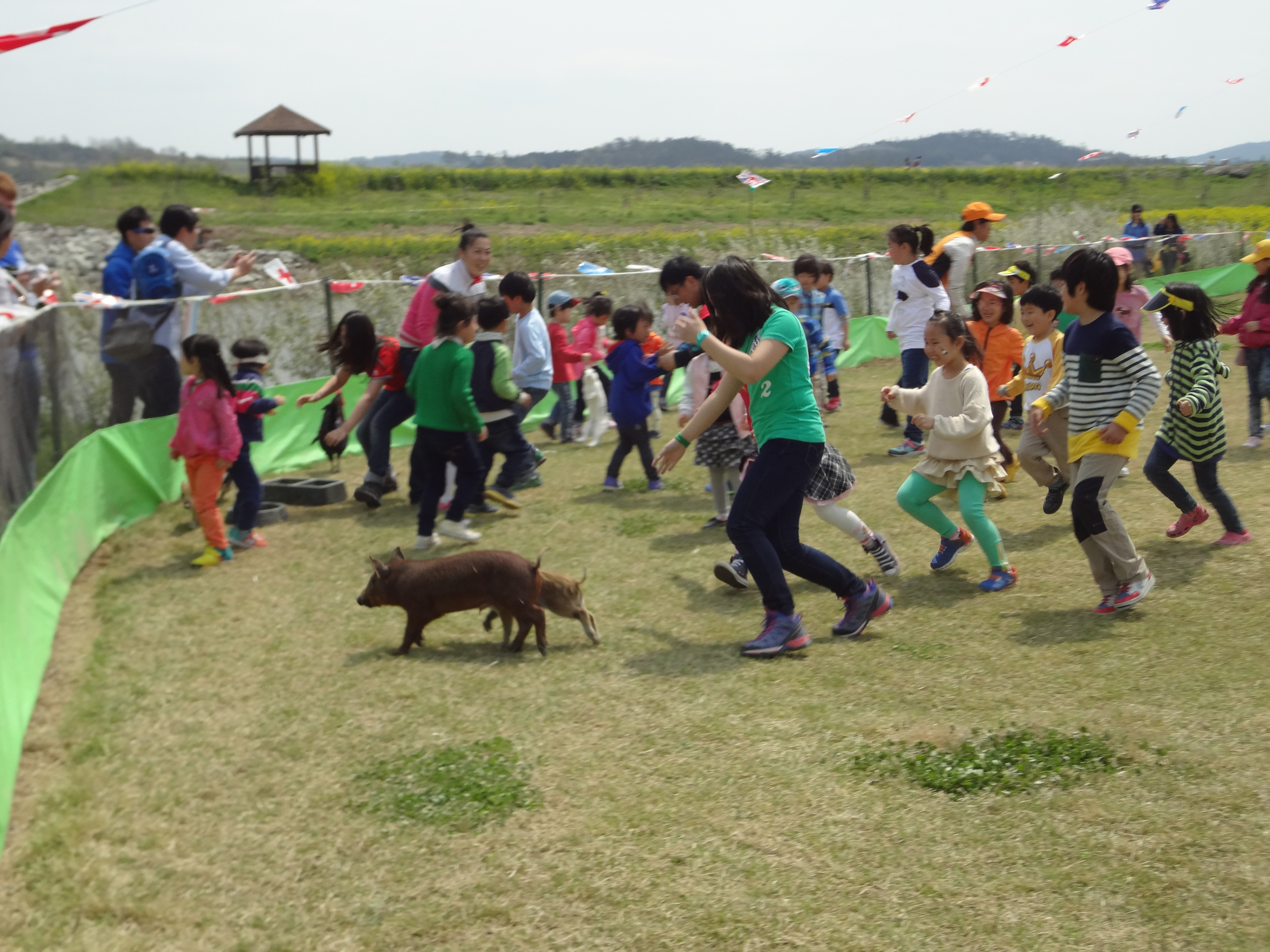
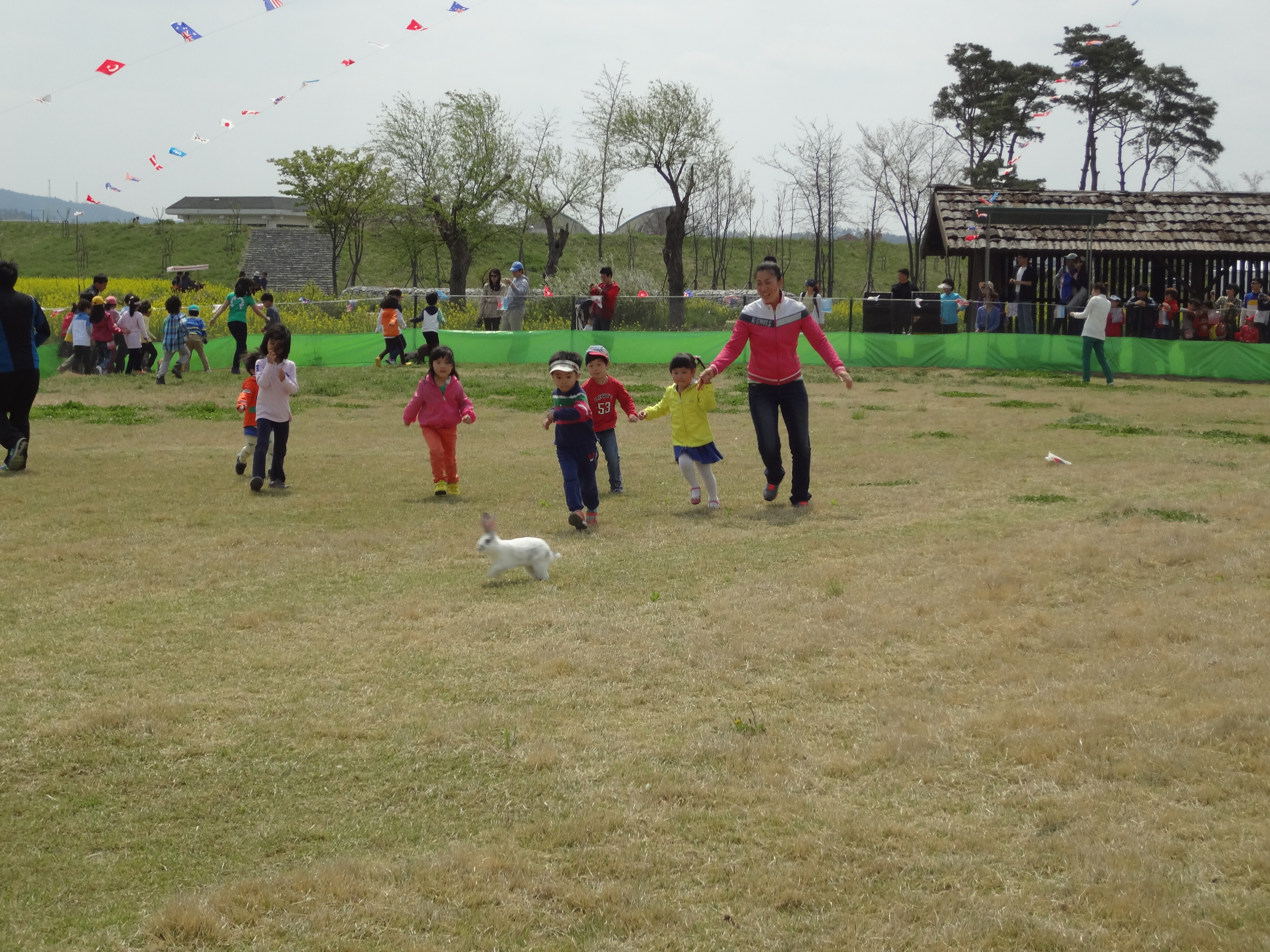
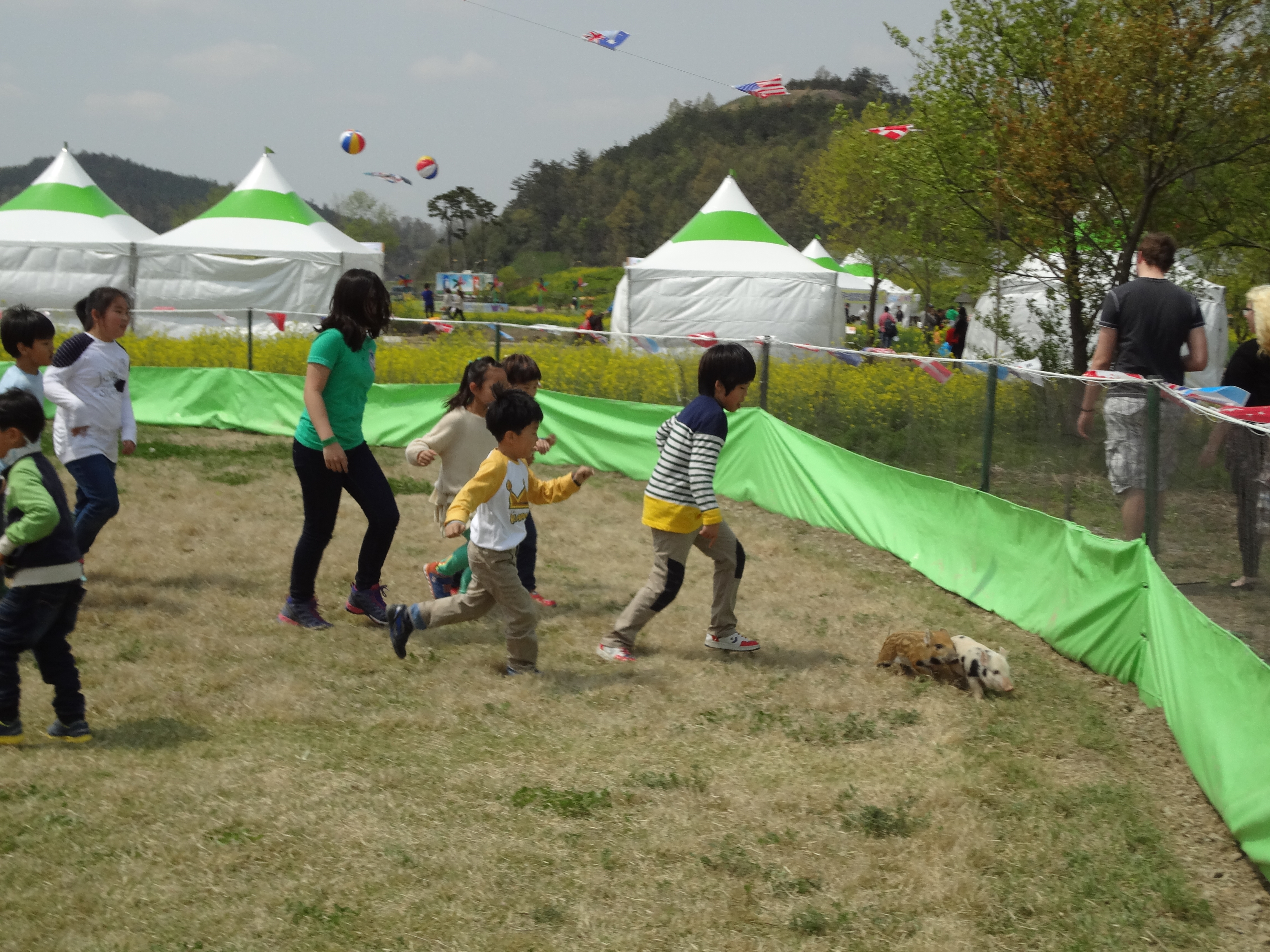
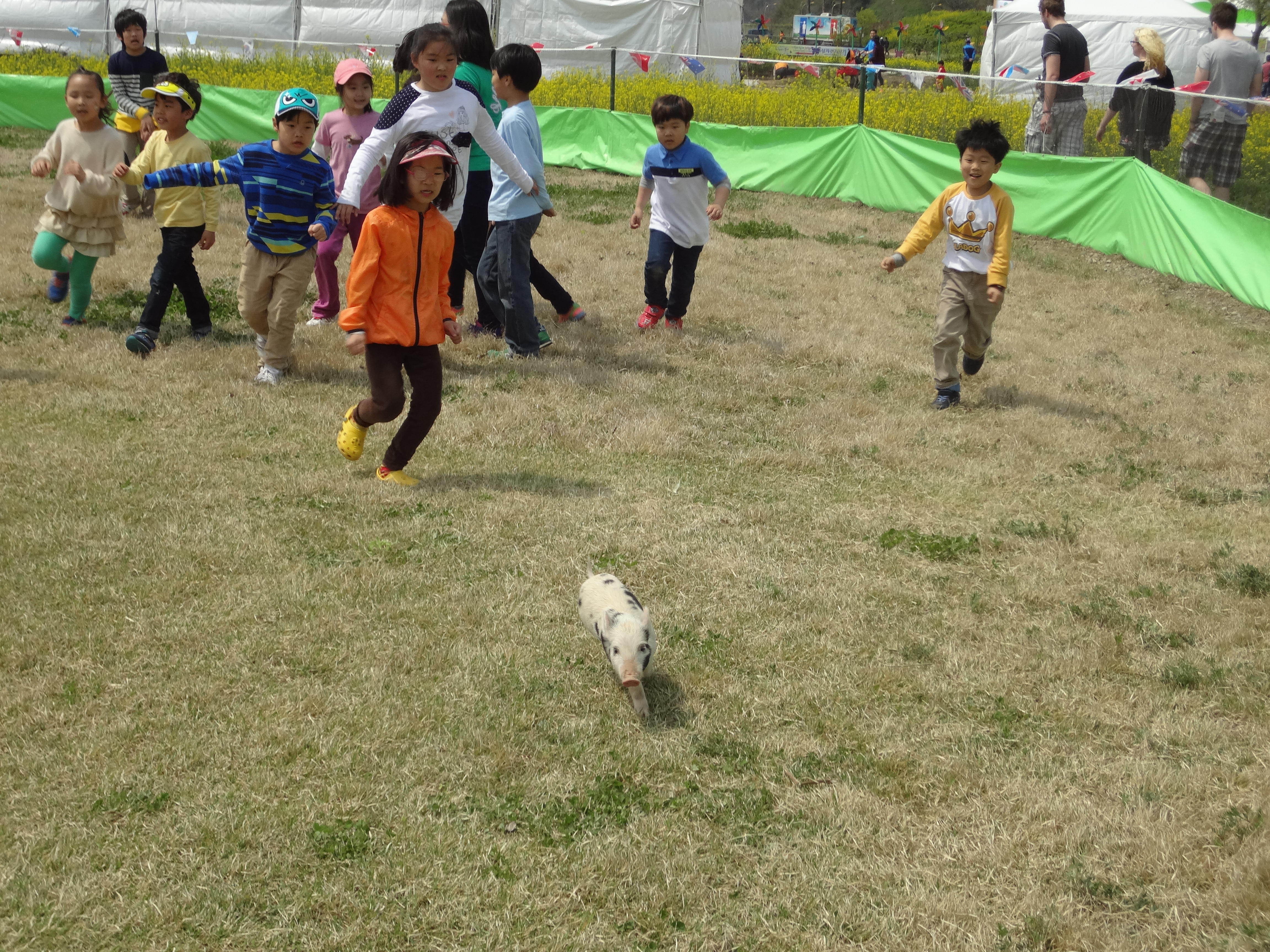
I used it for a talk/workshop with some children here at the National Art Studio of Korea, and invited them to interact with the work, too.

DSC04026

DSC04042

last


Many thanks to Ms. Ju-Eun Lee of Changdong Elementary School, their awesome students (special thanks to Anna Lee for participating in the video and still shots), and to the staff of The National Art Studio of Korea who assisted with organization and translation.

In a new series, I create tape installations that allows the audience to create their own games.

Games have constraints, such as the boundaries created by tape. In this piece, The Grid I, I transformed an exhibition gallery using masking tape. One side has only parallel lines, while the other side has both parallel and vertical lines.

The Grid I (April 2013)

The Grid I (April 2013)

The Grid I
April 2013
installation
31 by 34 feet
masking tape, toys

The Grid I (detail)

The Grid I (detail)

Agents of play were also provided, such as a jump rope, game tokens (in this case, baduk, or the Korean version of Go), a stuffed die, and balloons.

agents of play

agents of play

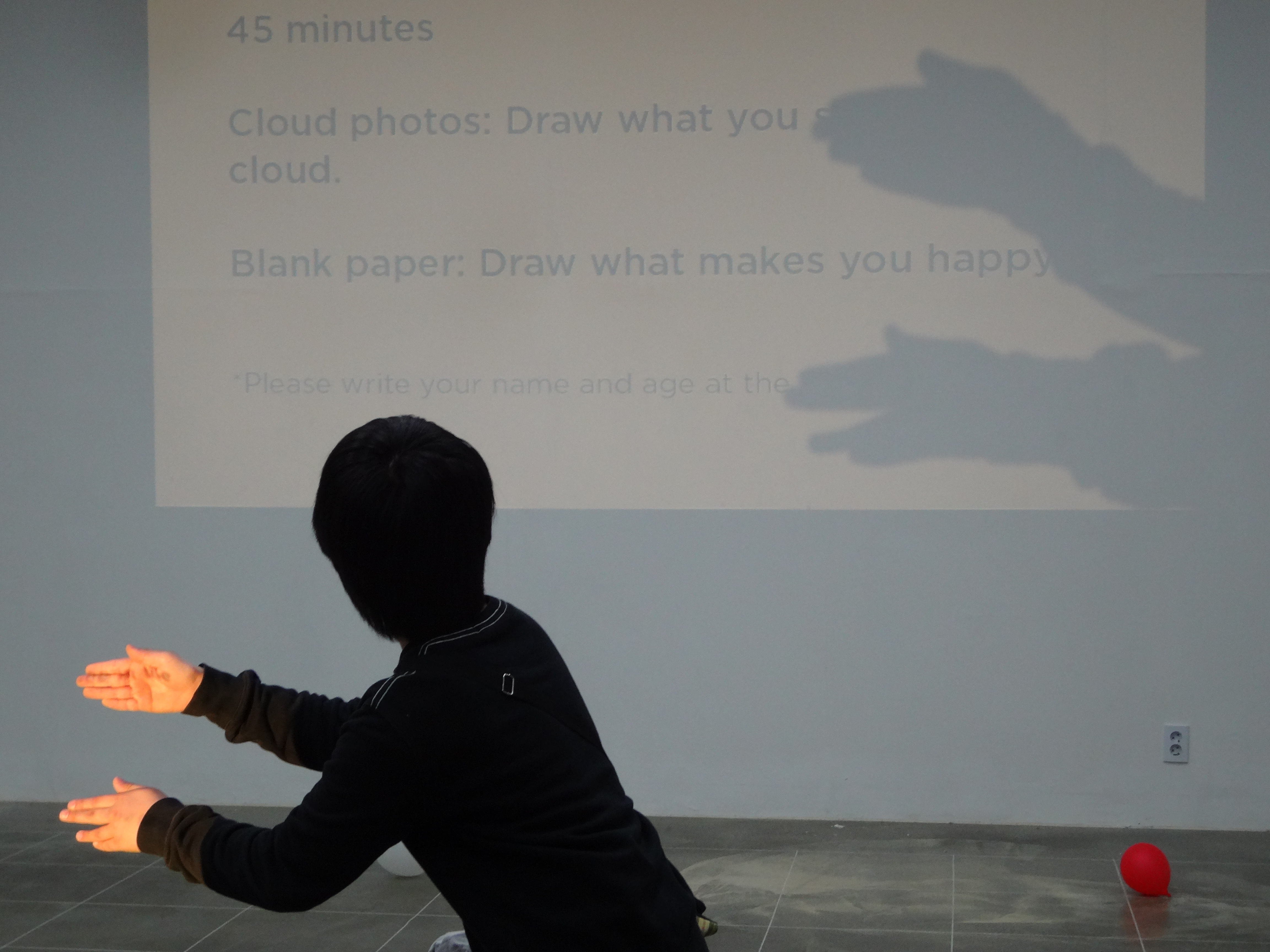
In the past week, I invited two groups two play with this grid. They had to create their own game, with their own rules, and utilizing the agents of play if they wished. They had to answer questions such as, “How many people or groups can play?” “How can I score a point?” and “How can I win?” (if it was a game about winning).

The first was a group of teenaged boys (aged 17-18). Most wanted to be architect, while the others wanted to be painters. They divided themselves into two groups and created the following games:

1. No Bounds

Players stand in a circle, avoiding the tape, and kicking a balloon without letting it fall to the ground.

I - No Bounds (balloon)

I – No Bounds (balloon)

2. Avoid Baduk

A player rolls the die, and the number corresponds to the number of baduk tokens he takes. He throws the baduk pieces at the other players standing in a line opposite him, who try to avoid getting hit.

2 - Avoid Baduk (stuffed die, baduk tokens)

2 – Avoid Baduk (stuffed die, baduk tokens)

The second group I invited was a lovely group of 12-year-old children from a local elementary school. Here are the games they played:

3. Baduk Slide

Players slid the baduk pieces across the floor. The one who slides the baduk piece the farthest wins.

3 - Baduk Slide (baduk tokens)

3 – Baduk Slide (baduk tokens)

4. King

One player is the “king,” who is unknown to the others. They follow each other using the lines of the grid, whispering and finding out who is the king.

4 - King (just the grid)

4 – King (just the grid)

5. Tennis

Players used the plastic piggy banks as modified rackets and took turns hitting the balloon.

5 - Tennis (plastic piggy banks, balloon)

5 – Tennis (plastic piggy banks, balloon)

6. Volleyball

Players used the die as a ball, and the rope as a net.

6 - Volleyball (rope, stuffed die)

6 – Volleyball (rope, stuffed die)

I learned a lot about children’s creativity and ingenuity from this project, and I think the kids had fun. It was fascinating to see objects whose function was completely changed for the purposes of games they thought of. It was also interesting to see components of traditional games and sports (such as tennis and volleyball) be used.

I definitely liked creating a piece where the audience had to interact with it for the artist’s intentions to be fulfilled. I would love to keep turning galleries and exhibition halls into playgrounds. Critically, these are children who are overexposed to online games—I was happy to get them unplugged from their smartphones and computers and plugged into their imagination. I’m definitely looking forward to pushing this idea further.

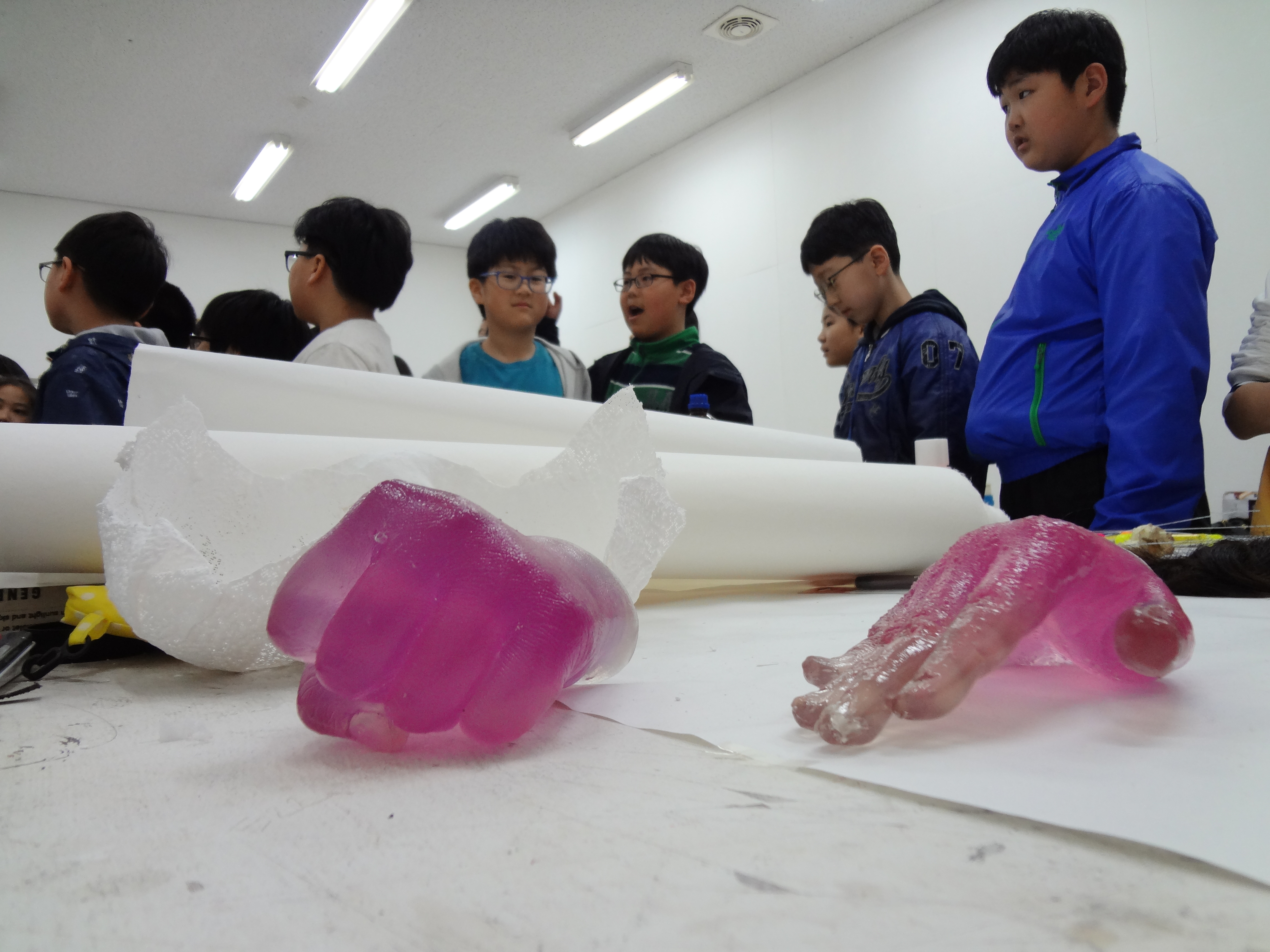
Some behind-the-scenes images with the elementary school kids. (Photos by Kate Kirkpatrick)

Many thanks to Ms. Se-Hui Park of Shin-il High School and Ms. Ju-Eun Lee of Changdong Elementary School, their awesome students, and to the staff of The National Art Studio of Korea who assisted with organization and translation.

The best thing after a particularly grueling hike (hello, Inwangsan!) is a cute note from the elderly guy who runs a pizza place with his wife across my street. After learning I was Filipino-Chinese, here is what I opened the box to:

Philippine / China Korea <3

The initials stand for:

Philippines / China
Korea

In barbecue sauce.

Aww, shucks. I love you back, Korea.

At Seoul’s Leeum Samsung Museum of Art, I was struck by two things:

1. 89 Seconds at Alcazar by Eve Sussman / Rufus Corporation

One of my favorite paintings is Diego Velasquez’s Las Meninas. This film, shown in the excellent exhibition, Mise-en-Scène, imagines the events before and after the painting, depicting the actual moment as a fleeting one. And hey, GoT fans, Peter Dinklage is part of the cast!

via artpulsemagazine.com

via artpulsemagazine.com


2. Interaction Design and Korean Treasures

In the exhibition Opulence: Treasures of Korean Craft, I was impressed at how the audience can view the art. In addition to seeing the actual relic, it was possible to explore the piece through a high resolution photo of the work, and a touch screen that allows you to zoom into different details.

Like Google Art Project in an actual museum

Like Google Art Project in an actual museum

Flowers are starting to bloom in Korea. Hurray!

Color. Finally.

Color. Finally.

On the way to pick up my fourth passport from the embassy—Oh the luxury of smelling and touching a crisp new passport!—even this bear agreed:

Yes, little bear. Yes, it is.

Yes, little bear. Yes, it is.

Fare thee well, the winter of our discontent.

In Seoraksan, a mountain in the east of South Korea, it’s like a calligraphy painting that came to life. It was a grueling yet doable trek, with me giving high fives and fist bumps to the friendly elderly Korean people who regularly climb these mountains. It seemed as though they do it without breaking a sweat.

(I want to be an ajumma when I grow up. Such respect for these badass people who are so physically fit and look as though they just stepped out of a hiking catalog.)

It's like a calligraphy painting that came to life!

It’s like a calligraphy painting that came to life!

I bet it will look beautiful in the fall. I bet that’s enough reason for me to go back.

Gorgeous.

Gorgeous.

There is nothing like getting physically and mentally pushed to my limits to power me through the second half of this residency. Hwaiting!