While exploring Korea, which slowly becoming one of my favorite countries, I’m a bit fascinated at how it has little-known connections with The Discovery Channel’s Mythbusters, one of my favorite TV shows of all time. Here are two that have been stuck in my head for a while and required a blog post:

1. Hwacha

A hwacha is a weapon developed during the Joseon dynasty that can fire multiple rockets in one go. I found one on display at the King Sejong museum in Gwanhwamun station, though I’ve seen others in various places in Korea.

I hope it works.

I hope it works.

The Mythbusters confirmed the hwacha’s effectiveness in the episode, “Alcohol Myths.”

2. Yellow Scream

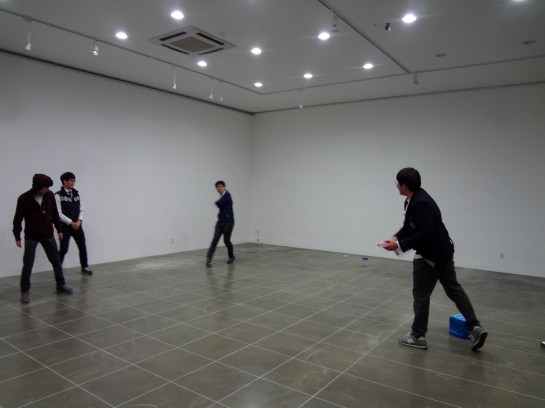
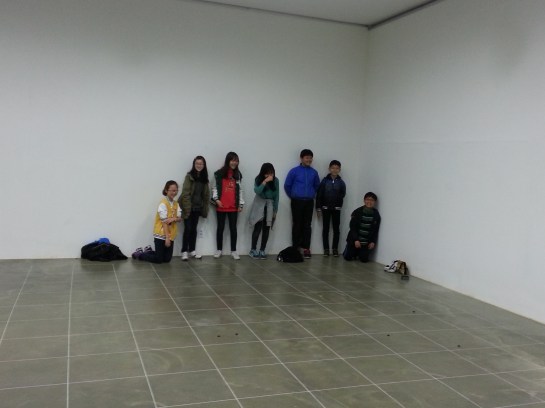
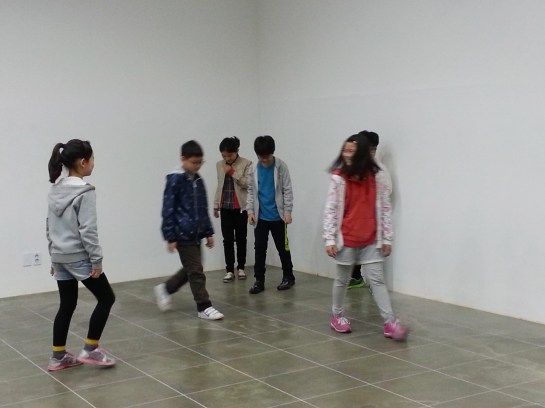
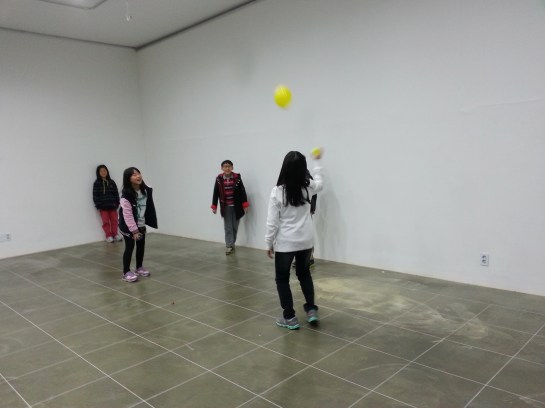
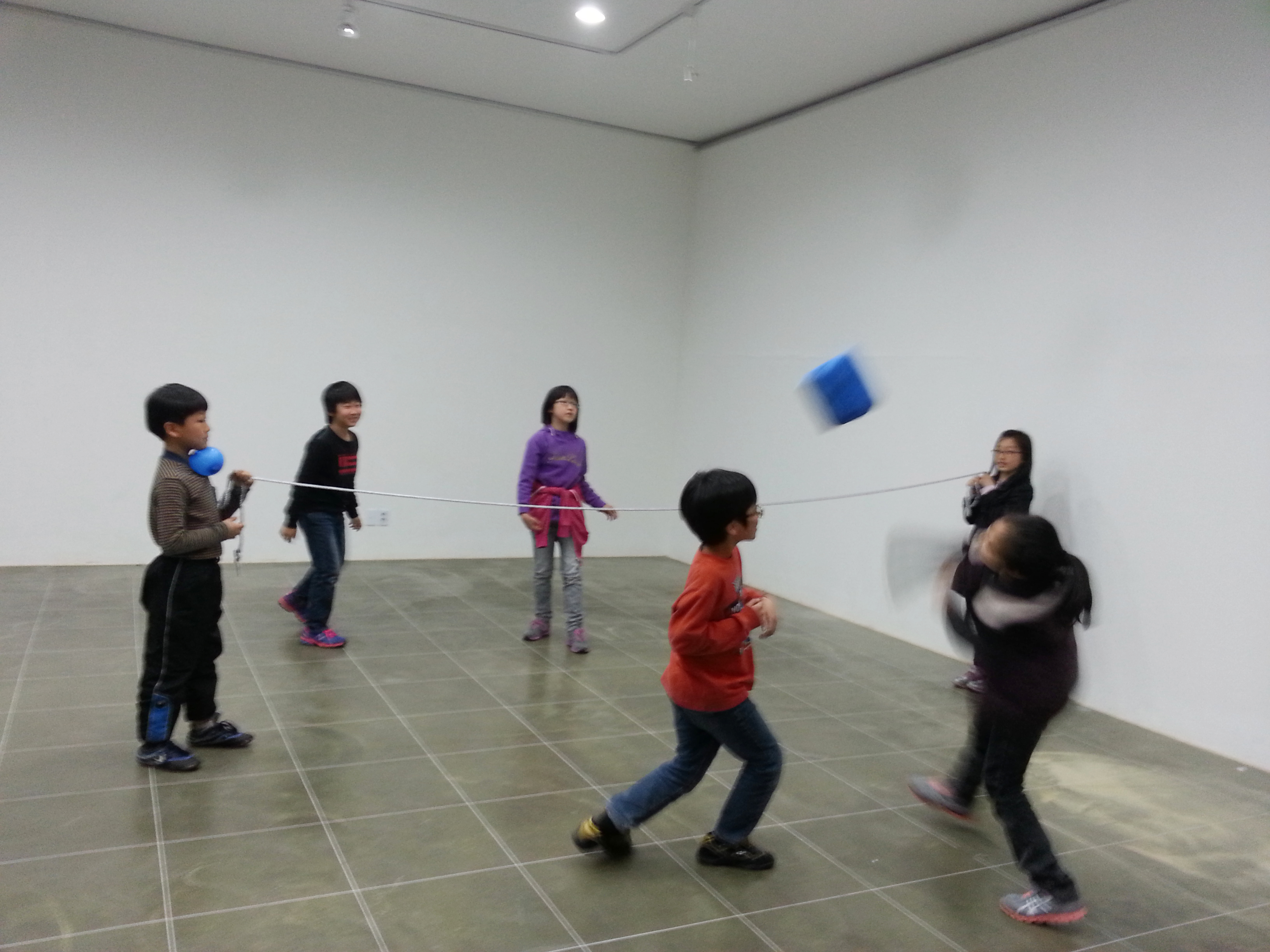
Kim Beom, a Korean conceptual artist, has a 31-minute video where he demonstrates how to embed screams into a painting in a manner that imitates Bob Ross. I saw this in the Nam June Paik Art Center in Gyeonggi-do.

In Yellow Scream (2012), Kim discusses his materials, than proceeds to scream, “Aaah!” near the brush while he is applying the paint to the canvas. He adds screams of terror, confusion, agony, and even high-pitched ones of happiness.

Still from Kim Beom's Yellow Scream (2012)

Still from Kim Beom’s Yellow Scream (2012)

Still from Kim Beom's Yellow Scream (2012)

Still from Kim Beom’s Yellow Scream (2012)

Still from Kim Beom's Yellow Scream (2012)

Still from Kim Beom’s Yellow Scream (2012)

I was laughing by myself in the projection room. This will be one of my favorite art pieces of all time. Looking up Kim Beom online, I was happy to see that he also did graduate school in SVA, and even happier to know that he has a thing for clouds, too.

This reminded me of the Mythbusters episode when they asked whether ancient sounds could have been embedded into pottery. Alas, I couldn’t find a video, but they definitely busted that myth.

(Gyeonggi-do, South Korea) In Bubryunsa, a beautiful temple set in the mountains about two hours from Seoul, I was happy to participate in a temple stay with fellow artists. I was struck at seeing this swastika, used without the Nazi connotations, but to represent what it originally supposed to—auspiciousness, eternity, and Buddhism.

Beautiful!

Beautiful!

Tae Min, the monk who guided us through a tea ceremony, meditation, and a tour of the temple grounds, made me smile when I saw that she has a smartphone. It’s the same one I have: a Samsung Galaxy S3.

Hello, fellow Android user!

Hello, fellow Android user!

Her phone’s cleaner had a Buddha on it.

Buddha!

Buddha!

We saw a lot of buddhas.

Each statue is carved out of one rock. They were made first and then the structure was built around them.

Each statue is carved out of one rock. They were made first and then the structure was built around them.

And I mean, a lot of buddhas.

Whoa, buddha, whoa.

Whoa, buddha, whoa.

But I think the statue I liked best was this one. He looks badass, and probably does martial arts.

A sword!

A sword!

I leave you with this lovely rock balancing we came across. Peace, love, and get your Zen on.

Rock balancing!

Rock balancing!

I loved this mash-up and I loved this kid.

I loved this mash-up and I loved this kid.

(D-Cube City, Sindorim)—I had no idea St. Patrick’s Day was big in Korea. My favorite part was the ladies who mixed Irish dancing with K-pop, and the little kid with stripes who followed them. People had green balloons and could get free scones and nearly everyone was civilized and no one was vomiting. I love globalization.
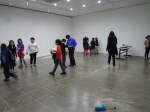
Happy St. Patrick’s Day, one and all!


Unofficial holidays meant for love are quite an event here in Seoul, with people filling out specific roles. In Confucian Korea, I’m quite pleased when people break out of the norm, or when I break it (usually out of ignorance of the custom) and they appreciate it anyway. (For example, last Valentine’s Day, when women are supposed to give out chocolates to the men of their desire, I handed out origami hearts to everyone I knew.)

The month after Valentine’s Day, March 14, may be Pi Day for those mathematically inclined, but here on this side of the world, it is also White Day, a day where it’s the men’s turn to give out hard candy to women they like. Like my belief in Valentine’s Day hacks, I appreciate it when guys do the same and hand out goodies to their friends.

My haul for my first White Day is chocolate from a married studiomate and lollipops from my taekwondo class. The four big lollipops are from Master Kim who handed out an entire box’s worth to the class while the two were from one of the kids. We may not know each other’s languages and have different opinions on eye contact, but hey, there are definitely other ways to communicate. This was, literally and figuratively, quite sweet.

White Day haul. Aww, shucks. <3

White Day haul. Aww, shucks. ❤

Say it with sugar. Arigato and kamsahamnida, gentlemen!

On the day I ate my way through Jeonju, chosen in 2012 as a Creative City for Gastronomy as part of UNESCO’s Creative Cities Network, I went past a store with teddy bears…

A teddy bear on a bench. Of course.

A teddy bear on a bench. Of course.

…the Gyeonggijeon Portrait Shrine with King Taejo’s portrait…

Image via Wikipiedia, since we weren't allowed to take photos of the actual portrait

Image via Wikipiedia, since we weren’t allowed to take photos of the actual portrait

…which made me wonder if his headpiece is the reason behind this Korean hat trend…

Devil hat. Or turkey hat, depending on how you look at it.

Devil hat. Or turkey hat, depending on how you look at it.

…and finally, oh finally, I made it to my bowl of Jeonju bibimbap.

Why, hello there, beautiful.

Why, hello there, beautiful.

Delish.

A clear sky at N Seoul Tower

A clear sky at N Seoul Tower

It was a beautiful clear Sunday at N Seoul Tower, whose observatory is the highest spot in Seoul. Amidst the locks of love, lovebird chairs, and kitschy space-themed elevators, what I really enjoyed was the warriors at the base, wielding swords at a demonstration I happened to come across.

Old meets new. Again!

Old meets new. Again!

But yes, the view was great, too!

Seoul!

Seoul!

At the Teddy Bear Museum in N Seoul Tower, one can discover the history of Korea in the most adorable and saccharine way possible. Hundreds of teddy bears, with most being mechanical, are dressed and arranged to form scenes from Korea’s old and modern history. Bears in royal court! Bears at war! Bears playing polo! Bears doing breakdance! Bears going on a date! Bears getting married! Bears! Bears! Bears!

Some of my favorite scenes involve the arts and the sciences. Here’s one during with scientists during the reign of King Sejong.

scientists during King Sejong's reign

scientists during King Sejong’s reign

Here’s a scene that made me smile. Look on the lower right:

Someone's not doing what he's supposed to. Can you guess who?

Someone’s not doing what he’s supposed to. Can you guess who?

I love this little errant artist bear that could.

This bear made me laugh.

This bear made me laugh.

I also love this scene where the first light bulb was installed in Gyeongbukgung, which I visited last month:

The first electric light in Korea!

The first electric light in Korea!

Sweet, amusing, and way more entertaining than your usual history museum.

(Seoul)—Last Saturday, a group of high school students from the docent program of the National Museum of Contemporary Art of Korea made their way over to the Changdong Art Studio for a talk and workshop with me and fellow artist-in-residence, Karolina Bregula.

Ms. Sung-hee Cho of the NMCA Korea's Department of Education & Residency Program

Ms. Sung-hee Cho of the NMCA Korea’s Department of Education & Residency Program

After I made the students go on a scavenger hunt in my studio, we had homemade kimbap and tteokbokki for lunch. Then, I facilitated short workshops on drawing what they see in clouds, assigning colors to memories, and a blind smell test to dig through their memories.

There are few days when I think having a group of teenagers go through my room is a good idea. This was one of them. Such bright young ladies!

There are few days when I think having a group of teenagers go through my room is a good idea. This was one of them. Such bright young ladies!

Drawing cloud interpretations

Drawing cloud interpretations

A wall of clouds!

A wall of clouds!

Connecting color to memory

Connecting color and memory

A smell test

A smell test

For the color workshop, I thought the work of this student who matched color with pop culture was spot on:

Colors as pop culture references

Colors as pop culture references

I also loved this color palette of memories by another student:

Color and memories of places

Color and memories of places

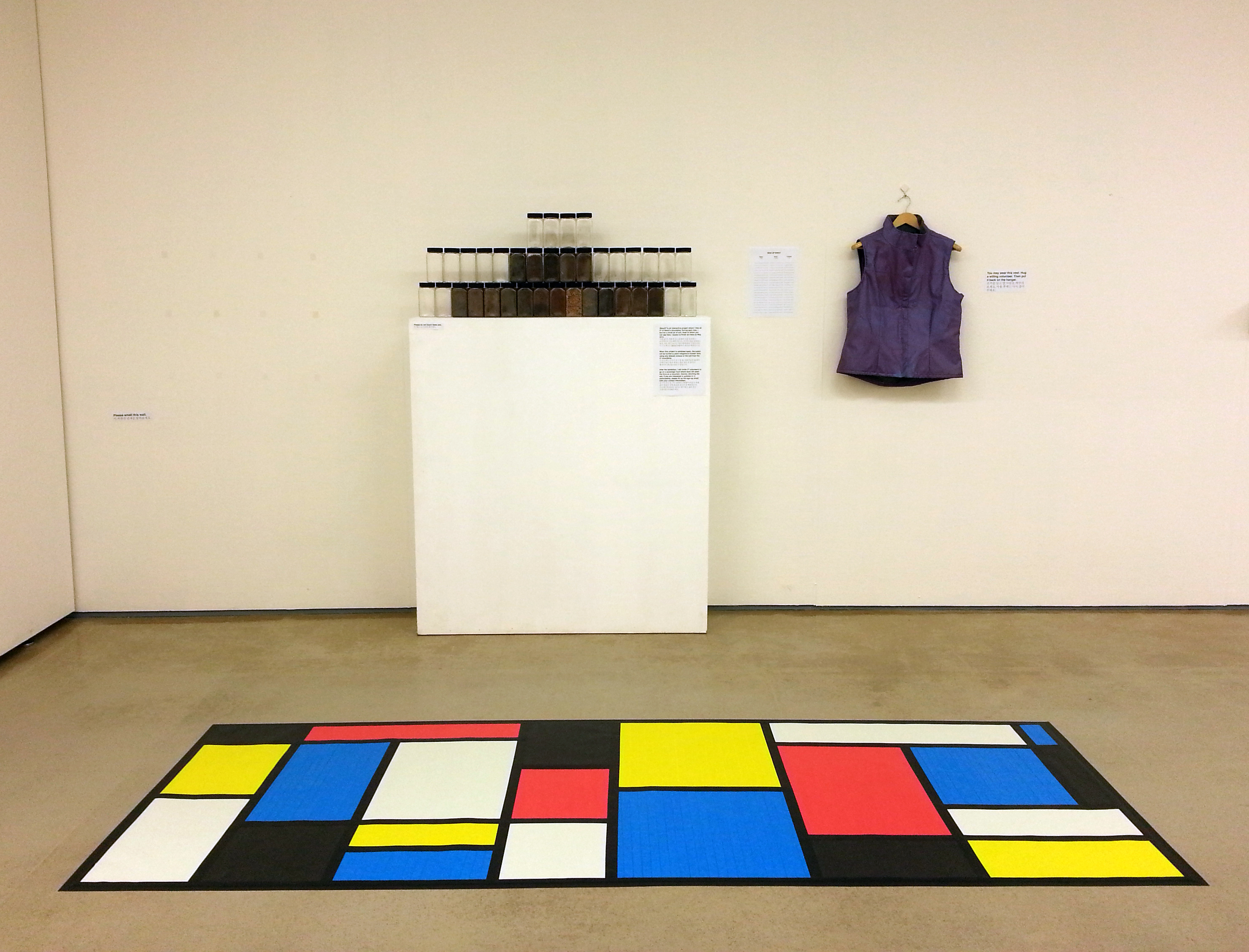
Oh, and some used The Hug Vest as well.

The Hug Vest lives!

The Hug Vest lives!

Post-workshop cleanup wearing an apron. Ms. Cho and her assistant spent an entire day making tteokbokki for all of us. And it was great!
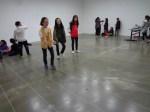
Post-workshop cleanup wearing an apron. Ms. Cho and her assistant spent hours making tteokbokki for all of us. And it was great!
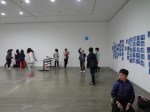
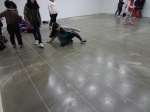
All in all, a lovely and inspiring day with such intelligent women, who will soon be off to university.

With thanks to Ms. Sung-hee Cho of the National Museum of Contemporary Art, Korea, and the staff of the National Art Studio of Korea, Changdong. Also huge thanks to Ashlee Seo Hyung Lee, who translated for me during the day.  

My talks from TEDxNewHaven last year are up online. A big thank you again to Sunnie and Mario and the rest of their team!

TEDxNewHaven, April 2012, The Art and Science of Happiness

1. Start a Hugging Revolution

2. The Sky as a Canvas for Creativity

3. The Memory of Smell

4. Happiness and the Senses

Blog posts about the production process
* Sense kit production process here
* My thoughts on the event here

Past and future talks will be archived on the Talks page from the menu.

During a post-bibimbap walk in Jeonju, a three-hour bus ride south of Seoul, I came across the perfect symbol of my impression of Korea in the past two months:

The Hyundai logo co-existing among traditional hanok, or Korean houses.

The Hyundai logo among traditional Korean houses

The Hyundai logo among traditional Korean houses