Archive

Field Trips

Gyeongokbokgung (Palace Greatly Blessed by Heaven) was built in 1395 and served as the main palace for more than 500 years. It was burned by the Japanese in 1592. Since 1990, efforts have been taken to restore it to its former glory.

Gyeongbokung

Outside one of Gyeongbokung’s gates

It’s such a beautiful palace. A bout of déjà vu came upon me, taking me back when I visited the Forbidden City in Beijing almost 11 years ago. They felt similar mainly because of scale—it seemed to take forever to cover all of it.

One of my favorite parts is the Gyeonghoeru Pavilion, where the king gave formal banquets for foreign envoys—it’s like the royal party club. In the winter, the water around it freezes and gives the impression that it’s floating on ice.

A pavilion on ice!

A pavilion on ice!

Another lovely spot is Hyangwonjeong, a small pavilion that stands out because of its smallness in contrast to its neighboring Goliath structures. Behind it is another palace, Geoncheonggung, where Queen Myeongseong was killed in an assassination plot by the Japanese.

Hyangwonjeong pavilion. Isn't she lovely?

Hyangwonjeong pavilion. Isn’t she lovely?

During my exploration, I came across a total of four magpies. The magpie is South Korea’s official bird. I am so in love with this city. May good fortune befall all of us!

On a trip to Incheon, we visited Songdo, a city built from scratch on 1,500 acres of reclaimed land. Although it cost more then $40 billion to make, there was virtually no one in it, except for the employees who worked to maintain the buildings. Eerily, the cafes had no person in it, but the computers were booted up and coffee prices were advertised. The convenience stores sold a lot of canned goods, such as Spam.

A deserted subway

A deserted subway

DSC01002

Among all other things, Spam! While they sell these in other convenience stores, it struck me differently because of the emptiness. No clerk inside, either.

No one. Nothing,

No one. Nothing,

DSC01009

There were two guys in the reception desk behind us.

A cafe seemed to be available for service, with no one behind the counter.

A cafe seemed to be available for service, with no one behind the counter.

There was no one inside!

There was no one inside!

Two of the computers are booted up. Very creepy.

Two of the computers are booted up. Very creepy.

What startled me out of the creepiness was the knowledge that some scenes from the viral Gangnam Style video were filmed in the Central Park building.

Songdo's Central Park building, with a protest sign outside

Songdo’s Central Park building, with a protest sign outside

It’s scary to imagine that the inhabitants of this city were kidnapped by aliens, and the workers here are just maintaining things for when they come back. Just kidding. It’s such a stark contrast to busy, busy Seoul.

DSC00826

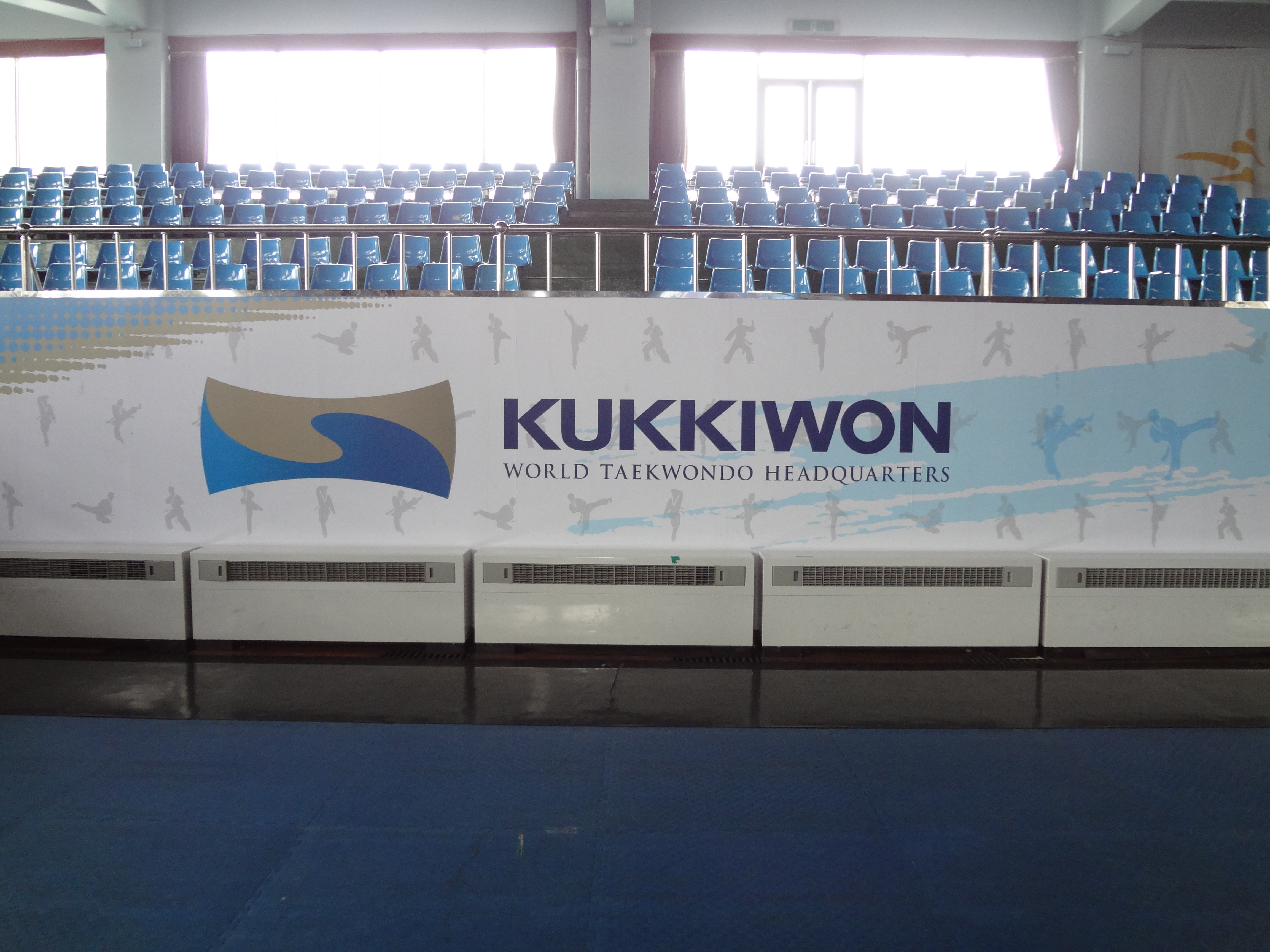
Yesterday, I took what may well be the start of a monthly pilgrimage to Kukkiwon, World Taekwondo Headquarters. Located in Gangnam, popularized by Psy, it was my first trip south of the Han River, not for horse-dancing but to visit the mecca of my favorite martial art in the world.

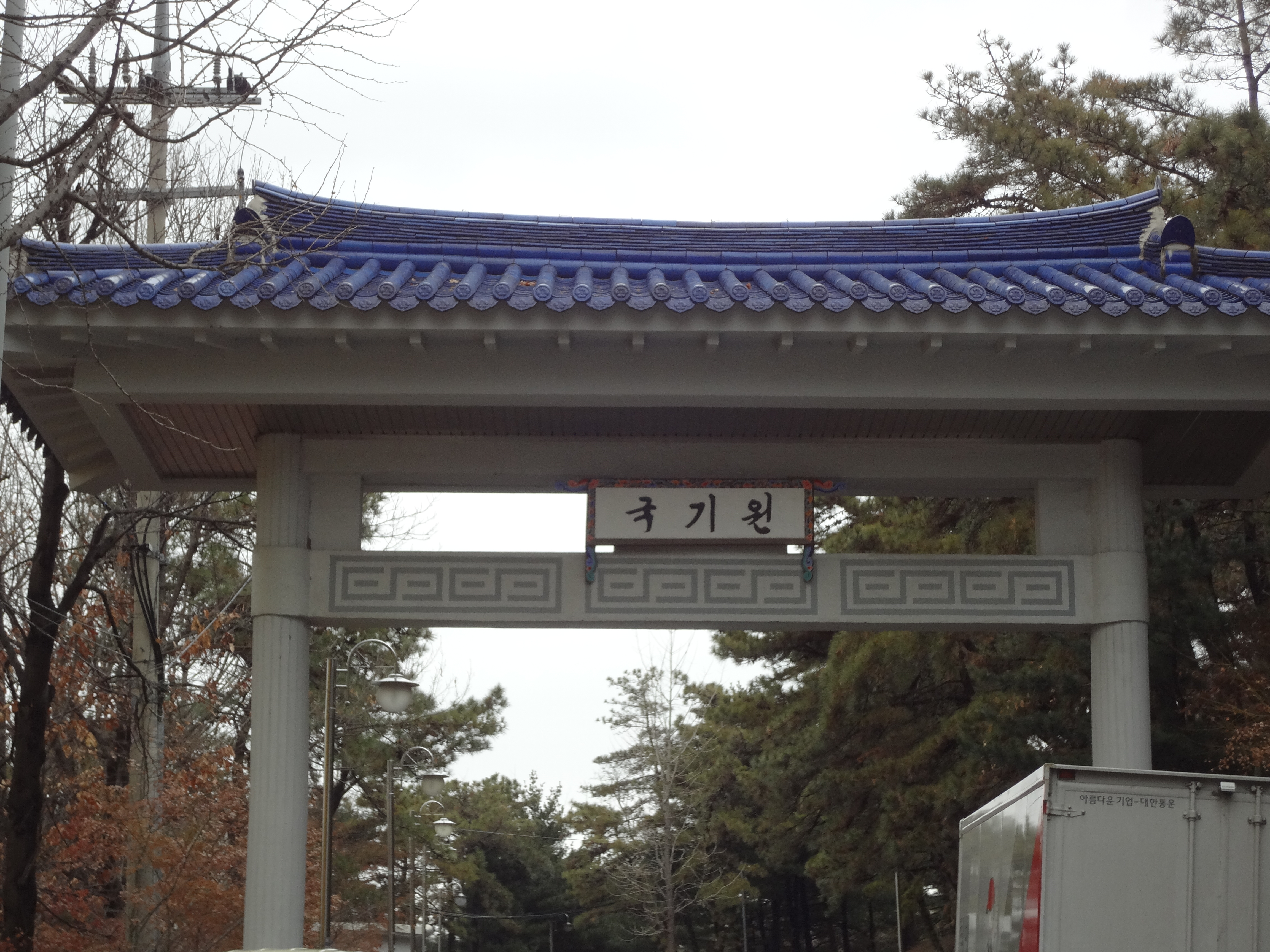
The Kukkiwon arch

The Kukkiwon arch

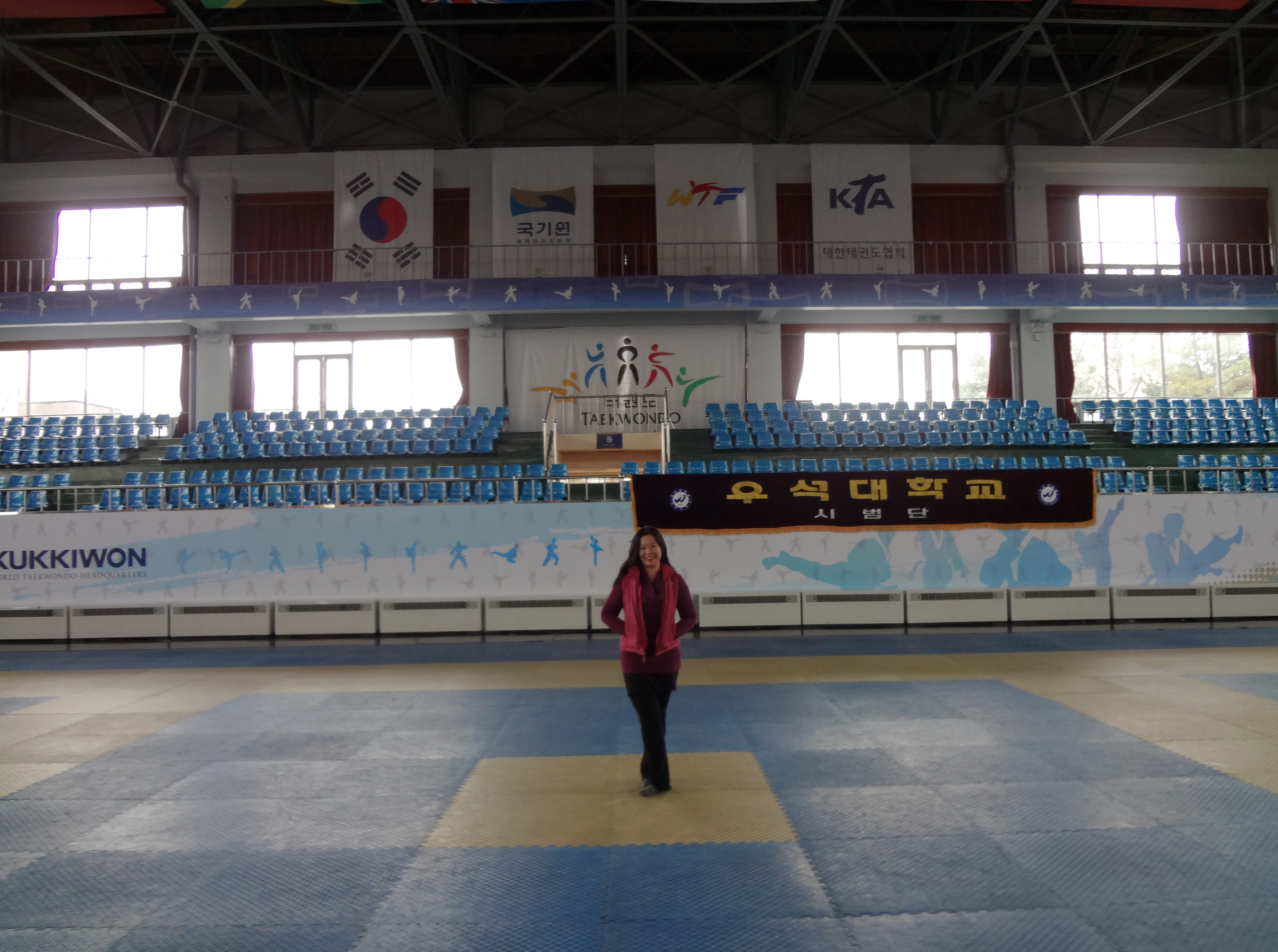
It definitely felt like a pilgrimage, since it was an uphill trek on a side street from one of the main roads, which was lined with South Korean flags. Nearing the end, I find a traditional looking arch, with the name Kukkiwon in Korean. World Taekwondo Headquarters itself is, well, just a gym, but, oh what a gym! It’s quite symbolic to have a public site specifically for a sport that welcomes practitioners around the world. I suppose it was apparent that it was my first time, at least to the security guards who were mildly amused and puzzled at a (deceptively) Korean-looking woman skipping on the mat and taking photos.

I had to. Please don't judge me.

I had to. Please don’t judge me.

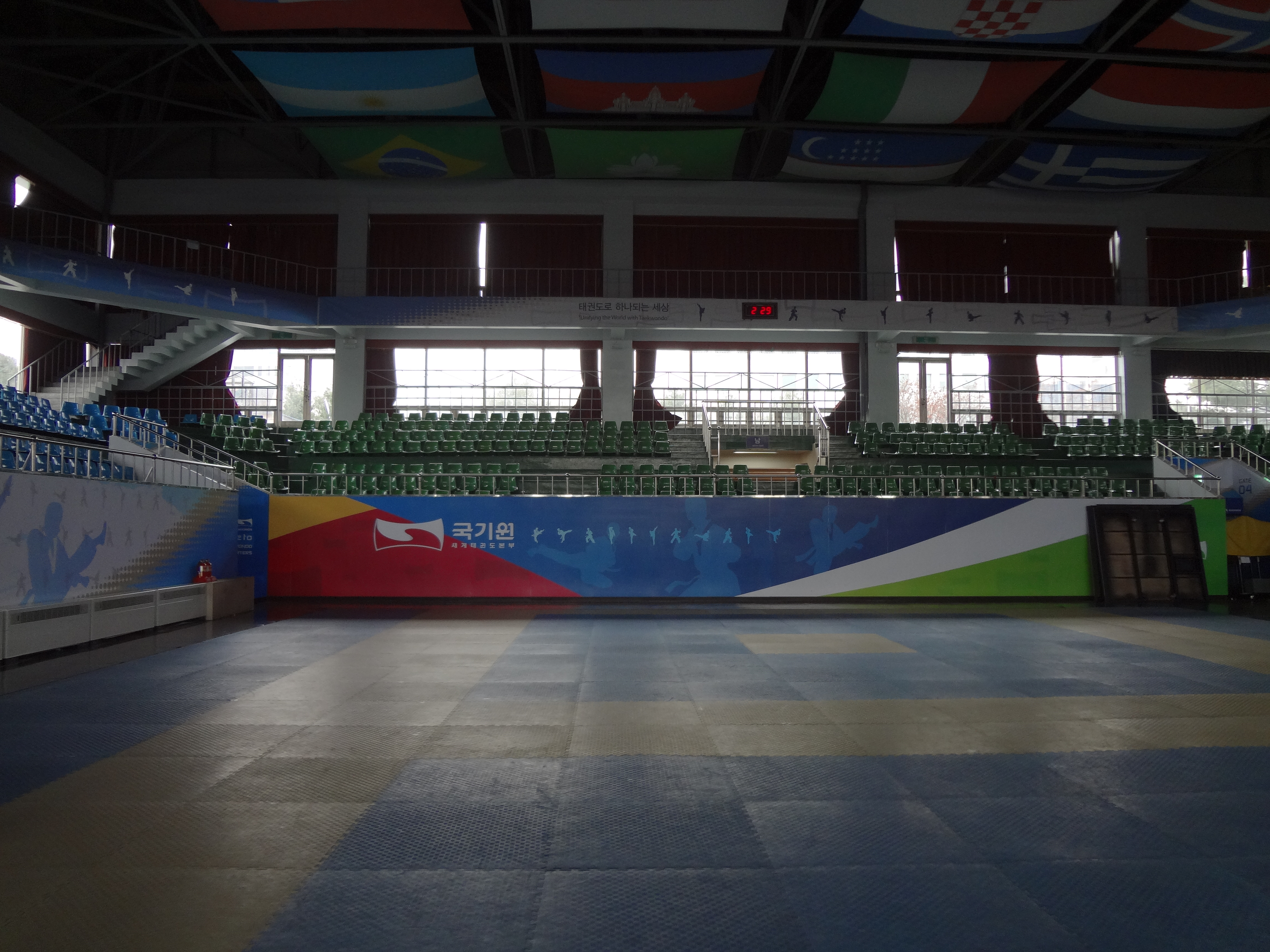
It didn’t look that much different from any gym, except with the flags on the ceiling, the important-looking seats on top, and the rubber mat which seemed firmer and harder than that of most dojangs. But think of all the athletes from all over the world who walked this mat! (On that note, I’m glad I was wearing socks.)

I know it just looks like a gym, but to me it's also a mecca.

I know it just looks like a gym, but to me it’s also a mecca.

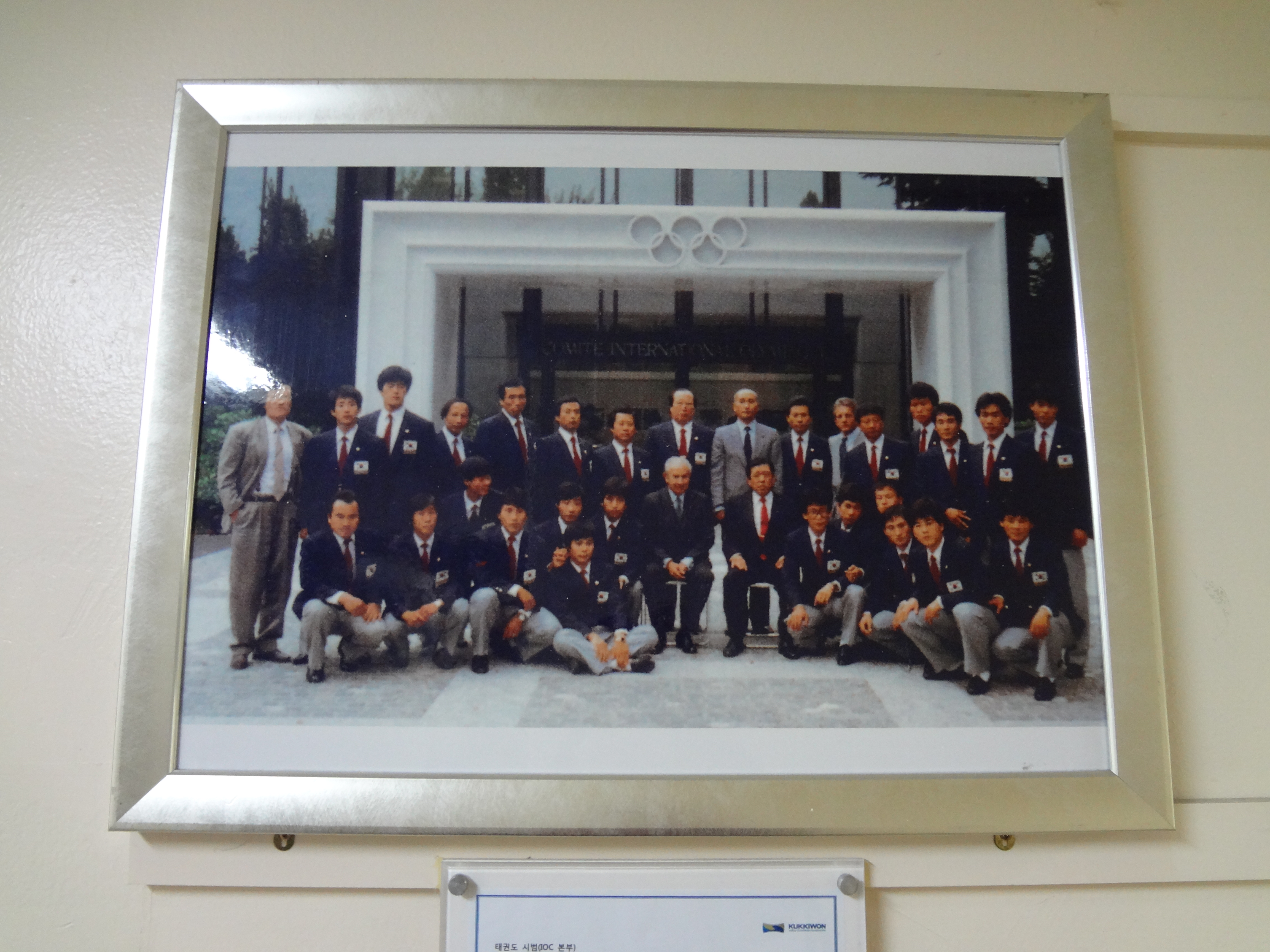
Outside the gym, the hallway was decorated with photographs of taekwondo history. One showed a photo of taekwondo jins from North and South Korea. Another showed people practicing taekwondo on the streets of Cambodia, barefoot. Surprisingly, there were two old posters from taekwondo championships held in Manila. I even recognized some of the people in the pictures.

A bit of history

A bit of history

It was a chilly foggy day in the perpetually busy city of Seoul, but as pilgrimages go, the journey was long but destination was worth it.

So I’ve decided to move to South Korea. Seoul, to be precise.

When I tell my friends I’m moving to Korea, I have three common reactions:

Common reactions to my move to Korea

Common reactions to my move to Korea

But seriously, it’s to do an art residency in Seoul. While it will be my fourth home city (“home” being anywhere I’ve lived in for at least six months because really, it’s probably the only criterion I have left), it’s my first time to live in East Asia.

Seoul, my fourth home city

Seoul, my fourth home city

A big part of choosing South Korea among all other countries is, duh, taekwondo, which I have realized has way more impact on my creativity than I think I give it credit for. Yes, I expect training after studio hours to be the most badass there, so I have high expectations for Dojang/School #15 and Sabonim/Master #29.

Korea, land of taekwondo. Oh la la! Hurray!

Korea, land of taekwondo. Oh la la! Hurray!

I only had a few weeks to pack as much Korean in my head as I possibly could, as I don’t think taekwondo terms will help much. For future expats in Korea, check out the incredibly helpful and hilariously engaging videos of Eat Your Kimchi and SweetAndTasty, which I’ve also written about in a previous post.

Simon and Martina of Eat Your Kimchi

Simon and Martina of Eat Your Kimchi

5-profoh

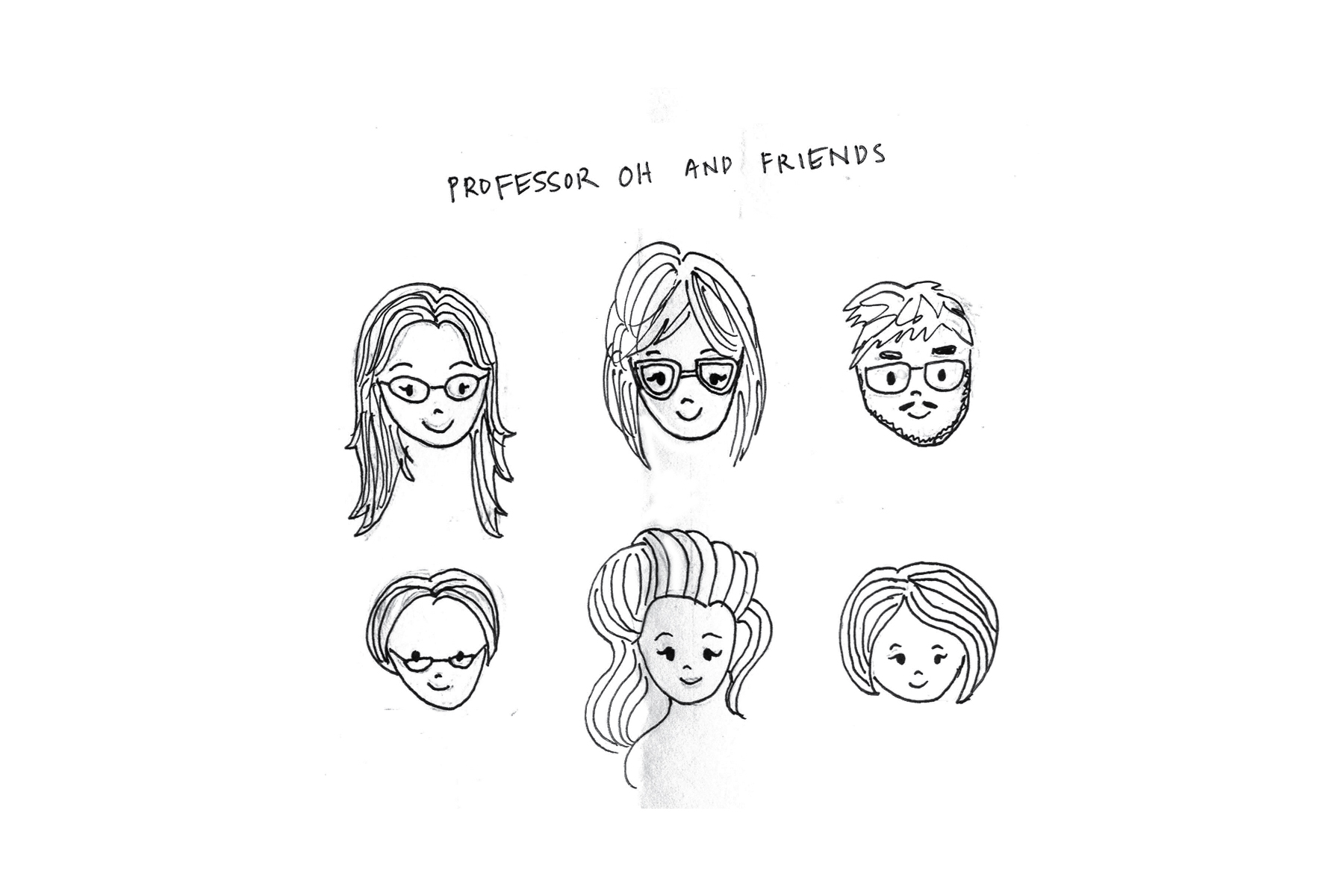
Professor Oh and Friends


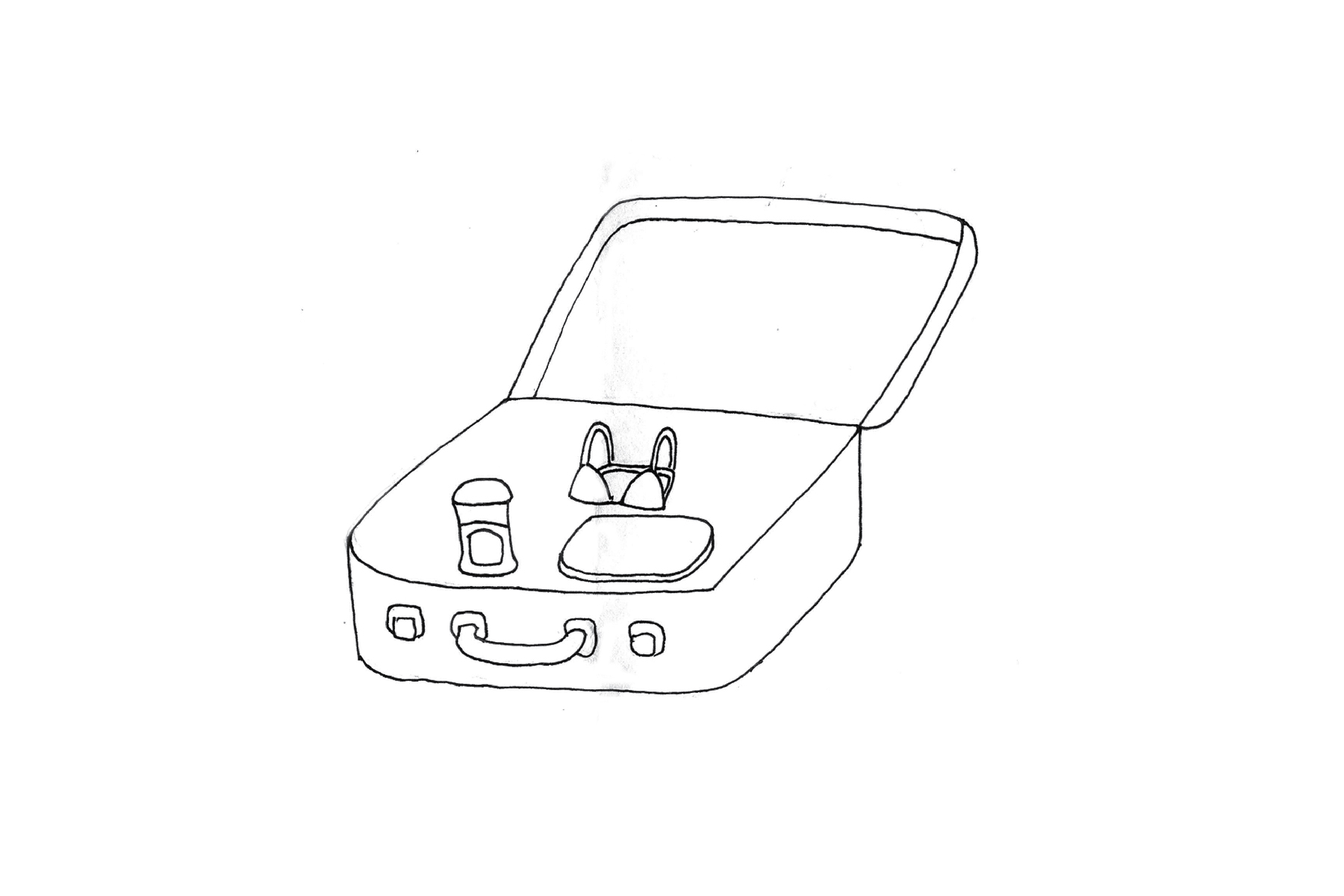
Thanks to the internet, I have come with things like deodorant, bedsheets*, and bras that will fit me—things that are apparently very hard to find in Korea.

Things I was advised to pack

Things I was advised to pack

And so the past two weeks were of doing what I now call The Expat Thank-You and Farewell Rounds (Part 7) of saying goodbye and having conversations with close friends and mentors. Closing another chapter through conversations, no matter how short that chapter was, is important to me, hence the lightning round of brunches, coffees, lunches, dinners, and drinks that make me question the human need of saying farewell over carbs. It’s quite sad to leave again, but I choose to look on the bright side. I am looking forward to uninterrupted time of continuing my work in a country that values tradition, skin care, and taekwondo as much as I do. Woohoo!

Ciao, friends! See you soon!

Ciao, friends! See you soon!

In the past nine years, I’ve always headed out west, and so this should be quite an adventure. Truthfully, it kind of feels like I’m going to another planet, or a parallel universe. I’m going to pretend the entire country is a dojang to minimize any untoward cultural misunderstandings. The bowing, the removal of shoes before getting in the room, shaking hands while touching your elbow—I’ve been doing this in taekwondo for the past 16 years.

Thanks to taekwondo, I feel that the chances of me unwittingly insulting a local are radically decreased.

Thanks to taekwondo, I feel that the chances of me unwittingly insulting a local are radically decreased.

It seems like only six months ago when I packed up my life and said goodbye.

Oh wait, it was.

Well, here goes nothing.

*Edit: So I’m here in my studio and they DO have bedsheets, or at least something that covers the bed. What the hey, internets. 

My dreams of the sleeping kind are often about flying, so it shouldn’t be too much of a surprise that I’m considering aviation. However, as someone who nearly fell out of a building at 8-years-old, I am afraid of heights. But childhood trauma be damned! As a tiny yet tangible step to being an actual explorer, I went on an ultralight for a ride overlooking the Philippine city of Angeles (about 1.5 hours from Manila) two Sundays ago.

Rorsketch: The Flying Edition

The desire to fly, or be up in the sky without the stressful ordeal of commercial flights, to which I am no stranger, also has something to do with my cloud project. For years now, I’ve looked up at the clouds. It would be awesome if I can actually be at the same height as them!

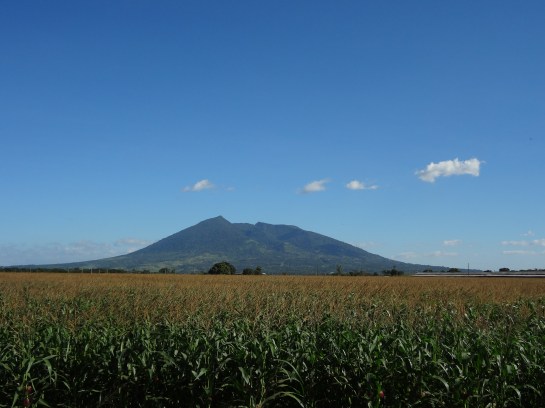
Arayat is a mountain with its own share of myths that feature gods who battle other gods and/or giants in nearby mountains or disguise themselves as humans.  It’s pretty. I want to climb it. But that will be another story for another day.

On the way, the clouds were already teasing me:

Arayat. With clouds! Thanks, Stephanie, for stopping the car.

Arayat. With clouds that look like the food chain. Thanks, Stephanie, for stopping the car.

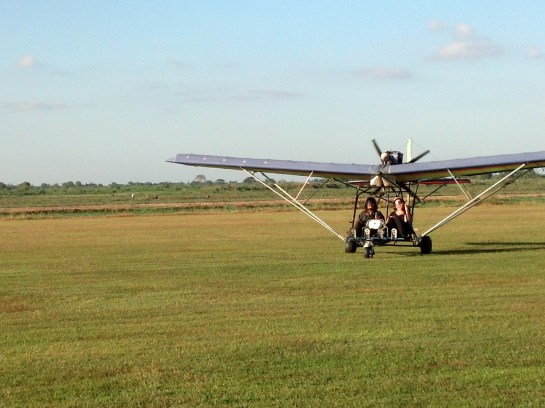
It’s difficult not to imagine the Wright brothers, who worked on planes and gliders of a similar size. The smallness of it! It’s like a bike with wings. But here goes nothing:

So this is an ultralight. From afar, it's like a dragonfly.

So this is an ultralight. From afar, it’s like a dragonfly.

Fist in the air! I'm afraid of heights, but it was not the time to think about that. Photo by Steph Tan.

Fist in the air! I’m afraid of heights, but it was not the time to think about that. Photo by Steph Tan.

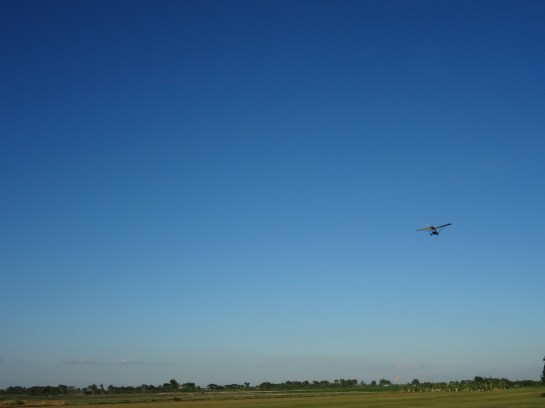
Up, up, and awaayyy!

Up, up, and awaayyy!

A bicycle in the sky

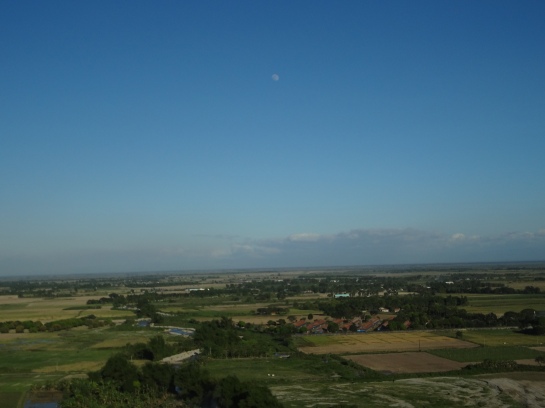
Flying via small planes has often been compared to being on a roller coaster with invisible tracks. Unlike commercial flights, which can give you the similar, and sometimes even better views, there is no barrier between you and the atmosphere. You control the vessel (well, Captain Max who was sitting on my right did, but he let me work the controls for a bit) and it is like riding a bike in the air. It’s quite exhilarating. And the skies told their stories:

The clouds are like the net that's catching the moon! Do you see it?

The clouds are like the net that’s catching the moon! Do you see it?

What I like about flying in relation to this project is that it makes me a part of the canvas now.

Yes, I'm in there! Photo by Steph Tan.

Yes, I’m in there! Photo by Steph Tan.

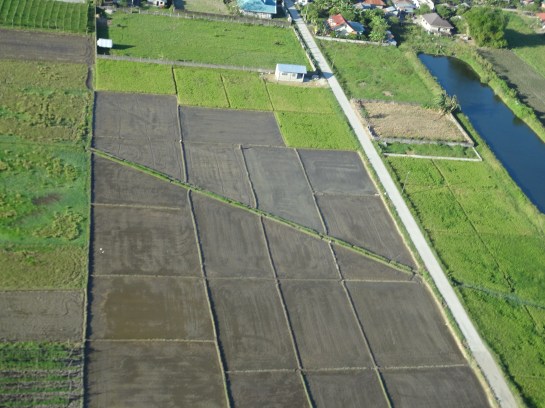
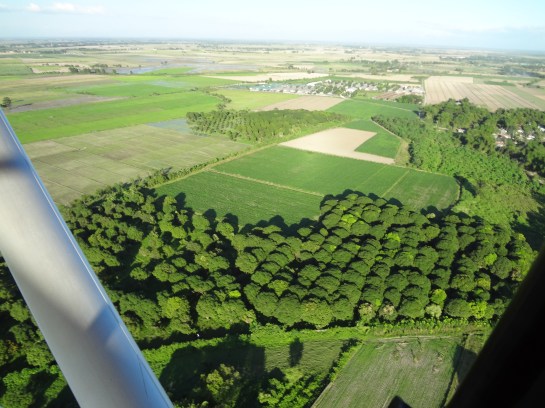
The change of height and vessel also brought about one crucial, if not obvious, thing: I can see the ground below. And so grass and fields and roads turned into playgrounds of visual perception as well. Living in big polluted cities all my life, it is always startling to see huge patches of green. While we were rocked by scary gusts of wind, it was air that tasted of rain and sunlight and coconuts.

I see a tangram. Sort of. You?

I see a tangram. Sort of. You?

Broccoli!

Broccoli!

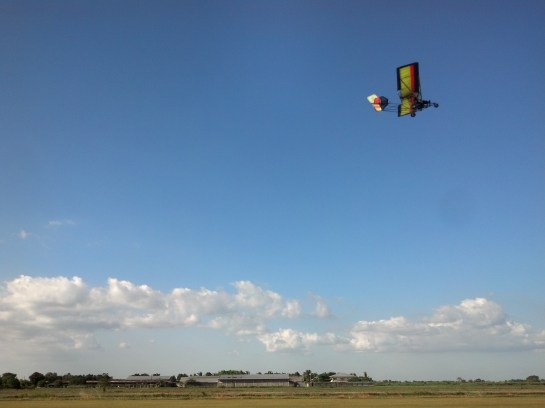
That day, my friends and I witnessed another plane doing aerobatic sequences in the sky using a bright yellow biplane. My jaw dropped, and I stared for several minutes. Then I started squealing. I can’t wait to do that eventually.

It's a bright yellow biplane and it's absolutely gorgeous.  And I think it was doing the sky equivalent of cartwheels.

It’s a bright yellow biplane and it’s absolutely gorgeous. And I think it was doing the sky equivalent of cartwheels.

A hangout in the hangar (Yes, puns are not funny)

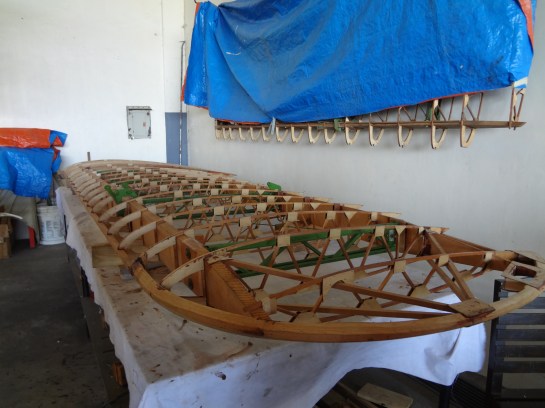
When the plane landed, I marched up and interrogated the pilot, Captain Mike, who humored us and described how the plane was made. Back in the hangar, he pointed out a pair of wings being made. Each part has its own paperwork so that it can be traced should anything go wrong.

The skeleton of a wing.

The skeleton of a wing.

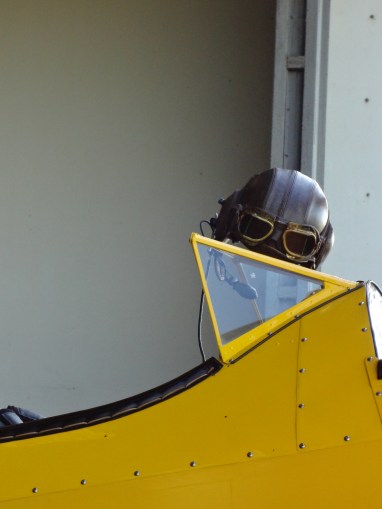
Even the hat and glasses are very steampunk. Look!

I want that hat.

I want that hat.

Planes in the hangar. Valet parking provided.

Planes in the hangar. Valet parking provided.

On the way back, we had fresh coconut juice from the roadside. The sunset painted the clouds a pale orange, and I caught two that looked like dolphins. The day was almost too cinematic.

I see kissing dolphins!

I see kissing dolphins!

I grew up loving Antoine de Saint-Exupéry’s The Little Prince, and was thrilled to learn that the author himself was actually a pilot. I’ve devoured his other writings, especially Wind, Sand, and Stars, Night Flight and Flight to Arras. I think traveling in general allows for creativity, but traveling alone allows you to get lost in yourself and discover these pure grains of truth that shape you without you consciously knowing it. I think this has been the reason why I keep moving and seeking new and strange experiences, and once you start, it’s difficult to stop.

Steph and Kristel Tan, and me. Thank you, ladies!

Steph and Kristel Tan, and me. Thank you, ladies!

Thanks to Stephanie (@StephLTan) and Kristel Tan, The Angeles Flying Club, Captain Max, and Captain Mike!

Rorsketches to be posted soon. But check out previous ones here

Up, up, and away!

I think the flying bug just caught me, you guys! Full disclosure: I was just a passenger on this ultralight (my first taste of a non-commercial flight), though the captain let me work the controls a bit when we were up there. I’ve been traveling for years, but this is the only time I’m actually considering the possibility of being at the controls.

And hey, I don’t even drive.

More updates (as well as how this ties to art, science, design, and everything else I do) soon!


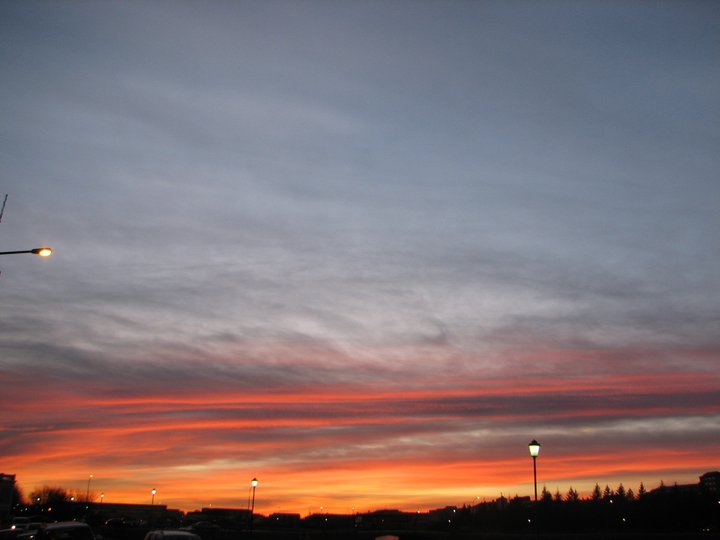
A winter sky in Reykjavik, Iceland

First, a thank you to science. The researchers who have, by the scientific method, concluded that travel is indeed good for creativity. Pop the champagne! It’s not just the coincidence of people like Hemingway, Stein, Picasso and company who produced creative work while having well-stamped passports.

In 2009, William Maddux of the business school INSEAD and Adam Galinsky of the Kellogg School of Management, reported their results in the Personality and Social Psychology Bulletin. They subjected 155 American business students and 55 foreign ones studying in the US to a creativity test called the Duncker candle problem. These students were given a candle, matches, and a box of drawing pins. They were then asked to attach the candle to a cardboard wall such that no wax would drip on the floor when the candle was lit. Maddux and Galinsky found that 60% of students who had lived abroad solved the problem, while only 42% of those who had not lived abroad did so.

For the past eight years, I have lived abroad. I have moved countries and changed lives for a total of six times. It does not get any easier, for goodbyes are never something I look forward to. It does, however, get more routine. It is a cycle that I think will repeat itself ad nauseum for most of my adult life.

For me, it is important to use travel for creative purposes. It’s the only way I can justify the price of a plane ticket and rising rent; I must use that time to further my projects. And so I try to make each trip count, making sure I have more to show for my trip other than photos to be uploaded online. The professions I now claim are many—one can read scientist, journalist, editor, visual artist, poet, student, communications director, graphic and interaction designer in my increasingly eclectic resume. Perhaps because one word can mean a variety of things in different countries, I have long been wary of labels and instead choose to tell stories about the projects I have run. (An example of which is DrawHappy, which will be in the Learning section every Monday. Go draw!)

Naturally, a thank you to the cities. I can recall stories, experiences, mishaps, and projects in in every one of them. Manila, Barcelona, and New York—places I have lived long enough to call home—are all port cities. They have been among the intersections of migratory or trading routes of humanity. All have very diverse cultures and colorful histories. Each time I return, I find that many things have changed. The dissolving streets, weather, landmarks, and people have all, in their minuscule ways, contributed to my worldview and identity. Each city’s definition of beauty has given me the impetus to compare and contrast their sunsets, cloud formations, art, and architecture. It is difficult to be a traveler without reading and rereading Italo Calvino (Invisible Cities), Jorge Luis Borges (everything), and Sun Tzu (The Art of War) as though they would give me a refresher course on the world, as though they were operating manuals for a life on the road.

Third, thank you to the cities’ inhabitants, particularly those who have opened their hearts and homes to someone who occasionally did not speak their language or understand their ways. The first time I traveled, I was more acutely aware of how different they were from how I was raised, from the food to the accents, the government, and the customs. My notions of what was “right” and “acceptable” were gutted and destroyed. Each city and country has the same familiar struggles and questions about government, national identity, and race. The more I traveled, the more I realized that human beings are more similar than different. Today, some of my best friends include those whose communications with me have necessitated dictionaries and Google Translate. Language and culture stop becoming barriers and instead become bridges.

But thank you, too, to the ones who have made me feel like I was “The Other.” The ones who have made me feel ostracized and have made me uncomfortable. It has taught me endurance, humility, and patience. I think the best way to judge a person’s character is how he treats you when he underestimates you. It has taught me to be grateful for everything I have and accomplished, and to focus on the important things.

Thank you to the grants, schools, and organizations that have given me purpose. I always hit the ground running once the plane has landed in order to accomplish the things I promised the powers-that-be I would do. My most recent stint was to do my MFA in Interaction Design at the School of Visual Arts, which was made possible by a generous grant from Fulbright. I learned to work through bad weather, sickness, ungodly hours, and alternate time zones. To this day it’s difficult for me to be idle. Creative travel, especially those involving contracts, has taught me accountability, responsibility, and a heightened sense of time.

Thank you, too, for all the things that have gone wrong. When you are out of your comfort zone, the things you fear will go wrong often will. I have taken detours, lost friends, and given up significant things for the choices I have made. Everything becomes a tool for teaching me something, whether it’s something as small as an iffy Internet connection, or something more devastating as losing relationships. It has taught me to let go of material things, because many are just too darn hard to pack.

While I can’t say that traveling is constantly great and wonderful, I know that I have always been changed by it, and that I would never have reached this level of personal and professional growth had I chosen to be anchored in one place. Not all travelers are creative, and not all creative people are travelers. (And that’s ok.) But for me, traveling has taken me outside of myself and opened worlds I never knew existed. It has been kind so far; it has taught me that the world is my home.

__

Five Ways to be A Creative Traveler (Passport not always required)

1. Try something new everyday. It doesn’t need an expensive plane ticket to have the mindset of a traveler. Even the office that you have been walking into for the past ten years can be a venue for personal growth. Try a new spot to work in, a different flavor of cereal, or a new email password. The fact that your mind is jolted to the newness can trigger your creativity.

2. Learn a new language. Last March, the New York Times reported that people who know more than one language have been shown to be smarter. While I suppose multilingualism is inherent for most Filipinos, I guarantee your mind will be squeezed (in a good way) when you try a language that is far removed from what you usually know. Try Russian, Hebrew, German, Bisaya, or any language with an unfamiliar pattern. You will learn not just grammar and vocabulary, but also the culture of a people in that way.

3. Reserve at least 15 minutes of your day for a creative habit. I would strongly recommend using the same medium, such as writing, drawing, photography, etc. That way, if you look back at your work after a month, you would realize that these small multiples add up to an awesome project. Put them all on a blog and help inspire other people, too.

4. Read everything. Don’t limit yourself to a certain genre. If you like science fiction, read the occasional children’s book. If you read novels, make time for a biography. Books are the windows to the world—past, present, and future. The more possibilities you realize, the more you will break through creative blocks.

5. Have a conversation with a stranger. While you’re at it, don’t limit yourself to the same type of people you spend time with. Make friends with those whose daily routines are radically different from yours. If you are usually stuck in the office all day, have coffee with someone who is always on his feet and outdoors. If you have conservative beliefs, talk to someone whose worldview is the complete opposite. You will discover that there is so much more to life than the things you are accustomed to.

An edited version of this article first appeared in the Philippine Daily Inquirer Learning Section, page H4, on 6 August 2012, and on their online edition on 5 August 2012. 

One of the best things I learned since moving back to Manila is The Mind Museum.

The Mind Museum at Taguig. Image via The Mind Museum’s Facebook page

It was a great day to reconnect with the city, and it was an even better surprise when I discover that one of my former capoeira classmates now works there as an exhibit manager.

The building itself is a gorgeous piece of architecture led by Ed Calma (featured in the December 2011 / January 2012 issue of Fast Company). It is a significant addition to the commercial, artistic, and residential landscape of Fort Bonifacio.

There are five galleries in two floors spread over 5,000 square-meters:

  1. The Story of the Universe: Its Beginning and Majesty
  2. The Story of the Earth: Its Story Across the Breadth of Time
  3. The Story of Life: The Exuberant Varieties of Life
  4. The Story of the Atom: The Strange World of the Very Small
  5. The Story of Technology: The Showcase of Human Ingenuity
It’s such a great example of interactivity in a science museum. The major theme is nature in scale. Visitors can go through a human brain, see a skeleton of a T-rex up close, and come across scientific concepts by experiencing them. It has been open since March, but already has gained visits from locals and tourists alike.
Maribel Garcia, curator, emphasized the importance of scientific correctness and emotionally grabbing the viewers—an opinion that   I share, and one that triggered this “science meets art” trajectory in my life.
Visit The Mind Museum site.

Speaking at my first TEDx conference was a challenge. It was not just because it was a great platform for ideas, but because of the timing, design, and execution needed to pull off four interactive talks in one day.
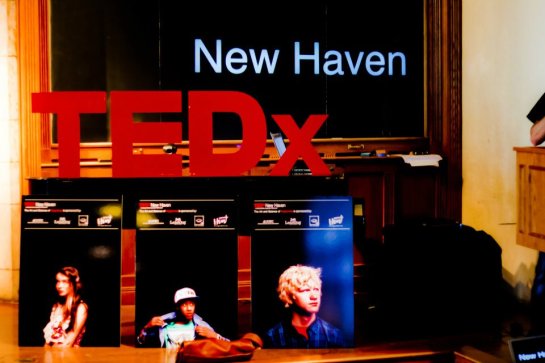
TEDxNewHaven: The Art and Science of Happiness. Photo by Chris Randall

The theme for TEDxNewHaven was The Art and Science of Happiness. My goal for the talks was two-fold: to engage the audience in something interactive in the course of the day, and to enable them to view their senses as tools by which to achieve happiness. To achieve these, I had to produce 200 “sense kits” that contained physical, non-digital formats of my projects: HugPrints, Rorsketch, Smellbound, and EatPoetry.

Round One. Photo by Liz Danzico

First Talk: Touch

My first talk was about using our sense of touch. I presented HugPrints, my project where I am attempting to hug everyone in the world and getting visual feedback through a specially designed thermochromic vest. I asked volunteers to come up the stage to hug me.
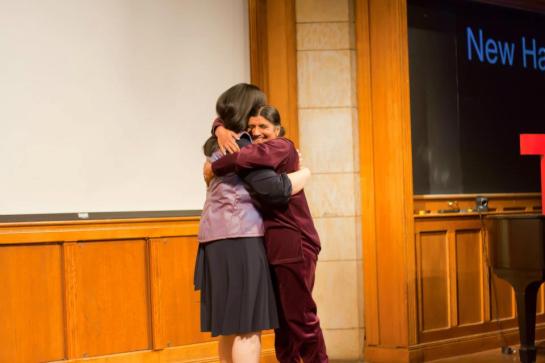
Hugging on stage. Don’t you just love it? Photo by Chris Randall

Afterwards, I asked the rest of the audience to pull out the HugPrints cards in their sense kits, which contained hugging instructions so they can hug each other (if they wished).

Are you getting enough hugs a day? Photo by Chris Randall

Second Talk: Sight

For the second talk, I explained Rorsketch and first engaged the audience in a guessing game of what clouds looked like and then revealed what drawings I made. After doing this project for a while, I wasn’t surprised about how some people were calling out the same things, while other clouds had very different interpretations.

You know what my favorite Pixar movie is! Photo by Ruoxi Yu.
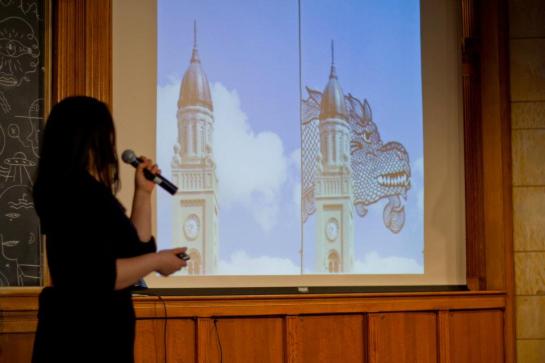
Yes, it’s a dragon! Photo by Chris Randall

I then asked the audience to pull out the blue Rorsketch cards and the Sharpies in their kits, and they drew their own interpretations on the clouds printed on their cards. To encourage them to draw, I did a live drawing session on a big cloud on stage.
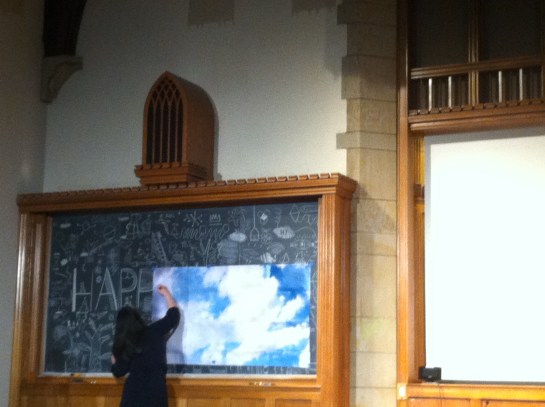
Drawing on a cloud. The cloud I sketched on was taken by Nikki Sylianteng. Photo by Liz Danzico

One of my fellow speakers, Nima Tshering, sent me his cloud drawing. (Thanks, Nima!)

A fairy grandma with a baby by Nima Tshering

Third Talk: Smell, Hearing and Taste

I explained two projects for this post-lunch session: Smellbound and EatPoetry. First, I explained the connection between smell and memory and had the audience remove the Smellbound postcard which contained a printed smell. I showed them the book I made, An Olfactory Memoir of Three Cities. Afterwards, I read them After Apple-Picking by Robert Frost while they ate the apple lollipop inside their kits.
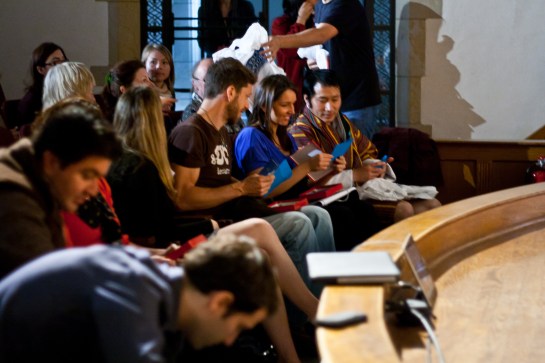
“Now please remove another envelope from your kits…” Photo by Chris Randall

Fourth Talk: Happiness and the Senses

For my fourth talk at the end of the conference, I summarized how we can use our senses to be happy. The key points were that we are all equipped with these tools; i.e. we all had the capacity to hug our loved ones, to interpret a cloud, to smell a memory, and to connect poetry with food, and that if we paid more attention to the world around us, it would promote our feelings of well-being and optimism. I also explained my own explorations with happiness by showing submissions from DrawHappy, as well as what I’ve learned from the project so far.
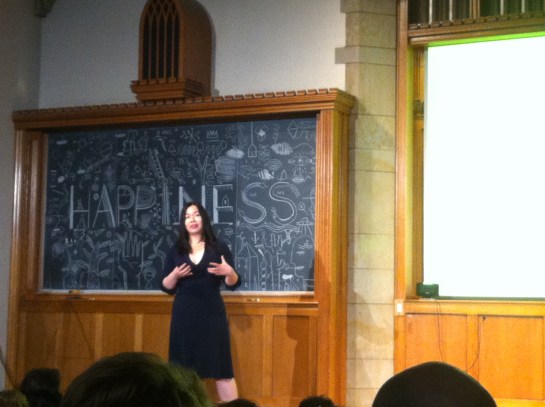
Photo by Liz Danzico

What Worked, and What I Would Do Differently Next Time

All the sleepless nights making sure all 200 kits had the right contents were definitely called for. So much craft and attention were given to every single detail—each postcard had to be sealed in an envelope so people can only view them as instructed, the envelopes had to match the main color of each project’s logo for easy recall, each postcard had to be branded and oriented in a specific direction, each kit had to contain envelopes in a particular order and needed both a Sharpie and a lollipop. Anything less would have taken away from the experience or would have confused people. Doing something onstage so that people can mirror my actions was also important, and getting all the props together also was something I had to keep in mind in addition to the actual slides.

I’ve also been onstage on different occasions and it was interesting to feel these variegations of audience contact. When performing for the Poetry Brothel in Barcelona, I had to inhabit a certain character and, depending on the piece we were doing, had to maintain a certain mystique. When doing poetry readings just as myself, there was a bit of conversation with the audience when I talk about the process of writing, but during the reading of the actual poem, it was just myself and the text. I felt this while reading the Frost poem to the TEDx crowd—the entire hall was dead silent in contrast to all the other times I was up there. (That was quite fun, actually.) But doing a talk that involved not just a Keynote presentation but an actual creative activity was another world altogether—it’s difficult to assess if everyone was enjoying the activity, although what was great about having a particularly open audience such as this one was that they weren’t afraid of trying new things.

For the next time I do something of this nature, I would have a card that had explicit instructions not to use the objects inside the kit unless asked. Although I anticipated this by making sure the envelopes were sealed, I did catch at least one person eating their candy before lunch. (We were running a bit late, and I suppose he was hungry.) One thing about having a sealed and long candy stick was that it affords a long eating session; they wouldn’t have finished it to begin with and they could just put the candy back in the plastic and in the kit. Hard candy was definitely the way to go.

Also, I would have split the third talk (Smellbound and EatPoetry) into two and let each project have its own 10 minutes. Thus, I would have placed EatPoetry for the fourth talk and followed it with a short summary of the senses. When I went up for the last talk and said that “Ok, I’m not going to make you do anything now,” I could swear I felt the disappointment of some people. If the schedule allowed it, giving each project its own time in the spotlight would have allowed the audience to absorb the concept more fully, instead of rushing to the next project right away. I can’t wait until I develop these projects more and more, and see what I will ask people to do the next time.

Finally

I have to say, I love this format of getting the audience to actually do something creative in a talk, instead of me just standing there telling them about myself. Thanks again to the audience for being open to these ideas, my friends and colleagues for helping me pull this off, and to the wonderful team at TEDxNewHaven who worked tireless to make it all happen!

Thanks to Kate Russell and Liz Danzico, my plus two!