Archive

Environment

Late this week, I had a chance to attend the mid-term exhibition of the Singapore-ETH Future Cities Laboratory, which is hosting me for the duration of my residency program here in Singapore. It was wonderful to see all the work from different modules—Low Exergy, Architecture and Construction, Digital Fabrication, Transforming and Mining Urban Stocks, Housing, Architecture and Urban Design, Urban Design Strategies and Resources, Urban Sociology, Territorial Organisation, Landscape Ecology, Architecture and Territory, Mobility and Transportation Planning, and Simulation Platform.

Below are some photos I took from the event.

One of the many exhibition tables:

DSC08950

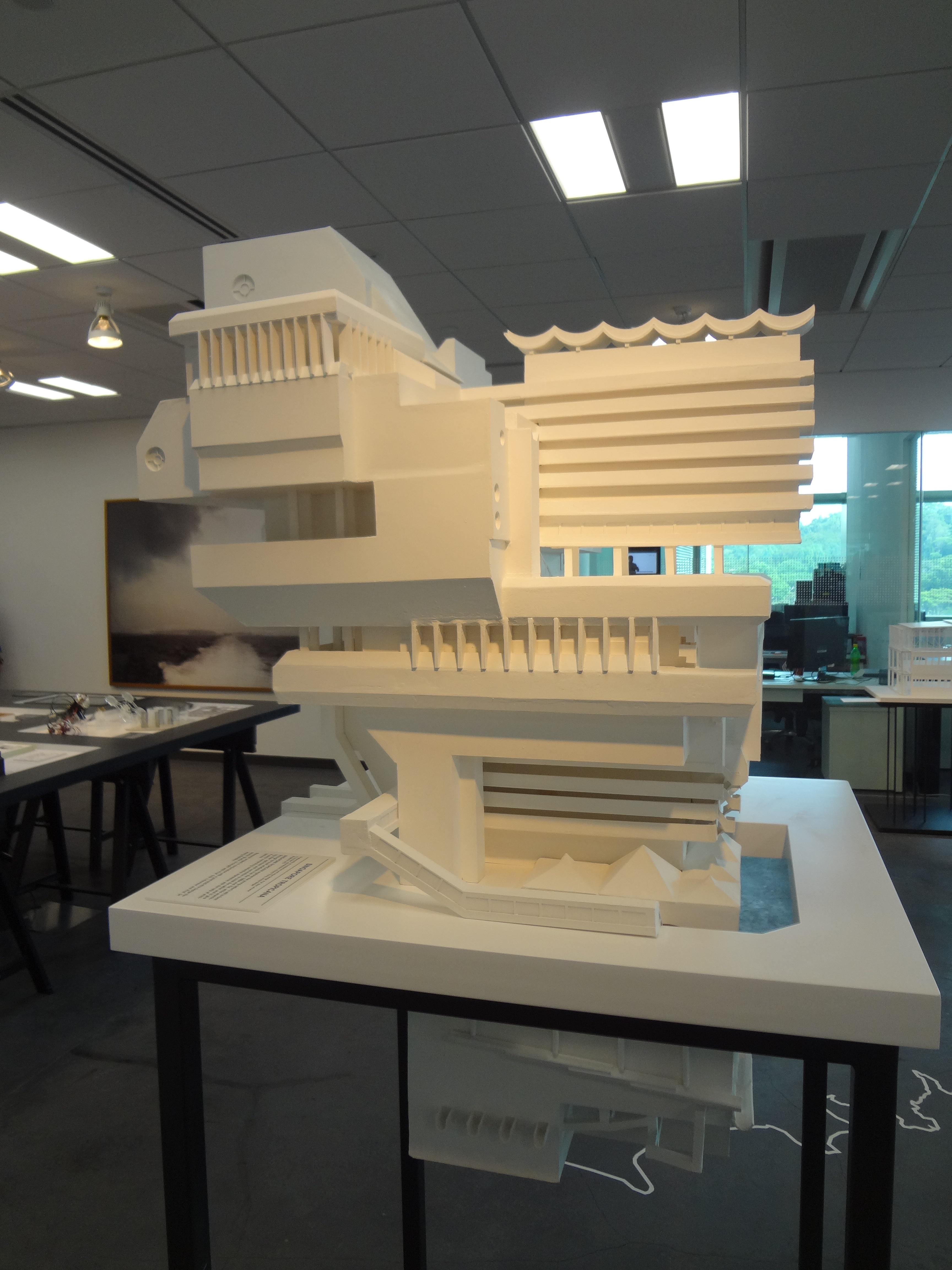
Singapore Tropicana:

DSC08948

Researcher Marcel Bruelisauer of the Low Exergy module after explaining his design solution for cooling systems:

20130905_170730

Professor Kees Christiaanse, Programme Leader and Module Leader, speaks at the book launch. Lots of books were introduced that day, including one of the coolest things I’ve heard of, Flight Assembled Architecture by Professor Fabio Gramazio, Professor Matthias Kohler, and Raffaello D’Andrea (see the monitor on the right).

20130905_173321

Some very cool things made by robots:

20130905_190245#1

Doctoral researcher Norman Hack in front of his module’s exhibition. Behind him are beautiful 3D pieces.

20130905_191755

An unmanned aerial vehicle (UAV) used for dengue research:

20130905_164247

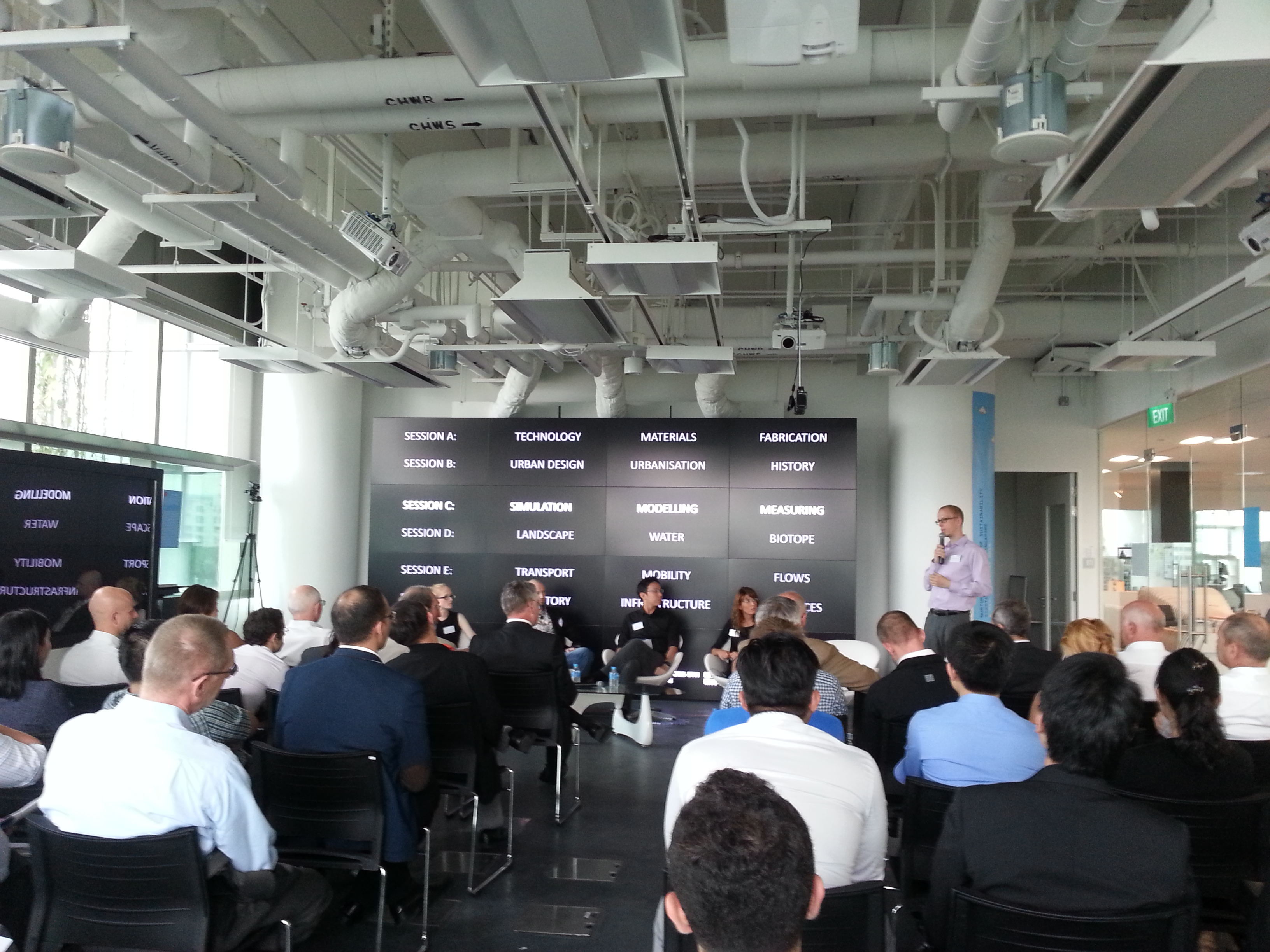
A panel discussion on Simulation, Modeling, and Measuring, moderated by Dr. Matthias Berger (standing, on the right):

20130906_140434I wish more people (non-architects / designers / computer scientists / urban planners) could visit it. It’s one of the coolest labs in the world! Check out the laboratory website here.

While researching for my residency project on climate change, I came across a dialogue between Emma Maris, environmental writer and reporter,  and Erle Ellis, Professor of Geography and Environmental Systems, in which they discuss a very thought-provoking question, “Is the Anthropocene…Beautiful?”

Because of the apocalyptic nature of my project, when I think of the Anthropocene, it’s hard not to be a curmudgeon. It’s hard not to dislike our species. But on the other hand, there is no question that our species can make beautiful things, although I suppose the notion of beauty is subjective.

I think back on Seoul43, which is the project that made me want to do this, my first intentionally environmental project. I remember the ones with physical evidence of Korea’s history—the eunuch cemetery, the fortress, the centuries-old temple. But these are human interventions that are seen through rose-colored glasses because of their age. As one who hiked past them all, I found it interesting to trek through these unwitting museums of a country’s past. If they were to be built today, perhaps they will be met with resistance. But because they are relics from the past, they are instead seen as something to be preserved. From personal experience, I found the centuries-old fortress on one mountain to be charming, but the modern apartment building on another to be jarring—the former contributed to my experience while the latter hindered it. I wonder if, centuries from now, if someone from the future encounters this present-day apartment and sees it as a relic of architecture?

Watch the video below:

Seoul43 has given me a lot of moments to reflect on the impact of humanity on nature. This, of course, was not my initial intention. I wanted to climb all these mountains as a personal challenge. A city with mountains—how wonderful! I still believe it is one of the reasons that I found Seoul to be a clean city, compared to the other capitals I have been to. Before Korea, I had hiked only one mountain in the Philippines. It was a disastrous and traumatic experience—I nearly fell off of the peak, slipped many times on our descent, and slowed everyone down. I was, in chemistry terms, our group’s limiting reagent.

44 - Bukhansan

My second intention was to get people to share my experience. This is why I brought the soil from these mountains so that people can plant with them and then bring them back. “Borrowing” instead of “taking” the soil was an important part. It has always been my view that no one is exempt from environmental responsibility, artists/scientists/explorers/designers included. The tasks I asked people to do were also deliberately chosen. I wanted to ensure that this project had some positive environmental and cultural impact.

What I didn’t expect, aside from the extreme fatigue, were my unique experiences for each mountain. Many pushed me to my limits, some nearly killed me, others were places I found so fascinating that I want to revisit them. A number disappointed me for their smallness (This is it? Really?) while others made me ask a lot of questions.

As these are mountains in a bustling capital, one thing I found consistent about them was human activity. If Seoul’s mountains were a system that ensured the coexistence of nature and humanity, then it was determined by these parts:

First, there were the modern city officials, or whoever governing bodies that mandated which trails should be open to the public and what was allowed to be done. They were the ones who permitted the landscaping and gardening of these mountains, who added trails, tennis courts, exercise machines, trail signs, and other things that make them “usable” to the public.

exercise ajumma - Ansan

Second, there were the citizens and tourists, both young and old, who use these mountains everyday. Hiking is an everyday activity for many Seoulites. Although I always hiked alone (which was a stupid idea, but I couldn’t find anyone who wanted to come with me), I was never really alone—there were always groups of ajusshi, ajumma, or young people who were also on the trails and giving me a hand. For the smaller mountains that served as neighborhood parks, it was the residents’ way of getting away from urban noise. Indeed, I could not help but think of these mountains as refuge in a city whose aging population is affected greatly by Korea’s rapid change.

lonely old man - Achasan

Finally, and no less importantly, are the people from Seoul’s past—the historical figures who added fortresses, cemeteries, and many a Buddhist temple to these mountains, turning them into rich canvasses that illustrate a city’s past and provide interesting questions as to how they fit into contemporary culture.

temple - Suraksan

The historical and cultural value that these manmade structures add undoubtedly “elevates” the status of a  mountain to something more than just a park. The exercise machines and other sports amenities added in recent years add utilitarian value for the citizens who make physical fitness a priority. These make me pause to think, because as a naturalist, one would balk at mankind altering nature, and yet, adding something of historical and utilitarian value perhaps encourages the city to preserve it better.

Because Korea is a very mountainous country and one that rapidly urbanized, I observed that: 1) Many mountains that used to be bigger have been “broken” into smaller ones because of apartment buildings, schools, etc. that found their homes in the lower areas, and 2) Some mountains seem to have all but disappeared because the buildings were right on top of them. Is it alright to do this to make room for city dwellers and businesses, as the country has so many? Indeed, as the official list I obtained from Korea’s Forest Service dates back to 2006-2007, I think that 43 will not be the number once they review the list once more. It will be interesting to see how the face of a city changes and how modernization affects these natural structures that are as old as time.

Originally posted on the Seoul43 site.

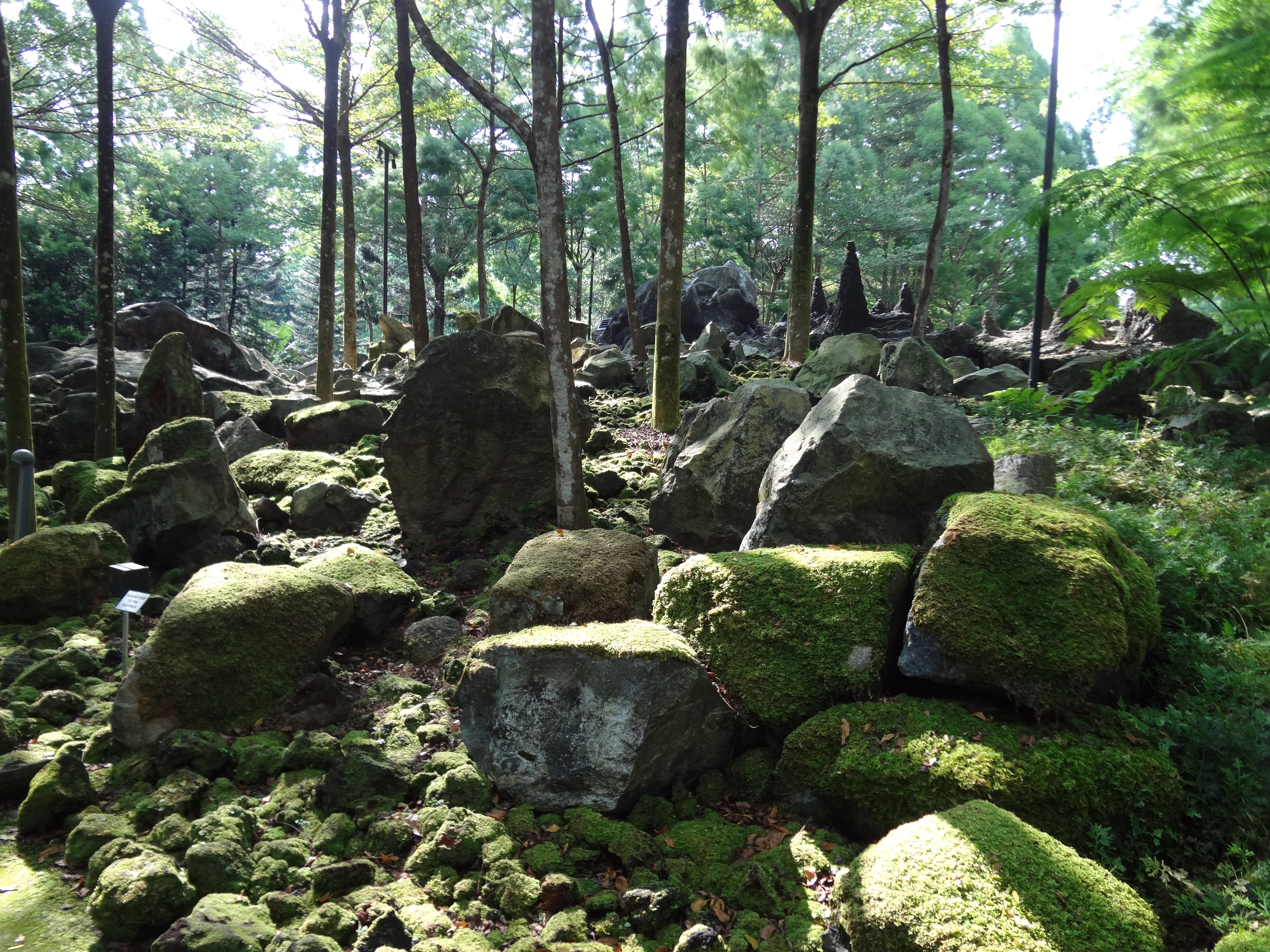
Walking around the Singapore Botanic Gardens, I come across the Evolution Garden, which simulates the evolutionary story of plants on earth before mankind ever came to be. It’s hard not to think of the apocalypse here. Half an hour before, I just squeezed through the MRT crowds. It feels odd to be suddenly alone. I was struck by how different it smells compared to the city and the rest of the gardens. It smells of rain and moss. There is a dampness in the air, but it does not feel heavy. It feels like an island washed after a heavy storm, like a tiny planet that went through a car wash.

DSC08620

The Evolution Garden in the Singapore Botanic Gardens

I wonder about how the end of the world will smell like, once human activity has pushed it too much. Does it smell like something just washed, or something burning? Is it a “unpleasant” smell? Perhaps there is more than one smell—an olfactory palette that signifies a climate change apocalypse? Can a man with a cold smell it, or just the most sensitive of trained dogs? Will there be a range of scent—are we dead, or almost dead? Will we have an apocalyptic nose?

Strange questions, but among the many I’m asking here on this side of the world.


When one wakes up in another world, the previous one seems like a dream. Korea, magical as it is for me, seems like it ended a year ago instead of just last month. I’m now in Singapore for the 2013 Art Science Residency Programme in partnership with ArtScience Museum™ at Marina Bay Sands, Tembusu College National University of Singapore (NUS) and the Singapore-ETH Centre’s Future Cities Laboratory.

It is such a wonderful opportunity, and a very timely one as well. I am very grateful. Because of the Seoul43 project, I realized that one potential application of my work is the environment. The things I saw while I was in the mountains made me care about what humans are doing to nature in a more visceral way. Don’t get me wrong; I’ve always cared about recycling, global warming, and polar bears, but having my hikes directly affected by what humans were doing to the environment (and ultimately affecting the direction of the project) was very unnerving. That project wasn’t too long ago, and I still have more questions than answers. (Visit the project site here.)

Climate Change and Environmental Futures

I am working on the theme, Climate Change and Environmental Futures. My project is about a potential “apocalypse” that may ensue in the future because of climate change. I aim to design objects that examine our perceptual lifestyles when that occurs. So. How will we see, hear, smell, touch, taste, etc. when we need to adapt to a less habitable earth? And on the other side of the spectrum, what can be designed along the lines of perception when we are able to mitigate climate change? These are questions that intrigue me and will keep me happily preoccupied in the next four months of this residency.

This project is also an experiment for myself and the direction of my work. I suppose this is why despite my excitement, I want to proceed with caution. This is definitely my science background talking. There are enough people misleading others about climate change; I don’t want to be one of those. I’m happy to have scientists and humanists in the college to give me their perspectives and share their research, thus informing my work.

Cousteau

I never thought I would work along the lines of climate change. And yet, I did kind of foresee this last year. Because of my passion for nature and exploration (and flying up in an ultralight), I came across the works of Jacques Cousteau, marine explorer and conservationist. In his book, The Human, the Orchid, and the Octopus (Bloomsbury, 2007, co-authored with Susan Schiefelbein), he said that “Had I known where I was going, I would not have gone.” This resonated with me, along with him quoting Albert Szent-Gyorgyi’s distinction between Apollonians and Dionysians. I fear applied research sometimes, because when one drops a product into the real world in the hopes of solving something, oftentimes there are consequences you did not account for. That, plus I think my best ideas and projects are those when I was just in states of play.

The Anthropocene 

In the past few weeks, I’ve done a lot of research on recent findings and ideas in our Anthropocene. I am encountering a lot of very interesting work by artists, scientists, journalists, etc. I will be updating this site frequently, so check it out for my progress. 

Goals

There are specifics of this project I will be working out within the next few weeks. But now that I am here and have seen the labs and met with the staff, I have a better idea of what I can and cannot do. But just like my previous projects, I aim for these qualities:

1. Inclusivity—I hope to engage not just people from within the field of climate change, architecture, sustainability, and urban design, but also the people outside of it. I want to reach out to those who have no professional stake in my project, because I believe that climate change is a human issue that affects all of us.

2. Interactivity—I intend to create pieces that people can have an experience with and engage their senses, instead of just making something people will look at.

3. Empathy—I aim to collaborate with both the sciences and the humanities. The former is to ground my work in facts, and the latter is to allow for profound human connection. I hope for the audience to move from mere awareness of environmental issues to mindfulness where they are spurred to act and maintain positive environmental habits for the long-term.

The Weekend with the Eameses

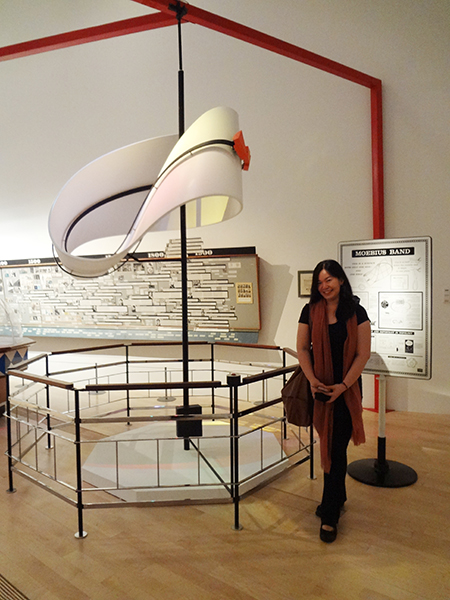
This past Saturday, as part of my research, I visited the wonderful ArtScience Museum, where we artists-in-residence are supposed to give a talk and be part of their Sunday Showcase sometime in November. I loved the Mummy exhibition and the National Geographic’s 50 Greatest Photographs, but it was the Eames exhibition that made me rejoice and gave me some level of encouragement as I begin this admittedly crazy project.

I loved seeing the Mobius Band from their Mathematica exhibition:
DSC08403small

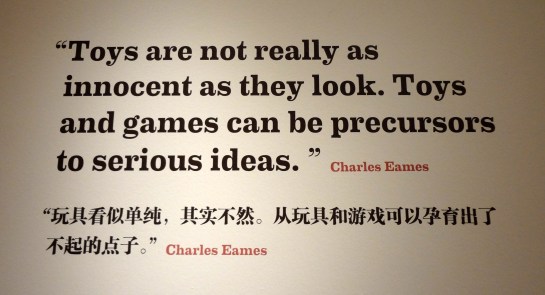
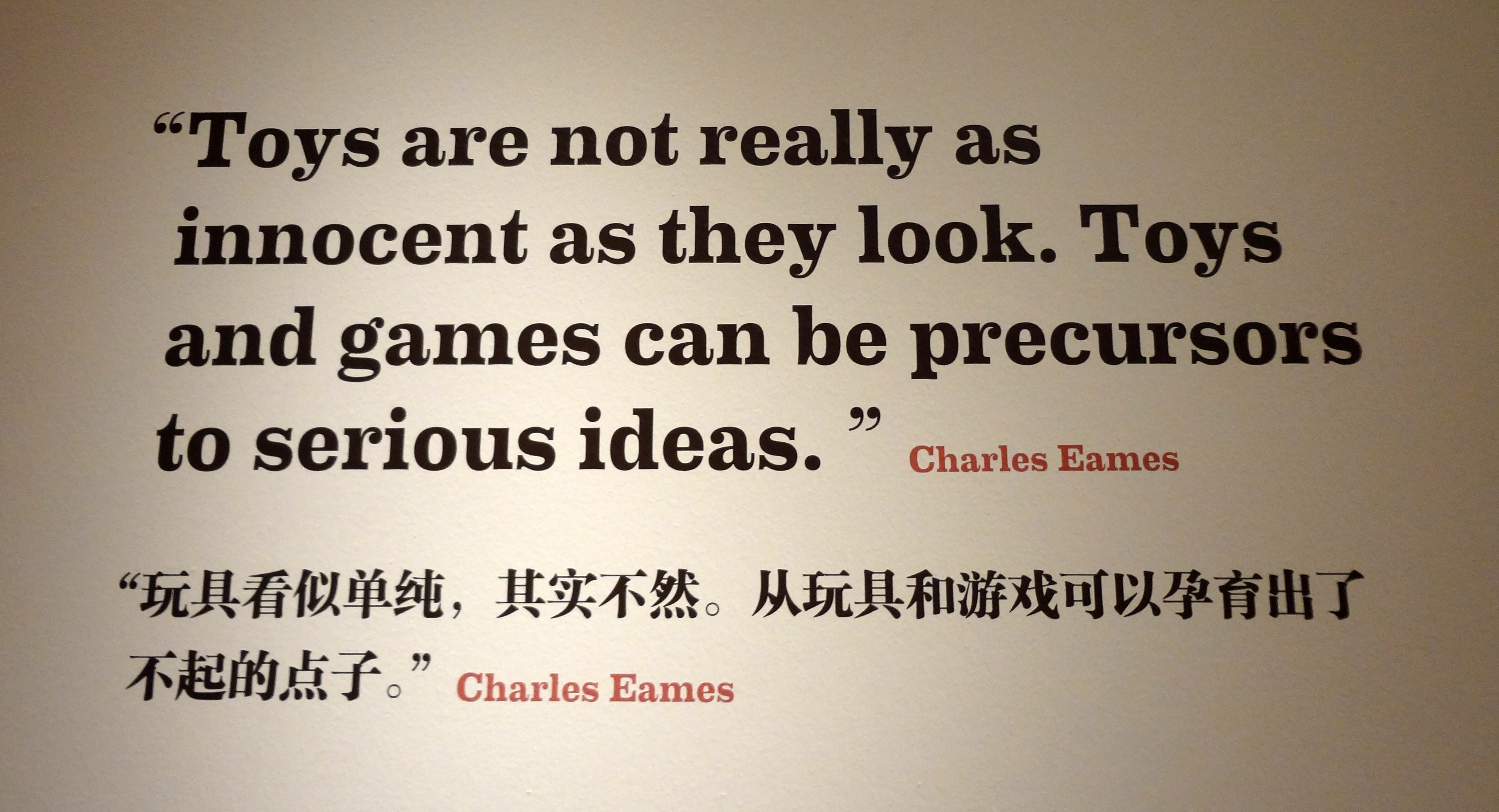
And thanks, Charles, for this:

DSC08406

Oh well, as always, here goes nothing.