Archive

Tag Archives: Seoul

At the Teddy Bear Museum in N Seoul Tower, one can discover the history of Korea in the most adorable and saccharine way possible. Hundreds of teddy bears, with most being mechanical, are dressed and arranged to form scenes from Korea’s old and modern history. Bears in royal court! Bears at war! Bears playing polo! Bears doing breakdance! Bears going on a date! Bears getting married! Bears! Bears! Bears!

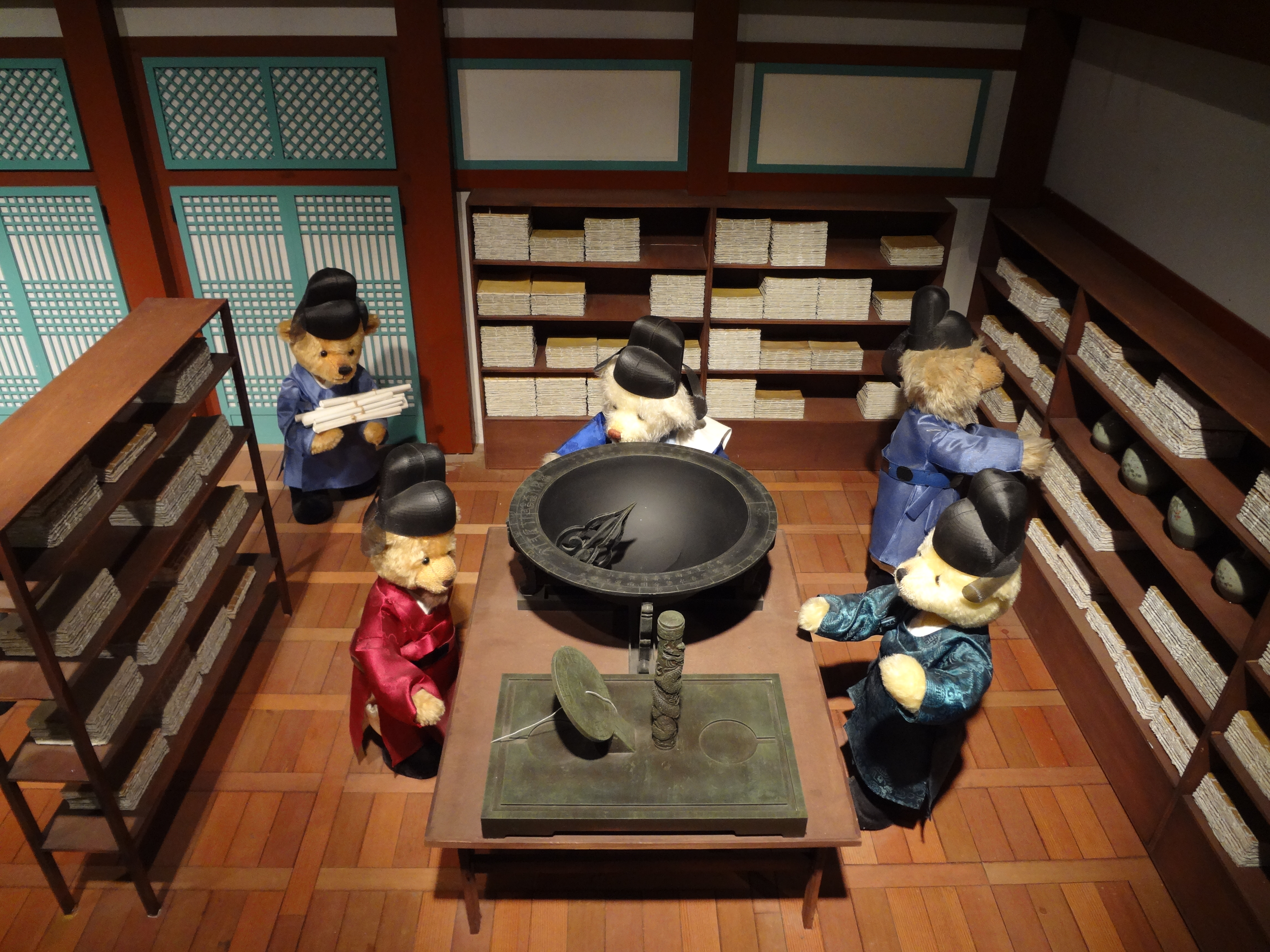
Some of my favorite scenes involve the arts and the sciences. Here’s one during with scientists during the reign of King Sejong.

scientists during King Sejong's reign

scientists during King Sejong’s reign

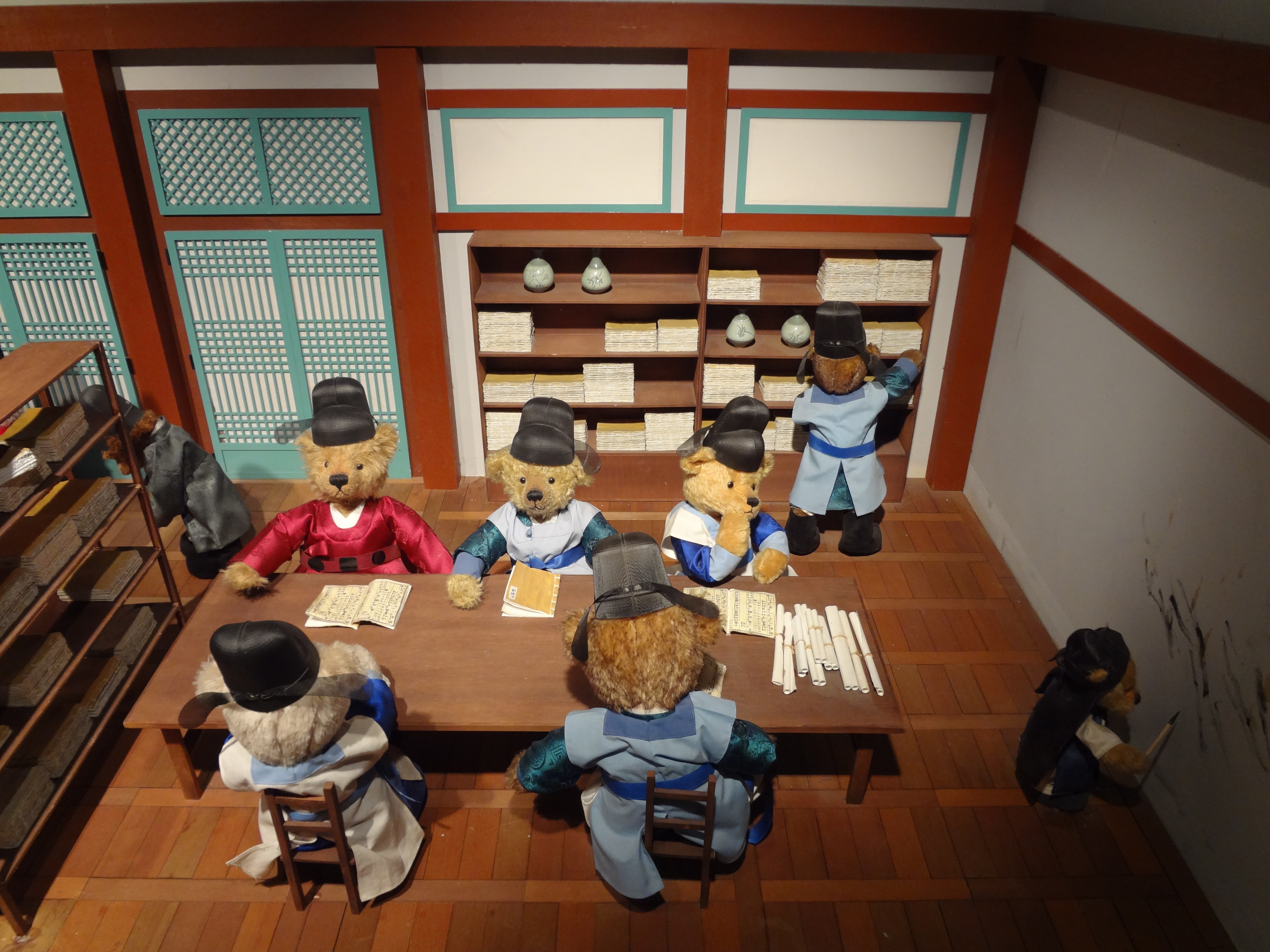
Here’s a scene that made me smile. Look on the lower right:

Someone's not doing what he's supposed to. Can you guess who?

Someone’s not doing what he’s supposed to. Can you guess who?

I love this little errant artist bear that could.

This bear made me laugh.

This bear made me laugh.

I also love this scene where the first light bulb was installed in Gyeongbukgung, which I visited last month:

The first electric light in Korea!

The first electric light in Korea!

Sweet, amusing, and way more entertaining than your usual history museum.

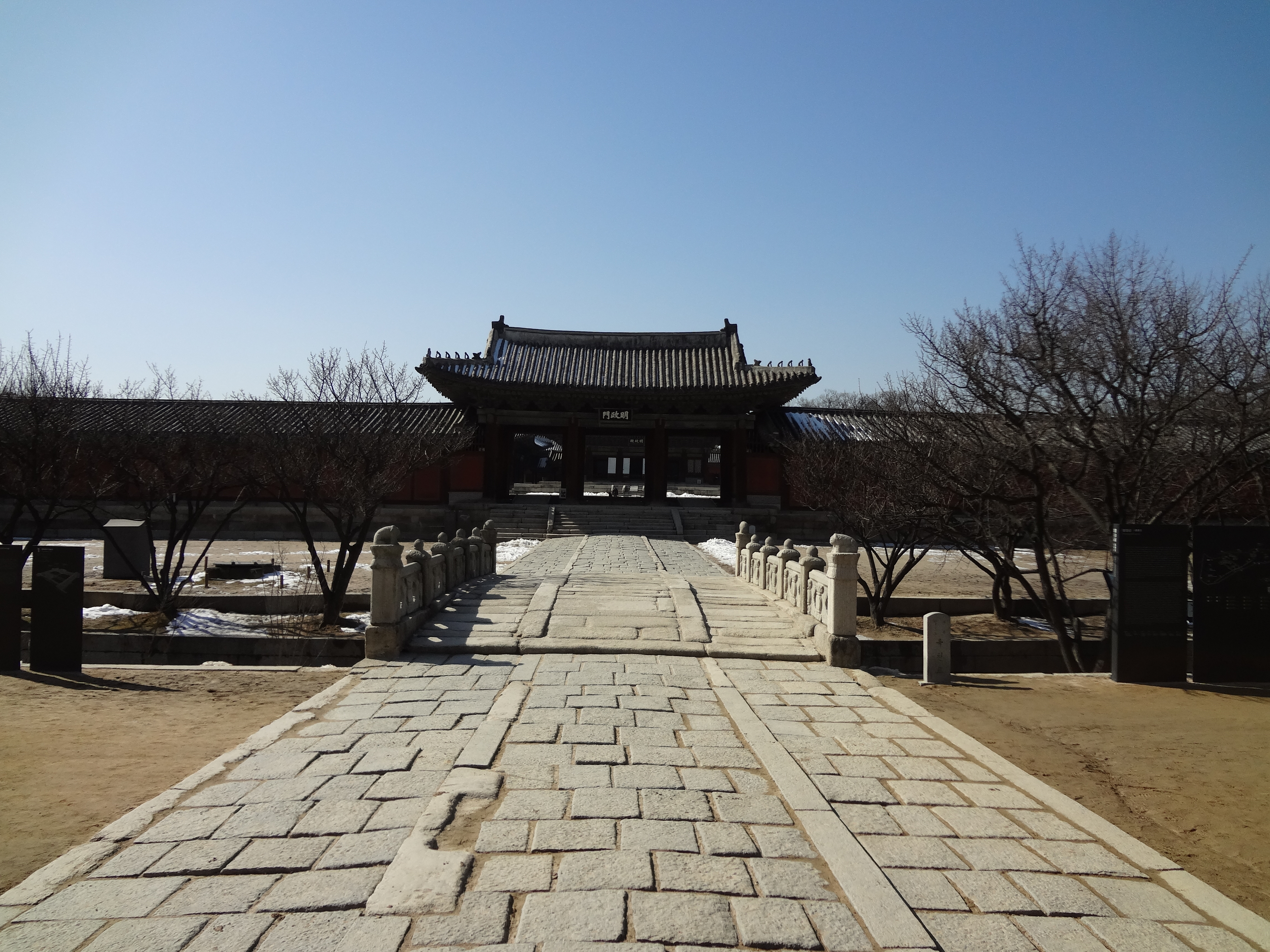
(Seoul)—Changgyeonggung, the palace to the east of yet another royal abode with a similar-sounding name (Changdeokgung), seems to be the least popular one among all the Korean palaces I’ve seen. On this cold winter’s day, the few people I encountered were mostly locals. However, this is one of my favorite palaces because of all the fascinating stories it harbors behind its silent walls.

Changgyeonggung

Changgyeonggung

The First Female Royal Physician

Hwangyeongjeon may look like most of the pavilions I’ve seen, but its story of being a “feminist pavilion” deserves to be told. Dae Jang Geum was the only female royal physician to attend to the king, delivering Queen Janggyeong’s baby and curing Queen Dowager’s Jasun of her illness. Her skills won the confidence of the king, who appointed her the top royal physician, a move that traditional Confucian ministers objected to. Dae Janggeum was the most trusted physician of the king, and attended to him until his death. Her story is the subject of an eponymous Korean historical TV series.

Hwangyeongjeon

Hwangyeongjeon

The Puppet Curse

At the site of Tongmyeongjeon, the queen’s bed chamber, is a scandal that trumps all tabloid stories. King Sukjong had an affair with a maid named Jang Ok-jeong, who gave birth to their son, Prince Gyun. While trying to make Gyun as the crown prince, King Sukjong removed those who opposed this move and deposed Queen Inhyeon, installing Jang as the queen. Followers of Queen Inhyeon restored her to power, demoting Jang as consort. Jang cursed Queen Inhyeon by burying a puppet of the queen together with dead animals near Tongmyeongjeon. Upon discovery, Jang was forced to commit suicide at 43 years old by ingesting poison. Nearby is a garden with a round well and a square pond.

Surprise, surprise, this year her story will make it as a TV serieswhich itself is based on a chick-lit novel.

Tongmyeongjeon

Tongmyeongjeon

The Playboy Mansion

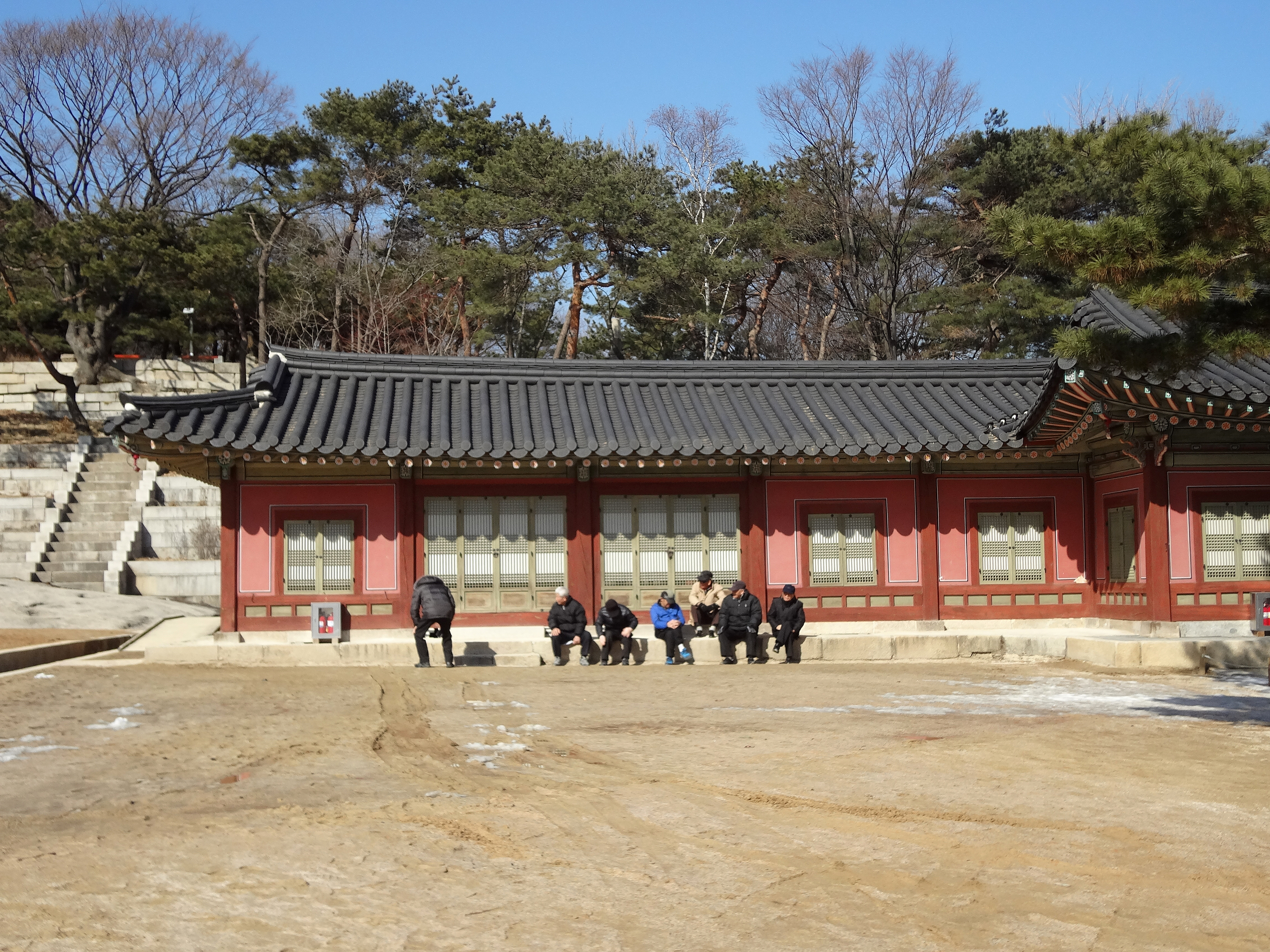
Yeongchunheon and Jipbokheon are believed to be residences for concubines. Seeing that these buildings are now empty and seems to be a place where these old guys hang out to gossip made me laugh.

I’m positive there are Korean TV series on something like this.

The playboy mansion

The playboy mansion

The playboy mansion

The playboy mansion

The King’s Placenta

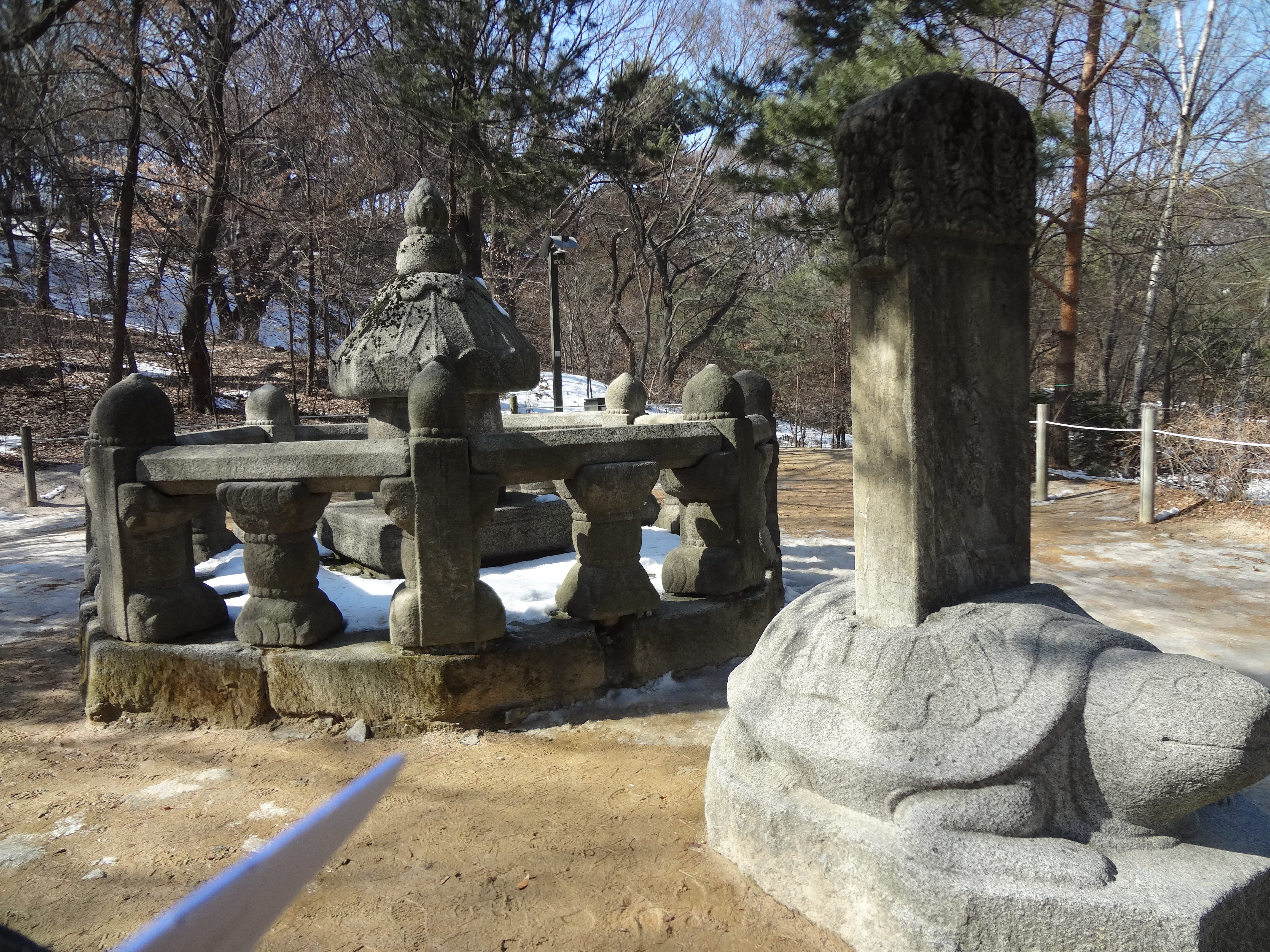
This is the site of King Seongjong’s taesil and taesilbi (placenta chamber monument). According to the Korean age system, a baby is one year old at the moment of birth because life is considered to begin at conception. The placenta is stored in a porcelain jar a few days after being born. The jaris sealed several times and enshired in a stone chamber after a few months. I’ve seen other placenta jars in the National Palace Museum of Korea.

King Seongjong's placenta chamber monument

King Seongjong’s placenta chamber monument

The Glass House

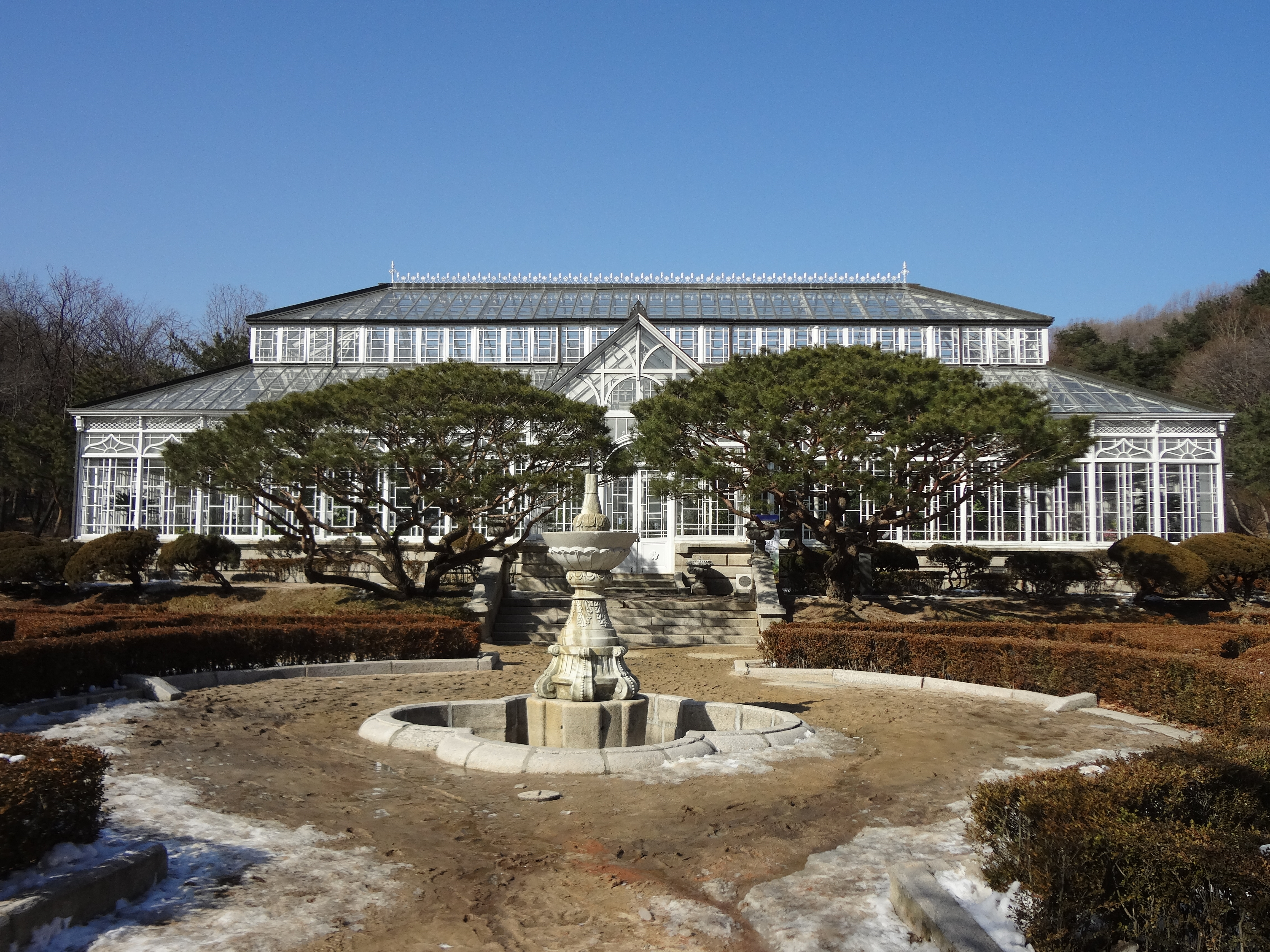
A year before Japan formally annexed Korea, Changgyeonggung was turned into a botanical garden and a zoo, demoting a palace into a public park. Daeonsil, the glass house, was built as Korea’s first Victorian-style greenhouse. The zoo was removed in 1983, but the glass house exists and contains a many indigenous plants.

Daeonsil, the glass house

Daeonsil, the glass house

Lessons learned: Beware the quiet ones, for they hold the juiciest stories. And the more scandalous or noteworthy it is, the better the chances of making it big on TV posthumously, centuries later.

Sources
(1) Cultural Heritage Administration of Korea (2011). Changgyeonggung. Pamphlet.
(2) Discovering Korea blog

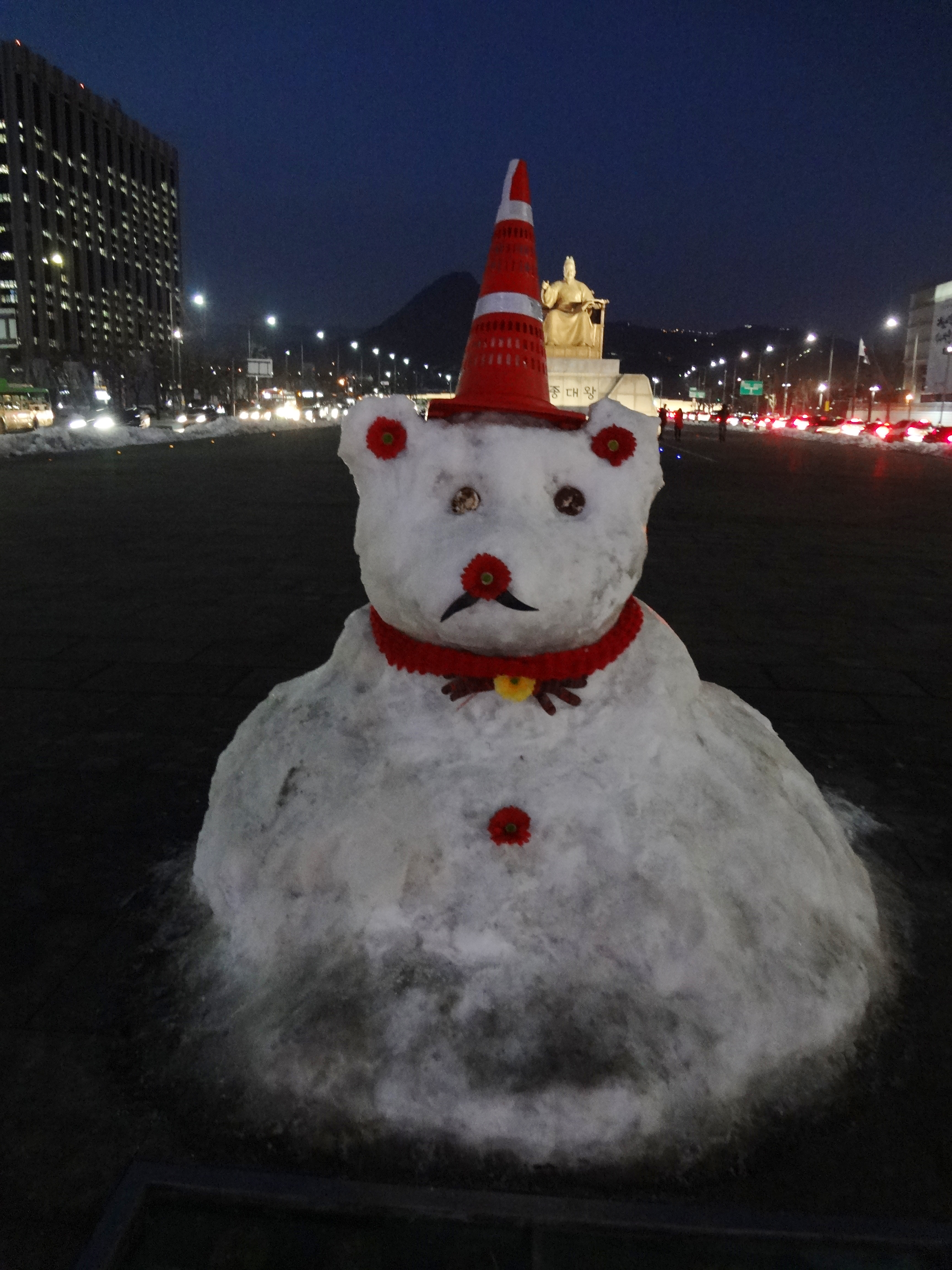
(Seoul)—In Gwanghwamun Square today, I came across a snow bear in front of the statue of King Sejong, under whose reign science and technology flourished in Korea. In his rule, Hangul was also introduced to the country.

A snow bear in front of Sejong the Great

A snow bear in front of Sejong the Great

Up close, the bear is decorated with flowers for ears, cookies for eyes, a glove for his neck and a traffic cone for a hat.

Yes, the hat is a traffic cone

Yes, the hat is a traffic cone

Flowers for its nose and ears, cookies for its eyes, and a glove for its neck

Flowers for its nose and ears, cookies for its eyes, and a glove for its neck

Behind King Sejong is Gwanghwamun, one of the gates that leads to Gyeongbokgung, the main palace of the Jeoson dynasty. The mountain behind it is Bukhansan.

Gwanghwamun by night

Gwanghwamun by night

It’s such a pretty sight in the evening, isn’t it?

A kite! A kite! I adore kites!

A kite! A kite! I adore kites!

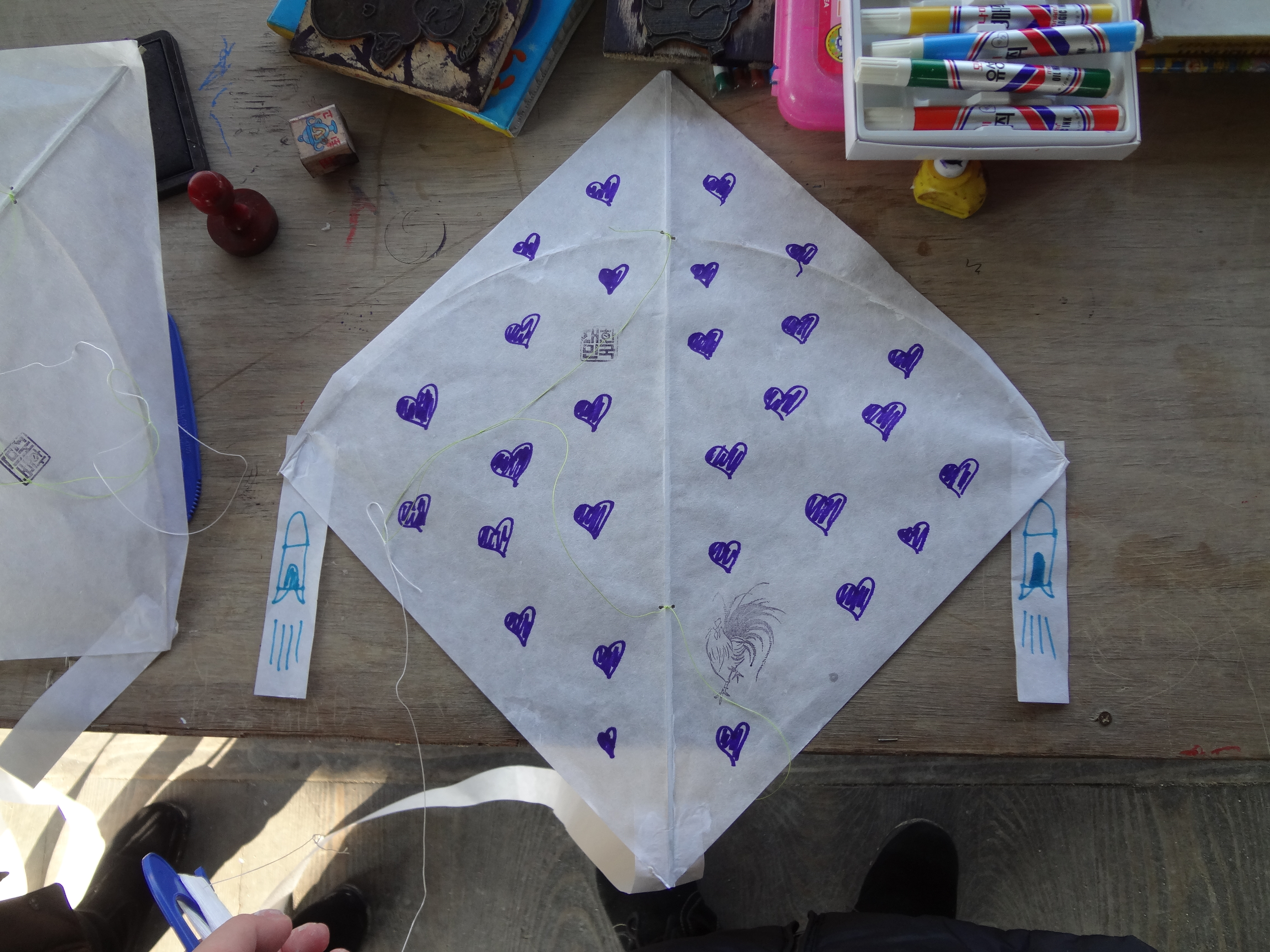
Today, on the eve of Seollal, the Korean New Year, I went with some friends to Namsangol Hanok Village. Among other things, I made and flew a purple-hearted rocket-powered kite. Kite-flying, or yeonnalligi (연날리기) is among the traditional games played during the new year. We had fortunes told, ate traditional Korean food (such as tteokguk), made our New Year wishes, and watched wonderful performances.

Purple hearts and blue rockets. It was quite cold and this was the best I could do with freezing hands.

Purple hearts and blue rockets. It was quite cold and this was the best I could do with freezing hands.

And away we go!

And away we go!

Happy Lunar New Year to you all! Gong Xi Fa Cai & Sae He Bok Mani Ba Deu Se Yo! Bring it on, Year of the Snake.

hotteok, South Korea

hotteok, South Korea

Annyeong, everyone! I’m starting another project.

During my first three weeks in Seoul, beyond the palaces, the museums, and other beautiful attractions the city has to offer, I learned to fall in love with their street food. I have started some drawing projects over the years, and so I came up with The Movable Feast: A Street Food Project, an interpretative illustration project that celebrates the joys and oddities of street food around the world.

Inclusive cuisine

Street food is arguably the most socially inclusive, yet sometimes unnoticed or taken for granted, of all cuisines. There is neither dress code nor reservation required. Everyone has to wait their turn. Street food is among the best things to eat when one is rushing to work, taking a break in between classes, or being too lazy to cook. It is cheap, easily available, and delicious.

The menu of street food can be simple (such as coconut juice and watermelon slices) or more complex and hard-to-find (such as escargot on the go, lobster sandwiches, and grilled tamales) This system includes a range of members—from the ambling taho vendor (Philippines), the seasonal bocadillo stall (Spain), to scheduled and franchised food trucks (United States). It is a mobile and complex system that consists of the producers of raw materials, the makers of the actual dishes, the transportation and infrastructure that bring them to the venues in which they are served, the governing bodies that allow their selling, and the vendors and consumers themselves.

Globalization and diaspora

In many ways, I have discovered that street food is a symbol of globalization and diaspora. Many of them hail from other countries, but with local flavor. Consider goroke, the Korean version of the French croquette. Or hotdogs in Iceland. Or shawarma in Canada. It is also a symbol of urbanization—as the population who move from rural to urban areas increase, so does the need for alternative sources and ways of distributing food.

Street food as identity

I believe that street food is a vital part of the culture and identity of a city. It is indicative of the sustenance immediately afforded by its geography. But more than that, it is a symbol of a people’s resourcefulness, creativity, and survival. They tell us stories about ourselves.

Eating and perception

Eating street food fires up all the senses, which are the center of my larger body of work. Street food conjures up memories of childhood and gives strangers a shared experience of a meal. These drawings themselves are interpretative; more than documenting what they are, I also draw how they’ve made me feel, and write the memory I have about them.

Follow the project’s Tumblr here.

P.S. Drawings up every Monday!

P.P.S. As I am based in Seoul, many of these posts will be about Korean street food, though I will draw all the other street foods I’ve eaten in other countries, past and future. But if you wish, you can submit photos of street food from your country and I can try it out and draw it. Or submit your own drawings, following the format I’ve started. The link to submit is here.

The Movable Feast, where eating means research. Thank you for checking it out.

DSC00826

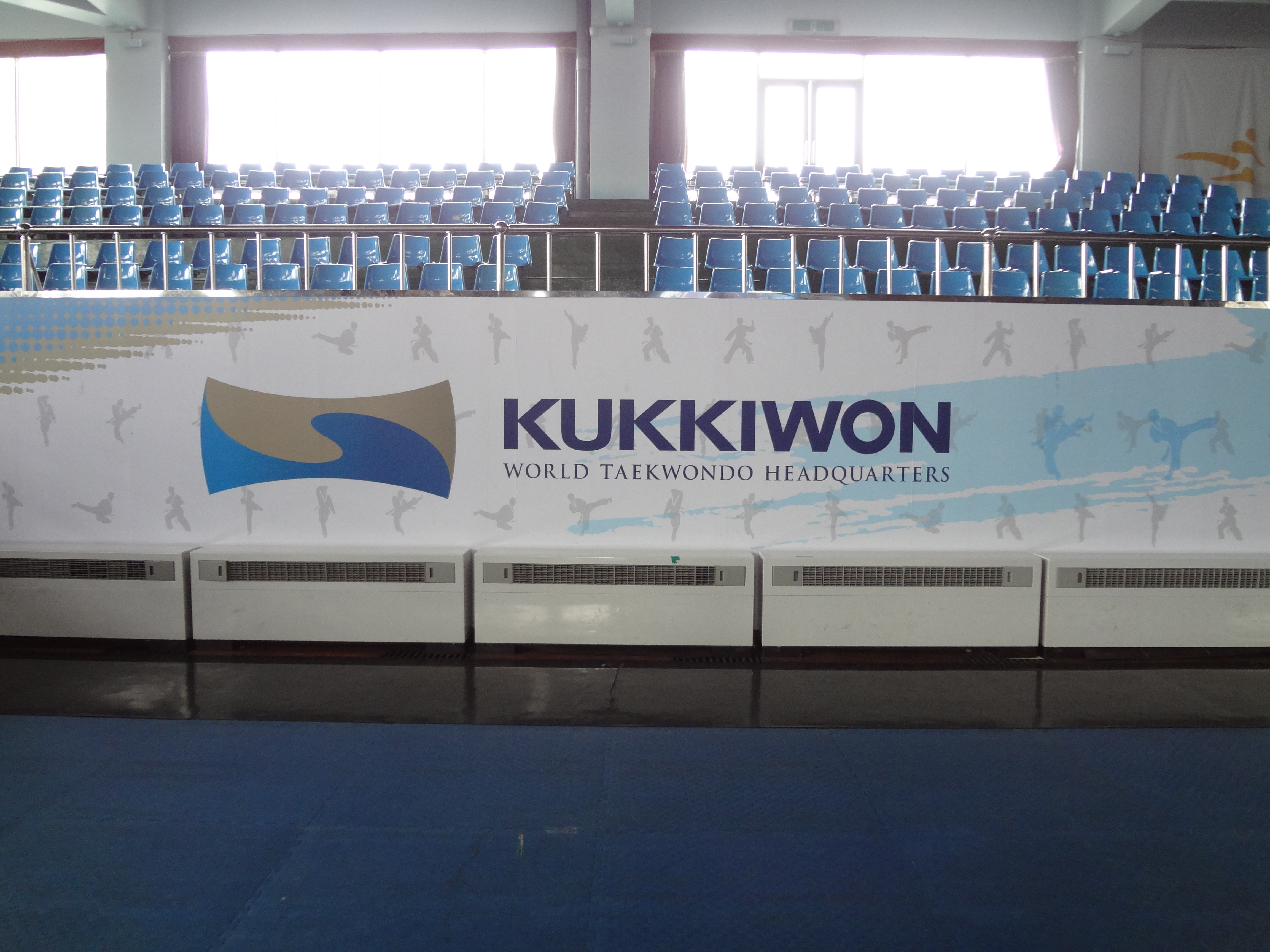
Yesterday, I took what may well be the start of a monthly pilgrimage to Kukkiwon, World Taekwondo Headquarters. Located in Gangnam, popularized by Psy, it was my first trip south of the Han River, not for horse-dancing but to visit the mecca of my favorite martial art in the world.

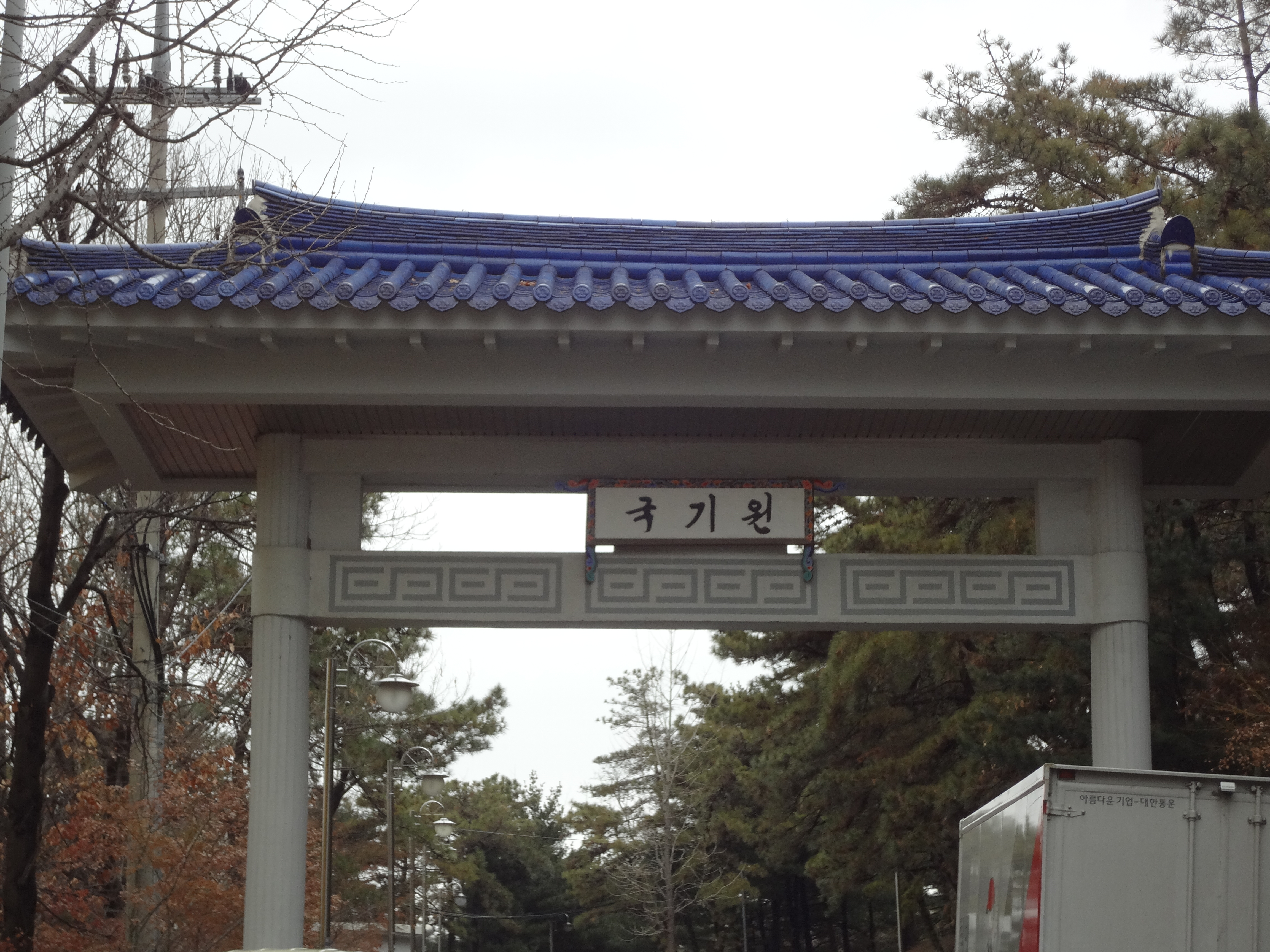
The Kukkiwon arch

The Kukkiwon arch

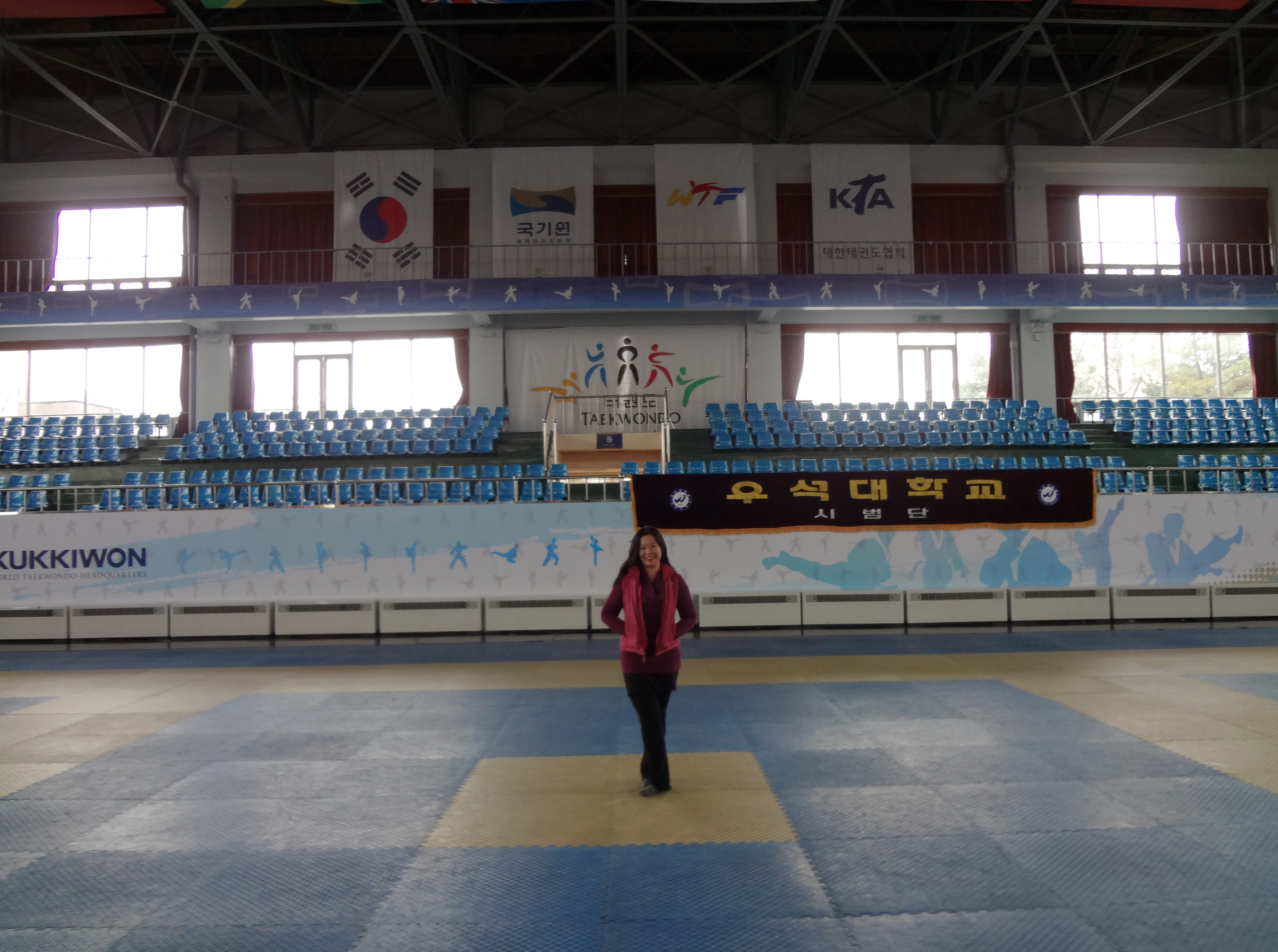
It definitely felt like a pilgrimage, since it was an uphill trek on a side street from one of the main roads, which was lined with South Korean flags. Nearing the end, I find a traditional looking arch, with the name Kukkiwon in Korean. World Taekwondo Headquarters itself is, well, just a gym, but, oh what a gym! It’s quite symbolic to have a public site specifically for a sport that welcomes practitioners around the world. I suppose it was apparent that it was my first time, at least to the security guards who were mildly amused and puzzled at a (deceptively) Korean-looking woman skipping on the mat and taking photos.

I had to. Please don't judge me.

I had to. Please don’t judge me.

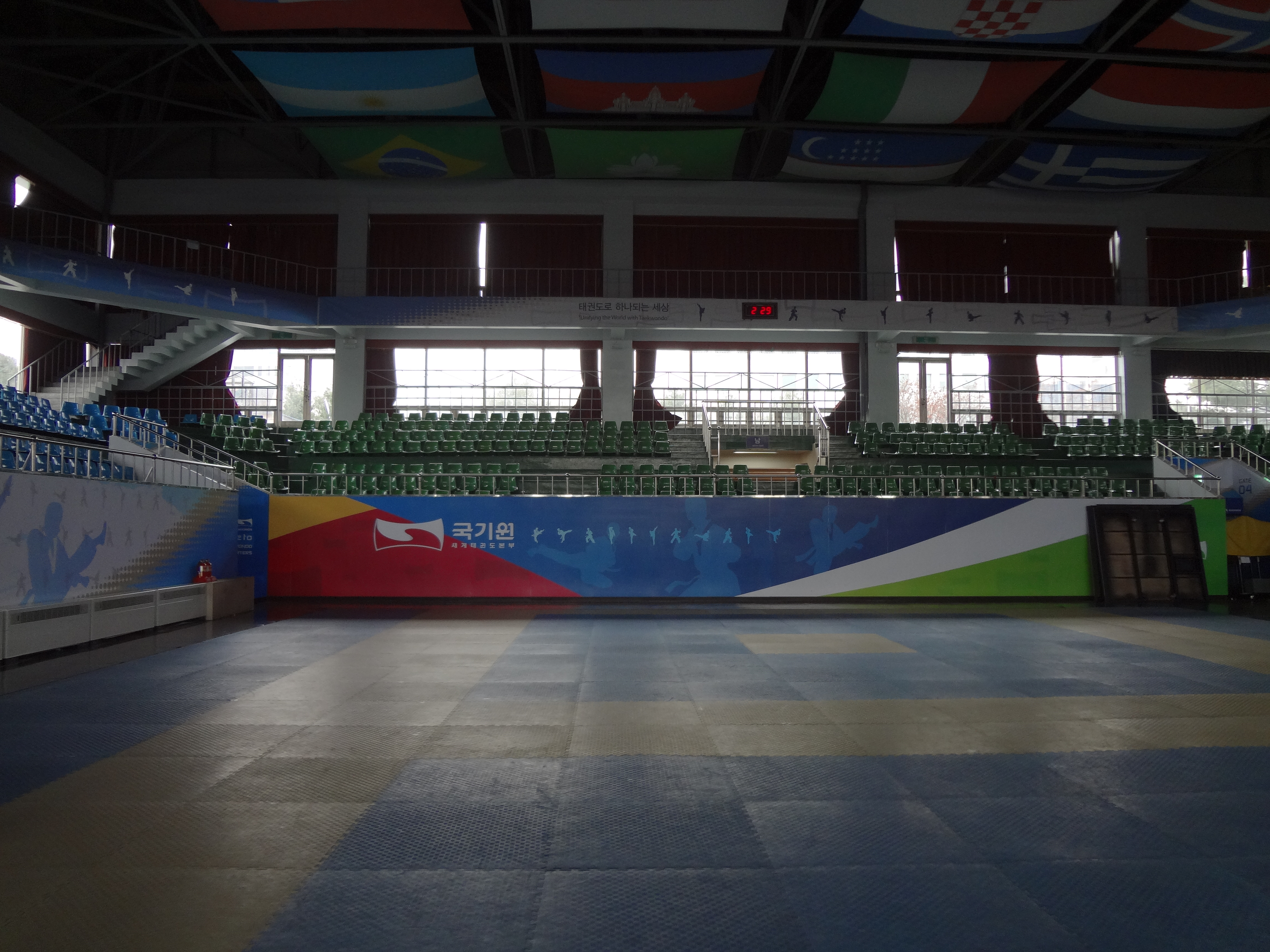
It didn’t look that much different from any gym, except with the flags on the ceiling, the important-looking seats on top, and the rubber mat which seemed firmer and harder than that of most dojangs. But think of all the athletes from all over the world who walked this mat! (On that note, I’m glad I was wearing socks.)

I know it just looks like a gym, but to me it's also a mecca.

I know it just looks like a gym, but to me it’s also a mecca.

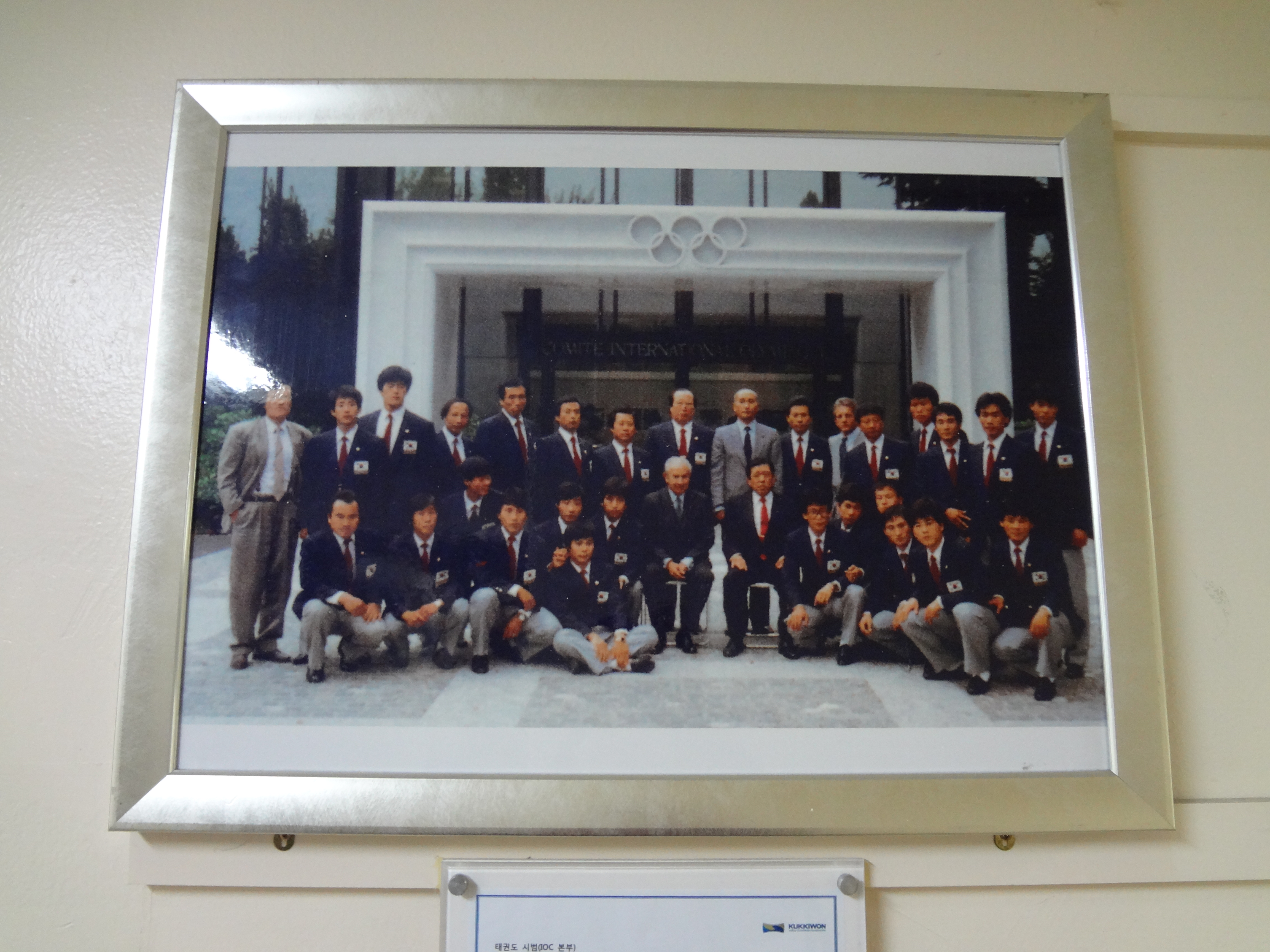
Outside the gym, the hallway was decorated with photographs of taekwondo history. One showed a photo of taekwondo jins from North and South Korea. Another showed people practicing taekwondo on the streets of Cambodia, barefoot. Surprisingly, there were two old posters from taekwondo championships held in Manila. I even recognized some of the people in the pictures.

A bit of history

A bit of history

It was a chilly foggy day in the perpetually busy city of Seoul, but as pilgrimages go, the journey was long but destination was worth it.

So I’ve decided to move to South Korea. Seoul, to be precise.

When I tell my friends I’m moving to Korea, I have three common reactions:

Common reactions to my move to Korea

Common reactions to my move to Korea

But seriously, it’s to do an art residency in Seoul. While it will be my fourth home city (“home” being anywhere I’ve lived in for at least six months because really, it’s probably the only criterion I have left), it’s my first time to live in East Asia.

Seoul, my fourth home city

Seoul, my fourth home city

A big part of choosing South Korea among all other countries is, duh, taekwondo, which I have realized has way more impact on my creativity than I think I give it credit for. Yes, I expect training after studio hours to be the most badass there, so I have high expectations for Dojang/School #15 and Sabonim/Master #29.

Korea, land of taekwondo. Oh la la! Hurray!

Korea, land of taekwondo. Oh la la! Hurray!

I only had a few weeks to pack as much Korean in my head as I possibly could, as I don’t think taekwondo terms will help much. For future expats in Korea, check out the incredibly helpful and hilariously engaging videos of Eat Your Kimchi and SweetAndTasty, which I’ve also written about in a previous post.

Simon and Martina of Eat Your Kimchi

Simon and Martina of Eat Your Kimchi

5-profoh

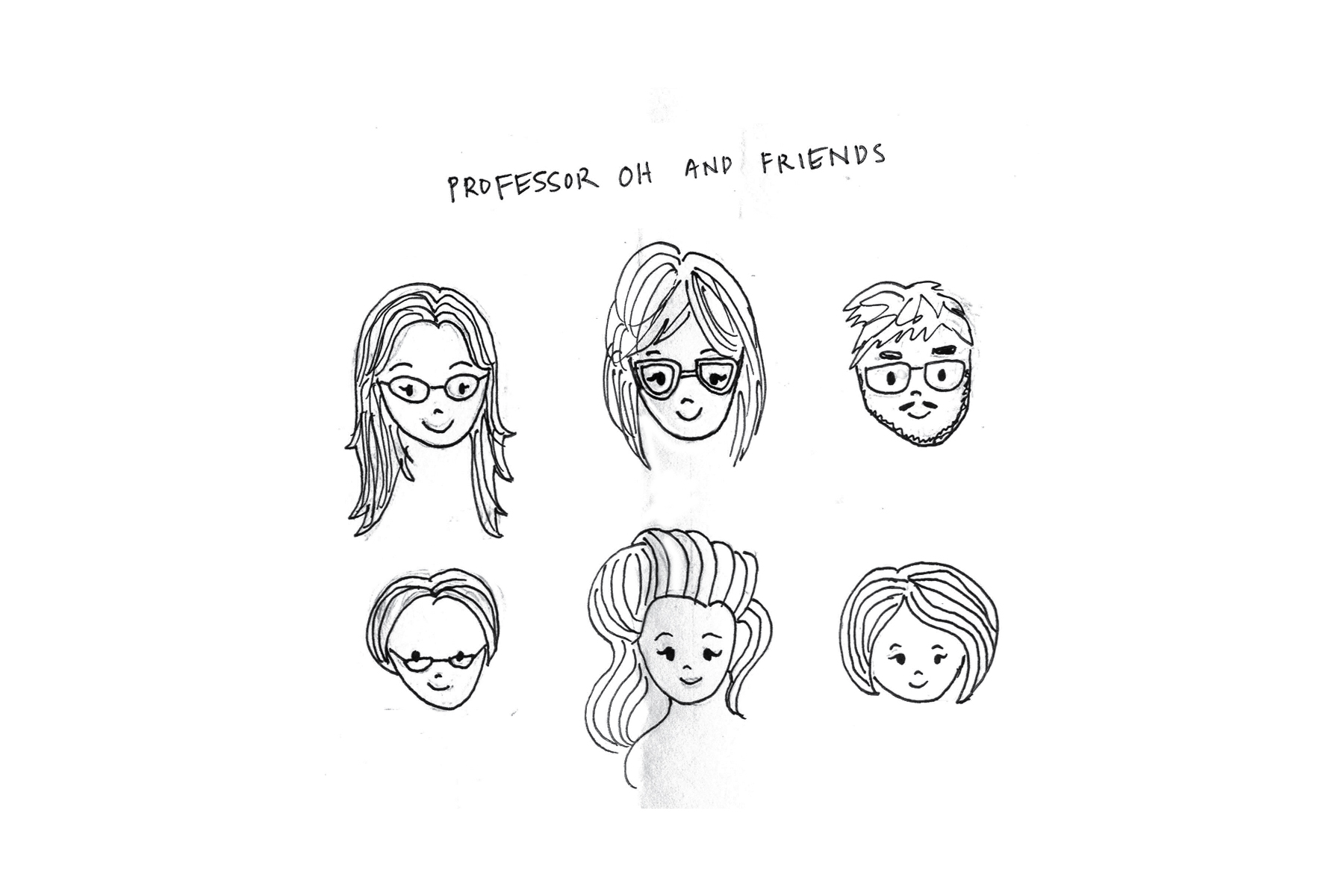
Professor Oh and Friends


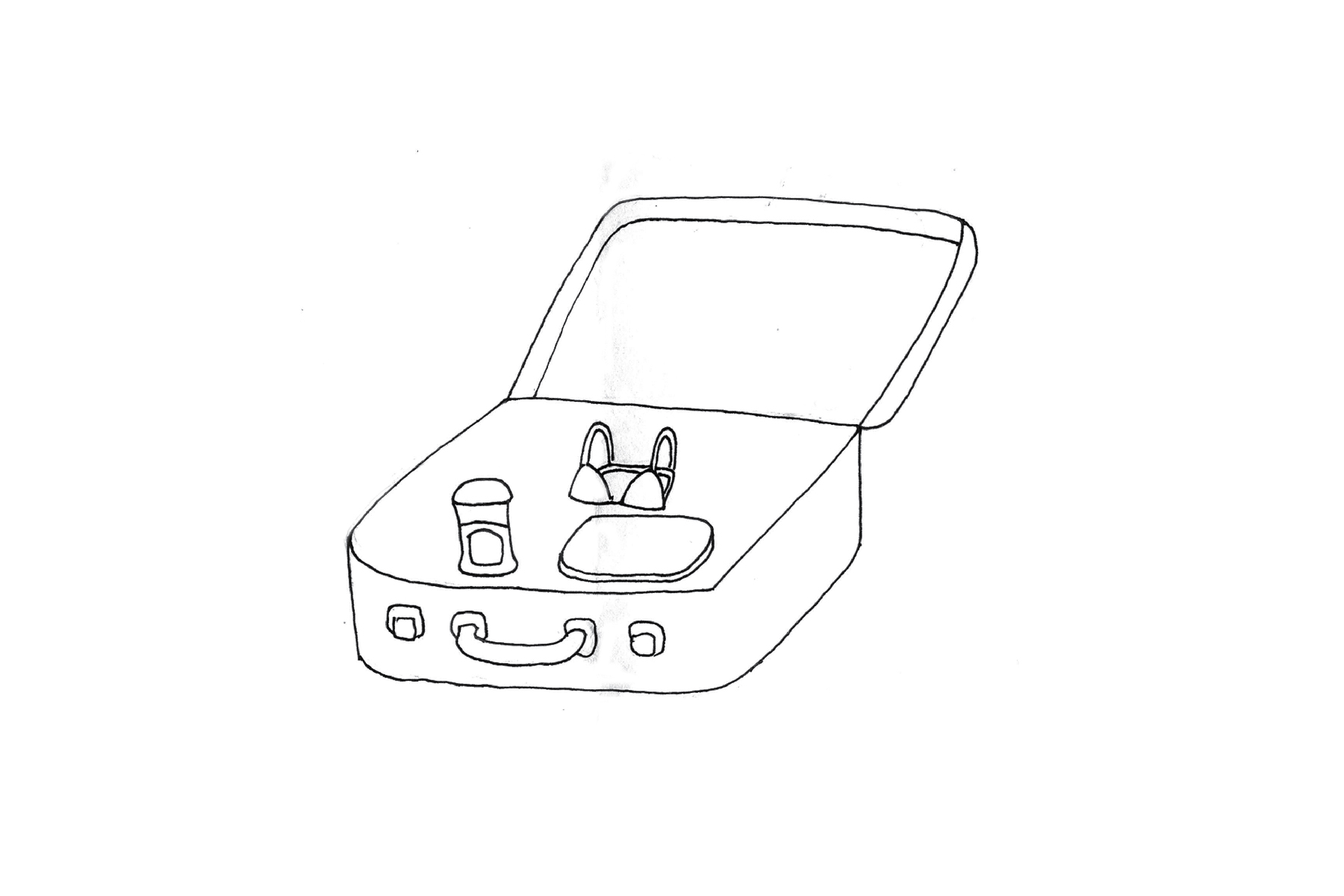
Thanks to the internet, I have come with things like deodorant, bedsheets*, and bras that will fit me—things that are apparently very hard to find in Korea.

Things I was advised to pack

Things I was advised to pack

And so the past two weeks were of doing what I now call The Expat Thank-You and Farewell Rounds (Part 7) of saying goodbye and having conversations with close friends and mentors. Closing another chapter through conversations, no matter how short that chapter was, is important to me, hence the lightning round of brunches, coffees, lunches, dinners, and drinks that make me question the human need of saying farewell over carbs. It’s quite sad to leave again, but I choose to look on the bright side. I am looking forward to uninterrupted time of continuing my work in a country that values tradition, skin care, and taekwondo as much as I do. Woohoo!

Ciao, friends! See you soon!

Ciao, friends! See you soon!

In the past nine years, I’ve always headed out west, and so this should be quite an adventure. Truthfully, it kind of feels like I’m going to another planet, or a parallel universe. I’m going to pretend the entire country is a dojang to minimize any untoward cultural misunderstandings. The bowing, the removal of shoes before getting in the room, shaking hands while touching your elbow—I’ve been doing this in taekwondo for the past 16 years.

Thanks to taekwondo, I feel that the chances of me unwittingly insulting a local are radically decreased.

Thanks to taekwondo, I feel that the chances of me unwittingly insulting a local are radically decreased.

It seems like only six months ago when I packed up my life and said goodbye.

Oh wait, it was.

Well, here goes nothing.

*Edit: So I’m here in my studio and they DO have bedsheets, or at least something that covers the bed. What the hey, internets. 

For reasons I will write about later, I have decided to learn the Korean language and culture. More specifically, I have decided to pack as much useful Korean phrases as possible into my head (and know how to say them in context) in the next few weeks.

I didn’t think that open source courseware from universities was the way to go. I love using online resources such as Khan Academy, Udemy, and Coursera, but they don’t really specialize in languages and cultures. In addition, with the timeframe I was giving myself, I didn’t want to feel like I was taking a class.

To my surprise, it wasn’t easy to find good online courses that teach Korean, perhaps because a lot of Korean people already speak English. Still, I believe that learning a people’s language is one of the best ways to understand them. When I lived in Barcelona, it was only when I started learning Spanish and Catalan that the locals started opening up to me. (Not that they weren’t nice to me before, but you get the idea.)

Learning a new language and culture always gives me what I refer to as a “brain massage”—I can feel my cerebral cortex almost groaning under all that cognitive load. Incorporating language classes into a busy schedule isn’t easy, and it was important to find learning material that were easily packaged into digestible pieces that are easy to recall.

Looking at the relatively small landscape of Korean culture and language videos, here are the two that are keeping me up at night (both from Youtube):

1. Professor Oh and Friends (SweetAndTasty on Youtube)

I’ve never come across better styled and more entertaining language and culture videos than those of Professor Oh’s. Her first video caught my eye, and I remembered her because her mnemonic for Korean consonants was to sing them to the melody of Twinkle Twinkle Little Star. This was something that we used to do in high school, but to remember all the Chinese dynasties. (It’s quite a versatile song, yes?) It’s also really helpful that she points out common mistakes in pronunciation. She’s come quite a long way from that endearingly shy first video, and now she’s morphed into several characters. As someone with many alter egos as well, I totally relate to her. Keep going!

(Also check our her other alter ago as Ramona Champion.)
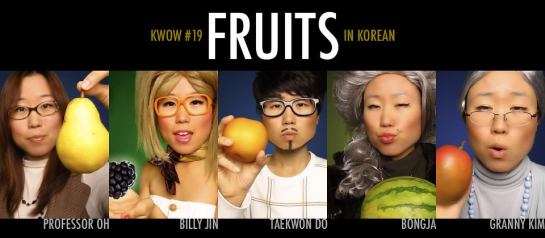
Professor Oh and Friends: Making the Korean language unforgettable. No kidding.

Professor Oh and Friends: Making the Korean language unforgettable. No kidding. (Photo from their Facebook page)

Because desperate times call for desperate measures, my Korean language notebook has frantically wriitten notes in the five languages I know, to highlight similarities and make me learn faster. Some Korean consonants were very similar to Mandarin, for example. It’s also funny that some words were the same in lots of languages. Banana is, well, pretty much banana in several countries.

2. Eat Your Kimchi with Simon and Martina

It’s impossible not to talk about Korean culture blogging without writing about Eat Your Kimchi. Canadians Simon and Martina Stawski came to South Korea in 2008 to teach English and started doing video blogs about their experiences as expats. They blog about the K-pop industry, but it’s their videos on culture that’s helping me. Now hugely popular, they have more than 260,000 subscribers on their Youtube channel. They even surpassed their Indiegogo goal to register EYK as an actual business.

Simon and Martina of Eat Your Kimchi. Prepping expats for Korean living (and K-pop) since 2008. Whatup, nasties!

Simon and Martina of Eat Your Kimchi. Prepping expats for Korean living (and K-pop) since 2008. Whatup, nasties! (Photo from the Eat Your Kimchi Facebook page)

From what I’ve learned from both Professor Oh and Eat Your Kimchi is this—having that human connection where the speaker is looking at you is a plus. Having well-defined characters or personalities allow for more contextualization, and when I remember the words and phrases, I hear the characters speaking them in my head together with their idiosyncracies. It also helps that they seem to be genuinely nice people with normal lives. Thoughtfully written scripts also work well in helping me remember. I switch back and forth from these channels because it’s great to have both Korean and non-Korean perspectives.

These people all feel familiar to me, and I might instinctively give them high fives if I ever see them. Seriously, thank you, for making this process wonderfully entertaining and useful.