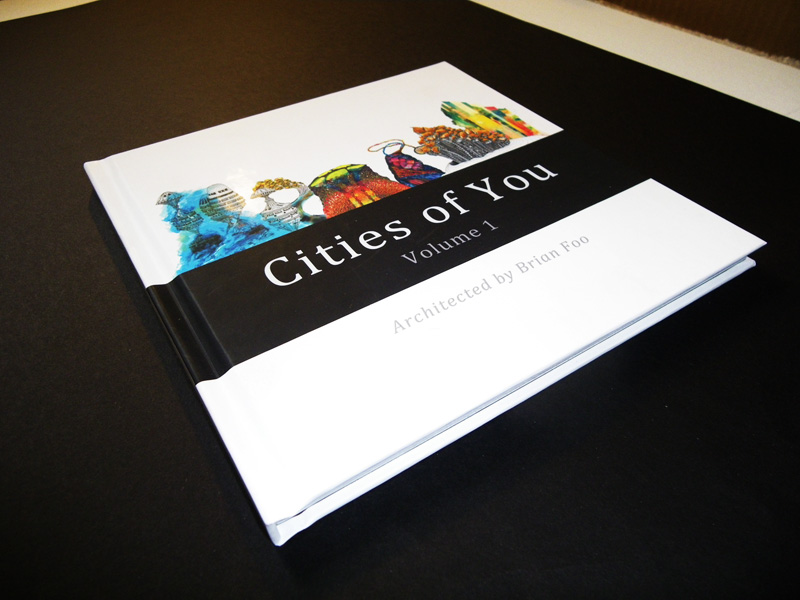
Due to my fascination with smell and its relationships with memory, I wrote and published a book that contains smells from Manila, New York and Barcelona—three cities I have lived in and have given me a lot of memories.

Each spread contains the memory on the left and the actual smell micro-encapsulated and printed on paper on the right.

Here’s one from Manila:

Burnt rubber
On busy streets
Particularly EDSA
The site of many a revolution
You can smell the worn tires.

Here’s one from New York:

Pumpkin pie
My first ever pumpkin pie was in 2007 on a martial arts retreat.
I remember not just the pie, but the knife lessons. We had a meditation room and went to a cemetery. We broke arrows with our throats.

Here’s one from Barcelona:

Strawberry
A birthday picnic for Harriet, up on Montjuic but closer to the museum. We wrote poems on a green Olivetti typewriter that we decorated with wildflowers.

Here are some people smelling my memories:

More photos up on Flickr.

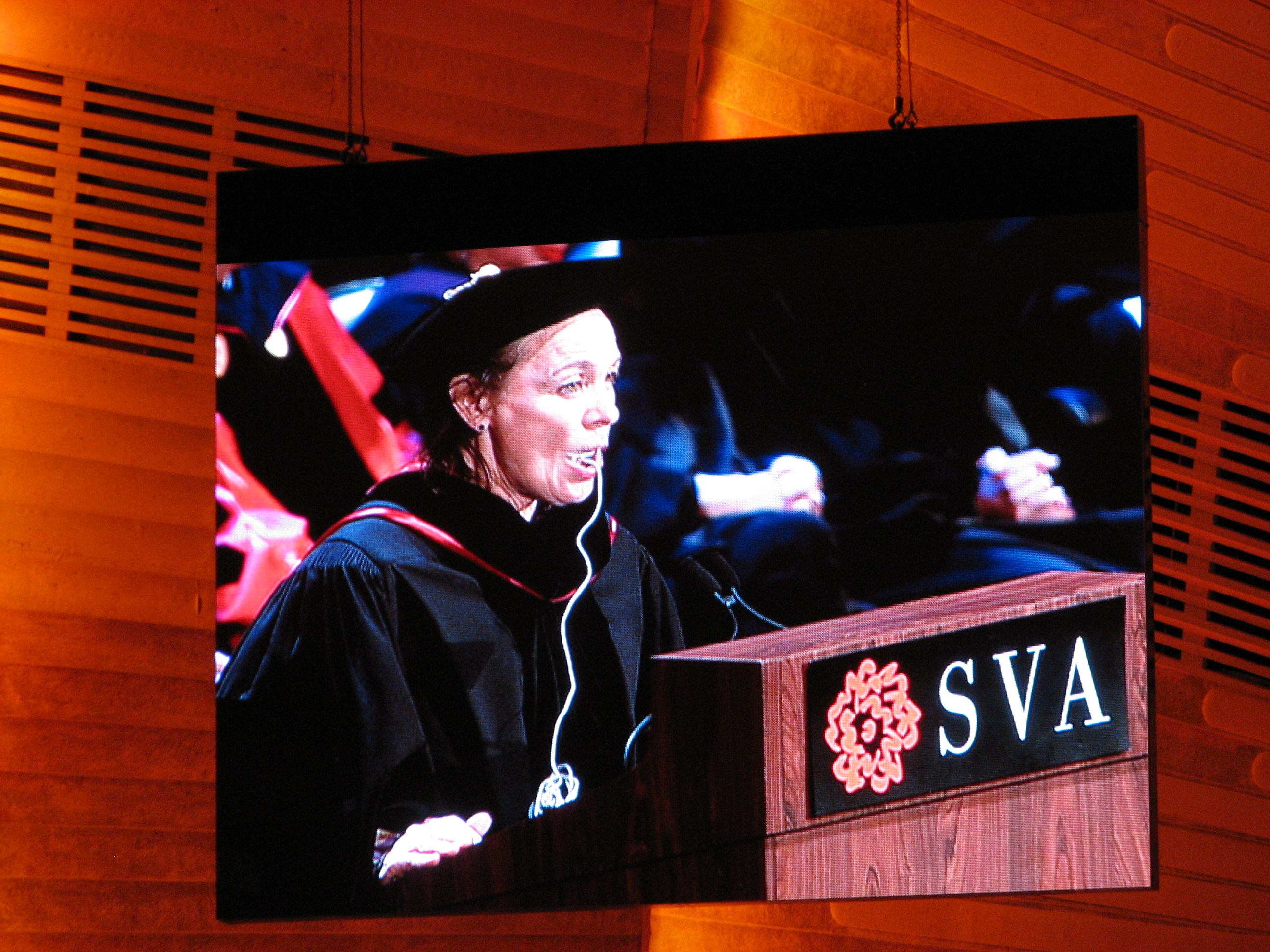
I have been invited as a speaker at the inaugural TEDxNewHaven conference at Yale University. The theme of the conference is “The Art and Science of Happiness”, and it will take place on April 28th from 10am to 6pm. I will give four talks / exercises of most of my thesis projects as well as some other projects I’ve made in my two years here at SVA, along with 12 other speakers who will explore the theme of happiness through the lens of their respective research and work. Topics will be drawn from a diverse set of disciplines, ranging from positive psychology, entrepreneurship, education, politics, media, culture, technology, and art.

This conference is designed to inspire people and make them happy. Its primary goal is to foster connections among the diverse audience which will consist of Yale students and professors, New Haven residents, and a global online audience. To that end, the primary aim of the conference is to spark a deep conversation about individual as well as the community’s collective well-being. It is the first time that a TED event specifically presents the theme of happiness, so this conference promises to be very interesting!

I hope you will be able to join me! It will take place in the Sudler Hall auditorium, in William L. Harkness Hall (WLH) on 100 College Street, on the Yale University campus in New Haven, CT. You can apply for a ticket here.

Currently, I am neck deep in my thesis and making 200 sense kits for the TEDxNewHaven audience. This week, I’m defending my thesis on Friday, then catching the train to New Haven to get some sleep in a hotel then wake up to do my talks and learn more about a subject I hope to be fascinated with for the rest of my life. Did you catch all that caffeine in that run-on sentence? I’m excited for it all; I hope you do come!

Hello. My name is Catherine and I would like to give everyone in the world a hug.

I’m a hugger. I can’t help it. When I see someone I know, I just go for it as a greeting with barely a thought.

There are perfectly good explanations for this. I was raised in the Philippines, land of extremely happy and friendly people. I also grew up with a lot of stuffed animals. I still sleep with a pillow I’ve had with me from the crib—it’s the only material possession that has been with me forever. And dang it, it feels good. Hugging releases oxytocin, the hormone that promotes love and trust. In fact, studies have shown that a lack of human interaction, such as touching, is detrimental to growth and development. Touch ranks up there with food and water as a basic need.

But I do realize that not all people like to hug others. The idea of touching as a greeting is largely cultural, and I’ve had to adapt accordingly, depending on where I’ve lived and whom I was interacting with. In the Philippines, I hugged. In Spain, I kissed (both cheeks). Here in America, I shake hands. It is especially in the latter that I’ve felt that people respond the least positively to hugs. Many people, I’ve observed, have an invisible “wall” that illustrates their personal space. Touch may be considered as an intrusion, an interruption, or a threat. On the other hand, a hug can also be a sign of great physical intimacy that is only reserved for one’s closest family and friends.

I wanted to investigate our perception of touch. Moreover, I want this project to be a personal reminder of being physically connected to people.

Thus comes HugPrints. I designed a thermochromic (temperature-sensitive, color-changing) vest, so that it was possible to see evidence of the hug. The purple fabric temporarily turns to blue when touched. Right after each hug, photos of the front and the back of the vest are taken, showing where I was touched and how warm (literally) the person is. The patterns people intentionally and unintentionally make have been an interesting exploration of human contact.

I also record the ambient temperature of the environment. Hugging people indoors versus outdoors would give different intensities of color change.

I would love to give you (yes, you!) a hug. But hey, I would love it more if you give your loved ones and perhaps that sad-looking stranger next to you one, too! Visit the project site for more details.

Ready? Go!

A rainy, chilly Saturday and there is only one thing to do: head uptown to one of my happiest, most wonderful place in the world—the American Museum of Natural History.

It was the opening of Creatures of Light, an exhibition that explores bioluminescence—its functions, its mechanisms, the organisms that have it, and how scientists study it.

Just inside, the exhibition greets you with a giant (!) glowing mushroom. Like so:

Creatures of Light opens with a giant glowing mushroom.

Immersive environments will instantly transport you. You can climb into a model of a New Zealand cave with magical looking strands of glowworms. You can pretend you are in a bioluminescent bay in Puerto Rico with tiny lights following your movement. You can gaze at giant glowing jellyfish from the Pacific Ocean.

Inside the New Zealand cave with glowworms

I love this:

Admittedly, I forget what this is. A worm? A firefly larva? Let me get back to you.

I think my favorite was this gorgeous dinoflagellate model.

A dinoflagellate model at Creatures of Light

You can even participate in the fun; if you tire of watching the fireflies glow, then pretend you are one by trying to match their mating patterns. Check out the interactive of a fluorescent coral wall that you can explore with one of the exhibit’s iPads. There are also live bioluminescent creatures, such as flashlight fish that are so tiny but fascinating to watch. As always, the immersive 3D models and the interactivity are the key strengths of the AMNH. Although packed with a lot of concepts, it was a joy to get through.

This exhibition is especially memorable for me because I helped research for it during my internship with the exhibitions department last summer, cataloging the bioluminescent creatures that were known and helping to explain to some of them the process of bioluminescence, which I studied in university. This is probably why I recognized most of the creatures there. My boss also very nicely allowed me to play somewhat, which led to me making this tiny encyclopedia of bioluminescent animals. We never got to use it, but it was fun, regardless.

On that note, some stills here, back in the day when I had a clay fetish. This was also one of my projects for my prototyping class.

You’ll have time to see the exhibition, as it runs until January 6, 2013. I, however, will likely see it over and over again.


I’m thinking deeply about who I want to use the Hug Vest that I’m designing, and while I can always wear it to hug friends and strangers alike (which I will do eventually), one specific audience I am looking at would be parents and their young children (roughly aged 3 to 7). The reason is that the desire to hug varies drastically among adults; witness the reactions I got with prototyping the vest. There were those who readily hugged, those who refused to, and those who reluctantly did it for the sake of helping the project.

Ah, but parents and kids! According to American psychologist and educator Virginia Satir, we need four hugs a day for survival, eight a day for maintenance, and twelve a day for growth. But for working parents, it may be difficult to find the time to hug their child, let alone get a young one to sit still to receive or to give a hug.

I wanted to find out how parents and children will interact with the thermochromic vest. I loaned the vest over the weekend to my friend and studio seatmate, Chris Cannon, who has a son, Alex, who is almost four. The vest was ill-fitting for both father and son; it was designed to fit a well-endowed girl or a large man, and neither of them fit these descriptions. I was interested specifically in how the material would affect their interaction. Chris, who has been in the clutches of graduate school for two years, says that he has made hugging important:

“Hugs are very important to us, especially since I don’t see much of him these days. I ask him for hugs everyday. We also bond in countless other ways: singing silly songs, making fart jokes, playing with his toys, sitting on my shoulders when we go out for walks, riding the subway together (he loves the G train), bedtime reading, etc.”

I doubted that Chris and his family would be the ideal audience for the vest. They already hug a lot, and I’ve seen Alex on many a day or event in school enough not to doubt that Chris and his wife, Yong, put family first in spite of how busy life can get. I was curious about how Alex would interact with the reactive material and how this can affect his manner of touching, as I knew his attention span was short based on what Chris has told me over the years.

As many of my friends with children have told me, the thing about hugging and young children is that they don’t hug the way adults do. The “standard” hug I’ve observed is putting one arm over the receiver’s shoulder and the other one around the waist. Or both arms over the shoulder or around the waist, depending on the height difference of the hugger and the huggee. But kids are less structured in how they hug or touch. Chris tells me about how Alex hugs him:

“It depends on whether I’m sitting or standing. I guess he hugs me in anyway imaginable, including head butts to the groin (hey, it counts as a hug!) and climbing up my back and putting me in a chokehold.”

The good thing about the thermochromic vest is that the entire vest is reactive. Thus, it didn’t matter how Alex hugged or touched the vest because it would change color despite what type of touch he gave it.
Below are the results, and further proof that I should always get my friends involved in my project. (So great!)

Chris Cannon and son, Alex

Hug Daddy, come on!

When I asked Chris if Alex enjoyed it, he says:

“He liked it. He didn’t want to hug me as much as just slap my back with his hand repeatedly to see his handprints. I enjoyed watching him experience something new, even if it was just for a few seconds before he got bored and moved on. He liked wearing it, probably because he likes wearing our clothes in general.”

Alex wearing (or perhaps a better term would be 'swimming in') the Hug Vest.

The bit that struck me was how Alex played with the material. Why he didn’t necessarily see the vest as a way to hug his Dad, he paid more attention to what the vest could do.

I liked how in the middle of playing and touching the vest, Alex ultimately plays with Chris, who is wearing it.
I loved this interaction, though I am mindful of who this vest is primarily for. As I said earlier, a well-bonded family like the Cannons wouldn’t have as much use for something like this. When I asked Chris frankly about whether he would buy one, he said:
“No, because we hug enough as it is (or at least I threaten to take away all of his toys until he hugs me!). Besides, then it’s a hug motivated by something other than enjoying a hug for its own sake. I’m sure he’d enjoy lights and sound added to it since a lot of his toys have that effect when he interacts with them.” [Note: italics mine]
I would be interested to see how this can play out in families where hugging is a chore. What about working parents who can’t squeeze time for a hug? Or children who need a sensorial “hook” to be sufficiently engaged in human contact? I am mindful of children’s short attention spans, especially in this video where Alex throws the vest on the couch and runs away when asked by his parents to show them how the handprints worked:
More to come, and soon.
A HUGE thank you to the Cannon family for agreeing to participate in this! Especially to Chris, who is repetitively awesome.

As a poet, I will be among the first to say that poetry can be difficult. It can be abstruse, incomprehensible, and consequently irrelevant to most people. I’ve often felt that this was unfortunate, because I believe that poetry can be very powerful. As Susan Stewart, author of Poetry and the Fate of the Five Senses, wrote:

“Poetry makes tangible, visible, and audible the contours of our shared humanity.”

But what if we had a different gateway to poetry? What if we can explore verses not just through reading text, but through accessing it via an “easier” medium?

This is what is being explored in a project called EatPoetry. It is a dining event where we ask a chef to create a dish out of poems—literally translating the poem into food—so people can readily have an association between the poem and the dish.

Why food? Simply because taste is a sense that is both social and intimate. It might not be easy to have an opinion about a poem, but it is easier to have one about something you are eating. Eating is usually communal and social; thus, the idea of having a conversation around something you are consuming (whether this consumption is through hearing a poem or eating a dish) is an organic process. An event such as EatPoetry also triggers all five senses: the sight, smell, and taste of the food your are eating; the feeling of the texture of the food; the sound of the poetry being read.

This week, I’ve tried a simple experiment where I’ve gathered a group of people to find out their reactions about two different experiences: hearing poetry with and without food. The food were simple supermarket treats, just to see whether this was a concept that was compelling enough for people to enjoy and to find meaningful.

Supermarket treats for prototyping

It was a small group of six people who rated themselves on whether they liked poetry and how much they think they understand it. I had participants who rated themselves as a 1 (the lowest) on how much they liked poetry and how much they think they understood it. I also had participants on the opposite side of the scale; they liked poetry (5) and believed they understood it. One of them wrote poetry herself.

For the poetry alone, here are the poems I read:
1. “This is Just to Say” by William Carlos Williams
2. “After Apple Picking” by Robert Frost
3. “Figs” by D.H. Lawrence (an excerpt)

For the poetry paired with a dish, here are the poems I read and the treats that went with them:
1. “The Cinnamon Peeler’s Wife” by Michael Ondaatje paired with cinnamon buns
2. “The Emperor of Ice-Cream” by Wallace Stevens paired with mint chocolate chip ice cream
3. “Cake” by Gertrude Stein (from her book Tender Buttons) paired with soft chocolate chip cookies

For both cases, I’ve asked them to recall the poem and write down as many words as they could remember. I’ve also asked them to write anything that came to mind, be it their thoughts about the poem (or in the second case, the dish), or their own poem.

Here is what happened:

Poetry and memory

In general, participants were able to recall most of the poem, or at least the ideas in the poem. “This is Just To Say,” “After Apple- Picking,” “Figs,” and “The Cinnamon Peeler’s Wife” were visual and concrete poems; you could almost see the scene/s that were being written about. “The Emperor of Ice-Cream”, although visual, used more obscure words, as well as those that had nothing to do with ice cream. “Cake” was the most difficult, as it had a nontraditional syntax and the words didn’t seem to form sentences that “made sense.”

Expectedly, the ones that had the least recall were “The Emperor of Ice-Cream” and “Cake.” What was unexpected, and more interesting, were the comments, original poetry, and drawings that came out of the session:

Part A: Poetry, No Food

1. This is Just to Say by William Carlos Williams

Sweet, but cold
life it is.

Forgive me, but I’m not sorry.

And they were not far from
reach, these plums,
alive and red, burning
and freezing.
Forgive me, they were
delicious and cold.

Not really asking for forgiveness
Plum metaphor for person? Personality? (sweet yet cold)
Delicate, not long-lasting

Perched on the verge of summer,
I want to work on my thesis.
But thoughts of sweet, cold plums
Keep frolicking in front of my vision
It rather gets in the way
Of writing poems in code.
Doesn’t it?

I ate the strawberries
from the ground
when I was 3,
My mom got mad
at me.

2. After Apple-Picking by Robert Frost

Giving up is easy,
easy to say at least
But you know your heart won’t rest,
until it finds what it’s looking for.

I am done with apple picking now,
There isn’t the time,
To look at the shadows,
Or shadows the time,
Let tomorrows rise,
I let yesterday fall,
For that is all
there is to living small.

Reminds me of the apples
Waiting at home
To be made into apple crumble.

My desk is covered in Apples. Big ones,
Small ones, glistening, cold, smooth
Not unlike ones fresh-picked in Autumn,
But these you cannot eat.

3. Figs by D.H. Lawrence

A secret that each one must unveil,
A different one, for each,
A secret not quite
Revealed in a bite.

If I were to write a
thinly veiled sexual metaphor about fruit
in the form of a poem
I too would probably choose
a fig.

Societies make rules
It says this is good, this is bad.
Rules are objective &
Good/Bad is subjective
If your heart feels differently
break the rules!

Part B: Poetry with Food

1. The Cinnamon Peeler’s Wife by Michael Ondaatje paired with cinnamon buns

Sliced cinnamon buns with chocolate sauce

If I were a cinnamon peeler’s wife
my clothes drying in the courtyard
would bring many a wandering man,
back to my carousel; I
talking amidst them in the market
would proclaim, the love in my veins.

Is the cinnamon peeler’s wife a
cinnamon bun?
I feel awkwardly voyeuristic
But it’s so delicious,
I will just eat and eat some more.

World looks you through a lens
And the lens has a name.

2. The Emperor of Ice-Cream by Wallace Stevens paired with mint chocolate chip ice cream

Mint chocolate chip ice cream

The emperor of ice cream,
sits on a beam, with mint
chocolate dip and lots of cream.
The only emperor is the
emperor of dreams.

You know what’s colder
and sweeter than
a summer plum?
Mint chocolate chip ice cream
that’s what.

3. Cake by Gertrude Stein (from Tender Buttons) paired with soft baked chocolate chip cookies 

Two chocolate chip cookies

Automatic, non stop,
in a way again, come,
these thoughts, flat jab
as a needle in sea, the
sea, that hides, in me.

A tragic baking accident!
It was a little hard to understand
the words as they were
being read. I kept wondering
about homonyms. Maybe some
meaning was lost. I want to read with my eyes, next time.
But the cookies were solid, sweet, and decidedly
non-abstract. I wonder if they helped or
hindered by focus on the poem?

I also got some feedback on the process itself. Was it an enjoyable experience to hear poetry and eat at the same time? Did they like the poems? Did they want other poems to be read next time? Were they able to make associations between the food and the poem? Here are some; highlights are my own.

I don’t know many poems to make suggestions. I probably need to read the poems myself to understand them better. Never “listened” to poetry before. I wish I understood the ice cream poem, because the ice cream I ate was really good. 

I enjoyed the poems and the food, except for the cookies. Not sure if I was supposed to establish a correlation between the food and poems, or remember the poems better because of them. Perhaps that’s what you’re testing? I don’t now. Concentrating on the poems to remember them kept me from enjoying the poems—just made me anxious that I wouldn’t remember / test poorly.

I think more physical, sensual poems worked better for this experience. For the fig poem, I really wanted a fig. I’m not a big fan of G. Stein normally, but I could enjoy it if I were held still for a long enough time. For poems like that, I would maybe pair it with a slow-to-eat food, not something you’d wolf down. (A lollipop perhaps?) Her words take time, more so than W.C.W.s poem which is clear-cut and non-abstract. I really enjoyed it! Thanks, C.

Enjoyed this. Ice cream—favorite food. Robert Frost poem was my favorite, best captured a mood and a place. Although the food was delicious, it distracted from understanding the poems. Gertrude Stein—least favorite; embodied everything I dislike about poetry. (Note: This was from the participant who disliked poetry the most.)

The food was overpowering; the first two poems worked the best, mostly because of the length. Food made it difficult to read anything. Gertrude Stein was beautiful sounding words, which is why the words were all I remember. Shorter poems would be the way to go. Loved the concept as an artwork / performance piece.

Some of my conclusions:

1. Participants generally enjoyed the experience, and giving them a way to express themselves after the poem was read was great. It allowed them to express their opinions on the poem, unlike regular poetry readings where the poem was just read, and that was that.

2. Food was a deterrent in recalling the actual text of the poem; having to taste something distracted from trying to understand something being read. While the participants will likely remember what the ate more than the words of the poem.

3. While eating didn’t facilitate the recall of the poems’ text, what it did do was create an association with the poem. For example, while few understood “The Emperor of Ice Cream,” most enjoyed the ice cream served to them. I enjoyed the drawings a lot, particularly because it came from the participant who had a clear dislike for poetry.

4. It would have been better to be as literal about the food as possible. I served cookies for Stein’s “Cake,” mainly as a wild card, and because the words such as “mussed ash,” “two,” “dirty,” recalled something dark and earthy.

As with prototypes, there are some additional questions raised from this session. Should the poems be projected on the wall instead of just read? Should they be read first and then have the food served, since having them together increased the friction in understanding the poem? How can we facilitate the participants’ own creativity, as to me, one of the more interesting results was the marginalia that they scribbled about the experience? More to come, and soon.

Over the years, I’ve come to be wary of labels. In past lives, I have been identified as “the scientist who writes,” “the artist who does science,” “the designer who’s an artist,” and a lot of other ostracizing phrases. These words, I have felt, have caused more exclusion than inclusion, and has served to contain a person’s identity into one silly box as dictated by someone else. Isn’t each world enriched by the knowledge of the other?

My mother was a genetics professor in a family of painters and photographers; thus I had childhood diet of Punnett squares and DNA sequences, and would often smell formaldehyde on Mom when her students learned about Mendelian genetics through crossing flies. (Her students secretly called her the Drosophila Queen). My summers were always spent in art school and piano lessons. I ended up doing my degree in molecular biology and biotech while working as a correspondent for a national newspaper. In between PCR reactions, dissections, and other tedious experiments, I would take photographs, write, and make. Later, doing art in Barcelona made me miss the lab; I would often always show work that had a scientific slant of some sort, which puzzled some of my colleagues. Even the poetry I was writing was geeky.

Why these two? I’ve often looked at things with wonder, and thought that artists and scientists pursued their paths with the same curiosity.  I realized that I wouldn’t have one without the other; I could not choose between two halves of myself*. I loved the rigor of science; to be able to discover things and arrive at exact answers. I also loved the looseness and profundity of the arts; it allowed me a lot of time and opportunities to play. Doing science alone was too tedious; doing solely art felt like I was floating aimlessly. At the same time, I found that many of the questions I was fascinated with were investigated by artists and scientists alike; it came to the point where it was difficult to tell where the boundaries lay.

(*That line feels familiar. I believe I am quoting Remy from Ratatouille. Yes, a rat.)

Remy from Ratatouille. Copyright Pixar.

Admittedly, in the beginning of doing an MFA in Interaction Design, I had the notion that my own Venn Diagram of Personal Beliefs and Interests, which only had two circles…

…would look like this after an MFA, adding design to it, because good things come in threes:

But now as nearly two years have passed and I inch slowly towards graduation, I find myself thinking that this is my point of view of Art, Science, and Design as I have used them, based on the common themes of what I have done so far:

I think that up to this point, I have used design to contain the concepts and questions I have grappled with in art and in science. Things like “What makes you happy?” or “What do clouds look like?” or “What do you remember in a smell?” are questions that have both scientific and artistic facets to them, albeit in varying degrees. When I think about design in this way, I’m really happy that I chose interaction design as the third thing I wanted to study. Art and science are always the two broad areas that interested me, but it was design that allowed me to see how I can articulate these concepts to others. More importantly, design is a way for me to get other people to participate in what I do. I don’t think this makes one field better than the other; but it reminds me which hat I have to put on and which language I have to speak depending on where and when I am.

I think this why I’ve struggled (i.e. drowned in ennui) with making things that are purely utilitarian. Design without the poetry of art and science at its core feels hollow and flat. I don’t think I will ever be truly happy by making living out of making things less inconvenient, or by satisfying people who just want to make more money—it seems like the stuff midlife crises are made of. It’s not that they aren’t important, because they are. It’s just that my happiest ideas and moments have been borne out of uncomfortable situations—getting the flu, waiting for hours in line, being stood up by someone. But I have always tried to make the best of them—I fill sketchbooks from cover to cover, I scribble poetry on napkins, I talk to a lot of strangers. I think that if everything were to run too smoothly for me, my life would be dull and flat, and I would never have had the happy accidents that have led to all these amazing opportunities and adventures.

This reminds me of a pivotal conversation I had with one of my classmates, who said that I had to create a bridge between my mind and the mind of my audience.  This led to my joke about “brainbows“—a rainbow bridge between the mind of an artist (or scientist) and those whom they want to connect with. In art and in science, I usually worked by myself, secluded and uncaring about what other people thought. To care too much about other people was seen as a disadvantage if you wanted to do something authentic and brilliant.

But in design, it is imperative to care about other people, perhaps not everyone, but at least the user, the participant, or whatever word you wish to refer to the person you are designing for. And I think this is probably the best thing I have learned in the two years I have been in graduate school: to know how I can make my ideas as an artist or scientist accessible to everyone. The invisible walls I’ve seen that made art and science too abstruse and irrelevant to many are broken down by design, making these concepts available, relevant, and malleable by all, regardless of gender, language, education, and culture. And because of this, I like to think design creates bridges that people can walk on, so that they can allow the experience to be a part of their lives, thus enriching them. I’m hoping I will able to do that by posing simple, universal questions, and by coming from the point of view of joy and actual human contact, which I think is common for everyone, regardless of whether you have an MFA, or a PhD, or an MD, or no letters at all.

Part of writing this is because I have been perusing journals from five years ago, and man, one knows how much she’s grown when, upon reading, she alternates between “Aww” and “Yikes!” I’ve done the painful and hilarious rereading of events—I went through quite a blur of taekwondo belt tests, French classes, and mammalian dissections—back in the day when I still ate red meat and wrote on notebooks with lines. (I’ve since gone pescetarian, finally with a black belt, and now go for the blank Moleskines. Hurray for all of it.) I smiled when I saw familiar things—one of my earlier (and forgotten) entries in 2007 was entitled “Celebrating the Senses”—some things just persist from youth, I suppose.

I wonder then, if my future self would challenge this current view. Just as I am alternately charmed and exasperated at the naïveté of my 23-year-old self, perhaps my future self would read this post and smile knowingly at all the things she has yet to learn. Perhaps when we look at the totality of all our different identities, we will find that we are all of those things and none of those things at the same time.

And I think, isn’t that marvelous.

I’m a hugger. I can’t help it. When I see a friend, I just go for it without thinking.

There are perfectly good explanations for this. I was raised in the Philippines, land of extremely happy and friendly people. I also grew up with a lot of stuffed animals. I still sleep with a pillow I’ve had with me from the crib—it’s the only material possession that has been with me forever. And dang it, it feels good. Hugging releases oxytocin, the hormone that promotes love and trust.

But I do realize that not all people like to hug others. The idea of touching as a greeting is largely cultural, and I’ve had to adapt accordingly, depending on where I’ve lived and whom I was interacting with. In the Philippines, I hugged. In Spain, I kissed (both cheeks). Here in America, I shake hands. It is especially in the latter that I’ve felt that people respond the least positively to hugs. Many people, I’ve observed, have an invisible “wall” that illustrates their personal space. Touch may be considered as an intrusion, an interruption, or a threat. On the other hand, a hug can also be a sign of great physical intimacy that is only reserved for one’s closest family and friends.

I wanted to investigate our perception of touch. In the past week, I’ve designed a vest made out of thermochromic fabric, which my dear friend and fashion designer Kate Russell expertly sewed. The purple color changes to blue at higher temperatures; if you touch it, your hand will leave a print. The color will change back to purple when the temperature is lowered again.

For this project, I’ve used it as a social experiment of a sort; I’ve initiated a “hug session” in the studio here in SVA’s interaction design department and hugged my fellow grad students. The goal was to find out where their impressions, or “hug prints” would lie, as well as to observe how they would interact with me while wearing a vest that was responsive to their touch. I’ve known these participants for at least a year, and we’ve shared hugs before.

While investigating materials, I noted that people’s skin responded differently to the fabric; some were very “warm” and immediately changed the color of the fabric. Others were “colder” and barely made any difference when they touched it. How much or how little the fabric changes also depends on what the person was doing right before. This made me expect diverse levels of color change.

The hug session was conducted in the studio on the same afternoon; hence the environmental temperature was the same. The participants had also been in the studio for some time; no one was “warmer” than others because of being outdoors.

Free hugs!

The experiment was simple. Each person hugged me, and the front and the back of the vest were photographed right after each hug. The vest was returned to its normal (purple) color by sticking it for a few seconds in the freezer and afterwards letting it reach the studio temperature.

Hug then shoot. Photograph by Shanshan Gao.

For this session, there were seven willing huggers and here are the impressions they left.

Tina was extremely warm and left the darkest prints. The two of us tend to hug in the studio on a regular basis, so familiarity definitely played a role here. It also seemed as though she wanted to make her prints darker, as she hugged me the longest.

Hug prints – Tina

It seems obvious that one’s personality reflects how he touches, yet I am still taken by surprise during projects like these. My friend Min Seung is one of the most composed people I know. His hand print on the right looks radically different from the others, because it’s the area surrounding the fingers that turned blue instead. In the beginning, I hesitated because he doesn’t usually hug people yet was willing to help out with the project. (Thanks, Min Seung!)

Hug prints – Min Seung

Shanshan had this interesting impression on the front. (Doesn’t that look like an arrow pointing down?) It almost felt like she was drawing on the vest.

Hug prints – Shanshan

JoonSeo’s was interesting because when hugging, she wrapped both arms underneath, unlike the others who usually had one hand over one of my shoulders and the other one at my waist.

Hug prints – JoonSeo

Tony left these moderate impressions.

Hug prints – Tony

Chris, who sits next to me in the studio, pretended to be grumpy and growled, “How many times do I have to hug you every day?” His imprints, which were mild, seemed aligned with his quiet personality.

Hug prints – Chris

This idea of “epidermal warmth” being related to personality and temperament also seems applicable to Prachi, who is one of the most poised and calm people in the studio.

Hug prints – Prachi

At the end of the session, I had two conclusions:

1. A responsive garment made people pay attention to the act of hugging in the sense that they had the feedback of the vest to observe after the hug. In normal circumstances, people would just hug and then carry on. Here I felt that they were aware of the vest’s thermochromism, and thus affected the pressure and duration of the hug.

2. Having a garment that responds to touch can make the person want to hug the wearer more. But it can also turn people away; I had an incident where the person refused to hug (I was a sad puppy), even though we’ve hugged on other, more informal, occasions. I suspect that if I kept doing this, I would encounter people who would not like the idea of calling out this particular interaction.

There are two directions in which I can take this project:

1. Investigate how this vest can affect specific relationships, such as parent and child, or husband and wife, etc.

2. Investigate how this can play out with strangers in public spaces.

In any case, I have a lot of hugging to do.

Thank you to my huggers! Also a big thank you to interaction designer and ace photographer Prachi Pundeer, who very patiently took all the photos (except when she hugged me) and waited while we let the vest cool in the freezer for the color to return back to normal.

On a recent trip to New Orleans, I was without a plan and without a clue. And yet, on this plan-less and clueless visit, there were two things that captured my attention amidst the remnants of Mardi Gras beads, tourists with stale beer in their go cups, capybara sightings, and fascinating reptiles.

1. Puzzle animal sculptures by Peter Chapman

My absolute favorite store in New Orleans is undoubtedly The Idea Factory, a wonderful shop that sells interactive wooden toys in the French Quarter.

The Idea Factory is located on 838 Chartres Street in the French Quarter.

The Idea Factory in New Orleans sells wonderful interactive wooden toys.

The store carries works by several artists, and while I loved the trains, the puzzle boxes, and the animals on wheels, what made me so incredibly happy were these three-dimensional interlocking wooden animal puzzles by Peter Chapman.

3D wooden animal puzzles by Peter Chapman

The eyes of the animal serves as the “lock”—remove it and it becomes possible to dismantle the puzzle. What makes it even better is the surprise inside each animal. An egg lies inside the brontosaurus. A finger falls out of the piranha.

On the last day of my visit, I caved in and bought one (the dinosaur, naturally). His name is Max.

2. The Toaster Project by Thomas Thwaites

The Toaster Project by Thomas Thwaites

The book that held my attention during idle moments this week was Thomas Thwaites brilliant (!) book, The Toaster Project, the documentation of his MA project  at the Design Interactions program in the Royal College of Art. In it, he chronicles his misadventures of creating a toaster from scratch, showing how he obtained materials such as steel, mica, plastic, copper, and nickel. Apart from being a modern quixotic tale of a seemingly impossible and foolish task, it is also a poetic reflection of sustainability and global capitalism.

Thwaites' toaster. Image via the designer's website. Photo credit: Daniel Alexander

As a designer of a more speculative and conceptual kind, and one who is sometimes weary of seeing only apps, websites, and flowcharts, I feel encouraged at seeing projects like this. I think my favorite part was when Thwaites was writing his thank-yous:

“…for making the Design Interactions MA a place where toasters can be made from scratch, and saving me from a life as a bad web designer.”

Spot on.

***

I am not embarrassed to admit that when I see things like Chapman’s puzzles or Thwaites’ toaster, I jump up and down with glee and spread the joy by telling everyone in my path. I love being humbled and reminded that wonder can go beyond our digital devices and can actually reside in simple materials and objects such as wood and toasters. Wood isn’t just wood; it can stoke the fires of human imagination and hide delightful secrets. Toasters aren’t just toasters; they contain histories of our technology and consumption.

There is always the potential of poetry in everyday things.

A white alligator in New Orleans' Audubon Zoo

Back in the 80s, a nest with white alligator babies were discovered in Louisiana and instantly became reptilian celebrities. The gators are leucistic instead of albinic; the pigmentation is reduced and their eyes are blue.

Today, in the New Orleans’ Audubon Zoo, some of these white alligators, now fully grown, sit silently behind glass. It seems debatable whether they are waiting to pounce on prey or, like child prodigies that burned out, lie jaded and oblivious to the excited and perhaps startled viewers on the other side.

Up close, it looks as though it’s grinning.

A white alligator up close

White alligators. It’s almost like seeing a unicorn, no?