
I just wrapped up a fellowship with the Haus der Kulturen der Welt’s (Un-)Learning Place! These were five wonderful days with fantastic people from around the world challenging institutions, our assumptions, realities, etc. Many thanks to HKW and the facilitators of our track, Spaces of Theory, including diffrakt: center for theoretical periphery and raumlabor berlin! Here’s a collection of my thoughts via my Instagram account:
Catherine Sarah Young is selected as one of the fellows for The (Un-)Learning Place at Haus der Kulturen der Welt in Berlin
(BERLIN, Germany) – Guten Tag! I’m honored and excited to be one of the selected fellows for The (Un-)Learning Place, a program by the Haus der Kulturen der Welt. What a great start to 2019 and how fitting having just been immersed in anthropogenic food futures, sustainability and decolonization with China Residencies and Mekong Cultural Hub / British Council this past Fall. I’m in Track 5 on Space/Theory. I can’t wait to be back in Berlin, one of my favorite cities in the world! Let’s take this on. See you soon!
 From the program text by HKW:
The present is characterized by a crisis of the established epistemic-political order. Outdated categories and terms no longer function. Representational logics fail to grasp the complexity of contemporary phenomena and increasingly global societies, whose change is accelerated by digital infrastructures. In this situation, it is necessary to unlearn established modes of referring to the world and to rethink methods of constructing, situating and criticizing reality.
During the Opening Days of HKW’s new long-term project The New Alphabet , HKW will set up a unique space for gathering, discussion and workshops—a unique (Un-)Learning Place curated by Boris Buden and Olga von Schubert. In the five-day curriculum international participants are invited to take part in (Un-)Learning Tracks to work with curatorial, artistic, or activist strategies in close collaboration with self-organized research collectives and independent artists, researchers and curators.
How do the cultural techniques of archiving, integrating, and classifying transform archived knowledge from within? Can the necro-aesthetics—the presentation of dead beings—in Natural History Museums be reframed by changing museum taxonomies? How do body molecules tell stories of their century-old political suppression and how can they be reread? What are modes of resistance in digital network cultures and how is it possible to navigate through increasingly opaque streams of data and information? What would spaces of learning and unlearning look like in a world permeated by institutional infrastructures of dominance and cultural supremacy? How can a library of African diasporic writing be cataloged without reproducing oppressive categories? And what role does our understanding of the workings and logics of theory and its institutional practice play within?
In five (Un-)Learning Tracks the (Un-)Learning Place seeks out strategies to navigate through the inherent classification and ordering systems of archives, libraries, museums, institutional architectures, and digital networks and offers approaches to situating, negotiating and ‘(un-)learning’ research in artistic, site-specific, poetic, and bodily practices. Together with eight independent curatorial, activist or artistic collectives, and invited guests, the (Un-)Learning Place offers its 80 international participants the opportunity to investigate new strategies for interdisciplinary research and potential crossdisciplinary collaborations in the fields of Translation, Digitality, Archiving, Embodied Infrastructures as well as the Politics of Space and Theory, in order to challenge established perspectives and collectively develop ways of restructuring the order of things.
Year in Review 2018
It’s almost 2019, and what a year 2018 has been! Here’s a year in review:
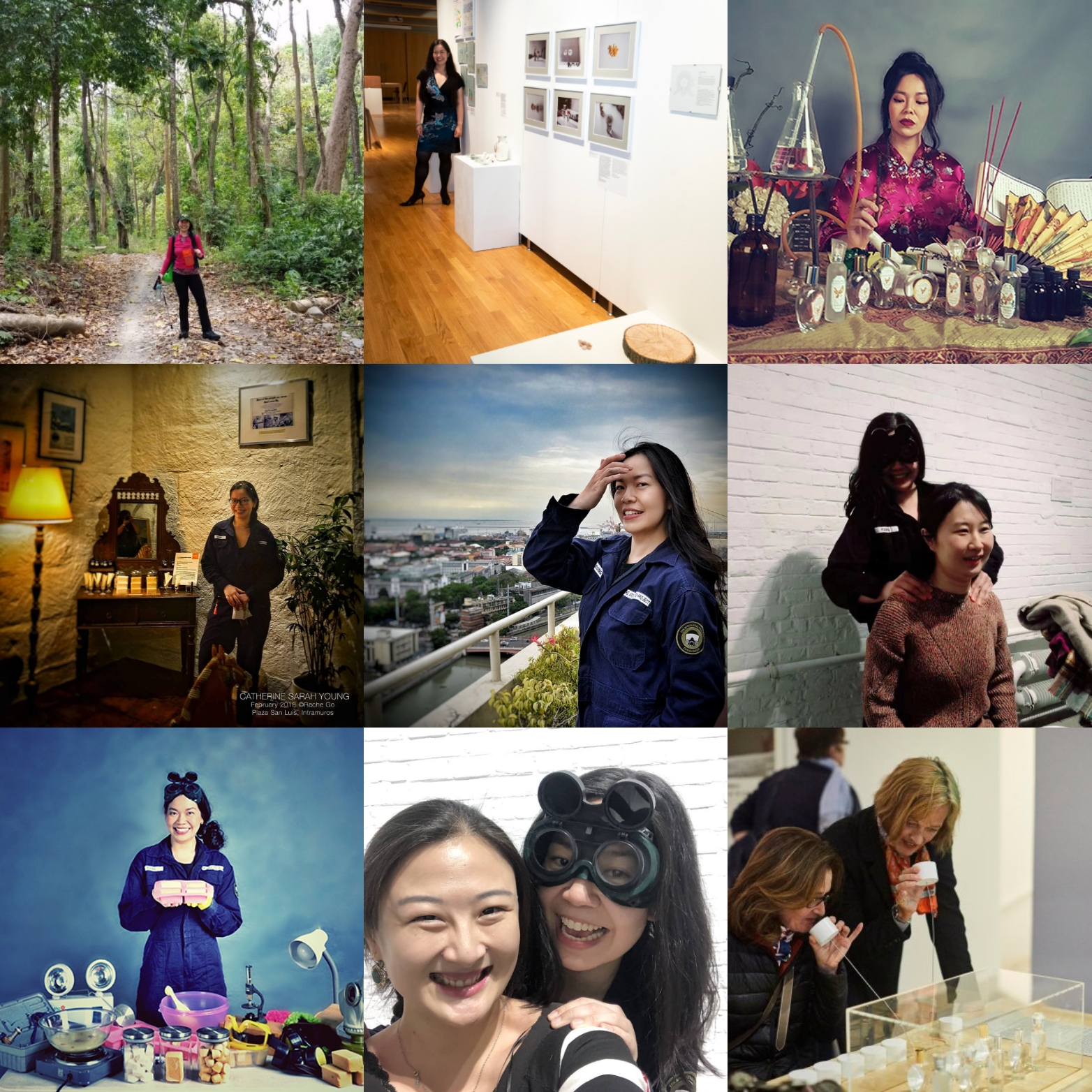
Personal
I started the year decluttering my parents’ house, stopped needing a cane from a hip injury, went back to training in taekwondo again, made lots of new friends, and reconnected with old ones. My dad was diagnosed with a benign brain tumor and is back in Manila from treatment in New York. Apart from residency/fellowship travel (see below), I visited Lucerne (to see a friend), Bratislava, Berlin, Salzburg, and Bangkok (with extended family).
Research: Philippine jungles
I visited Cleopatra’s Needle Critical Habitat sponsored by Great Escapes Philippines and Centre for Sustainability PH.
Exhibitions: Manila, Germany, Dublin
The Sewer Soaperie and An Olfactory Portrait of the Amazon Rainforest were part of the Manila Biennale in February. The Ephemeral Marvels Perfume Store was part of “Victor Papanek: The Politics of Design” at the Vitra Design Museum in Germany in September, and was also part of Science Gallery Dublin’s In Case of Emergency exhibition which closed in February.
Projects, Residencies, Fellowships, Awards: Vienna, Beijing, Taipei
From April to June I did a visual arts residency with KulturKontakt Austria and the Austrian Federal Chancellery. I produced another body of work, Wild Science, which explores the role of science in society. There were fun collaborations, such as with Dr. Gerhard Heindl of the Schönbrunn Tiergarten for this piece, Der Tiergarten 1.0: Human Forces on the Animal Kingdom, and a photo shoot with some cool herpetologists and taxidermists at the Naturhistorisches Museum Wien (Natural History Museum, Vienna). I also produced Letters for Science and asked youth from Eferding, Austria to write letters to climate change deniers.
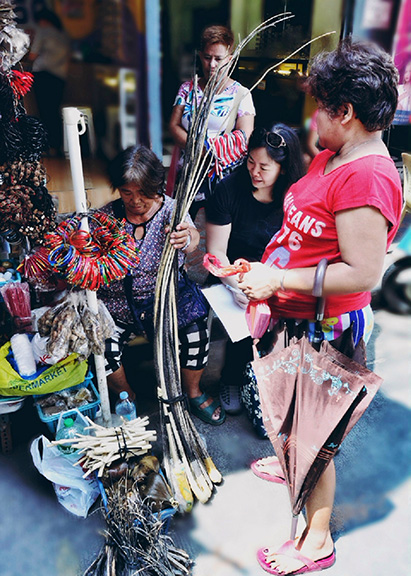
In Manila in September, we finished photo and video shoots of The Ephemeral Marvels Perfume Store and The Sewer Soaperie. I also started doing research for Wild Science on religion and beliefs in Quiapo, a part of Manila where Catholicism, Islam, and paganism intersect.
In Beijing in November for part 1 of the Crystal Ruth Bell Residency with China Residencies and Red Gate Gallery, I performed The Planetary Renewal Spa for the first time and did research for Future Feast. I’ll be back in March 2019 to finish the project.
I’m one of the ten inaugural SEAΔ fellows of the Mekong Cultural Hub and the British Council with part 1 held in Taipei in late November. We were divided into four groups, and mine will meet in Cambodia in May 2019 to execute our project. We will all be together to present the outcomes in Bangkok in June and reflect on the program in September.
I did the second Year for the Planet edition, focusing on my clothing choices.
The Apocalypse Project was shortlisted for Best Climate Solutions Award by Euro-Mediterranean Center on Climate Change (CMCC).
This year’s Ritual Card is a Sunset Wheel, based on the cyanometer used by Alexander von Humboldt.
Talks: From Mental Health to Art and Social Norms
I spoke about artists and mental health in Manila, and spoke about art, science and social norms at the Academy of Fine Arts in Vienna and in Crossboundaries Beijing.
Media
I’m one of ArtReview Asia’s Future Greats for their Summer issue and was featured in my alma mater, the SVA NYC’s Visual Arts Journal for the Fall issue. I wrote an article for Vienna-based contemporary art magazine Springerin, entitled “A Different Shape of Progress: Contemporary Art and Social Inclusion.” I was part of a podcast by America Adapts (Episode 78: Flooding, Climate Change, and Art).
If you have been part of my year at all, thank you very much for your support! Here’s to another productive year. May 2019 be full of new work, growth, relationships, and life!
—Catherine
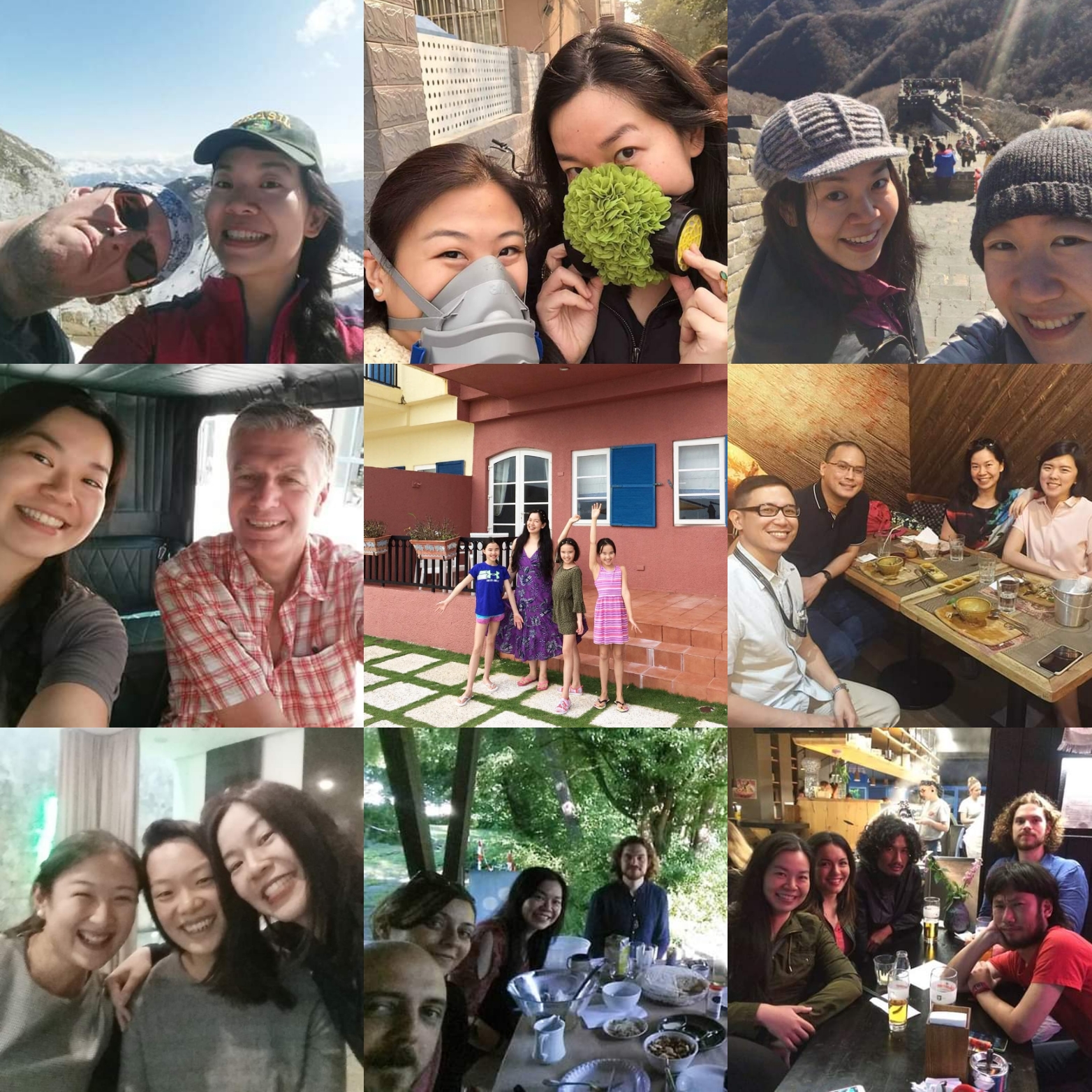
Post-Residency Reflections: Taipei
It’s that time of the year when I finish all residencies, fellowships, talks, and exhibitions, and reflect on the year that’s about to pass. It’s been a wonderful year of learning from different cultures and finding other ways of pursuing my practice. In 2018, I held residencies and fellowships in Vienna (KulturKontakt Austria and the Austrian Federal Chancellery), Beijing (China Residencies and Red Gate Gallery), and Taipei (Mekong Cultural Hub and the British Council). This post recalls some of my favorite memories during Part 1 as a SEAΔ fellow. Head to this post for thoughts about my Vienna residency, and this one for my Beijing residency.
Hot off the heels of my residency in China was my fellowship as part of the inaugural SEAΔ Program of the Mekong Cultural Hub and the British Council. I flew to Taipei from Beijing and got to work.
SEAΔ is a program co-created by Mekong Cultural Hub and British Council which creates space for cultural practitioners to reflect on how their work in arts and culture can contribute to sustainable development within South East Asia through their individual and collective leadership.
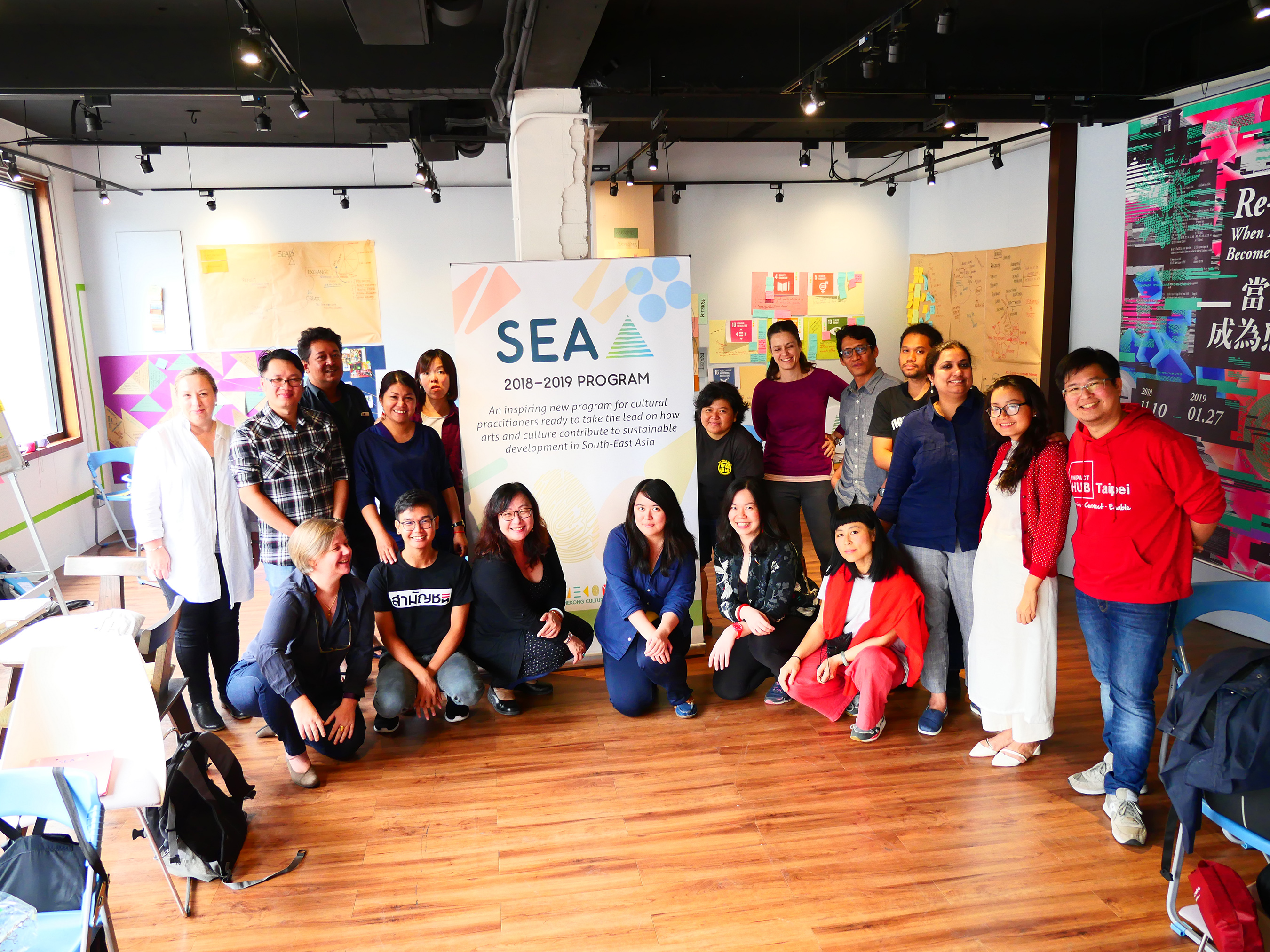
The inaugural SEAΔ fellows from Cambodia, Laos, Malaysia, Myanmar, Philippines, Thailand, Taiwan, and the UK, together with staff from the Mekong Cultural Hub and the British Council. Image credit: Mekong Cultural Hub
Each year 10 Fellows are selected from 10 countries: Cambodia, Laos, Myanmar, Thailand, Vietnam, Malaysia, Indonesia, Philippines, Taiwan and the United Kingdom. The program has 4 main gatherings spread over a one-year period where Fellows get together. Each gathering takes place in a different country and has a unique purpose: exchange, create, share then reflect.
The first gathering, SEAΔ Exchange, was held in Taipei, and after the week-long exchange, we were split into four groups based on our proposed projects, which we were going to iterate for the second part of the program, SEAΔ Create. I was with my co-fellows Sinath Sous (Cambodia), Zikri Rahman (Malaysia), and Thet Oo Maung (Myanmar)—a great fit since we were all working on sustainability in some way. For SEAΔ Create in May, our group will gather in Cambodia to execute the project.
Our project is in conjunction with Arts and Environment Festival 2019 in Kampong Thom, which SEAΔ fellow Sinath Sous is spearheading. The platform will be opened for artistic exchange to encourage experience sharing of arts and environment to better address climate challenges. The objectives are to focus on capacity-building workshops based events to support the team in climate action and to promote local knowledge among development experts and governments on this topic of sustainable development project in the future. My part here involves co-designing art workshops and scavenger hunts for the participants to reflect on climate change impacts in Cambodia.
During the exchange in Taipei, the fellows finally met each other and it was great to learn about their work. We engaged in design thinking workshops, met with the creative community of Taipei, and learned from stellar speakers who shared their work. We also had opportunities to go outside of the city, such as meeting the staff and artists of the Bamboo Curtain Studio. Taiwan is an island bustling with creativity and promise.
The SEAΔ program was the most unique in all of the fellowships I’ve had, and certainly stands out among all of the things I’ve done this year. Frankly, this is one of the few fellowships I’ve had in Southeast Asia—an involuntary choice, seeing that most opportunities available to me have been in the West and in East Asia where I felt more culturally adapted to as a Chinese-Filipino who grew up in a Chinese community, and in the Philippines where American culture is widely available. While I have tried to pursue projects in my home region, such as a research trip earlier this year to Cleopatra’s Needle Critical Habitat in Palawan, the Philippines with the Centre for Sustainability PH and Great Escapes Philippines, and the art residency I did with Plan International and the International Climate Initiative last year, finding funding for the projects I want to do will take time (and a bigger network and fairy dust), and it has been a lot easier and more logical to accept all these foreign opportunities while there were available and while I was within their age limits.
Applying to SEAΔ was my way of filling in the gaps in my world experience, and to be able to find something worthwhile to do considering that this region will bear the brunt of climate change impacts. I’m extremely grateful for this opportunity and am really excited for the rest of the fellowship. It was my first time in Taipei—a personal revelation according to my childhood friend Barbie whom I reconnected with in my Beijing residency was that the books we read in Chinese school were actually Taiwanese. This would give me a bigger identity crisis if my grasp of the Chinese language were any better. But the people were wonderful and the parks were free and the food was fantastic. Cambodia will also be a whole new world for me. I can’t wait for 2019!
SEAΔ Exchange, the first part of the SEAΔ program, happened from November 26-30, 2018 in Taipei, Taiwan. SEAΔ Create for my group will take place in Kampong Thom, Cambodia. Thank you to the wonderful staff of the Mekong Cultural Hub and the British Council!
Post-Residency Reflections: Beijing
It’s that time of the year when I finish all residencies, fellowships, talks, and exhibitions, and reflect on the year that’s about to pass. It’s been a wonderful year of learning from different cultures and finding other ways of pursuing my practice. In 2018, I held residencies and fellowships in Vienna (KulturKontakt Austria and the Austrian Federal Chancellery), Beijing (China Residencies and Red Gate Gallery), and Taipei (Mekong Cultural Hub and the British Council). This post recalls some of my favorite memories during my Beijing residency. Head to this post for thoughts about my Vienna residency.
My residency with China Residencies was split in two; I finished part 1 in November and will come back in March. I was really excited for this residency. It was my second trip after many years as a journalist, and coming back as an artist gave me plenty to be inspired by. Here are some takeaways for Part 1:
1. If at first you don’t succeed
This was the second time I applied for this residency and I thought my chances were even more dismal than the first time with 700+ applications. Hurray for perseverance! For my younger artists, seriously, just keep going.
2. My fellow residents and the residency staff
For the most part, I’ve been quite lucky with fellowships because no one is a drama queen. I really loved being with my fellow Red Gate Residents this year, and the staff has been fantastic and supportive. I’m also pretty blown away by many of the senior Chinese artists I’ve met, who have been very generous with their time and humble despite their accomplishments. Also, there’s an artist I met in my Vienna residency that was also in Beijing! The world keeps getting smaller.
3. The food is great (and nothing to be scared of)
My residency project is about food, so oh poor me, I had to eat my way through Beijing. At first, I was panicking at the thought of buying so-called fake food that I would read about before my arrival. To be honest, I encountered none of these issues; if they exist, I was told by several locals that one might find them in the countryside but not in the upscale markets in the more modern areas of Beijing.
4. Reconnecting with childhood and grad school friends
So much time with familiar faces! Barbie has known me since I was 6! I knew Qing Qing from grad school in NYC and she lives across the street from the apartment that Red Gate let me stay in! Tina is a classmate from grad school and she visited! (Her grad school thesis was about food and she trained in culinary school, so our conversations really helped in my residency project.) How amazing to reconnect with all of these people!
5. Training in taekwondo after a year
If there’s something I’m thankful for in this residency that I was not expecting, it was training in a taekwondo school again. I haven’t stepped inside a dojang since injuring my hip from side kicks, so I almost cried when my feet touched the familiar rubber mat. It’s so good to train in a school…with a mirror. My poomsae are so off. I had stopped bringing a uniform with me since Vienna, as I had given up on finding a nearby school. Note to self: bring the freaking dobok every time. Plus the coach was World Champion! Hurray for kicking! I will die with this sport (though I hope I won’t die doing it).
This is also the first residency where I felt well enough not to bring a cane. I’m definitely taking way better care of myself this time.
6. Visiting the Great Wall
See what I mean? This was my second time on the wall. I’m definitely way fitter this time around, ha.
7. The very adaptable people
Flexibility is, I find, a very Chinese trait. China is very much a Big Brother state, but I found the people I interacted with to take this in stride, as though they were used to it and simply found ways to get on with their lives. While I’m sure this has disadvantages, as a (half) Chinese person, female, and of color, who has lots of dreams and has faced lots of challenges owing to her sex and race and background, I think this adaptability and determination to go on are survival skills that have served me well in all the years of being an artist. I also really like seeing the elderly in China; lots of community gatherings such as tai chi, mah jong, singing, etc. It feels less lonely here, for sure.
8. The future is here
I designed some Climate Change Couture masks back in 2014-2015, and exhibited them in a show at the Institute for the Future and Swissnex San Francisco. Little did I know this would work the best for me battling Beijing smog in 2018.
I spoke about this a lot during my talks, such as this one in Crossboundaries, an architecture firm in Beijing:
9. Can you feel the power?
There are a lot of places in Beijing that will make you contemplate about the centuries and dynasties that it took to build this city. They’re quite inspiring and exhausting to walk around in. Fragrant Hills and the Botanical Gardens looked tiny on the map and I thought I’d be done in the morning. I came home…12 hours afterwards. The good thing about splitting a residency in two is that one can run around in Part 1, determining which ones to go back to and include in your project in Part 2.
10. An older history of science
Still a nerd, I think my favorite place in Beijing is the Beijing Ancient Observatory, which was built in 1442 during the Ming Dynasty. Many places i loved in Vienna were built in the 1800s and are therefore babies in comparison. Most history books are so Western-centric and I was grateful for being reminded that the oldest technologies in the world aren’t far from my backyard.
TLDR: I had kept my expectations low, mainly because I didn’t have enough information about China as lots of websites like Google are blocked. And so I was prepared for anything. It’s wonderful to have a wealth of information, a lot of new friends, and a tank of inspiration to draw from as I prepare to finish this residency in 2019. Do reach out for more about Future Feast and The Planetary Renewal Spa!
In November 2018, I was artist-in-residence of China Residencies and Red Gate Residencies as the 5th Crystal Ruth Bell Resident Crystal Ruth Bell was co-founder of China Residencies who passed away in 2014; the residency is held in her honor. The projects I am working on are Future Feast and The Planetary Renewal Spa from The Apocalypse Project series. I will be back in March of 2019.
Post-Residency Reflections: Vienna
It’s that time of the year when I finish all residencies, fellowships, talks, and exhibitions, and reflect on the year that’s about to pass. It’s been a wonderful year of learning from different cultures and finding other ways of pursuing my practice. In 2018, I held residencies and fellowships in Vienna (KulturKontakt Austria and the Austrian Federal Chancellery), Beijing (China Residencies and Red Gate Gallery), and Taipei (Mekong Cultural Hub and the British Council). This post recalls some of my favorite memories during my Vienna residency.
My residency with KulturKontakt Austria and the Austrian Federal Chancellery was, without a doubt, one of the best and most rewarding residencies I’ve had. Being in the quiet environment of the Schloss Laudon complex, having a very supportive staff (Hi Nicole and Brigitte!) and wonderful collaborators, and having freedom and time made me push myself and not waste a day. It also helped that I was around nature and was able to go hiking every day if I wished. I came out with another body of work and more questions that I hope to pursue as I move forward.
Here are memories that I took away from Vienna and hope to return to one day:
1. The museums
Specifically, I could live in the Naturhustorisches Museum Wien (Natural History Museum, Vienna), and bunk in the meteorite room and hang out with the taxidermists and herpetologists. Then I can take a break by going across the plaza to check out the cabinet of curiosities at the Kunsthistorisches Museum. Then walk across the street to MuseumsQuartier and take a nap on one of the purple benches. It was fantastic to drink in all of this knowledge and be inspired by it.
2. The Tiergarten
I love animals and have always been seeking to incorporate zoology (one of the subjects my mom used to teach) into my work, so it was such joy to work with Gerhard Heindl, the historian of the oldest zoo in the world, to produce our collaborative piece, Der Tiergarten 1.0: Human Forces on the Animal Kingdom.
It was also a treat to go around the zoo in a golf cart to carry some 100+ year old wood!
3. Schloss Laudon and Augustinerwald
I miss the castle that we were never allowed into. And the swans and flowers. And those two sculptures of wild boars. And the room that used to be a sauna that was turned into art studios. And most of all, the stories of previous residents.
I also miss my bathtub, the Schloss Laudon fox, the trees I would say hello to, the bugs, etc.
View this post on Instagram
Gonna miss you, Schloss Laudon fox! Good to see you on our last days. #SchlossWalks
There were no taekwondo schools nearby so I had to find other ways of being centered. Thankfully, there was a forest right outside the schloss, so off I went many times. Being in nature is one way to flex our muscle against capitalism and fascism, so this is one thing I always make time for:
4. My fellow residents
As KulturKontakt Austria’s first artist-in-residence from the Philippines (sheesh, aren’t I always the first artist from the Philippines?), it was very mind-expanding to meet fantastic artists from Eastern Europe. To most Asians, when we think of Europe it’s usually the London-Paris-Barcelona triad and nearby, perhaps similar to how Westerners automatically think “Japan” or “China” when they think of Asia. Perhaps we surprised each other. It’s always a very humanizing event to meet different people and realize how very similar we are. Not to mention how amazing their food is.
5. My non-residency friends
Isn’t it great to click with people from all over the world? In this residency I met some activists, translators, artists, and many other people who made my three-month stay in Vienna seem as though I was home. There are still lots of freethinking people in Austria; I highly recommend checking it out!
View this post on Instagram
One Manileño down, one to go. We’ll miss you, Poklong! Even me; I live in Malate and you’re in QC! 😂
6. New skills
Each project makes me want to push myself and learn something new, so it is with a lot of pride and excitement that I report that I can now work with a belt sander and a laser engraver. The latter is only after a lot of help from German-speaking people at HappyLab. I’m a member of a maker lab—how miraculous is that?
7. Working with kids
I think working with children and youth will always be part of my practice, so hurray for the first group of writers for Letters for Science!
8. Being around the history of science and art
From carrying a pizza box outside Johannes Kepler’s old apartment to having coffee in Gustav Klimt’s old stomping grounds, Austria is pretty fantastic for art-science nerds like me.
9. The Naschmarkt
If I add up the ages of all the old science books I bought, they will span centuries. I miss my Saturday routine of grabbing a couple of Kaspressknödel and saying hello to my favorite booksellers, Gerard and Idris.
I also unwittingly built a collection of Nazi books, including a 1938 Mein Kampf. I’m still hoping to incorporate into a project. (I only read half of it; how depressing to read someone’s unadulterated hatred for other people.)
10. The cakes
Hey Austria, when I finally lose the 10 pounds I gained from three months of eating Sachertorte, I hope to see you again.
Thanks for everything, Vienna! Hope to see you again soon!
From April to June 2018, I was artist-in-residence of KulturKontakt Austria and the Austrian Federal Chancellery. The body of work produced during this time was Wild Science.
The Planetary Renewal Spa
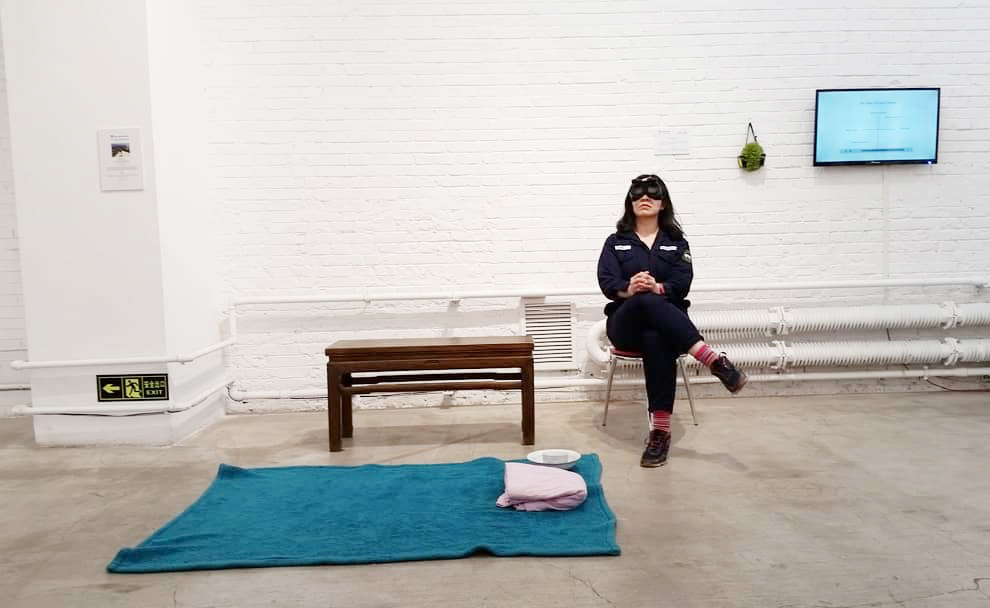
The Planetary Renewal Spa
The Planetary Renewal Spa (2018- ) is a series of self-care performance rituals that illuminate the effects of climate breakdown. The spa currently offers two services: Back Massage to Simulate Hurricanes and Disappearing Honey Facial.
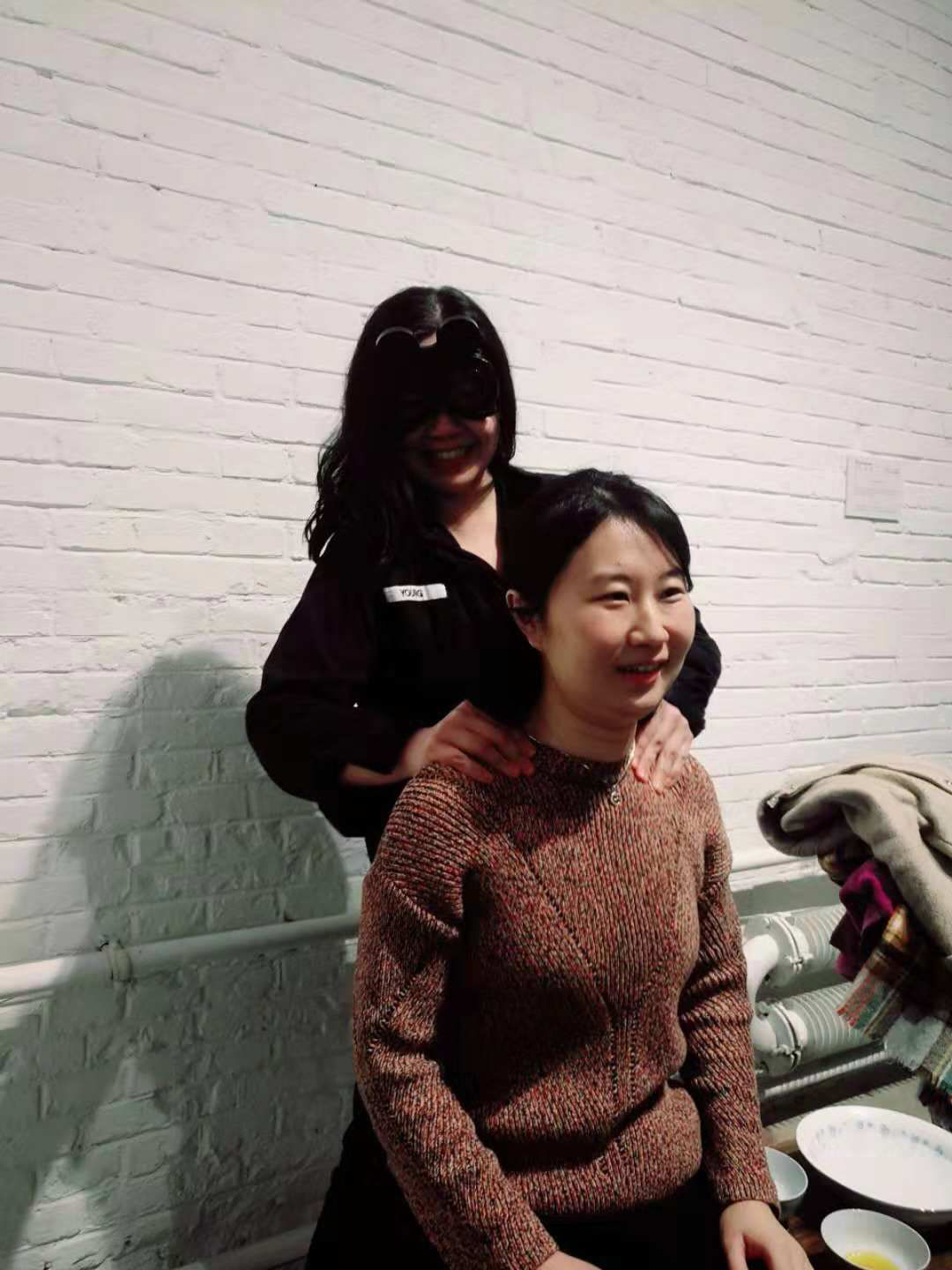
The Planetary Renewal Spa: Back Massage to Simulate Hurricanes
Back Massage to Simulate Hurricanes takes clients on a sensory experience of a hurricane, from light feathery touches of the coming storm to a full catastrophe.
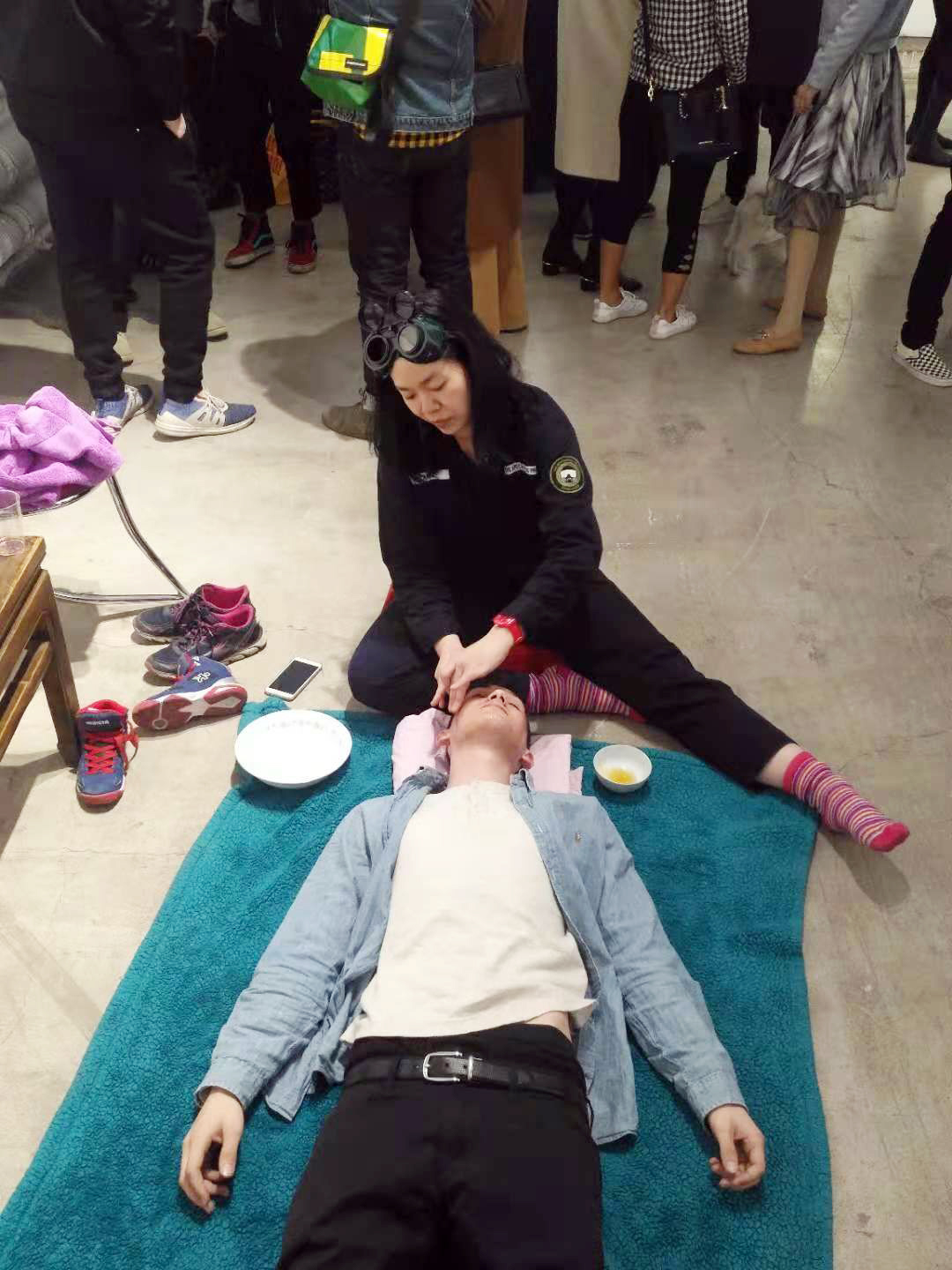
The Planetary Renewal Spa: Disappearing Honey Facial
Disappearing Honey Facial gives clients a relaxing facial massage using raw honey while the artist narrates the story of bees disappearing because of climate change.
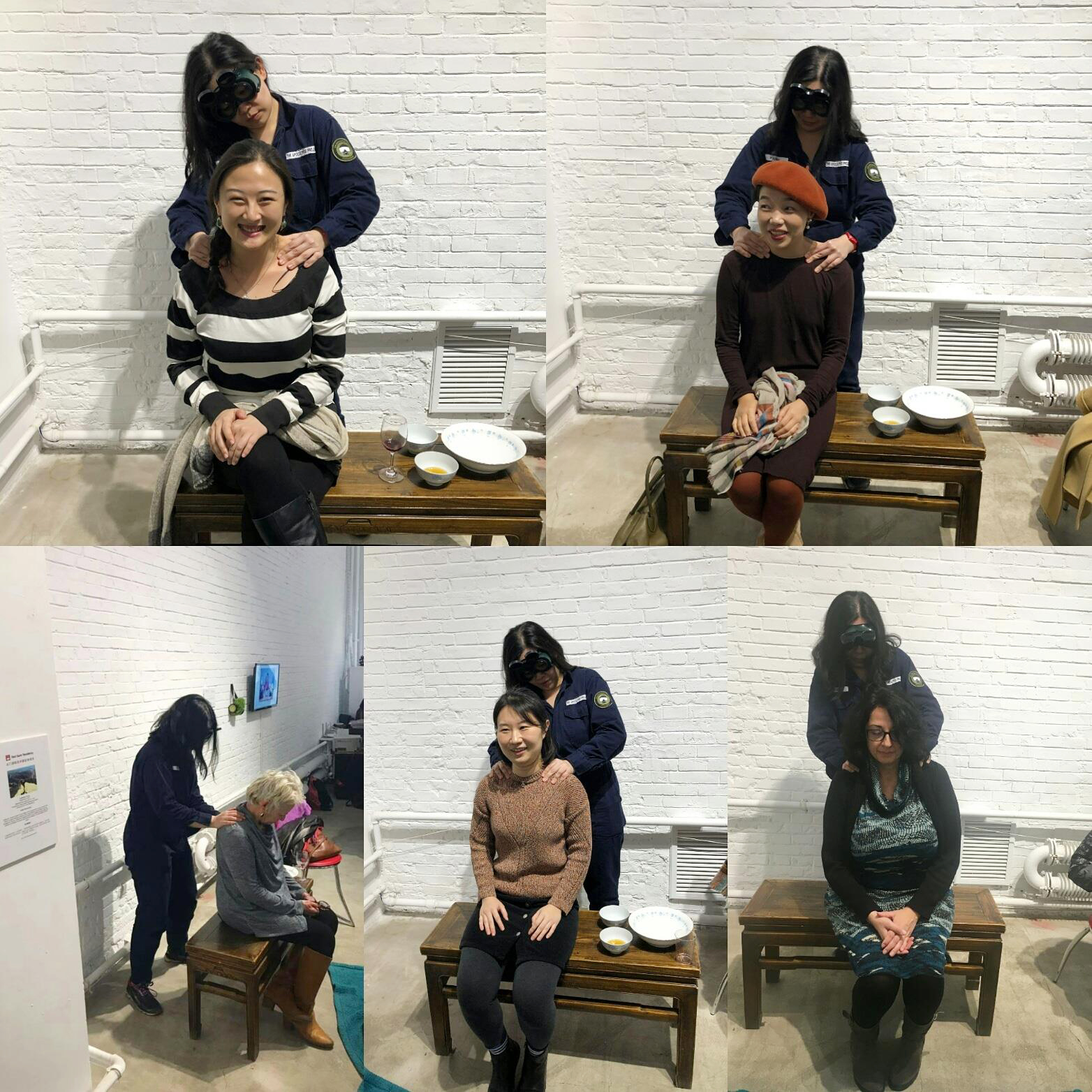
The Planetary Renewal Spa: Back Massage to Simulate Hurricanes
The Planetary Renewal Spa was first performed at Red Gate Gallery in Beijing as part of my residency as the 5th Crystal Ruth Bell resident of China Residencies.
Catherine Sarah Young is selected as one of the inaugural SEAΔ program by the Mekong Cultural Hub and the British Council

What’s up, Taipei! I’m honored to be one of the 10 inaugural SEAΔ fellows for 2018-2019, with my aim to develop the arts-led climate change educational program of The Apocalypse Project. Very excited for what looks like a kick-ass program and to meet some incredible people. I’ll be in Taiwan from November 25 to December 8; an obvious invite to meet up of you’re there! 😙
SEAΔ is a program co-created by Mekong Cultural Hub @mekonghub and the British Council @britishcouncil which creates space for cultural practitioners to reflect on how their work in arts and culture can contribute to sustainable development within South East Asia through their individual and collective leadership.
Learn more about the program and the other fellows here: https://mekongculturalhub.org
See you soon / Studio break
I’ll be traveling for some residencies and fellowships, so until then, here is a preview of some work coming soon:
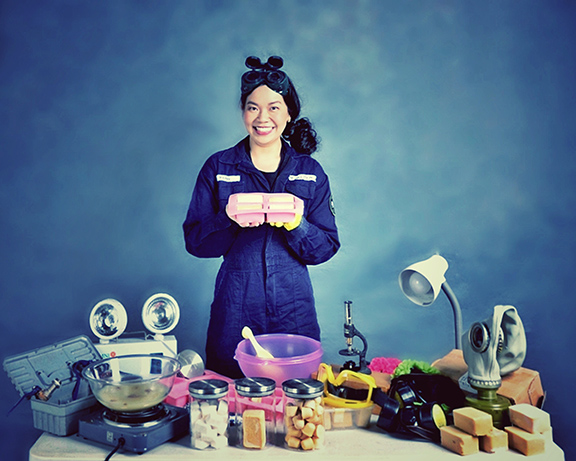
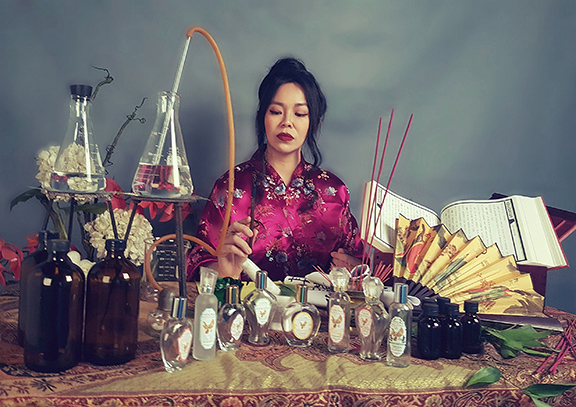
I got dolled up to create videos for The Sewer Soaperie and The Ephemeral Marvels Perfume Store:
I explore the intersection of religion, belief, and technology in the center of mysticism in Manila:
Ciao!
xo
Catherine
“Global Warming” in the Visual Arts Journal of the School of Visual Arts

“The best thing about being an artist is being able to mingle with all kinds of people.” I’m stoked to be in the Fall 2018 issue of the magazine of my beloved grad school alma mater, the Visual Arts Journal of the School of Visual Arts NYC about my art residencies and speaking engagements around the world. A sure sign of old age.
Together with other international students and scholars from The Fulbright Program, the article, “Global Warming”, is written by Alexander Gelfand (pp 20-23) and I talk mostly about how I’ve adapted to many places around the world (TLDR: take care of your mental health, have a healthy diet, exercise, and make friends 😉).
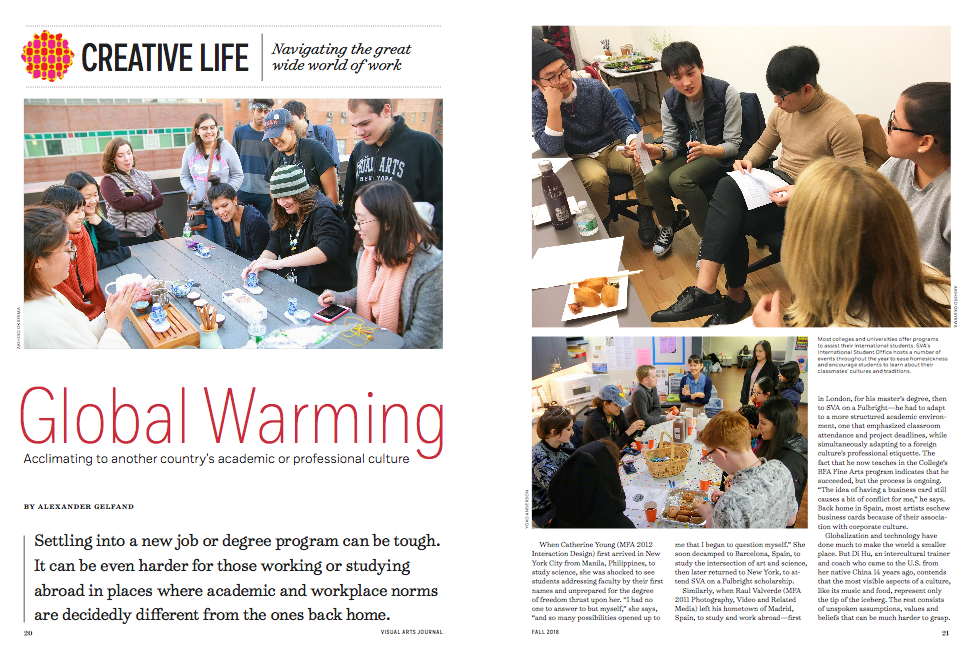
This interview happened during a late night in my residency in Vienna with KulturKontakt Austria and the Austrian Federal Chancellery; residencies are always great time to reflect on past work to see where we want to go next. Images courtesy of USAID Asia, Rache Go, Plan International Asia, Gui Gomes, LABVERDE, Joni Ong, & Centre for Sustainability PH. Always wonderful to remember all the places art has taken us!
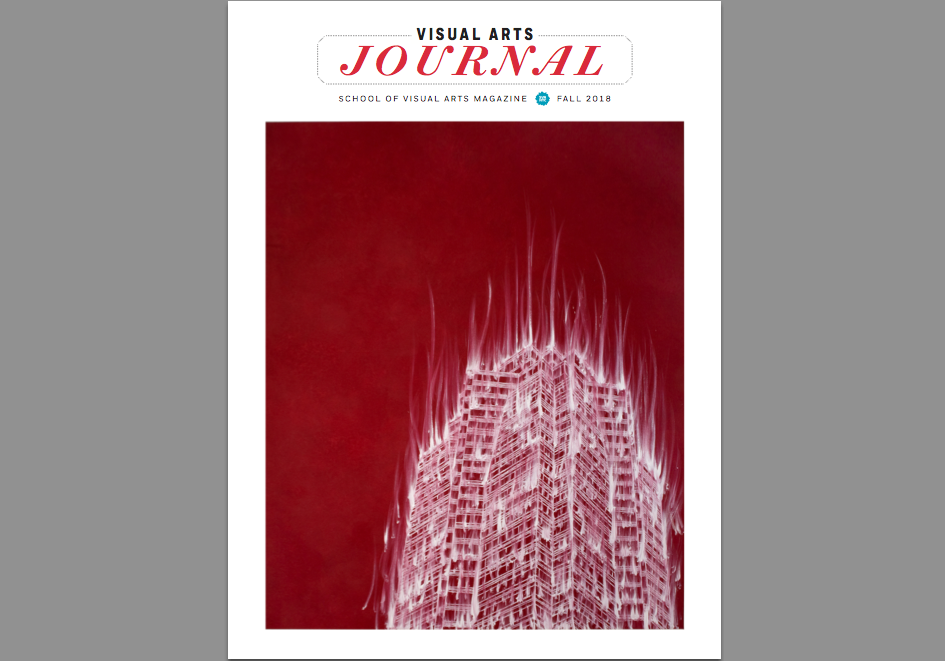
Check out the issue here for more articles: http://www.sva.edu/about/visual-arts-journal

