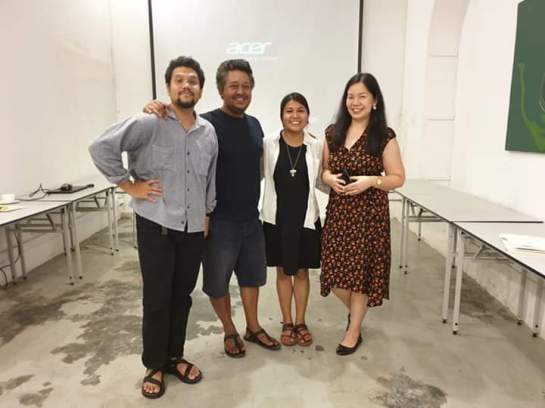
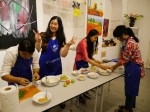
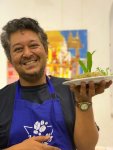
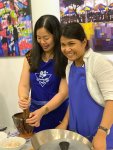
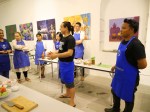
Science Gallery Melbourne’s DISPOSABLE exhibition wrapped up on September 1st after a busy month. The Sewer Soaperie was one of the works in this exhibition. The team sent me lots of photos and feedback. Here is what happened and what we learned from this project:

According to co-curator Dr. Ryan Jefferies in an email to me, the exhibition received 26,504 attendees within the four weeks. The show had 150 kg of recycled fat, 12,000 plastic-eating mealworms, over 500 urine samples, and thousands of river reeds.

Having just moved to Australia, I have learned that post-event surveys are standard procedure here, which is fantastic. Here are quantitative feedback from the audience:

  • 92% of visitors were satisfied with the exploration of the theme DISPOSABLE
  • 85% think SGM is distinctive to other galleries
  • For 79% the program challenged their thinking
  • For 86% it sparked conversations they wouldn’t usually have

Dr. Jefferies also wrote that, “DISPOSABLE has also been our most sustainable season, with Science Gallery now following a Sustainability Action Plan, participating in the University of Melbourne’s Green Impact Challenge and significantly reducing our waste.”

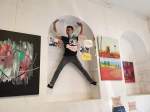
The Sewer Soaperie at DISPOSABLE. Image by Science Gallery Melbourne

It was also great to see this piece at the Parliament of Victoria for National Science Week:

The Sewer Soaperie at National Science Week, Parliament of Victoria. Image by Science Gallery Melbourne

I’ve had this work exhibited before, but Science Gallery Melbourne’s team is one of the most exuberant I have ever worked with, and I couldn’t help but feel excited as though this were the first time. It also made those long hours worth it.

More images by Science Gallery Melbourne:

DISPOSABLE by Science Gallery Melbourne. Image by Brent Edwards

Some viewers participated by washing their hands with the soap, though for those who passed, no one blames you.

Images by Brent Edwards

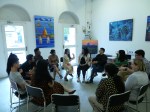
Among the hallmarks of Science Gallery are their mediators, who are there to help their largely young audience to connect with the works. Science Gallery audiences are, from my experience, very curious and ask a lot of excellent questions, which is why I love exhibiting with these guys.

Image by Nicole Cleary for Science Gallery Melbourne

According to Ellie Michaelides, one of Science Gallery Melbourne’s mediators, here are some feedback from the visitors:

“It feels just like normal soap! But less lather”
“I make my own soap at home, I never thought of adding my own left over cooking fat to it!”
“Sewers?! Yeah, nah…”
“Are you sure it’s really clean?”
“That’s really smart, can I buy some?”
“I thought it would smell more”

“It doesn’t smell bad”
“I wish I could buy some”
“I feel like the colour should be less clean”
“I wanted to see what the original fat looks like”

More images by Nicole Cleary:

I, too, have learned a lot as an artist who was a part of this. Back in 2016, this project seemed outlandish, almost in the realm of conceptual art. But human impact on the environment and on cities have increased over time, and so The Sewer Soaperie is in its own way now a legitimate design solution. I am happy and fascinated with how well this been received, including how it provoked many people. For me, art can have a confrontational message and propose solutions in addition to other things it can do. I think this is the strength of interdisciplinary art-science work: it can bring about new dimensions and divergent ways of thinking, and as we continue to negotiate our environmental futures, this can be among the ways by which we can transform society.

It was also inspiring to have this piece be exhibited with these amazing projects. There’s also been a lot of media coverage about DISPOSABLE; do check them out:

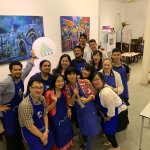
Thank you to the Science Gallery Melbourne team!

Hurray, SGM team! Image by Brent Edwards

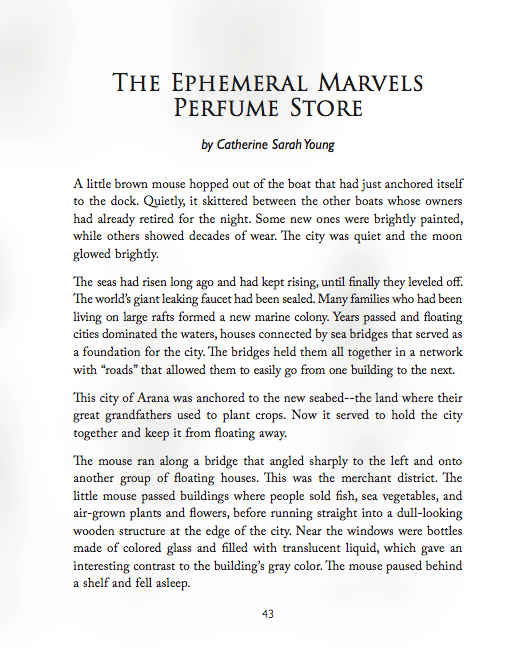
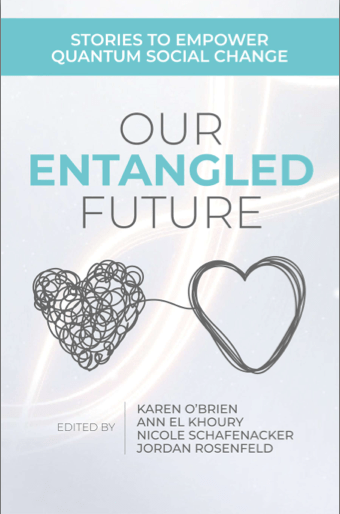
(Norway / Chile) I’m excited to share the news that the book, “Our Entangled Future: Stories to Empower Quantum Social Change,” is now available and free to download. My contribution, a short story version of “The Ephemeral Marvels Perfume Store,” won third place, and I’m stoked to be part of this wonderful collection.  The book will be launched tomorrow, October 15, at the Transformations 2019 conference in Santiago, Chile, and will be available in ebook and paperback versions.

The nine short stories presented in Our Entangled Future are rooted in the complex reality of the climate crisis. Rather than painting a dystopic future, they present agency-driven characters whose insights will inspire readers to contemplate and realize the potential for quantum social change.

The book is co-edited by Karen O’Brien, Ann El Khoury, Nicole Schafenacker and Jordan Rosenfeld. Many thanks to the team, the jury and my fellow writers!

Download the book here.

I’m excited to let you know that I have moved to Sydney to join the Arts-led Energy Humanities group at the Faculty of Art and Design at UNSW as a Scientia scholar, continuing my art-science work on the environment! Hurray for deep work in what looks like a supportive community. (TLDR: same schtick, but deeper and down under.)

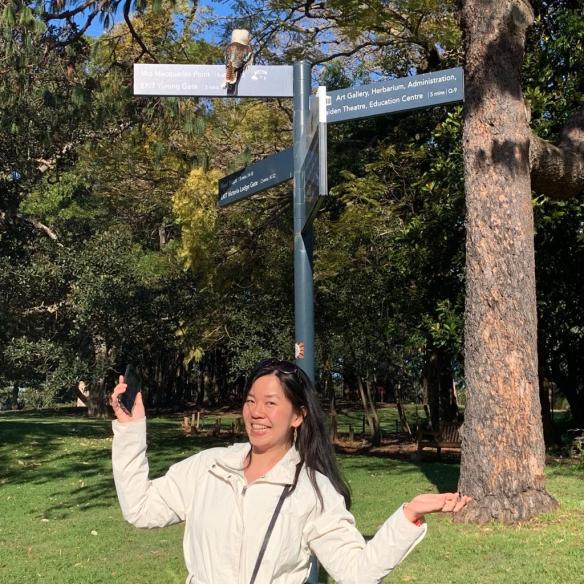
I saw a kookaburra on my first day so I hope this is a good sign!

Image by Nicola Turner

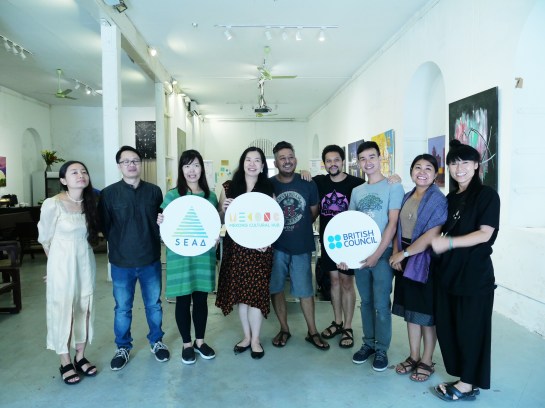
(Yangon, Myanmar)—From September 16-19, the SEAD1 fellows gathered at the Pansuriya Art Space in Yangon, Myanmar for the final part of the SEAD program.

SEAΔ is a program co-created by Mekong Cultural Hub and British Council which creates space for cultural practitioners to reflect on how their work in arts and culture can contribute to sustainable development within South East Asia through their individual and collective leadership.

On Day 1, we looked back on what SEAD has done for us in the past year and what the future might hold for us. As an interdisciplinary art-science person, I really appreciate how much more exposed I am towards social and environmental issues, and also as a former journalist I shared my experience in communicating my work especially on the internet.

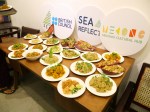
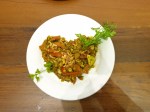
In the evening we prepared a Burmese dinner together, thanks to the fantastic team of Sa Ba Street Food Tours. I really love the tea leaf salad, and what a great introduction to delicious Burmese food.


On Day 2, we spent time getting to know some inclusive art spaces in Yangon, such as the Pansuriya Art Space where the fellowship was held, and The Able, a cafe and community space which employs hearing-impaired people. We also mapped out our networks and listed our skills, reviewing them as we slowly move forward from SEAD. It was a great say seeing how art can permeate different communities, and how far we ourselves have come.


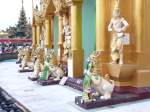
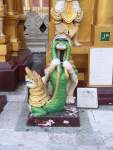
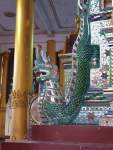
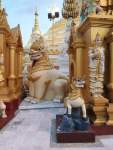
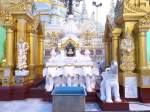
In the evening some of us went to the beautiful awe-inspiring Shwedagon Pagoda, currently my favorite pagoda in all of Southeast Asia. I really liked the animal sculptures that all had some kind of symbolism.

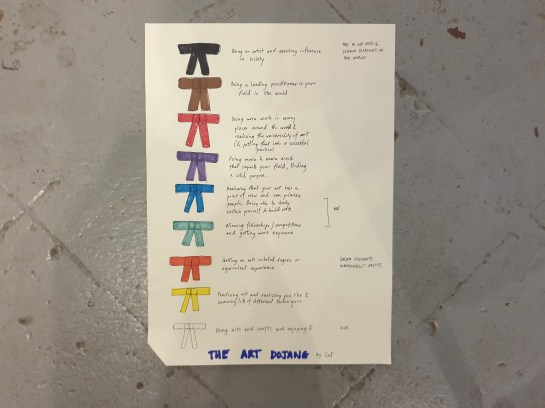
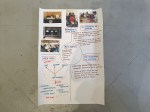
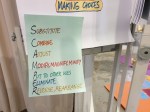
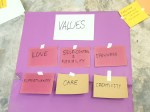
On Day 3, the last day, we thought about our assets as artist and I realized I had more resources than I thought, and ideated on our insights, values, questions, and redefinitions that we had over the course of the nine-month fellowship. Critically (at least for me!) we worked out what our ladders of success (whether vertical or horizontal), and I diagrammed “The Art Dojang”—how I mapped out an arts career to taekwondo, because, well, what better metaphor do I have? We wrapped up the day sharing stories that connected us, and also filmed a message for the future SEAD2 fellows.

We wrapped up our time in Yangon at the wonderful Burma Bistro. It was quite a wild ride for the past nine months! This is the first fellowship I’ve had where I didn’t need to bring hot sauce. I’m really happy to have said yes to this opportunity to reconnect with my Southeast Asian half in a nurturing and safe environment and to think about the divergent ways I can manifest being an artist. I’m thinking about this experience in the context of a very productive year with very timely gigs, starting from The Unlearning Place at the Haus der Kulturen der Welt to China Residencies and then Southeast Asia. .

My deepest thanks to the Mekong Cultural Hub’s Frances Rudgard, Jennifer Lee, and Patty Chan; creative facilitators Nicola Turner and Sudebi Thakurata; and the British Council’s Katelijn Verstraete, Daniel Donnelly and Julia Davies for taking great care of us and helping me grow through this process, and my fellow SEAD friends for being my teachers as well as colleagues. Very excited to take all that I have learned in the next steps. Can’t wait to begin again in Sydney! .

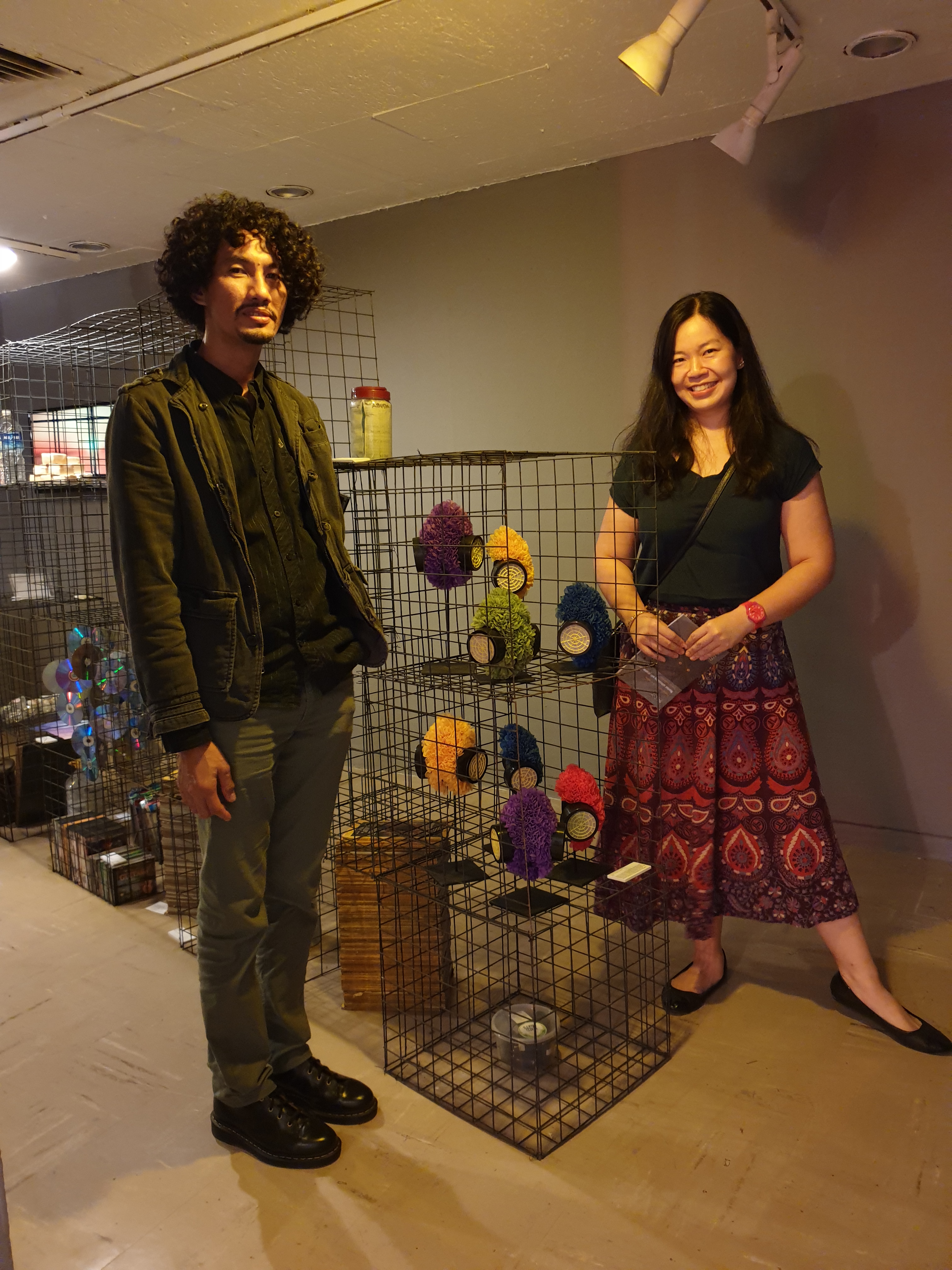
The Sewer Soaperie, The Ephemeral Marvels Perfume Store, and Climate Change Couture: Flower Masks are included in the Seawall project, a collaborative work by Manila-based artist Poklong Anading (PH), currently at his and Neil Fettling’s (AUS) exhibition, “Normal scheduling will resume shortly” curated by Dr. Vincent Alessi.

The Sewer Soaperie

Seawall is a collaborative project that deals with memory and the relationship of the city. Our imbalanced overdependence on natural resources for our daily sustenance has led to eroding our relationship with nature, largely for the sake of economic progress. Manila used to be protected from typhoons and flooding by mangroves; in fact, its name came from “may nilad“, where nilad is a mangrove species Scyphiphora hydrophyllacea that grows beside the water, protecting coastlines from storms and erosion. Using the “balikbayan” image of sending foreign goods to the Philippines, the stacks of boxesare a metaphor of looking back and serve as containments for the individual artists’ idea of the city they are living in. What are our memories of this city, and what might we let go of in order to make it more habitable for its inhabitants?

Other participating artists for Seawall include Milo Aceremo, Billy Adonis, Lorena Rose Balina, Idan Cruz, Rico Entico, Neil Fettling, Neo Maestro, Paul Mondok, Gelo Narag, Miguel Lorenzo Uy, Johannes Wiener, and MM Yu. Wonderful to meet new artists and say hello to old friends!

With Poklong Anading, curator of the project

The exhibition runs until November 3, 2019 at the 4th foor of the Cultural Center of the Philippines.

An Olfactory Portrait of the Amazon Rainforest. Image credit: Science Gallery Dublin 2017

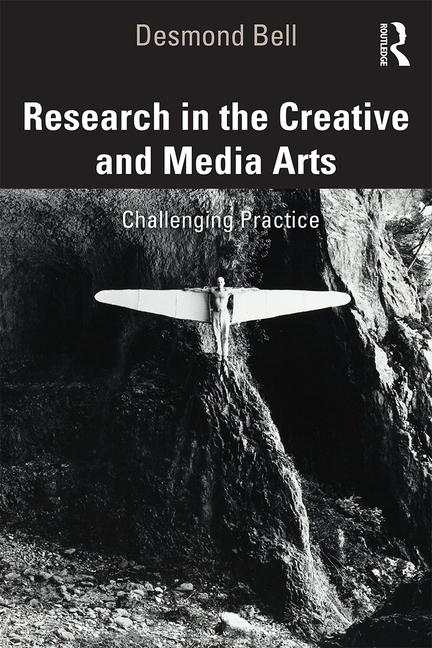
My work, “An Olfactory Portrait of the Amazon Rainforest”, is in the book, “Research in the Creative and Media Arts: Challenging Practice” (2019, Routledge) by the inimitable Prof. Desmond Bell, award-winning documentary filmmaker and fellow of the National College of Art and Design in Dublin, where he was previously Head of Research. I’m truly honored and now feeling like a dinosaur.

With this, I am also reminded of the current struggle of Brazilian researchers, artists, and citizens in general, and hope that my work as an artist creates some impact, no matter how infinitesimal. I have a bunch of Amazon-themed projects in the pipeline, and I’m always happy to share.

Kudos to Prof. Bell and Science Gallery Dublin where the work was exhibited as well as LABVERDE and the INPA National Institute for Amazonian Research in Manaus who supported this work. Thank you, obrigada, go raibh maith agat, salamat and xie xie!

Get the book here.

The Ephemeral Marvels Perfume Store now also exists as a short story and won third place at the “Our Entangled Future: Short Stories to Empower Quantum Social Change” held by the University of Oslo. This is my first literary prize in, well, a while, so I am both happy and amused. The open access book will be launched in October at the Transformations 2019 Conference in Santiago, Chile. The book will include one of our studio photos.

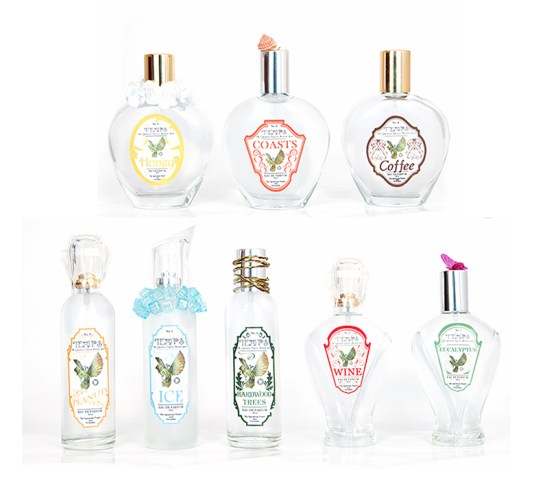
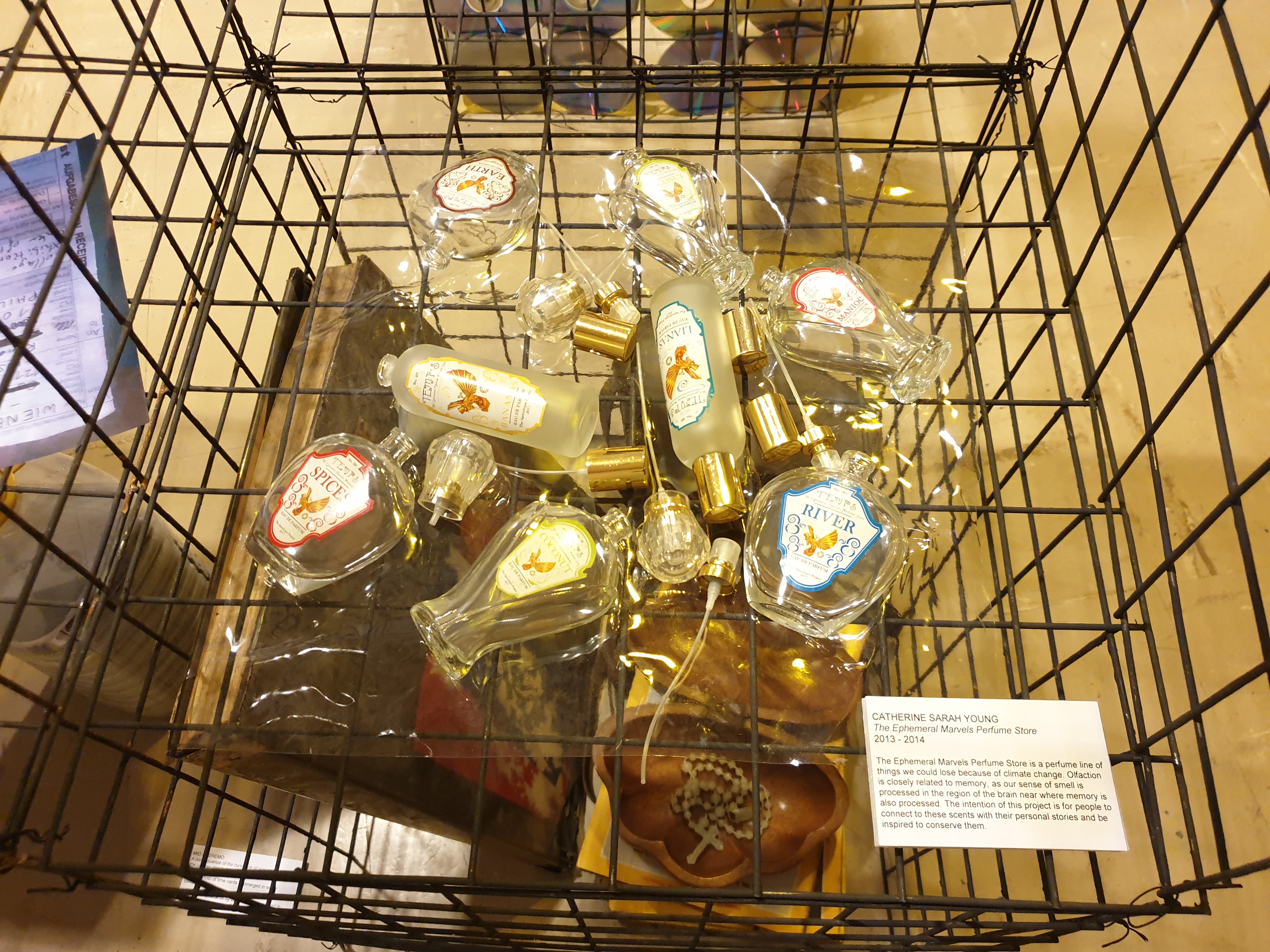
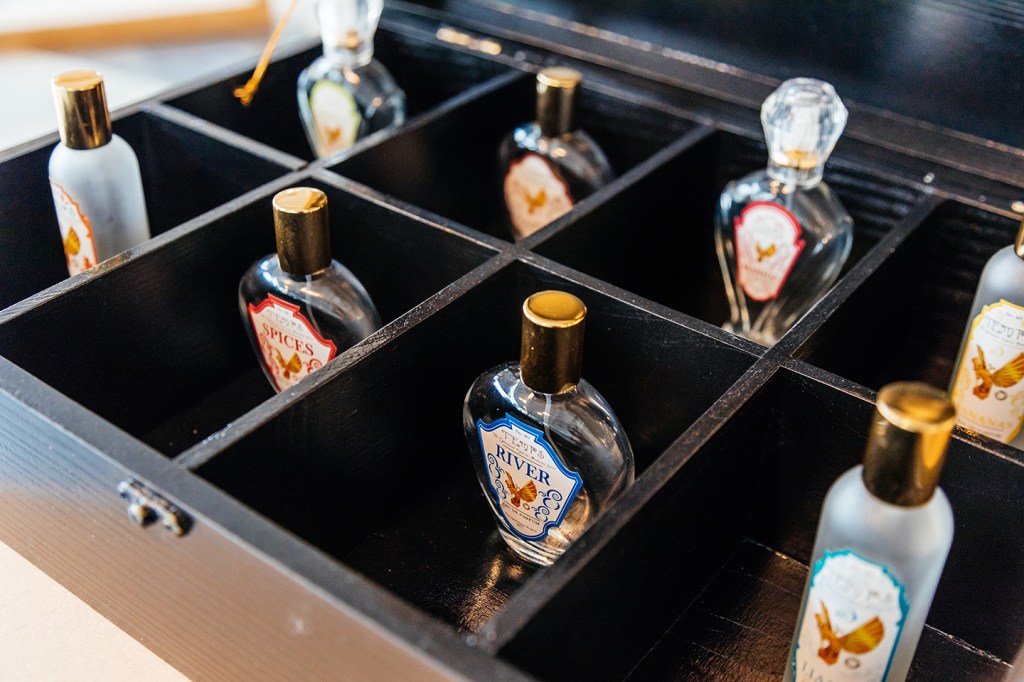
The Ephemeral Marvels Perfume Store. Image by Studio Catherine Sarah Young

The story revolves around a female perfumer who lives in a future time when climate change has eradicated a lot of scents and she tries to preserve as many of these as possible. One day, she receives a knock on a door from a client who searches for her to create a perfume that has not been smelled in a very long time.

A perfumer in a future under climate change. Image by Studio Catherine Sarah Young

The actual olfactory art is still at the “Victor Papanek: The Politics of Design” retrospective with the Vitra Design Museum and their staff told me it will travel to the Barcelona Design Museum also in October.

The Ephemeral Marvels Perfume Store at “Victor Papanek: Politics of Design”. Image courtesy of Vitra Design Museum

The Ephemeral Marvels Perfume Store (T.E.M.P.S., or French for “time”) is part of The Apocalypse Project body of work which explores climate change and our environmental futures. Other extensions of this work is An Olfactory Portrait of the Amazon Rainforest exhibited at Science Gallery Dublin in 2017 as part of my residency with LABVERDE in Manaus, Brazil.

An Olfactory Portrait of the Amazon Rainforest. Image courtesy of Science Gallery Dublin

Also part of The Apocalypse Project is The Sewer Soaperie, currently at the DISPOSABLE exhibition of Science Gallery Melbourne. What fun to connect with all of these places with one of my favorite projects! Thank you to the jury and all the curators and institutions who have supported this work in the fields of art, science, design, and now fiction.
The Sewer Soaperie, part of The Apocalypse Project body of work, will be at the month-long DISPOSABLE group exhibition by Science Gallery Melbourne beginning August 1.

The Sewer Soaperie is an interactive experimental art project about turning raw sewage and used fats into soap to raise awareness on the fatbergs clogging sewer systems around the world, and how this will worsen flooding brought about by the more intense storms of the Anthropocene.

From observing the consequences of fatbergs in Manila to pursuing it as a residency project in Medellin, to being exhibited at 1335Mabini art gallery and presented at a USAID Climate-Resilient development conference in Bangkok, The Sewer Soaperie finally goes back to its interdisciplinary art/science roots with Science Gallery.

The DISPOSABLE exhibition is a month-long pop-up of installations, experiments, and events. From the programme:

The lid has been lifted on human wastefulness, but what next? Science Gallery Melbourne’s pop-up season, DISPOSABLE, takes you on a dumpster dive to find creative solutions to our throwaway culture. 

Curated with young adults for young adults, the season will be an experimental trash bag of installations, exhibits and events at sites throughout Melbourne.         

The Sewer Soaperie will be at Testing Grounds, Southbank from July 31 – August 3, and The University of Melbourne at Macfarland Court from August 5 to 18. It was also be part of the Extrasensory exhibition at the Parliament of Victoria on August 10 from 6PM to 10PM for National Science Week.

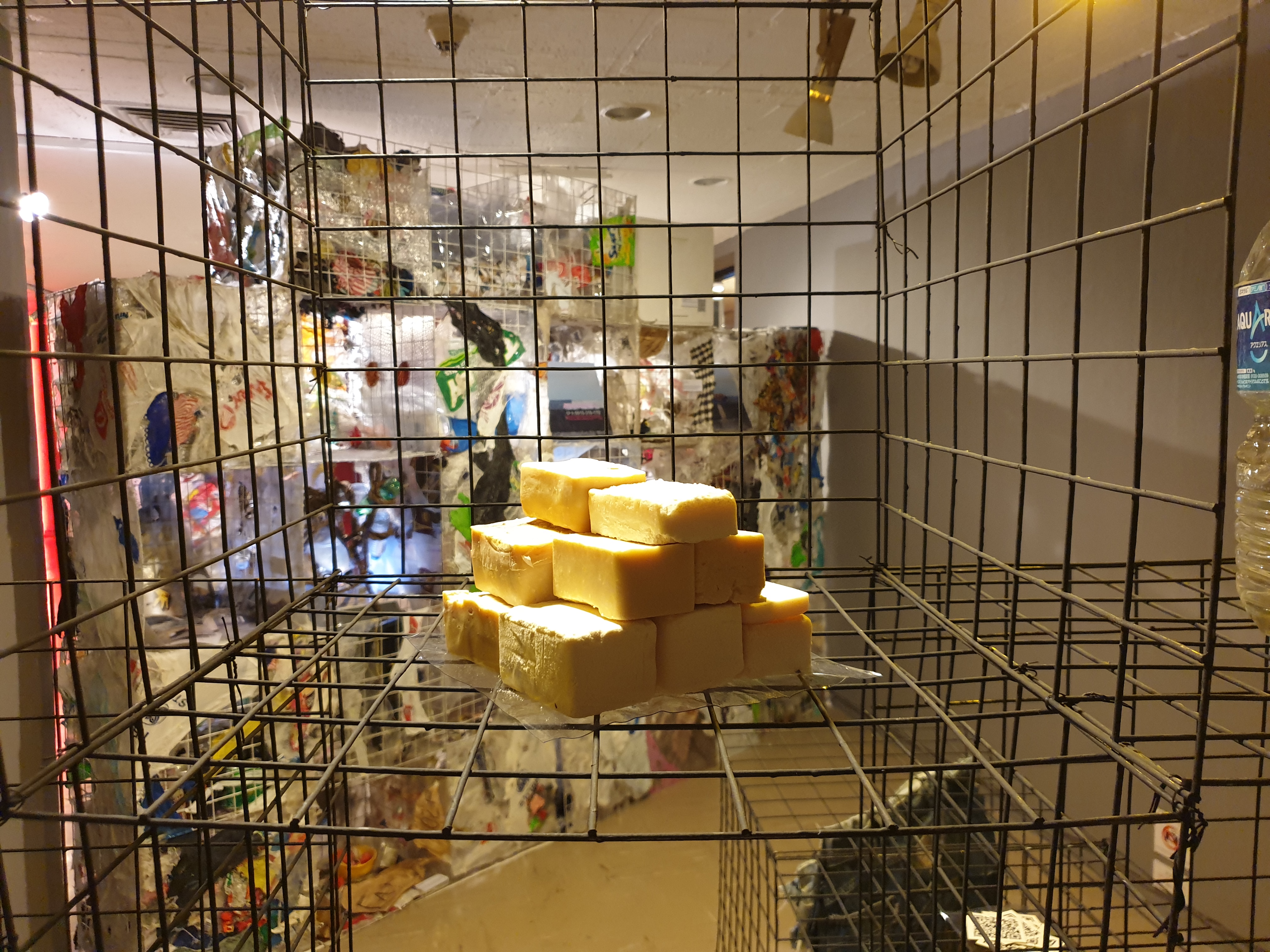
The audience will be invited to wash their hands with the soaps, but please do so at your own risk. There are three types of soaps: those made from palm oil, those made from used oils, and those made from sewage. These were all boiled and then mixed with the appropriate amount of sodium hydroxide method to create soap. If you’d rather not touch the soaps (I don’t blame you), there are other ways of perceiving the work, such as through sight (Observe the physical differences and ask what type of fats might be in these different-colored soaps?) and smell (Some have said they smell like cookies, others have said chicken. What do you think they smell like?)

Follow the hashtag #SewerSoaperie for updates!
Image credits: First image – 1335Mabini; all the rest: Studio Catherine Sarah Young (Photography by Rache Go, hair and makeup by Rori de la Cruz). Thank you to Science Gallery Melbourne curators Tilly Boleyn, Veronica Dominiak, and Ryan Jefferies, and the fantastic Science Gallery Melbourne team!

From June 29 to July 4, the SEAΔ fellows of the Mekong Cultural Hub and the British Council were at the “Asia on the Rise?” Conference hosted by the Association of Asian Studies at the Royal Orchid Sheraton in Bangkok, Thailand. There we presented the outcomes from SEAD Create, which our group held in Kampong Thom, Cambodia.

It was quite fun to discuss what we did with the local communities in Cambodia, from the workshops we held and the culminating Art and Environment Festival. At the very least, as I have learned presenting in different conferences, it was unique to have artists in an academic setting who actually reached out to communities that academics are studying.

Moreover, it was a joy to reconnect with my new friends and colleagues from all over Southeast Asia and the UK, comparing notes on what went well and what did not. We were divided into three groups and there were three very unique projects. Our group’s project, “Adapt to the Future” focused on how art can contribute to adaptation in the climate crisis. Through performances, exhibitions, and workshops for social development, the project inspired co-creation and action of Cambodia’s collective futures through the lens of climate change.

Another group, “Clayground Theater”, was a workshop series in Thailand using dance and craft to explore childhood memories. The third group, “Three Women and a Duck”, connects with groups inside several markets in Vietnam and Lao through an intimate sharing space, coming up with workshop sessions and recording stories, music, and objects.

Finally, it was fantastic to connect with so many amazing people in the conference and the Bangkok art scene. Bangkok is a dynamic, pulsating city packed with people in art and sustainability. We had field visits at the Fine Art Magazine office where we met Tawatchai Somkong, artist, editor-in-chief, and curator of the Thai Pavilion at this year’s Venice Biennale; the community in the beautiful Bangkok 1899, Chris Oestereich of Linear to Circular and the Circular Design Lab, and others thanks to MCH regional representatives Siriwat Pokrajen of Thailand and Mimi Heaungsoukkhoun of Laos.

Even on my days off, I was still meeting people, such as a chance visit to the traveling exhibition of the National Museum of the Philippines where they presented the pineapple silk cloths of the tropics, and some people from the UK and China art scene in the Airplane Graveyard. If I can still work in the decaying corpse of a Boeing 747, I know it was a good trip.

I learned many things during this trip. Among others, I have no doubt that it is imperative for the arts to be integrated into other disciplines to reach the communities that the latter aim to serve. I am so excited to be in this unique position to come from both the arts and the sciences doing projects on the environment, and to work with all of these incredible people. I look forward to how these experiences will shape me in the years to come.

All in all, it was a great week in Bangkok. Next up, SEAΔ Reflect in Yangon, Myanmar. See you, fam!

Thanks to Jennifer Lee and Patty Chan of Mekong Cultural Hub, our creative facilitators Nicola Turner and Sudebi Thakurata, Daniel Donnelly and Julia Davies from the British Council, and the Association for Asian Studies!

Overview

Ice Chess examines the Arctic crisis and inspires viewers and participants to reflect on the situation up north. A map of the Arctic with its indigenous peoples is printed on a chessboard with pieces cast out of ice. Inside the pieces are toy soldiers and that represent the players in the emerging “battle” of the Arctic—the political and industrial figures that have big stakes in oil and shipping that stand to gain from melting ice and the emerging maritime routes as a result, and the pawns that represent the countries that will be affected by sea level rise and that are sacrificed in order to achieve these goals.

In these urgent times, now is not the time to romanticize the Melt. In a game with high stakes, who is responsible? On the edges of the board are freestanding soldiers and figures that represent observer countries and other affected nations, and anonymous figures that represent globally concerned distributed people. The battle is on, and we are all watching with bated breath. Ice Chess uses art and science to interrogate, to speak truth to power, to point to the powerful entities who are primarily responsible for what is affecting the whole planet.

Why Chess?

Chess is one of the oldest skill games in the world and has been played for over 5000 years. Chess spread around the world through colonization and trade. The objective of chess is to trap the king—to checkmate him—and it wins the game. Chess is historically played by the wealthy. In this project, it references wealth inequality, one of the systemic causes of climate change.

Chess is metaphorical of how humanity has treated nature—as a game of strategy where we seek to exploit it and each other. It takes this further by actually melting the project with the aid of the players—a reference to how we collectively have caused the Arctic to melt and how we can also put a stop to it.

This game does not intend to pit one human being against the other (or one country against the other), which risks oversimplification. Rather, each player represents a set of alternative possibilities that, when the game is played, clash to produce permutations of consequences. In the game, players and the audience are allowed to view the many entanglements that a wicked problem such as the Arctic crisis can provide.

A primary reason for economic interest in the Arctic is the emerging Northern Sea Route, which will connect Western Europe and Asia. This could make shipping up to 14 days faster than the southern route via the Suez Canal. In 2018, the Venta Maersk, owned by Maersk Line and carrying 3,600 containers, successfully set sail from Vladivostok to St. Petersburg—the first container ship to tackle the Arctic sea route north of Russia.

The Chessboard & The Pieces

The board is a map of the Arctic labeled with indigenous communities, seas, emerging shipping routes—all of these will be names we would hear more about in the coming decades. This map represents the battleground where a literal and figurative cold war is already happening.

The Arctic Council Nations

The powerful row of pieces—the king, queen, bishop, knight, and rook—represent the Arctic Council nations: Russia, USA, Iceland, Finland, Sweden, Norway, Canada, and Denmark. The row of pawns represent countries around the world that are and will be most affected by sea level rise. Surrounding the board are Arctic Council observer countries, other nations affected by sea level rise, and anonymous figures that represent globally distributed concerned people.

Climate Change & the Great Lakes

The Great Lakes contain 5,500 cubic miles of freshwater, one of the biggest freshwater resources of the world. It supports more than 34 million people who live within its Basin. These people rely on the lakes for drinking water, fisheries, recreation, and industry. Climate change is already affecting these ecosystems through extreme weather, decreased crop yields, heat waves and consequent poor air quality, stress on water quality and infrastructure, affected navigation and recreation, and impact on wildlife.

Thank you to curators Mark Valentine Sullivan and Antajuan Scott and the rest of the Science Gallery Detroit team!