Archive

Science

My favorite part of Gyeongbukgung, the main palace of the Joseon dynasty of Korea, is a lovely pavilion named Hyangwonjeong and its surrounding pond.

Hyangwonjeong pavilion. Isn't she lovely?

Hyangwonjeong pavilion. Isn’t she lovely?

It is usually more known for the ghastly assassination of Queen Myeongseong by the Japanese government. But in Choi Joon-sik’s book, Soul in Seoul (2005), I came across another interesting (and less gruesome) fact: This pond is the place where an electric light was turned on for the first time in Korea in March 1887. Mr. Choi writes:

“The Joseon government sent off an official letter to the American bulb inventor Thomas Edison in 1883, asking him to set up the lighting system within the palace. Four years later in 1887, the first light bulb was switched on at this pond, which was two years before the Forbidden City in China was brightened with electricity. One of the reasons why light bulbs were installed here so early is because King Gojong, with his kingdom on the verge of collapse, was very afraid of potential threats from his rivals. He was particularly scared of nights, so he seemed to have wanted his residence to be brightened up with lights at night. The reason why the power generator was set up around the pond was because it needed water to produce electricity. There are many other interesting stories involving the nation’s first power generation: for example, it is said that people couldn’t sleep because of loud noise coming from the generator or that the fish living in the pond went belly up due to hot water flowing from the generator.”

Barcelona Kawaii (December 2009), Digital illustration

Blessed are hard drives, for they shall reveal files gathering digital dust.

I did this digital illustration years back, for an exhibit called “Des de Fora” (From the Outside) in Sants, Barcelona. It was a time when I was getting over the hump of learning Adobe Illustrator. I completely forgot about this drawing! But I suppose this influenced my doodling habit later on.

The theme reflects on being a foreigner in Barcelona; I wanted to portray the increasingly multicultural nature of one of my favorite cities in the world. Futbol, Feast of St. George, Bicing, Gaudi architecture, etc. are all things I will remember Barcelona for.

It was also the year that it snowed in Catalunya for the first time in years:

Snow in Barcelona (March 2010)

It was also a time when I saw double AND triple rainbows on the day my friends and I were eating calçots and writing poetry:

Double rainbows over Barcelona (April 2010)

Look closely: Triple rainbows!

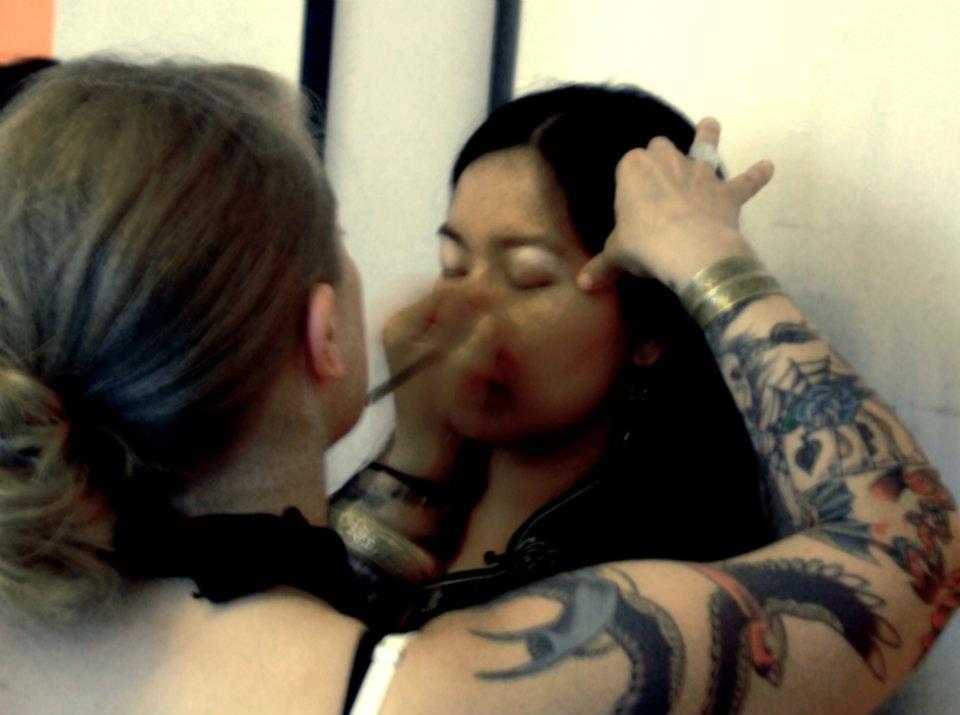
I t was also the time I was first part of the Poetry Brothel in Barcelona, which was probably one of the most influential times of my life from a creative standpoint and made me look at science from the point of view of poetry:

getting made up by Violet (Photo by Joe Wray)

I accidentally unearthed that cheongsam / qi pao the other day and was quite amazed by the wear and tear it had to withstand amidst all those poetry readings and performances.

I’ve been in Manila for five months now, and it’s been a time of looking at the city I grew up in from the outside. Despite living in multiple countries for so long, cities never fail to surprise me.

Perhaps, like cities, poetry whores, and the weather, humans, too, can pause and look at ourselves from the outside.

It’s just one of those days.

One afternoon, I accidentally got off the wrong floor of my East Village apartment. Each floor in the building looked exactly the same, and yet, for some reason, I felt that something was amiss. Wait, it smells different, I thought.

Smell, the most underestimated and underappreciated of our senses, is everywhere. In Chandler Burr’s The Emperor of Scent, he tells the story of a woman to whom everything smelled vile. The condition, cacosmia, kept her indoors for years, until a doctor diagnosed her to have a form of epilepsy that was interfering with her olfactory bulb. Once given the proper medication, the woman could recall the specific moment when her sense of smell started to become normal. The room she was in started to change in perspective, as though it were moving. It seems that smell affects our sense of space.

Curiously, things that we may not immediately attribute smells actually give off odors. Here are some examples:

1. Rain

Can you smell when a storm is coming?

You know when you (or animals) can “smell” that rain might come? Well, it turns out that you’re not imagining it. Rain does give off a smell; three of them, in fact. These are ozone, petrichor, and damp earth, according to Daisy Yuhas of Scientific American.

(HT @sciam)

2. Space

Space can remind astronauts of steak, metal and welding fumes, among other things.

Perhaps “ordinary” isn’t the word I would use for space, but it’s quite fascinating that something that primarily awes us visually can also smell otherworldly. Megan Garber of The Atlantic reports that astronauts describe the smell of space in various ways, such as “seared steak,” “hot metal,” and “welding fumes.”

3. Tumors

Dogs as cancer detectors

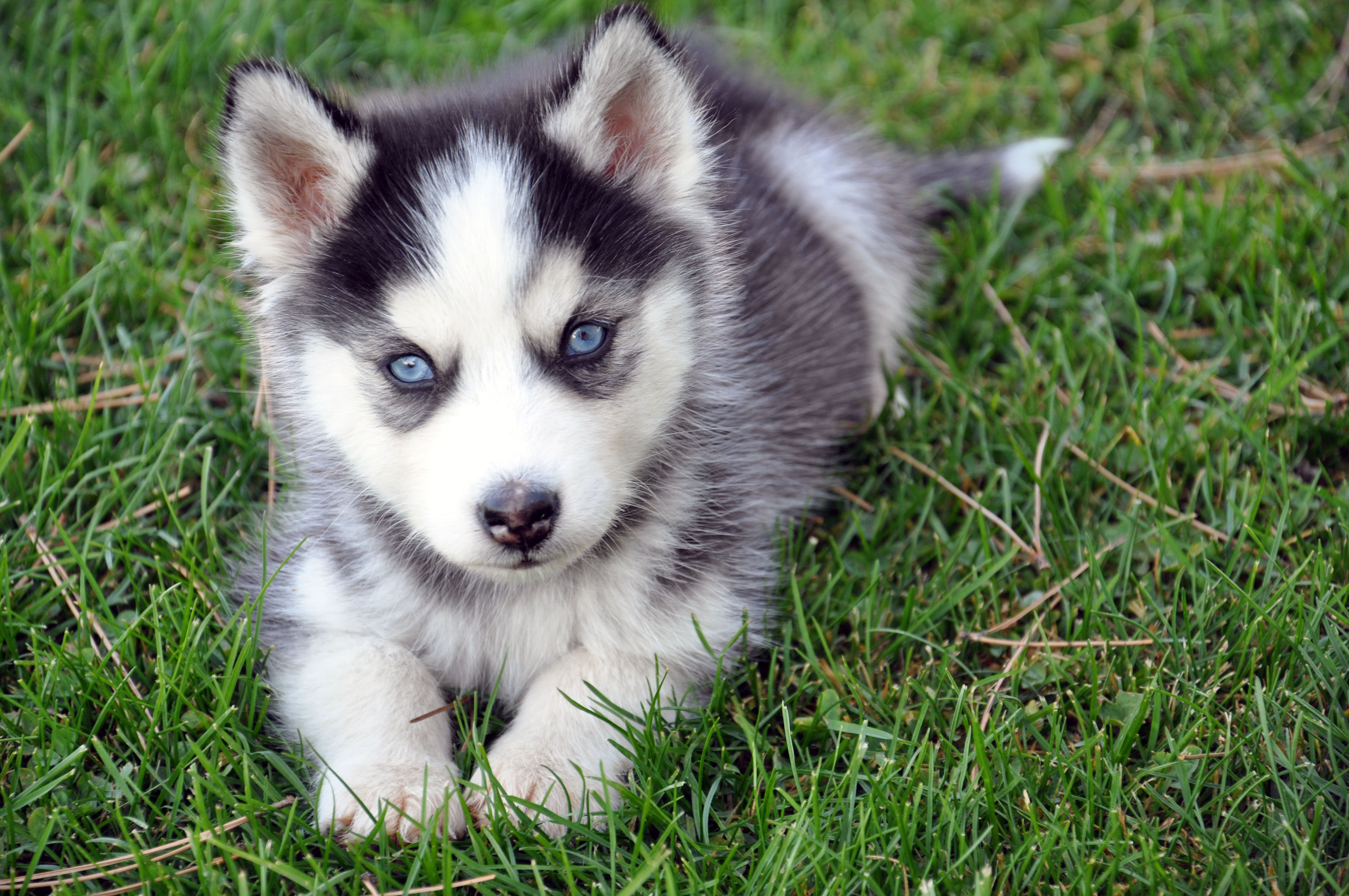
Dogs, whose sense of smell is 100,000 times more sensitive than that of humans. Last year, German researchers reported that dogs can detect the smell of cancer, specifically lung cancer. When cells start to mutate because of the disease, they give off volatile odors that dogs can detect.

Hacking into olfaction

Scientists are increasingly finding ways to elucidate the complex process of olfaction. In 2010, Harvard scientists engineered mice that were capable of “smelling light.” The same year, German scientists also engineered flies that were capable of perceiving light for unpleasant smells.

There is nothing like a heatwave that will make you wonder about things that are cold. Seriously, with some of the warmest temperatures hitting North America, it’s time to think about natural structures that will likely disappear in time. Here are two of my favorite artists and their pieces on ice:

1. Camille Seaman

In her project, “The Last Iceberg,” photographer Camille Seaman captures breathtaking portraits of these colossal structures. “They are like humans in that each one reacts to its environment and its circumstances in its own way,” says the 42-year-old artist in an interview with the New York Times. “There’s a sadness to them.”

I think they’re hauntingly beautiful; it feels like they’ve been around forever and have the history of the earth etched on their faces.

Svalbard, 2008. Image copyright by Camille Seaman via NYTimes

(via NYTimes)

2. Katie Paterson

One of my favorite artists, Katie Paterson, has a lovely piece called “Langjökull, Snæfellsjökull, Solheimajökull.” These are the names of three Icelandic glaciers from which she obtained sound recordings, pressed them into three records, cast, frozen with meltwater from each of the glaciers, and played until melted.

Langjökull, Snæfellsjökull, Solheimajökull. Image copyright by Katie Paterson via the artist’s website.

I’m so happy artists are able to create these beautiful pieces that sadly may outlast their subjects. While you’re at it, check out Project Pressure, an organization that aims to document the world’s changing glaciers.  (via The Guardian)

Opening up your online DNA results is, ironically, almost like cracking open a fortune cookie.

Genetics is something I’ve lived with all my life. My mom was a genetics professor, and my undergraduate degree is in molecular biology. And so I knew that even though I was presented with the “science of myself,” I had to take it with a grain of salt. In addition to our genes, the environment plays a role, too. For example, not being at risk for heart disease is great, but eating foods chockful of saturated fat can kill you eventually.

So over a year ago, I had my DNA done. (You know, it’s like getting your nails done. Kidding.) I used two services, 23andMe and National Geographic’s Genographic Project. The former required you to spit in a tube, while the latter asked for a cheek swab. 23andMe yields a more personalized profile of health and ancestry, while the Genographic Project is a research project that aims to map the migratory history of the human race. Both are very affordable; I wouldn’t have done them if they cost several hundred dollars. I was able to get a 23andMe kit for $99 during a Black Friday sale, and a Genographic kit costs $99.95.

The results are fascinating and intriguing. Sometimes, I wasn’t sure what they could mean. Will I have a different (or perhaps deeper) sense of identity, now that I have a better idea of ancestry? Will I turn into a hypochondriac if I see that I’m at risk for certain diseases?

Some things about me that I already know: I was born and raised in Manila, the Philippines, to a Filipina mother and a Chinese father. I suppose both are mixed at some point, especially considering the Philippines’ long colonial history. I’m pescetarian, a non-smoker, and rarely drink. Because of all the years living in different countries, my immunization requirements (a must for getting your student or exchange visas) are complete. On average, I do 5 to 9 hours of taekwondo a week. (Yes, I realize this makes for a very boring dating profile.)

Here are some highlights of my results:

23andMe

The homepage of your 23andMe profile shows updates to research results. On the left is the menu where you can check out your health and ancestry profiles.

Health

1. I could die from a heart attack. Bummer. Of all the increased disease risks, “atrial fibrillation” topped the chart. This wasn’t much of a surprise. Once or twice a year I end up with an irregular heartbeat; my heart beats harder than normal for several minutes. I would stop and breathe slowly, and my heart beat would eventually normalize. My ECG has always been ok.

2. I have decreased risks of Type 2 diabetes, breast cancer and Parkinson’s disease. Oh happy day.

3. I am lactose intolerant. At this point I started to doubt whether they processed the right sample, because I’ve been drinking milk all my life and I love it. The fine print did say that I “may still be lactose tolerant for environmental reasons.”

Ancestry

1. Based on my maternal haplogroup, I am closely related to East Asians, particularly Japanese, followed by Siberians and South Americans. It wasn’t particularly revelatory; I’ve always had very pale skin. It used to be a joke that I was “whiter than white people.”

2. I am labeled Eurasian, though the Asian-ness greatly surpasses the Euro-ness. My friends surmise the latter is responsible for my height. I’m 5’9″, which is quite gigantic by Asian women’s standards. I do think that I’ve met so many Asian women just as tall, if not taller, so perhaps it’s due to a shift in nutrition as well. (All that milk, I suppose.)

3. Clicking on “Relative Finder,” I see that I have potential distant cousins who also used the service and whom I can contact. The likelihood of me sending them a message is close to null. I think I would rather reach out to another human being because of similar interests instead of genes. It’s fun to know that I have distant relatives from all over the world, though.

The Genographic Project

Among the results you get from The Genographic Project is a map showing the migratory pattern of your ancestors’ DNA.

There are similarities between my results from The Genographic Project and my ancestry results for 23andMe, which made me more confident in their results. Highlights of my ancestral journey include (starting from Africa, where we all came from) countries in the Middle East, and then Asia. I would love to do a project where I can travel through all these countries with this in mind. Note that for both services, I would get more information if I compared my results with those of a male relative, as I, being female, do not have a Y chromosome.

Now What?

Do I recommend getting your DNA tested? Of course! I think human beings will always be interested in different facets of their identities. Unlike other, dubious diagnostics such as personality tests, horoscopes, etc., this gives you insight into your actual biological past (and present) and can allow you to make important decisions, especially health-wise, about your future.

Will it affect me significantly? Not really. It was interesting to see where my ancestors came from, but in the end, I’m more interested in where I have been myself. My “cultural DNA”—the languages I speak, the places I live in, the habits I acquire, the people I call my friends—will likely make more of an impact on me. As for health, I think I already lead a pretty healthy lifestyle, but it’s good to know what I’m at risk for and what I’m not. At the end of the day, everyone dies.

In a conversation with Gretchen Rubin, author of The Happiness Project, we exchanged ideas about the senses, particularly about smell. She mentioned a book she was reading called The Scent of Desire by Rachel Herz. A part of it discussed olfaction as a way for human beings to choose mates and how the birth control pill may be a culprit for divorce.

The Scent of Desire by Rachel Herz

Research suggests that birth control affects women’s taste in men. It’s all in the MHCs, or major histocompatibility complexes, hidden in the scent of men. Studies show that females prefer men whose MHCs differ from their own, perhaps to increase chances of  survival—the resulting offspring will then bear more diverse MHC profiles.

But being on the pill creates a preferential shift towards men with similar MHCs. Relationship troubles can then start when the woman gets off the pill; she begins to be attracted to MHC-dissimilar men and is less attracted to the MHC-similar guy she’s with.

In simpler terms, being on the pill can make you attracted to Mr. Wrong, and you realize it when you get off the pill.

(Read more at Psychogical Science.)

One of the best things I learned since moving back to Manila is The Mind Museum.

The Mind Museum at Taguig. Image via The Mind Museum’s Facebook page

It was a great day to reconnect with the city, and it was an even better surprise when I discover that one of my former capoeira classmates now works there as an exhibit manager.

The building itself is a gorgeous piece of architecture led by Ed Calma (featured in the December 2011 / January 2012 issue of Fast Company). It is a significant addition to the commercial, artistic, and residential landscape of Fort Bonifacio.

There are five galleries in two floors spread over 5,000 square-meters:

  1. The Story of the Universe: Its Beginning and Majesty
  2. The Story of the Earth: Its Story Across the Breadth of Time
  3. The Story of Life: The Exuberant Varieties of Life
  4. The Story of the Atom: The Strange World of the Very Small
  5. The Story of Technology: The Showcase of Human Ingenuity
It’s such a great example of interactivity in a science museum. The major theme is nature in scale. Visitors can go through a human brain, see a skeleton of a T-rex up close, and come across scientific concepts by experiencing them. It has been open since March, but already has gained visits from locals and tourists alike.
Maribel Garcia, curator, emphasized the importance of scientific correctness and emotionally grabbing the viewers—an opinion that   I share, and one that triggered this “science meets art” trajectory in my life.
Visit The Mind Museum site.

Last May 10th, my class and I finally marched (!) on stage, culminating two years of graduate work here at the MFA program in Interaction Design at the School of Visual Arts.

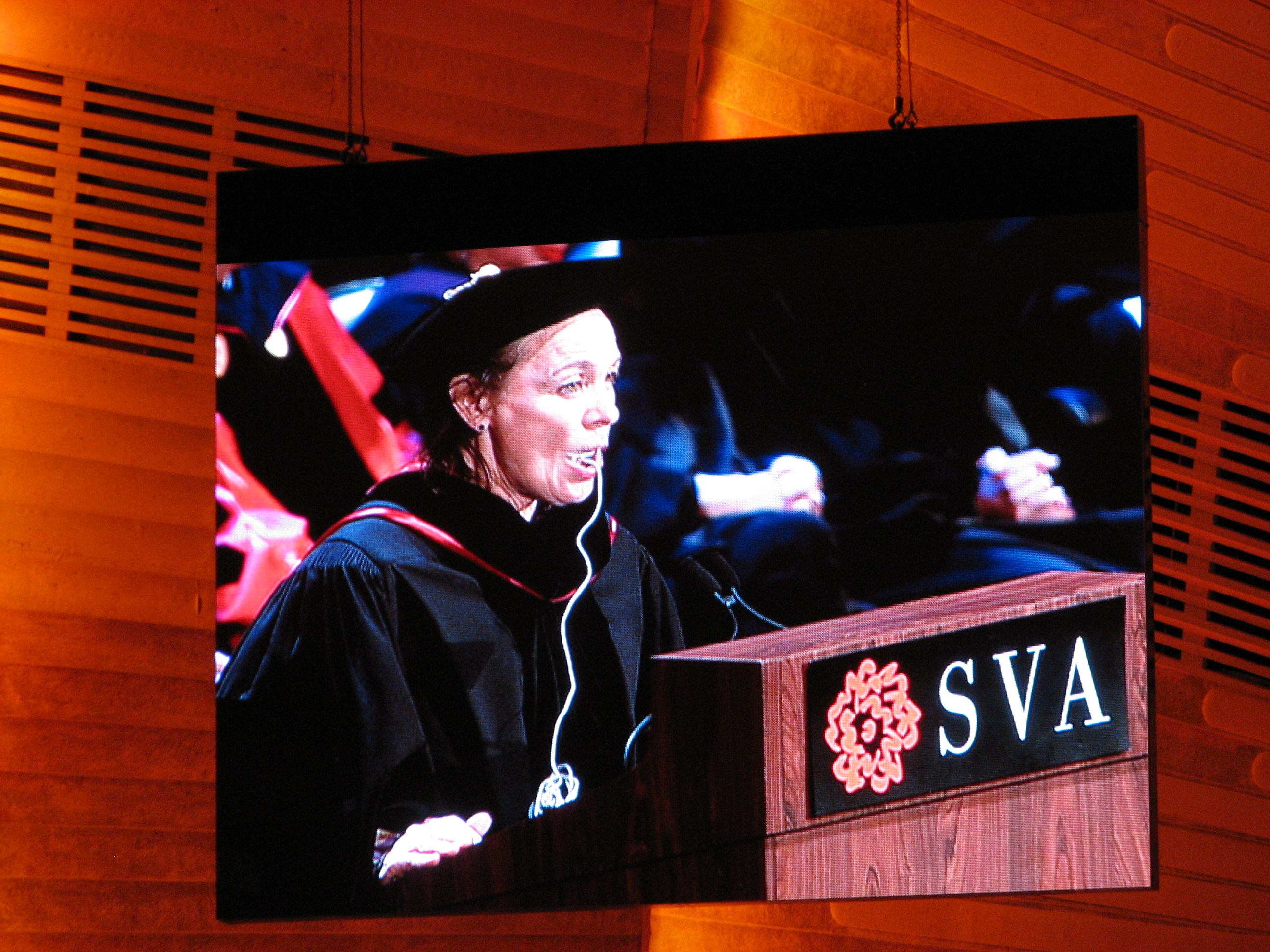
Our commencement speaker was the incomparable Laurie Anderson, experimental musician, composer, performance artist, and inventor, among other hats she wears. During her speech, she recounted her time as NASA’s first artist-in-residence and recalled how she was also the last one, after a politician sought to amend a bill making sure no such thing happened in the future. Anderson suggested that really, we should create artist-in-residence positions in institutions such as NASA, Congress, and other such places, which generated applause and laughter from the audience.

Laurie Anderson. Image via The Guardian.

It’s strange to be listening about art when I spent two years studying to be a designer. I have always questioned my artistic leanings, especially coming from a scientific background. I am and will always be immensely grateful for my geeky past (and who am I kidding, present), although from my experience in that world, to want to be in the arts was almost tantamount to self-banishment.  Thinking about the past six years out of undergrad—all the cancer lab rotations at Memorial Sloan-Kettering, art school in Spain, the Poetry Brothel in Barcelona—and frankly, I have to ask myself whether I actually have found what I’m looking for in a design program. And to a large extent, I did in interaction design. I always thought it was a way to humanize the sciences and the arts, which thankfully doesn’t always have to translate to something on screen. Two years in a design program have found me to be stubbornly conceptual, not because I wanted to upset my class but because that’s what I came to graduate school for. I think that if I do work for a company, I will probably spend all my waking hours designing apps and websites, and I have all the time in the world to do that.

So what is the use of an artist? After being immersed in interaction design for two years, I think that IxD shares an important thing with the arts—empathy. To be an artist, at least for me, requires me to place myself in different shoes and absorb various identities. The same is true as an interaction designer. Perhaps one thing that has been enormously helpful to be a practicing artist is the familiarity of actually inhabiting a character instead of simply watching people from afar, taking down notes.

To be an artist is to challenge the norm. While it’s wonderful to design apps and websites, it’s not the first thing I turn to when trying to give form to a project. Ironically, I do not own a smartphone, which will probably give most interaction designers a heart attack. No smartphone? What do you do when figuring out a bill, trying to find a place, or bored in a subway? Well, I try to do the algebra by hand, I talk to strangers a lot, and I write and doodle in a sketchbook constantly. It’s not a perfect system but it is a cheaper and more entertaining one. I think that we are more than our gadgets, and I think that an artistic practice allows one to experiment not just with what is, but what could be.

But more importantly, at least for me, artists are always questioning the self. Art will never lose its relevance, particularly in a time that is rife with uncertainty, though as I get older, I think each year in human history is tumultuous and unstable. On a personal scale, art allows for the exploration of selfhood in a manner that is less contained. I suppose that’s why I keep hearing of the banker who finally turned to painting, or the lawyer who is now a musician. As a scientist (I’m still wondering if I can call myself this), there are certain terminologies and protocols I have had to use for the scientific institution to understand where I am coming from. As an interaction designer, I do feel sometimes limited (although “limited” isn’t always a bad thing) by the words I have to use (hello, “user”) and the media by which I practice (wireframes and sticky notes). As an artist, I am moored to no such arbitrary islands; I can easily experiment with musical instruments as much as kitchen appliances and be equally at home with both of them

But enough with all this labeling. As I leave the comforts of school—though my classmates and my teachers alike are betting I’ll go for a PhD eventually—I would like to embrace the hyphen the comes when saying that one is a writer-artist-interaction designer-etc. I sometimes cringe when I’m only referred to as one of these, because to seemingly pledge allegiance to one field may appear as though one is relinquishing all her other interests. And wouldn’t that be such a shame.

Laurie Anderson with a pillow speaker in her mouth

But back to the red landscape of graduation at Radio City Music Hall and the blinding strobe lights. My favorite part of Anderson’s speech was the finale, when she stuffed a pillow speaker in her mouth and proceeded to sing to us for quite a long period of time with a sound that resembled Darth Vader’s voice, waking up even those who were dozing off. Afterwards, the school gave her an honorary doctorate. Lady, I just adore you.

Speaking at my first TEDx conference was a challenge. It was not just because it was a great platform for ideas, but because of the timing, design, and execution needed to pull off four interactive talks in one day.
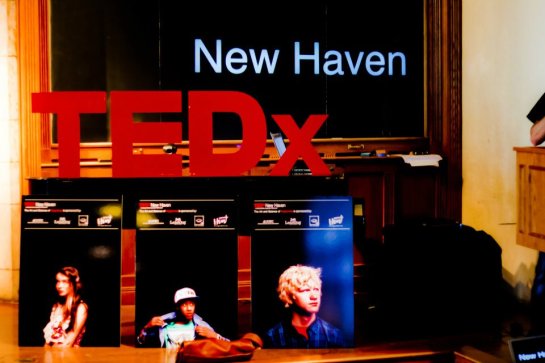
TEDxNewHaven: The Art and Science of Happiness. Photo by Chris Randall

The theme for TEDxNewHaven was The Art and Science of Happiness. My goal for the talks was two-fold: to engage the audience in something interactive in the course of the day, and to enable them to view their senses as tools by which to achieve happiness. To achieve these, I had to produce 200 “sense kits” that contained physical, non-digital formats of my projects: HugPrints, Rorsketch, Smellbound, and EatPoetry.

Round One. Photo by Liz Danzico

First Talk: Touch

My first talk was about using our sense of touch. I presented HugPrints, my project where I am attempting to hug everyone in the world and getting visual feedback through a specially designed thermochromic vest. I asked volunteers to come up the stage to hug me.
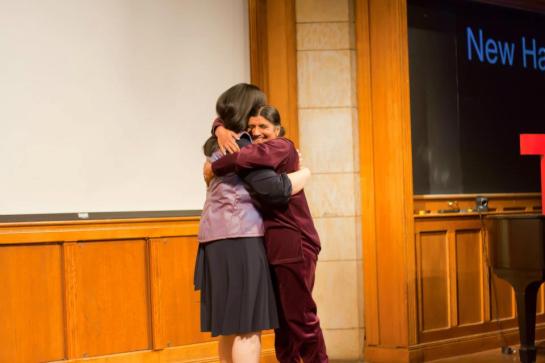
Hugging on stage. Don’t you just love it? Photo by Chris Randall

Afterwards, I asked the rest of the audience to pull out the HugPrints cards in their sense kits, which contained hugging instructions so they can hug each other (if they wished).

Are you getting enough hugs a day? Photo by Chris Randall

Second Talk: Sight

For the second talk, I explained Rorsketch and first engaged the audience in a guessing game of what clouds looked like and then revealed what drawings I made. After doing this project for a while, I wasn’t surprised about how some people were calling out the same things, while other clouds had very different interpretations.

You know what my favorite Pixar movie is! Photo by Ruoxi Yu.
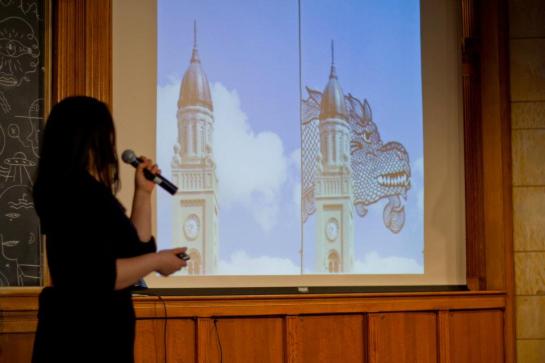
Yes, it’s a dragon! Photo by Chris Randall

I then asked the audience to pull out the blue Rorsketch cards and the Sharpies in their kits, and they drew their own interpretations on the clouds printed on their cards. To encourage them to draw, I did a live drawing session on a big cloud on stage.
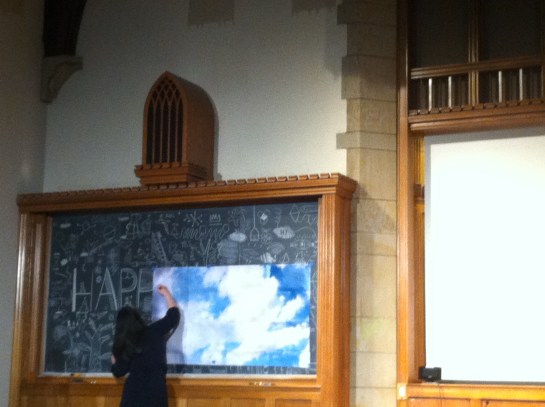
Drawing on a cloud. The cloud I sketched on was taken by Nikki Sylianteng. Photo by Liz Danzico

One of my fellow speakers, Nima Tshering, sent me his cloud drawing. (Thanks, Nima!)

A fairy grandma with a baby by Nima Tshering

Third Talk: Smell, Hearing and Taste

I explained two projects for this post-lunch session: Smellbound and EatPoetry. First, I explained the connection between smell and memory and had the audience remove the Smellbound postcard which contained a printed smell. I showed them the book I made, An Olfactory Memoir of Three Cities. Afterwards, I read them After Apple-Picking by Robert Frost while they ate the apple lollipop inside their kits.
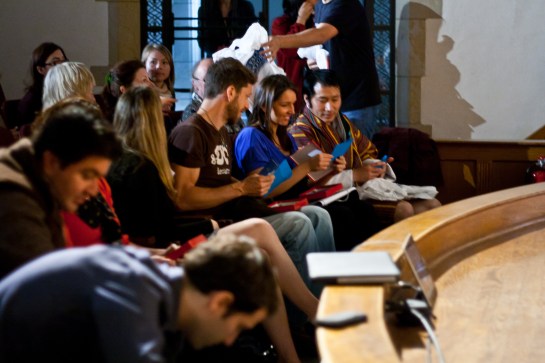
“Now please remove another envelope from your kits…” Photo by Chris Randall

Fourth Talk: Happiness and the Senses

For my fourth talk at the end of the conference, I summarized how we can use our senses to be happy. The key points were that we are all equipped with these tools; i.e. we all had the capacity to hug our loved ones, to interpret a cloud, to smell a memory, and to connect poetry with food, and that if we paid more attention to the world around us, it would promote our feelings of well-being and optimism. I also explained my own explorations with happiness by showing submissions from DrawHappy, as well as what I’ve learned from the project so far.
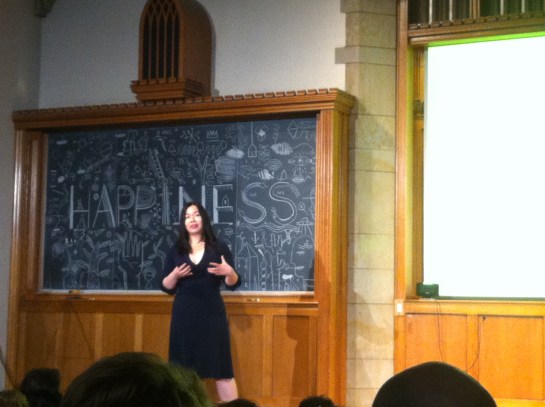
Photo by Liz Danzico

What Worked, and What I Would Do Differently Next Time

All the sleepless nights making sure all 200 kits had the right contents were definitely called for. So much craft and attention were given to every single detail—each postcard had to be sealed in an envelope so people can only view them as instructed, the envelopes had to match the main color of each project’s logo for easy recall, each postcard had to be branded and oriented in a specific direction, each kit had to contain envelopes in a particular order and needed both a Sharpie and a lollipop. Anything less would have taken away from the experience or would have confused people. Doing something onstage so that people can mirror my actions was also important, and getting all the props together also was something I had to keep in mind in addition to the actual slides.

I’ve also been onstage on different occasions and it was interesting to feel these variegations of audience contact. When performing for the Poetry Brothel in Barcelona, I had to inhabit a certain character and, depending on the piece we were doing, had to maintain a certain mystique. When doing poetry readings just as myself, there was a bit of conversation with the audience when I talk about the process of writing, but during the reading of the actual poem, it was just myself and the text. I felt this while reading the Frost poem to the TEDx crowd—the entire hall was dead silent in contrast to all the other times I was up there. (That was quite fun, actually.) But doing a talk that involved not just a Keynote presentation but an actual creative activity was another world altogether—it’s difficult to assess if everyone was enjoying the activity, although what was great about having a particularly open audience such as this one was that they weren’t afraid of trying new things.

For the next time I do something of this nature, I would have a card that had explicit instructions not to use the objects inside the kit unless asked. Although I anticipated this by making sure the envelopes were sealed, I did catch at least one person eating their candy before lunch. (We were running a bit late, and I suppose he was hungry.) One thing about having a sealed and long candy stick was that it affords a long eating session; they wouldn’t have finished it to begin with and they could just put the candy back in the plastic and in the kit. Hard candy was definitely the way to go.

Also, I would have split the third talk (Smellbound and EatPoetry) into two and let each project have its own 10 minutes. Thus, I would have placed EatPoetry for the fourth talk and followed it with a short summary of the senses. When I went up for the last talk and said that “Ok, I’m not going to make you do anything now,” I could swear I felt the disappointment of some people. If the schedule allowed it, giving each project its own time in the spotlight would have allowed the audience to absorb the concept more fully, instead of rushing to the next project right away. I can’t wait until I develop these projects more and more, and see what I will ask people to do the next time.

Finally

I have to say, I love this format of getting the audience to actually do something creative in a talk, instead of me just standing there telling them about myself. Thanks again to the audience for being open to these ideas, my friends and colleagues for helping me pull this off, and to the wonderful team at TEDxNewHaven who worked tireless to make it all happen!

Thanks to Kate Russell and Liz Danzico, my plus two!

Hello. My name is Catherine and I would like to give everyone in the world a hug.

I’m a hugger. I can’t help it. When I see someone I know, I just go for it as a greeting with barely a thought.

There are perfectly good explanations for this. I was raised in the Philippines, land of extremely happy and friendly people. I also grew up with a lot of stuffed animals. I still sleep with a pillow I’ve had with me from the crib—it’s the only material possession that has been with me forever. And dang it, it feels good. Hugging releases oxytocin, the hormone that promotes love and trust. In fact, studies have shown that a lack of human interaction, such as touching, is detrimental to growth and development. Touch ranks up there with food and water as a basic need.

But I do realize that not all people like to hug others. The idea of touching as a greeting is largely cultural, and I’ve had to adapt accordingly, depending on where I’ve lived and whom I was interacting with. In the Philippines, I hugged. In Spain, I kissed (both cheeks). Here in America, I shake hands. It is especially in the latter that I’ve felt that people respond the least positively to hugs. Many people, I’ve observed, have an invisible “wall” that illustrates their personal space. Touch may be considered as an intrusion, an interruption, or a threat. On the other hand, a hug can also be a sign of great physical intimacy that is only reserved for one’s closest family and friends.

I wanted to investigate our perception of touch. Moreover, I want this project to be a personal reminder of being physically connected to people.

Thus comes HugPrints. I designed a thermochromic (temperature-sensitive, color-changing) vest, so that it was possible to see evidence of the hug. The purple fabric temporarily turns to blue when touched. Right after each hug, photos of the front and the back of the vest are taken, showing where I was touched and how warm (literally) the person is. The patterns people intentionally and unintentionally make have been an interesting exploration of human contact.

I also record the ambient temperature of the environment. Hugging people indoors versus outdoors would give different intensities of color change.

I would love to give you (yes, you!) a hug. But hey, I would love it more if you give your loved ones and perhaps that sad-looking stranger next to you one, too! Visit the project site for more details.

Ready? Go!