Archive

Korea

hotteok, South Korea

hotteok, South Korea

Annyeong, everyone! I’m starting another project.

During my first three weeks in Seoul, beyond the palaces, the museums, and other beautiful attractions the city has to offer, I learned to fall in love with their street food. I have started some drawing projects over the years, and so I came up with The Movable Feast: A Street Food Project, an interpretative illustration project that celebrates the joys and oddities of street food around the world.

Inclusive cuisine

Street food is arguably the most socially inclusive, yet sometimes unnoticed or taken for granted, of all cuisines. There is neither dress code nor reservation required. Everyone has to wait their turn. Street food is among the best things to eat when one is rushing to work, taking a break in between classes, or being too lazy to cook. It is cheap, easily available, and delicious.

The menu of street food can be simple (such as coconut juice and watermelon slices) or more complex and hard-to-find (such as escargot on the go, lobster sandwiches, and grilled tamales) This system includes a range of members—from the ambling taho vendor (Philippines), the seasonal bocadillo stall (Spain), to scheduled and franchised food trucks (United States). It is a mobile and complex system that consists of the producers of raw materials, the makers of the actual dishes, the transportation and infrastructure that bring them to the venues in which they are served, the governing bodies that allow their selling, and the vendors and consumers themselves.

Globalization and diaspora

In many ways, I have discovered that street food is a symbol of globalization and diaspora. Many of them hail from other countries, but with local flavor. Consider goroke, the Korean version of the French croquette. Or hotdogs in Iceland. Or shawarma in Canada. It is also a symbol of urbanization—as the population who move from rural to urban areas increase, so does the need for alternative sources and ways of distributing food.

Street food as identity

I believe that street food is a vital part of the culture and identity of a city. It is indicative of the sustenance immediately afforded by its geography. But more than that, it is a symbol of a people’s resourcefulness, creativity, and survival. They tell us stories about ourselves.

Eating and perception

Eating street food fires up all the senses, which are the center of my larger body of work. Street food conjures up memories of childhood and gives strangers a shared experience of a meal. These drawings themselves are interpretative; more than documenting what they are, I also draw how they’ve made me feel, and write the memory I have about them.

Follow the project’s Tumblr here.

P.S. Drawings up every Monday!

P.P.S. As I am based in Seoul, many of these posts will be about Korean street food, though I will draw all the other street foods I’ve eaten in other countries, past and future. But if you wish, you can submit photos of street food from your country and I can try it out and draw it. Or submit your own drawings, following the format I’ve started. The link to submit is here.

The Movable Feast, where eating means research. Thank you for checking it out.
Gyeongokbokgung (Palace Greatly Blessed by Heaven) was built in 1395 and served as the main palace for more than 500 years. It was burned by the Japanese in 1592. Since 1990, efforts have been taken to restore it to its former glory.

Gyeongbokung

Outside one of Gyeongbokung’s gates

It’s such a beautiful palace. A bout of déjà vu came upon me, taking me back when I visited the Forbidden City in Beijing almost 11 years ago. They felt similar mainly because of scale—it seemed to take forever to cover all of it.

One of my favorite parts is the Gyeonghoeru Pavilion, where the king gave formal banquets for foreign envoys—it’s like the royal party club. In the winter, the water around it freezes and gives the impression that it’s floating on ice.

A pavilion on ice!

A pavilion on ice!

Another lovely spot is Hyangwonjeong, a small pavilion that stands out because of its smallness in contrast to its neighboring Goliath structures. Behind it is another palace, Geoncheonggung, where Queen Myeongseong was killed in an assassination plot by the Japanese.

Hyangwonjeong pavilion. Isn't she lovely?

Hyangwonjeong pavilion. Isn’t she lovely?

During my exploration, I came across a total of four magpies. The magpie is South Korea’s official bird. I am so in love with this city. May good fortune befall all of us!

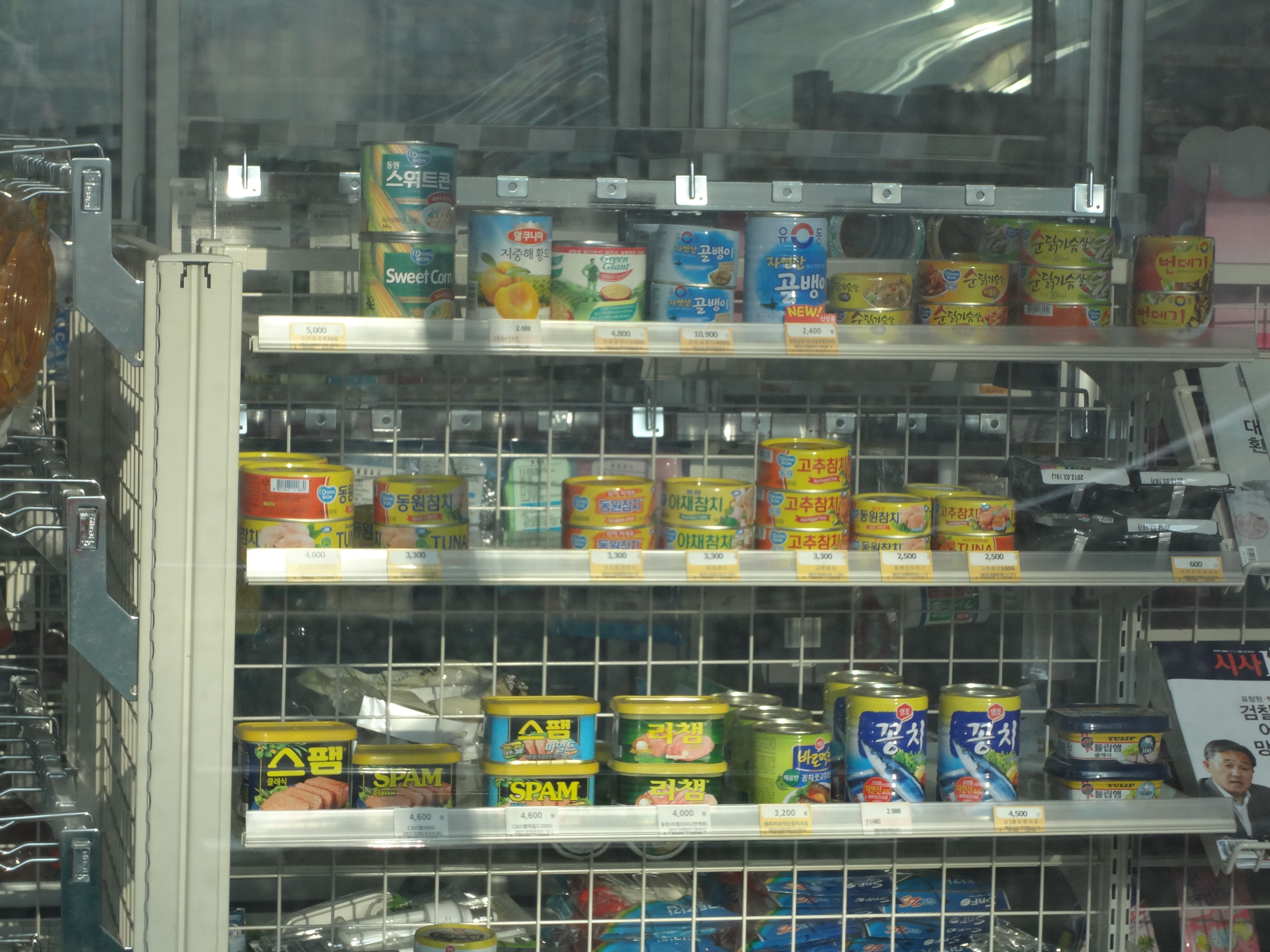
On a trip to Incheon, we visited Songdo, a city built from scratch on 1,500 acres of reclaimed land. Although it cost more then $40 billion to make, there was virtually no one in it, except for the employees who worked to maintain the buildings. Eerily, the cafes had no person in it, but the computers were booted up and coffee prices were advertised. The convenience stores sold a lot of canned goods, such as Spam.

A deserted subway

A deserted subway

DSC01002

Among all other things, Spam! While they sell these in other convenience stores, it struck me differently because of the emptiness. No clerk inside, either.

No one. Nothing,

No one. Nothing,

DSC01009

There were two guys in the reception desk behind us.

A cafe seemed to be available for service, with no one behind the counter.

A cafe seemed to be available for service, with no one behind the counter.

There was no one inside!

There was no one inside!

Two of the computers are booted up. Very creepy.

Two of the computers are booted up. Very creepy.

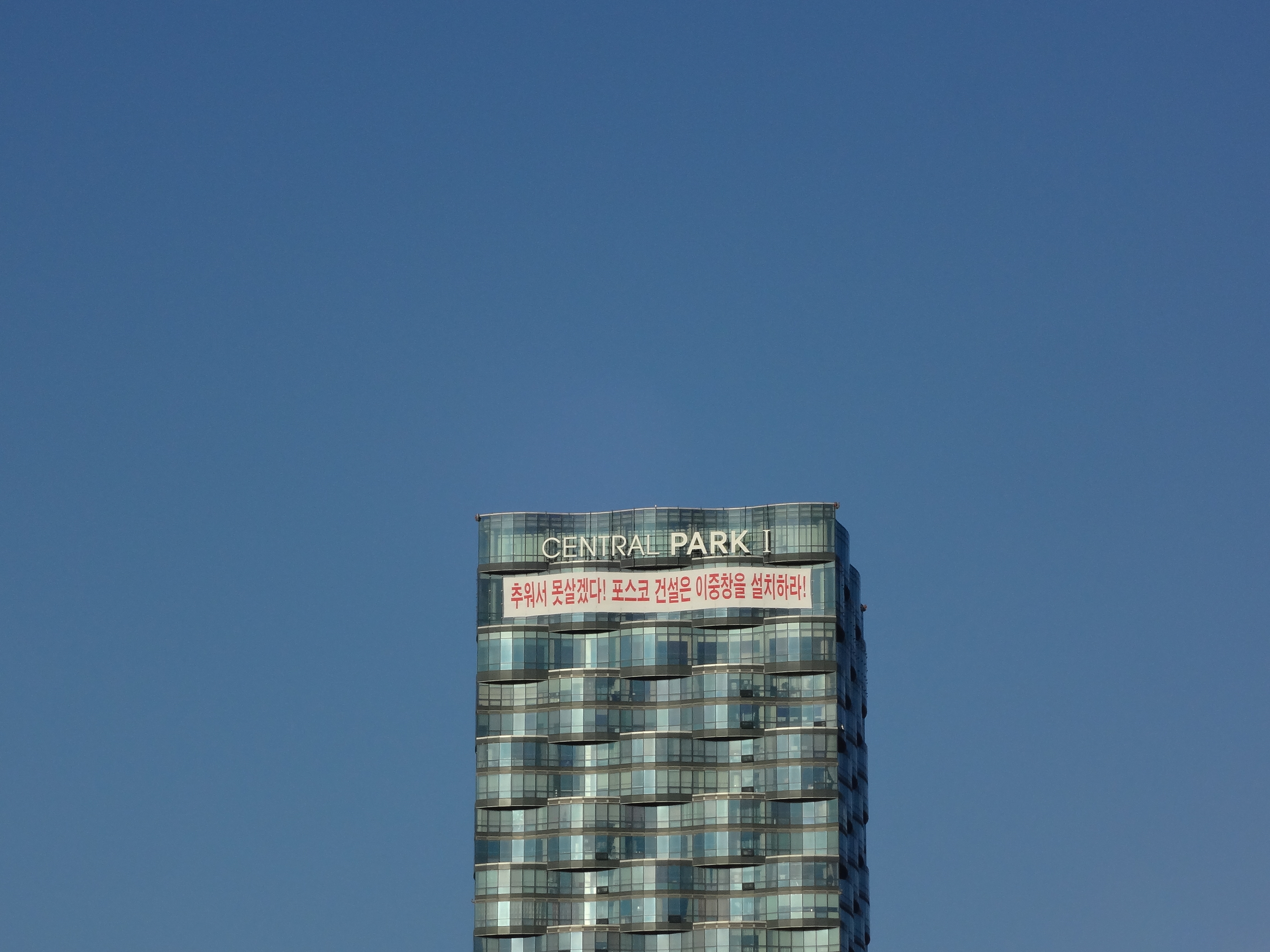
What startled me out of the creepiness was the knowledge that some scenes from the viral Gangnam Style video were filmed in the Central Park building.

Songdo's Central Park building, with a protest sign outside

Songdo’s Central Park building, with a protest sign outside

It’s scary to imagine that the inhabitants of this city were kidnapped by aliens, and the workers here are just maintaining things for when they come back. Just kidding. It’s such a stark contrast to busy, busy Seoul.

DSC00826

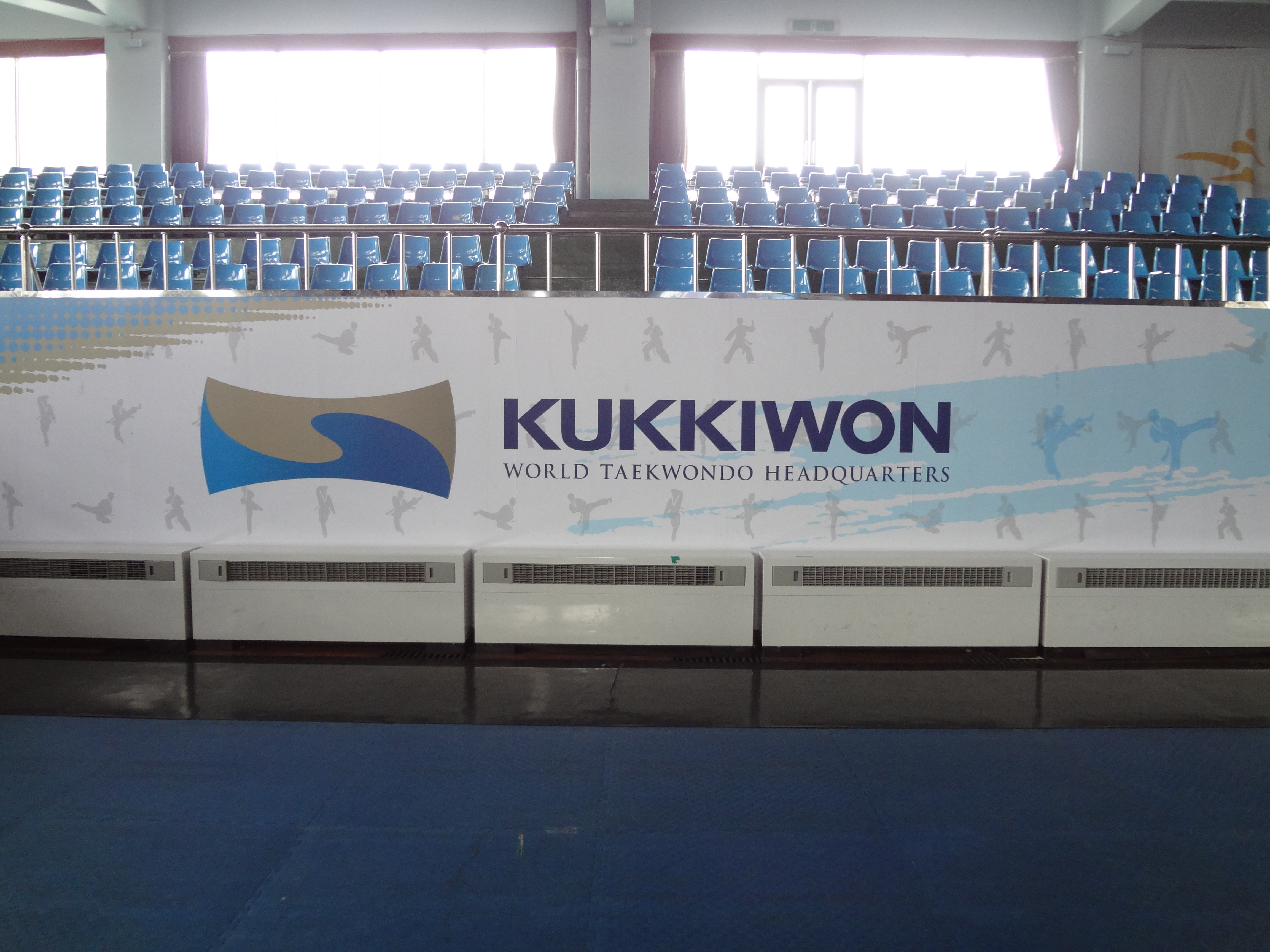
Yesterday, I took what may well be the start of a monthly pilgrimage to Kukkiwon, World Taekwondo Headquarters. Located in Gangnam, popularized by Psy, it was my first trip south of the Han River, not for horse-dancing but to visit the mecca of my favorite martial art in the world.

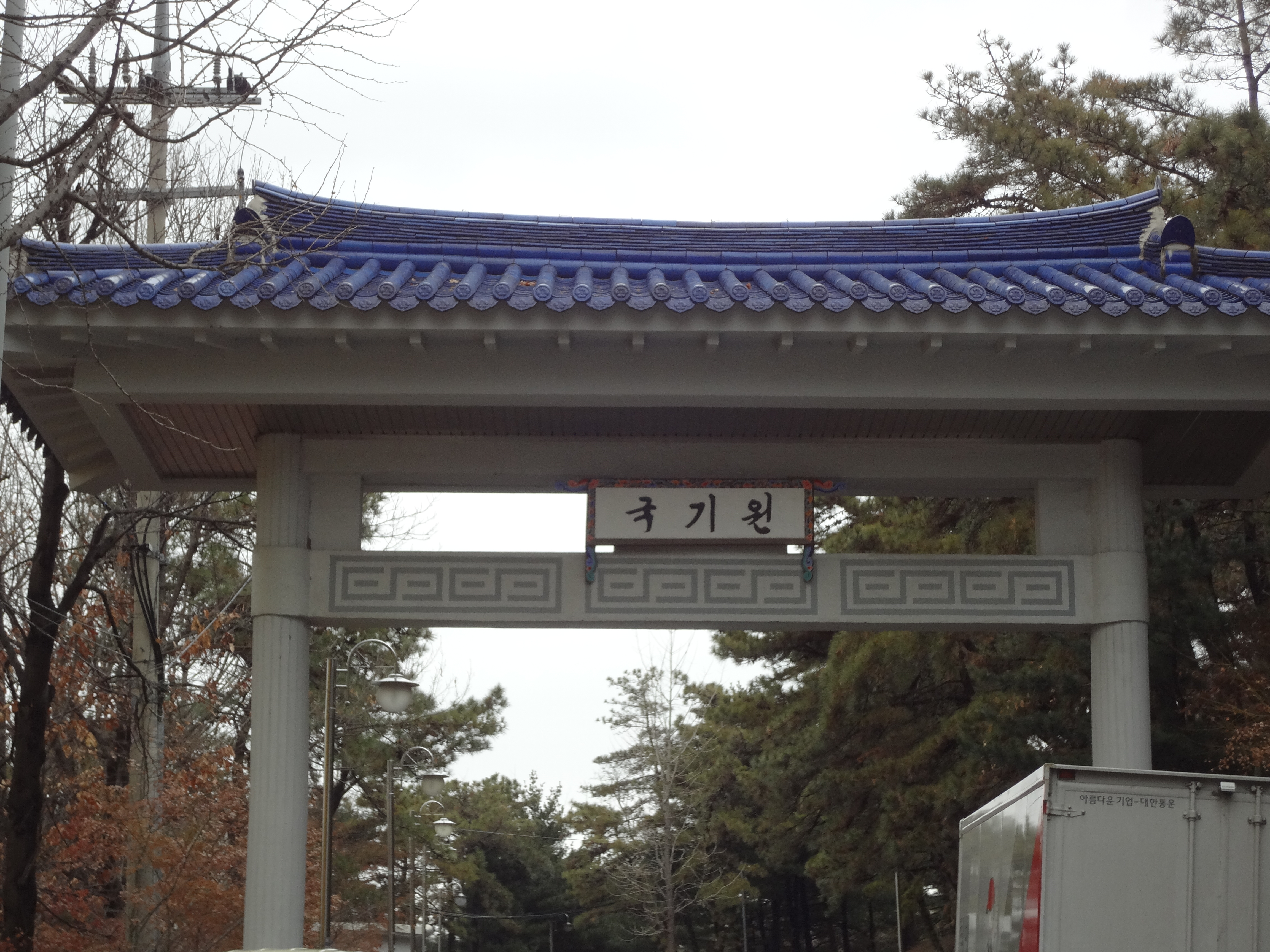
The Kukkiwon arch

The Kukkiwon arch

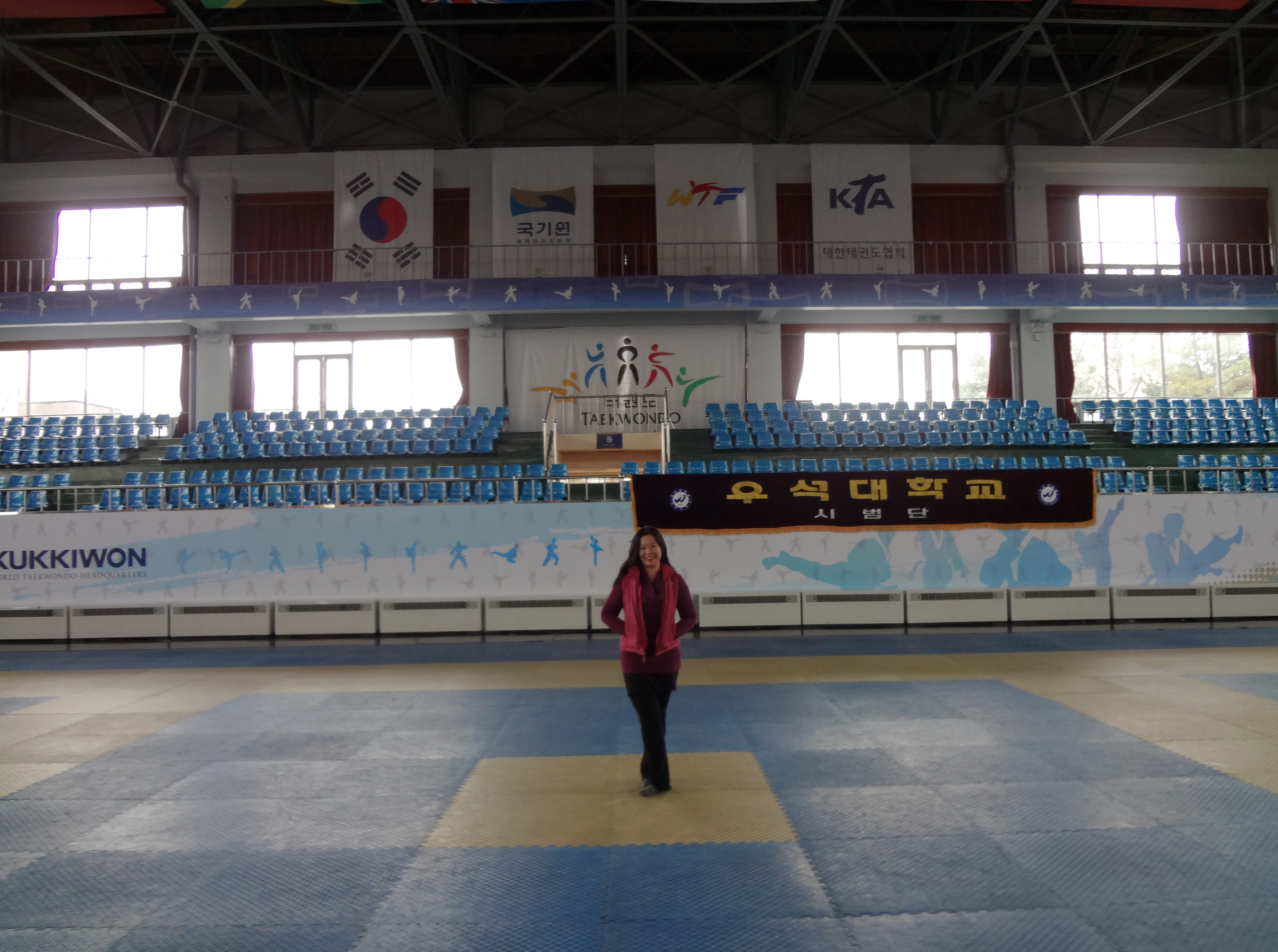
It definitely felt like a pilgrimage, since it was an uphill trek on a side street from one of the main roads, which was lined with South Korean flags. Nearing the end, I find a traditional looking arch, with the name Kukkiwon in Korean. World Taekwondo Headquarters itself is, well, just a gym, but, oh what a gym! It’s quite symbolic to have a public site specifically for a sport that welcomes practitioners around the world. I suppose it was apparent that it was my first time, at least to the security guards who were mildly amused and puzzled at a (deceptively) Korean-looking woman skipping on the mat and taking photos.

I had to. Please don't judge me.

I had to. Please don’t judge me.

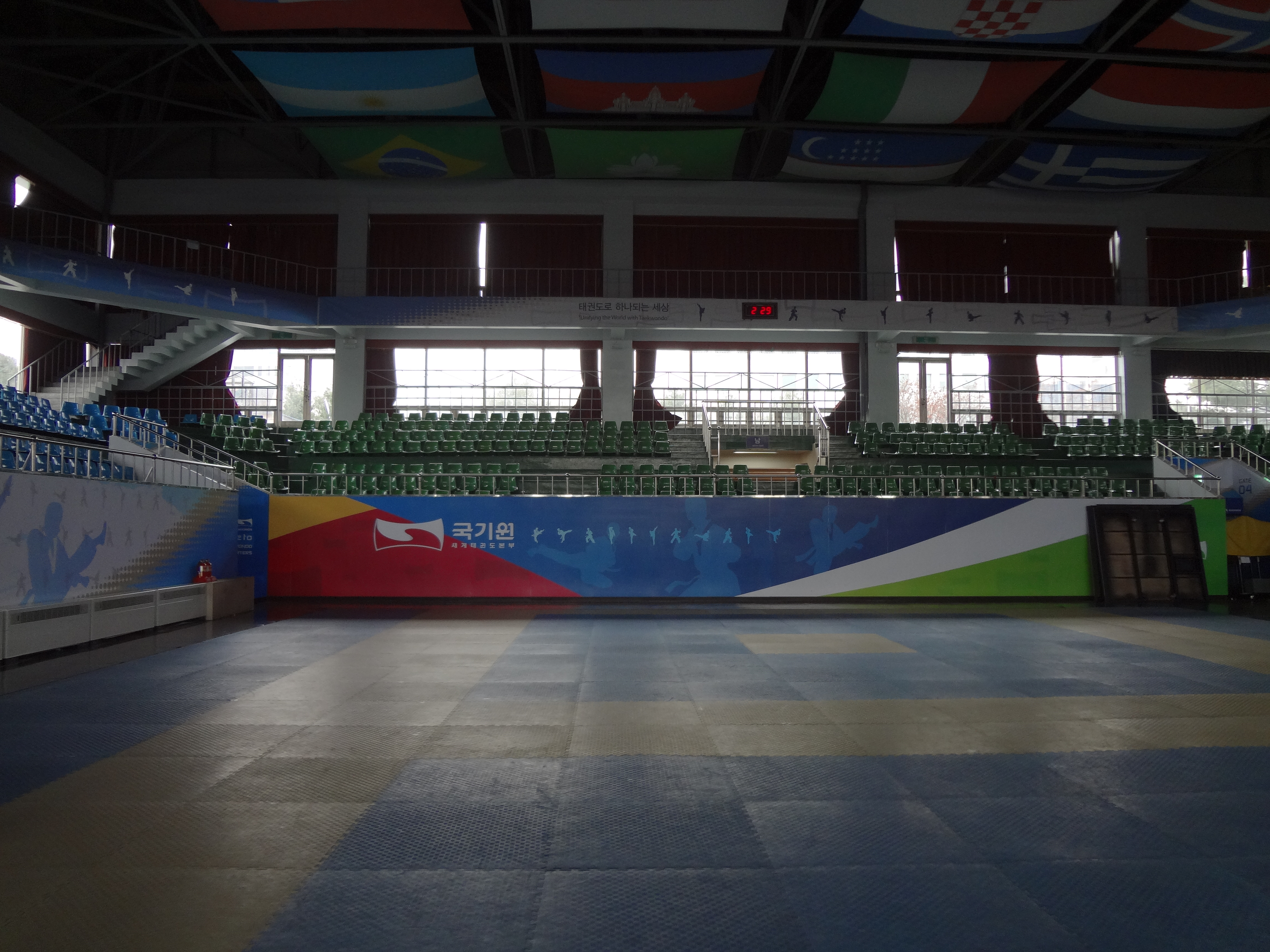
It didn’t look that much different from any gym, except with the flags on the ceiling, the important-looking seats on top, and the rubber mat which seemed firmer and harder than that of most dojangs. But think of all the athletes from all over the world who walked this mat! (On that note, I’m glad I was wearing socks.)

I know it just looks like a gym, but to me it's also a mecca.

I know it just looks like a gym, but to me it’s also a mecca.

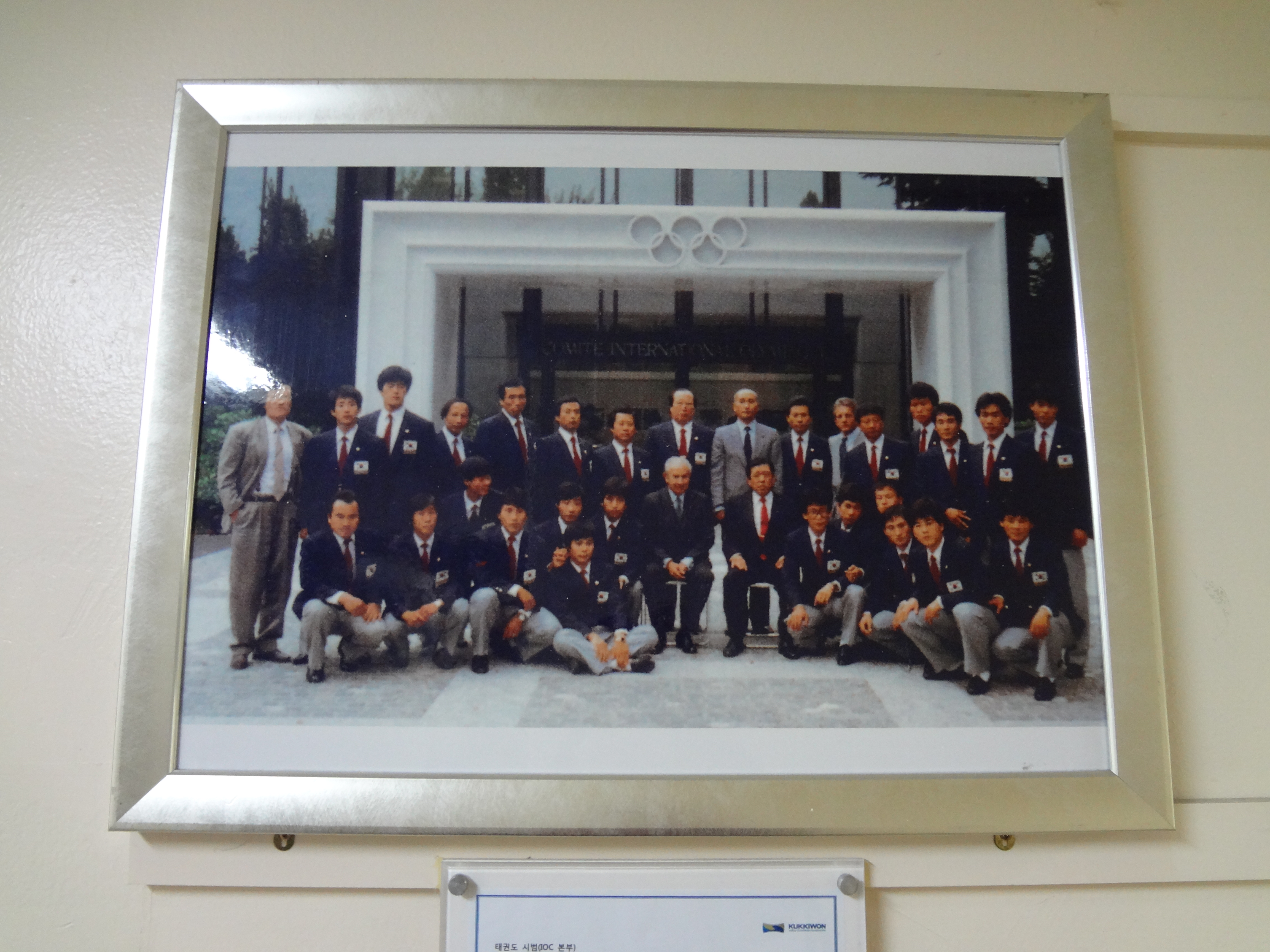
Outside the gym, the hallway was decorated with photographs of taekwondo history. One showed a photo of taekwondo jins from North and South Korea. Another showed people practicing taekwondo on the streets of Cambodia, barefoot. Surprisingly, there were two old posters from taekwondo championships held in Manila. I even recognized some of the people in the pictures.

A bit of history

A bit of history

It was a chilly foggy day in the perpetually busy city of Seoul, but as pilgrimages go, the journey was long but destination was worth it.

Scroll below for an informal giveaway!

My desk, January 2013

My desk, January 2013

Annyeong! I’m posting from my studio in Seoul, where I’m based for a while. This is my current desk. See if you can spot the following:

1. My lucky caganer
2. A bubble maker
3. A biography of Robert Irwin
4. Thaumatropes (which have been mistaken for eye masks—yes I am in Korea!)
5. My English and Chinese names translated in Korean
6. Receipts, mostly from Etude House
7. A Post-It pad shaped like a heart
8. Chinese astrology for 2013 (I found it on the back of my bus ticket, which I found interesting.)
9. Something from SVA IxD
10. A Korean bank book

The first three people who can email me a photo with the above items encircled and guesses at least 6 correctly gets a postcard, stickers, and a poem specially written for them. Not kidding.