Archive

Exhibitions

Hi all! I and my friends at the National Art Studio of Korea will be part of the International Sculpture Festa 2013 at the Hangaram Museum of Art in Seoul Arts Center.

It opens tomorrow, May 4, with art talks by yours truly and other international artists.

via ISF 2013 Facebook page

via ISF 2013 Facebook page

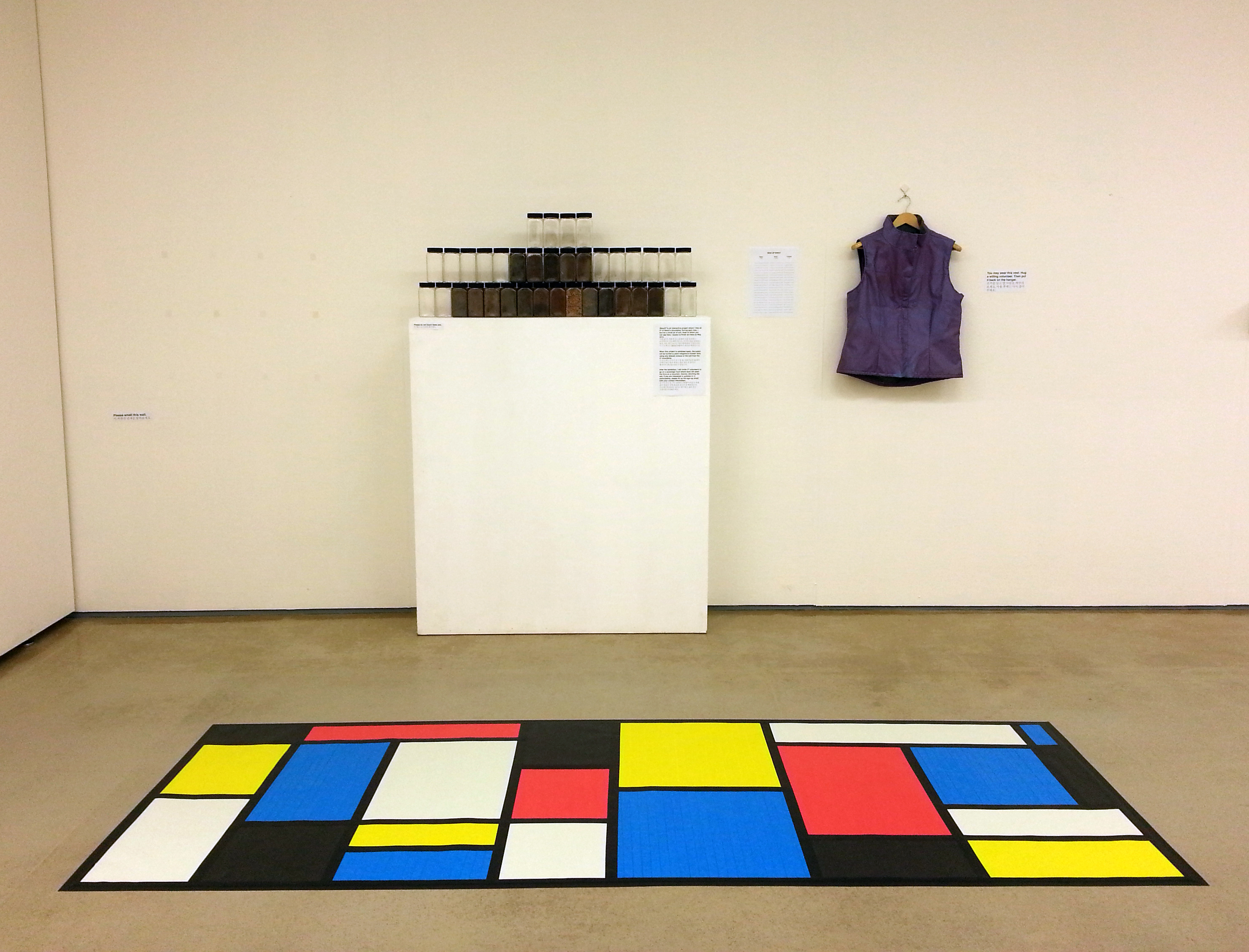
We installed today, and here’s how mine looks, on the second floor.

Installation view

Installation view

As an interactive and perceptual artist, I’m placed in the category, “What Can Sculpture Be?” I have four pieces: a wall with microencapsulated odors you can smell, The Hug Vest that you can wear, a Mondrian Hopscotch board you can play with, and 37 jars that are and yet to be filled with soil from all 37 mountains of Seoul that I’ve hiked. The last one is to be exhibited again in the National Art Studio in June, when I’ve finished all the hikes and get willing participants to join me on an interactive project afterwards.

Check out the festival website here.

At Seoul’s Leeum Samsung Museum of Art, I was struck by two things:

1. 89 Seconds at Alcazar by Eve Sussman / Rufus Corporation

One of my favorite paintings is Diego Velasquez’s Las Meninas. This film, shown in the excellent exhibition, Mise-en-Scène, imagines the events before and after the painting, depicting the actual moment as a fleeting one. And hey, GoT fans, Peter Dinklage is part of the cast!

via artpulsemagazine.com

via artpulsemagazine.com


2. Interaction Design and Korean Treasures

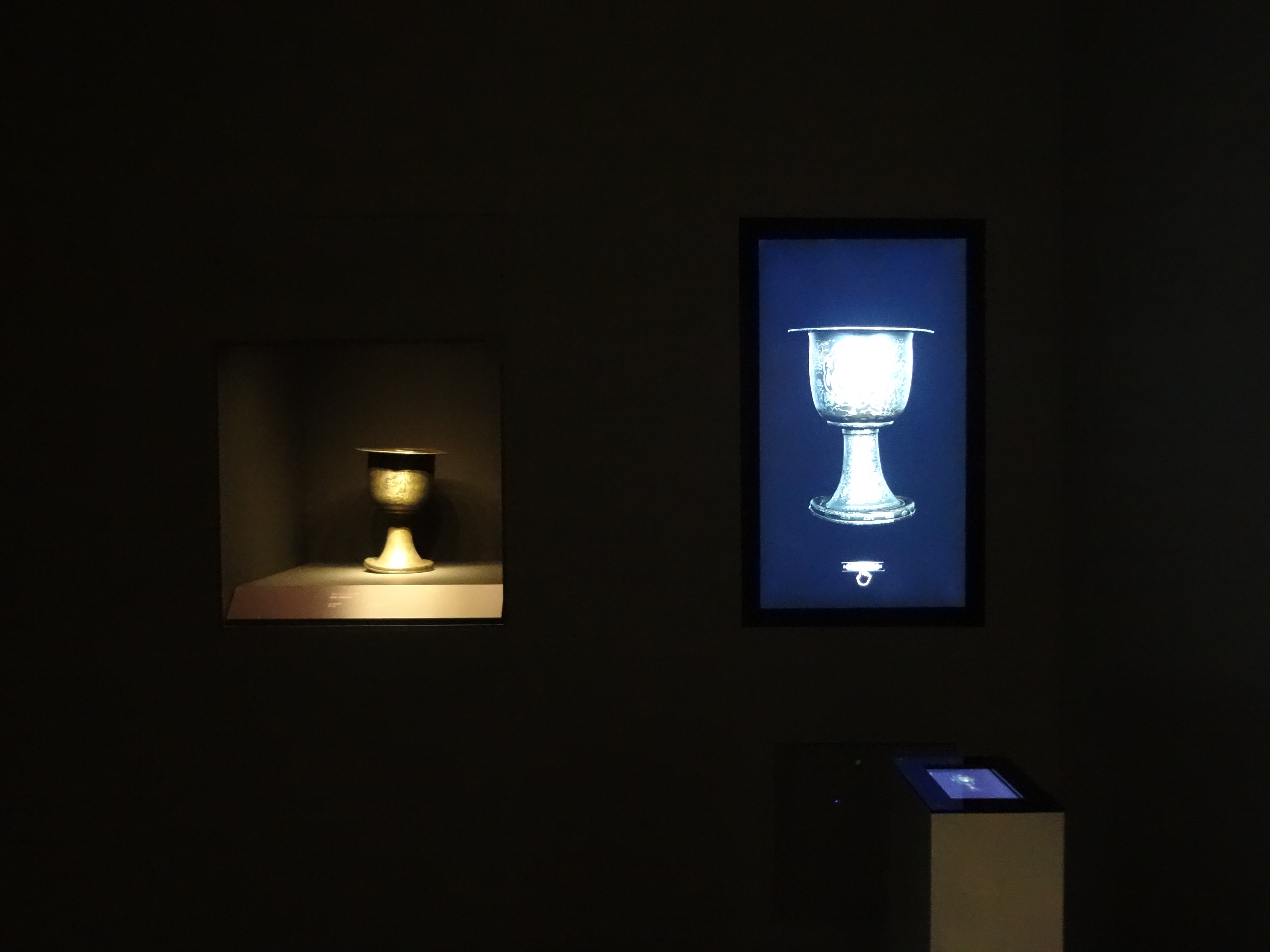
In the exhibition Opulence: Treasures of Korean Craft, I was impressed at how the audience can view the art. In addition to seeing the actual relic, it was possible to explore the piece through a high resolution photo of the work, and a touch screen that allows you to zoom into different details.

Like Google Art Project in an actual museum

Like Google Art Project in an actual museum

While exploring Korea, which slowly becoming one of my favorite countries, I’m a bit fascinated at how it has little-known connections with The Discovery Channel’s Mythbusters, one of my favorite TV shows of all time. Here are two that have been stuck in my head for a while and required a blog post:

1. Hwacha

A hwacha is a weapon developed during the Joseon dynasty that can fire multiple rockets in one go. I found one on display at the King Sejong museum in Gwanhwamun station, though I’ve seen others in various places in Korea.

I hope it works.

I hope it works.

The Mythbusters confirmed the hwacha’s effectiveness in the episode, “Alcohol Myths.”

2. Yellow Scream

Kim Beom, a Korean conceptual artist, has a 31-minute video where he demonstrates how to embed screams into a painting in a manner that imitates Bob Ross. I saw this in the Nam June Paik Art Center in Gyeonggi-do.

In Yellow Scream (2012), Kim discusses his materials, than proceeds to scream, “Aaah!” near the brush while he is applying the paint to the canvas. He adds screams of terror, confusion, agony, and even high-pitched ones of happiness.

Still from Kim Beom's Yellow Scream (2012)

Still from Kim Beom’s Yellow Scream (2012)

Still from Kim Beom's Yellow Scream (2012)

Still from Kim Beom’s Yellow Scream (2012)

Still from Kim Beom's Yellow Scream (2012)

Still from Kim Beom’s Yellow Scream (2012)

I was laughing by myself in the projection room. This will be one of my favorite art pieces of all time. Looking up Kim Beom online, I was happy to see that he also did graduate school in SVA, and even happier to know that he has a thing for clouds, too.

This reminded me of the Mythbusters episode when they asked whether ancient sounds could have been embedded into pottery. Alas, I couldn’t find a video, but they definitely busted that myth.

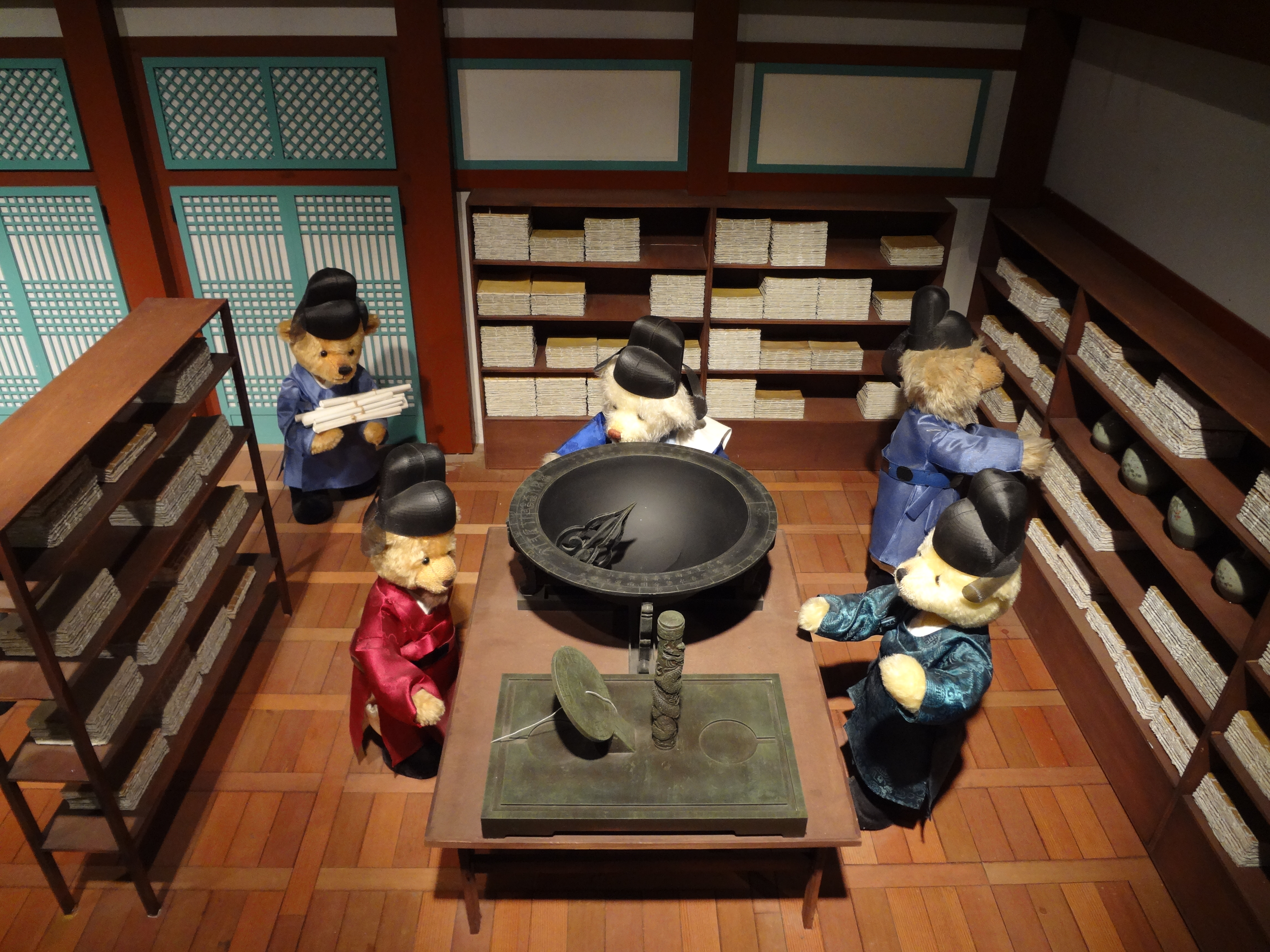
At the Teddy Bear Museum in N Seoul Tower, one can discover the history of Korea in the most adorable and saccharine way possible. Hundreds of teddy bears, with most being mechanical, are dressed and arranged to form scenes from Korea’s old and modern history. Bears in royal court! Bears at war! Bears playing polo! Bears doing breakdance! Bears going on a date! Bears getting married! Bears! Bears! Bears!

Some of my favorite scenes involve the arts and the sciences. Here’s one during with scientists during the reign of King Sejong.

scientists during King Sejong's reign

scientists during King Sejong’s reign

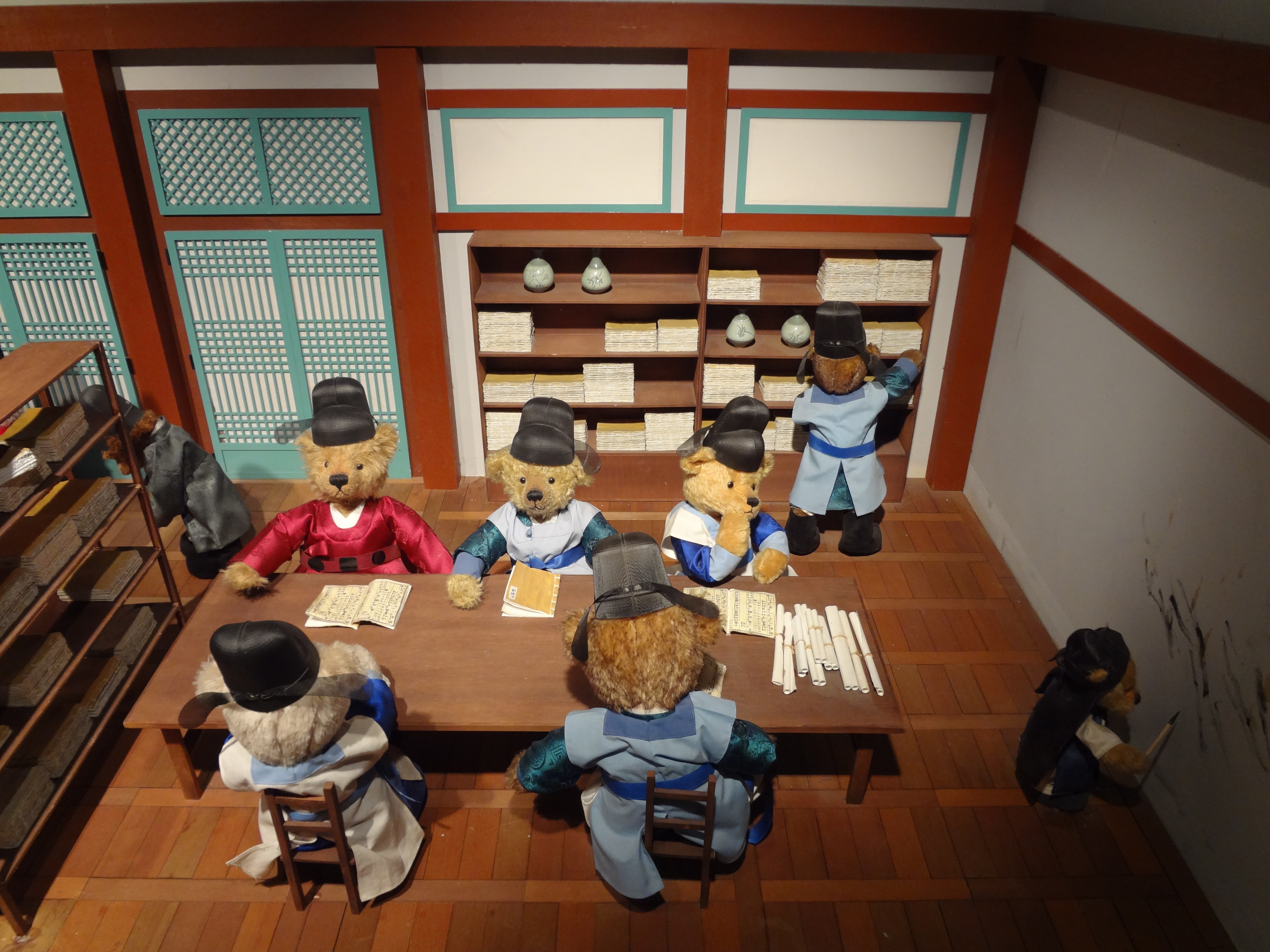
Here’s a scene that made me smile. Look on the lower right:

Someone's not doing what he's supposed to. Can you guess who?

Someone’s not doing what he’s supposed to. Can you guess who?

I love this little errant artist bear that could.

This bear made me laugh.

This bear made me laugh.

I also love this scene where the first light bulb was installed in Gyeongbukgung, which I visited last month:

The first electric light in Korea!

The first electric light in Korea!

Sweet, amusing, and way more entertaining than your usual history museum.

One of the best things I learned since moving back to Manila is The Mind Museum.

The Mind Museum at Taguig. Image via The Mind Museum’s Facebook page

It was a great day to reconnect with the city, and it was an even better surprise when I discover that one of my former capoeira classmates now works there as an exhibit manager.

The building itself is a gorgeous piece of architecture led by Ed Calma (featured in the December 2011 / January 2012 issue of Fast Company). It is a significant addition to the commercial, artistic, and residential landscape of Fort Bonifacio.

There are five galleries in two floors spread over 5,000 square-meters:

  1. The Story of the Universe: Its Beginning and Majesty
  2. The Story of the Earth: Its Story Across the Breadth of Time
  3. The Story of Life: The Exuberant Varieties of Life
  4. The Story of the Atom: The Strange World of the Very Small
  5. The Story of Technology: The Showcase of Human Ingenuity
It’s such a great example of interactivity in a science museum. The major theme is nature in scale. Visitors can go through a human brain, see a skeleton of a T-rex up close, and come across scientific concepts by experiencing them. It has been open since March, but already has gained visits from locals and tourists alike.
Maribel Garcia, curator, emphasized the importance of scientific correctness and emotionally grabbing the viewers—an opinion that   I share, and one that triggered this “science meets art” trajectory in my life.
Visit The Mind Museum site.

A rainy, chilly Saturday and there is only one thing to do: head uptown to one of my happiest, most wonderful place in the world—the American Museum of Natural History.

It was the opening of Creatures of Light, an exhibition that explores bioluminescence—its functions, its mechanisms, the organisms that have it, and how scientists study it.

Just inside, the exhibition greets you with a giant (!) glowing mushroom. Like so:
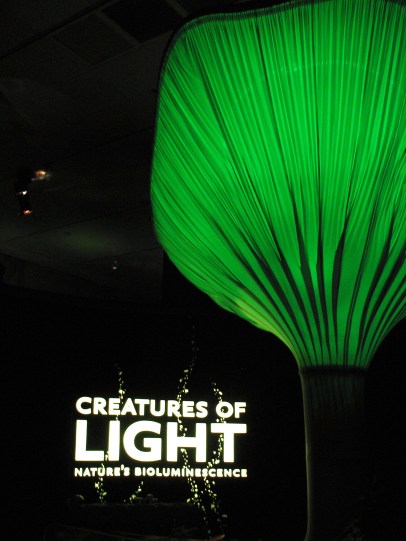
Creatures of Light opens with a giant glowing mushroom.

Immersive environments will instantly transport you. You can climb into a model of a New Zealand cave with magical looking strands of glowworms. You can pretend you are in a bioluminescent bay in Puerto Rico with tiny lights following your movement. You can gaze at giant glowing jellyfish from the Pacific Ocean.
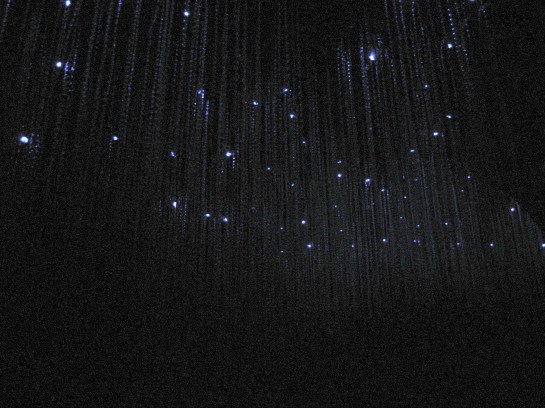
Inside the New Zealand cave with glowworms

I love this:
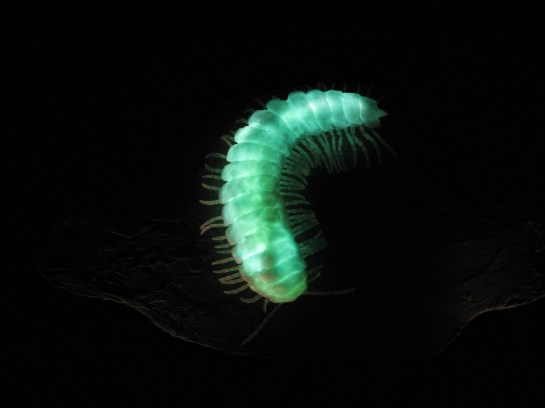
Admittedly, I forget what this is. A worm? A firefly larva? Let me get back to you.

I think my favorite was this gorgeous dinoflagellate model.
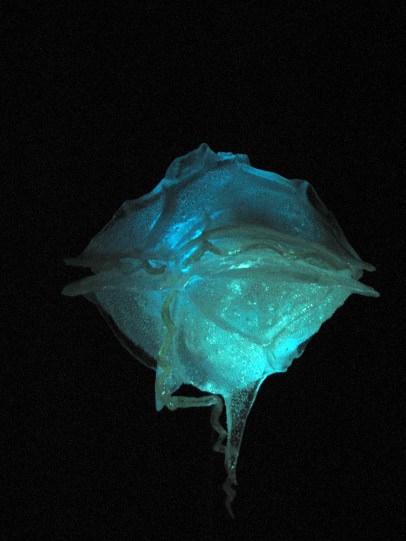
A dinoflagellate model at Creatures of Light

You can even participate in the fun; if you tire of watching the fireflies glow, then pretend you are one by trying to match their mating patterns. Check out the interactive of a fluorescent coral wall that you can explore with one of the exhibit’s iPads. There are also live bioluminescent creatures, such as flashlight fish that are so tiny but fascinating to watch. As always, the immersive 3D models and the interactivity are the key strengths of the AMNH. Although packed with a lot of concepts, it was a joy to get through.

This exhibition is especially memorable for me because I helped research for it during my internship with the exhibitions department last summer, cataloging the bioluminescent creatures that were known and helping to explain to some of them the process of bioluminescence, which I studied in university. This is probably why I recognized most of the creatures there. My boss also very nicely allowed me to play somewhat, which led to me making this tiny encyclopedia of bioluminescent animals. We never got to use it, but it was fun, regardless.

On that note, some stills here, back in the day when I had a clay fetish. This was also one of my projects for my prototyping class.

You’ll have time to see the exhibition, as it runs until January 6, 2013. I, however, will likely see it over and over again.