Archive

Exhibitions

(Or maybe re-crew-ting for The Apocalypse Crew. Haha. Ha. Ha. Uhm. Yes. Anyway, back to this post.)

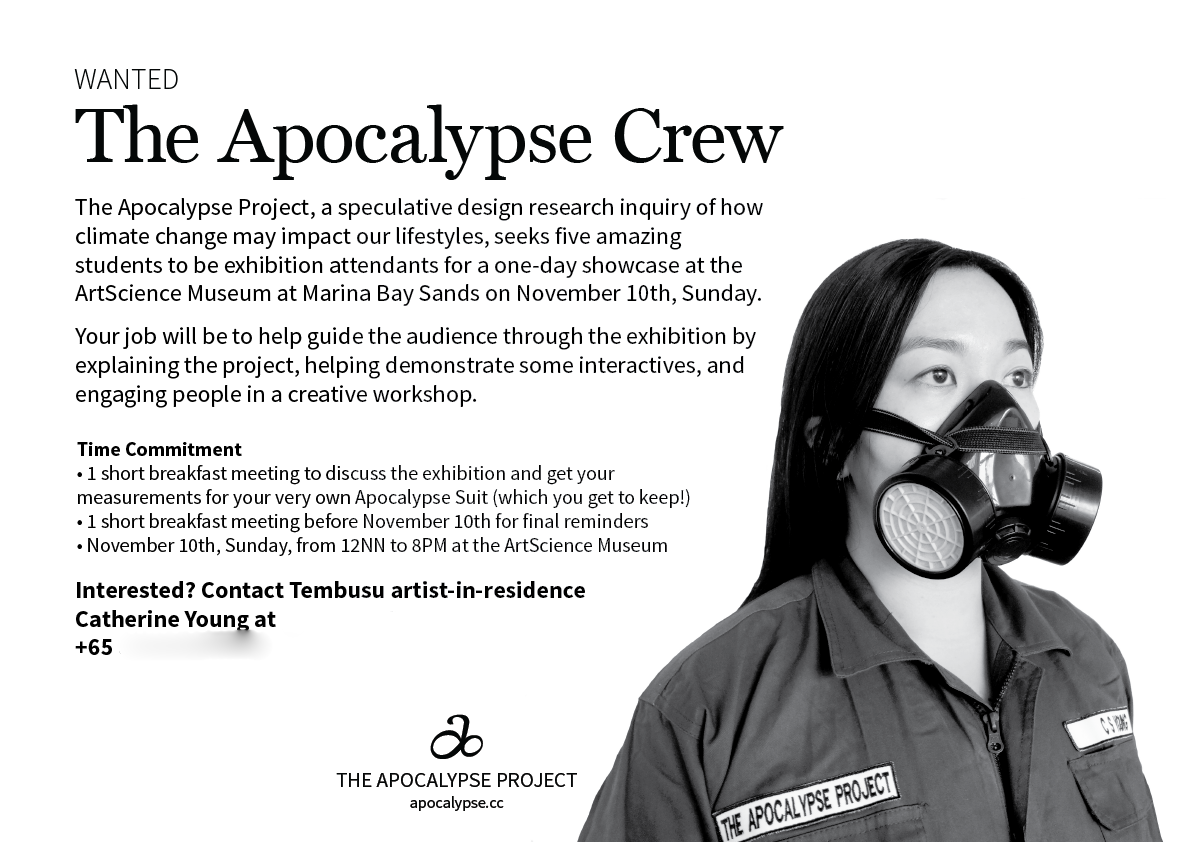
Last week, I was busy recruiting students to be exhibition attendants for our Art/Science Residency Showcase on November 10th. There are too many pieces in my part of the show that I can’t do it alone. I posted this ad in Tembusu College at the National University of Singapore, where I currently live.

TheApocalypseCrewAd-01

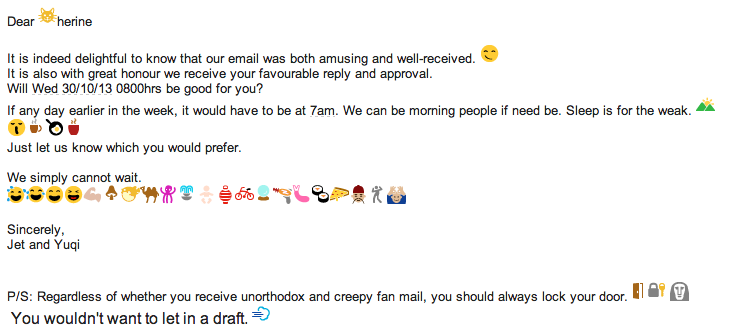
I was expecting to have to beg the students, as it’s midterm crunchtime for most of them. However, I now have six awesome people who have agreed to help! And for two of them, they come with this interesting application letter:

Dear Catherine,

It is with great interest (and perhaps some desperation) that

XXXXX / Chinese Male / Year One Law / Year One Tembusu

and, I,

XXXXX / Chinese Male / Year One Architecture / Year One Tembusu

enlist as exhibition attendants for impending The Apocalypse Project.
After having read your A4 print of a woman wearing a hazmat respirator in our recently-LED-lit elevators of Tembusu (the dimly lit environment did enhance the dystopian intent of your exhibition, though making posters slightly harder to read) , here prize two eager students at your disposal.

We believe that your exhibition would prove valuable, enlightening and practical if we were to face the brink of extinction (have you yet not seen the signs?).
Perhaps we could also offer our insights during the tour, perspective of a Law and Architecture student (if our professional endeavours prove relevant, if not useful).

We will be faithful minions to your cause – to educate people in end of the world preparations, as gaily as possible.
We will be the last two remaining outlasting volunteers, lasting in resolve, even if it were the last few days to the end of the world. Last.

I hope you find our response to your conch call and enthusiasm appealing, if not incredibly weird (both strange and funny).
Hope to hear from you soon.

Sincerely,
XXXXX and XXXXX

I replied back with a ‘yes’ and an attempt to be as clever in language—something about how I didn’t know whether to laugh or to lock the front door—and here was their reply:

Screen Shot 2013-10-24 at 1.52.44 AM

What crazy person wouldn’t hire these two?

On another note, I wonder what kind of emails I’ll get if I design something more complex, such as a dating service or something.

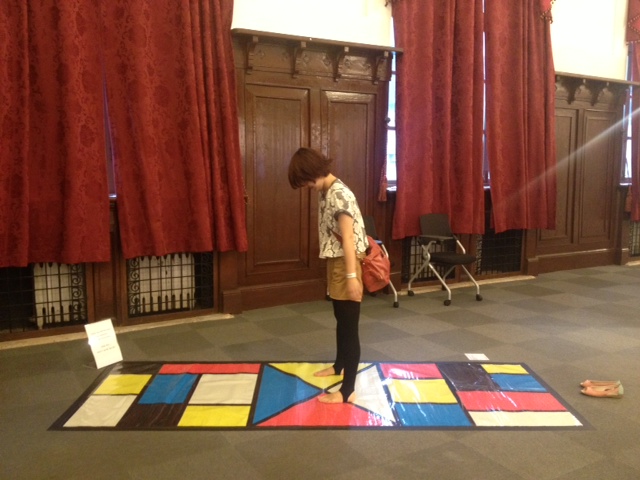
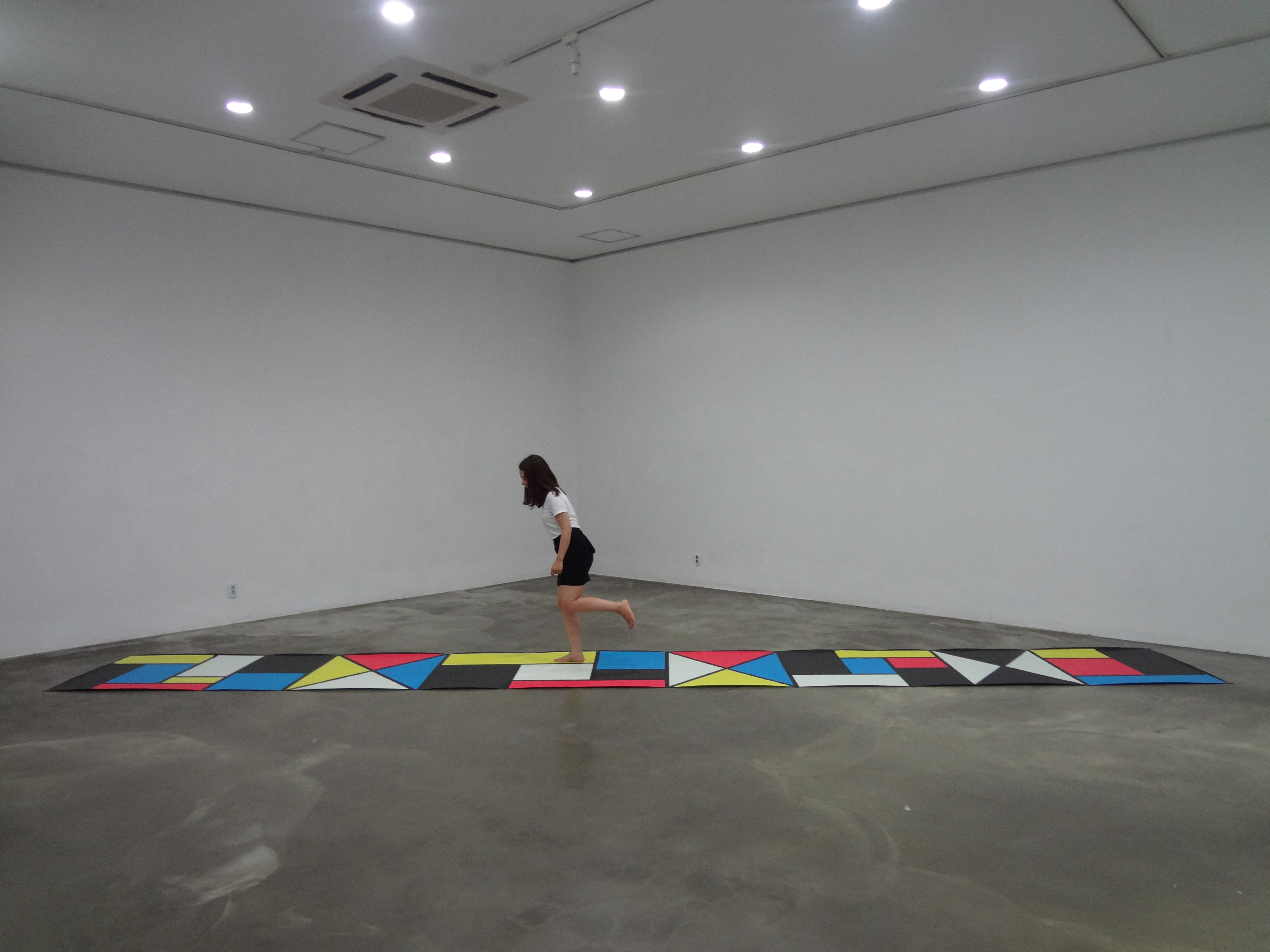
Heejung sent me this photo of our friend Kaya jumping on my hopscotch board at the Asian Students and Young Artists Art Festival (ASYAAF 2013), which ended last week.

사진 (24)

I’m neck-deep in climate change articles and meetings with a lot of brilliant people, so this was such a nice email from the life I just left. I love that beam of light on the right. It looks as though Kaya was beamed there from space.

Thank you, ladies! And I miss you, Korea!

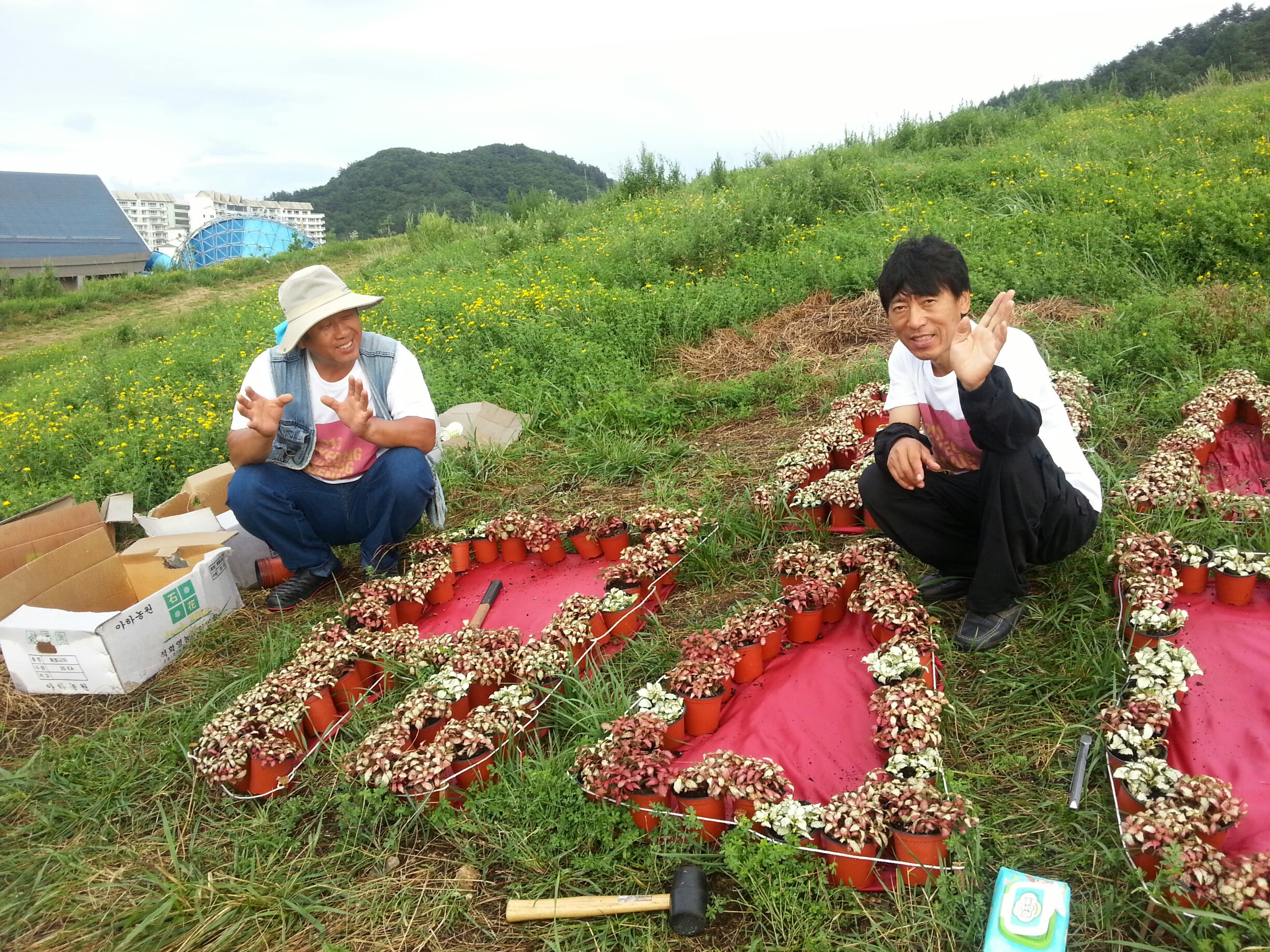
My friend Kate Kirkpatrick, who also serves as producer of my Seoul43 project, has been working making sure that its extension project, Pyeong Chang Mobile Garden, a piece currently in the 2013 Pyeong Chang Biennale, is finished. This weekend, she reported back to me (I’m currently in Manila in transit to my next project), with these photos.

1375605923070 1375606195305

I smiled when I saw this photo with Pyeong Chang Biennale curators, Mr. Hyunchul Lee (left) and Mr. Yoonkee Kim (right), who helped finish the job. Kamsahamnida!

1375606435365

View a previous post about the installation and another piece here.

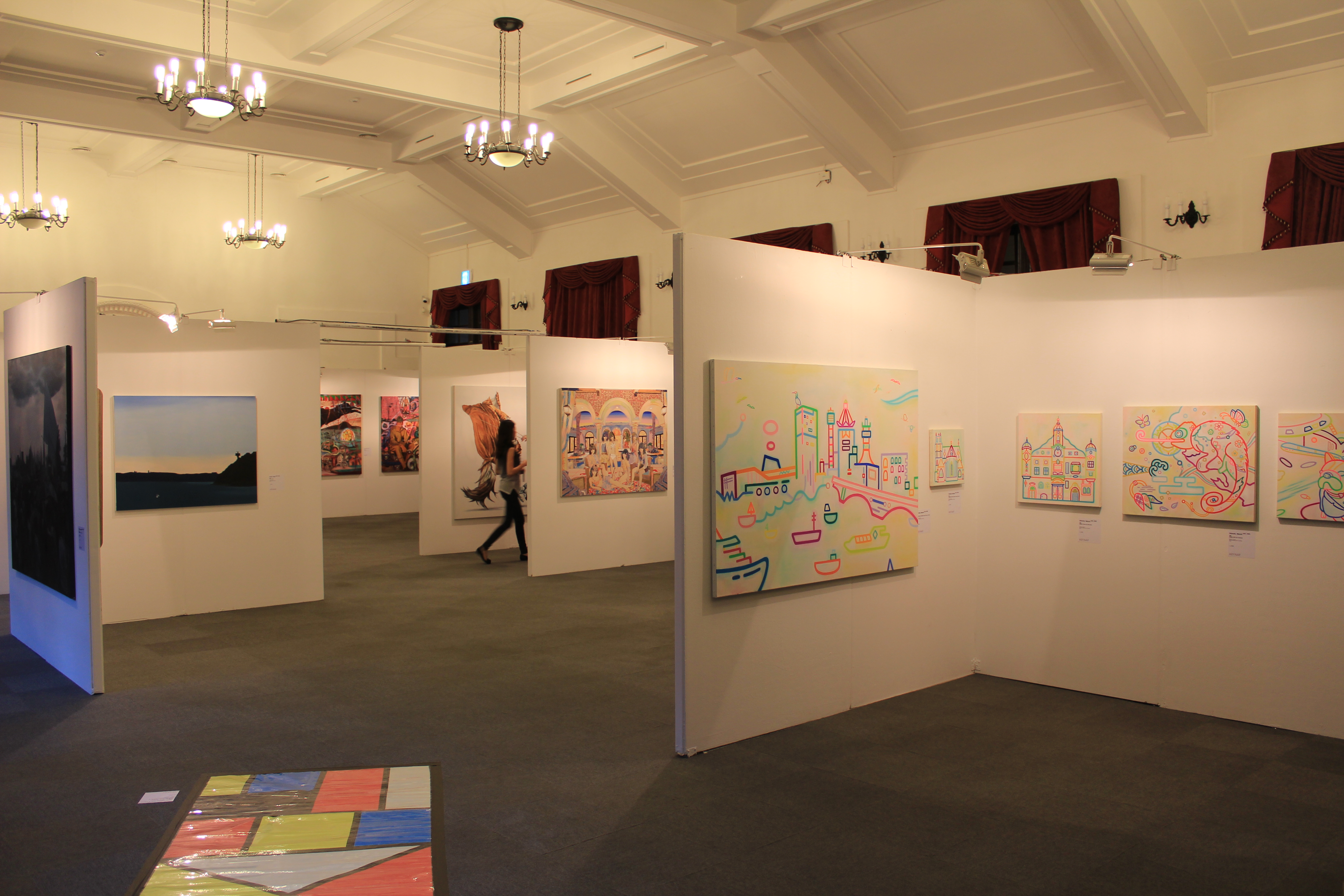
(SEOUL)—The Asian Students and Young Artists Art Festival (ASYAAF) 2013, co-organized by the Chosun Ilbo Daily and the Ministry of Culture, Sports, and Tourism, is currently happening at the beautiful Culture Station Seoul 284. It features 500 art students, post-graduates, and professional artists. It runs until August 18.

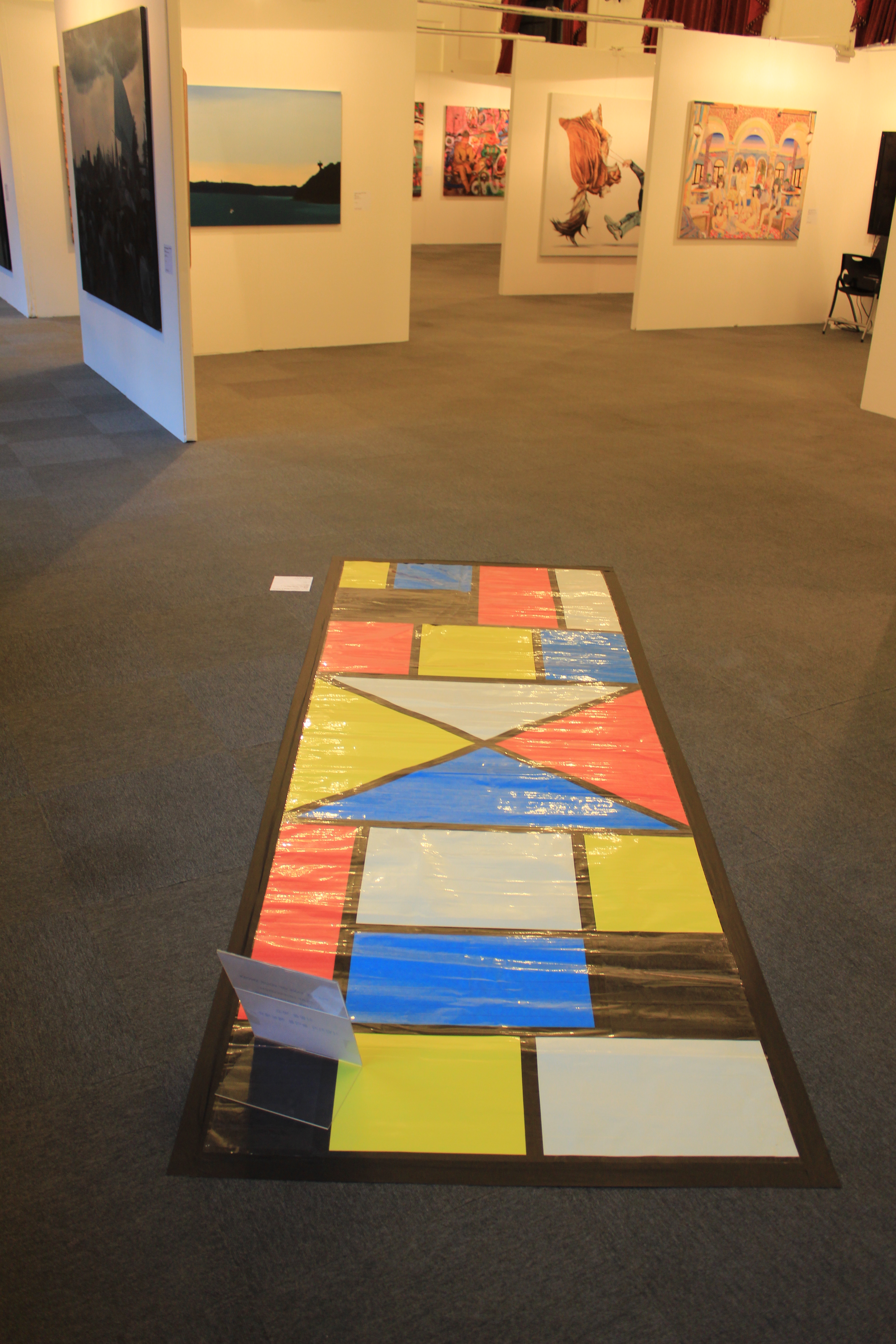
If you are in town, go hop on one of my Mondrian Hopscotch boards, and check out art from all these vibrant artists 30 years old and under.

IMG_0008

IMG_0003

View the ASYAAF 2013 website here.

With thanks to the awesome people at Gallery LVS, especially Ms. Dain Oh for the photos.

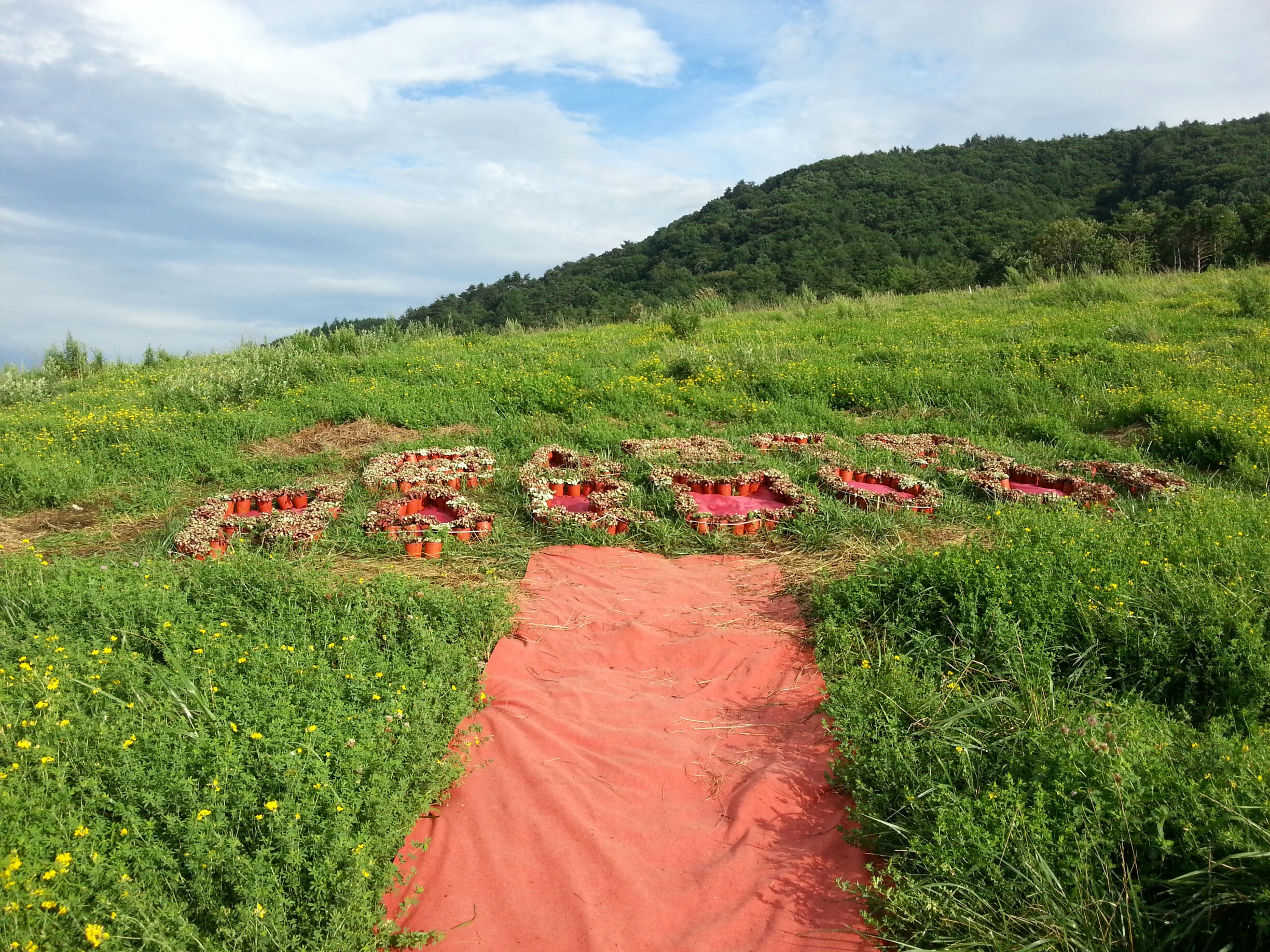
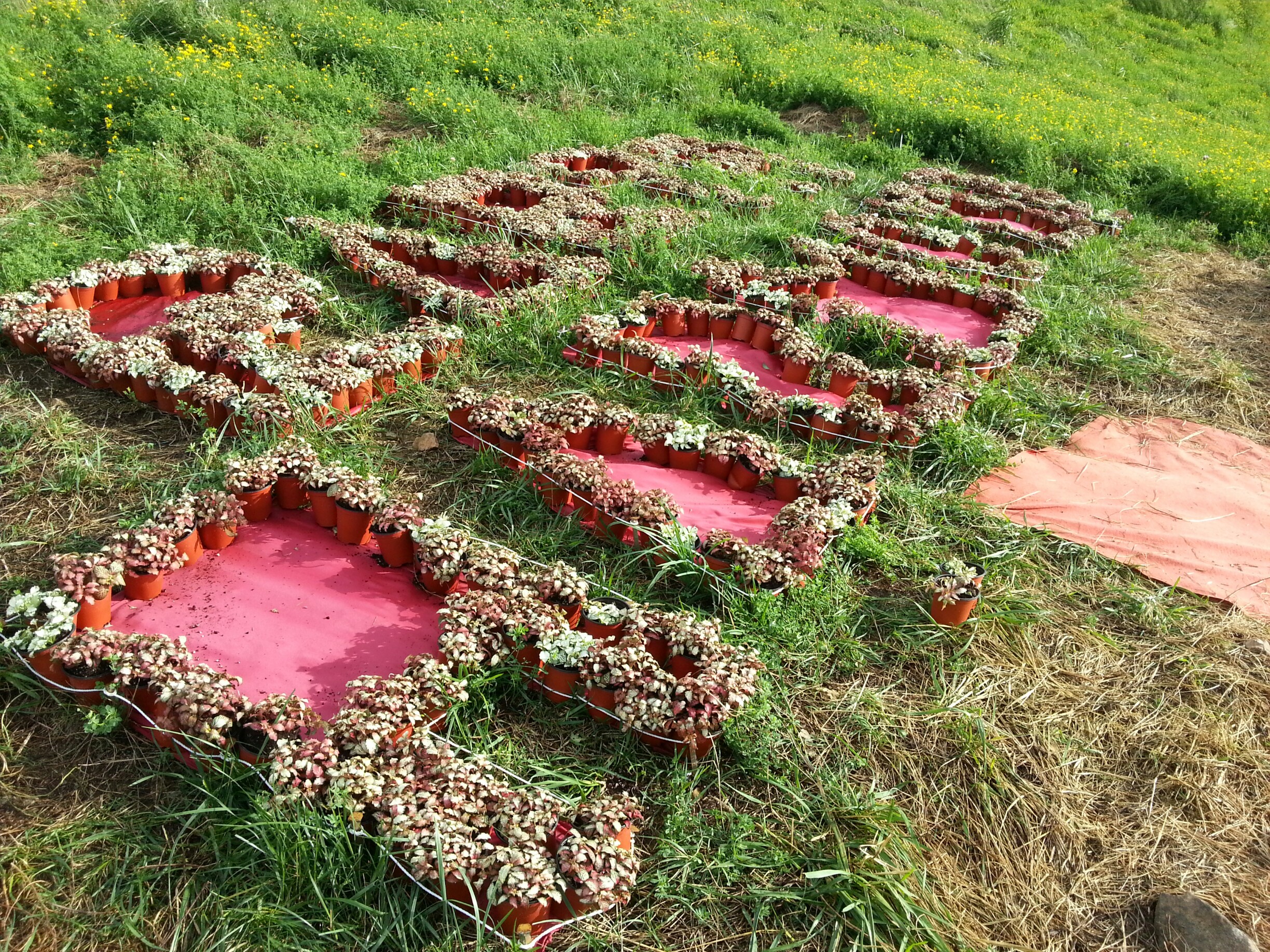
To prepare for the Winter Olympics in 2018, Pyeong Chang is having a biennale from July 20 to August 30, 2013. As an extension of my Seoul43 project, I was commissioned to do a 1-day community planting project reflecting their theme, Earth Harmony.

Last week, I installed the first half. During the opening of the biennale, participants will be invited to plant seedlings and assemble them on the letters so that both artist and audience form the words of the biennale’s theme, Earth Harmony. After the event, people will be invited to take the plants to bring home, to plant in their gardens, or in any public area where planting is permissible.

I wanted to use a framework similar to Seoul43, where I create a piece that the public is invited to collaborate with to achieve one goal, and then disperse it to their local environment. In Seoul43, I bring a piece of all the mountains for participants to plant with and bring back individually to the mountains, giving them an opportunity to design their own experience.

DSC08321

20130712_094234


It was a grueling 2-day installation, with me having to mow the mountain with a sickle all my myself in a monsoon. But here I am in taekwondo pants, my American Museum of Natural History sweatshirt that I got as an intern, and my Korean ajusshi barbecue gloves.

DSC08279

It was painful and hilarious at the same time. I’m a bit worse for the wear, but hey, no pneumonia!

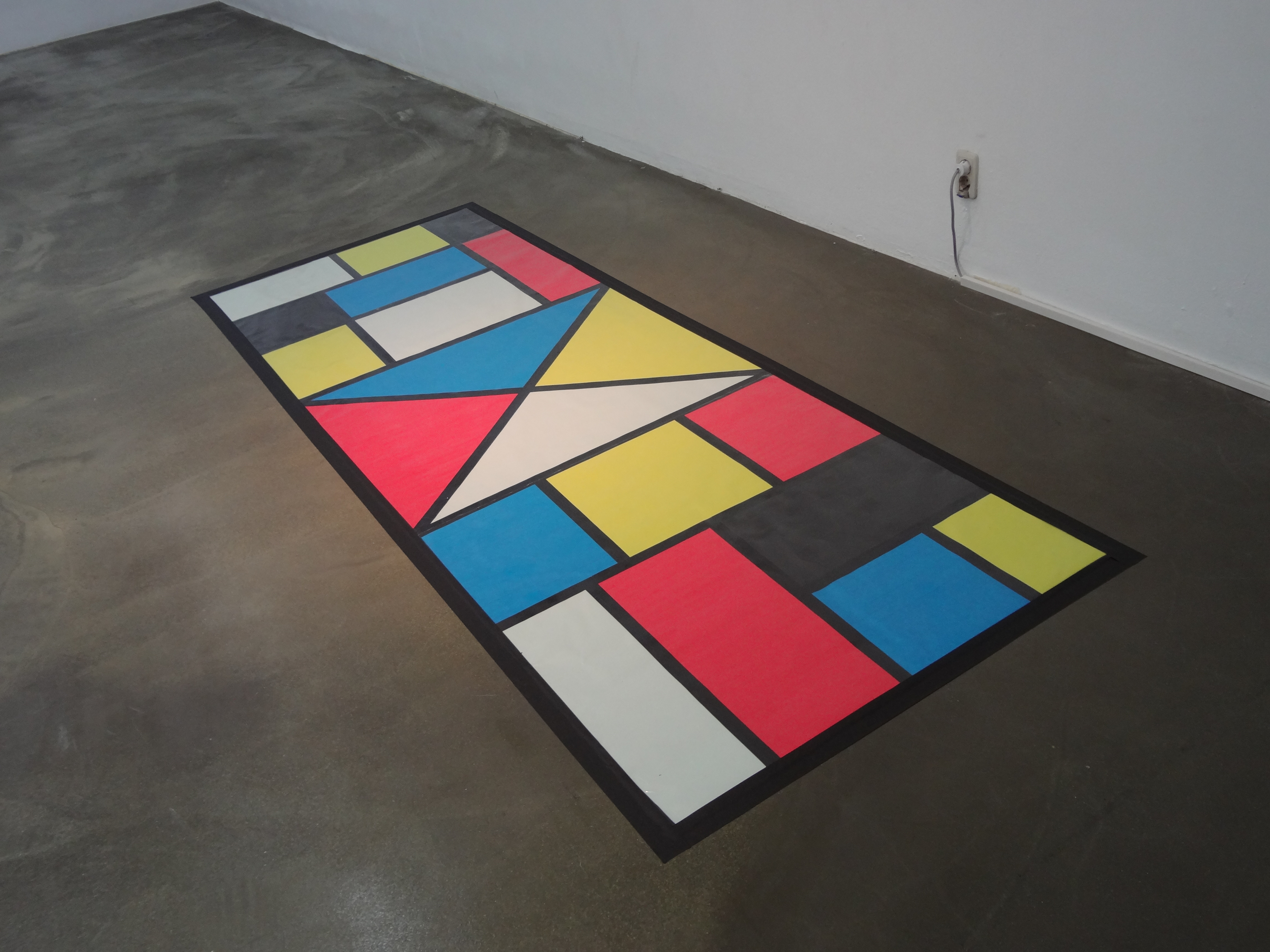
Another piece commissioned is an 8-meter-long Mondrian hopscotch board. This is the fourth one I’ve made so far.

DSC08255


Visit the Pyeong Chang Biennale website here.

For my Seoul43 project, where I hiked all the mountains in Seoul and borrowed soil samples from each mountain, the public was invited to plant using the mountain soil. Afterwards, people were invited to go on scavenger hunts to plant the soil back to the mountains of their choice. I have held two children’s workshops where participants planted using the soil, and together we went to a nearby mountain to do the scavenger hunt.

The scavenger hunt is designed to use small tasks that will promote positive hiking habits in the participants.

1. Greet and bow to the elderly.*
2. Give candy to fellow hikers.
3. Pick up trash.
4. Arrange fallen leaves or flowers into a sculpture.
5. Recite poetry.
6. Balance rocks.**
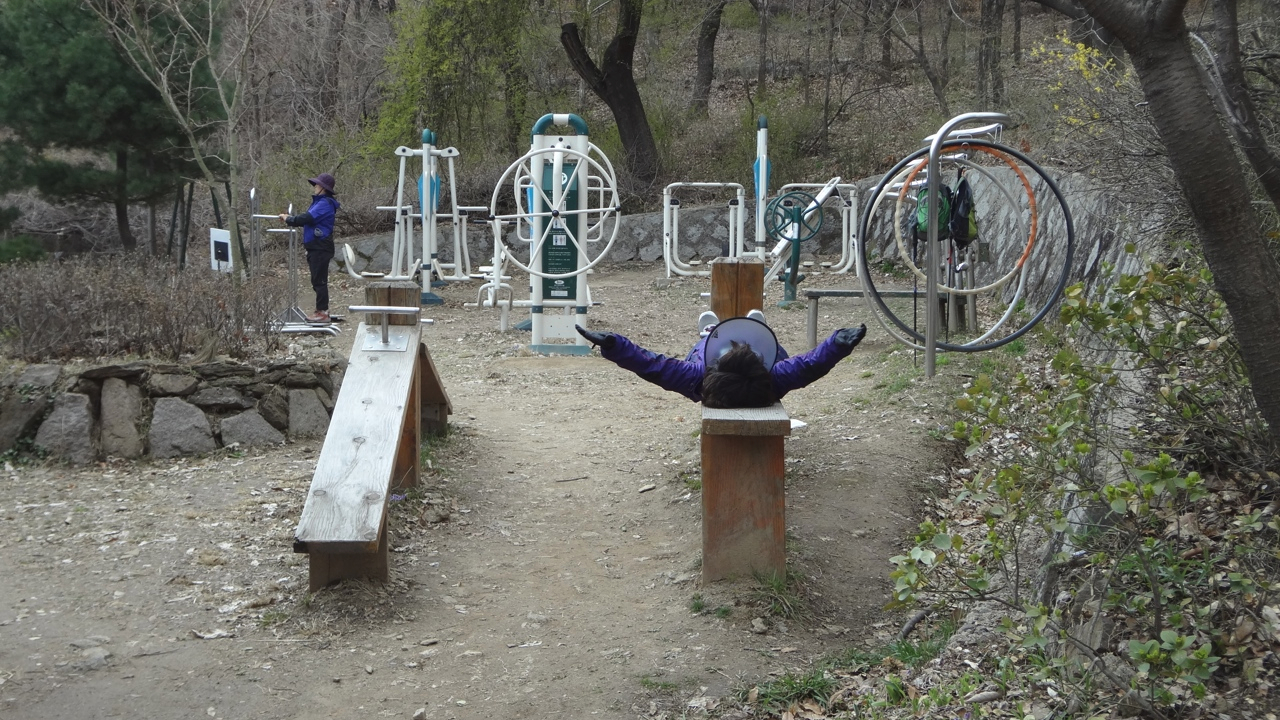
7. Use an exercise machine.
8. Write on a postcard.
9. Read official signs.
10. Plant!

* In South Korea, it is considered polite to bow to one’s elders.
** Many Korean mountains have Buddhist temples, and rock balancing is a common sight in and around them.

In addition, some people who previously learned about this project from my participation in the International Sculpture Festa in the Hangaram Art Museum at Seoul Arts Center this May signed up to participate. During the exhibition in the National Art Studio of Korea, they came to pick up a plant and hike a mountain. They told me the mountain they wished to hike, and I gave them their task list. Later, they will email me with documentation of what they did. Participants will be featured on the Seoul43 site with their permission.

The project website will be regularly updated, but here are some photos. If you are interested in doing a scavenger hunt even after this project is finished to join a community of city hikers here in Seoul, please email me at csgyoung[@]gmail[dot]com.

Hiking in Choansan:
DSC06951

After greeting an elderly lady:
DSC06956

Giving candy to fellow hikers:
DSC06958

Rock balancing:
DSC07016

Planting:
DSC06986

Planting:
DSC06993

DSC06562

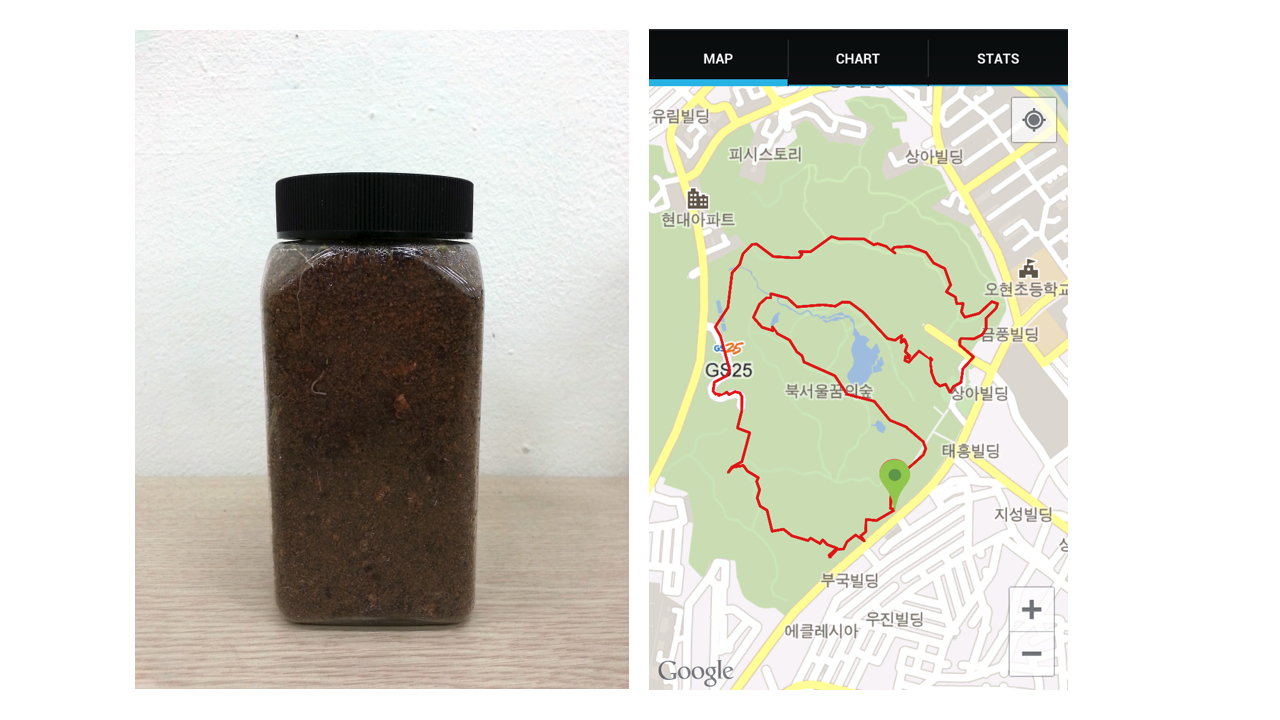
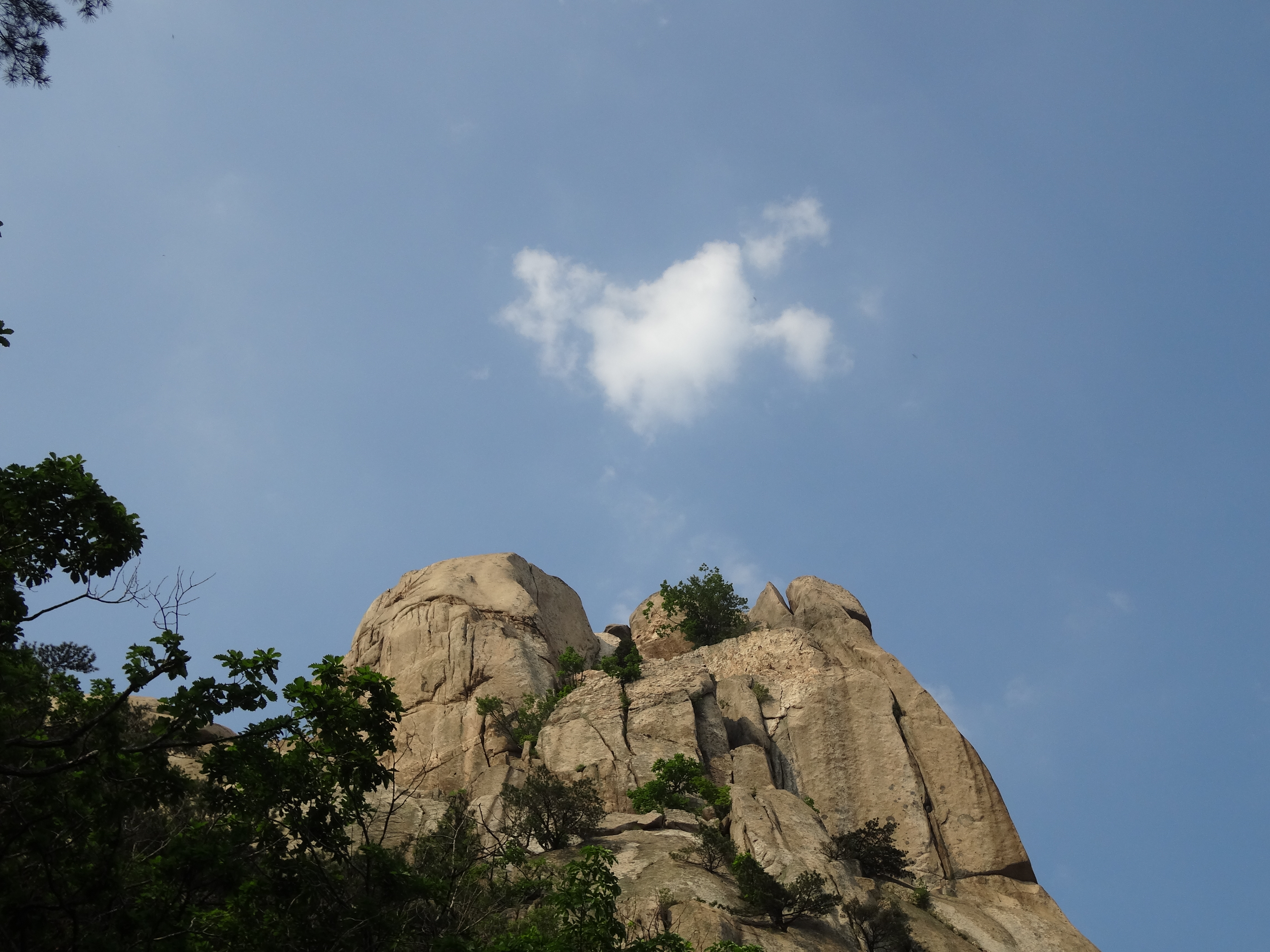
Yesterday, I hiked Dobongsan, my final mountain in Seoul. I have hiked a total of 154 km (~77 miles) in 60 hours. (Perhaps this is extreme fatigue talking, but I think that cloud looks like the Ghostbusters logo, don’t you? Something to Rorsketch.) I’ve hiked all 43 mountains (and then some) of this city for a project called Seoul43. Today, I present it in our group exhibition, “Seoul Seoul Seoul” at The National Art Studio of Korea in Changdong.

DSC06581

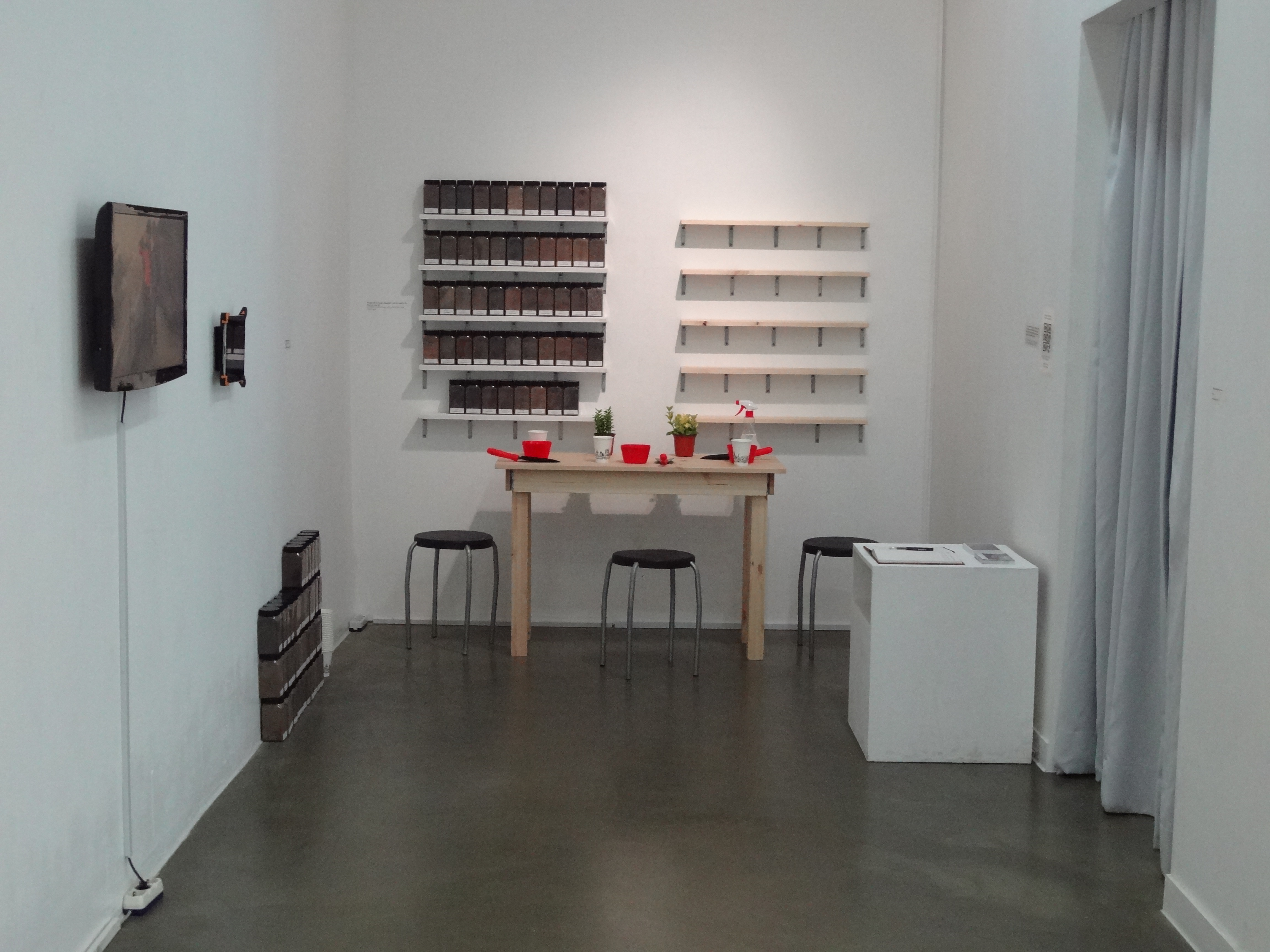
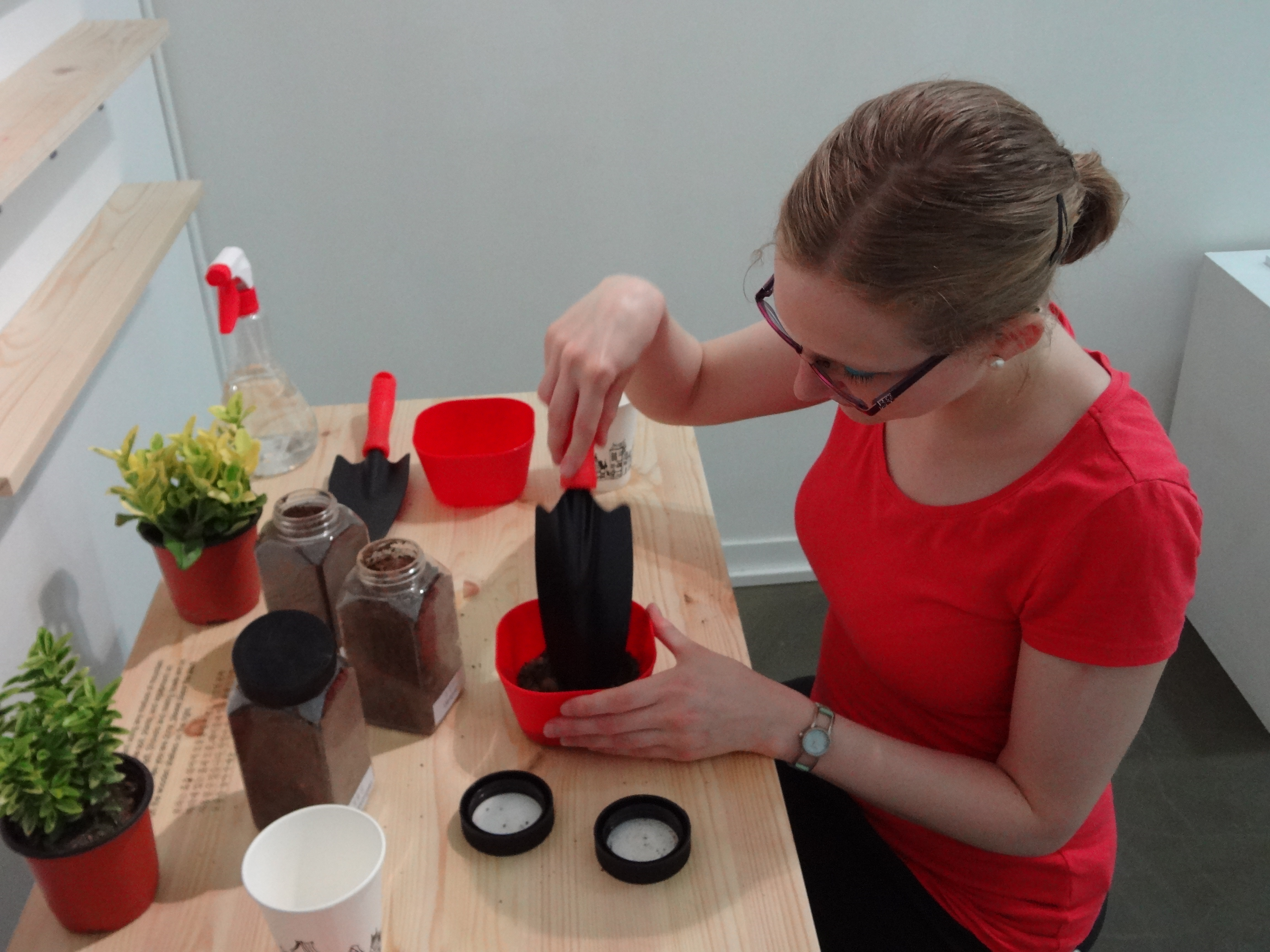
On display is a multimedia interactive piece. The main parts are jars that contain soil samples from all the mountains I hiked, which were taken at the end of each hike at the bottom of the mountains. The table in the middle has shovels, mixing bowls, small outdoor plants, and other gardening equipment. Participants are invited to plant using any mixture of soil.  When they finish planting, they can place the paper cup containing the plant with the soil, now a mixture of soil from different mountains, on the shelves on the right. On the left is a video in both English and Korean that explains the project, and an iPad showing the website that contains more photos, information about the mountains, data from the hikes, etc.

Here is my friend Kate assembling the first plant, after helping me get the entire display finished in time for the opening:

DSC06599

After the exhibition, I will invite people to go to the mountains on individual scavenger hunts to return both soil and plant to the mountains, and to do fun tasks while at it.

Although I am grateful to have finished all the treks with no mishaps whatsoever, this piece is far from over. My next step is to continue with the website to add the data I have gathered during my hikes, which was recorded by the MyTracks app. I will also have to design the scavenger hunts and get enough people to participate in them.

But that’s it for now. Our opening is in two hours, and tomorrow I plan on going to a jimjilbang (Korean sauna). Because dang it, my feet are killing me.

Oh, and I made another hopscotch board for the Mondrian Hopscotch series, this time with a Korean twist (the X in the middle is how they create their boards here):

DSC06595

The link to the Seoul43 site is here.

Last May 5th, I gave an artist talk entitled Art, Science, and Interactivity at the Hangaram Art Museum in Seoul Arts Center for the International Sculpture Festa for a small audience. I and my friends from the National Art Studio were in the category “What Can Sculpture Be?” As an interactive artist, while some of my work can be classified as sculpture, I don’t really consider myself one in the most traditional sense of the word. Unlike most sculpture where Do Not Touch is written beside the piece, my work usually comes with a set of “experience instructions”—such as “Please Smell This Wall,” “Please wear this vest and hug someone,” etc. etc.

These are my notes and slides from the talk:

Art, Science, and Interactivity
CatherineSarahYoung_ISFtalk.001

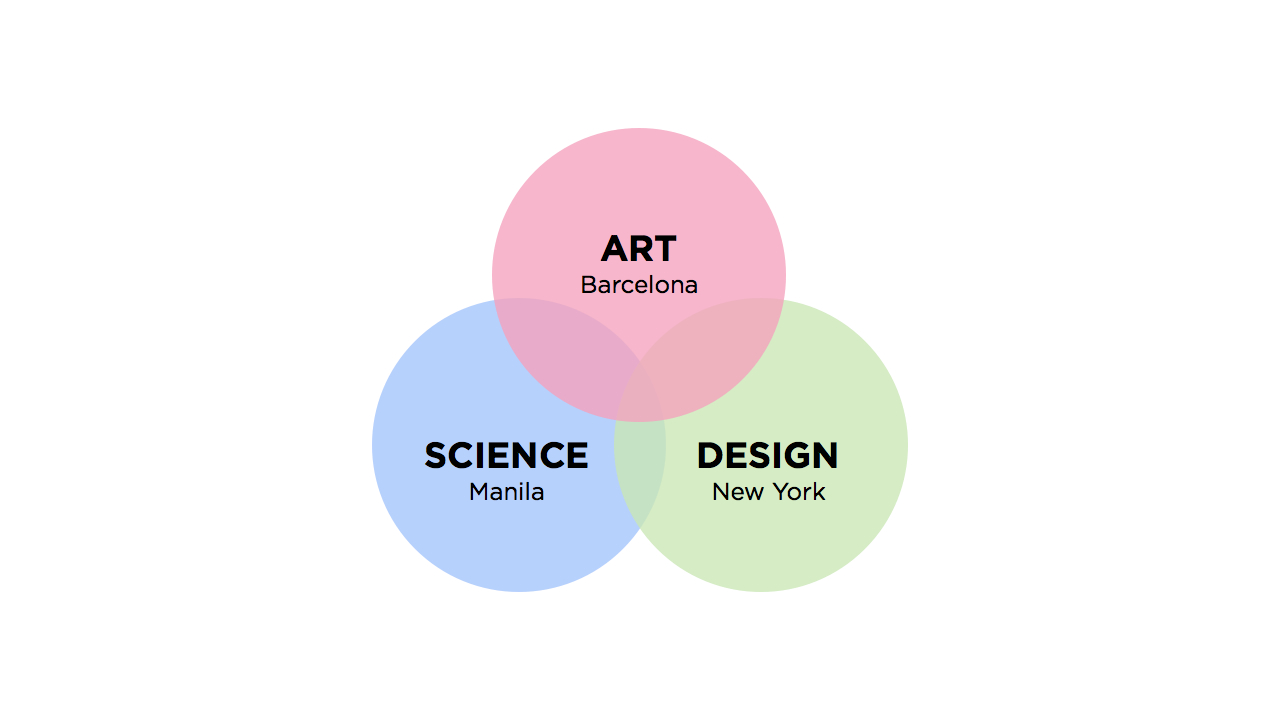
Annyunghaseyo. My name is Catherine, and I’m an interactive artist from the Philippines. I come to you from three fields of study, and from three cities around the world. The first is science, where I studied molecular biology and biotechnology in Manila. The second is Barcelona, where I studied contemporary art and poetry. The third is New York City, where I lived for five years and did my MFA in Interaction Design at the School of Visual Arts.

CatherineSarahYoung_ISFtalk.002

Coming from many different worlds, I often asked myself what was the core of my interests? Finally, I realized that it was human perception. Our senses, or how we perceive the world. More specifically, I investigate perception and how it can bridge memory and play. The more aware we are of the world, the more we can explore and go beyond what we know, and the more we go beyond, the more we add to our storehouse of memories.

CatherineSarahYoung_ISFtalk.003

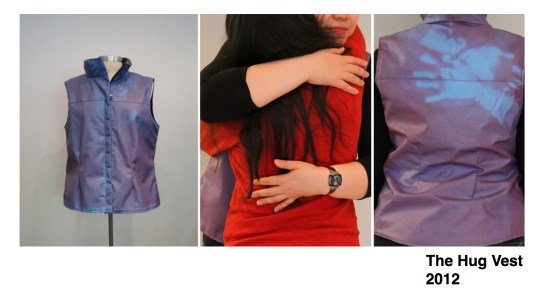
1. Sculpture can facilitate human connection
CatherineSarahYoung_ISFtalk.004

The Hug Vest
This is a vest made out of thermochromic fabric, so it changes color, from purple to blue when you touch it. For the past two years, I have been wearing this, and other versions of this vest, and hugging people with it. In these exhibitions, I invite people to hug me, and invite them to wear it and hug other people as well. Being able to tangibilize the hug through a color change seems to make hugging more fun, and gets people to touch more. What this project has taught me is that sculpture can facilitate human connection.
CatherineSarahYoung_ISFtalk.005

2. Sculpture can go beyond sight

An Olfactory Memoir of Three Cities
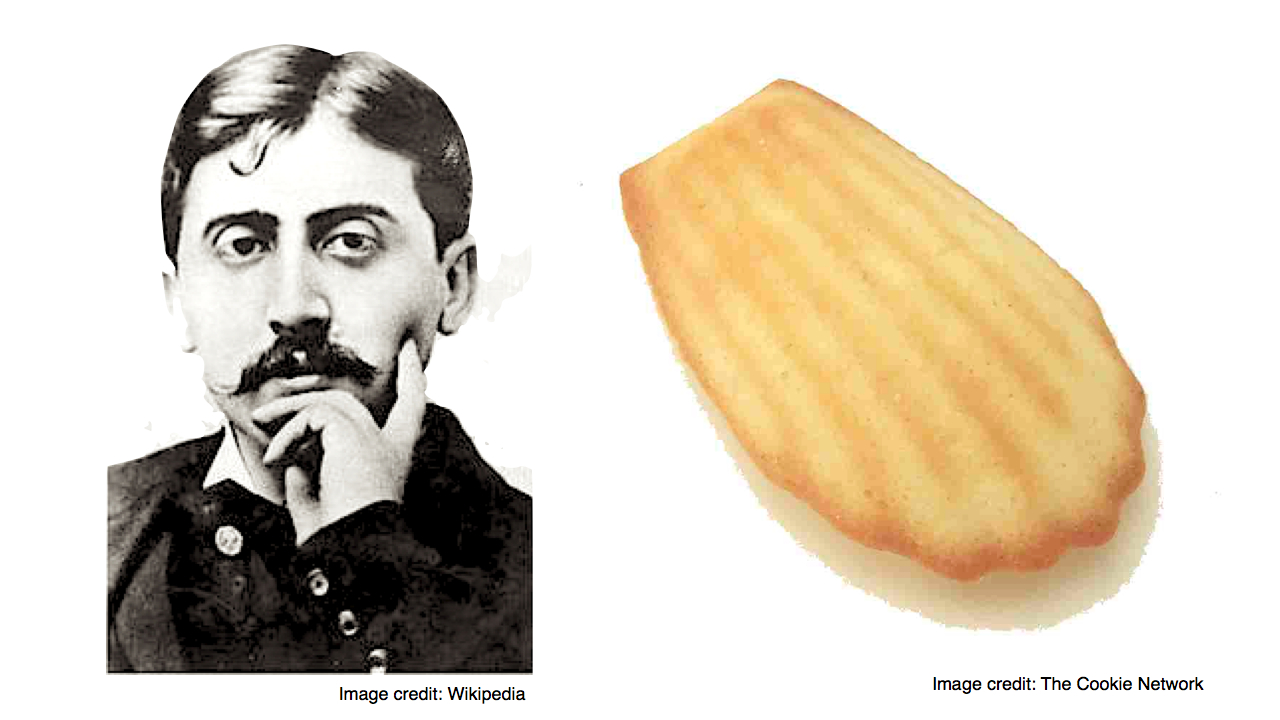
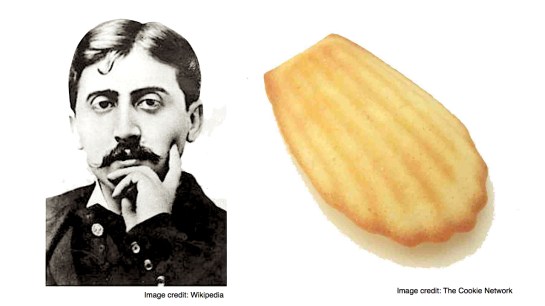
For the next project, I want to first show you this image. Who can tell me what was going on here?
CatherineSarahYoung_ISFtalk.006

Smell and memory are closely interlinked. In neuroscience, we learn that smell is processed in the region of the brain where memory is also processed. This explains why we can unearth deep-seated memories from decades back.

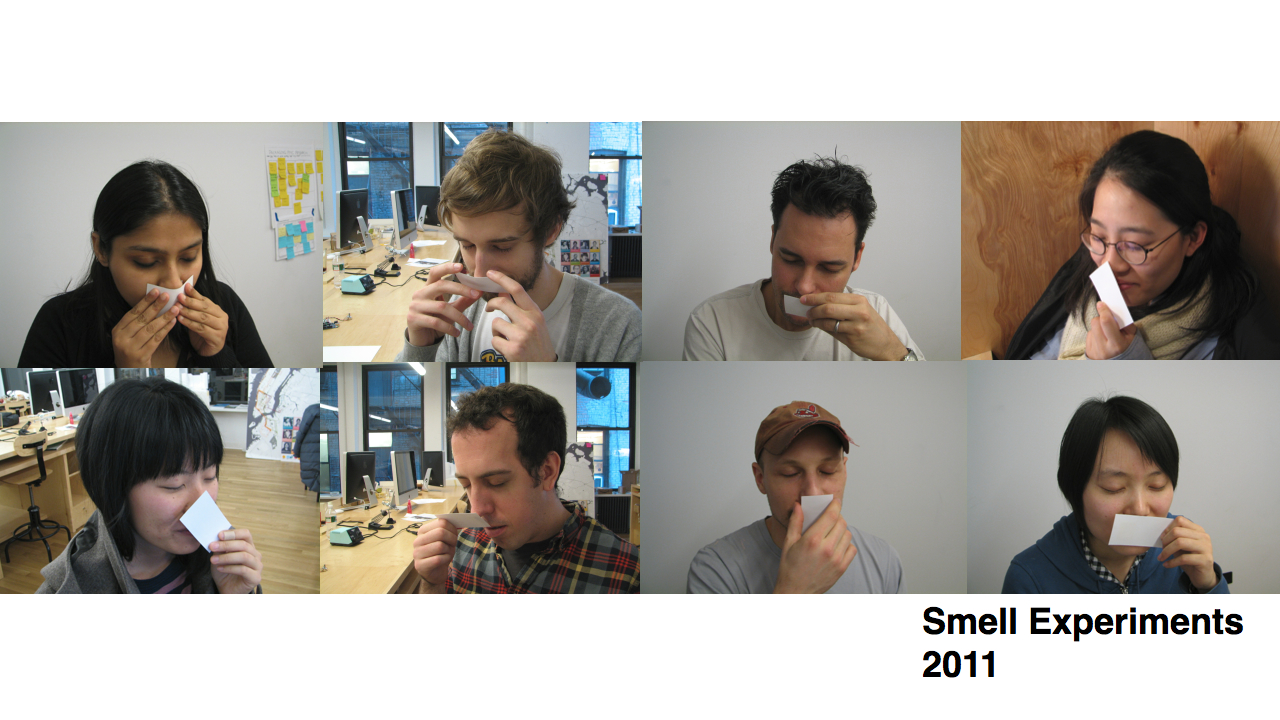
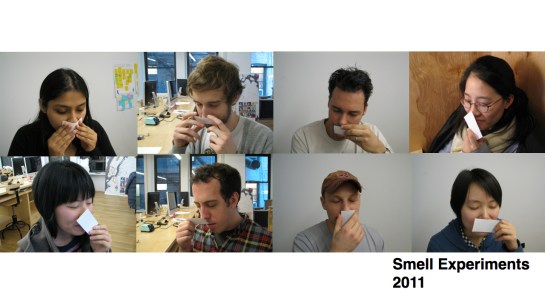
I’ve been doing experiments on olfaction, where I ask people to smell these pieces of paper with microencapsulated smells, so they’re very concentrated. Afterwards, I ask them what memory came to mind. The results were very surprising, because many of them recalled memories from a long time ago, as far back as twenty years.
CatherineSarahYoung_ISFtalk.007

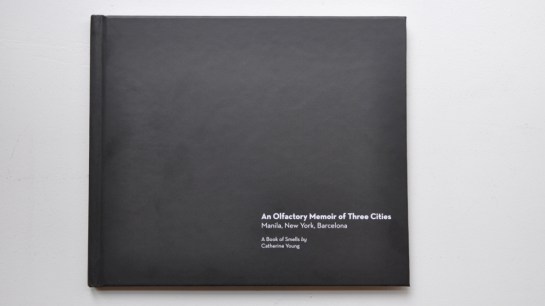
I was inspired by the results, so I created an Olfactory Memoir of Three Cities I’ve lived in – Manila, New York and Barcelona.
CatherineSarahYoung_ISFtalk.008

It contains printed smells with my memory of the place. Of course, if you smelled this book, you have your own memories of the smell, and this creates a conversation among those perceiving art.

CatherineSarahYoung_ISFtalk.009

So from this project, I learned that sculpture can go beyond sight, which is the most overused and oversaturated sense, at least for us who are not visually impaired. With smell, sculpture can be remembered longer, and the memory of the art persists.

CatherineSarahYoung_ISFtalk.011

For this exhibition, there is a little wall of smells with twelve different smells on it, which you can sniff.

3. We can enable the audience to create his own experience with art.

Mondrian Hopscotch II
During my residency in Changdong, one question I wanted to explore was, Can you play with art?
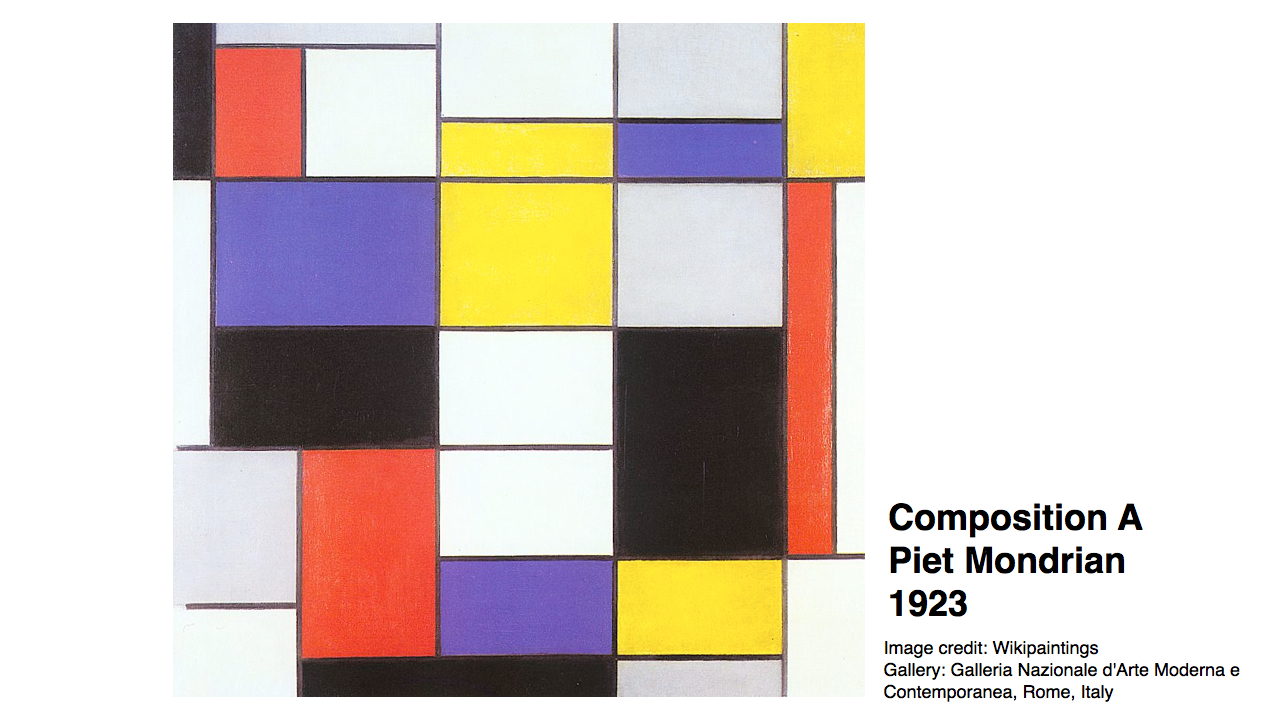
So I created this hopscotch board in the style of Piet Mondrian, whose aesthetic is well-known and almost lends itself to the framework of a hopscotch board.

CatherineSarahYoung_ISFtalk.012

CatherineSarahYoung_ISFtalk.013

I believe that my primary audience is children, so I invited some elementary schoolkids near the studio to play with the art.

CatherineSarahYoung_ISFtalk.014

CatherineSarahYoung_ISFtalk.015
This taught me that sculpture can be played with, and in the course of playing, each person creates his own experience with art.

CatherineSarahYoung_ISFtalk.016

4. Sculpture can build communities

Seoul37
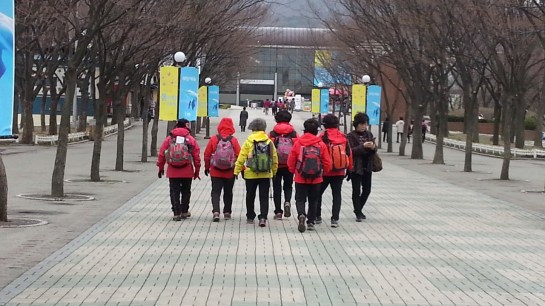
I’m in my fourth month of my residency here in Korea, and among the many things that fascinate me is this.
CatherineSarahYoung_ISFtalk.018
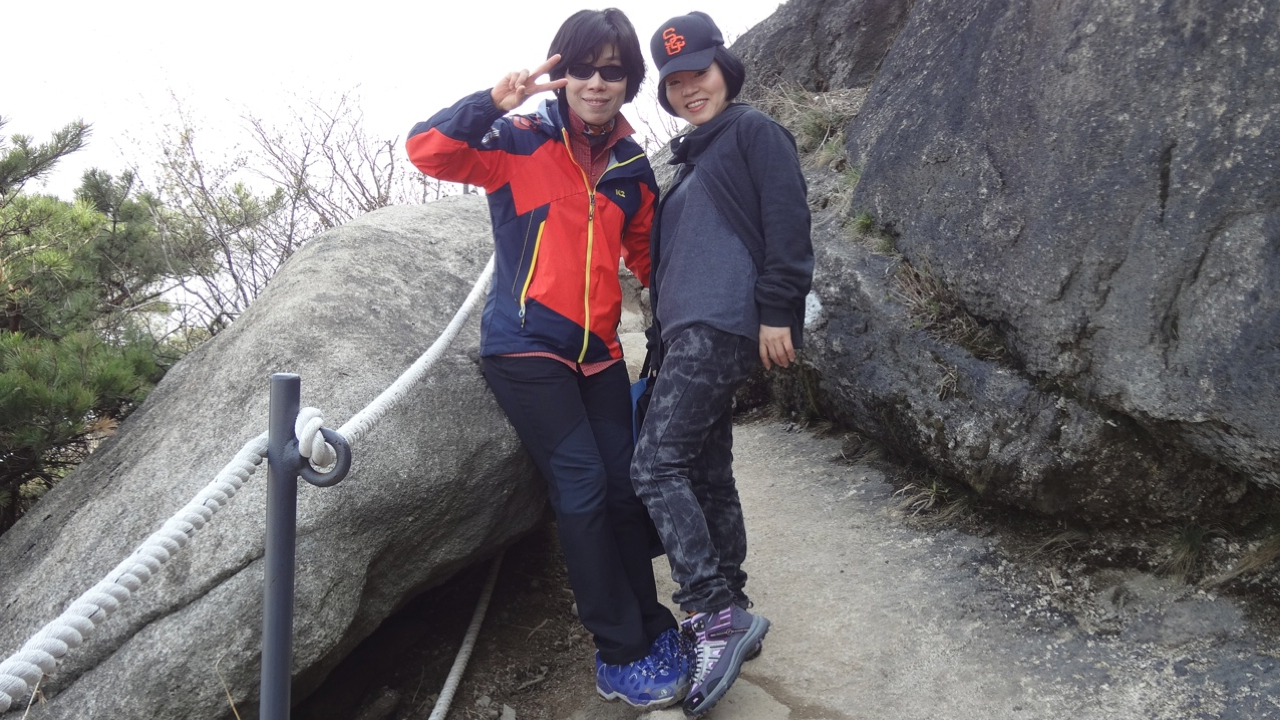
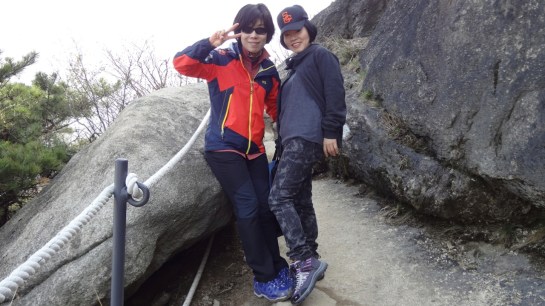
The hiking culture in Korea is truly mind-blowing to me, and has led me to investigate the people doing it—mostly your elderly, the economics behind it—the fashion industry from high end places such as the North Face to the cheaper ones like those in Dongdaemun markets, to the exercise machines I see.
CatherineSarahYoung_ISFtalk.019 CatherineSarahYoung_ISFtalk.020

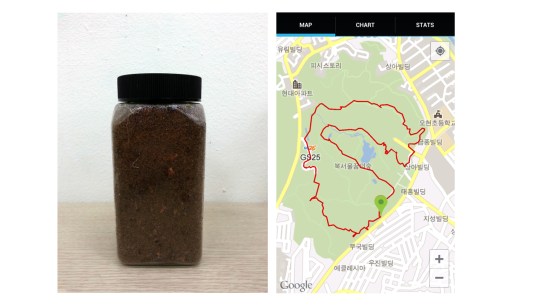
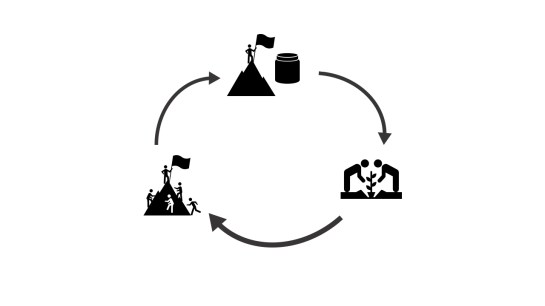
Midway through my residency, I learned that there are 37 mountains in Seoul, and I decided to hike all of them. During each hike, I borrow a small jar of soil and track my hike with a smartphone app.
CatherineSarahYoung_ISFtalk.021

The goal here is to hike all 37, take soil, and for the next time I exhibit this piece, get the audience to plant using any mixture of soil from all these mountains. After the exhibition, I hope to get 37 volunteers to plant these flora back to all the mountains, thereby returning the soil to where it came from.
CatherineSarahYoung_ISFtalk.025

I’m interested in the idea of the earth giving me material, and instigating this human intervention that does something positive to a community and also to the earth. I’m also interested in doing a big project that is ephemeral. From this project, I see potential in sculpture that can help build communities, with consequences even after the exhibition.

CatherineSarahYoung_ISFtalk.026

Thanks very much.
CatherineSarahYoung_ISFtalk.027

It’s post-exhibition at the International Sculpture Festa 2013 in Seoul. While installing my exhibit took hours, taking it down last Wednesday took a mere 30 minutes. Here was how it looked:

Oh hey, you.

Oh hey, you.

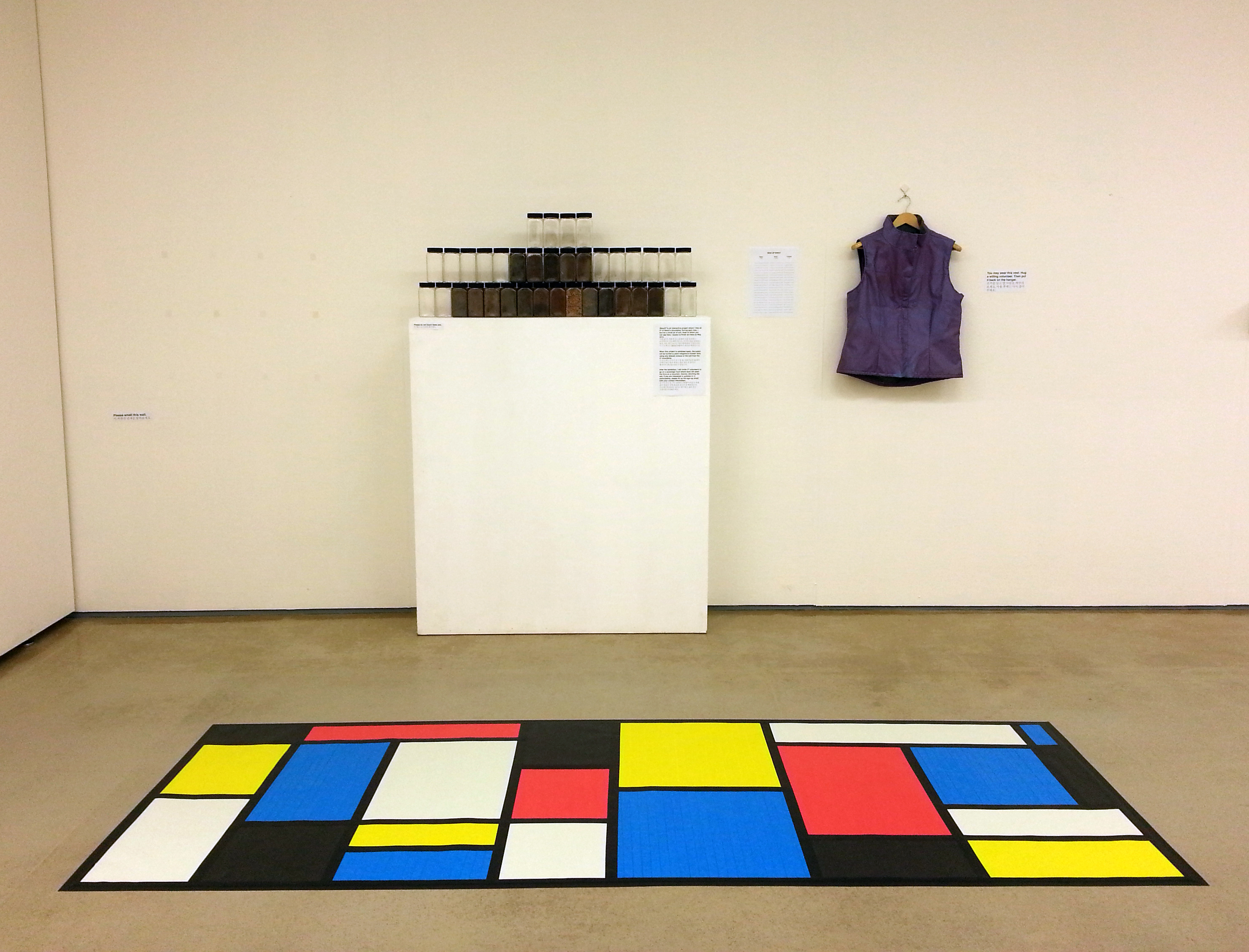
I exhibited four pieces:

1. Seoul37

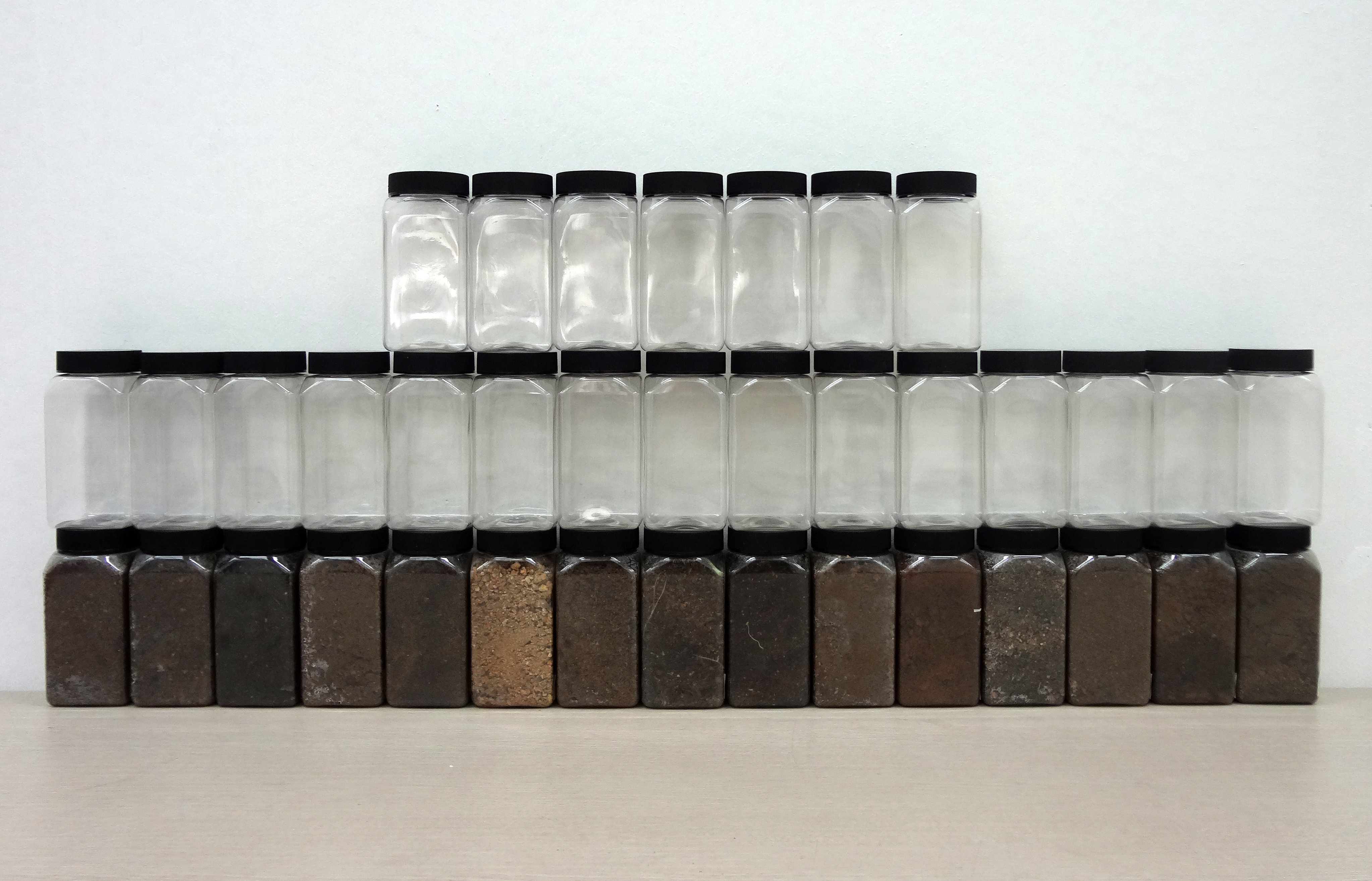
This is the main project I’m doing in my residency at the National Art Studio in Korea. This country has quite a lot of mountains, and they have been its foundation. Despite Korea, especially Seoul, changing so much in the past centuries, these mountains have withstood the test of time. I became fascinated with them (there’s quite a strong hiking culture here), and, upon learning that there are 37 mountains (or hills) in Seoul, decided to hike them all. Yes, ALL. I track each hike with a smartphone app and borrow a jar of soil. During our exhibition here at the National Art Studio, I will invite people to plant using these soil samples I have collected, and will ask 37 volunteers to plant them back to the mountains.

An earlier image of the piece

An earlier image of the piece

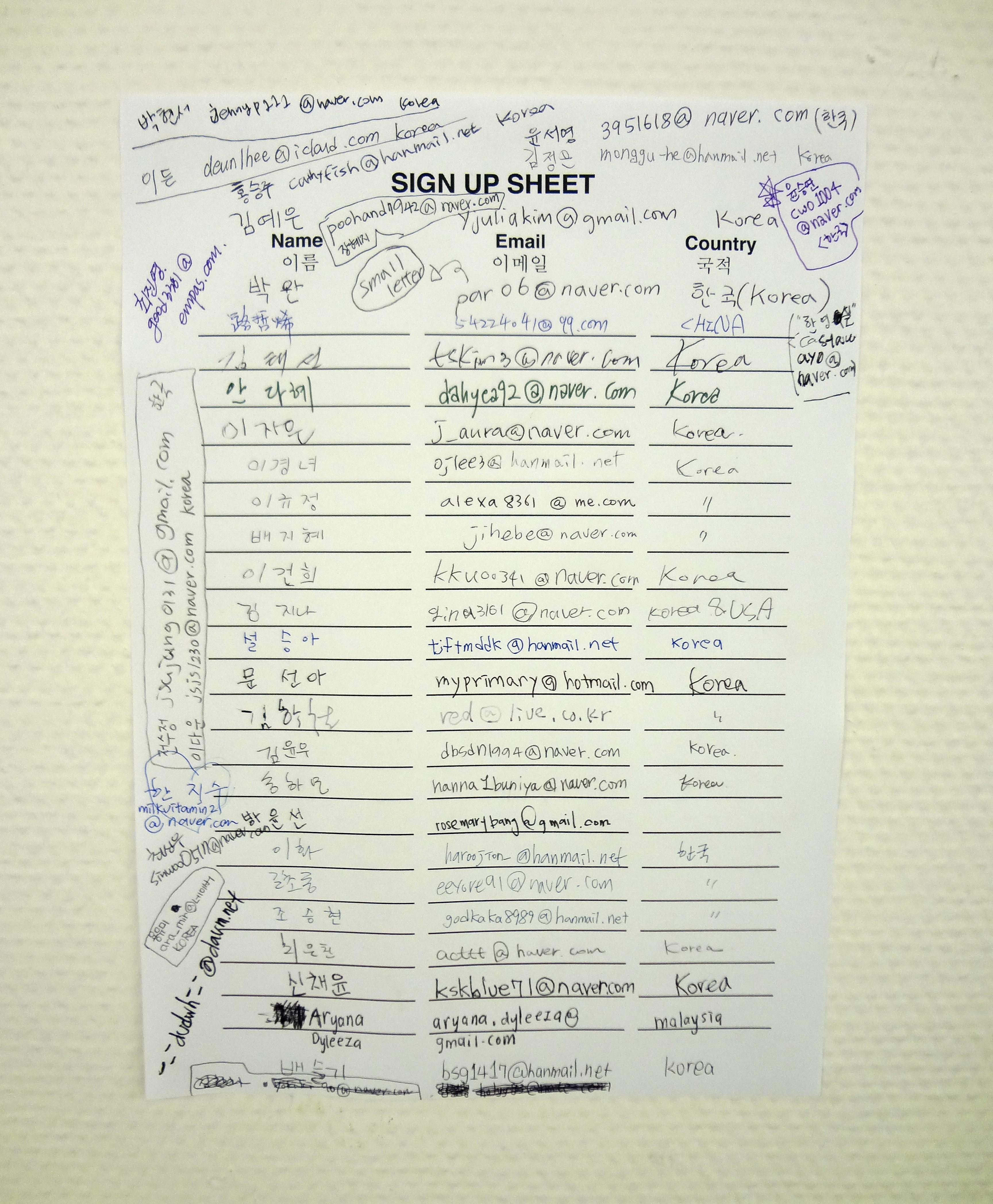
I was about midway through the hikes, and exhibited 18 soil samples, with 19 empty jars to show the ones I still have to hike. (As of this writing, I have hiked 27 mountains and nearly died from two.) More information to follow, and no, I don’t usually exhibit things that are not finished, but here I wanted to ask for future participation. I’m very happy that Seoulites seem interested in signing up (I posted a sign-up sheet beside the piece and so many emails were written on it.)

I... whoa! I'm speechless. Thanks, everyone!

I… whoa! I’m speechless. Thanks, everyone!

2. The Smell Wall

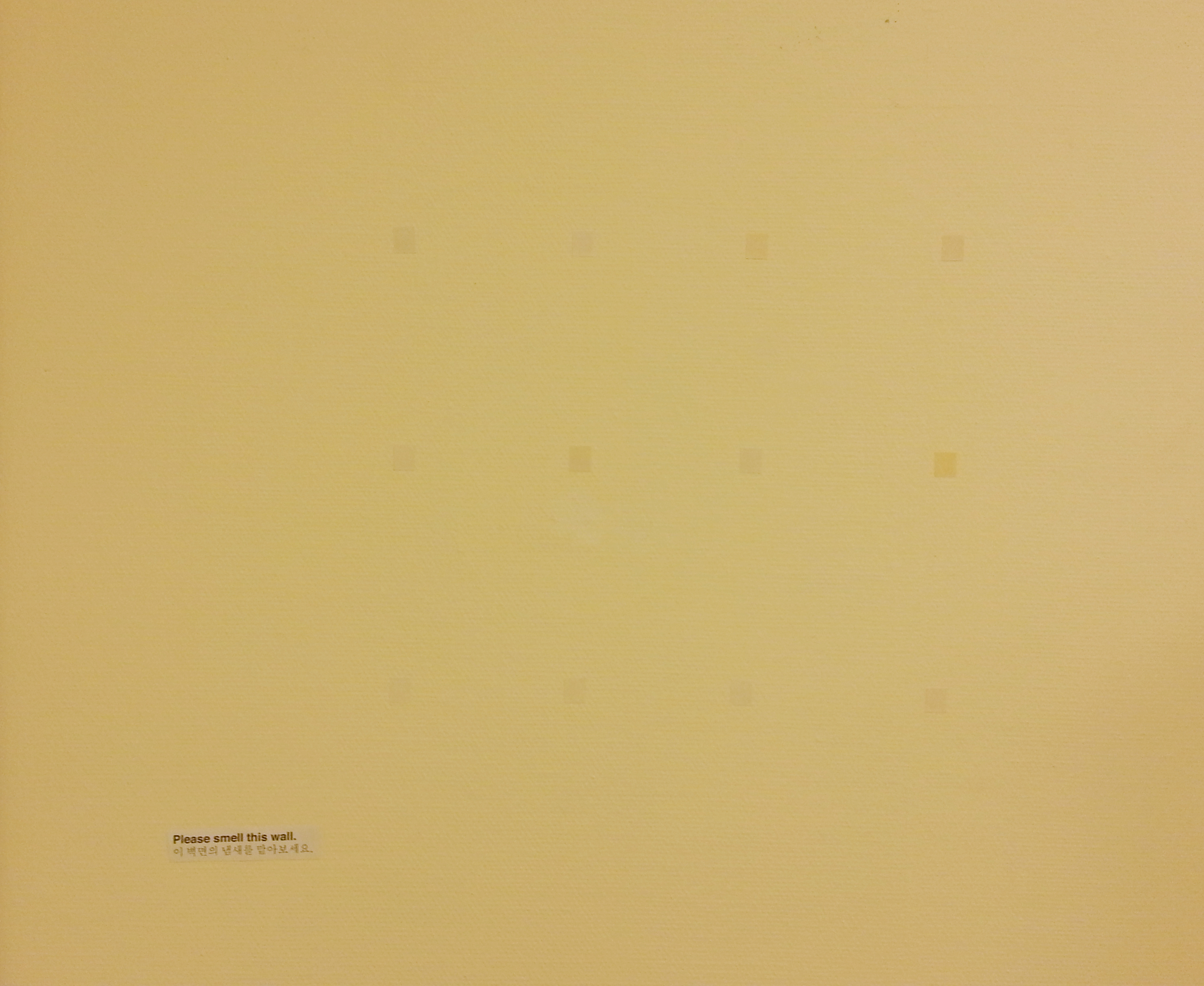
I glued twelve squares of different smells on the wall and invited people to smell them. It looked almost invisible, but I suppose that’s the point.

Can you see twelve squares?

Can you see twelve squares?

3. Mondrian Hopscotch II

I made another interactive hopscotch board that would fit my exhibition space. I loved seeing people, especially children, jump on it. On May 5th, which was Children’s Day, it was incredibly rewarding seeing parents with their dressed-up children playing with it. Aww!

Cutie on the board!

Cutie on the board!

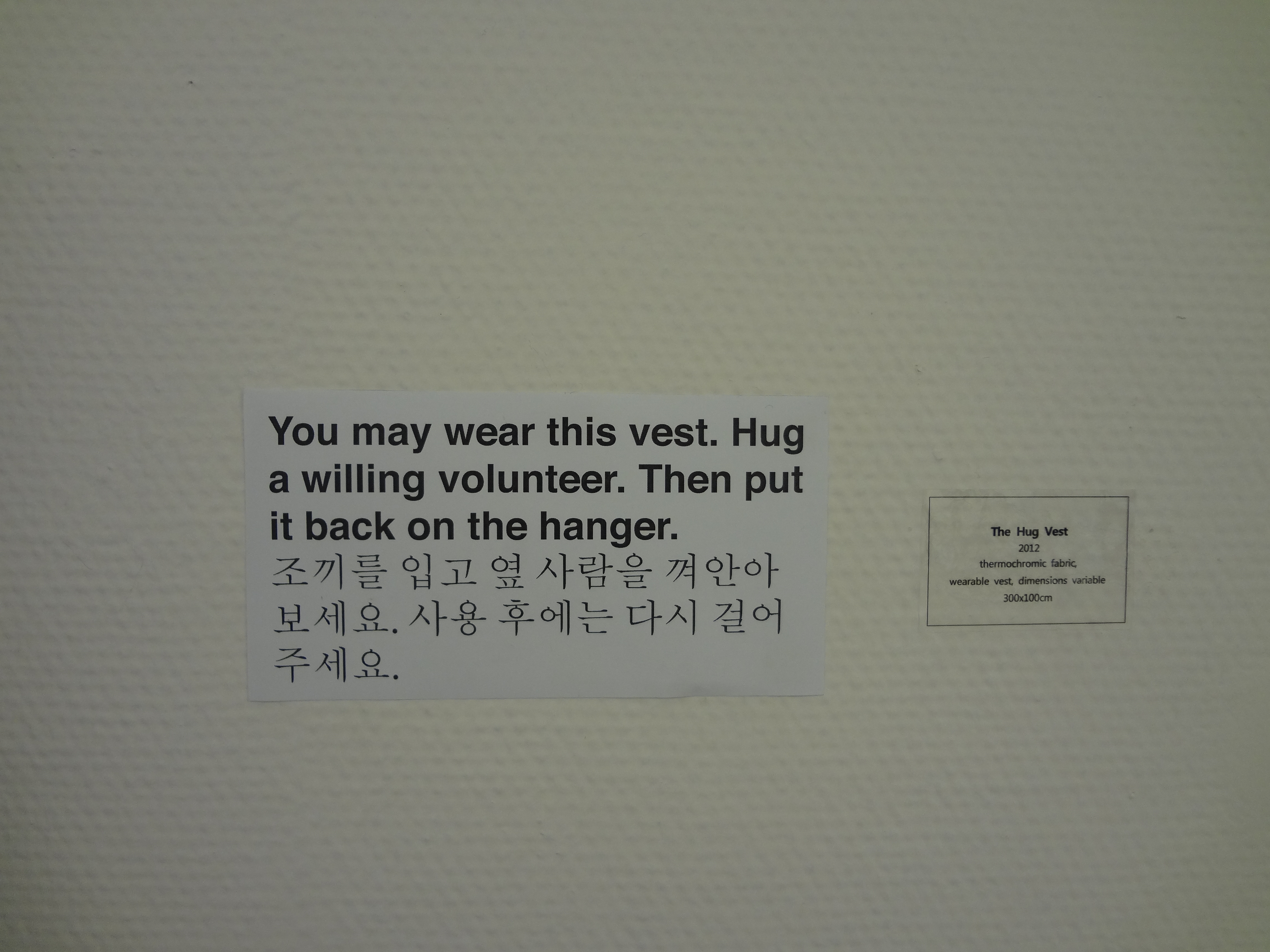
It’s quite fun having to write down instructions for every piece.

Art with instructions.

Art with instructions.

4. The Hug Vest

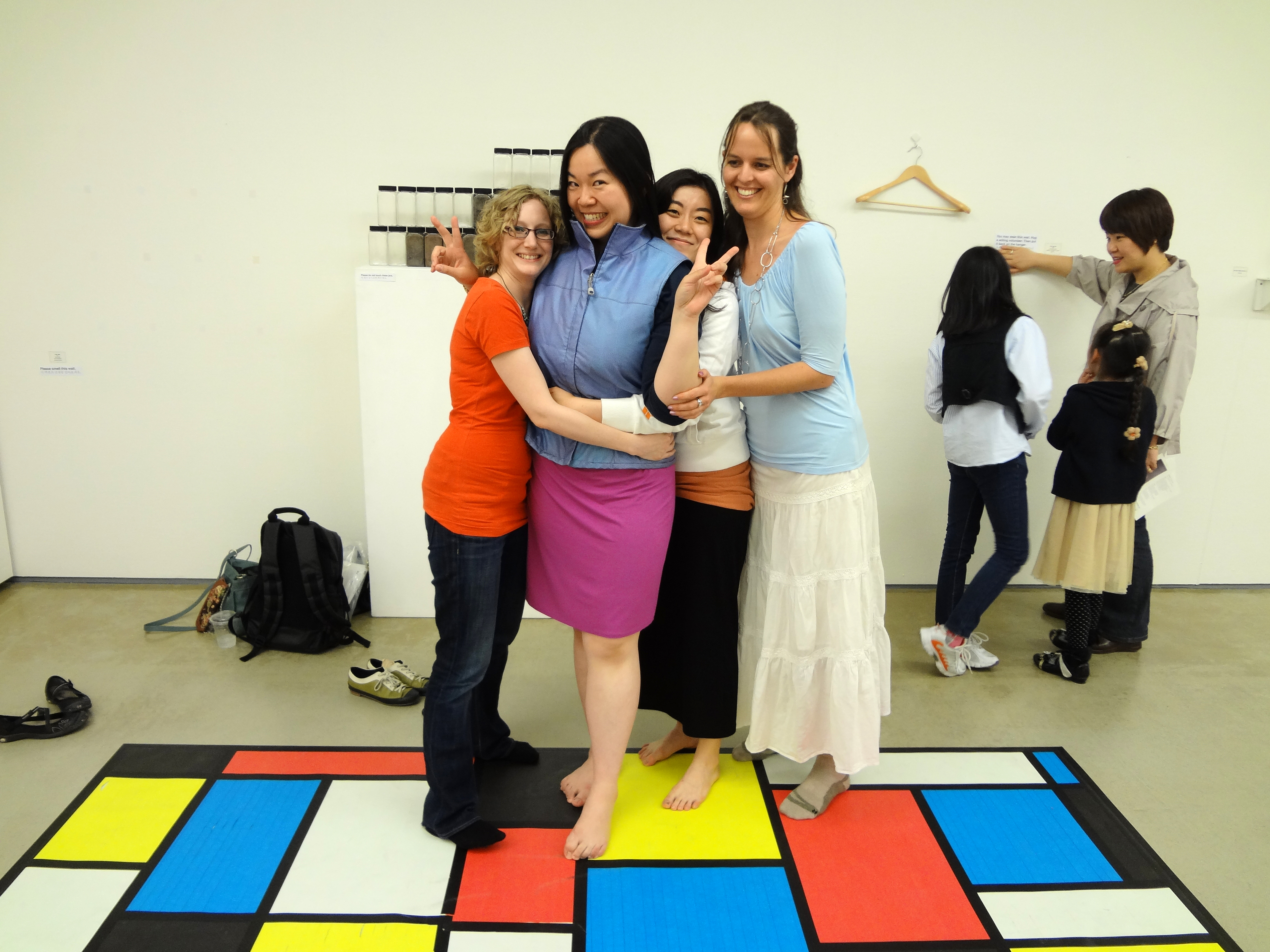
This is a vest made of thermochromic fabric that changes from purple to blue when you touch it. This feels a bit vintage to me now, since this was designed during my grad school years. However, people always get a kick out of seeing it change when it’s touched. Oh, the history this vest has had—from the nights in SVA IxD, to the conferences and lectures, to me using it on the streets of New York as protection from the cold that week when I was freezing and desperate, to being exhibited here in Seoul. This never gets old.

Hugging! With my friends Hyomin and Amy in the background.

Hugging! With my friends Hyomin and Amy in the background.

My friends were laughing at the phrase “willing volunteer.”

"Willing" being the operative word.

“Willing” being the operative word.

Very happy to have my friends there:

Group hug!

Group hug!

Thanks for coming, unni! <3

Thanks for coming, unni! ❤

Fun times. Now back to work.

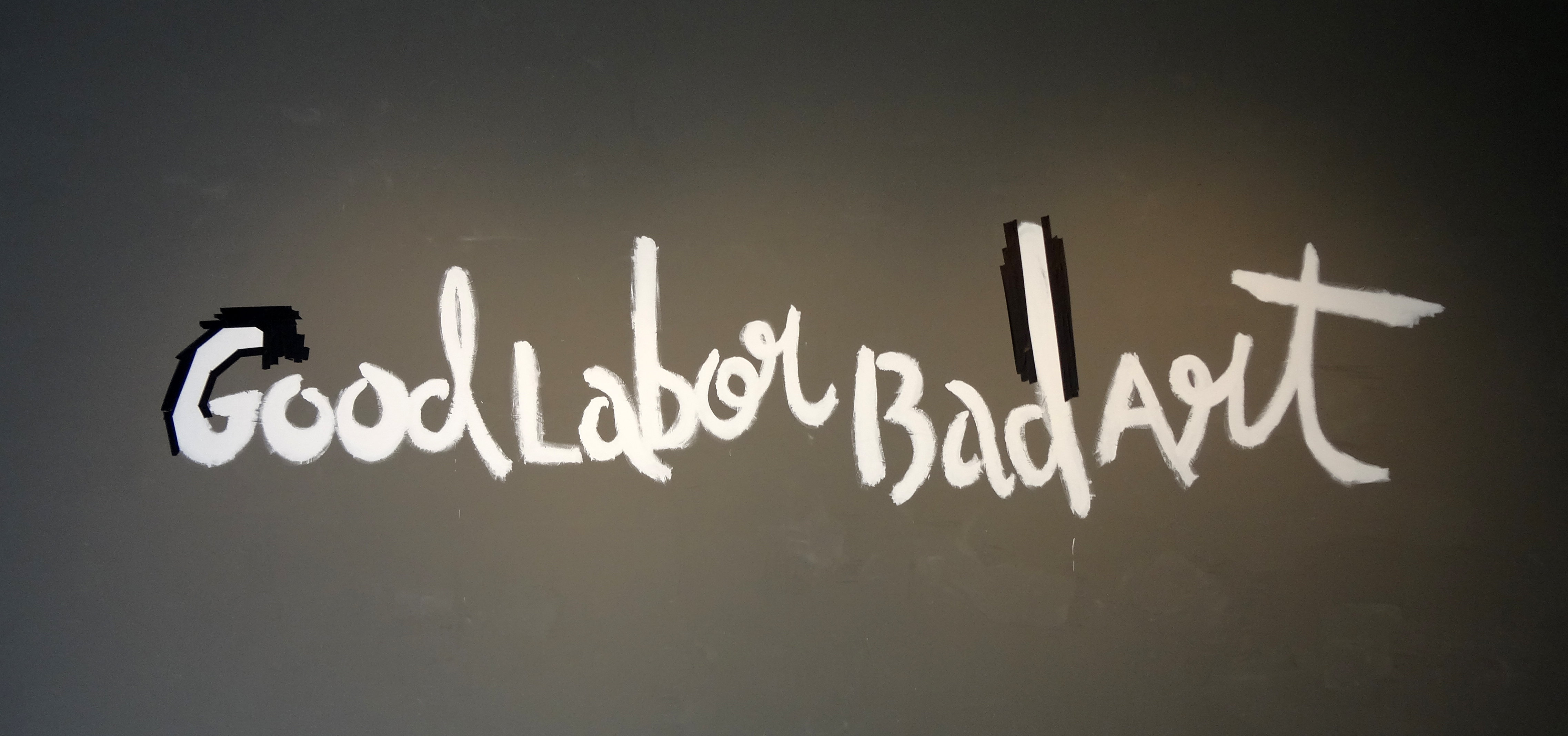
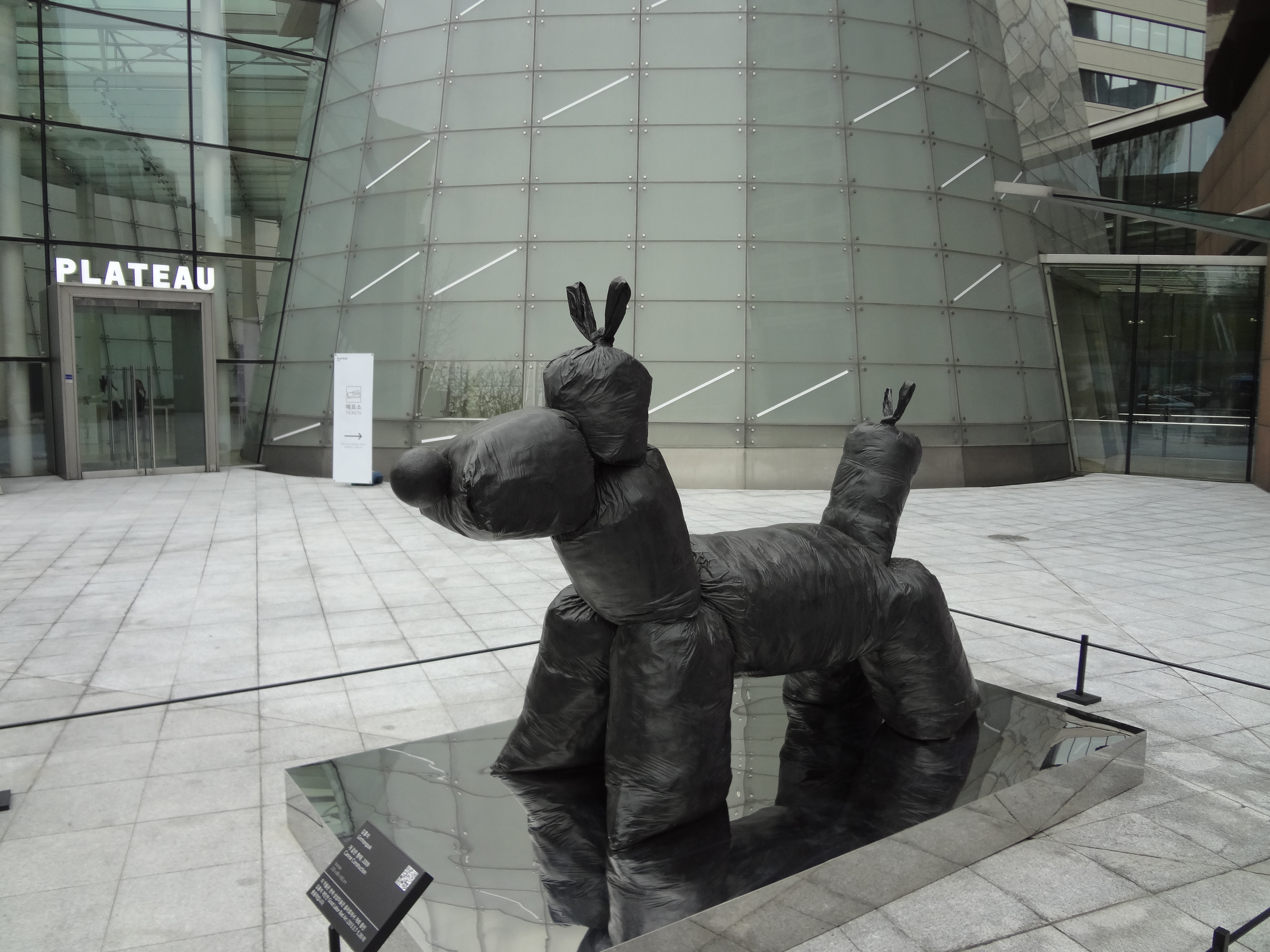
To add to my growing list of favorite Korean artists (Kim Beom, Choi Jeong Hwa, Lee Ufan) is Gimhongsok, whose exhibition, “Good Labor Bad Art”, is in Samsung’s Plateau Gallery.

GoodLaborBadArt

Canine Construction, which appears to be made of garbage bags yet upon close inspection is actually made of bronze, is wonderfully deceptive.

Canine Construction

Canine Construction

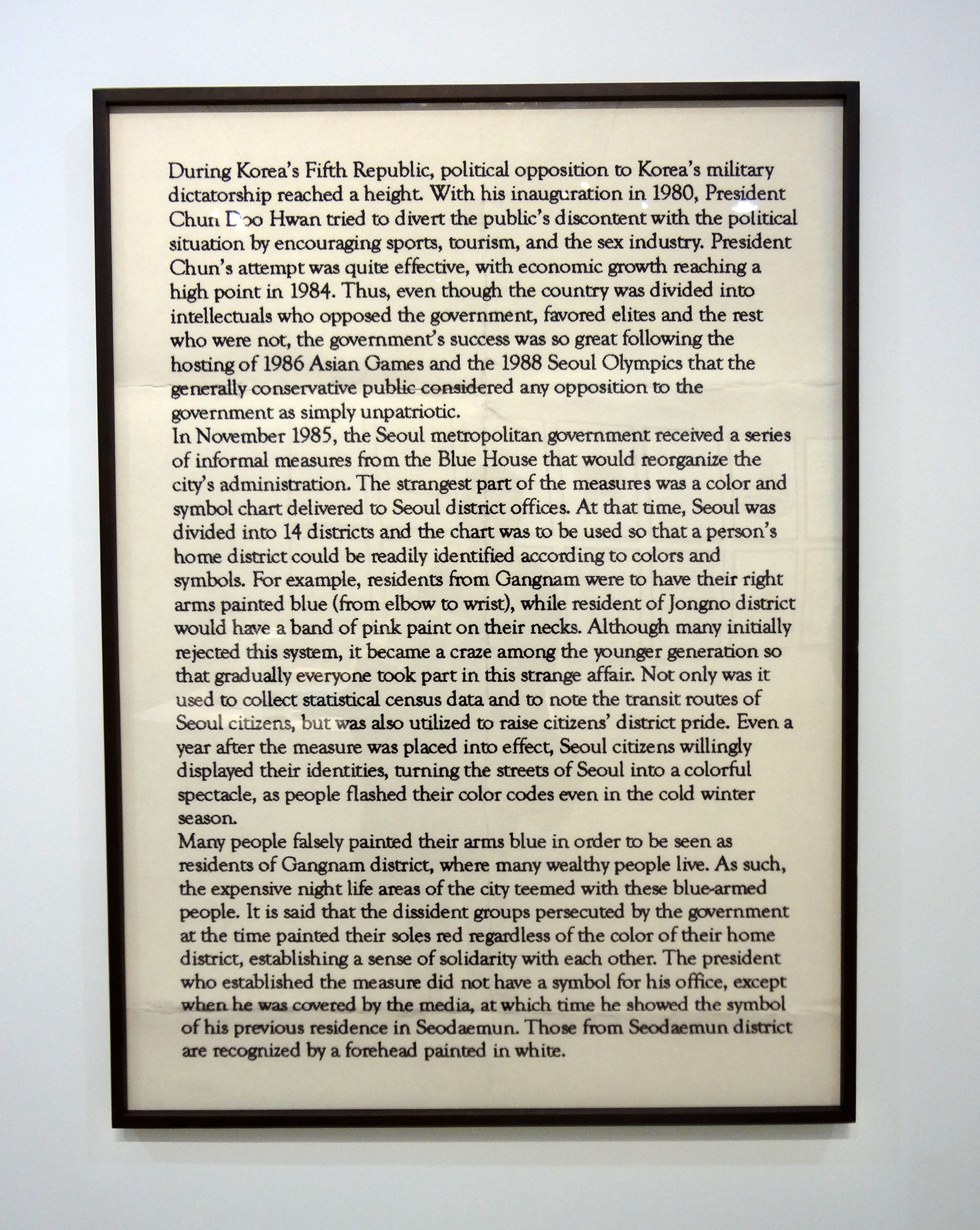
I also enjoyed this piece that my friend Kate pointed out (hurray for friends who tell us not to rush and encourage us to pause and read!) this speculative piece that reminds me a bit of Italo Calvino’s Invisible Cities. (Click on the photo to enlarge the text.)

GimhongsukGangnamsmall

The exhibition runs until May 26th. Go, go, go!