Archive

Tag Archives: climate change

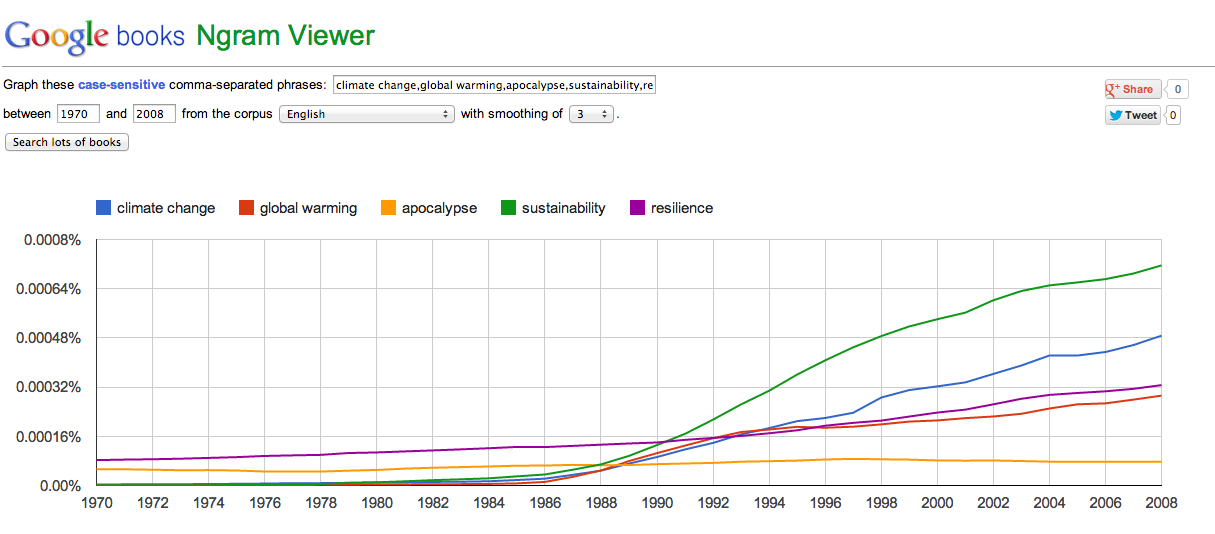
This morning, just for kicks, I decided to do an n-gram analysis of the main words I encounter or use in my project: climate change, global warming, apocalypse, sustainability, and resilience using Google Books Ngram Viewer. Here is a screenshot:

Screen Shot 2013-09-23 at 12.30.31 PM I think the conclusions I can make that are useful to my project are:
1. “Climate change” is more often used than “global warming.”
2. “Apocalypse” is pretty much used with the same frequency as before. (I guess that’s a great thing for this project?)
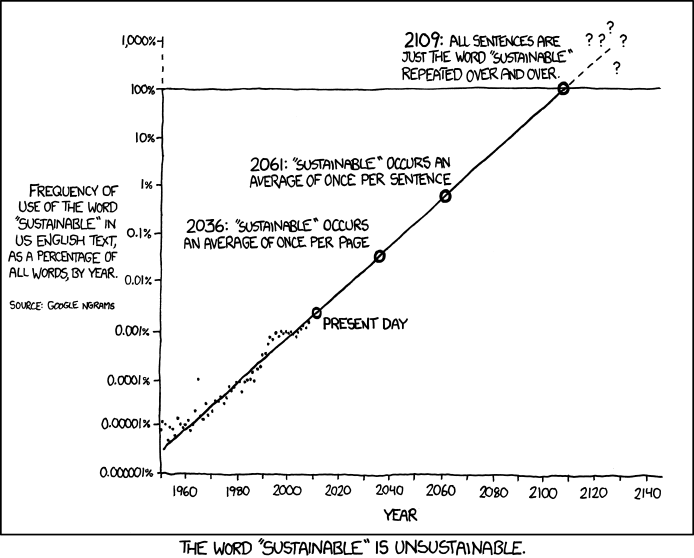
3. We’ve been using “sustainability” a lot. I’ve deliberately avoided using this word unless I absolutely had to, because, well, I feel that it’s overused to the point that it’s losing its meaning to me. This reminds me of this graph by xkcd:

Image copyright by xkcd

Image copyright by xkcd

(Original version here.)

I’m a bit sad that this tool only gives me results until 2008. But anyhow, that was an enlightening break before another day of designing, picking typefaces, and writing art/design statements.

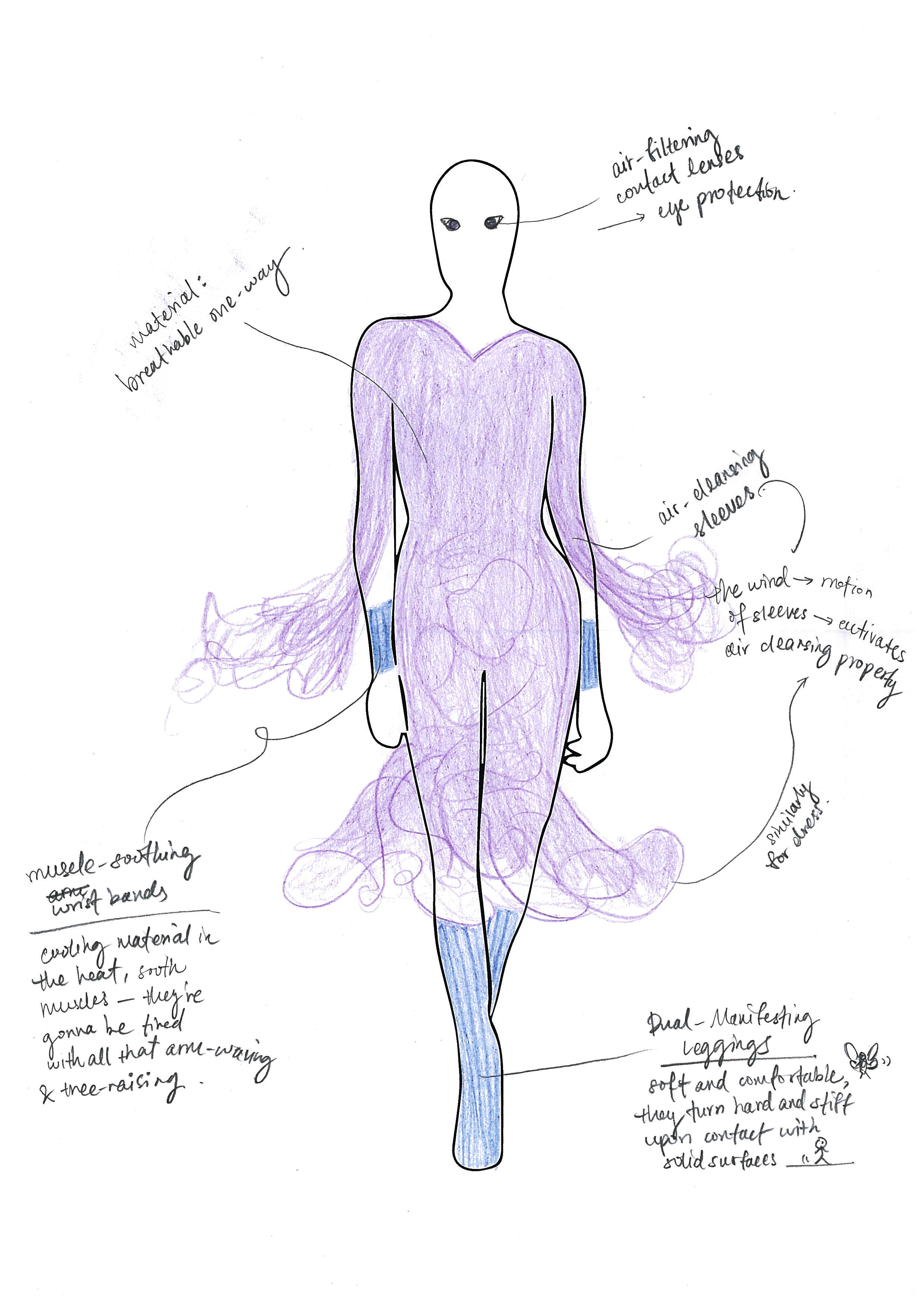
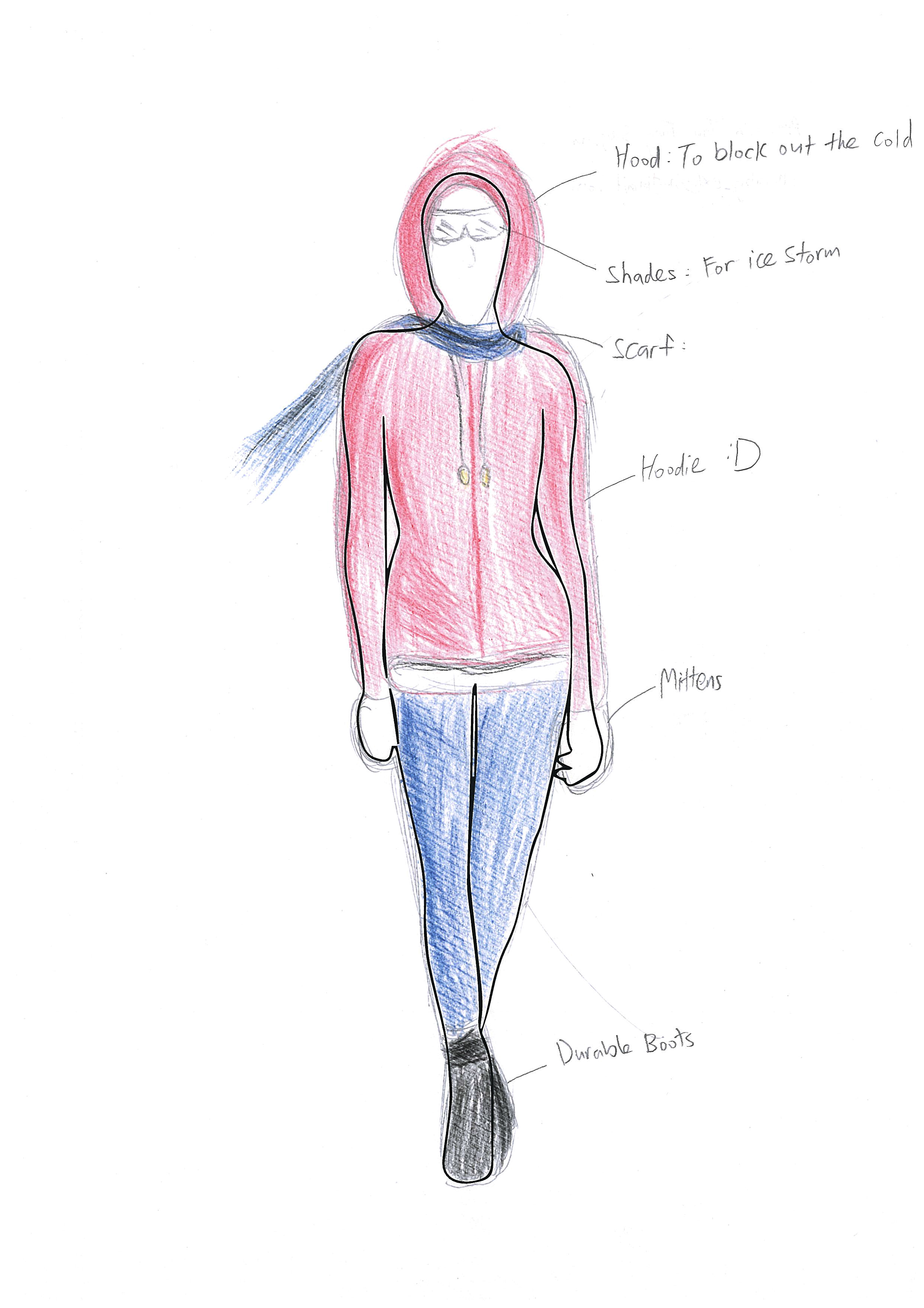
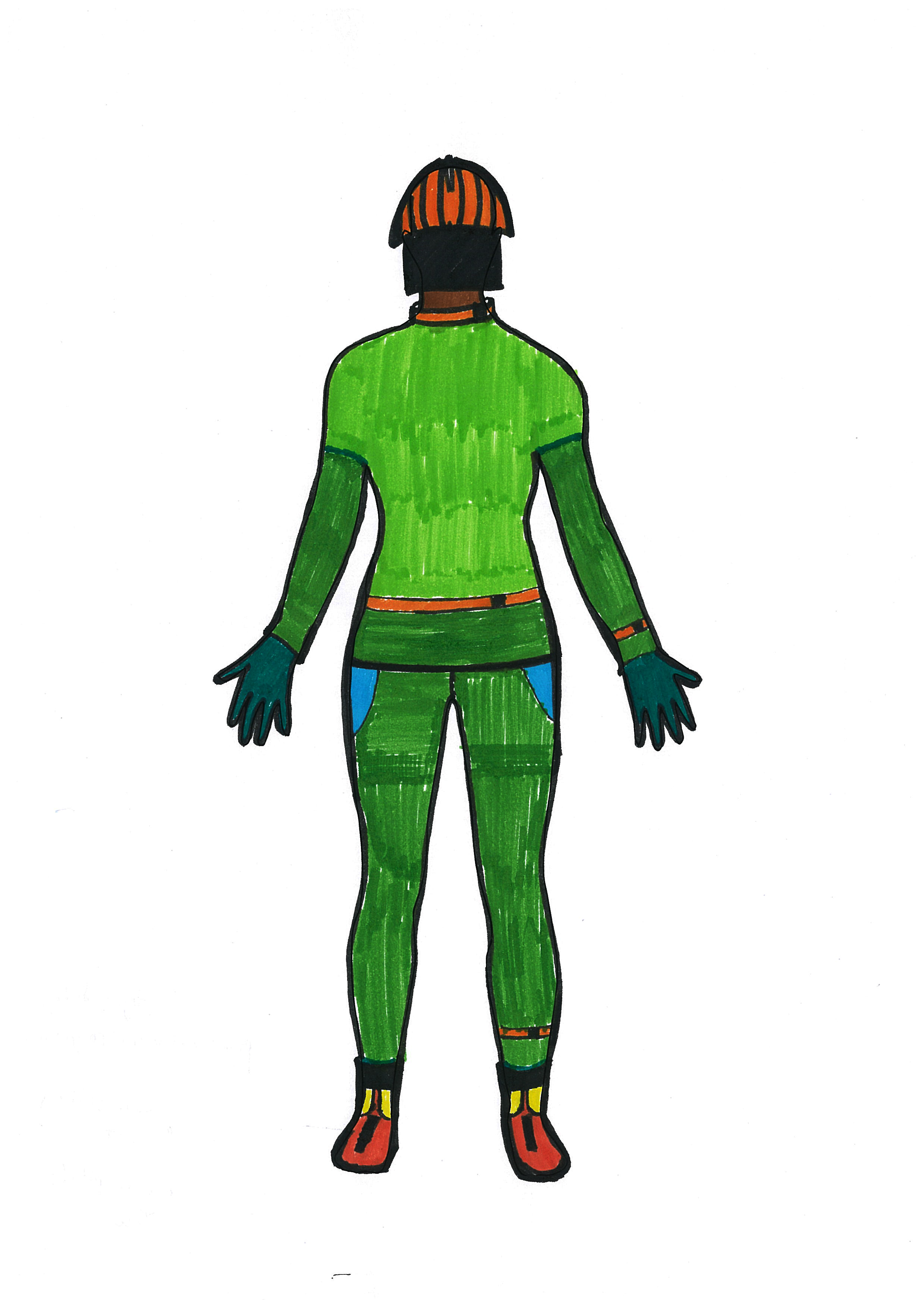
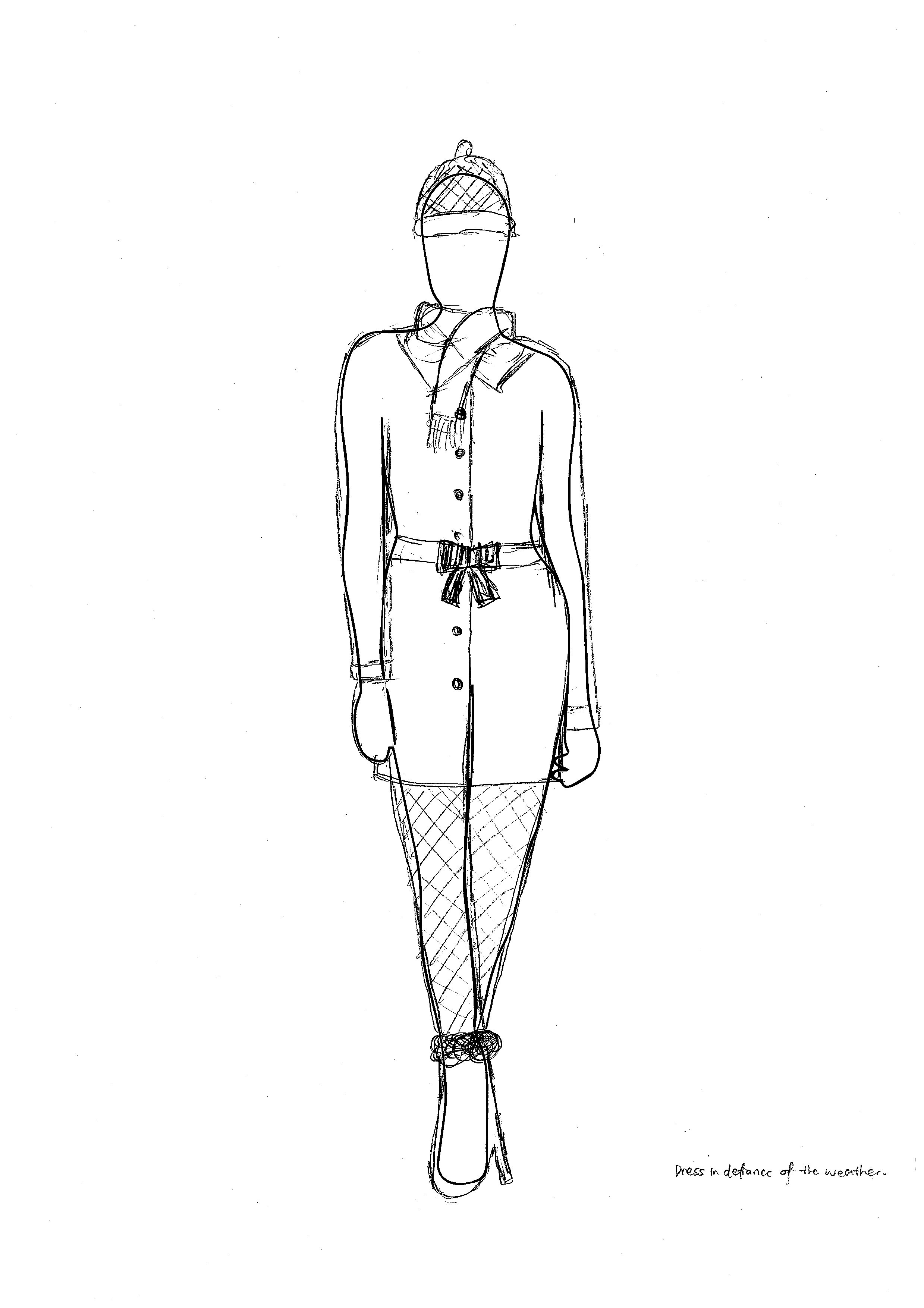
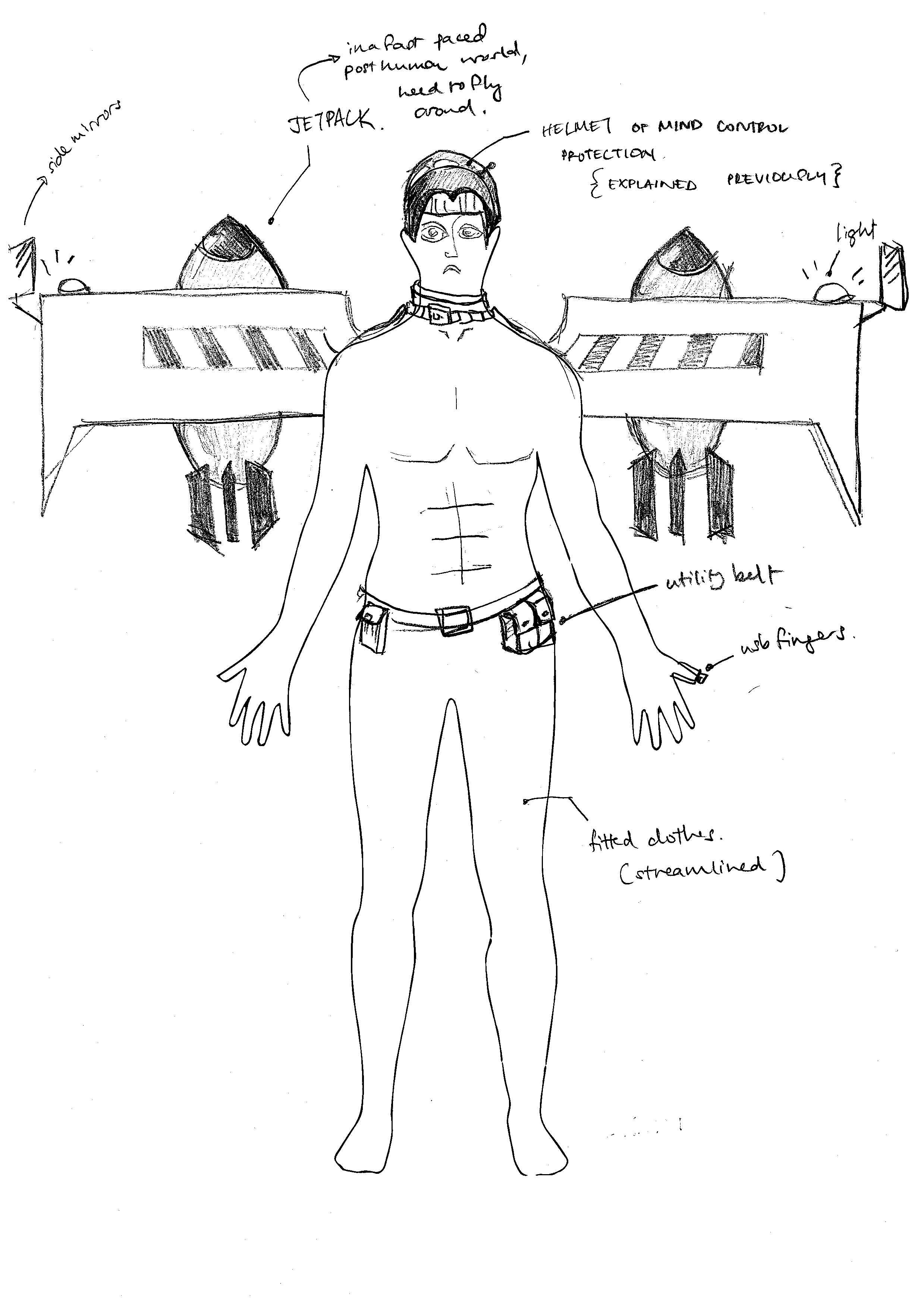
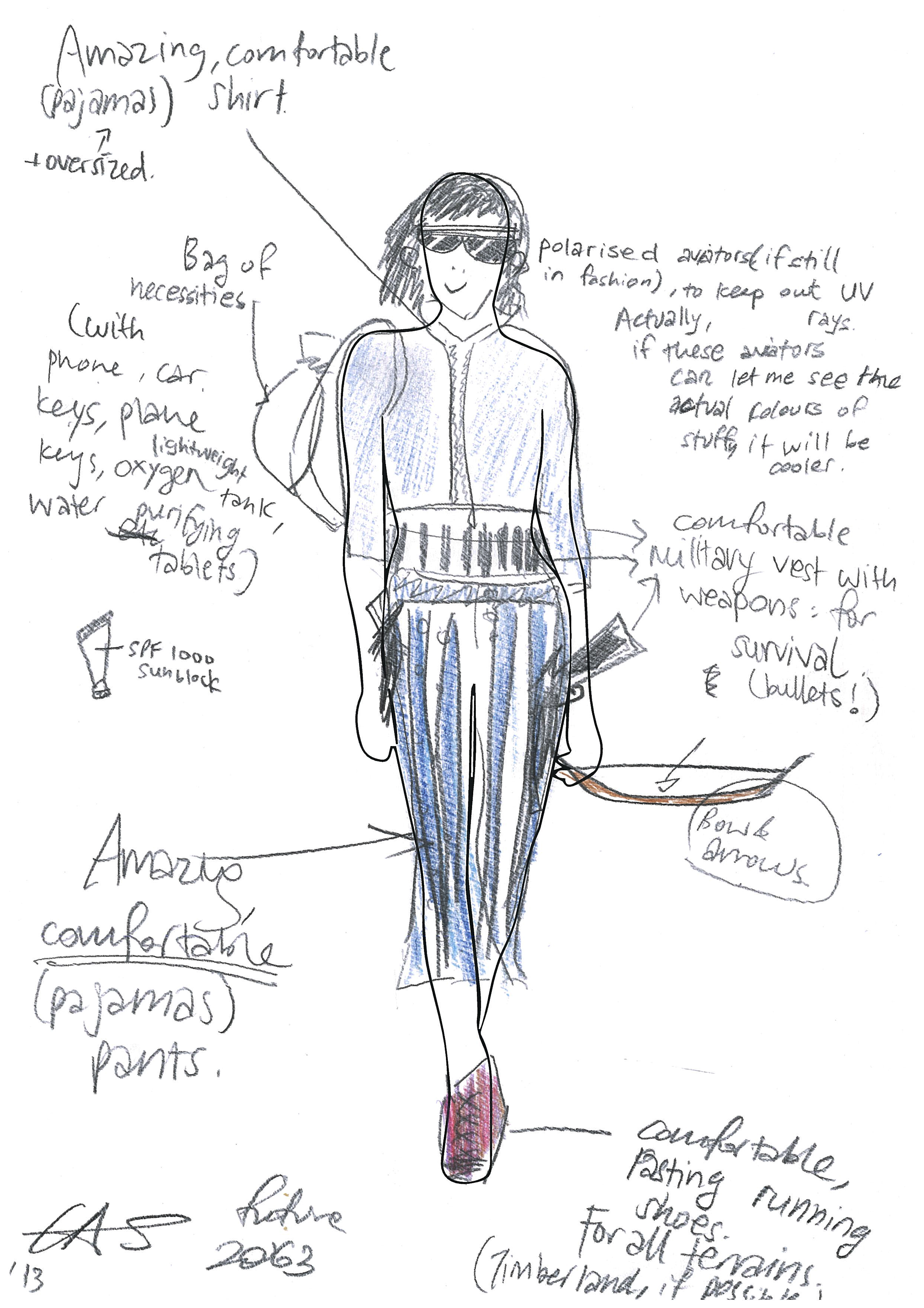
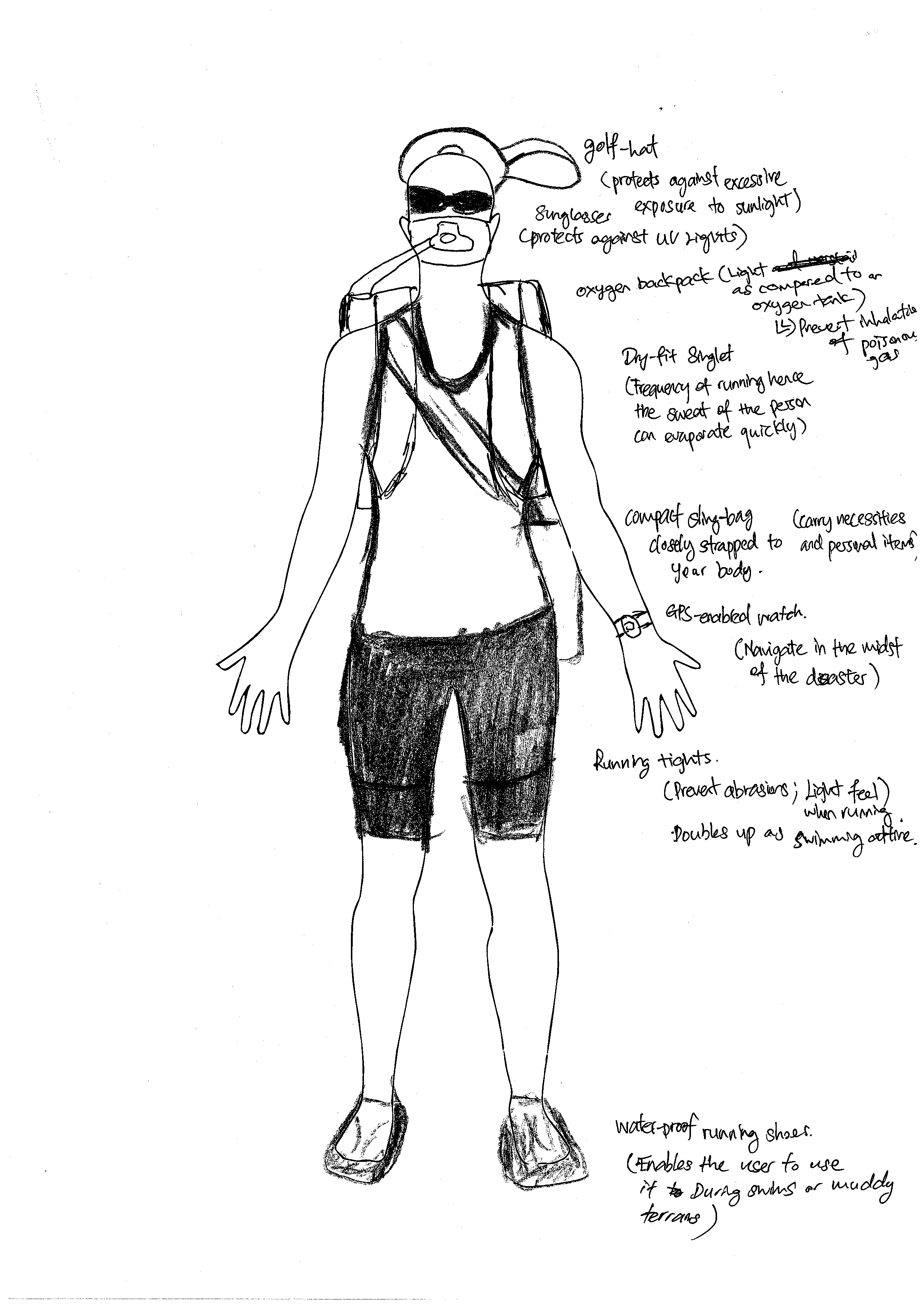
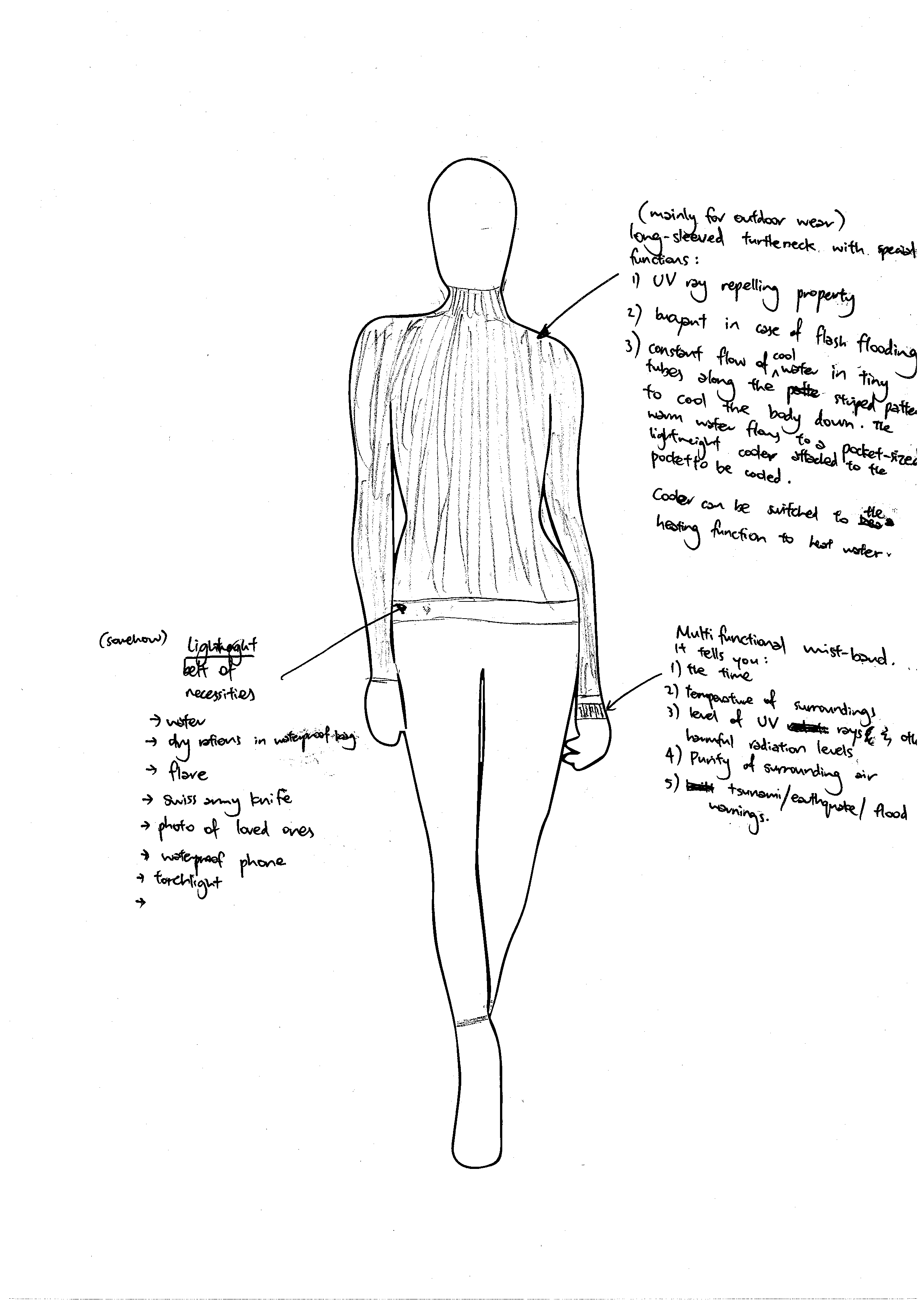
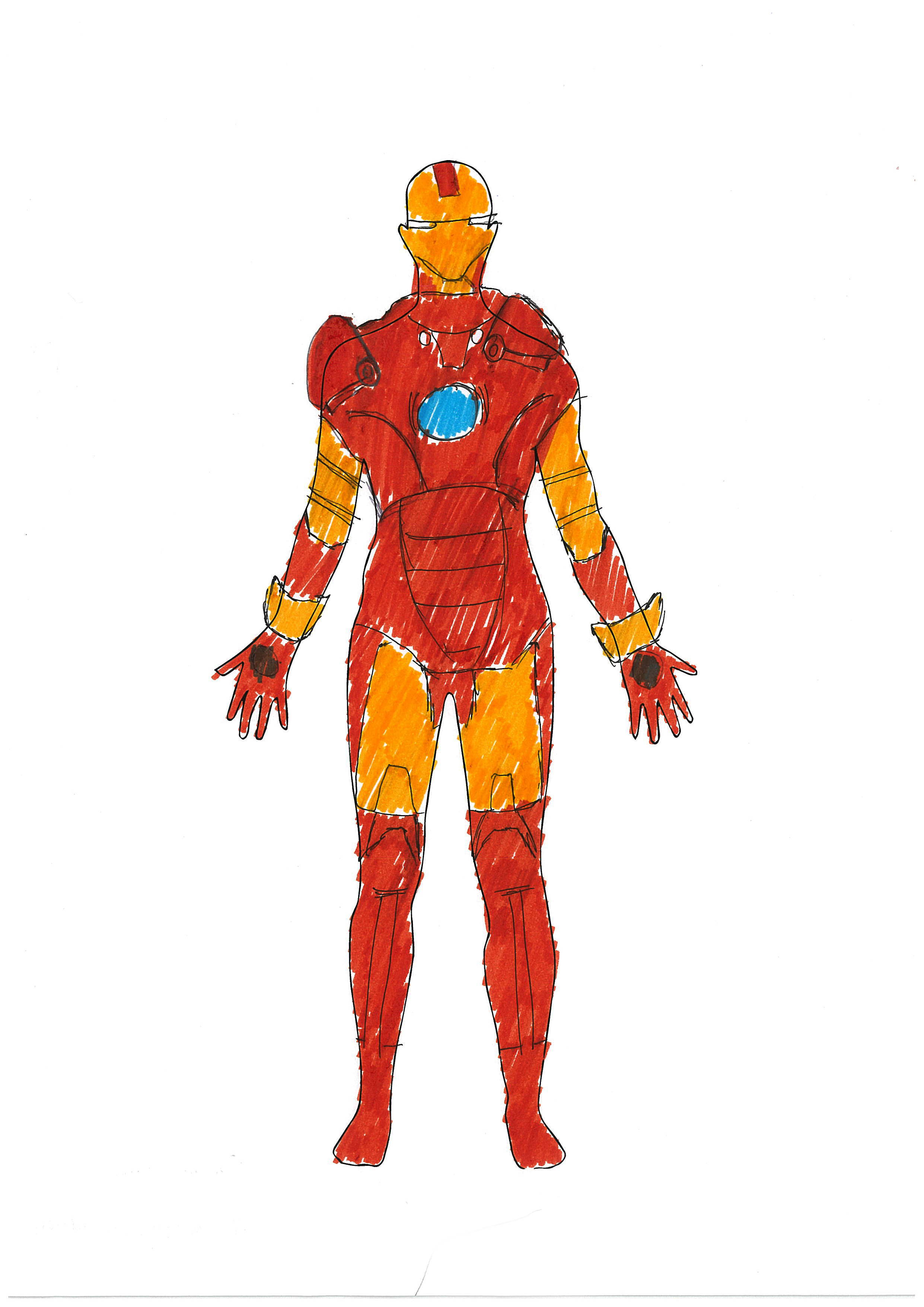
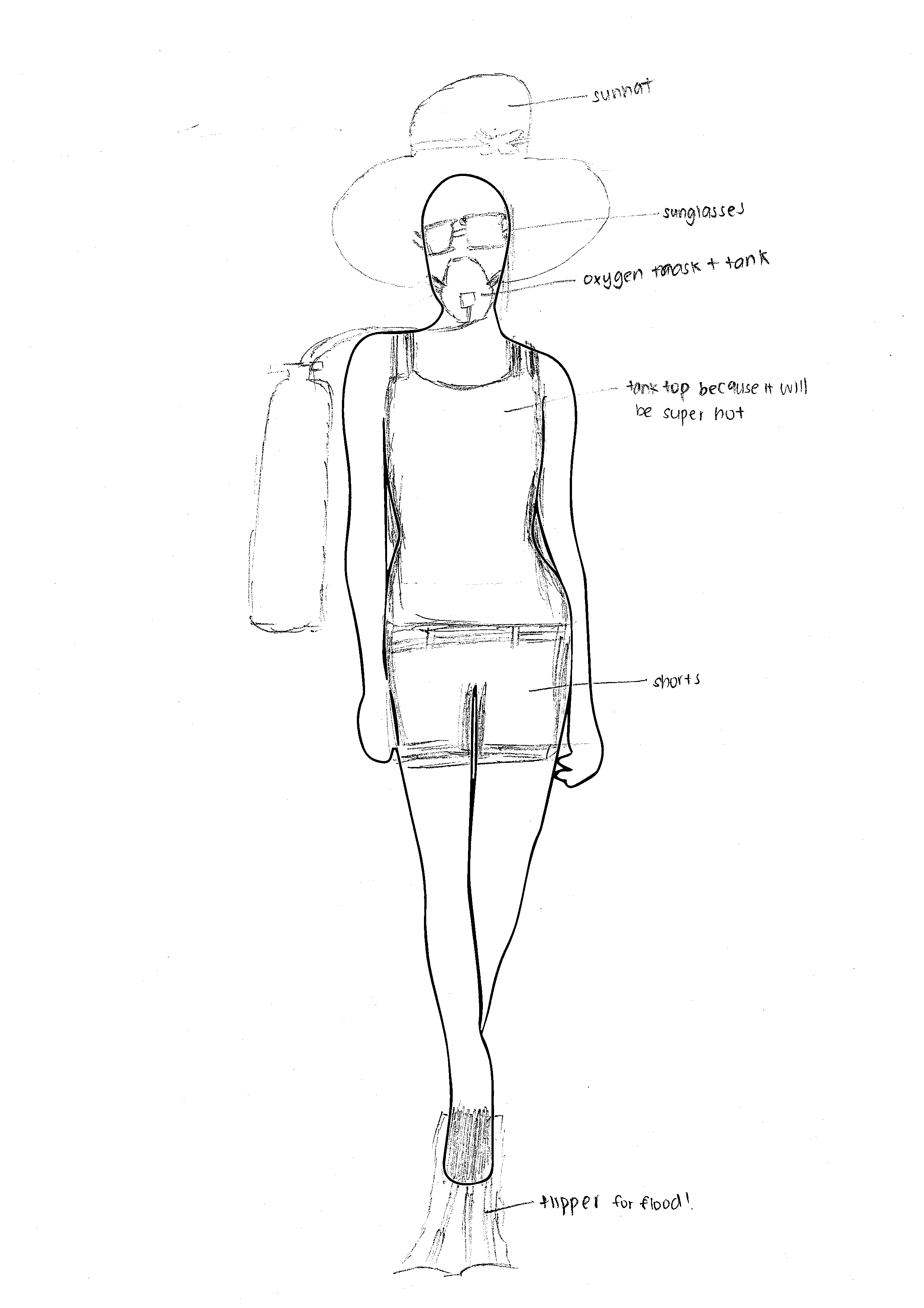
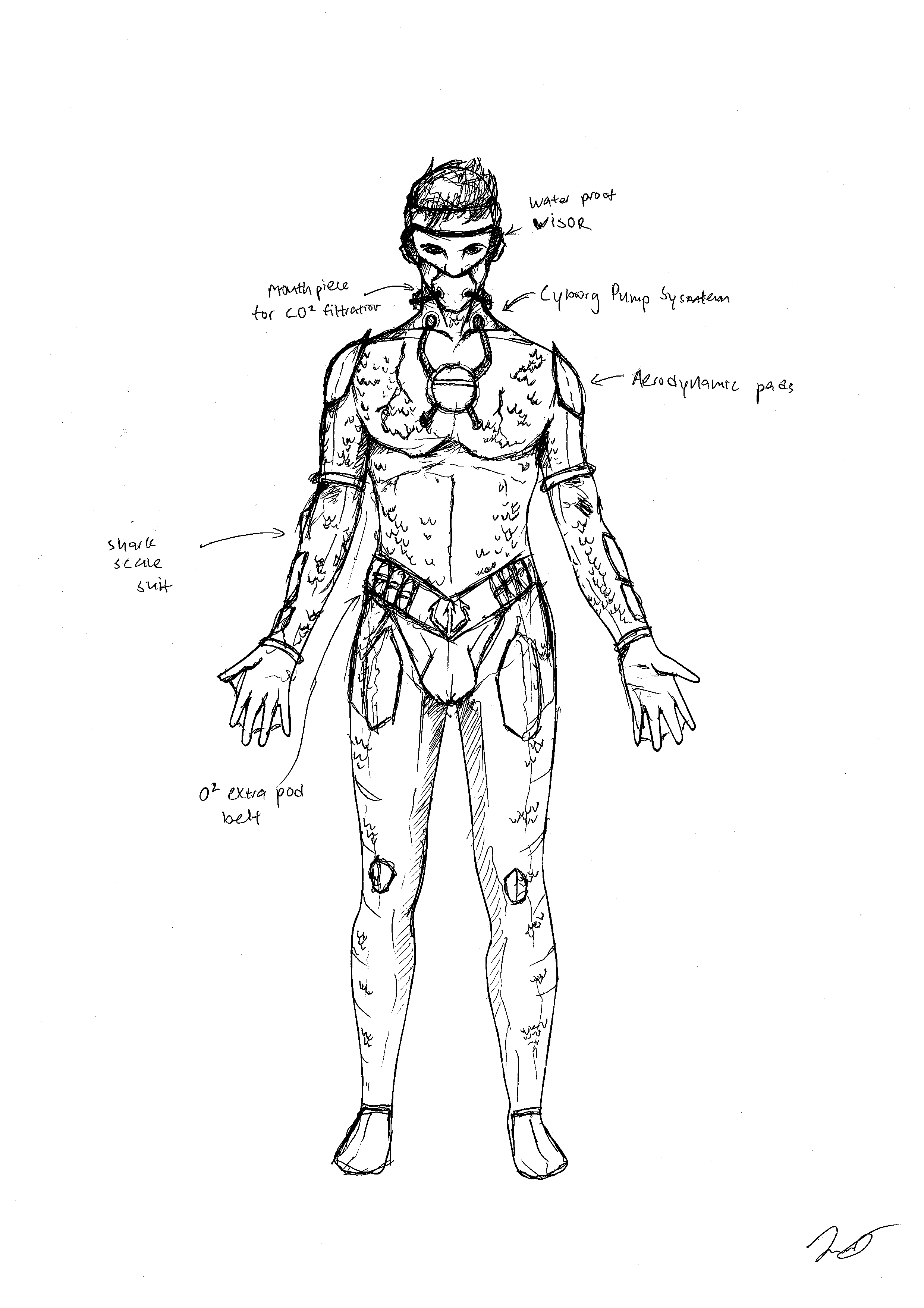
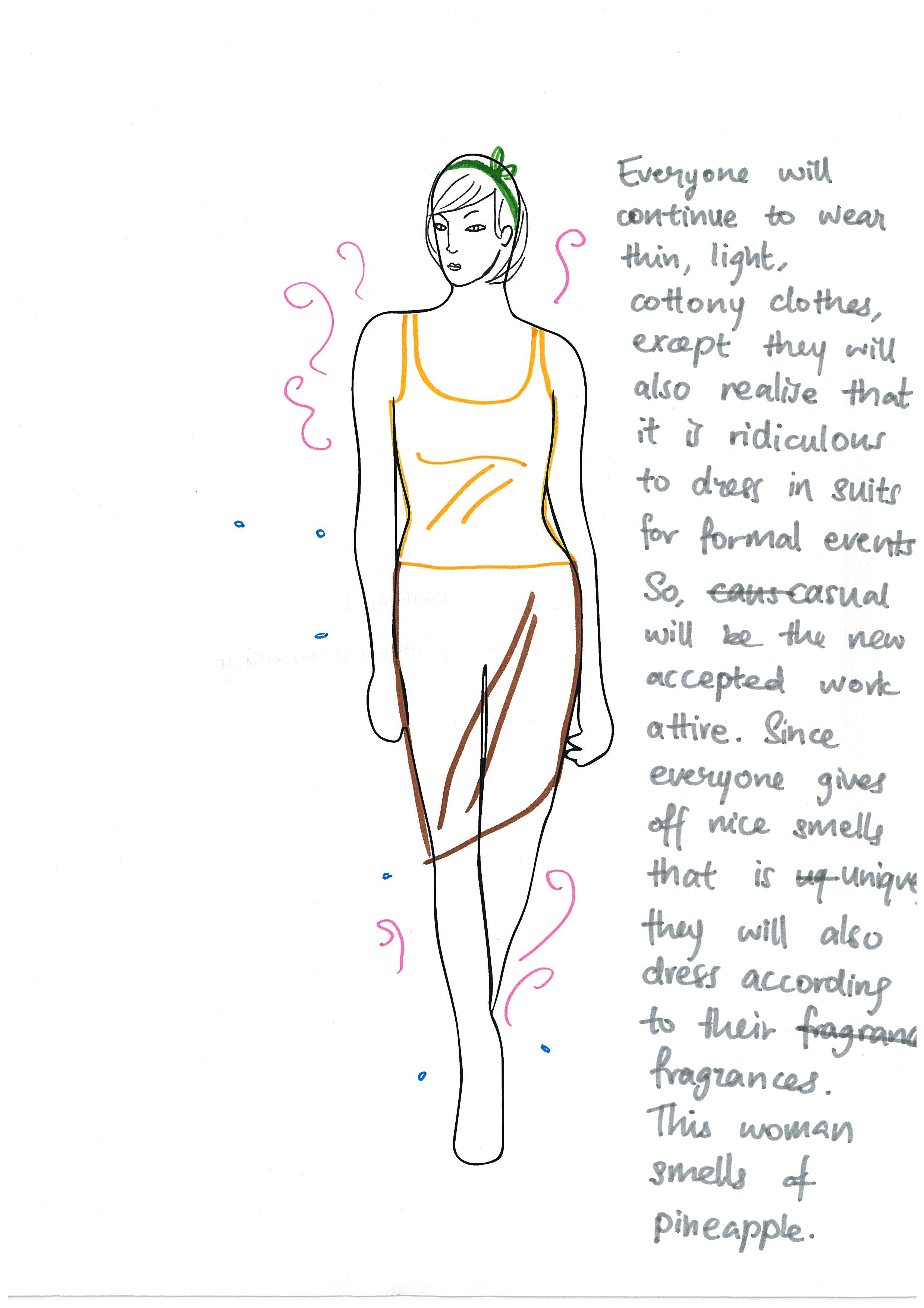
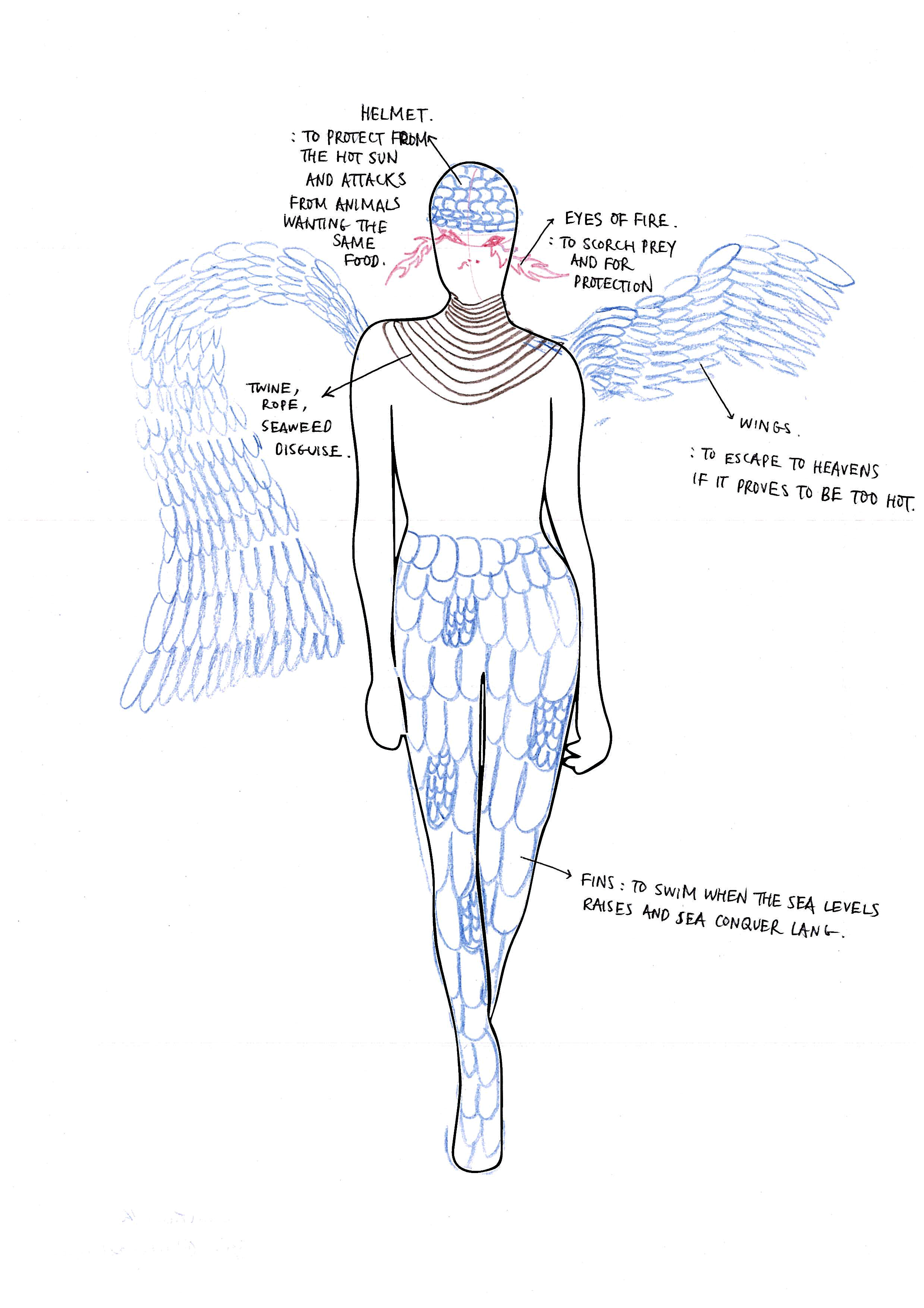
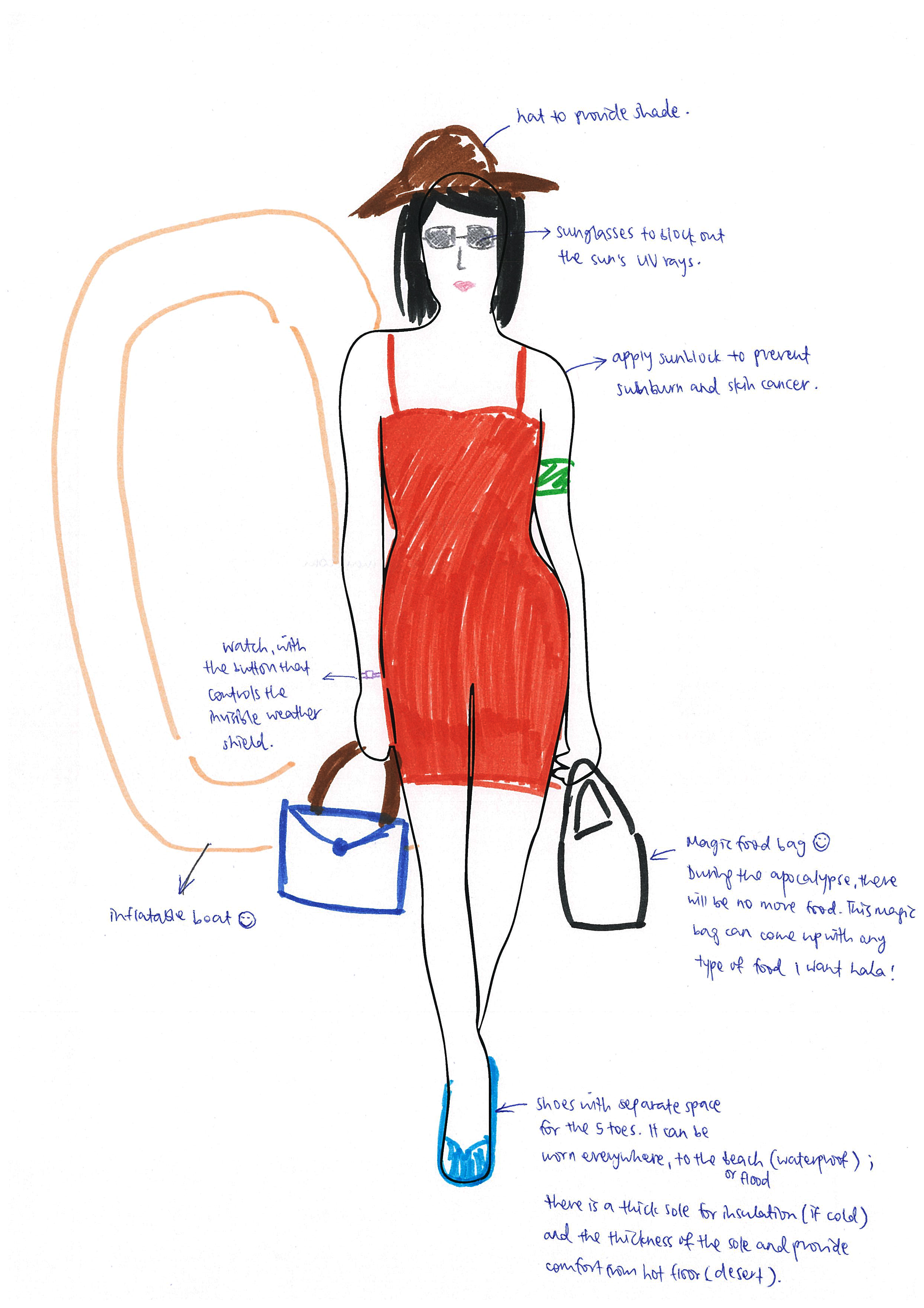
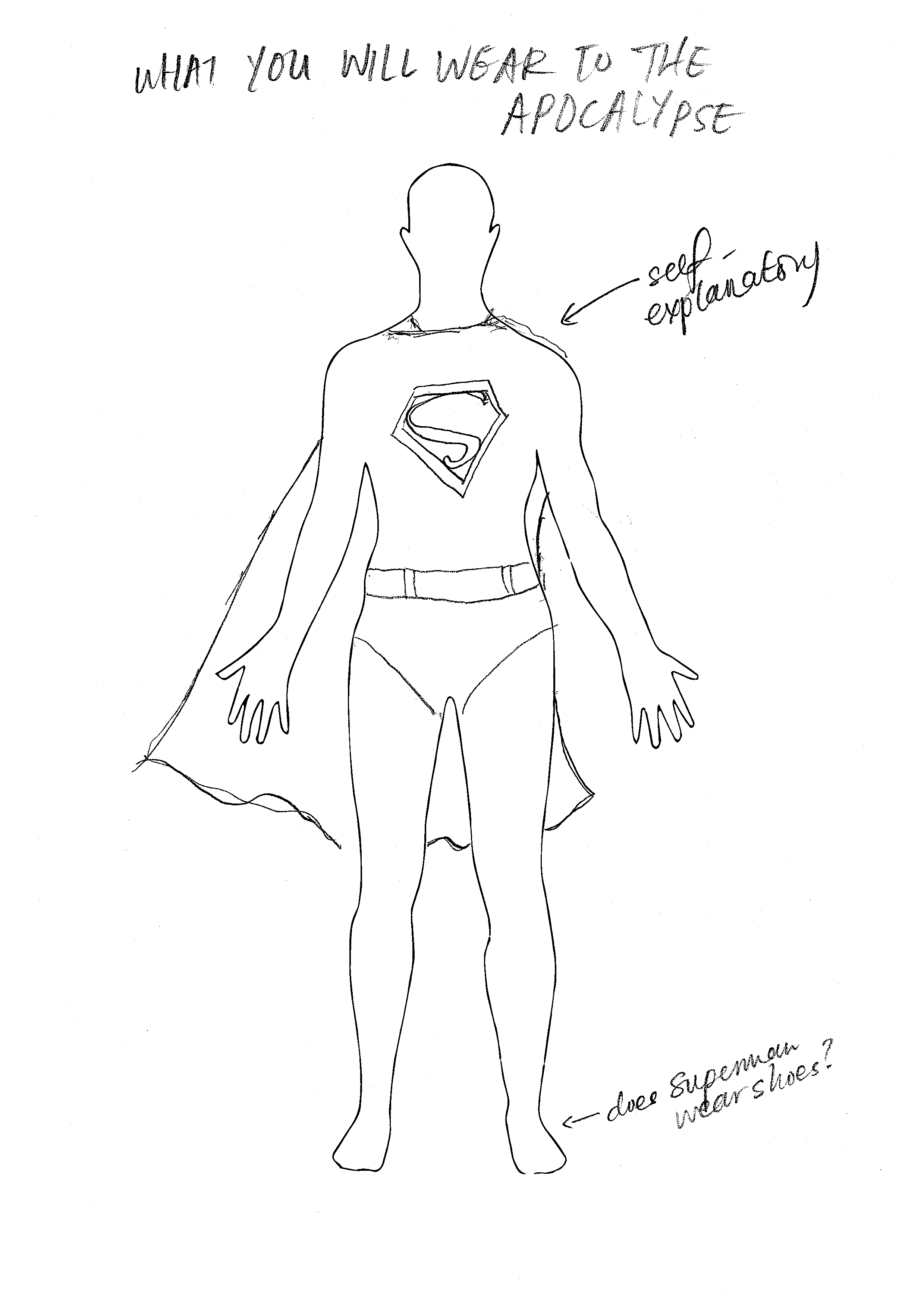
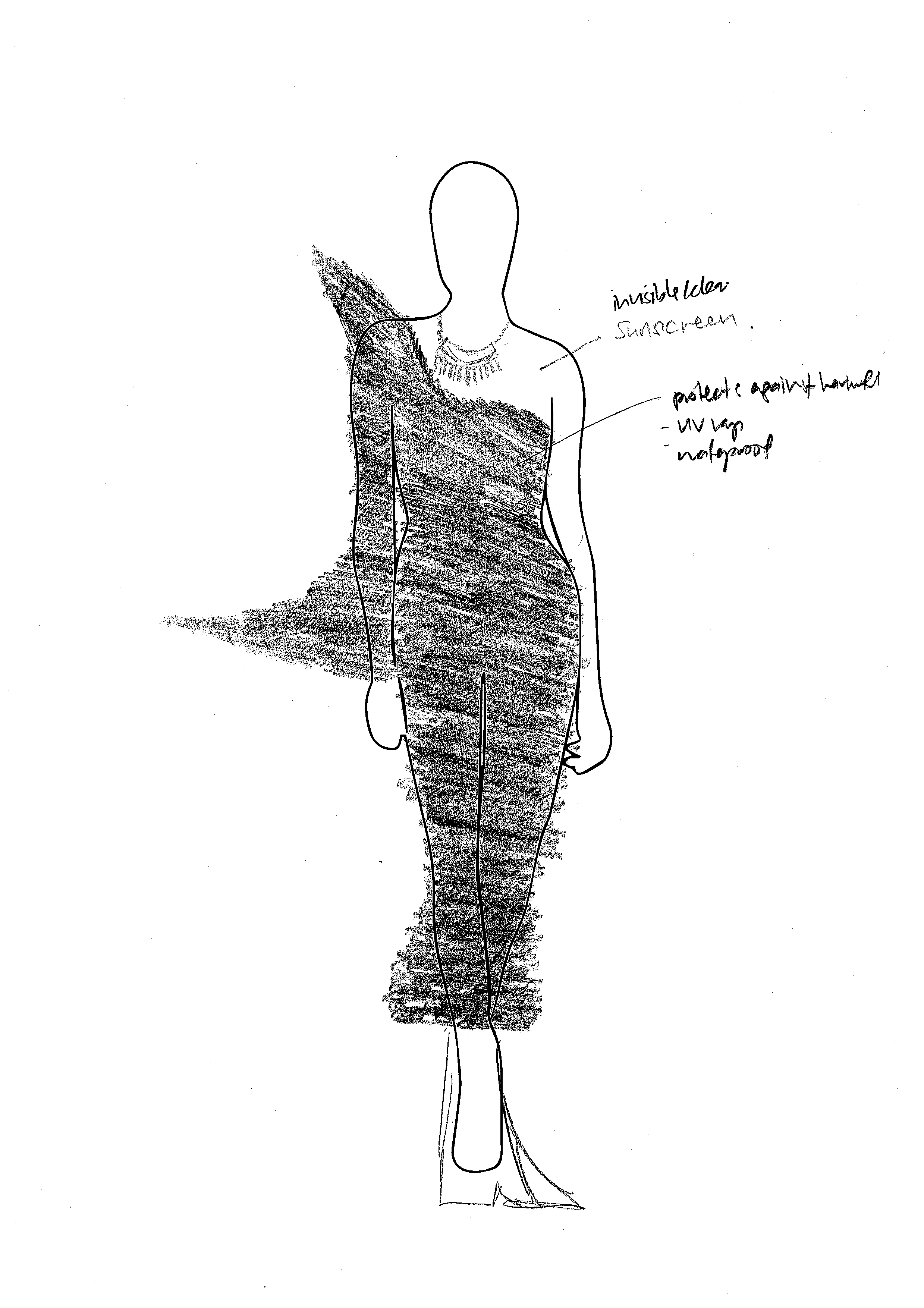
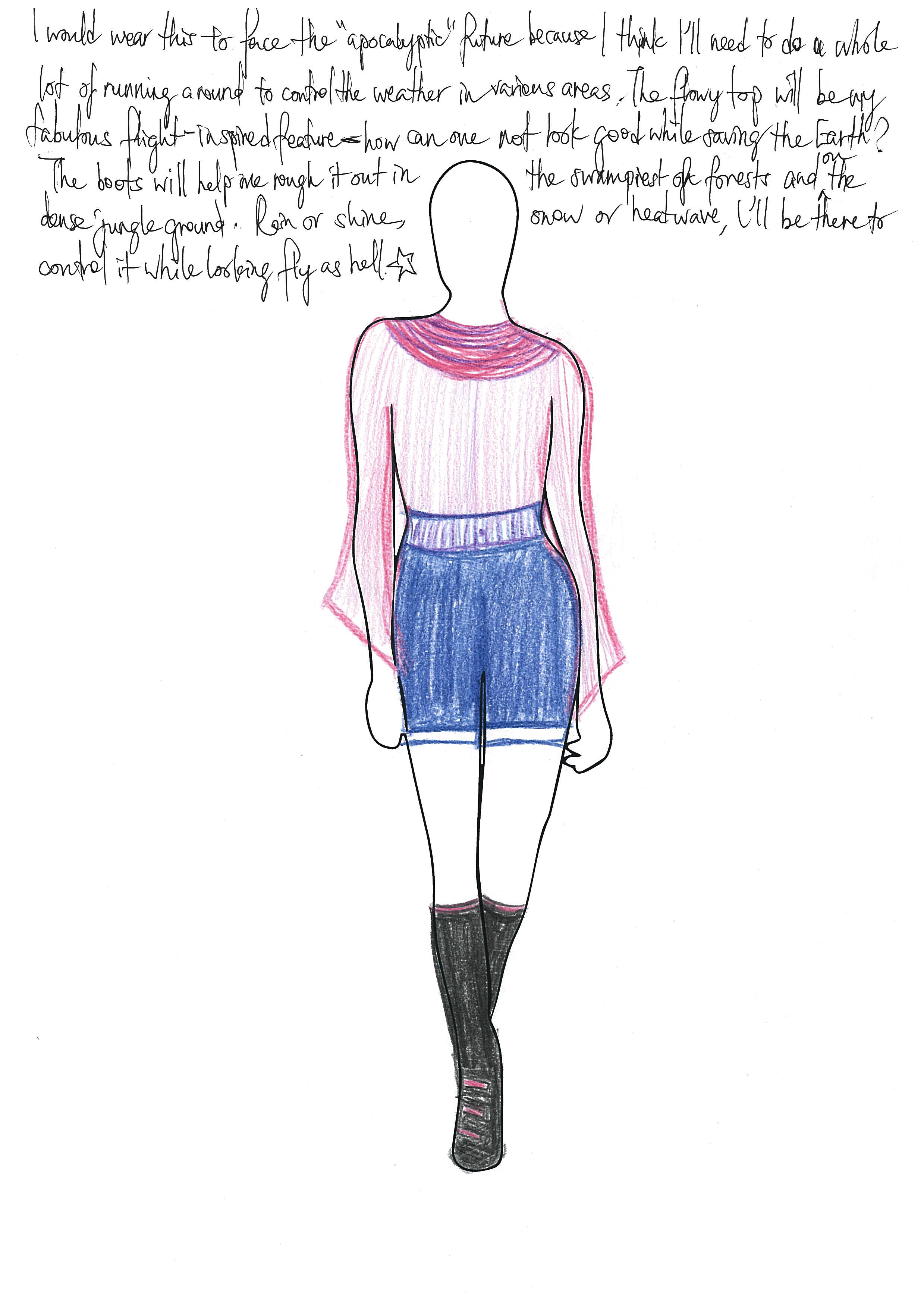
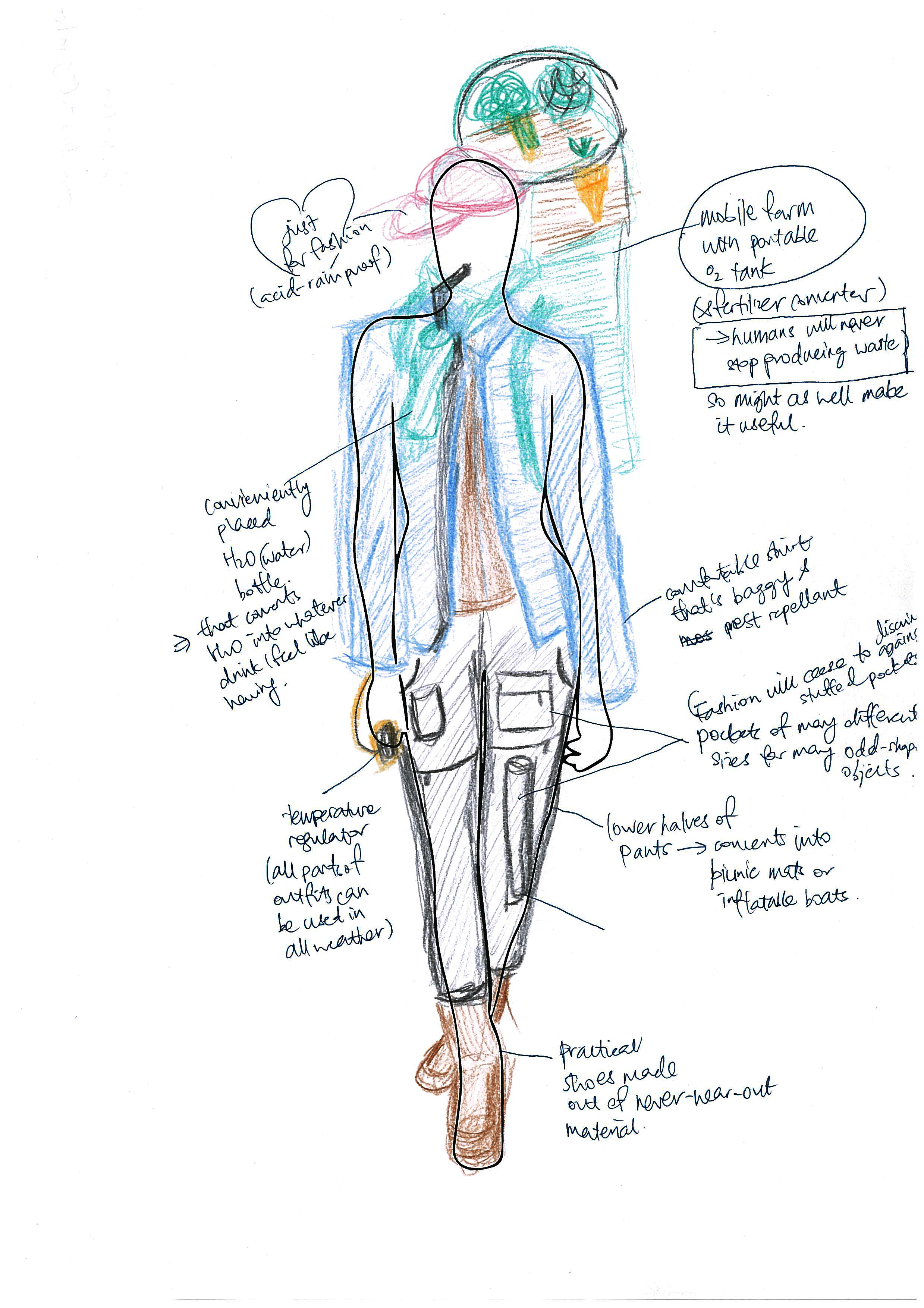
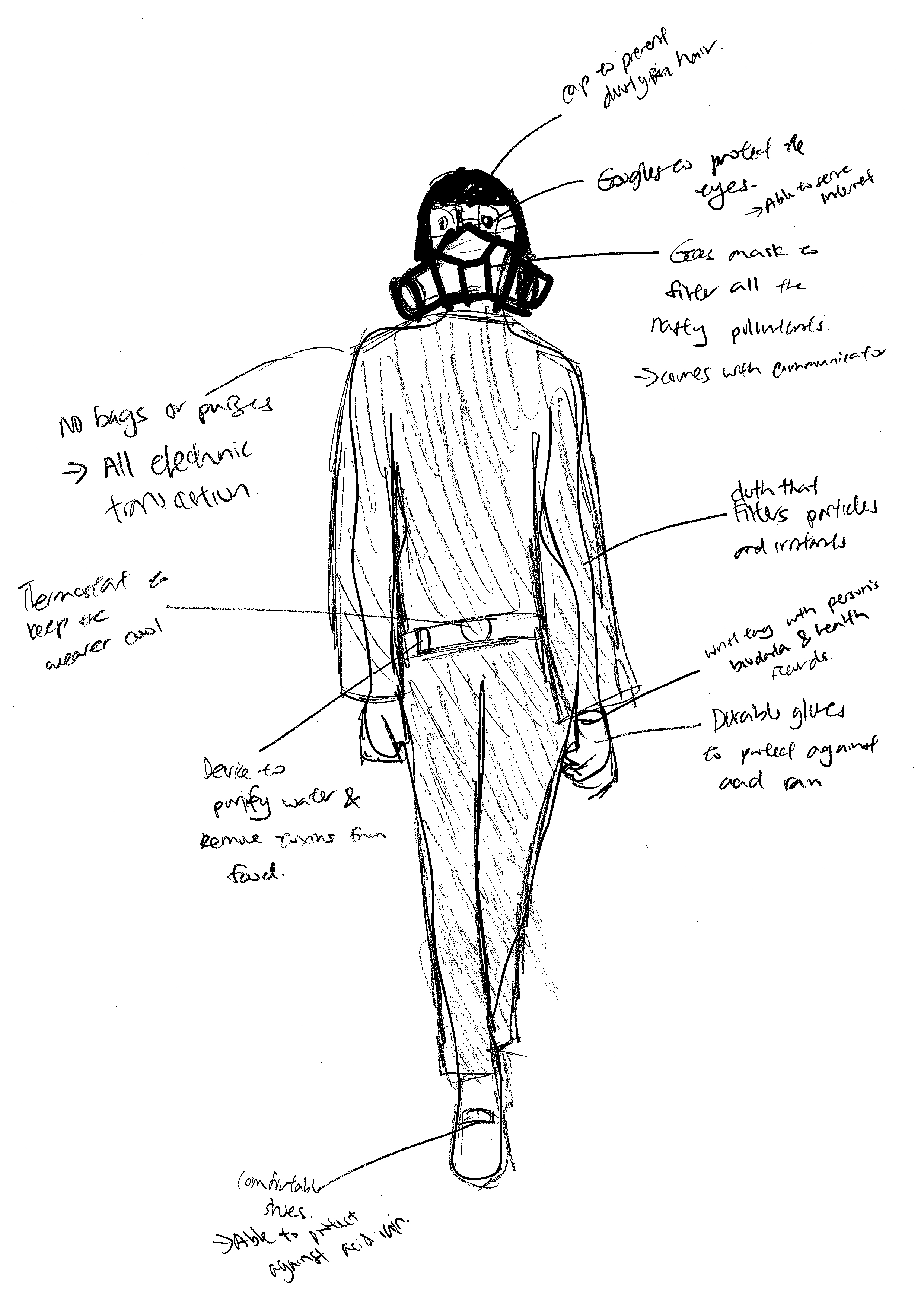
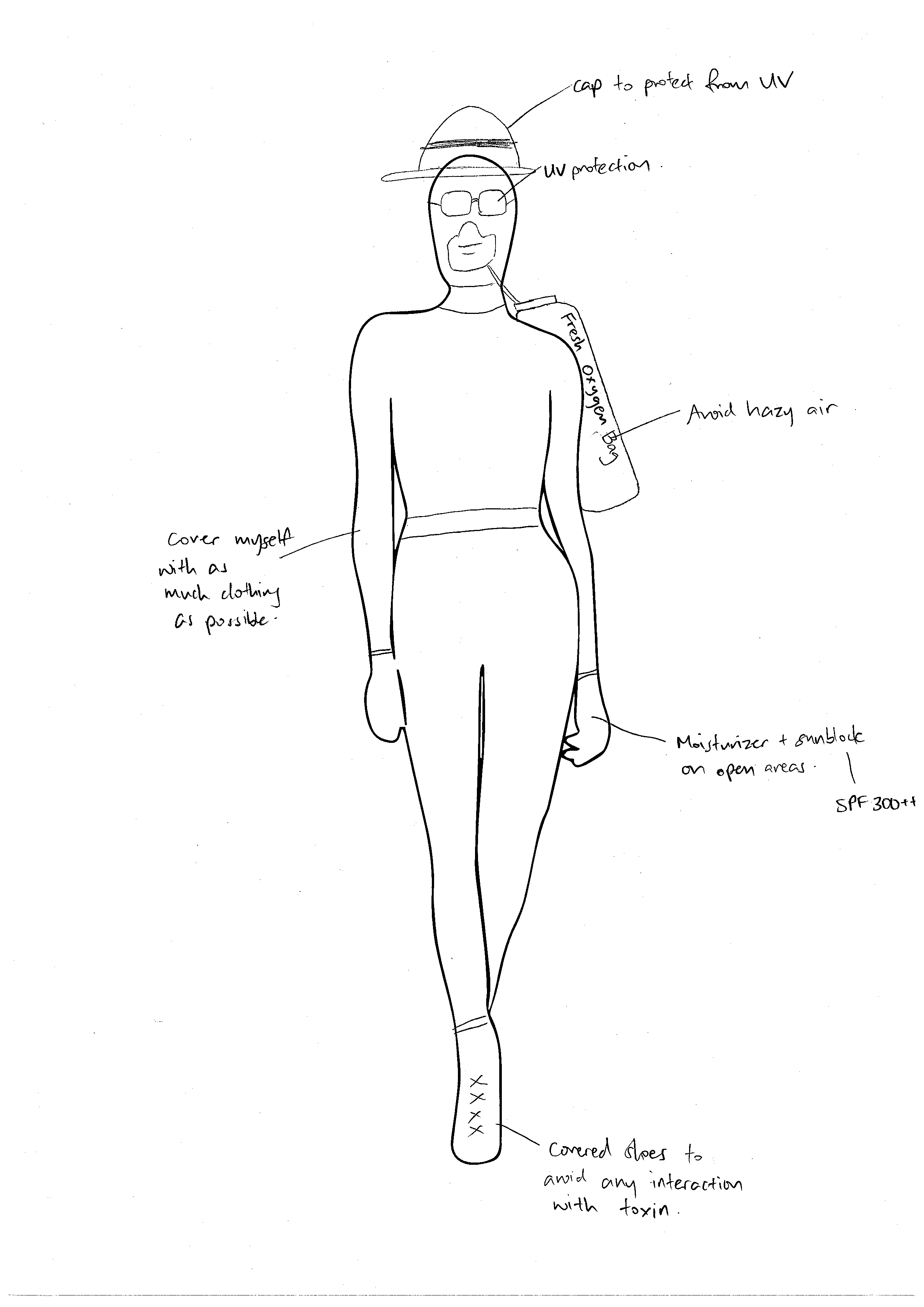
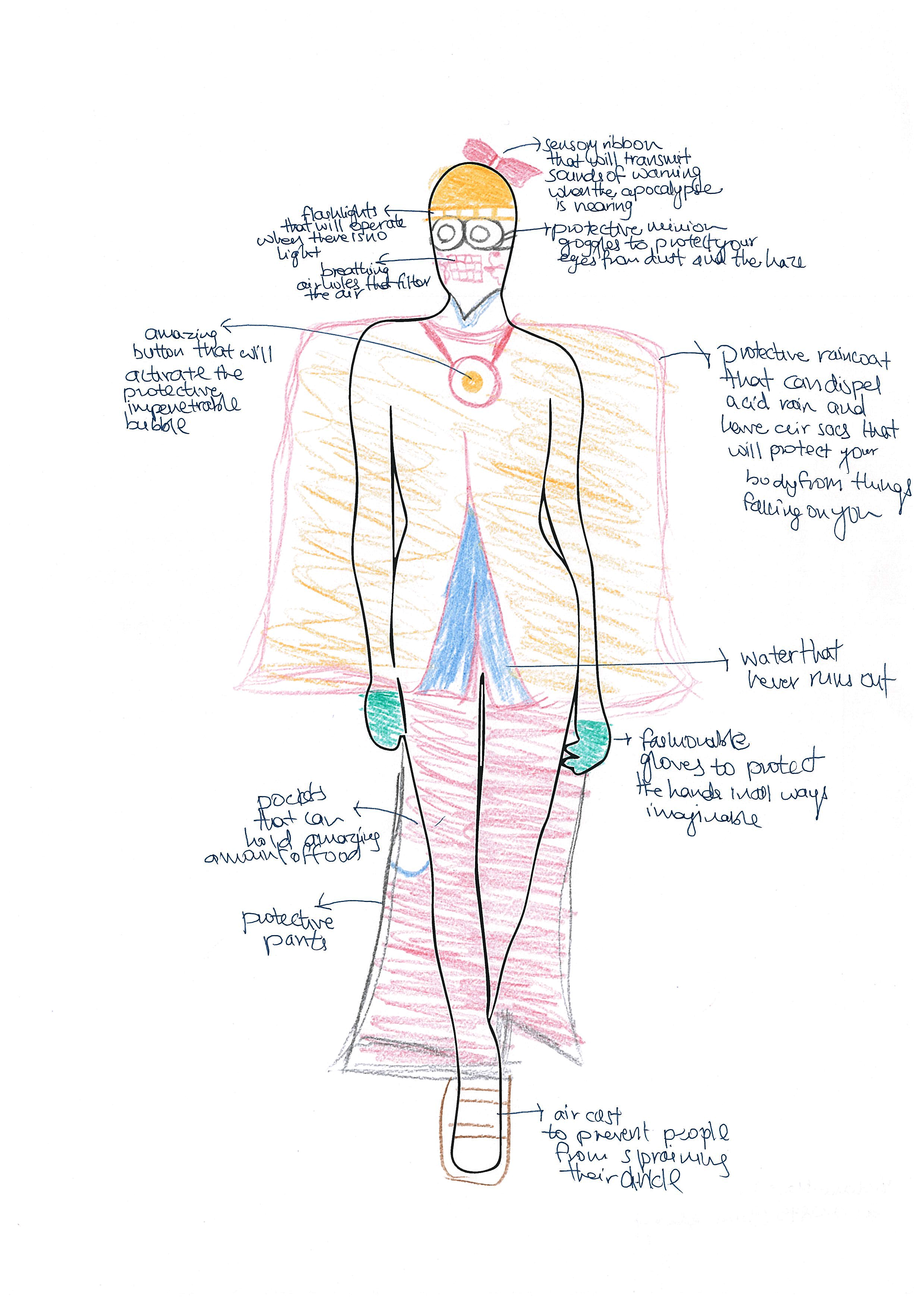
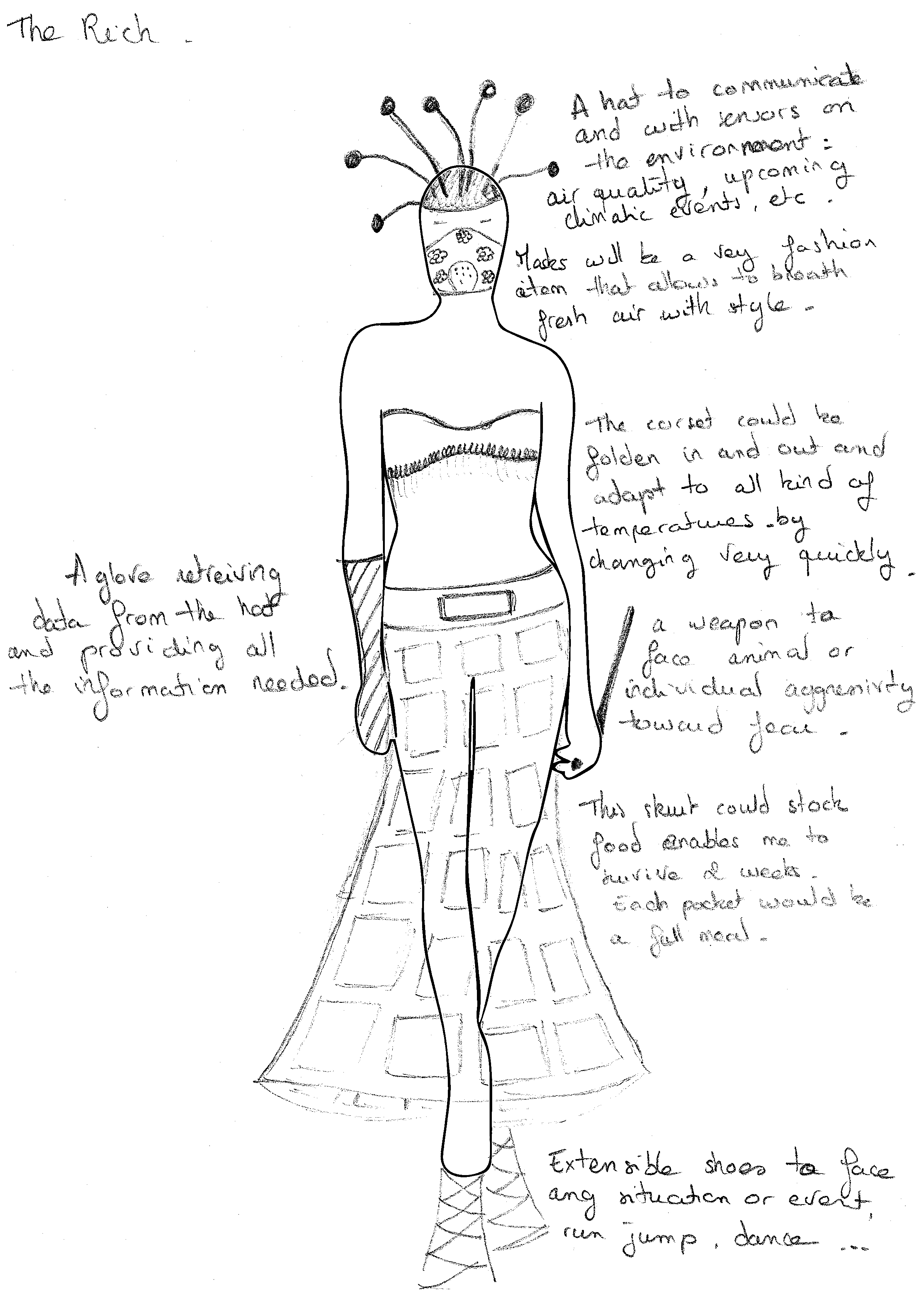
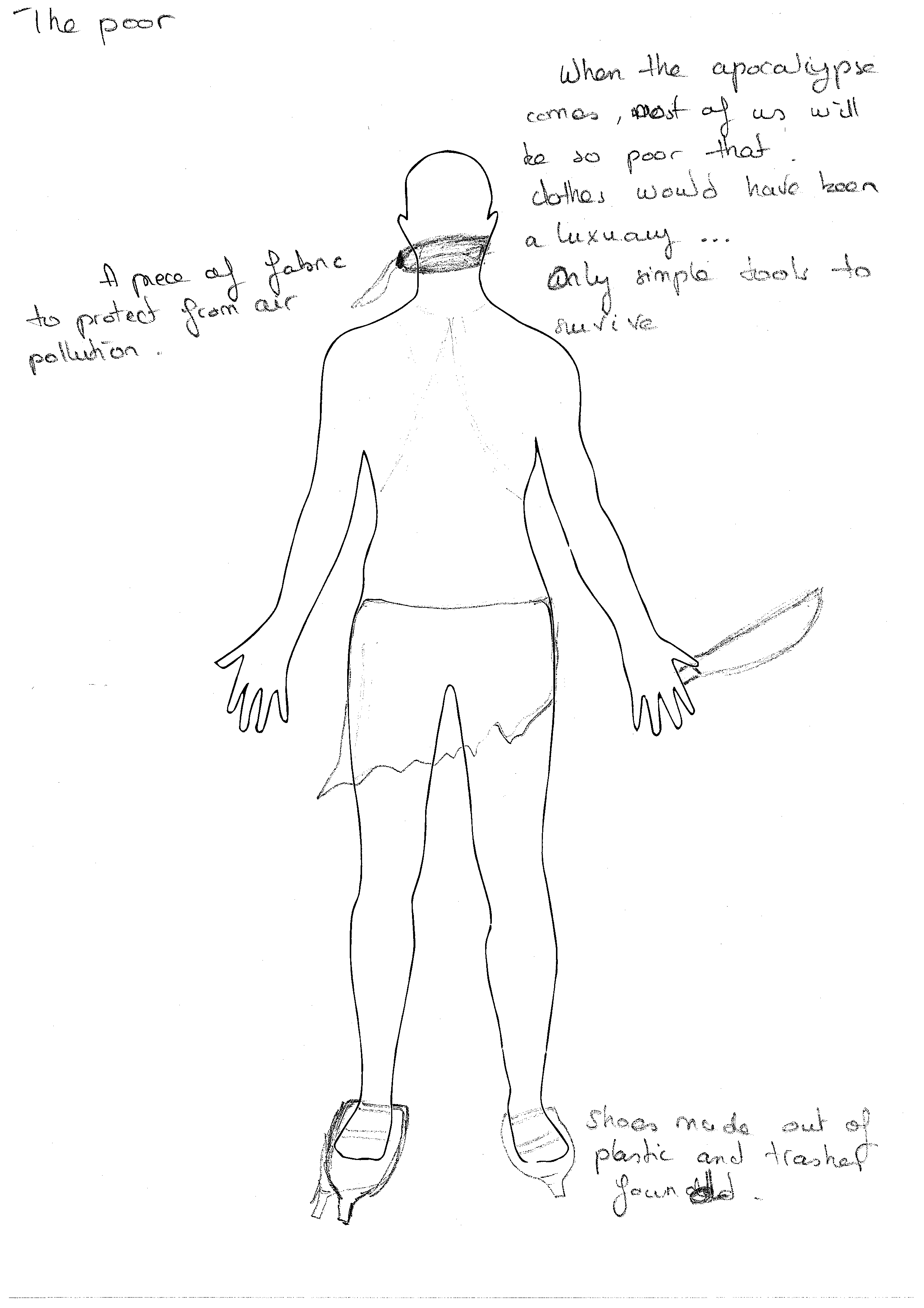
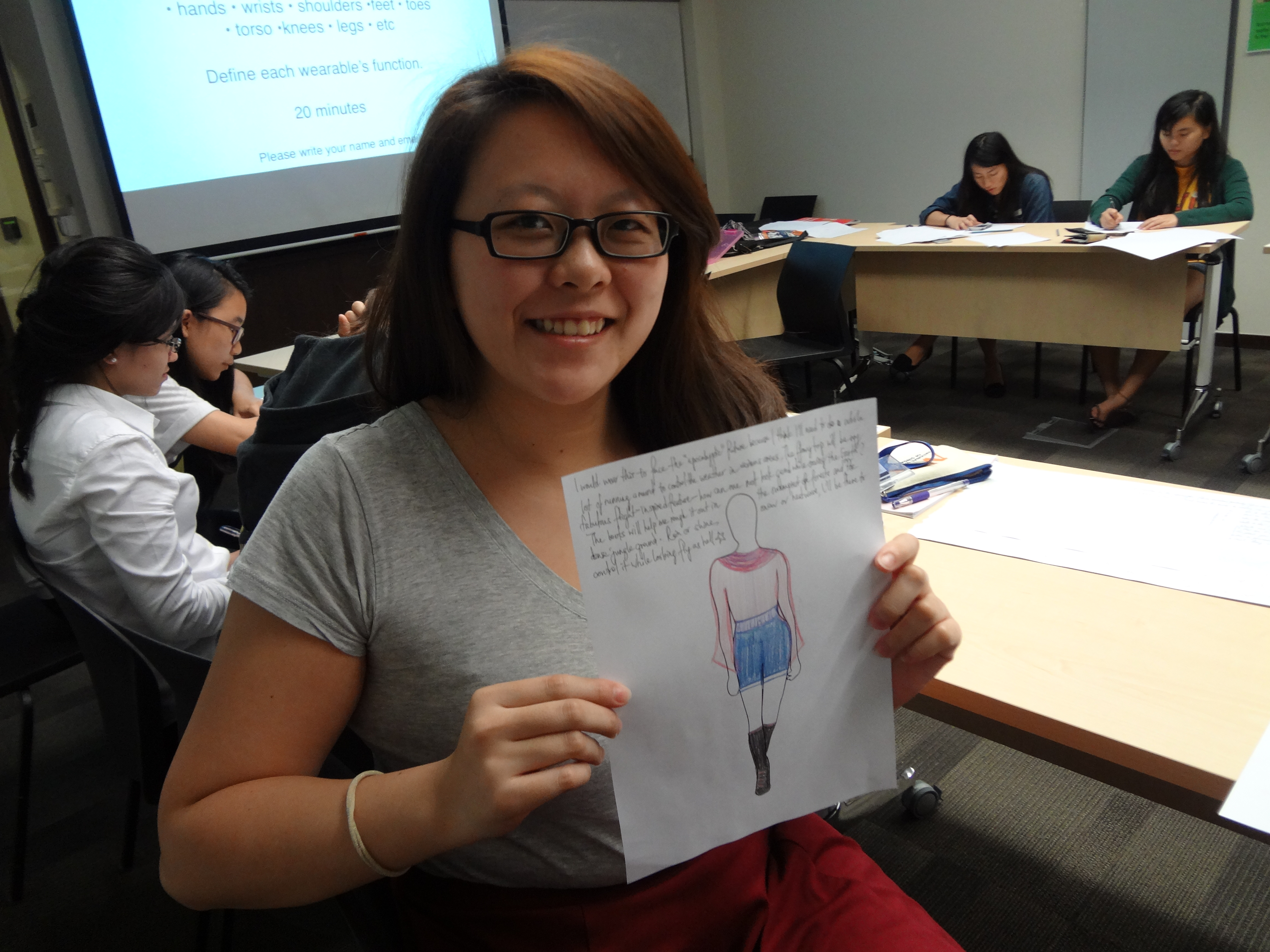
For the final part of The Apocalypse Workshop, I asked the participants, “What would you wear to the apocalypse?” and to define each wearable they design. I gave them fashion design templates. Here is the Tembusu version of an Apocalypse Lookbook:

AdelineChang

by Adeline Chang

AmandaTan

by Amanda Tan

ArjunSaha

by Arjun Saha

AuYongShiYa

by Au Yong Shi Ya

CarminaCastro

by Carmina Castro

CassandraTeo

by Cassandra Teo

ChanSzeHow

by Chan Sze How

CherlynTan

by Cherlyn Tan

GeorgiaTam

by Georgia Tam

GermaineGoh

by Germaine Goh

JaredKoh

by Jared Koh

JonathanT

by Jonathan T

LamYuenKei

by Lam Yuen Kei

LeeYingLin

by Lee Ying Lin

LyciaHo

by Lycia Ho

NaomiNeoh

by Naomi Neoh

RachelLee

by Rachel Lee

SarahLim

by Sarah Lim

SonjaChua

by Sonja Chua

TayYingYing

by Tay Ying Ying

VictoriaEr

by Victoria Er

ZoeBezpalko

by Zoe Bezpalko

ZoeBezpalko2

by Zoe Bezpalko

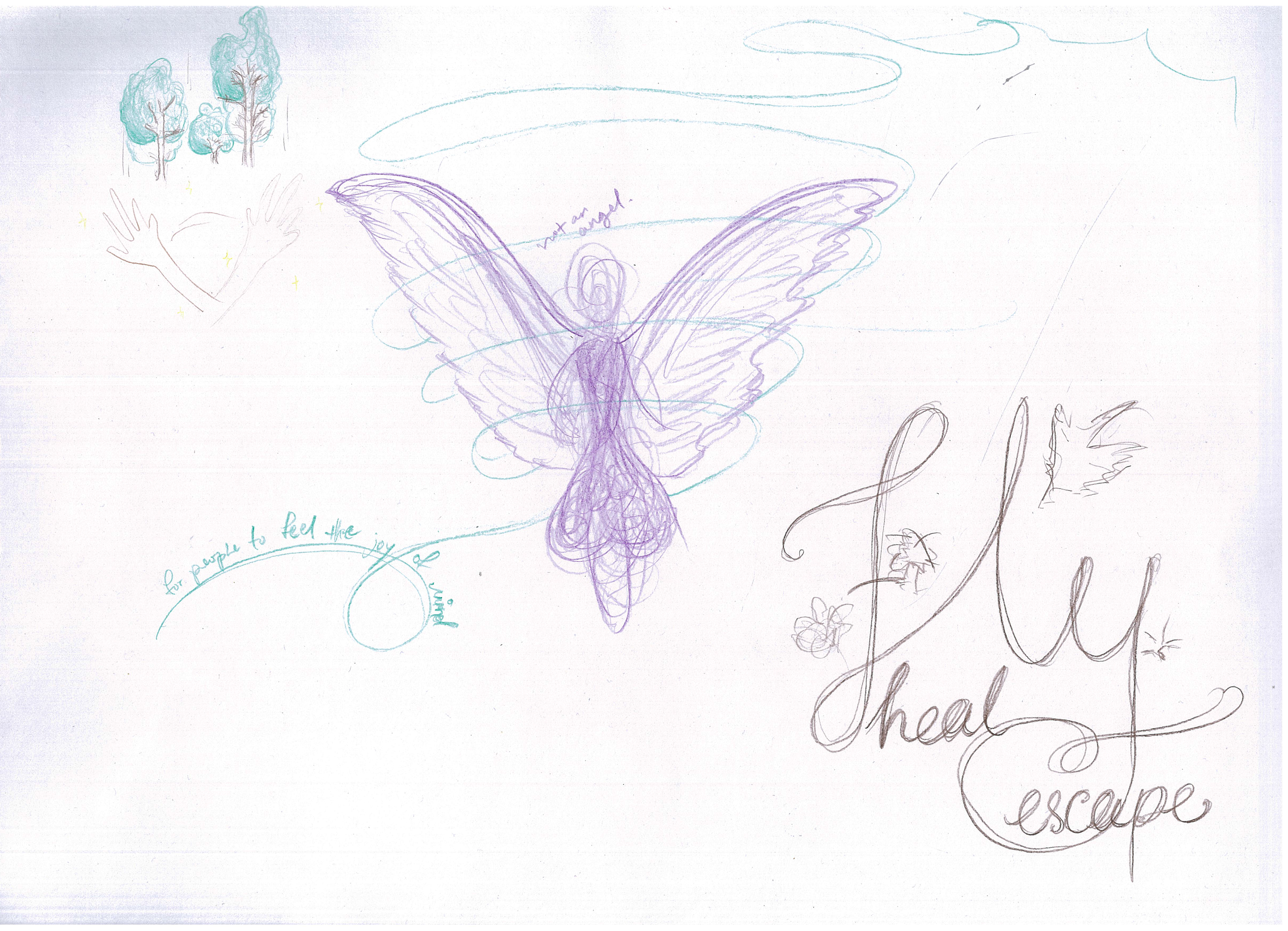
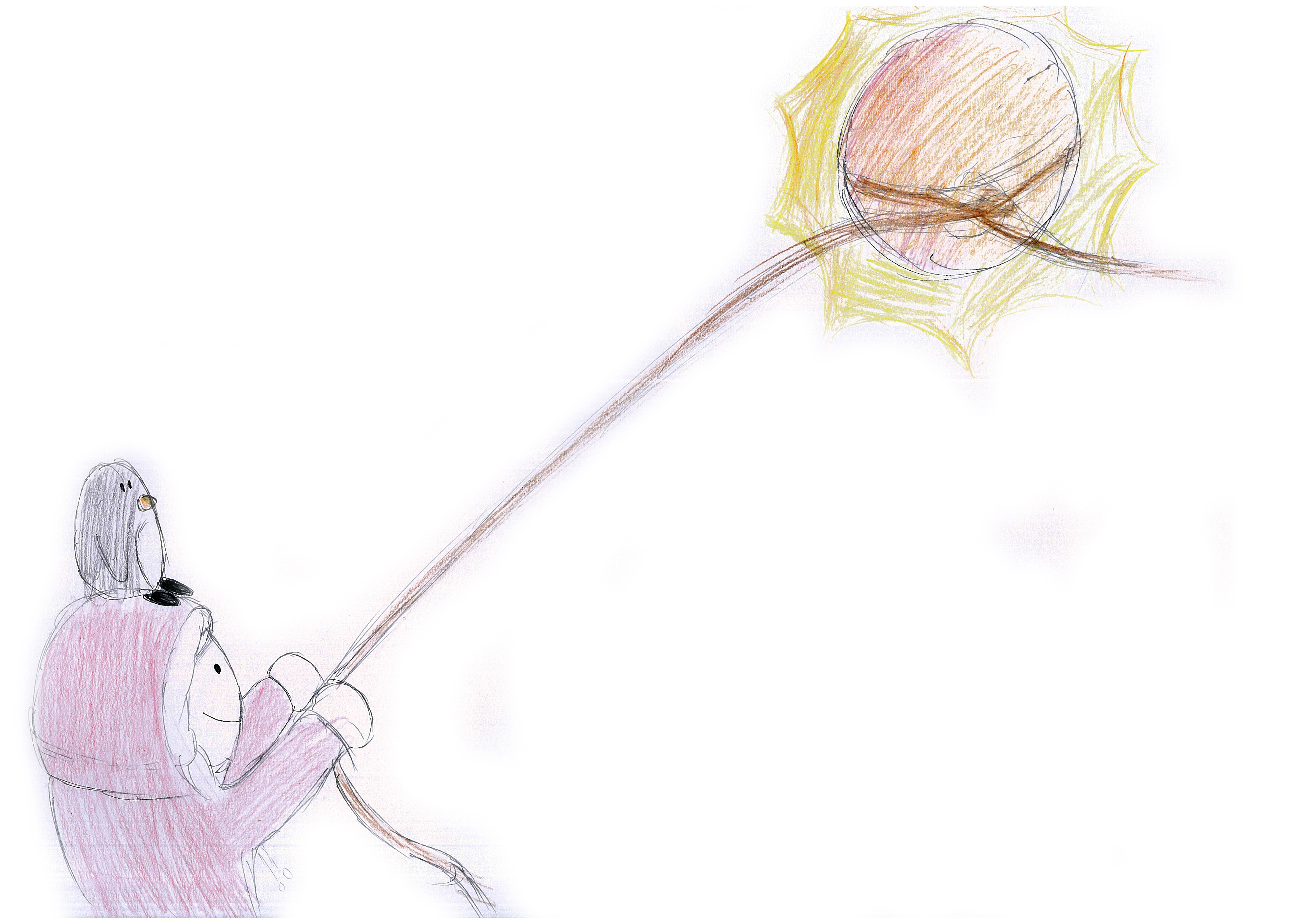
For the second part of The Apocalypse Workshop, I asked students to imagine their superpowers to navigate through the apocalypse they described in the beginning.

Here are some sketches:

AdelineChang

“Fly. Heal. Escape.” —Adeline Chang

AmandaTan

“Ability to move the sun” —Amanda Tan Ying Shyuan

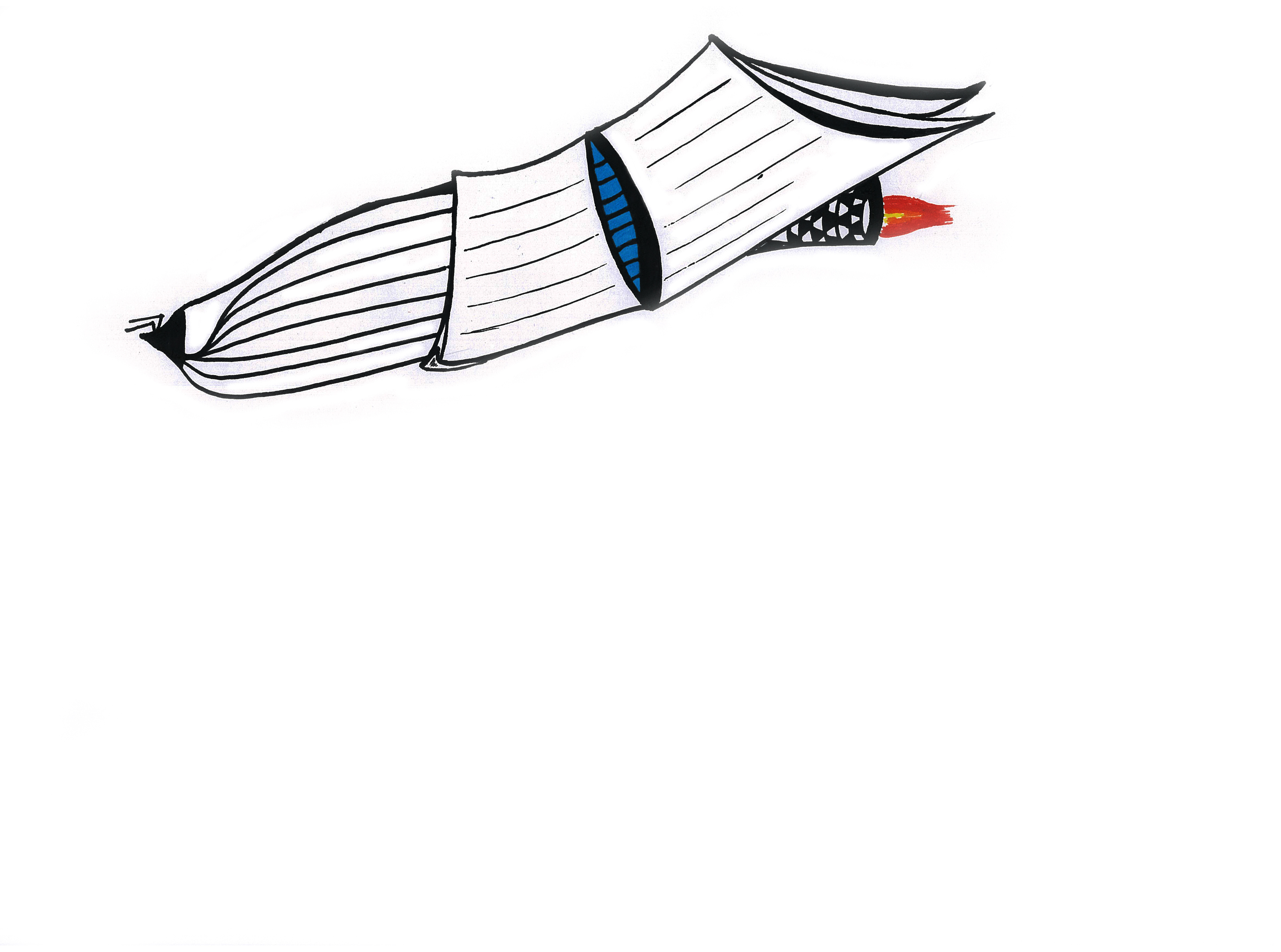
ArjunSaha“Spaceship out to sun to cool it. Suicidal ice core cooler.”—Arjun Saha

AuYongShiYa

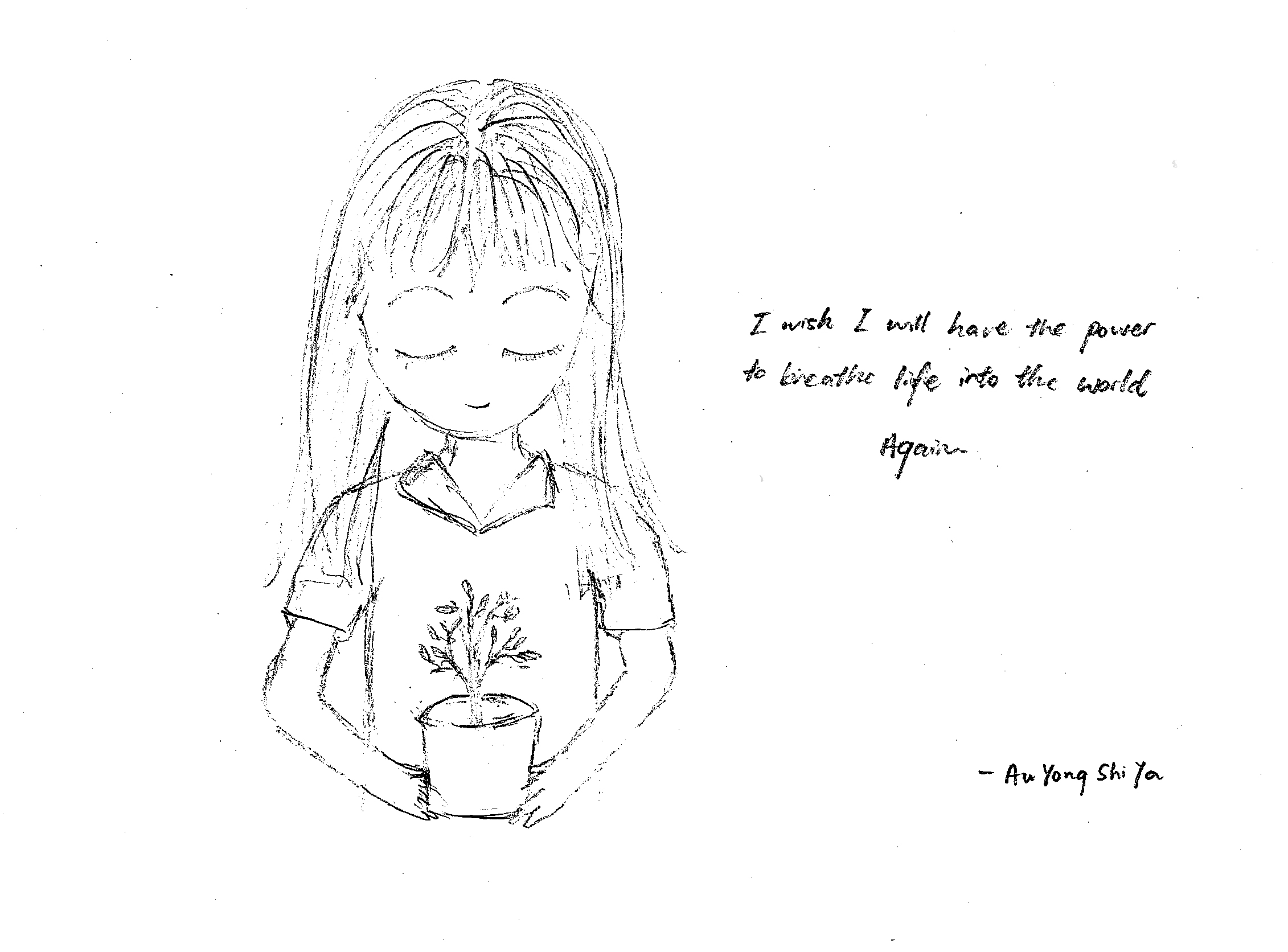
“I wish I will have the power to breathe life into the world again.” —Au Yong Shi Ya

CarminaCastro

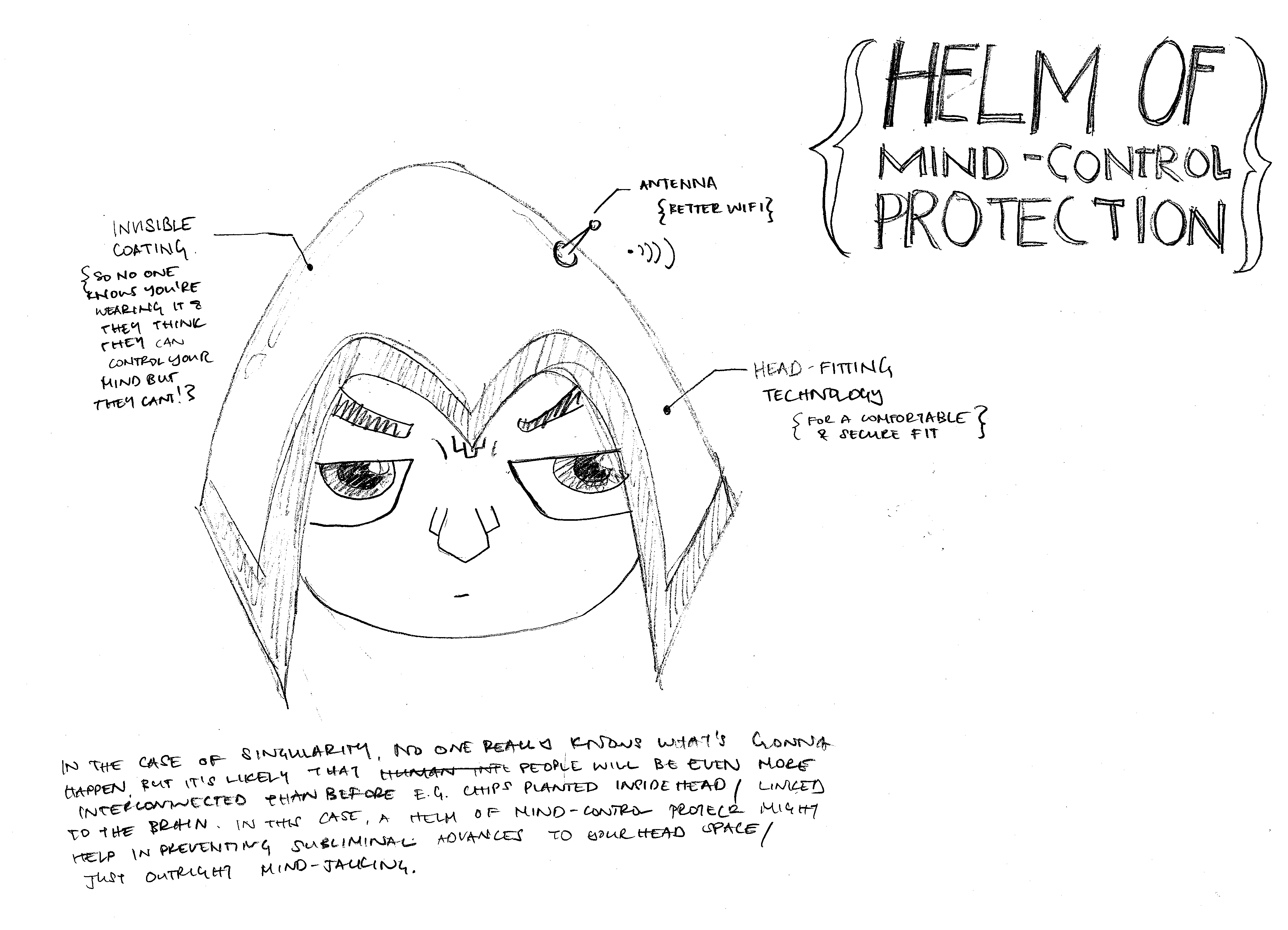
“In the case of singularity, no one really knows what’s gonna happen, but it’s likely that people will be even more interconnected than before. e.g. chips planted inside head / linked to the brain. In this case, a helm of mind-control protector might help in preventing subliminal advances to your head space / just outright mind-jacking.

CassandraTeo

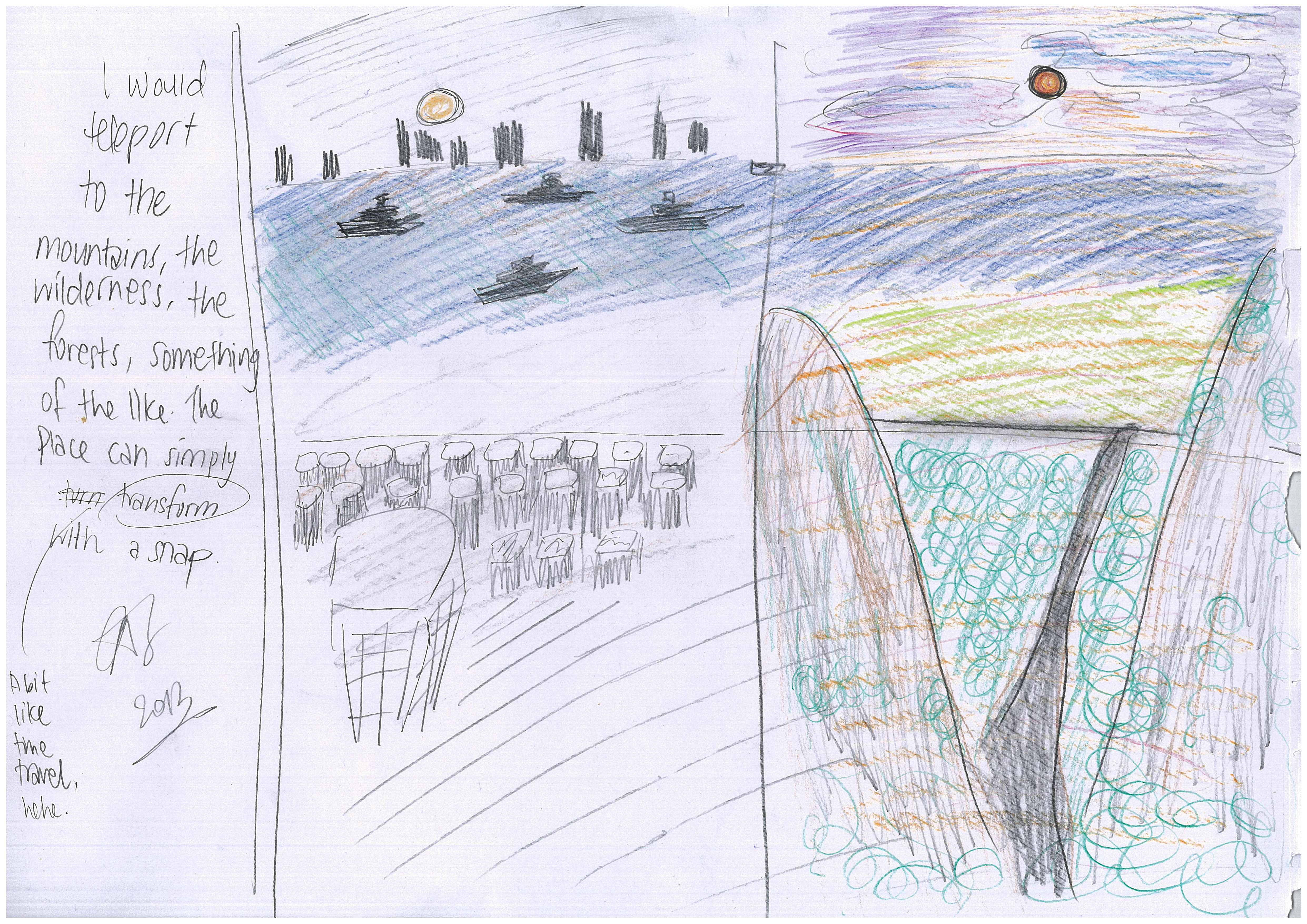
“I would teleport to the mountains, the wilderness, the forests, something of the like. The place can simply transform with a snap.” —Cassandra Teo

ChanSzeHow

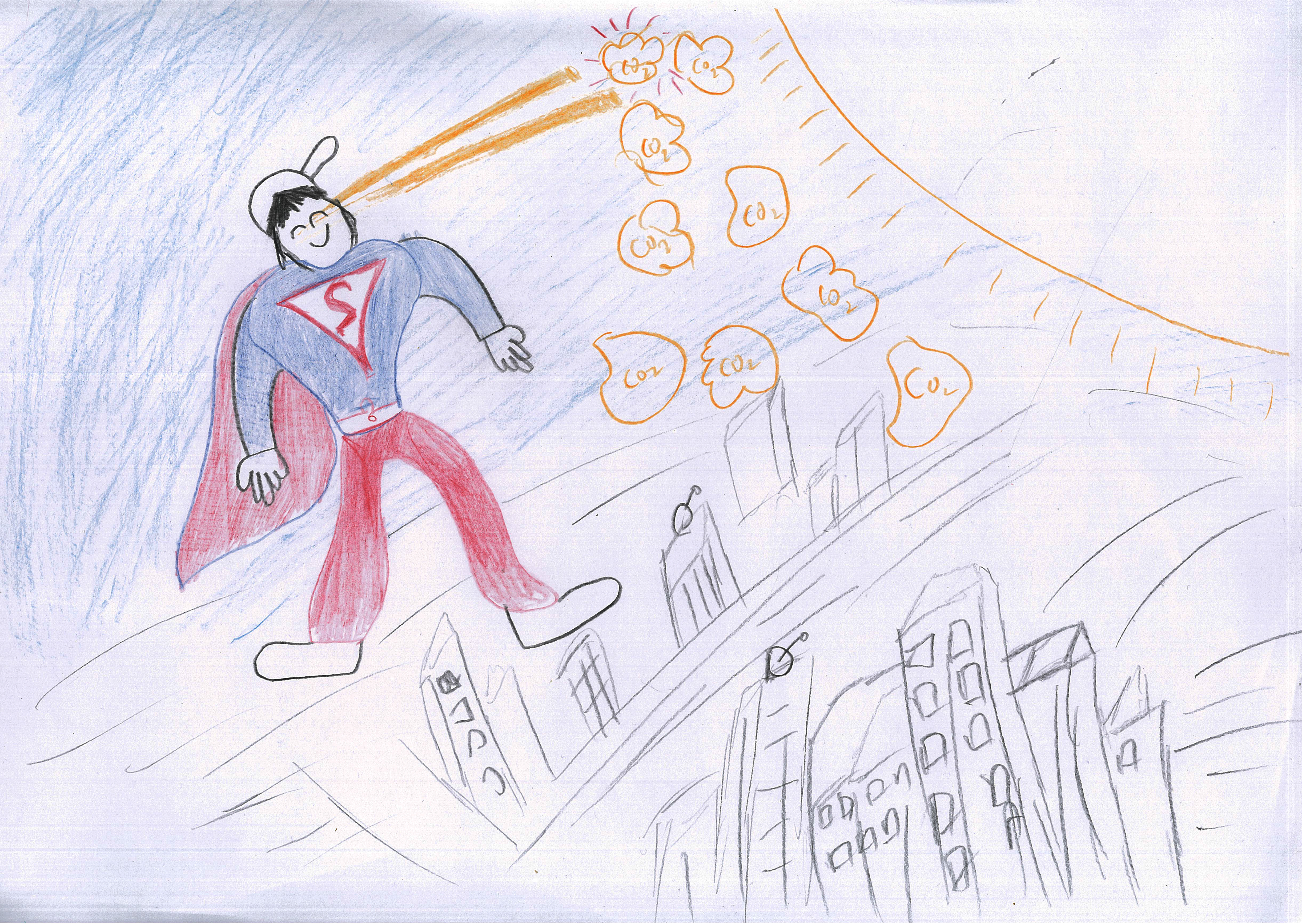
“This drawing shows a Superman shooting down CO2 gas molecules to reduce greenhouse warming. He is flying and protecting the atmosphere of the Earth.” —Chan Sze How

CherlynTan

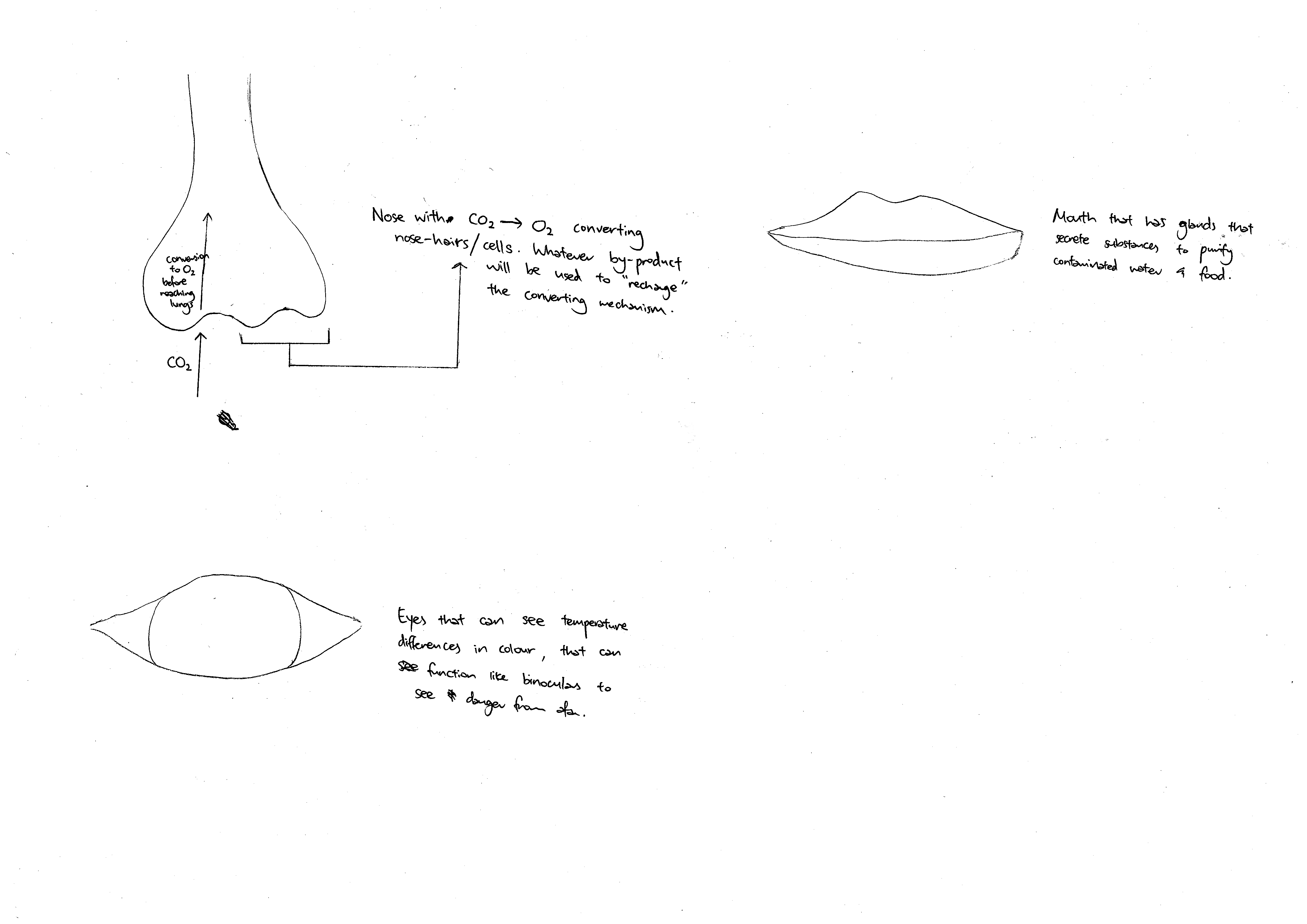
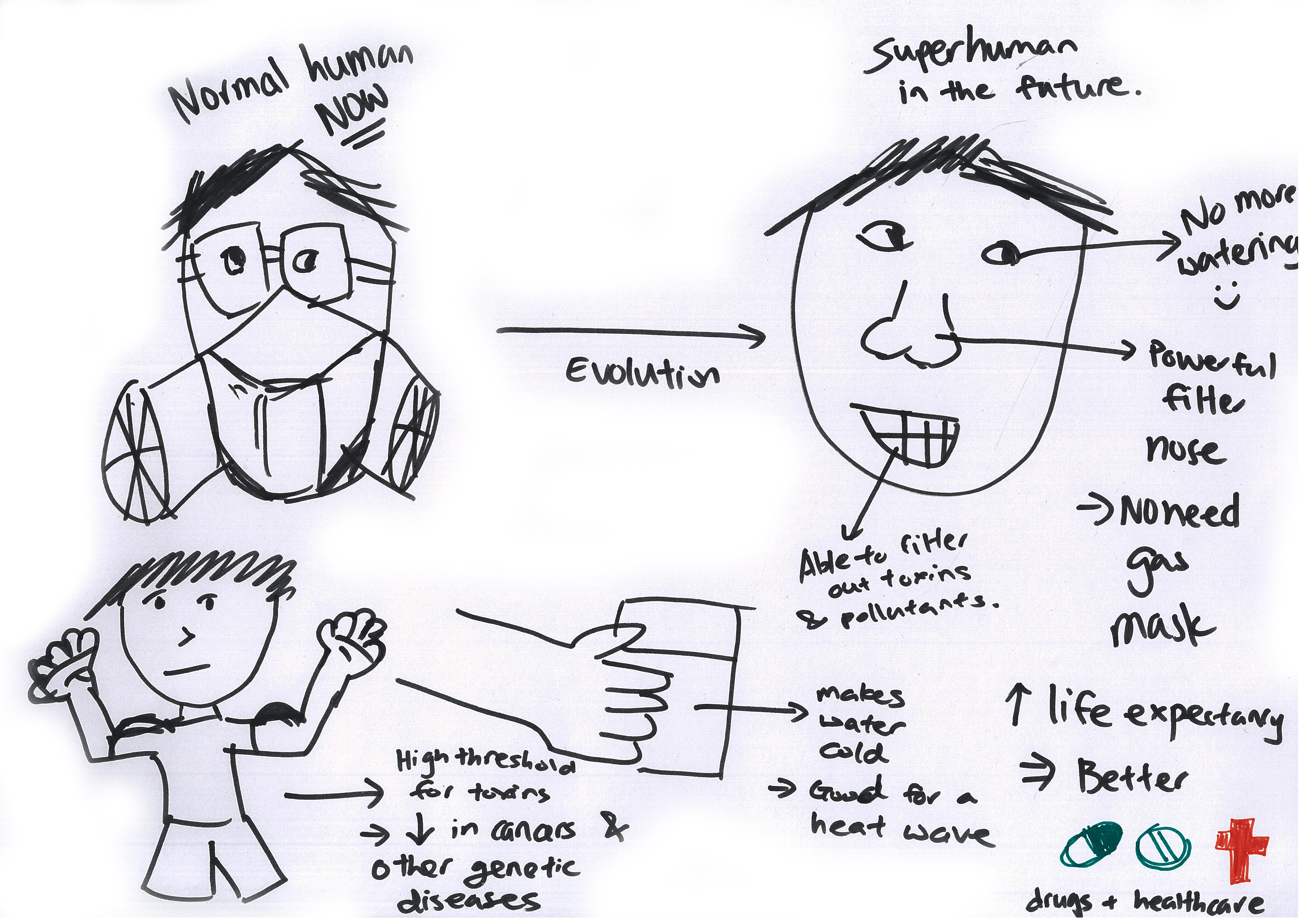
“Nose with CO2 to O2 converting nose-hair / cells. Whatever by-product will be used to “recharge” the converting mechanism. Eyes that can see temperature differences in color, that can function like binoculars to see danger from afar. Mouth that has glands that secrete substances to purify contaminated water and food.” —Cherlyn Tan

GeorgiaTam

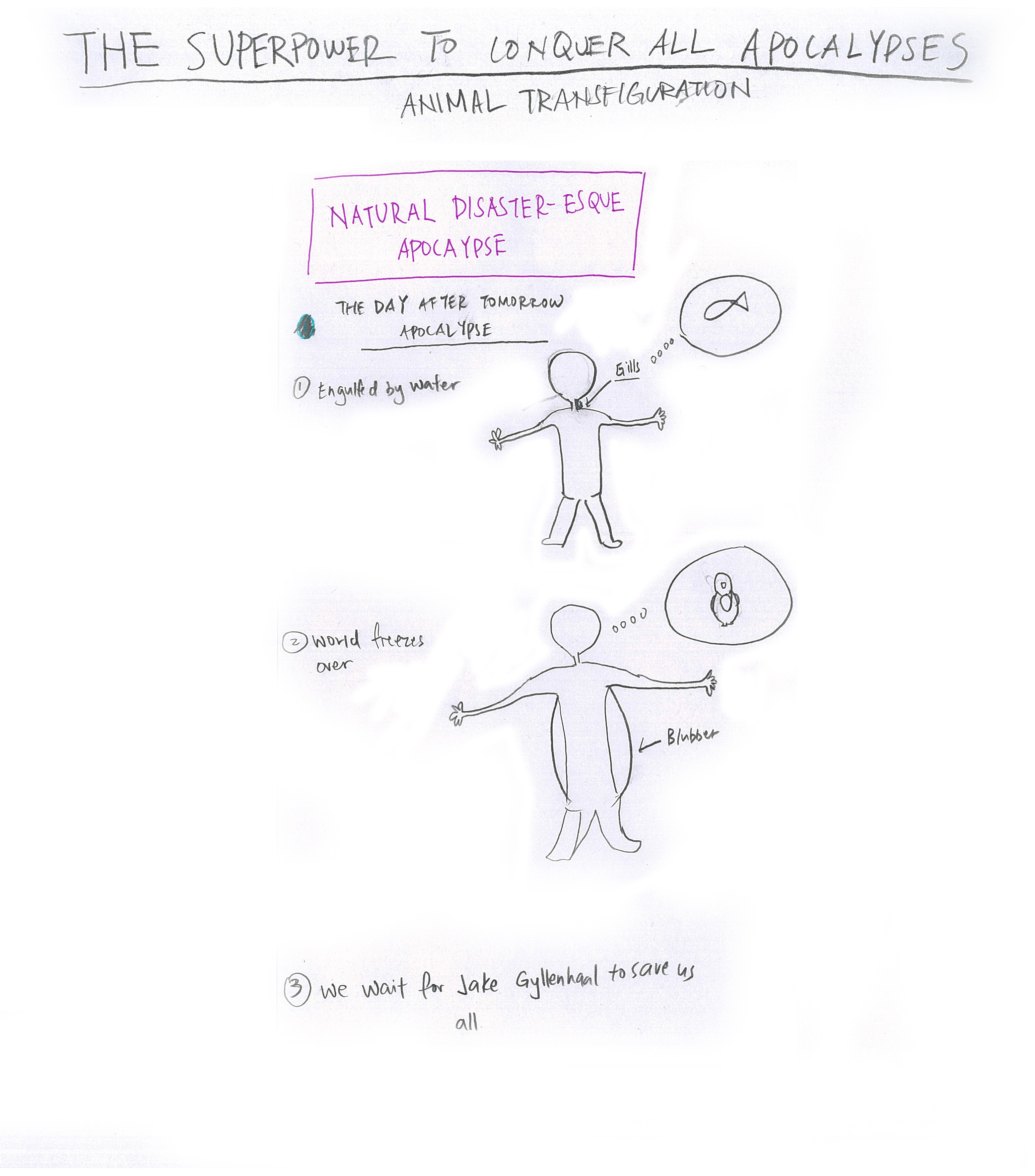
“The Day After Tomorrow Apocalypse: 1. Engulfed by water 2. World freezes over. 3. We wait for Jake Gyllenhaal to save us all.” —Georgia TamGermaineGoh

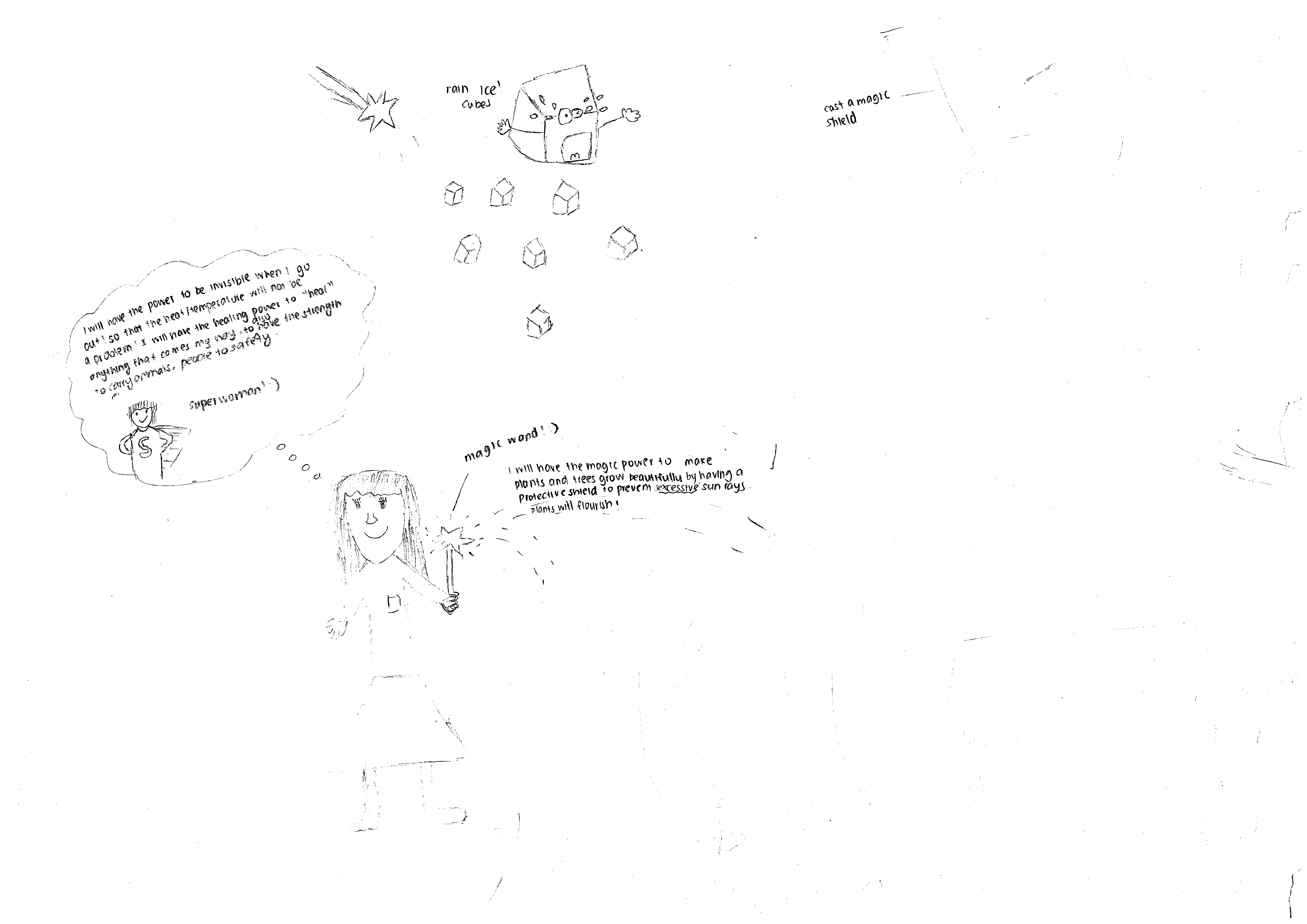
“I will have the power to be invisible when I go out so that the heat / temperature will not be a problem! I will have the healing power to “heal” anything that comes my way, to have the strength to carry animals, people to safety. Magic wand: I will have the magic power to make plants and trees grow beautifully by having a protective shield to prevent excessive sun rays. Plants will flourish.” —Germaine Goh

JaredKo

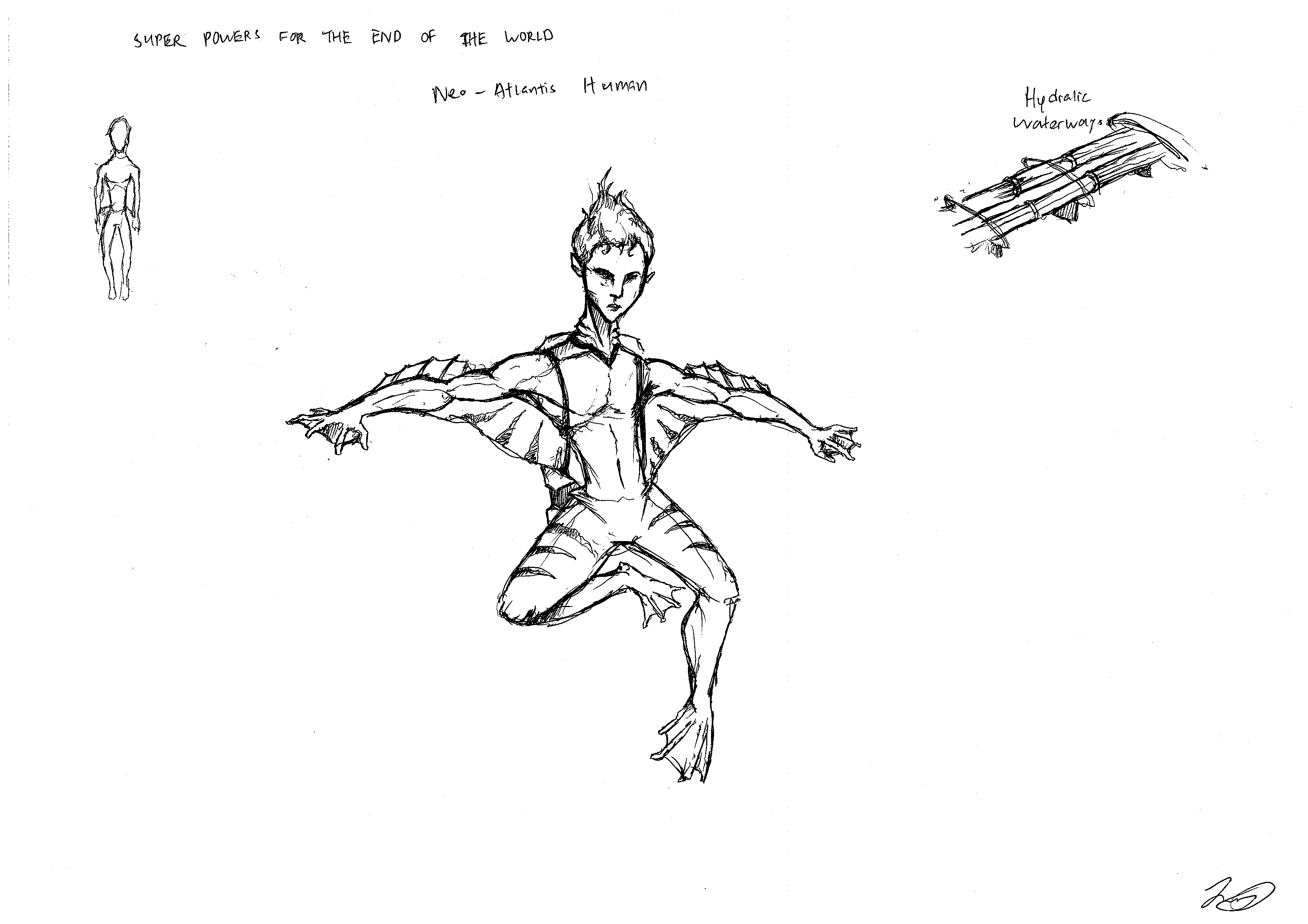
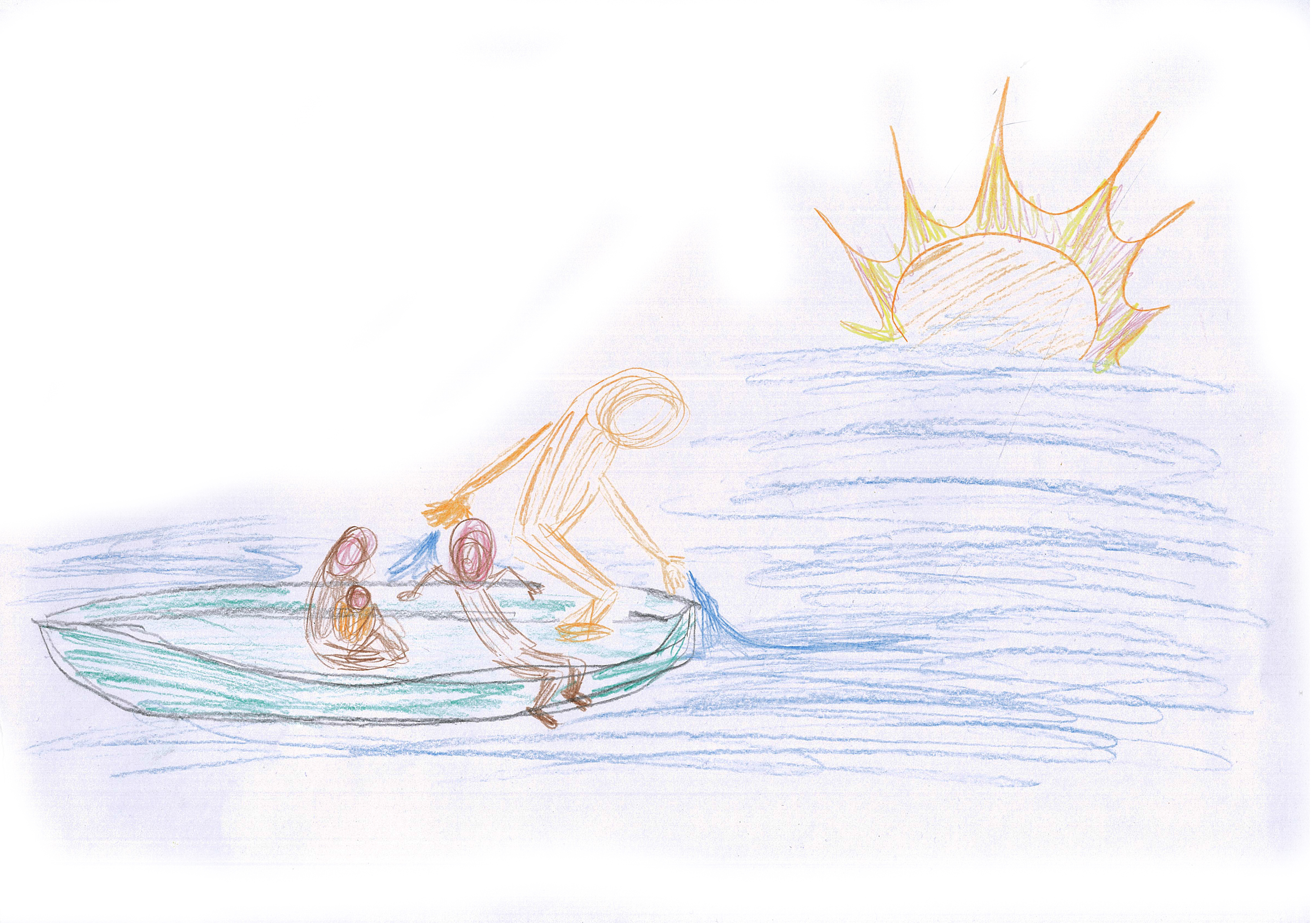
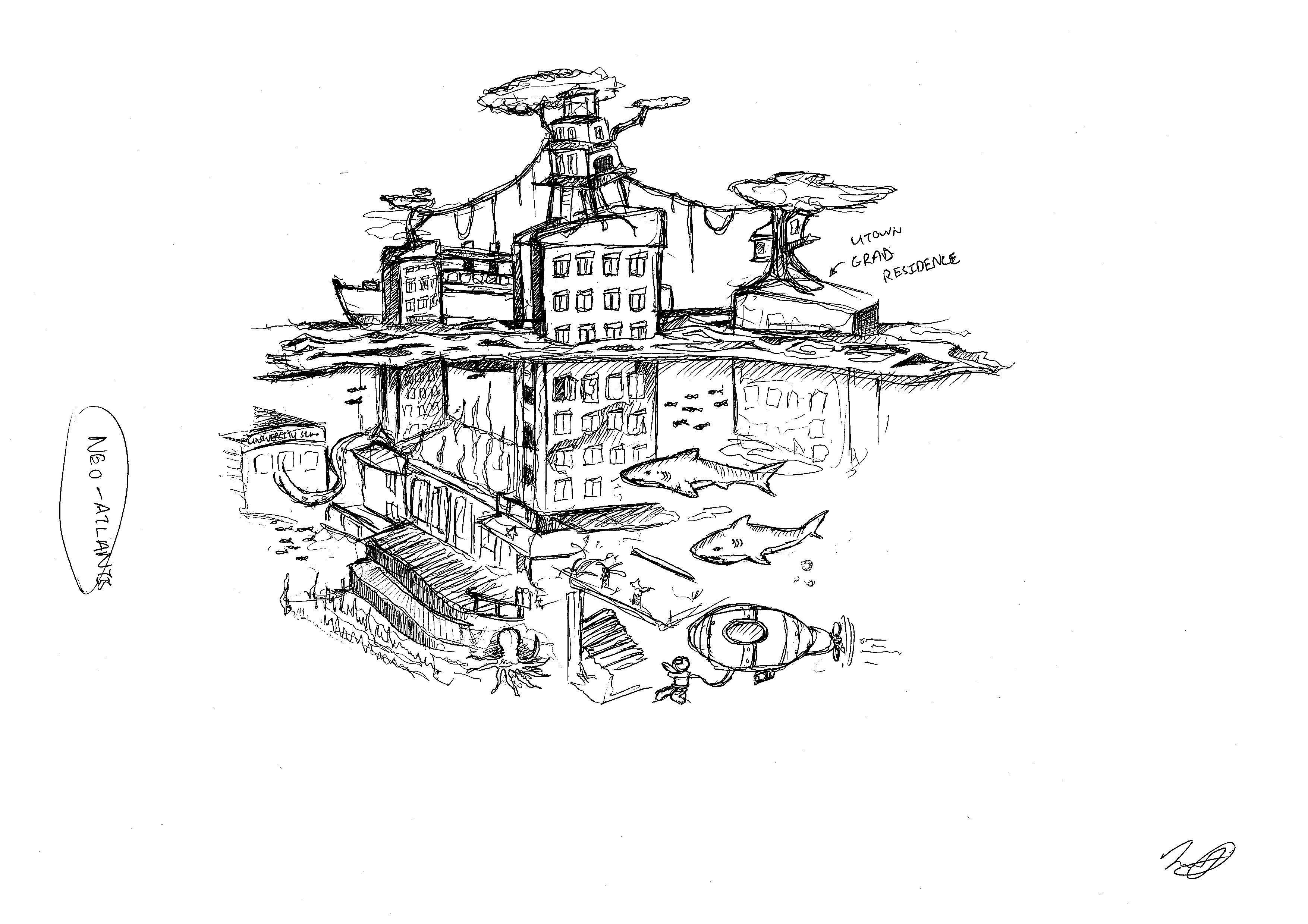
“Neo-Atlantis human.” —Jared Koh

JonathanT

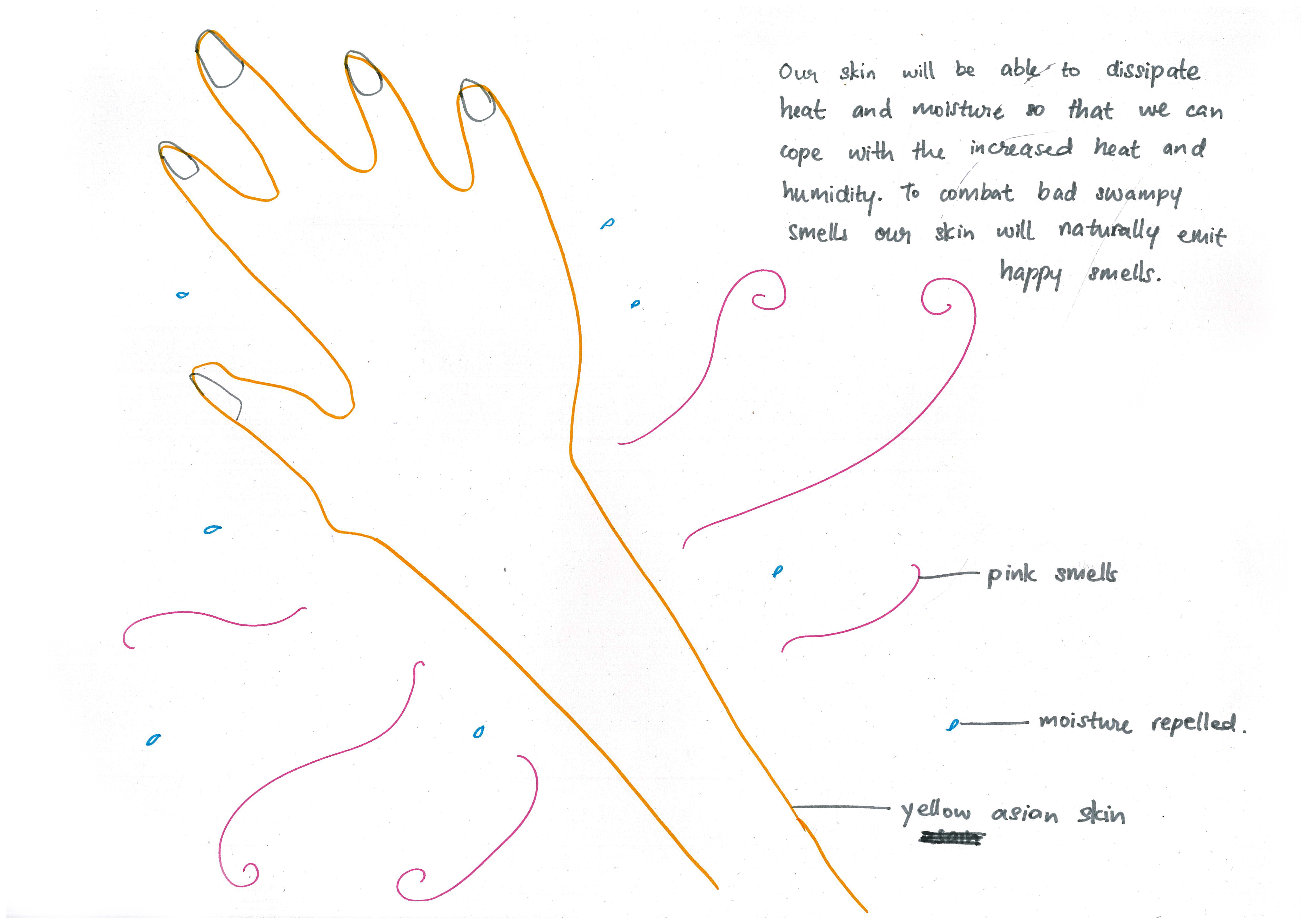
“Our skin will be able to dissipate heat and moisture so that we can cope with the increased heat and humidity. To combat bad swampy smells out skin will naturally emit happy smells.” —Jonathan T

LamYuenKei

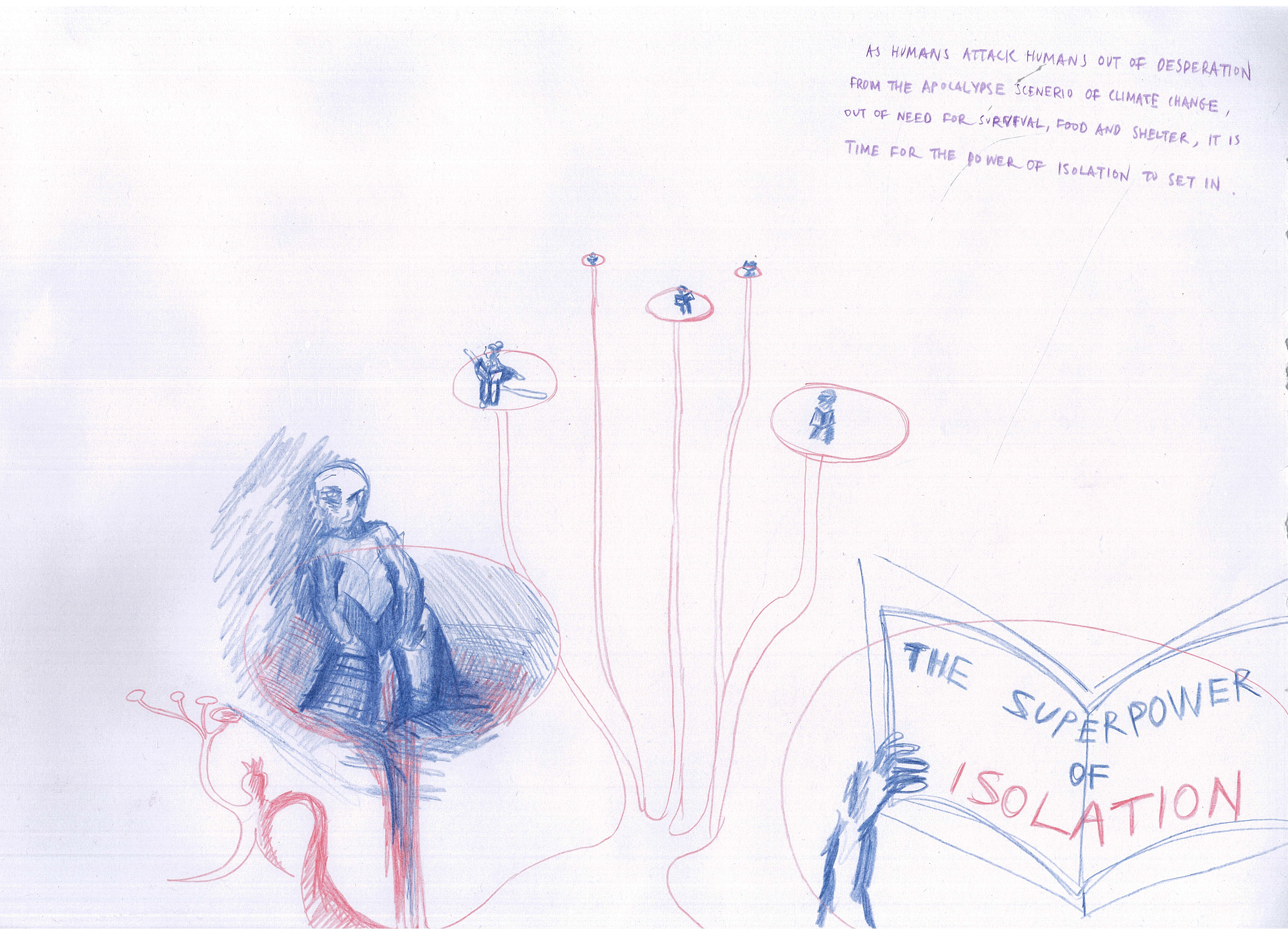
“As humans attack humans out of desperation from the apocalypse scenario of climate change, out of need for survival, food and shelter, it is time for the power of isolation to set in.” —Lam Yuen KeiLeeYingLin

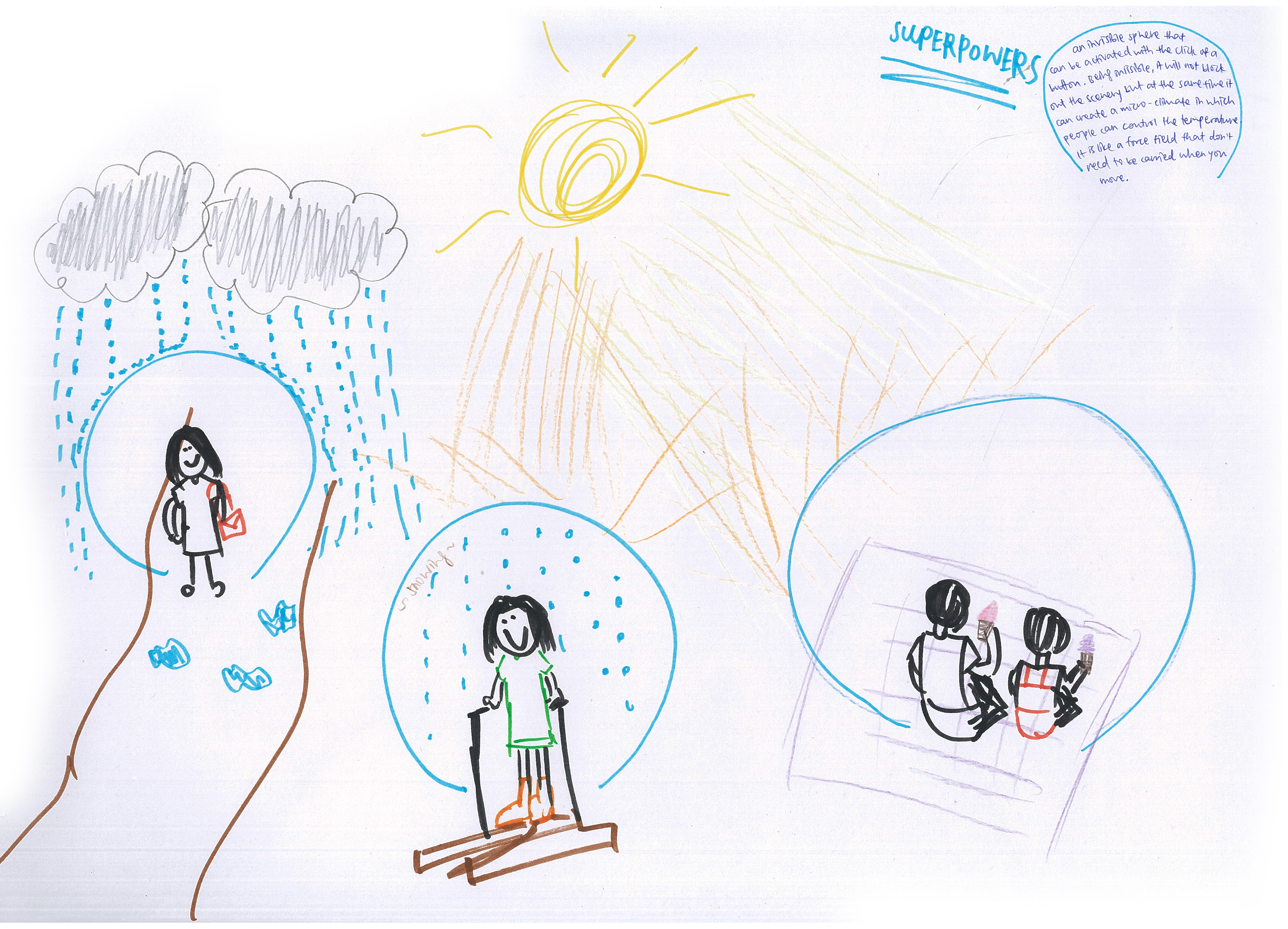
“An invisible sphere that can be activated with the click of a button. Being invisible, it will not block out the scenery but at the same time it can create a micro-climate in which people can control the temperature. It is like a force field that don’t need to be carried when you move.” —Lee Ying Lin

LyciaHo

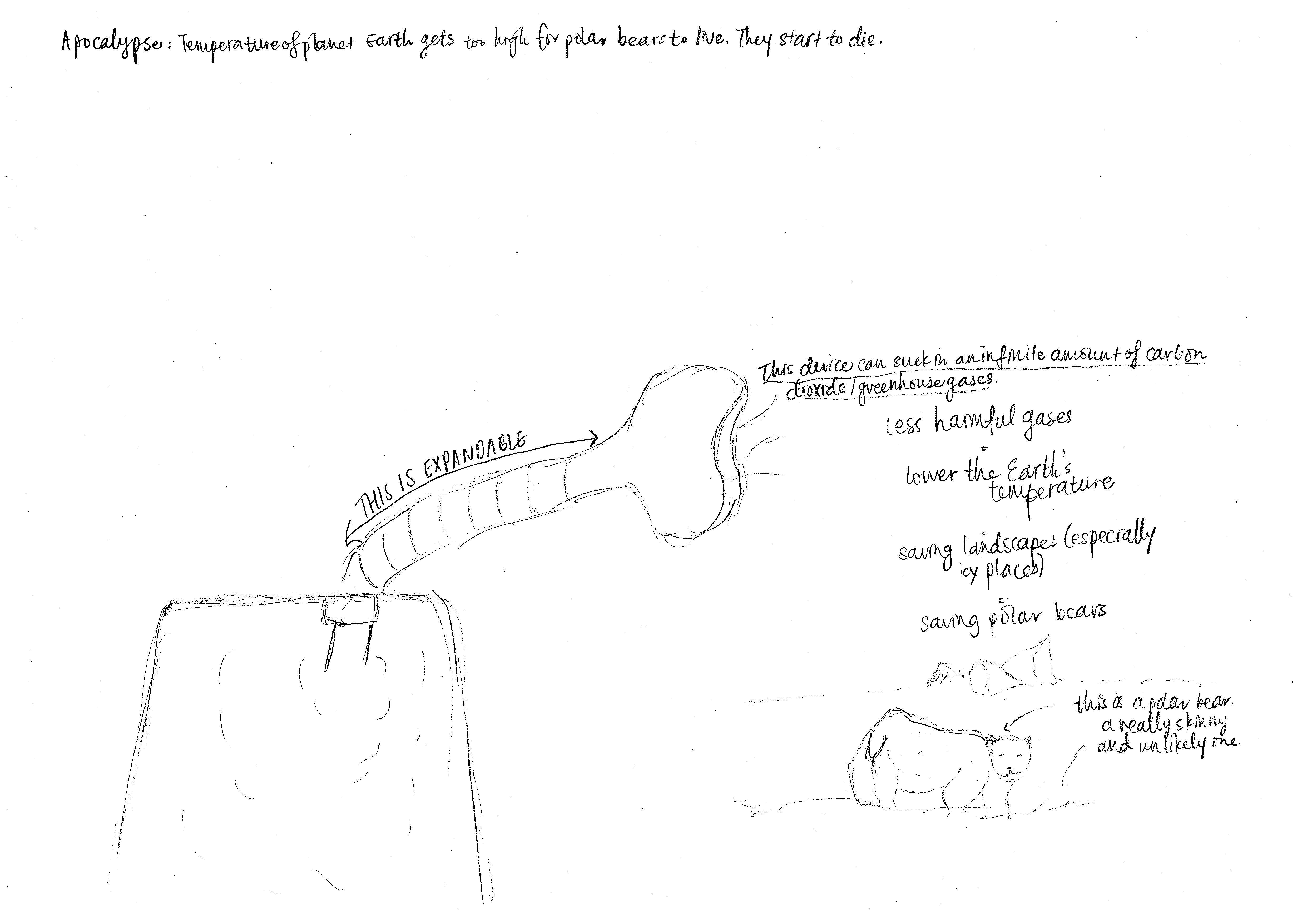
“This device can suck in an infinite amount of carbon dioxide / greenhouse gases.”—Lycia HoNaomiNebh RachelLee

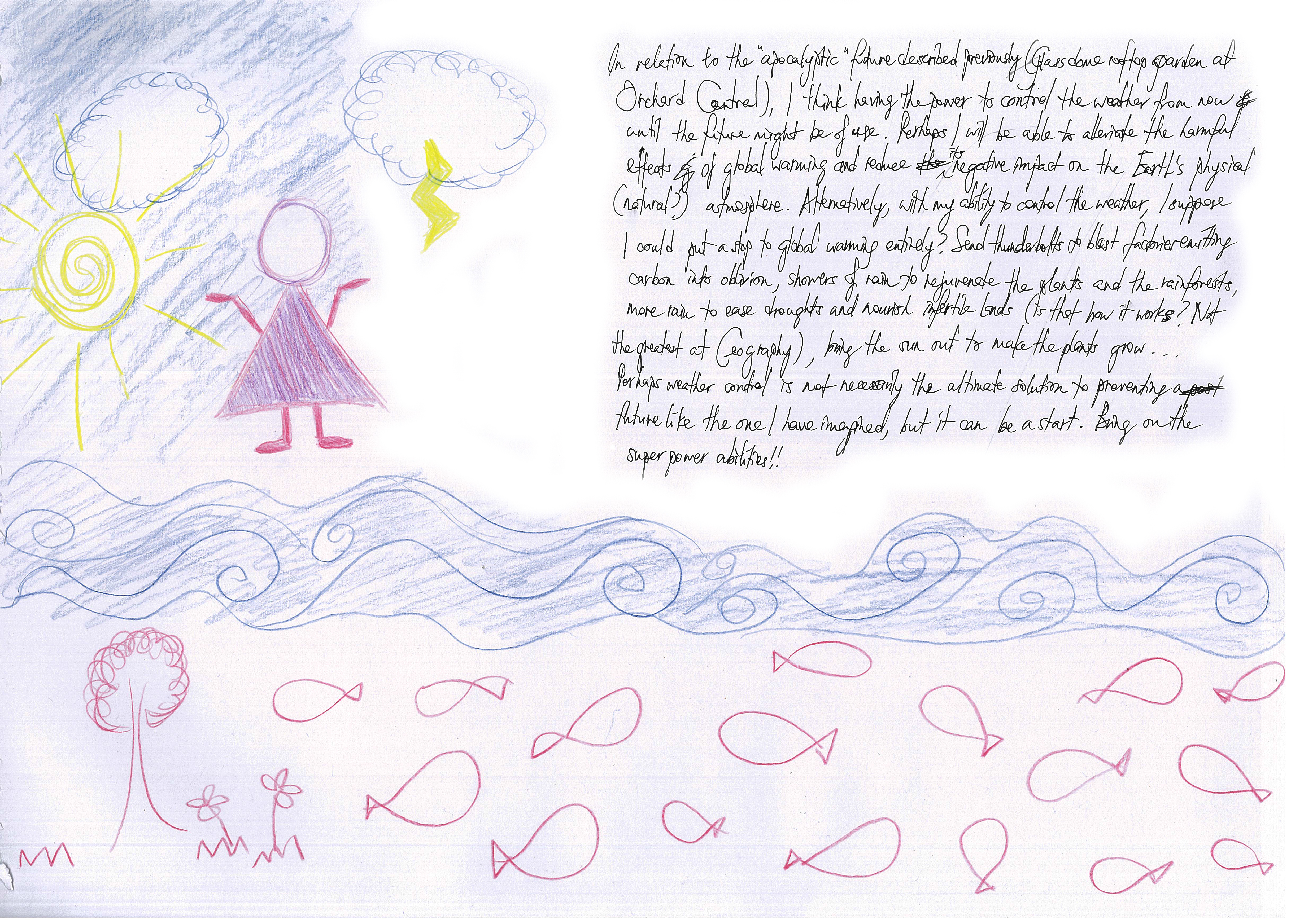
“…I think having the power to control the weather from now until the future might be of use. Perhaps I will be able to alleviate the harmful effects of global warming and reduce its negative impact on the Earth’s physical (natural?) atmosphere. Alternatively, with my ability to control the weather, I suppose I could put a stop to global warming entirely? Send thunderbolts to blast factories emitting carbon into oblivion, showers of rain to rejuvenate the plants and the rainforests, more rain to ease droughts and nourish infertile lands … bring the sun out to make the plants grow… Perhaps weather control is not necessarily the ultimate solution to preventing a future like the one I have imagined, but it can be a start. Bring on the superpower abilities!” —Rachel Lee

SarahLim

Sarah Lim

SonjaChua

Sonja Chua

TayYingYing

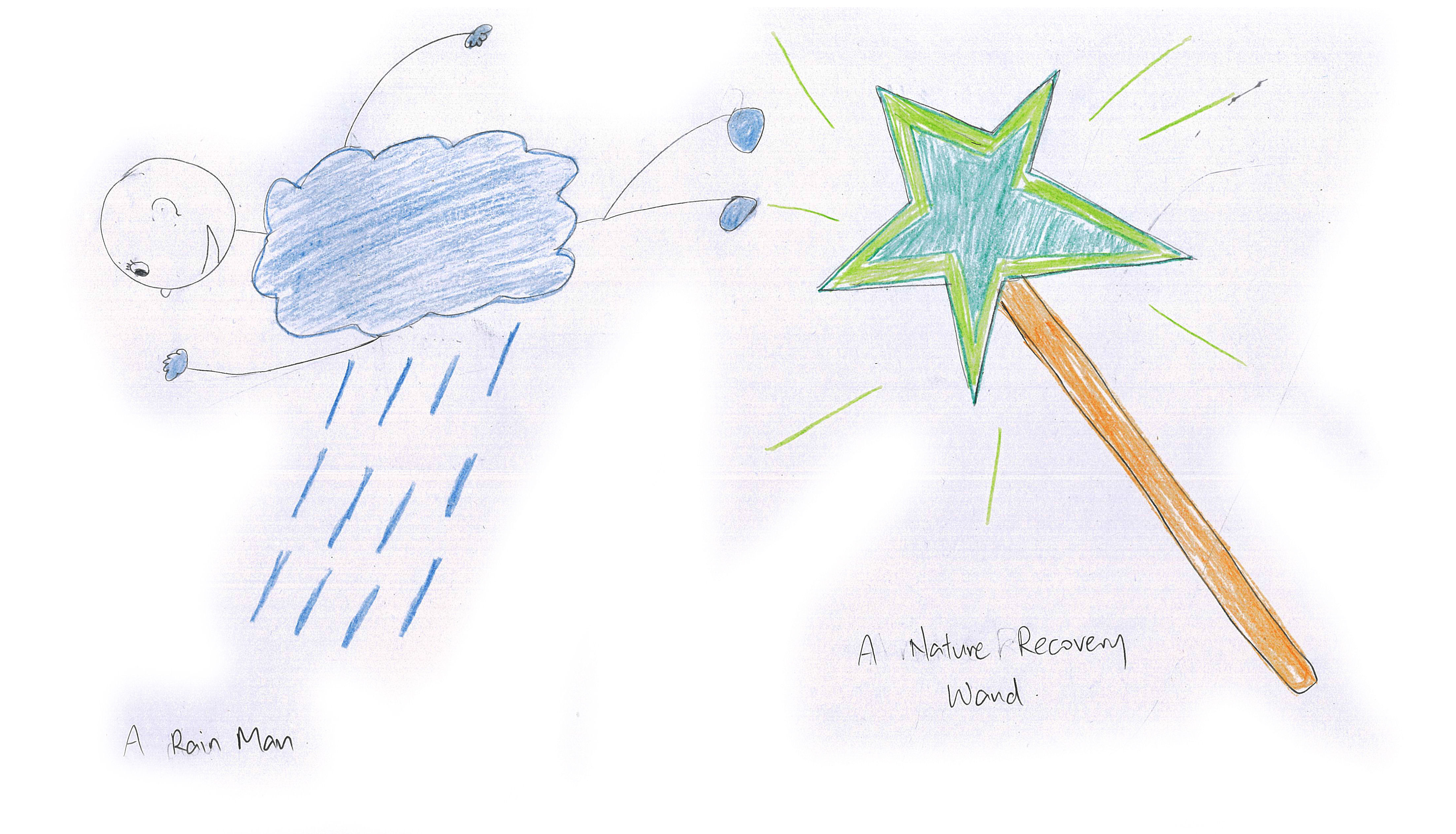
“A Rain Man. A Nature Recovery Wand.” —Tay Ying Ying
VictoriaEr

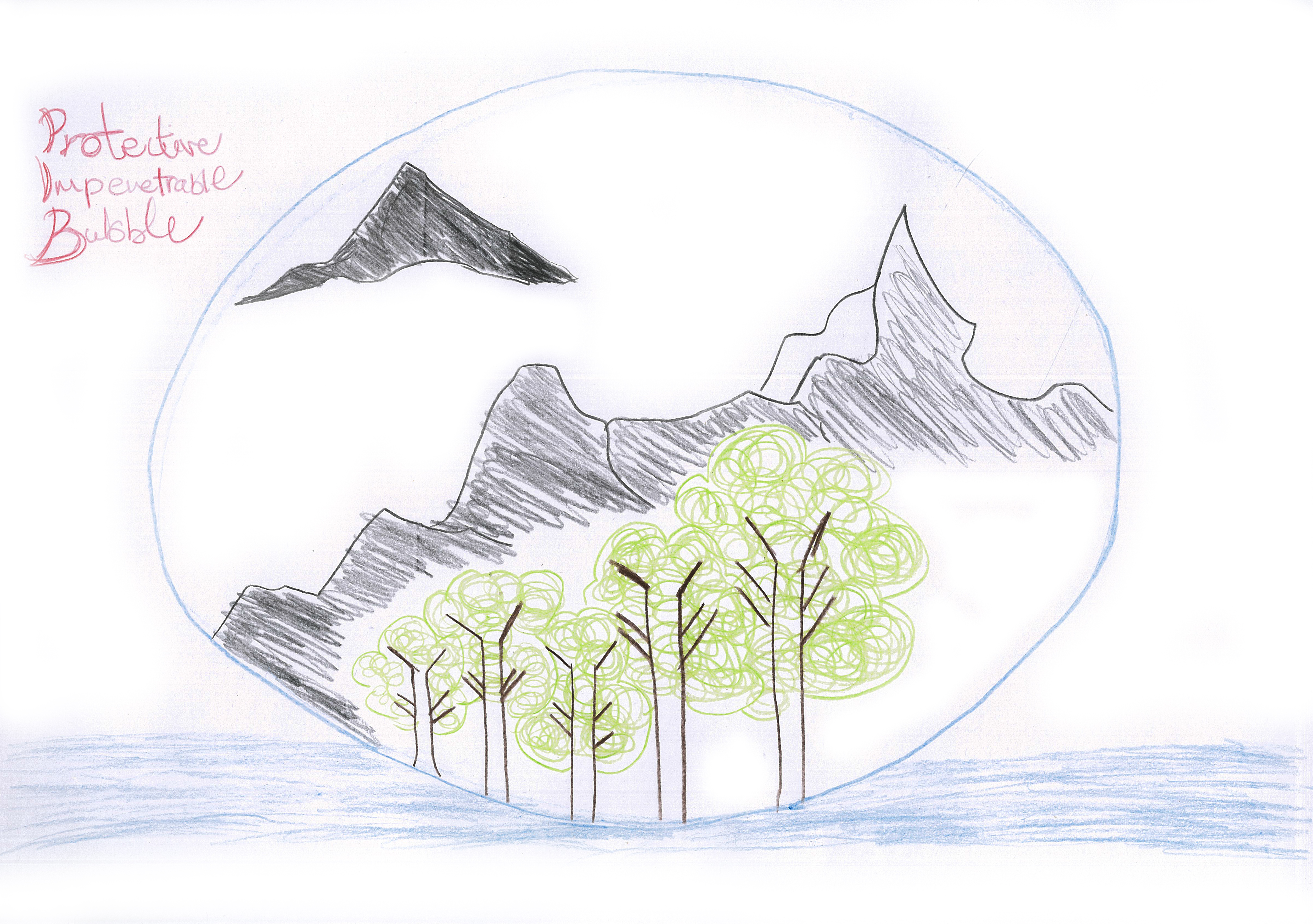
“Protective Impenetrable Bubble.”—Victoria Er

ZoeBezpalko

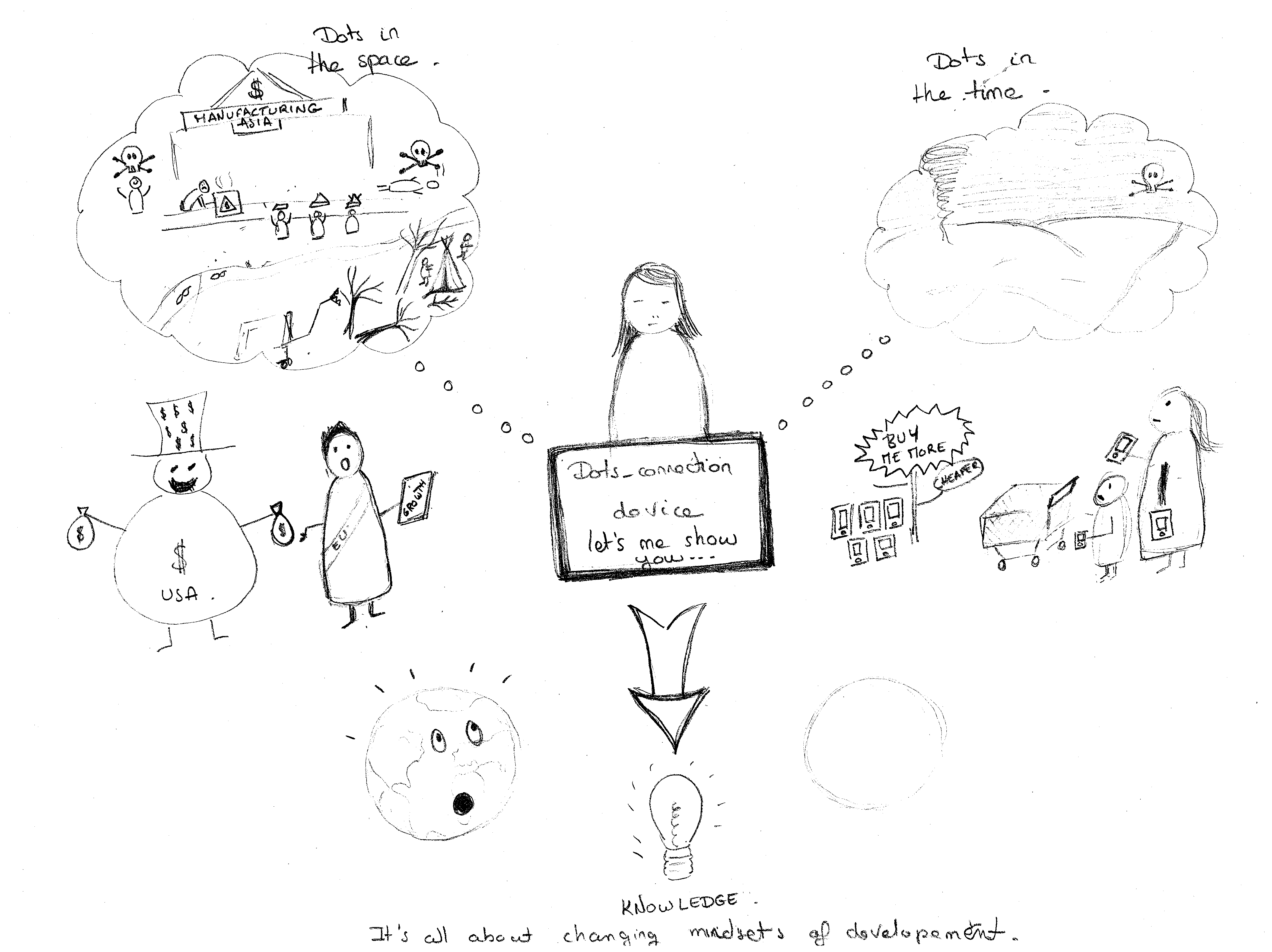
“Dots-connection deviece. It’s all about changing mindsets of development.” —Zoe Bezpalko

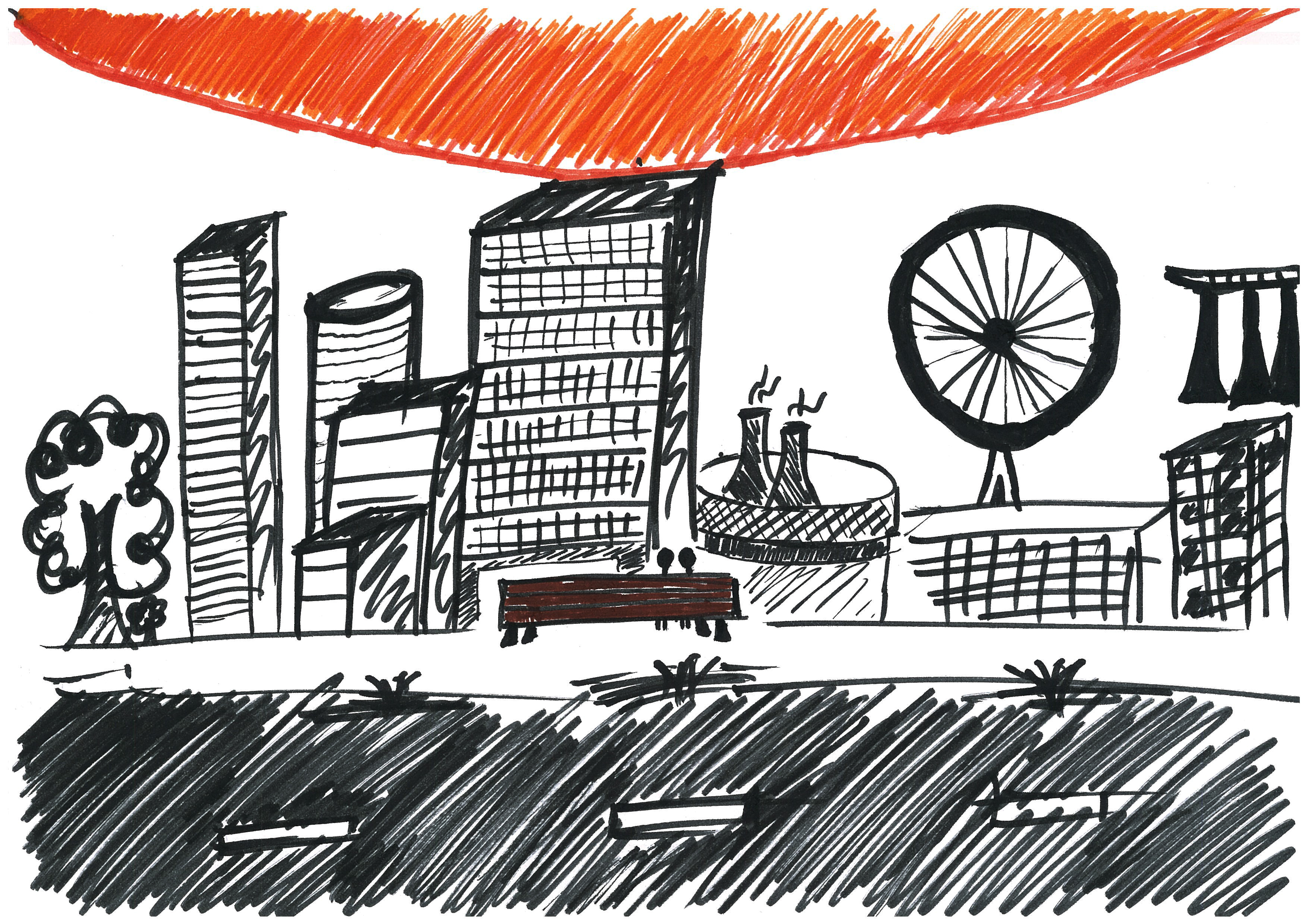
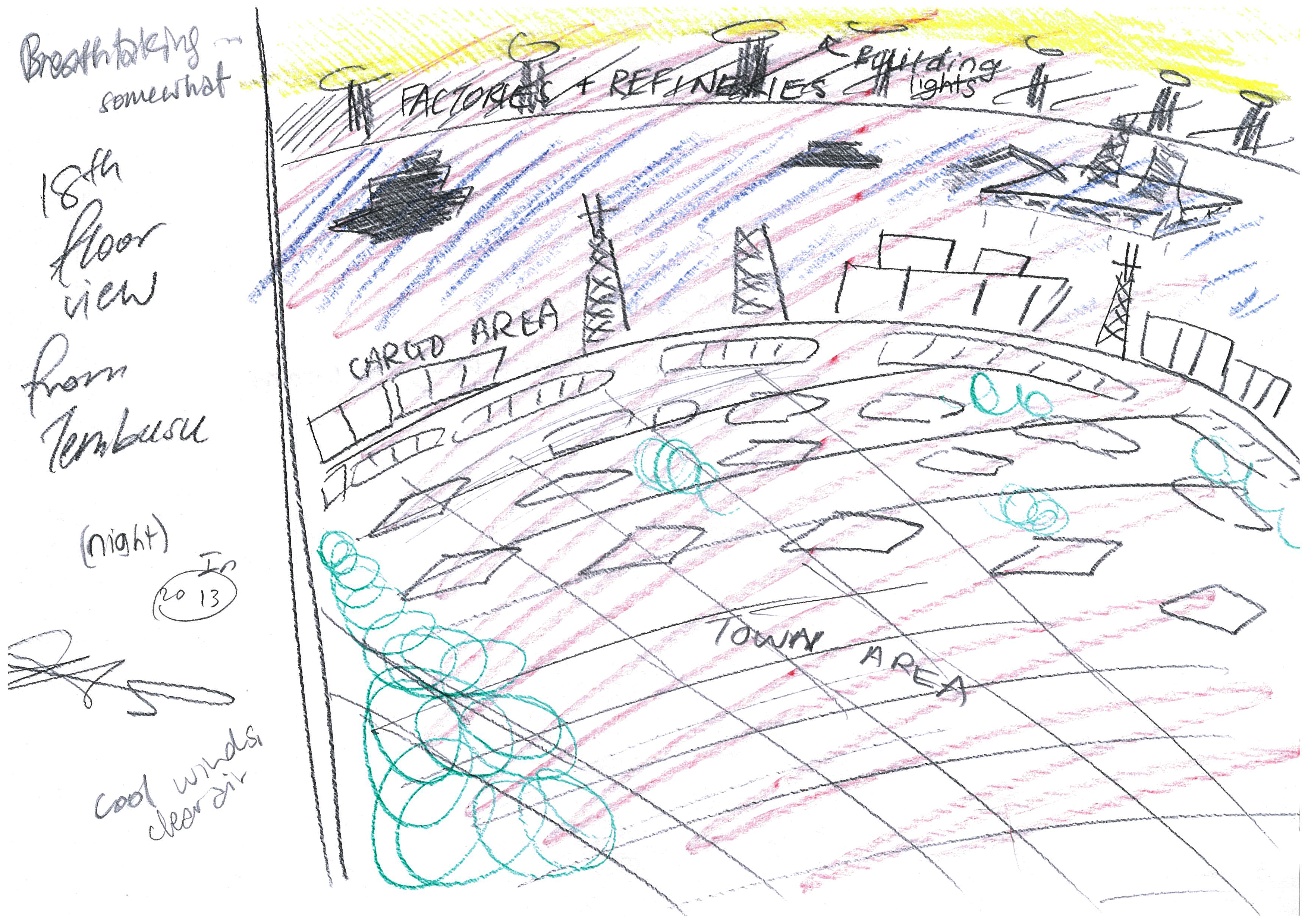
The Apocalypse Workshops that I held last week at Tembusu College, National University of Singapore yielded some very interesting results as to how young people view climate change nowadays. For this part, I asked them to pick a favorite place and describe in great detail how climate change will affect it 50 years hence.

Below are some results. Check out the future site of The Apocalypse Project here.
AdelineChang

Adeline Chang:

One of my current favourite places to be in the open air lift lobby in the Tembusu College building —on the 14th level. I go there at night, when I need to peace out or think or feel the coldness of the wind against my body. In the darkness all I can see are the faint outlines of treetops, and twinkling out of them are lights —staring eyes and the corners of a generous, comforting smile that engulfs me and my troubles. The lights of the buildings shine in the distance far, far behind the trees, and the air is fresh and cold. At half past 2 in the morning, there isn’t a soul around me, and calm falls over me like the softest blanket as the automatic corridor lighting clicks off. I breathe deep once, then once more.

50 years later I sneak back to that spot, my spot, on the 14th floor. I gaze out at the phantoms of trees past; my eyes glitter with the barest trace of tears. My mind runs free and in ecstasy, conjuring up the face that has kept me company through nights of intimate conversations, cup noodles, somber inner ramblings, the pure bliss of wind, sensation and being alive. But there are only glass towers now, beautiful and cold and hard and ugly and out of place. The wind I loved so is no more, it is warm today, too warm. As my eyes blur it becomes easier to pretend it is tears that shroud my vision—and not the haze of change.

AmandaTan

Amanda Tan Ying Shyuan:

Place: ocean
Climate problem: full-blown freezing of the top of the ocean waters

ArjunSaha

Arjun Saha:

Mt. Faber view point
Sunspots superheated

AuYongShiYa

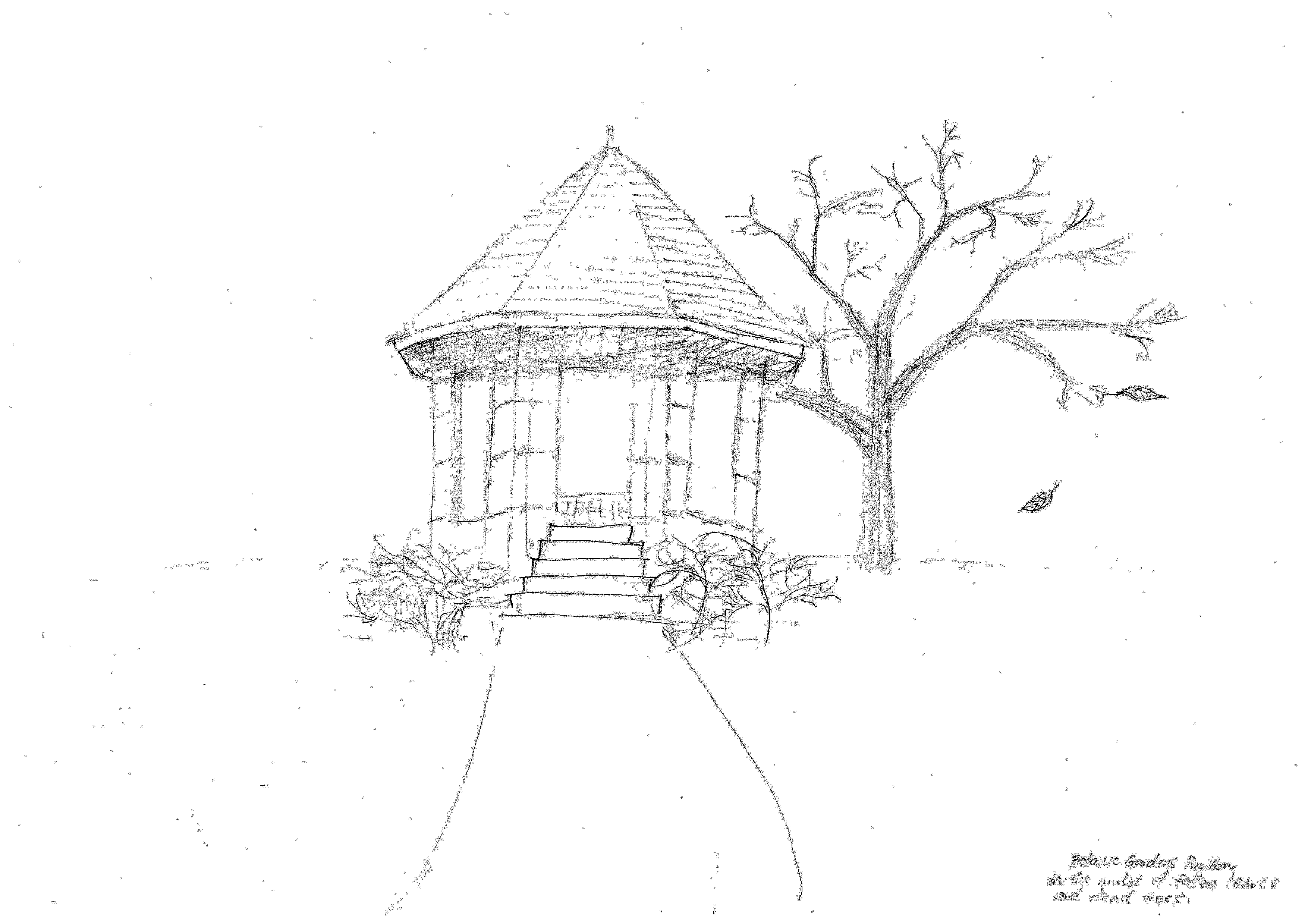
Au Yong Shi Ya:

Botanical Gardens Pavilion in the midst of fallen leaves and dead trees

CarminaCastro

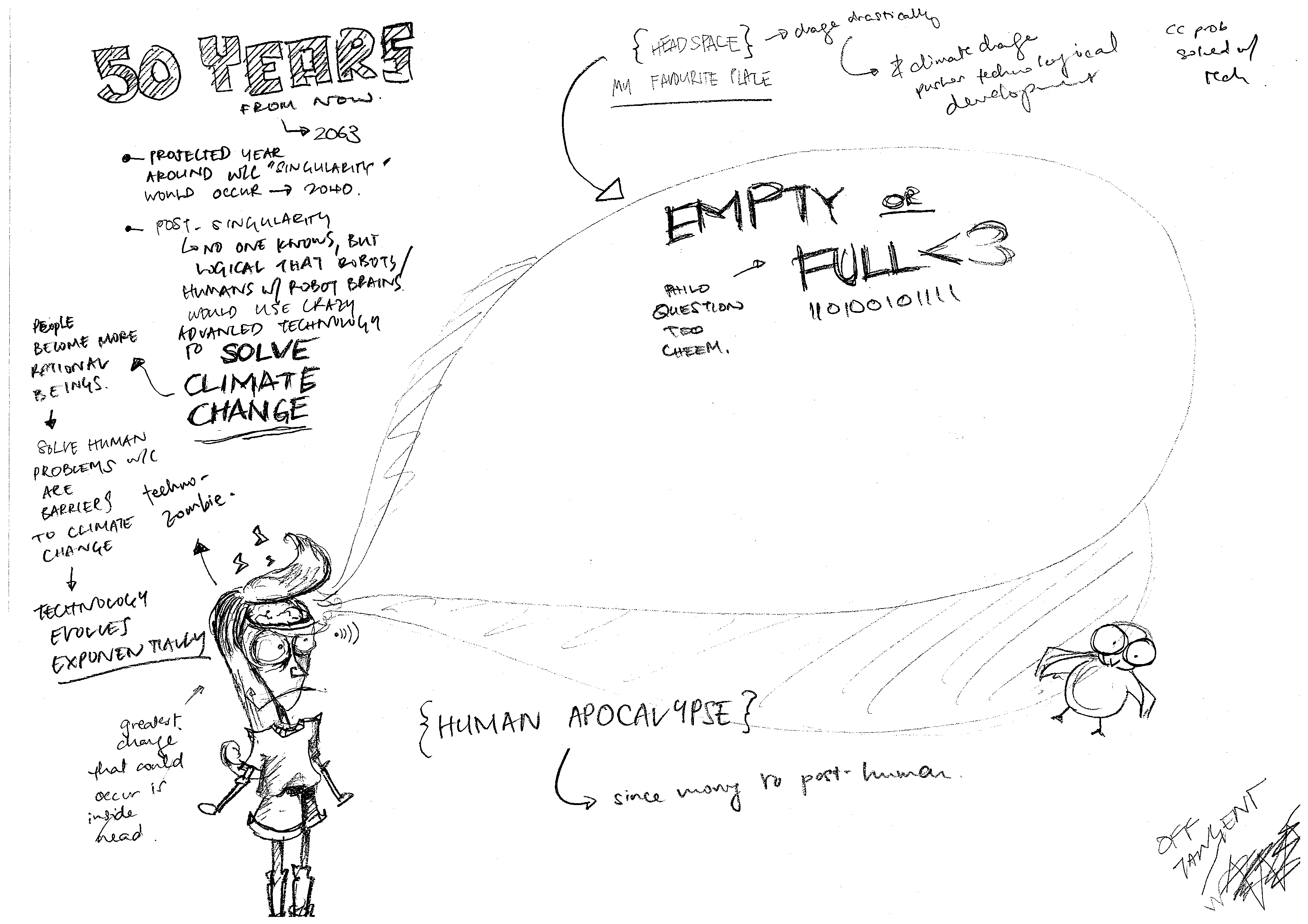
Carmina Castro:

My favorite place: Headspace > change drastically > Climate change pushes technological developments

50 years from now > 2063 > Projected year around which “singularity” will occur: 2040 > Post-singularity: no one knows, but logical that robots / humans with robot brains would use crazy advanced technology to solve climate change > People become more rational beings > Solve human problems which are barriers to climate change > Technology evolves exponentially

Greatest change that could occur is inside head.

Human apocalypse? since moving to post-human.

CassandraTeo

CassandraTeo2

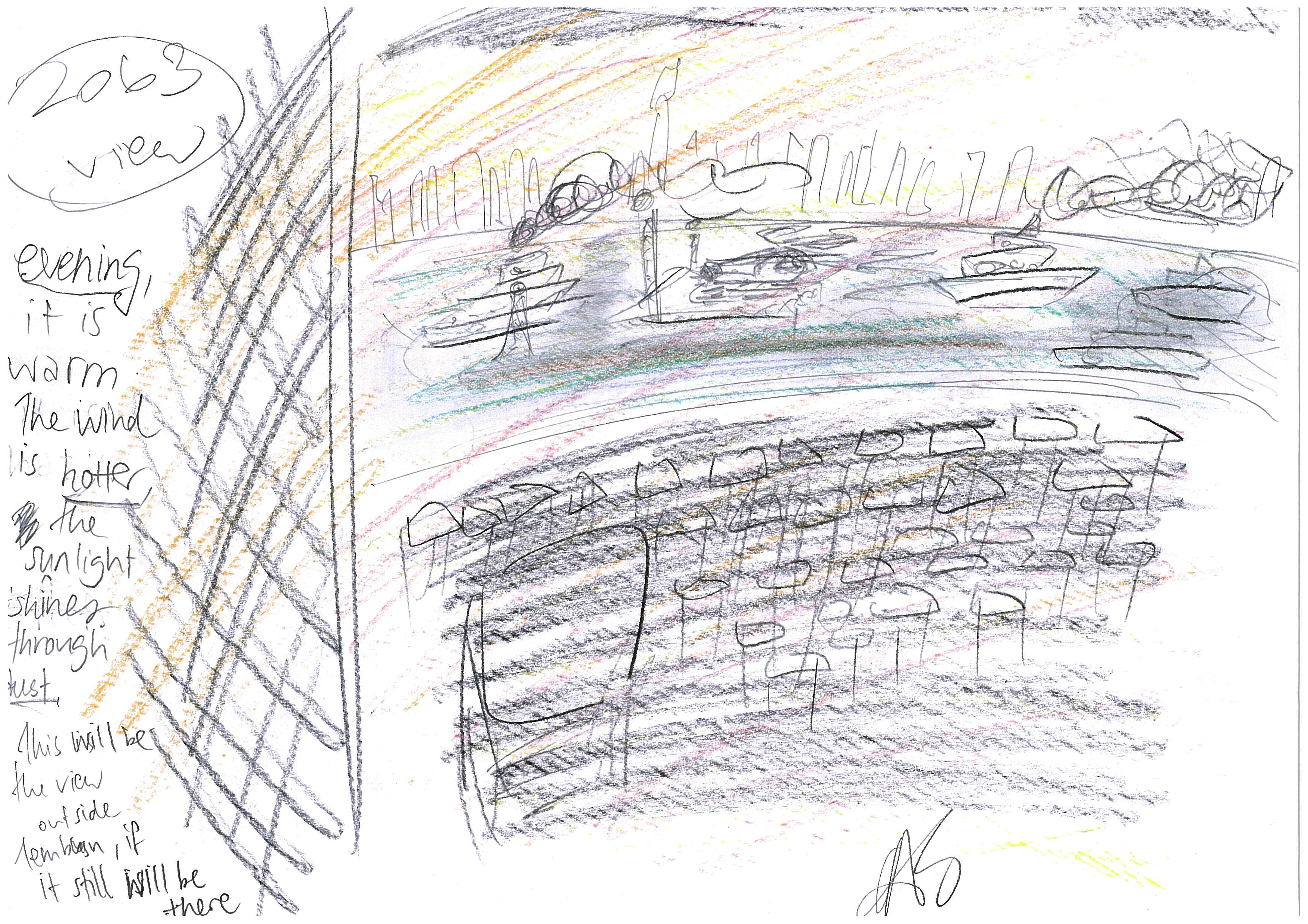
Cassandra Teo:

2063 view:

Evening, it is warm. The wind is hotter, the sunlight shines through dust. This will be the view outside Tembusu, if it still will be there.

ChanSzeHow

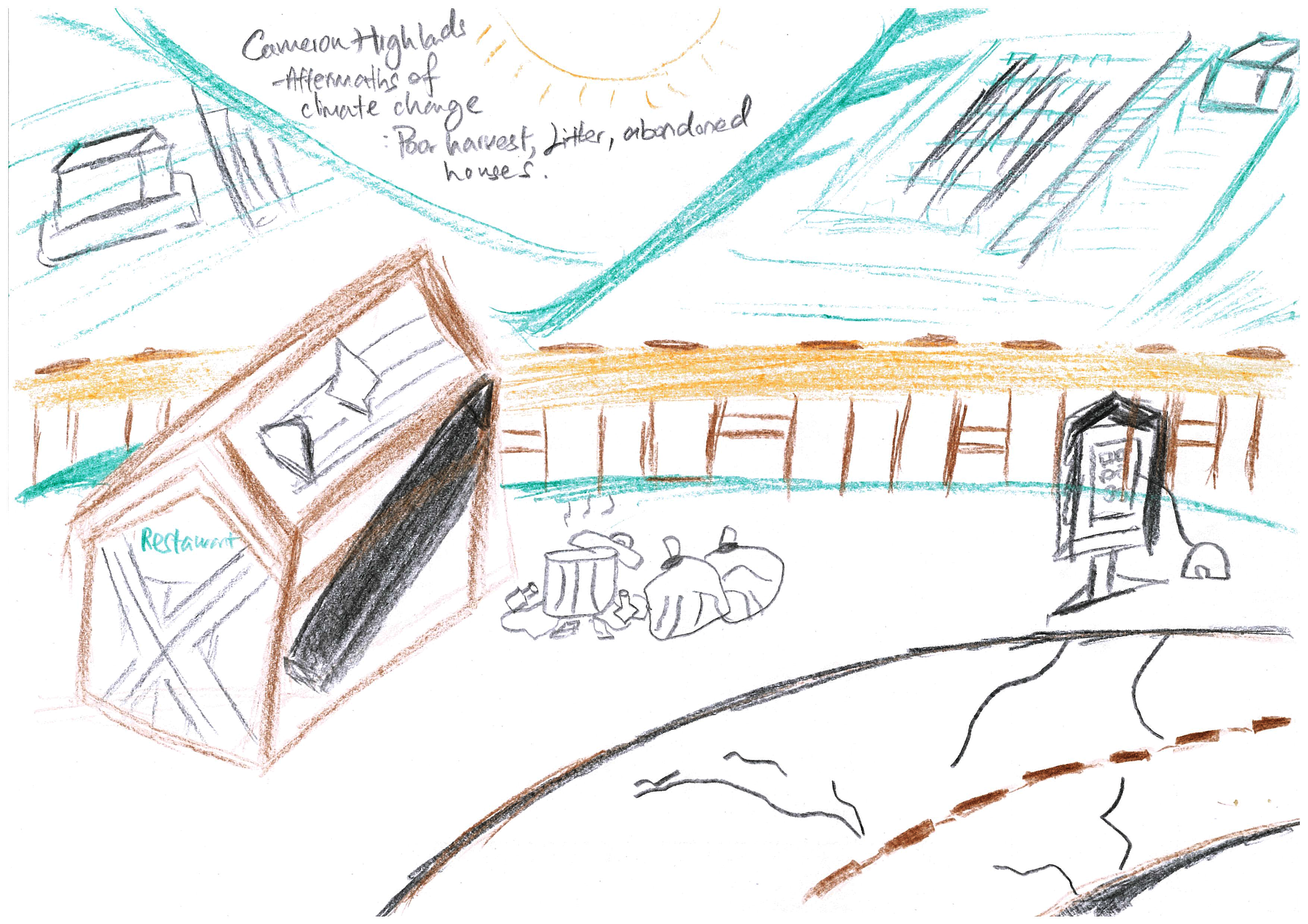
Chan Sze How:

This image is a location in the Cameron Highlands, Malaysia. 50 years on, with changing climatic conditions, poor harvests (characterised by the black outlines on the slopes of the mountains) and the abandoned town is obsessed. This place relies heavily on subsistence farming which explains why the place is abandoned due to poor crop yield.

CherlynTan

Cherlyn Tan:

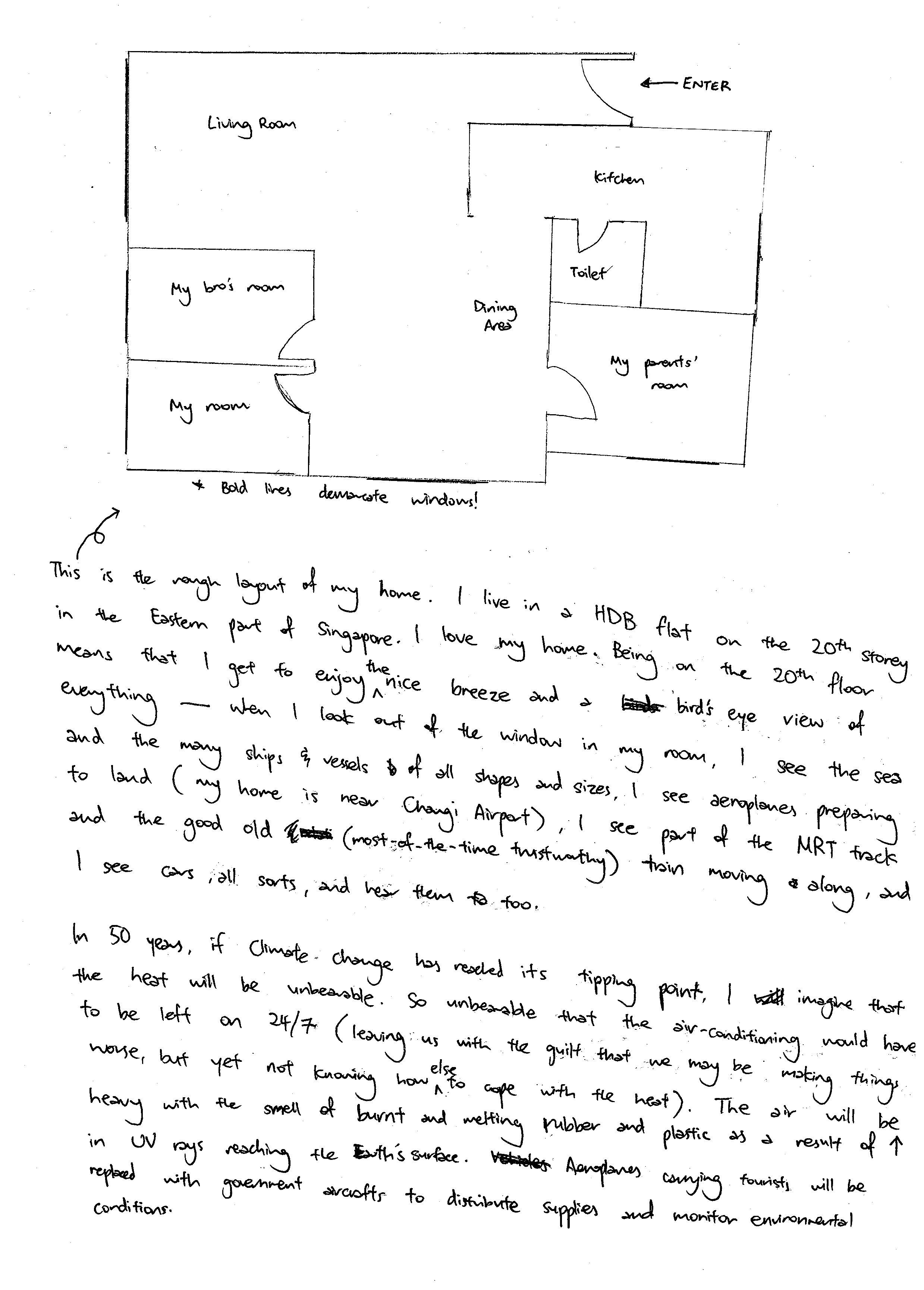
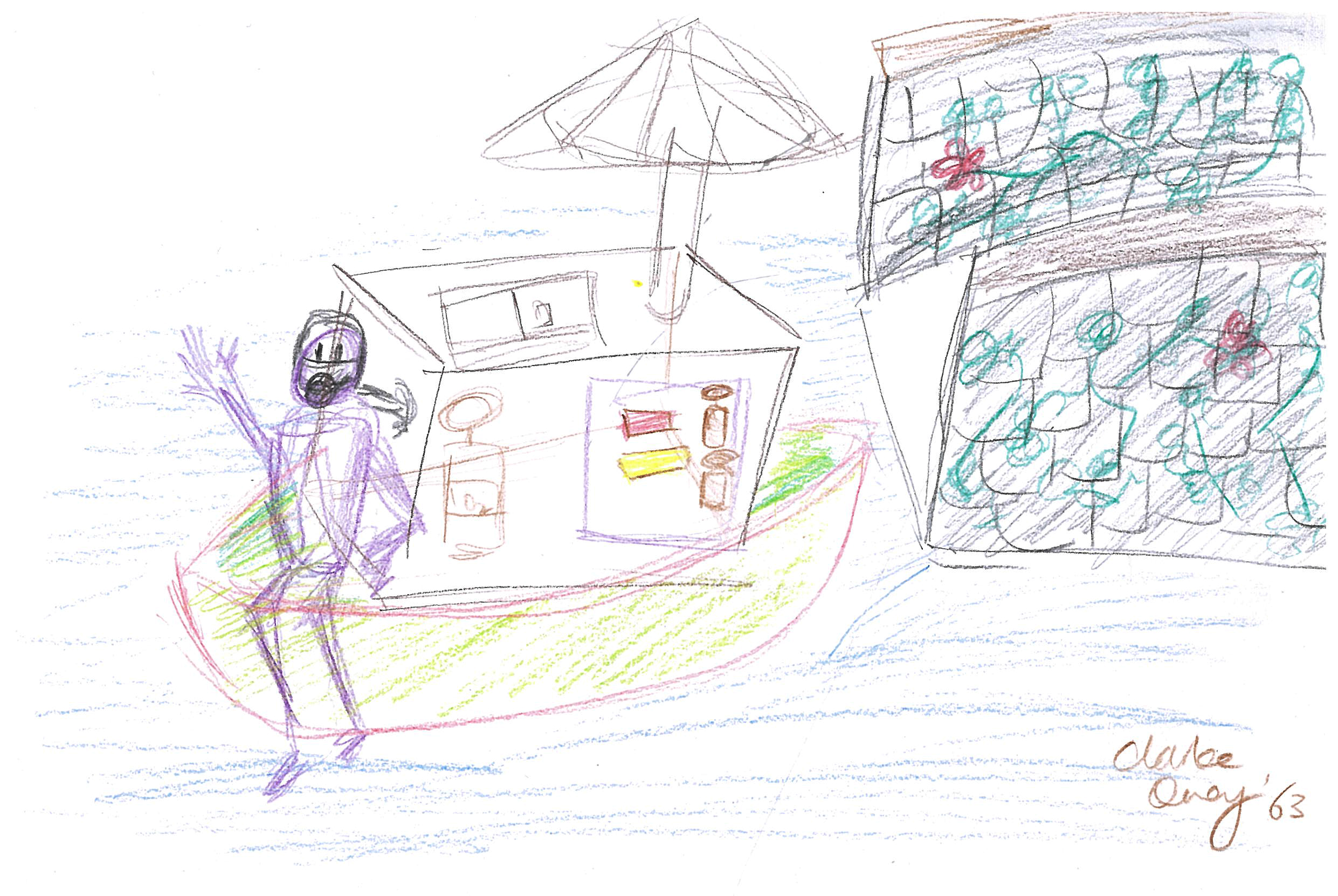
This is the rough layout of my home. I live in a HDB flat on the 20th storey in the Eastern part of Singapore. I love my home. Being on the 20th floor means that I get to enjoy the nice breeze and a bird’s eye view of everything—when I look out of the window in my room, I see the sea and the many ships and vessels of all shapes and sizes. I see aeroplanes preparing to land (my home is near Changi Airport), I see part of the MRT track and the good old (most-of-the-time trustworthy) train moving along, and I see cars, all sorts, and hear them, too.

In 50 years, if climate change has revealed its tipping point, I imagine that the heat will be unbearable. So unbearable that the air-conditioning would have to be left on 24/7 (leaving us with the guilt that we may be making things worse, but yet not knowing how else to cope with the heat). The air will be heavy with the smell of burnt and melting rubber and plastic as a result of [increase] in UV rays reaching the Earth’s surface. Aeroplanes carrying tourists will be replaced with government aircrafts to distribute supplies and monitor environmental conditions.

GeorgiaTam

Georgia Tam:

Oxford

GermaineGoh

Germaine Goh:

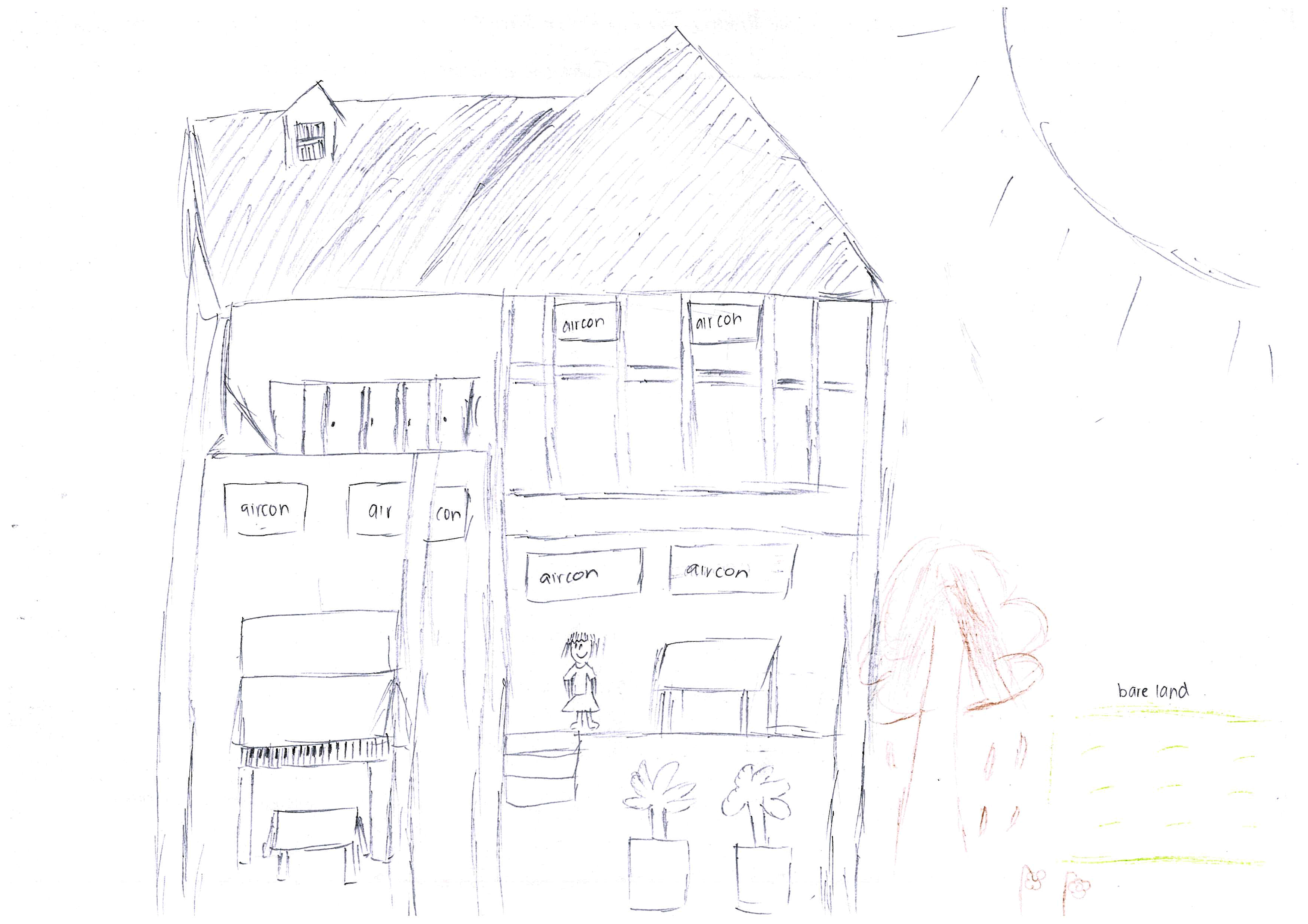
In 50 years, I imagine my house to be my little safe haven, whereby life will be unbearable without aircon (as see by the increase in number of air-conditioner present). Furthermore, my plants will have to be indoor plants for the heat will be unbearable under the hot sun. Trees will not survive (fallen leaves) and the land will be bare (no plants can grow) in the garden outside my house. My safe haven will have my piano still. 🙂JaredKoh

Jared Koh:

Neo-Atlantis

JonathanT

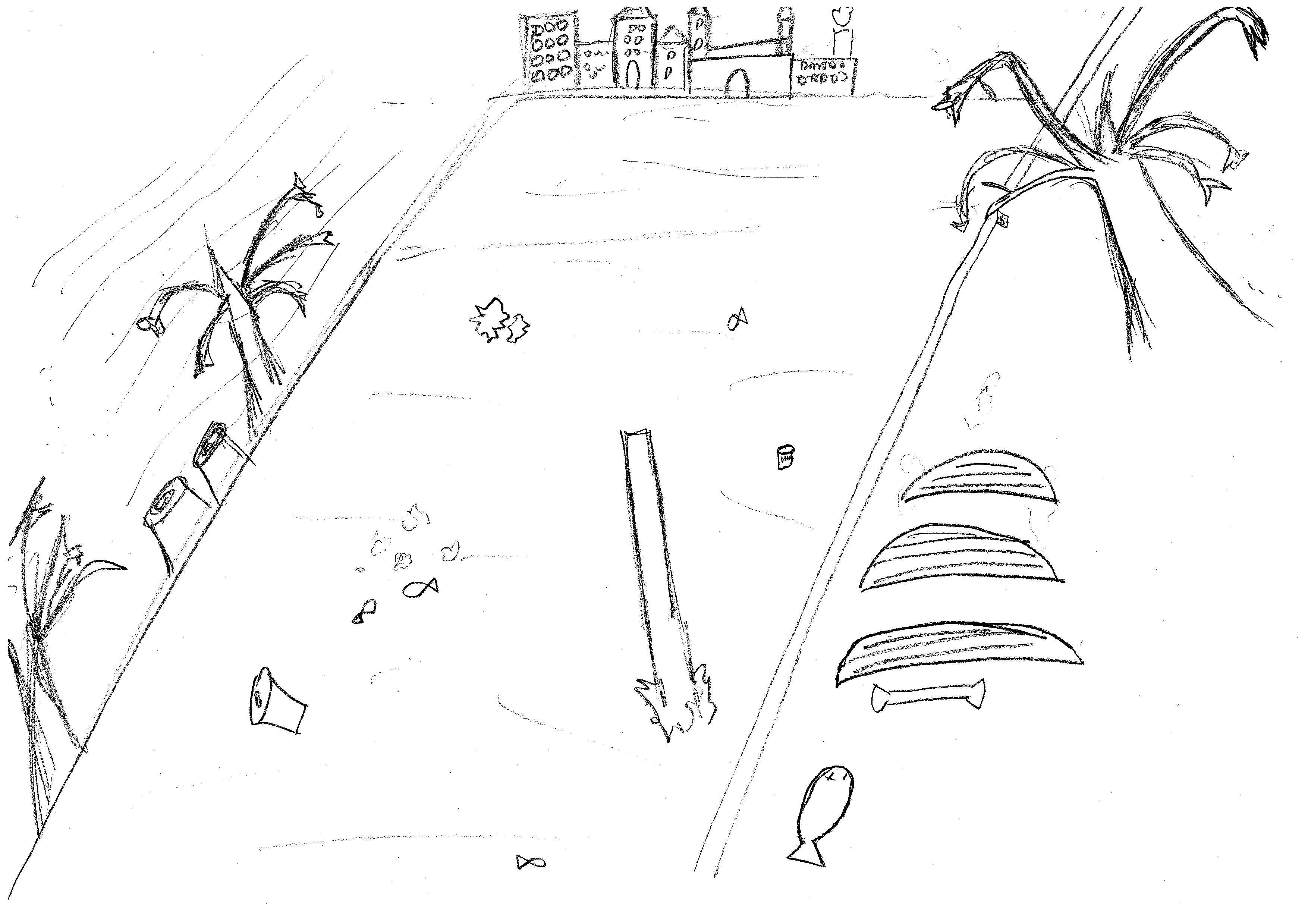
Jonathan T:

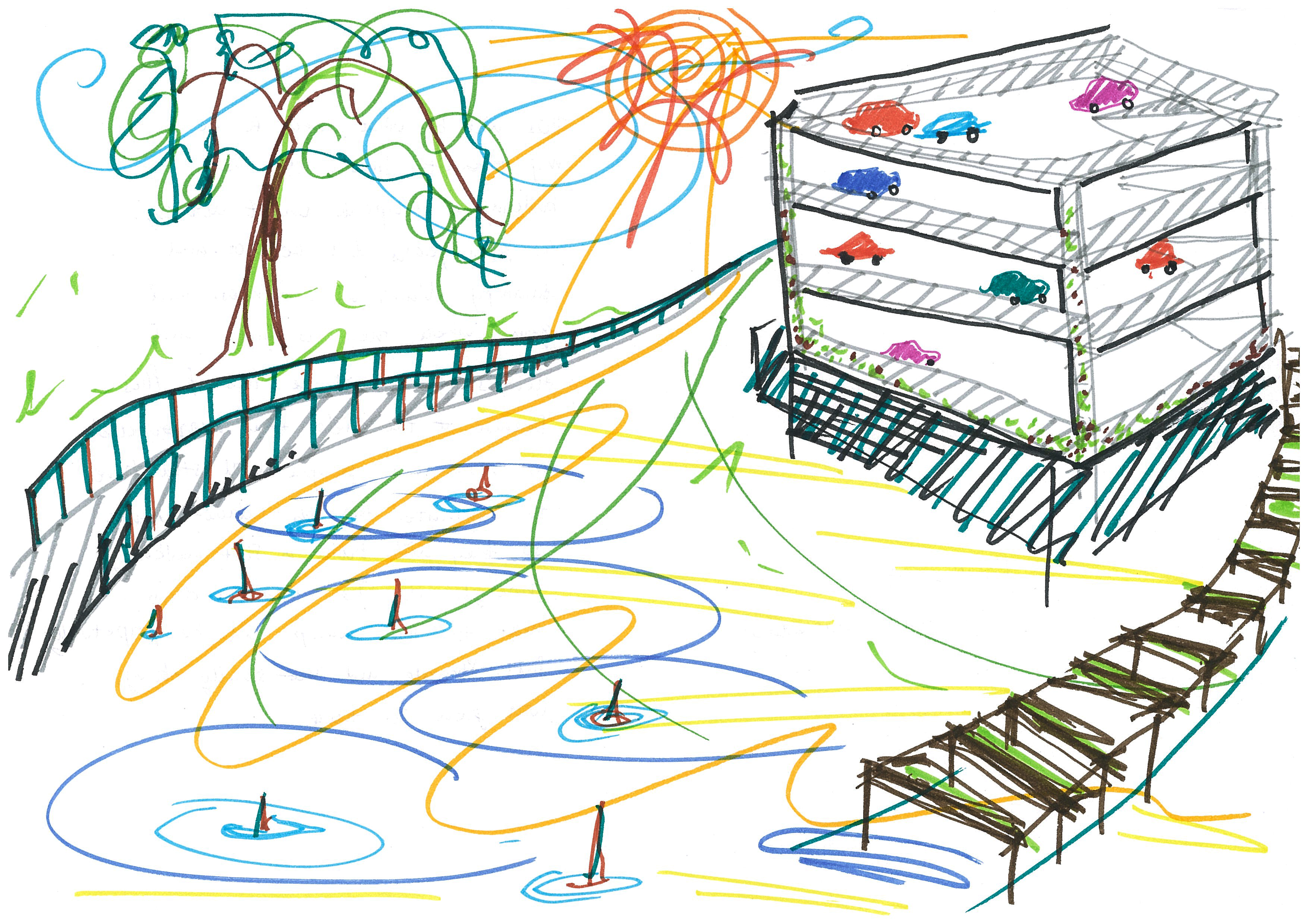
This is what used to be my favorite field. They are building a car park on it already. In fifty years it’ll be hot and swampy. Mangroves and moss will grow where there is grass and flowers. There will be lots of flies. Because the field is surrounded by residences, people will still have to commute through future-swamp. So they will build a stilt walkway through it. The monsoon drain next to the swamp will be perpetually full. Strange and smelly things will grow in there.

LamYuenKei

Lam Yuen Kei:

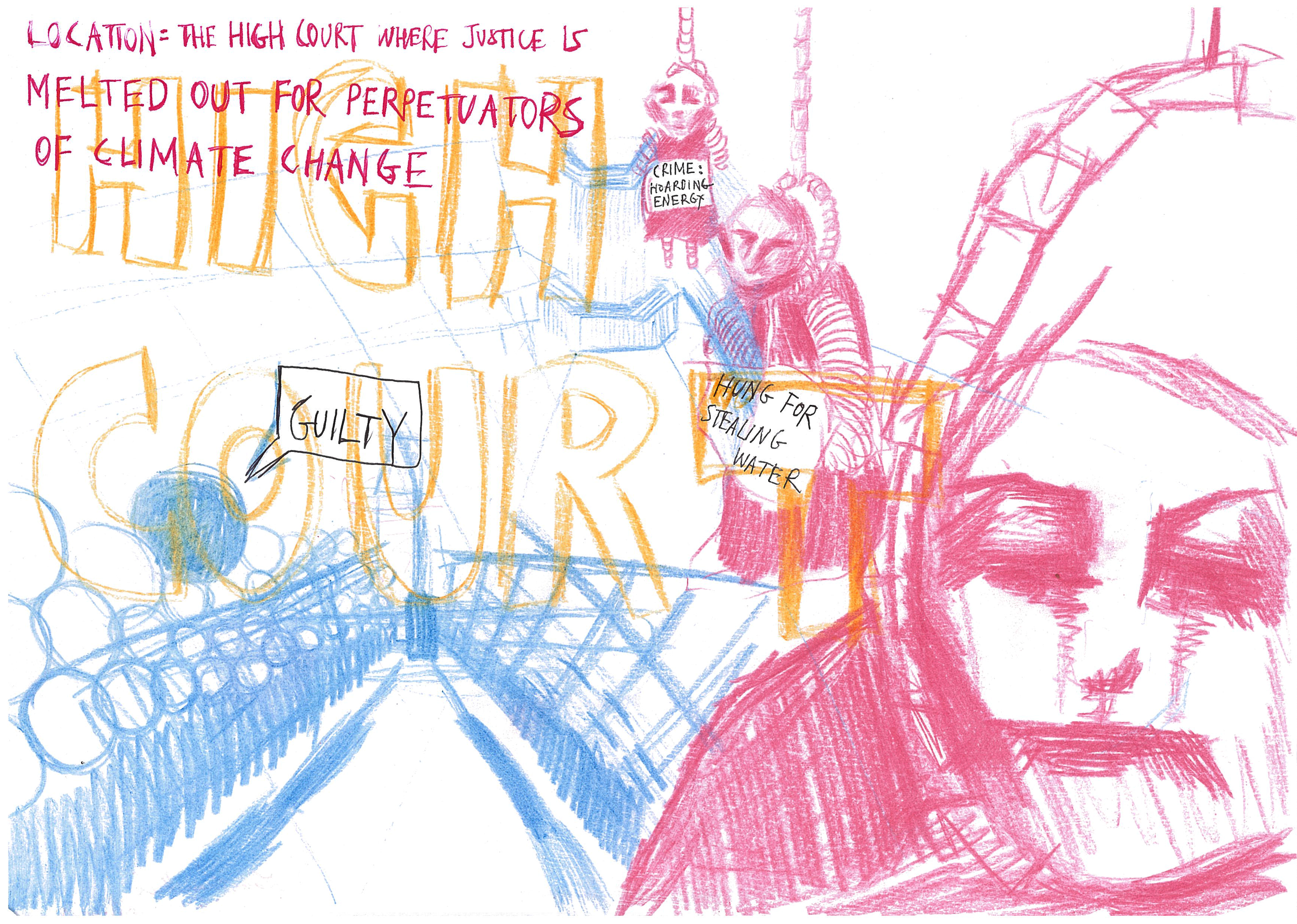
Location: The High Court where justice is meted out for perpetuators of climate change

[Shown: people who are hanged for stealing water]

LeeYingLin

Lee Ying Lin:

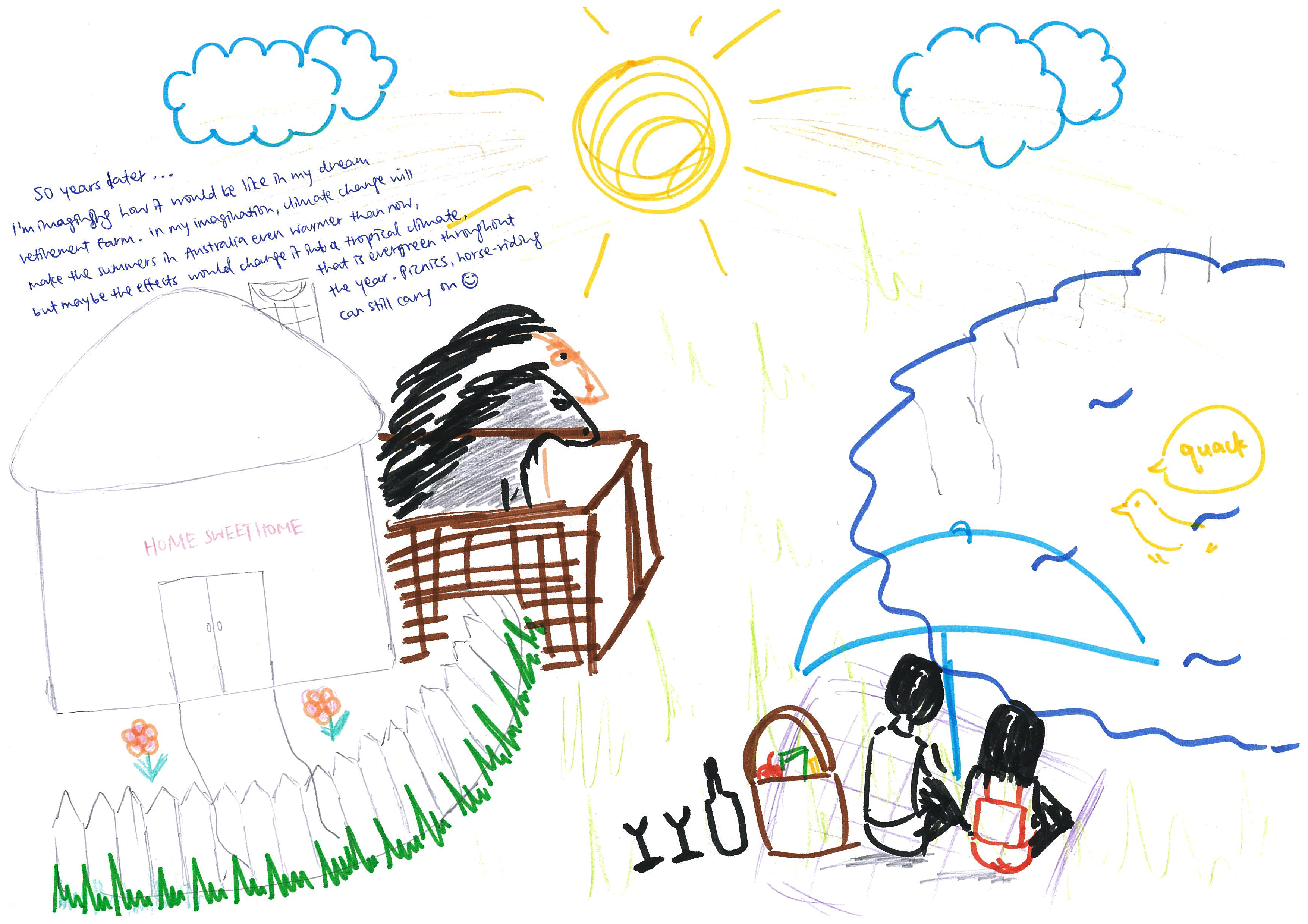
50 years later… I’m imagining how it would be like in my dream retirement farm. In my imagination, climate change will make the summers in Australia even warmer than now, but maybe the effects would change it into a tropical climate, that is evergreen throughout the year. Picnics, horse-riding can still carry on.

LyciaHo

Lycia Ho:

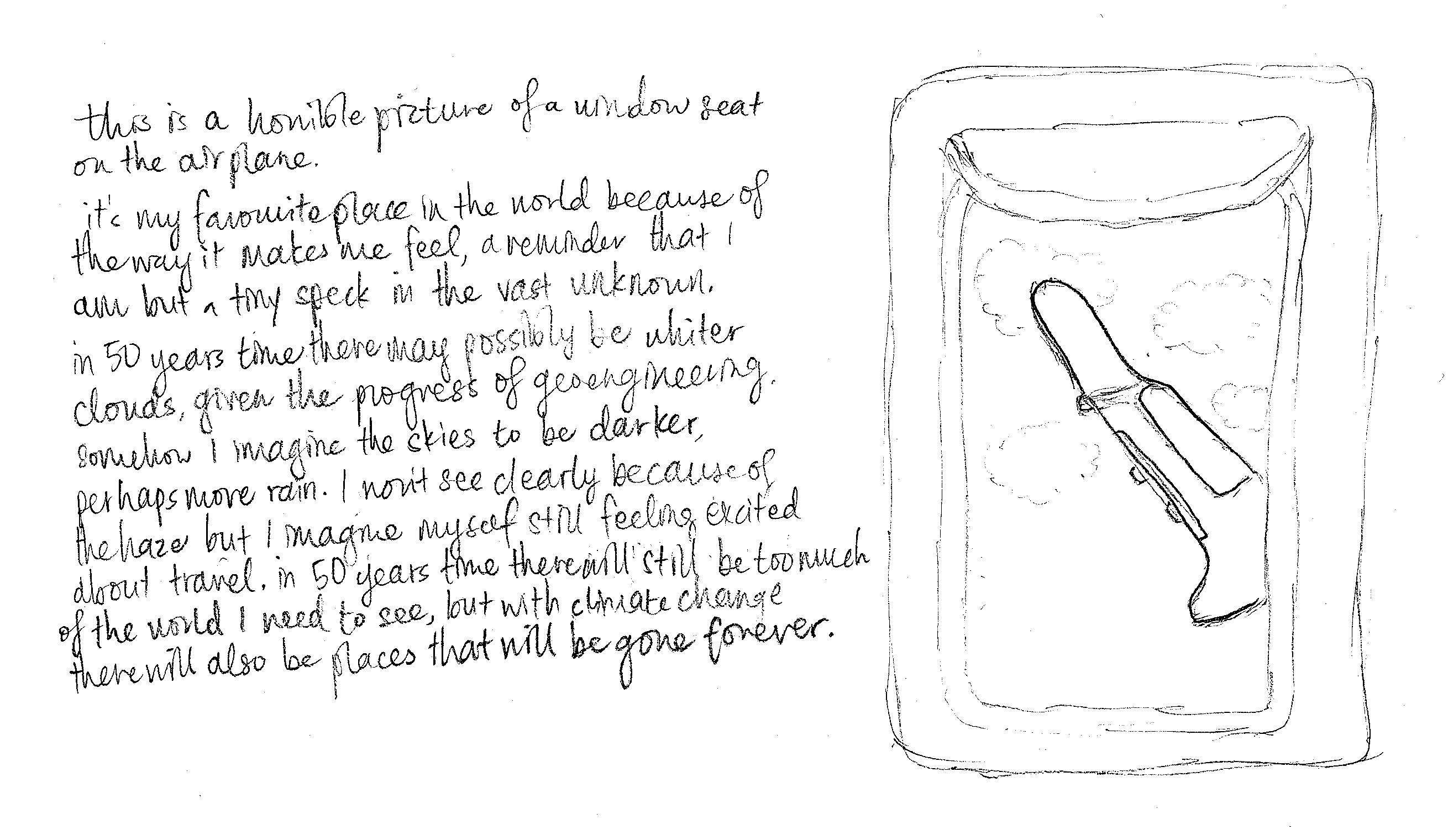
This is a horrible picture of a window seat on the airplane. It’s my favourite place in the world because of the way it makes me feel, a reminder that I am but a tiny speck in the vast unknown. In 50 years’ time there may possibly be whiter clouds, given the progress of geoengineering. Somehow, I imagine the skies to be darker, perhaps more rain. I won’t see clearly because of the haze but I imagine myself still feeling excited about travel. In 50 years’ time there will still be too much of the world I need to see, but with climate change there will also be places that will be gone forever.

NaomiNebh

RachelLee

Rachel Lee:

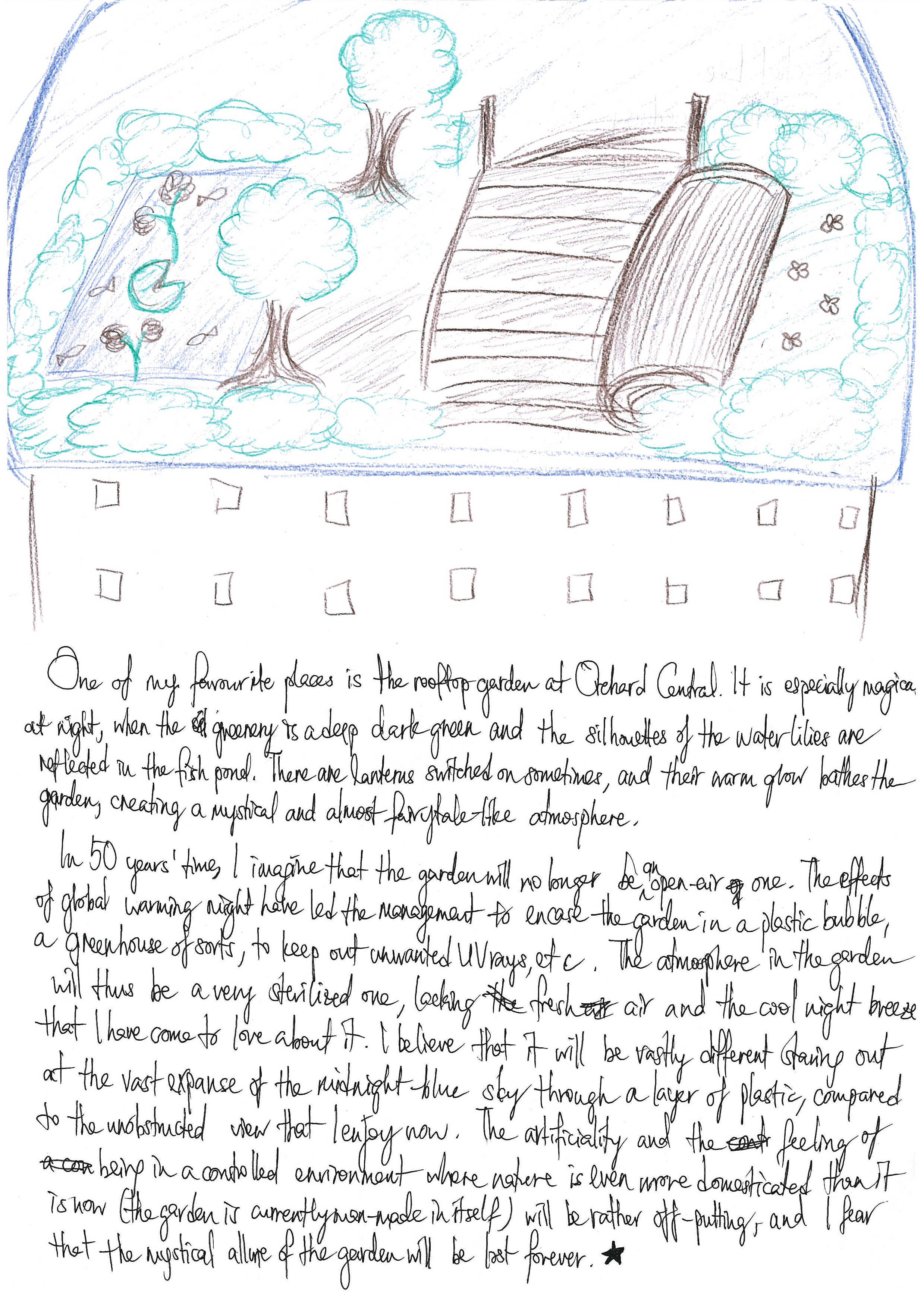
One of my favourite places is the rooftop garden at Orchard Central. It is especially magical at night, when the greenery is a deep dark green and the silhouettes of the water lilies are reflected in the fish pond. THere are lanterns switched on sometimes, and their warm glow battles the garden, creating a mystical and almost fairytale-like atmosphere.

In 50 year’s time, I imagine that the garden will no longer be an open-air one. The effects of global warming might have led the management to encase the garden in a plastic bubble, a greenhouse of sorts, to keep out unwanted UV rays, etc. The atmosphere in the garden will thus be a very sterilized one, lacking fresh air and the cool night breeze that I have come to love about it. I believe that it will be vastly different staring out at the vast expanse of the midnight-blue sky through a layer of plastic, compared to the unobstructed view that I enjoy now. The artificiality and the feeling of being in a controlled environment where nature is even more domesticated than it is now (the garden is currently man0made in itself) will be rather off-putting, and I fear that the mystical allure of the garden will be lost forever.

SarahLim

Sarah Lim Shu Hui

SonjaChua

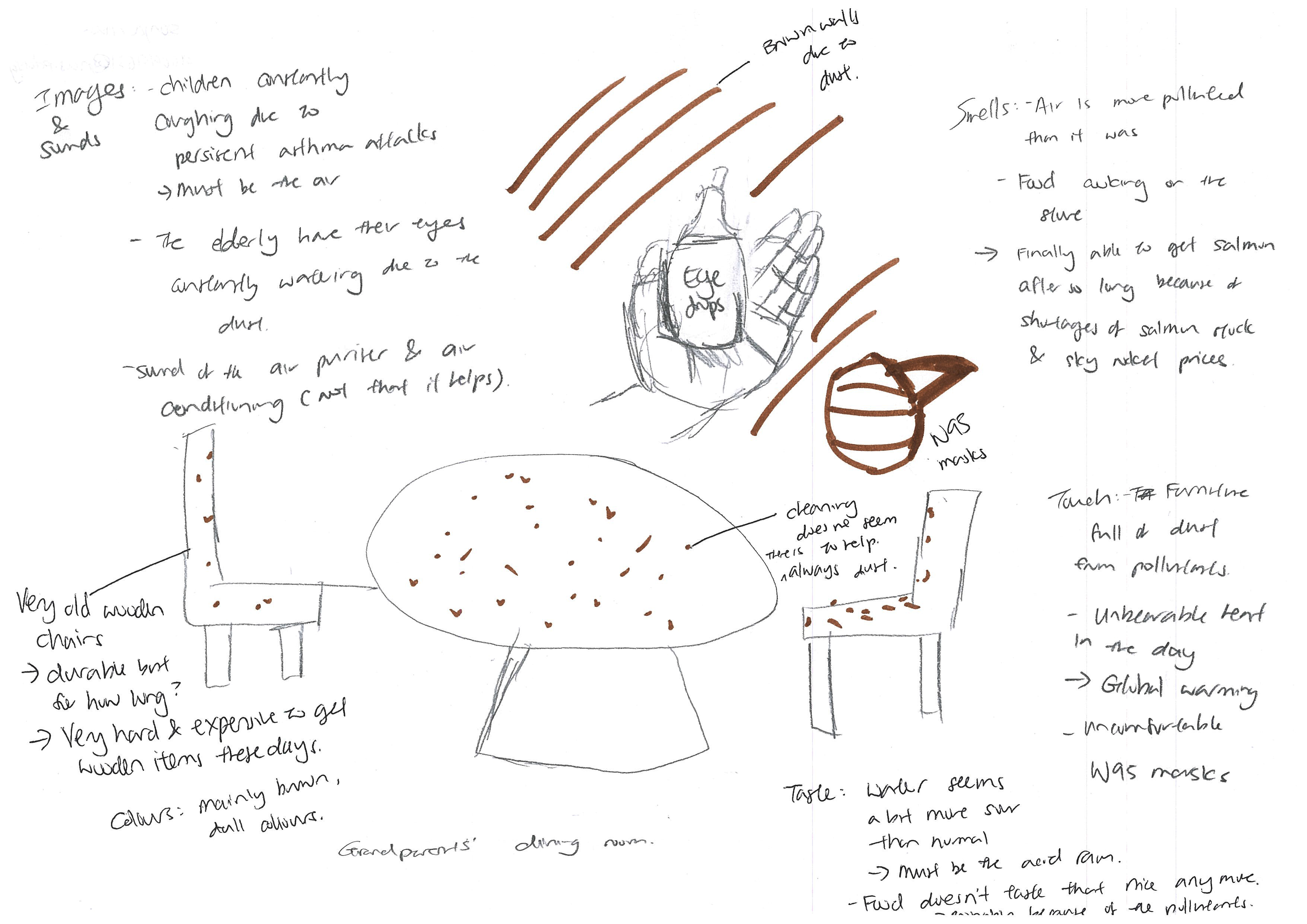
Sonja Chua:

Images and sounds:
– Children consistently coughing due to persistent asthma attacks > must be the air
-The elderly have their eyes constantly watering due to the dust.
– Sound of the air purifier and air conditioning (not that helps).

Smells:
– Air is more polluted that it was.
– Finally able to get salmon after so long because of shortages of salmon and sky rocket prices.

Touch:
– Furniture full of dust from pollutants
– Unbearable heat in the day
– Global warming

Taste:
– Water seems a bit more sour than normal > must be the acid rain.
– Food doesn’t taste that nice anymore > probably because of the pollutants.

TayYingYing

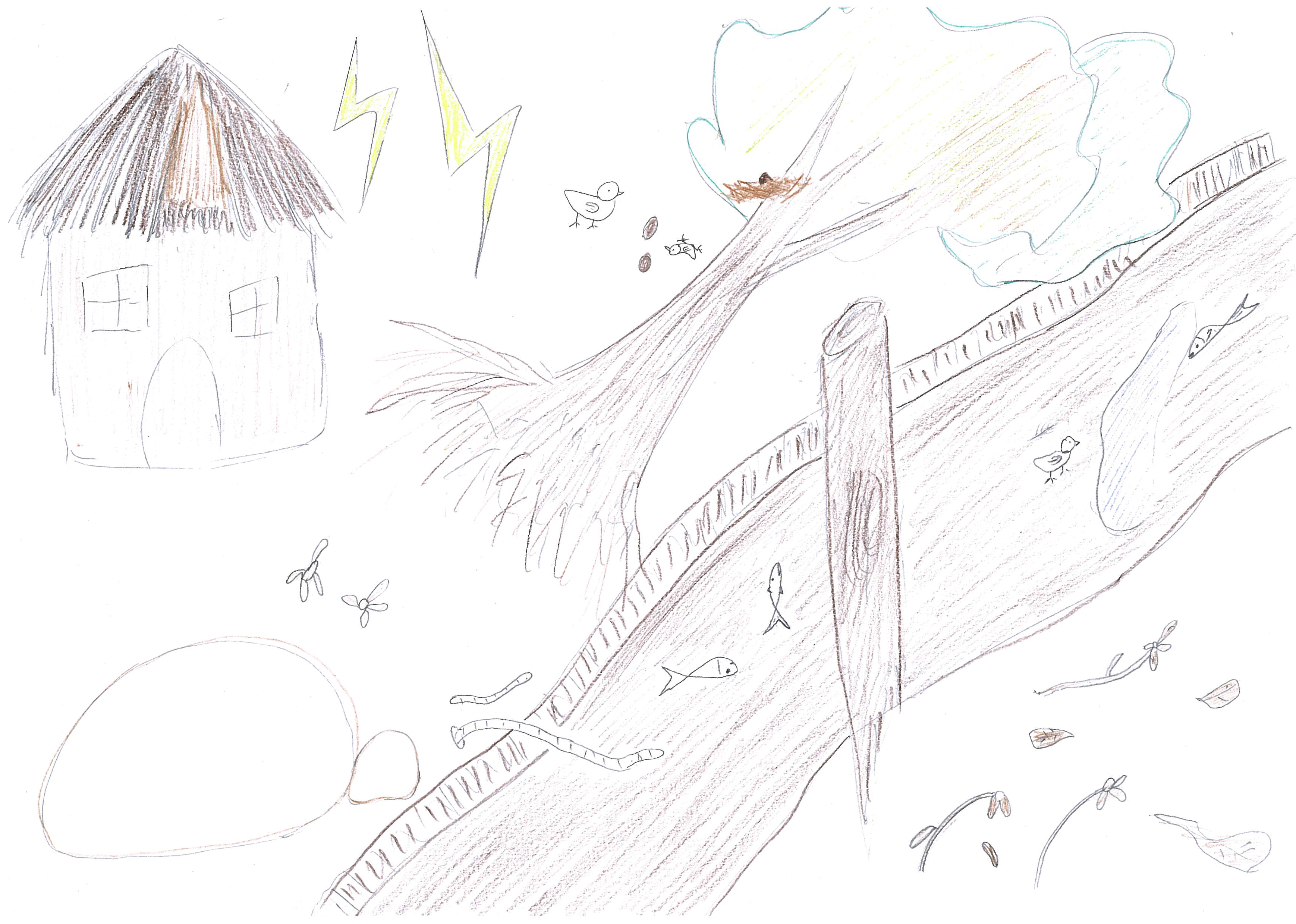
Tay Ying Ying:

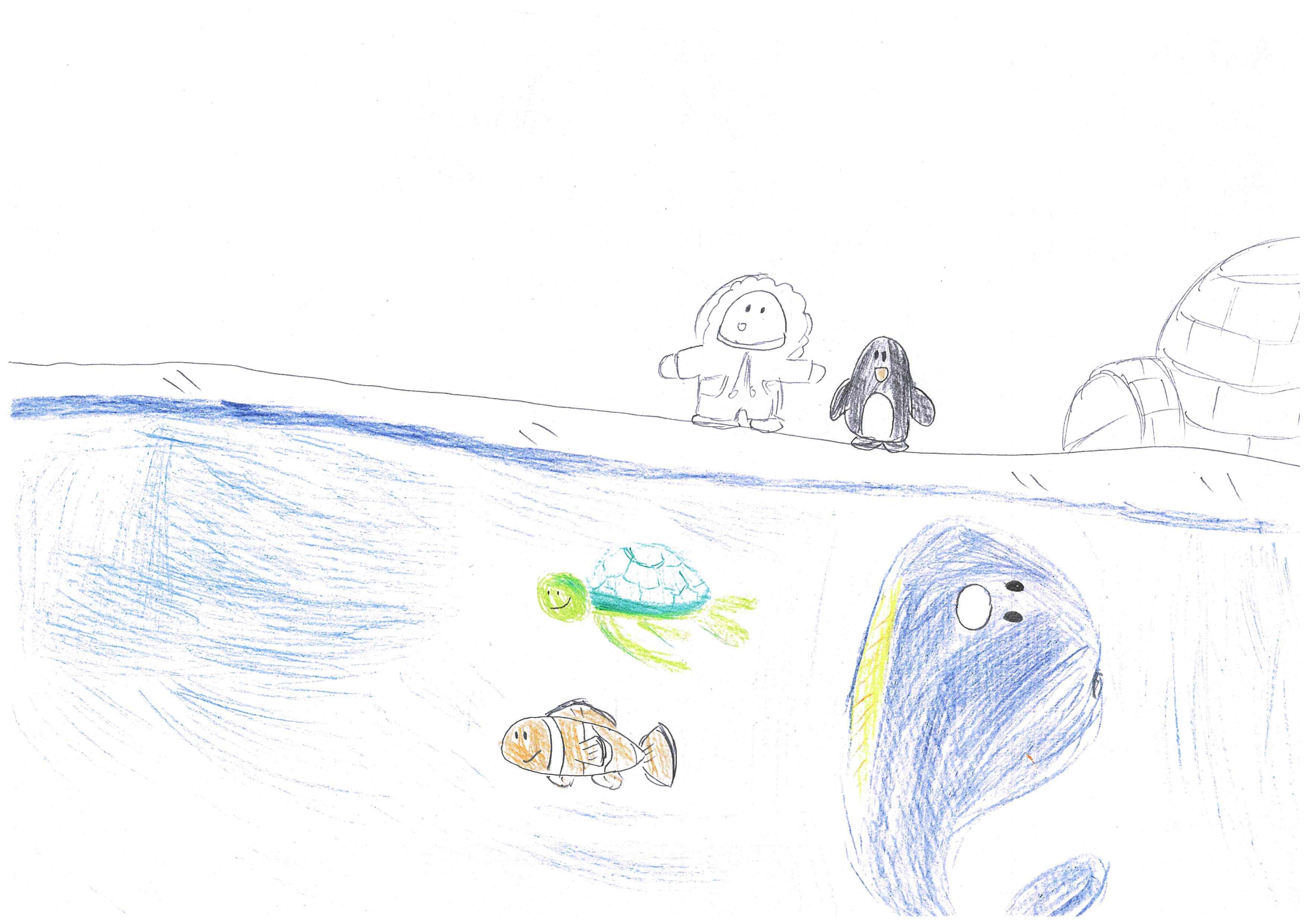
The Death of NatureVictoriaEr

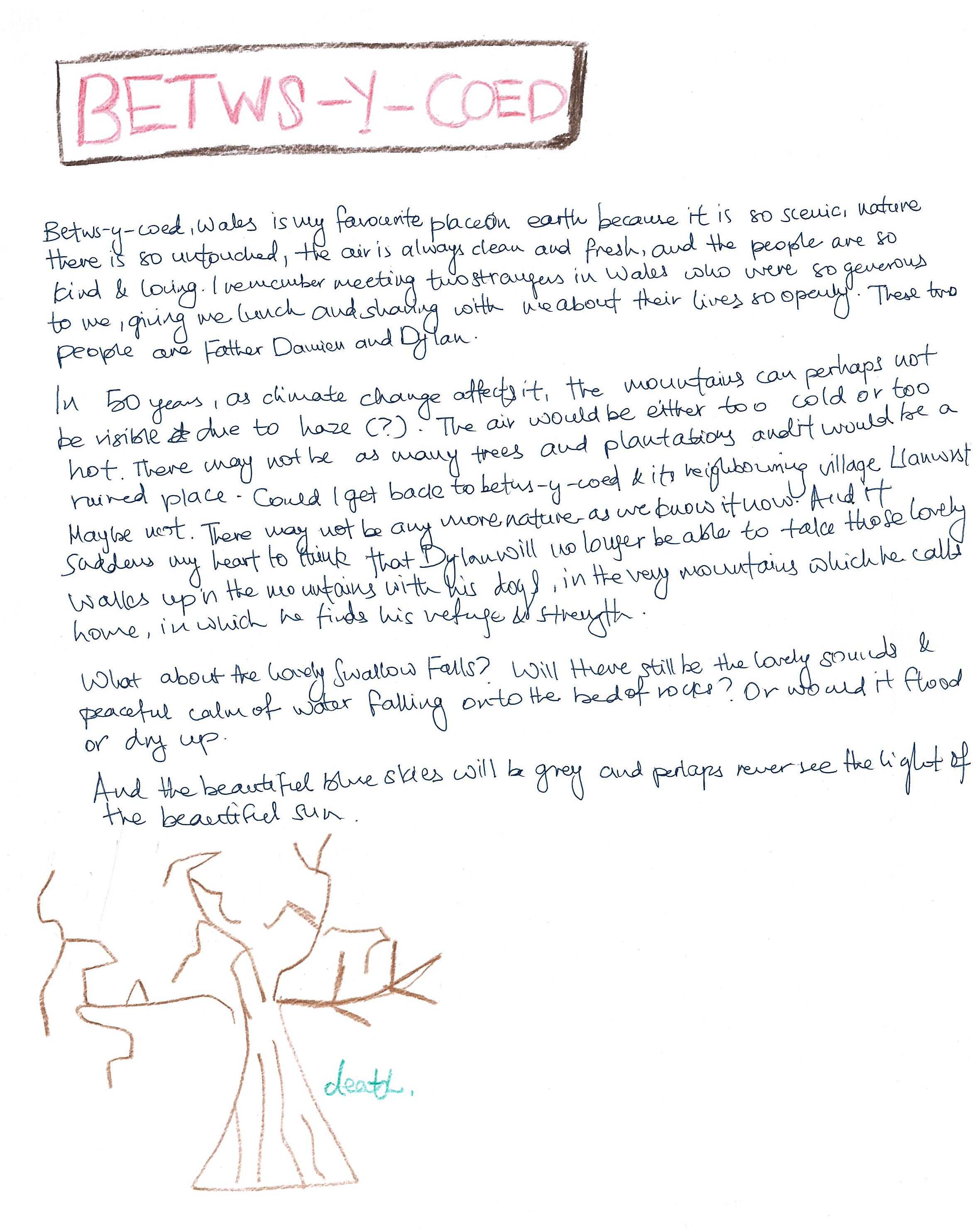
Victoria Er:

Betws-y-Coed, Wales, is my favorite place on earth because it is so scenic, nature there is so untouched, the air is always clean and fresh, and the people are so kind and loving. I remember meeting two strangers in Wales who were so generous to me, giving me lunch and sharing with me about their lives so openly. These two people are Father Damien and Dylan.

In 50 years, as climate change affects it, the mountains can perhaps not be visible due to haze. The air would be either too cold or too hot. There may not as as many trees and plantations and it would be a ruined place. Could I get back to Betws-y-Coed and it’s neighboring village Llanrwst? Maybe not. There may not be any more nature as we know it now! And it saddens my heart to think that Dylan will no longer be able to take those lovely walks up in the mountains with his dogs, in the very mountains which he calls home, in which is finds his refuge and strength.

What about the lovely Swallow Falls? Will there still be the lovely sounds and peaceful calm of water falling onto the bed of rocks? Or would it flood or dry up?

And the beautiful blue skies will be grey and perhaps never see the light of the beautiful sun.

ZoeBezpalko

Zoe Bezpalko, environmental engineer:

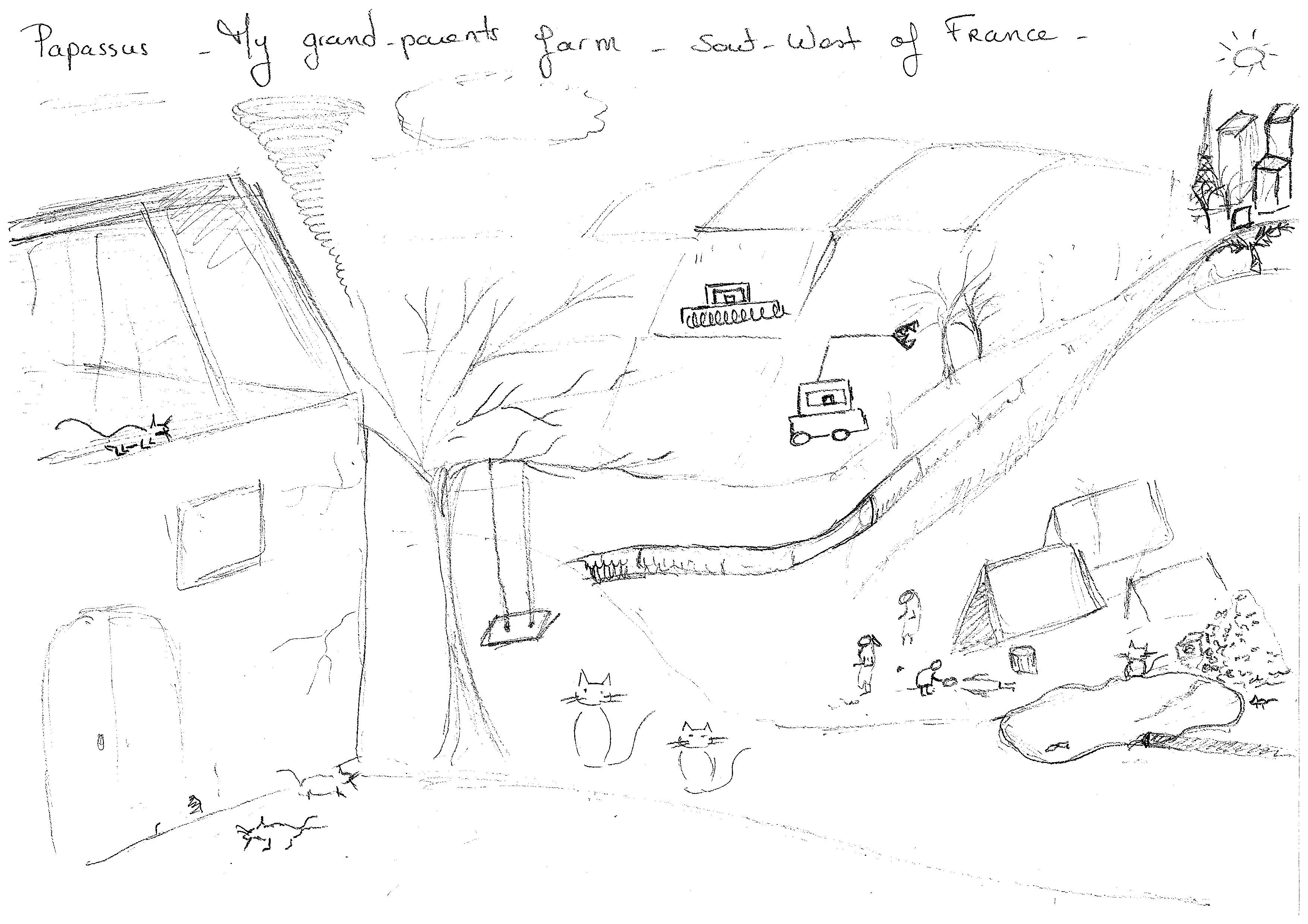
Papassus, my grandparents’ farm, southwest of France

In Papassus, the climate change already affected the environment, the seasons don’t change, spring and autumn disappeared. Animals like glow-in-the-dark worms disappear whereas some developed and spread like rats and cats. With climate catastrophes, I see poverty coming. I image the energy demands raining so much that pipe lines will be built everywhere and people will chop down the forest. Biodiversity of trees, animals and landscape will change to be a very monotonous view. We will have only one type of agriculture. Robots will take out all jobs forcing people to live in poverty and trying to survive in an artificial world. Very rich people will be locked down in fake paradises with no notion of local, sustainable resources, always demanding more.

Every single “virgin” natural place will be polluted by wastes. At my grandparents’ place a community of optimistic people decided to settle down and live in an autonomous society.

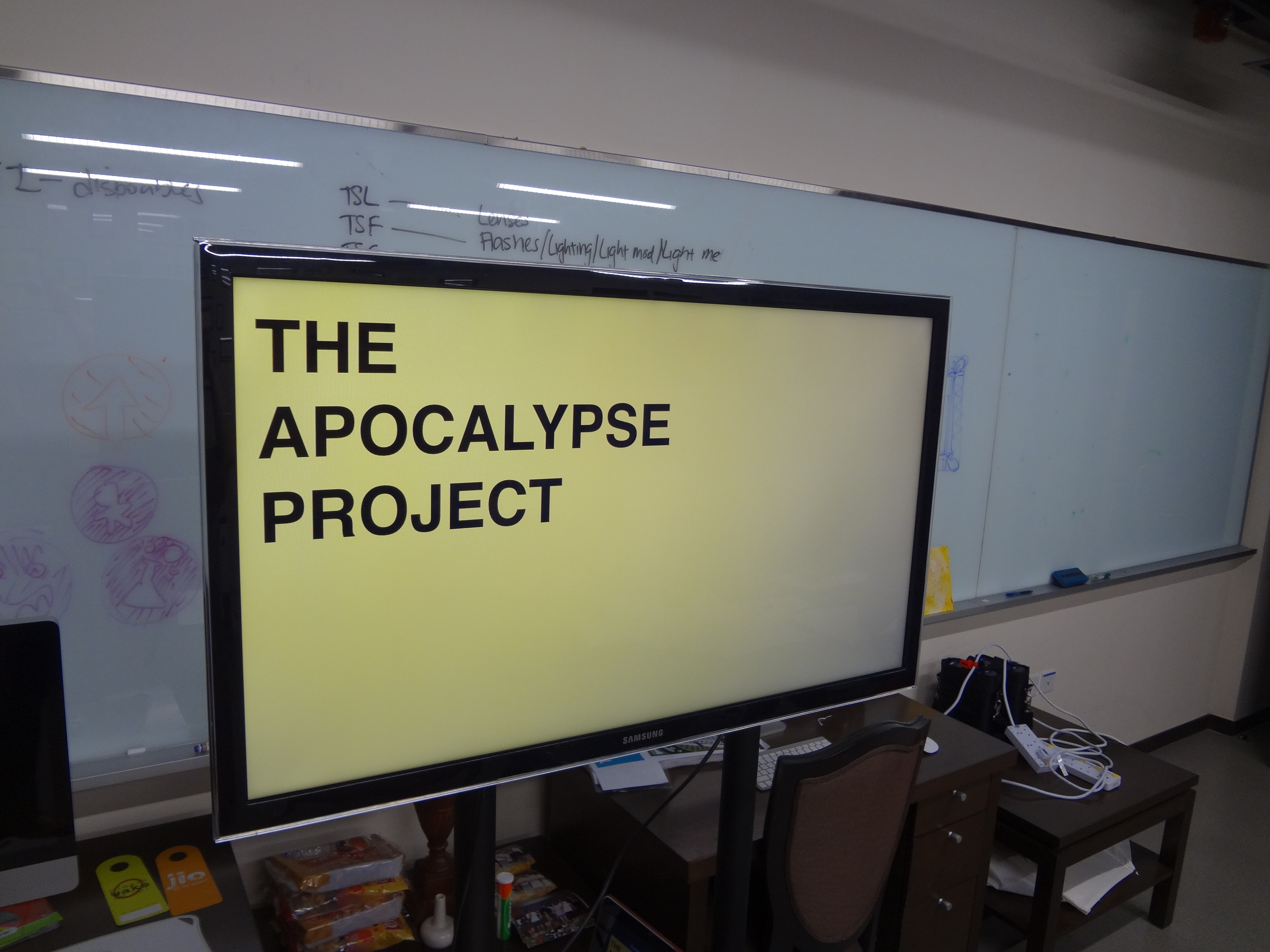
This week, I got two groups of students from Tembusu College here at the National University of Singapore, to voluntarily participate in my Apocalypse Workshop. The goal was for them to imagine a climate change apocalypse.

TembusuWorkshop.035

The first activity was called My Apocalypse. These were my instructions:

Name and describe your favorite place in 50 years as climate change affects it. (Write about it and draw it.) This could be a city landmark, the family farm, your apartment building, your favorite cafe, or any other place you feel like speculating on. Please be as specific as possible. Scenarios can be positive or negative. (Some questions to ponder, but please don’t limit yourself to these: What does it smell like? What plants and/or animals are present, if any? How hot or cold will it be when you are sitting there? How will you get there? Can you see clearly? Will your pet be happy living there? What is the color you see when you look up? Are there walls, and what are they made of?)

I asked them to name the actual place (and not just write, “the world” or “the city”) because I wanted them to be as specific and detailed as possible. The participants were also more likely to choose different places and thus provide a wider range of descriptions.

TembusuWorkshop.038

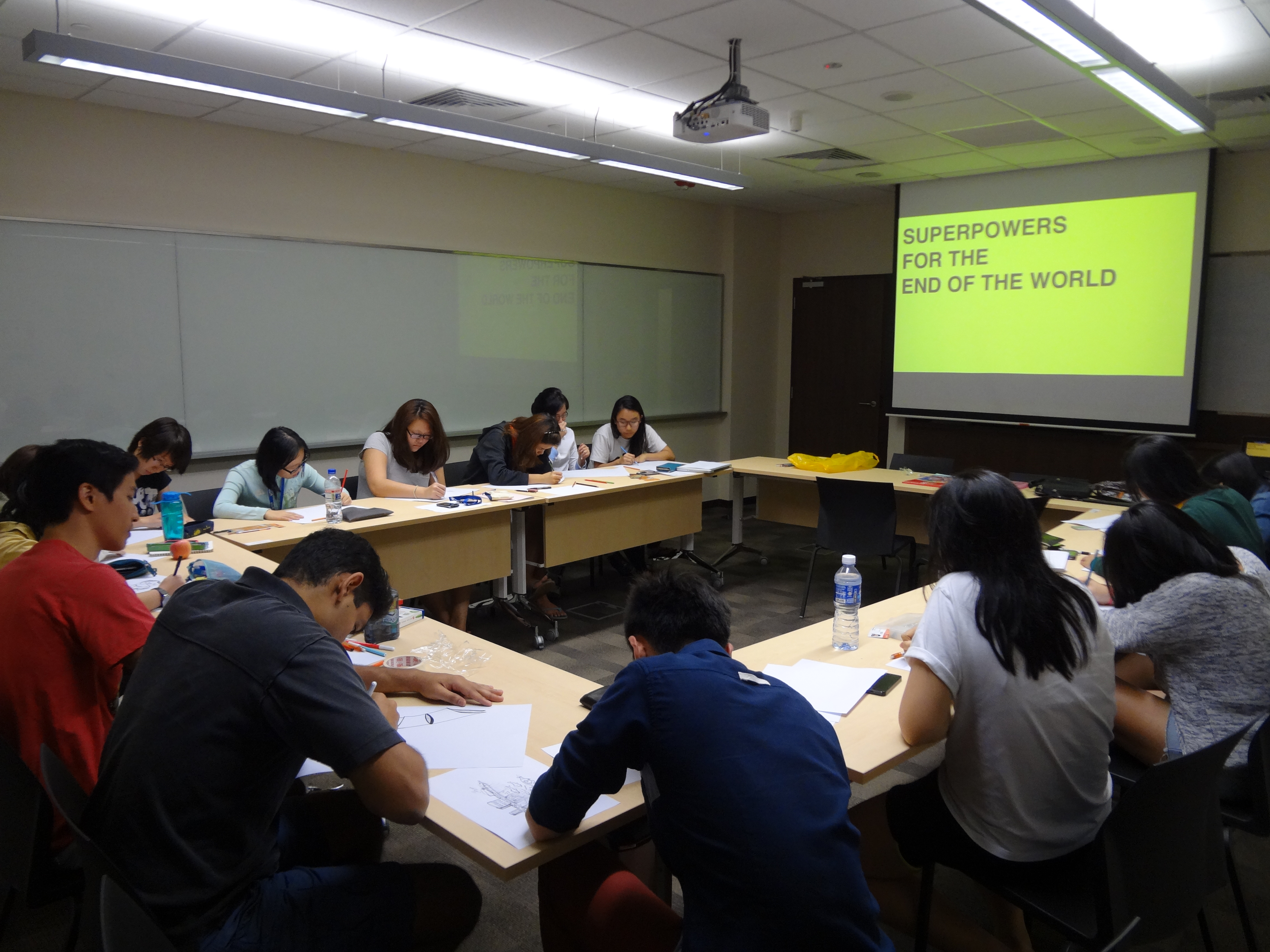
The second activity was called Superpowers for the End of the World. These were the details:

If you had a superpower to navigate through what you described in Activity 1, what would it be?
Examples of superpowers can be the ability to: smell an incoming tsunami, be invisible to animals, turn into ice during a heatwave, or anything that your current senses and abilities can’t let you do right now. It can be an extension of your biological abilities, or a device that performs it. You can list more than one superpower.

I wanted to frame it in this way so that people will find it more fun and exciting and really think outside the box when it comes to climate change. Nothing like superpowers to get the creative juices flowing!

TembusuWorkshop.040

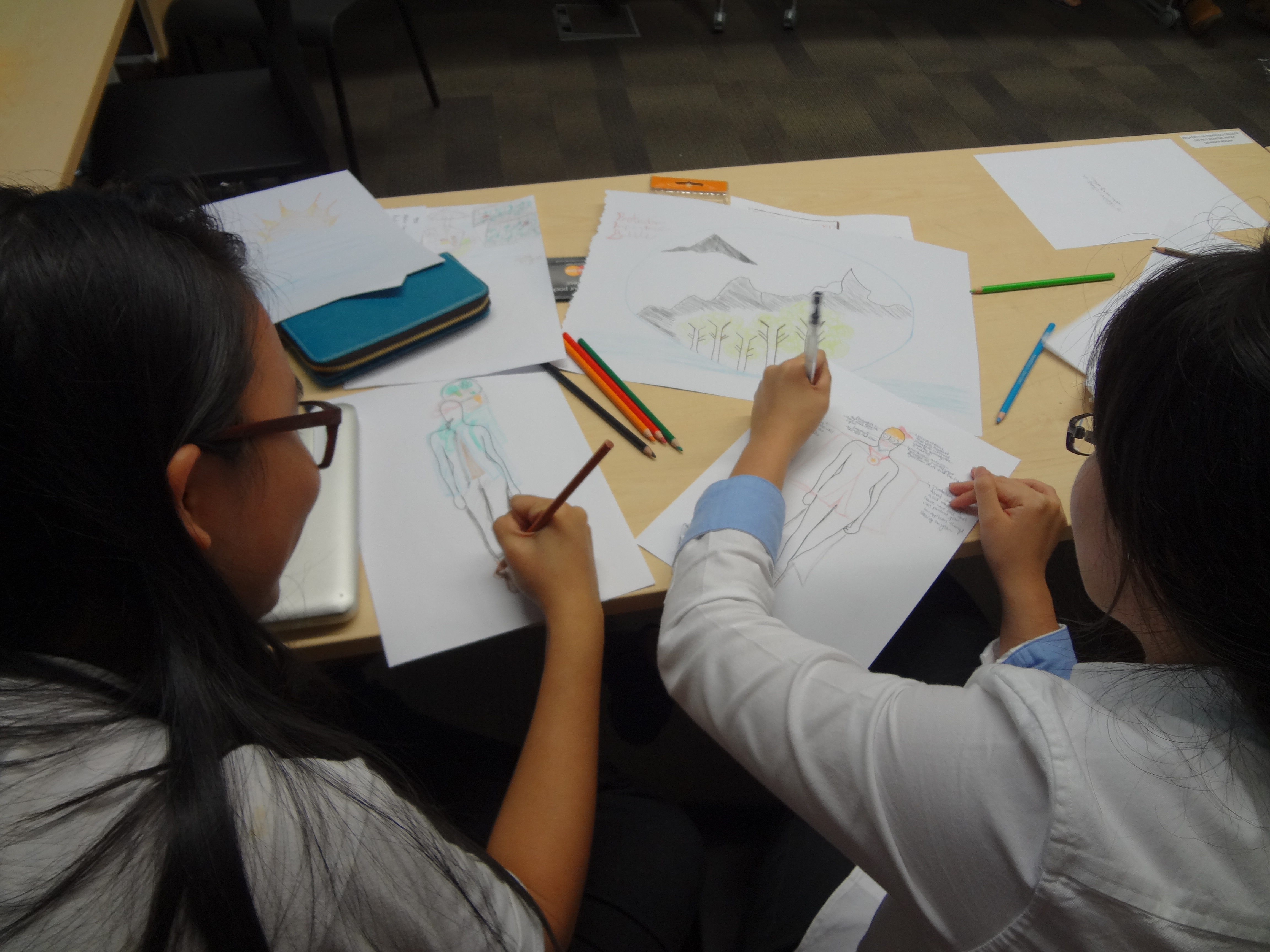
The last activity was called The Apocalypse Lookbook, where I gave them fashion design templates:

What will you wear to the apocalypse? Use the templates provided. Define the function of each wearable.

TembusuWorkshop.042

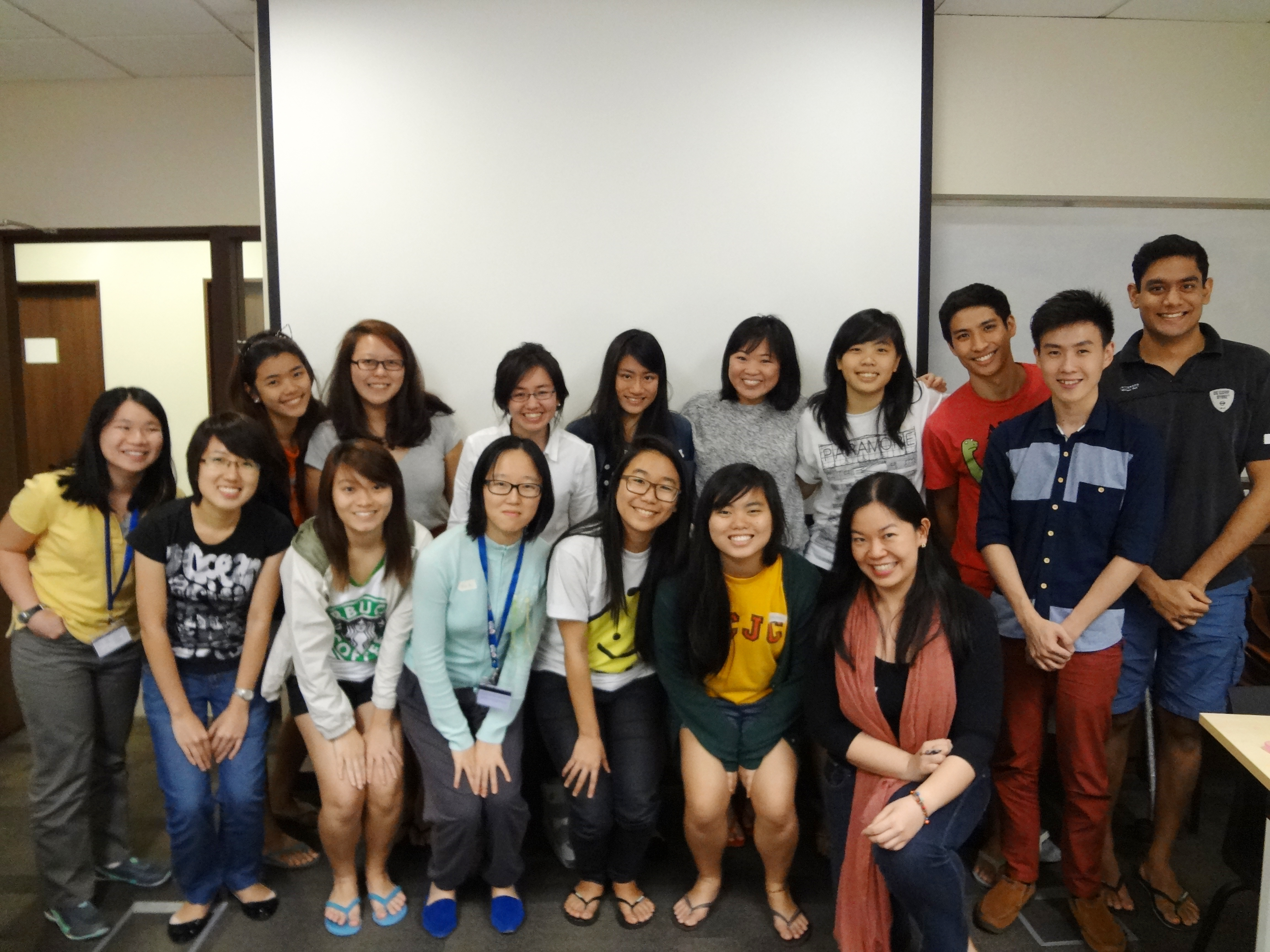
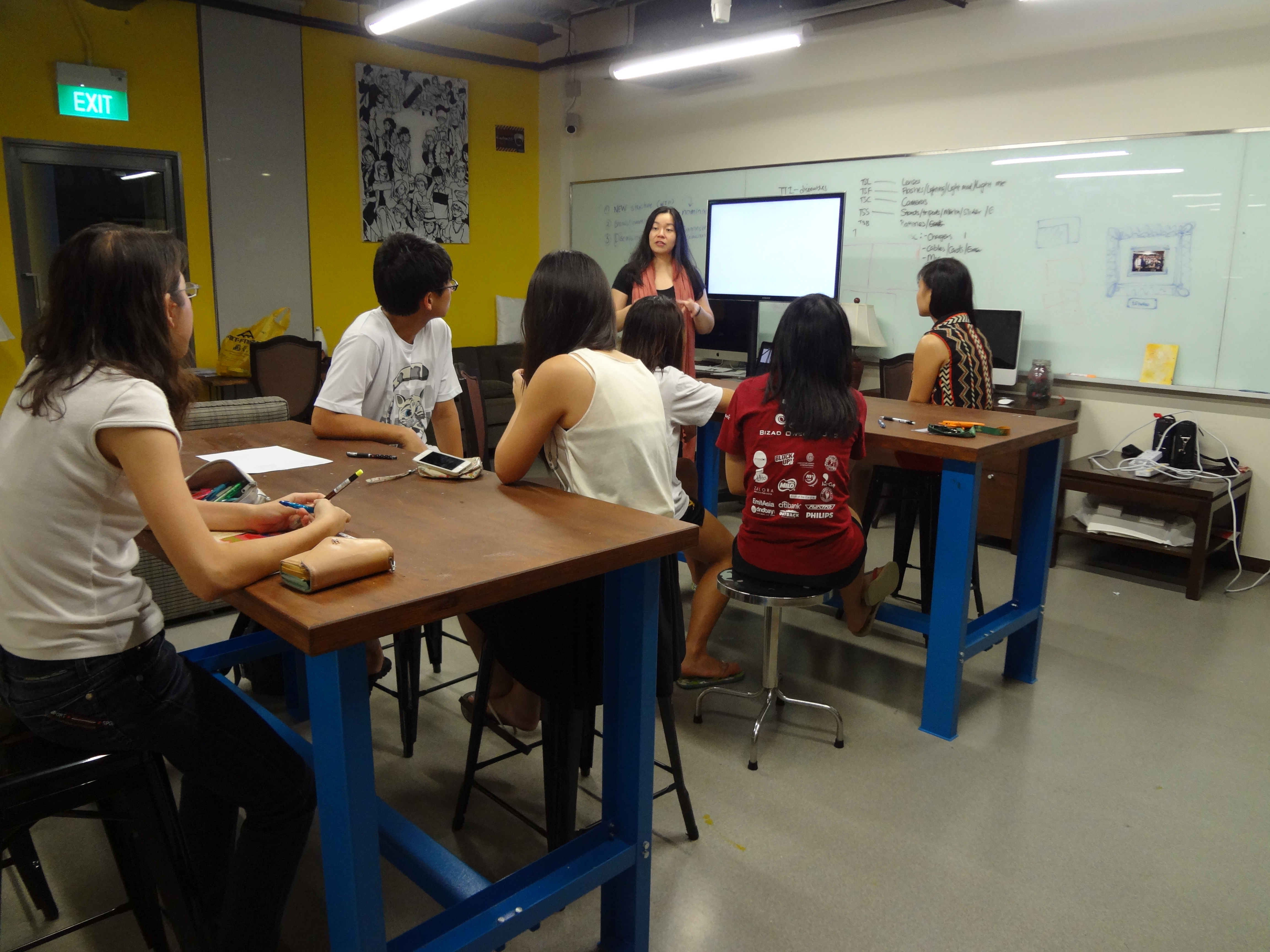
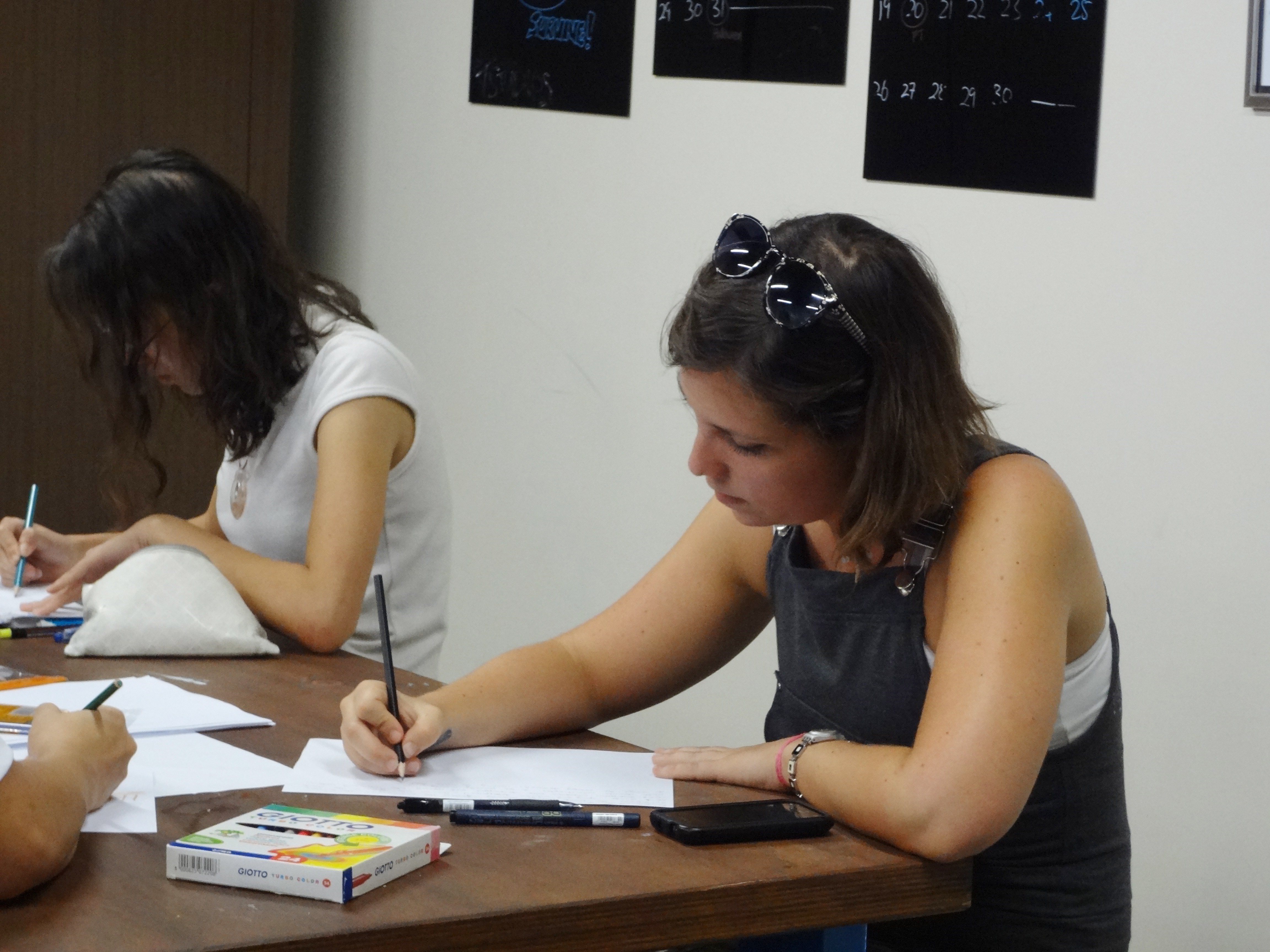
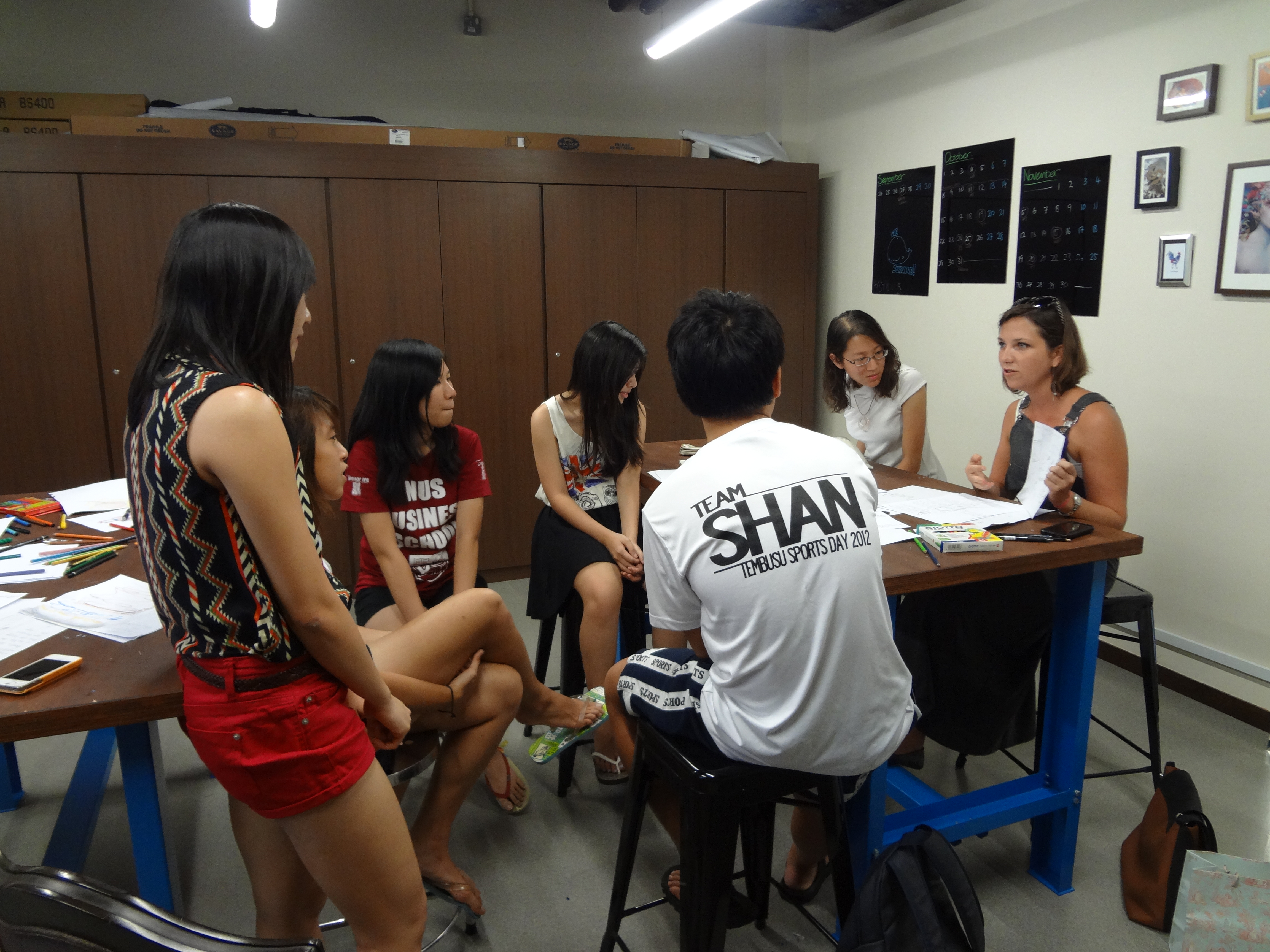
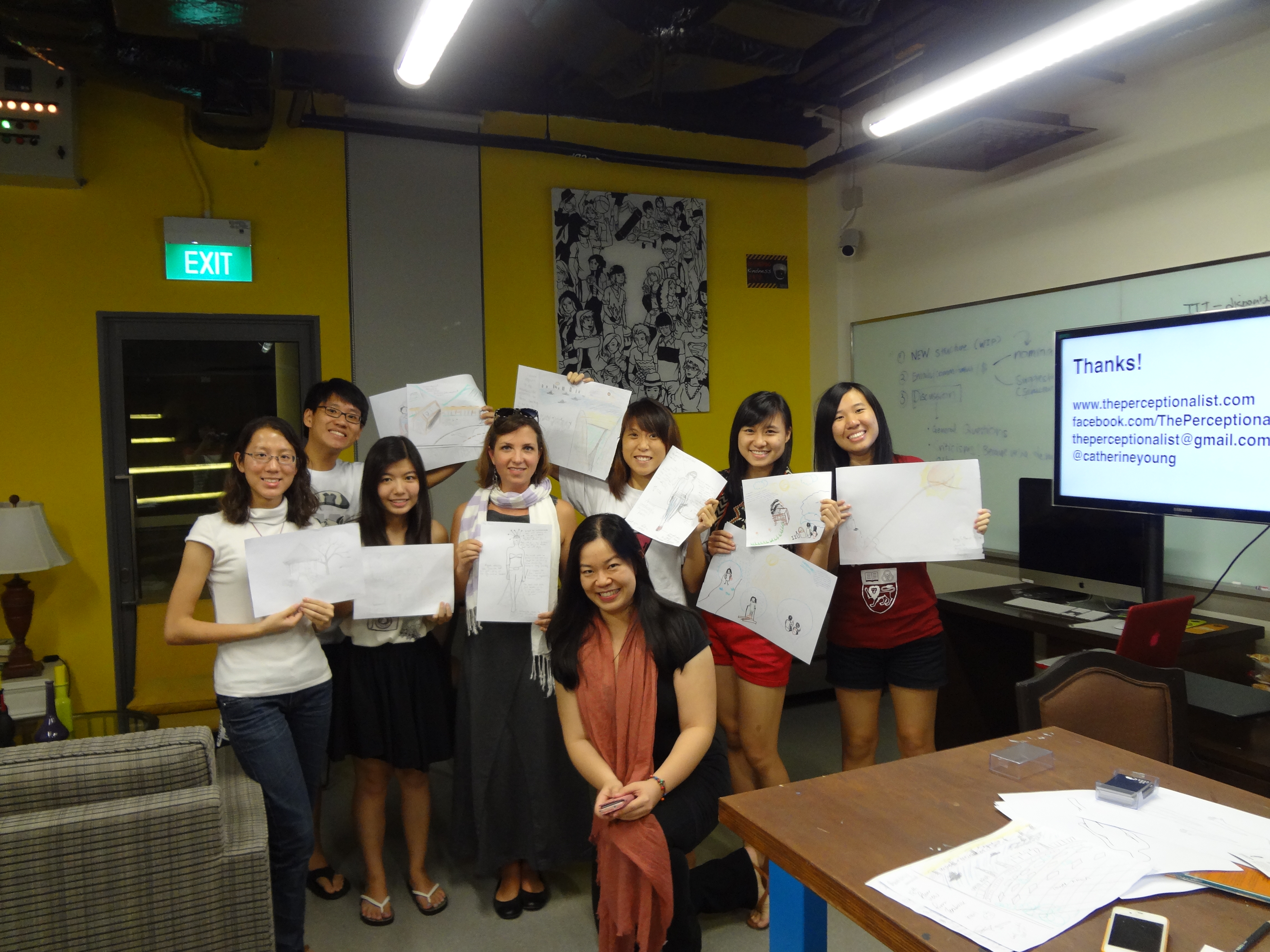
I let them do each activity for twenty minutes, and afterwards, they shared what they made to the  group. These university students all had taken a class on climate change, or were in the middle of one.  They came from business, economics, engineering, and communication majors. I also had one participant who is a professional environmental engineer.

Here are some photos from the sessions:

DSC08956 DSC08958 DSC08959 DSC08973_A DSC08984 DSC08991 DSC08998 DSC09008 DSC09013

I’ve given lots of workshops in the past few years—this definitely yielded among the most imaginative results. I’ll be sharing those soon. Thanks to all the participants, and also to those from all over the world who sent their answers online!

The first few weeks in Singapore, apart from battling a tropical superflu, one other war I was waging was contextualizing climate change in a way that was, well, less boring for people.

Put it this way, during the beginning of this residency, I was reading up on UN documents on the environment and we all know how enjoyable that is. I was beginning to be afraid that this project will be the most boring one I’ve ever done. When finally, it hit me.

Climate change has a branding problem. Not that I didn’t think so before, but it’s different when you are doing a project that is supposed to get people to want to act on climate change. My initial responses for my project were, well, meh. I felt like people were humoring me because I was a guest in their lab / college / country. I don’t blame them. People think climate change is too dry and inaccessible. Or more precisely, I believe it is seen as something separate from other concerns, when I think environmental “mindfulness” should be integrated in our lifestyles.

When I see climate change campaigns in schools and organizations, it’s mostly about recycling. Don’t get me wrong—recycling is important and we all should do it. I just don’t think that it is the cure-all for all our environmental woes. Climate change-related events are getting bigger and more serious—it’s critical to think beyond our current solutions.

Another field having a branding problem with respect to climate change is art. I think for the most part, people see it as frivolous. “Oh that’s nice,” but thinking “but let the important people do the important work” type of attitude. Again, I don’t blame them. The ivory towers and walls that distance disciplines from each other have served to alienate. (I also think that this is a one of the causes of professional burn-out, but that’s another post for another day.)

I need to get people in a state of “play” so that they will think outside the box. Hence the formation of this Apocalypse Project. It’s tricky to turn something as serious as climate change as something “fun,” but I believe that making it so will get people to start thinking beyond the box.  Dystopias and apocalypses pave the way for that. We already have these ingrained in literature and pop culture. But beyond that, ideas that seemed crazy in the beginning sometimes become the best solutions. Science fiction becomes speculative fiction and eventually reality, doesn’t it? As an example, just check out this TED talk by Steve Ramirez and Xu Liu on manipulated memories. 

Stay tuned for the next post on The Apocalypse Workshop, when the very creative minds of students here at NUS’ Tembusu college take a stab at thinking about a climate change apocalypse.

While researching for my residency project on climate change, I came across a dialogue between Emma Maris, environmental writer and reporter,  and Erle Ellis, Professor of Geography and Environmental Systems, in which they discuss a very thought-provoking question, “Is the Anthropocene…Beautiful?”

Because of the apocalyptic nature of my project, when I think of the Anthropocene, it’s hard not to be a curmudgeon. It’s hard not to dislike our species. But on the other hand, there is no question that our species can make beautiful things, although I suppose the notion of beauty is subjective.

I think back on Seoul43, which is the project that made me want to do this, my first intentionally environmental project. I remember the ones with physical evidence of Korea’s history—the eunuch cemetery, the fortress, the centuries-old temple. But these are human interventions that are seen through rose-colored glasses because of their age. As one who hiked past them all, I found it interesting to trek through these unwitting museums of a country’s past. If they were to be built today, perhaps they will be met with resistance. But because they are relics from the past, they are instead seen as something to be preserved. From personal experience, I found the centuries-old fortress on one mountain to be charming, but the modern apartment building on another to be jarring—the former contributed to my experience while the latter hindered it. I wonder if, centuries from now, if someone from the future encounters this present-day apartment and sees it as a relic of architecture?

Watch the video below:

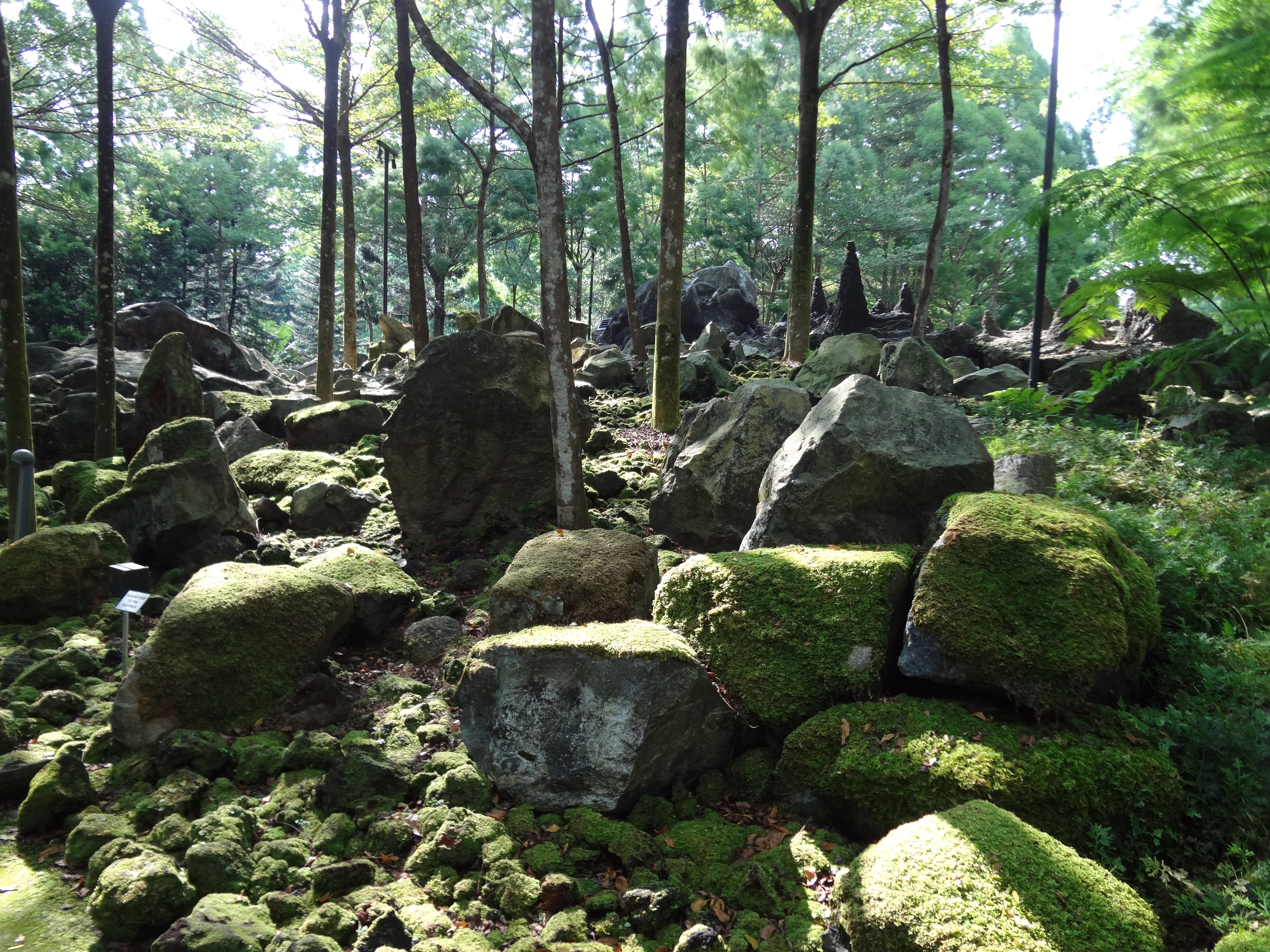
Walking around the Singapore Botanic Gardens, I come across the Evolution Garden, which simulates the evolutionary story of plants on earth before mankind ever came to be. It’s hard not to think of the apocalypse here. Half an hour before, I just squeezed through the MRT crowds. It feels odd to be suddenly alone. I was struck by how different it smells compared to the city and the rest of the gardens. It smells of rain and moss. There is a dampness in the air, but it does not feel heavy. It feels like an island washed after a heavy storm, like a tiny planet that went through a car wash.

DSC08620

The Evolution Garden in the Singapore Botanic Gardens

I wonder about how the end of the world will smell like, once human activity has pushed it too much. Does it smell like something just washed, or something burning? Is it a “unpleasant” smell? Perhaps there is more than one smell—an olfactory palette that signifies a climate change apocalypse? Can a man with a cold smell it, or just the most sensitive of trained dogs? Will there be a range of scent—are we dead, or almost dead? Will we have an apocalyptic nose?

Strange questions, but among the many I’m asking here on this side of the world.


When one wakes up in another world, the previous one seems like a dream. Korea, magical as it is for me, seems like it ended a year ago instead of just last month. I’m now in Singapore for the 2013 Art Science Residency Programme in partnership with ArtScience Museum™ at Marina Bay Sands, Tembusu College National University of Singapore (NUS) and the Singapore-ETH Centre’s Future Cities Laboratory.

It is such a wonderful opportunity, and a very timely one as well. I am very grateful. Because of the Seoul43 project, I realized that one potential application of my work is the environment. The things I saw while I was in the mountains made me care about what humans are doing to nature in a more visceral way. Don’t get me wrong; I’ve always cared about recycling, global warming, and polar bears, but having my hikes directly affected by what humans were doing to the environment (and ultimately affecting the direction of the project) was very unnerving. That project wasn’t too long ago, and I still have more questions than answers. (Visit the project site here.)

Climate Change and Environmental Futures

I am working on the theme, Climate Change and Environmental Futures. My project is about a potential “apocalypse” that may ensue in the future because of climate change. I aim to design objects that examine our perceptual lifestyles when that occurs. So. How will we see, hear, smell, touch, taste, etc. when we need to adapt to a less habitable earth? And on the other side of the spectrum, what can be designed along the lines of perception when we are able to mitigate climate change? These are questions that intrigue me and will keep me happily preoccupied in the next four months of this residency.

This project is also an experiment for myself and the direction of my work. I suppose this is why despite my excitement, I want to proceed with caution. This is definitely my science background talking. There are enough people misleading others about climate change; I don’t want to be one of those. I’m happy to have scientists and humanists in the college to give me their perspectives and share their research, thus informing my work.

Cousteau

I never thought I would work along the lines of climate change. And yet, I did kind of foresee this last year. Because of my passion for nature and exploration (and flying up in an ultralight), I came across the works of Jacques Cousteau, marine explorer and conservationist. In his book, The Human, the Orchid, and the Octopus (Bloomsbury, 2007, co-authored with Susan Schiefelbein), he said that “Had I known where I was going, I would not have gone.” This resonated with me, along with him quoting Albert Szent-Gyorgyi’s distinction between Apollonians and Dionysians. I fear applied research sometimes, because when one drops a product into the real world in the hopes of solving something, oftentimes there are consequences you did not account for. That, plus I think my best ideas and projects are those when I was just in states of play.

The Anthropocene 

In the past few weeks, I’ve done a lot of research on recent findings and ideas in our Anthropocene. I am encountering a lot of very interesting work by artists, scientists, journalists, etc. I will be updating this site frequently, so check it out for my progress. 

Goals

There are specifics of this project I will be working out within the next few weeks. But now that I am here and have seen the labs and met with the staff, I have a better idea of what I can and cannot do. But just like my previous projects, I aim for these qualities:

1. Inclusivity—I hope to engage not just people from within the field of climate change, architecture, sustainability, and urban design, but also the people outside of it. I want to reach out to those who have no professional stake in my project, because I believe that climate change is a human issue that affects all of us.

2. Interactivity—I intend to create pieces that people can have an experience with and engage their senses, instead of just making something people will look at.

3. Empathy—I aim to collaborate with both the sciences and the humanities. The former is to ground my work in facts, and the latter is to allow for profound human connection. I hope for the audience to move from mere awareness of environmental issues to mindfulness where they are spurred to act and maintain positive environmental habits for the long-term.

The Weekend with the Eameses

This past Saturday, as part of my research, I visited the wonderful ArtScience Museum, where we artists-in-residence are supposed to give a talk and be part of their Sunday Showcase sometime in November. I loved the Mummy exhibition and the National Geographic’s 50 Greatest Photographs, but it was the Eames exhibition that made me rejoice and gave me some level of encouragement as I begin this admittedly crazy project.

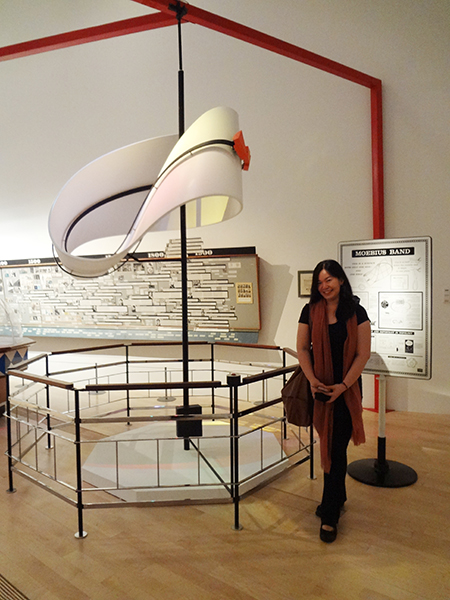
I loved seeing the Mobius Band from their Mathematica exhibition:
DSC08403small

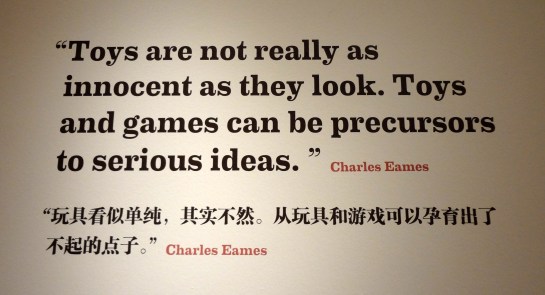
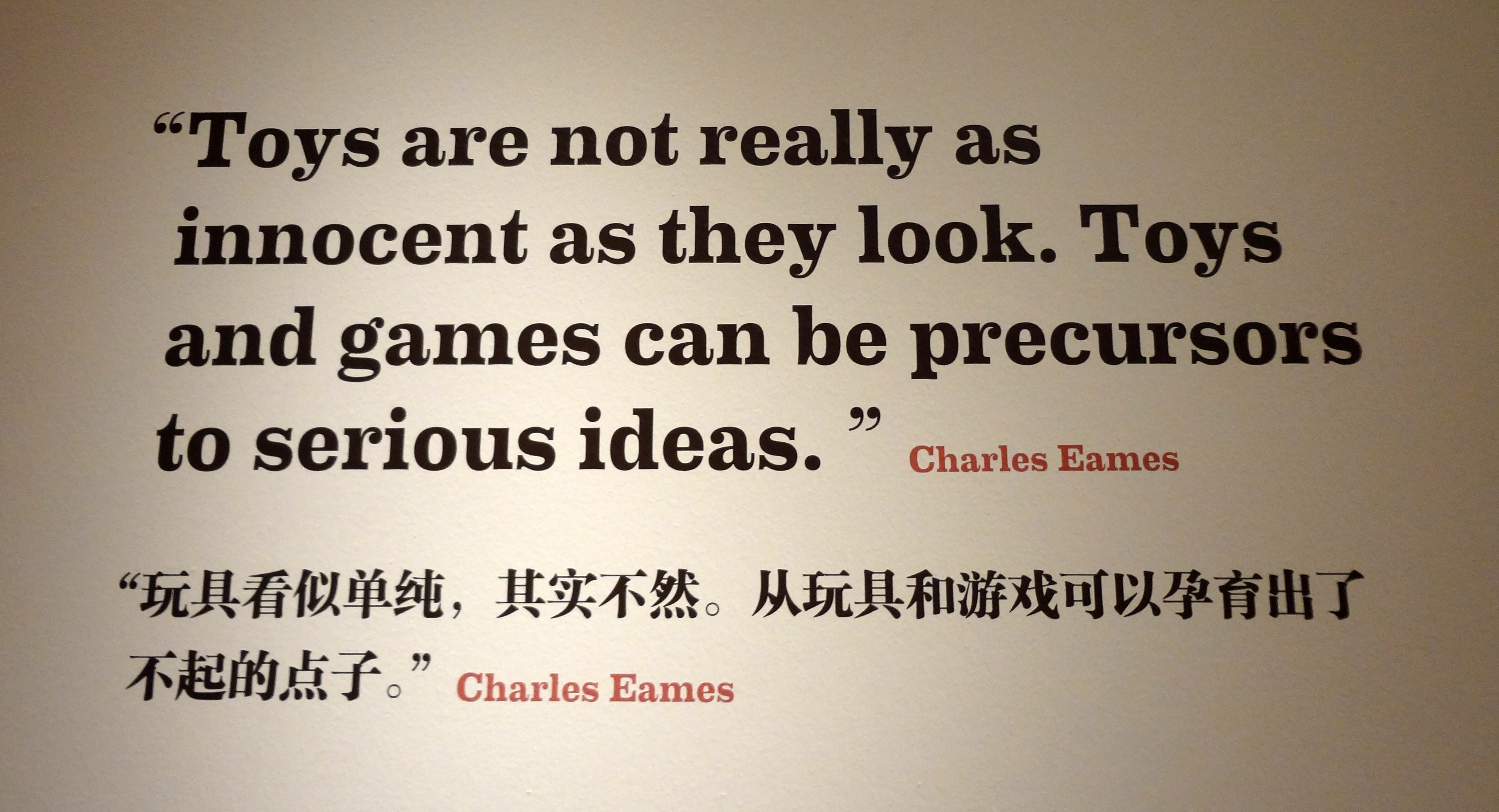
And thanks, Charles, for this:
DSC08406

Oh well, as always, here goes nothing.