Two days before a Christmas with no snow, some friends and I drove to the ends of Brooklyn, past Avenue V and through other streets I did not even know existed after five years of living in New York City to the lonely marshlands of Dead Horse Bay.

Dead Horse Bay was named for what it used to be—a place with horse rendering plants from the 1850s to the 1930s where dead horses were sent to Barren Island to be turned into glue and fertilizer. When the number of dead horses decreased as more automobiles were manufactured, the city began using it as a landfill to connect Barren Island to the Brooklyn mainland in the 1920s. The Barren Island Airport, New York’s first airport and later renamed to Floyd Bennett Field, opened in 1927. In the 1950s, one of the containers of the landfill burst open, allowing garbage, particularly bottles and ceramics, to wash ashore and turning it to the scavenger’s paradise it is today.

Despite the absence of snowflakes, it was a cold, cold day, with the wind cutting through my coat and my tights a poor, ill-considered choice for the weather.  The bottles themselves, unperturbed by the cold after years of waiting, lay immobile, some resigned to being crushed under our boots, while others already leading second lives as homes and anchors for various sea organisms. Near the shore where the landfill used to be, bottles jutted out like roots, and you could easily pick one out, intact. Dead Horse Bay was its own ecosystem and its own wonderland—gray, chilly, alive, and frozen in time.

The sand was both a keeper of treasures and of lies. While I loved the big bottles my friend Sarah collected, I was more intrigued by the toys I picked up, such as old plastic guns, blocks, and a toy whistle.

More often, we would find bottles and teacups that looked fit for scavenging, only to pull them out and realize they were missing half of themselves.

On the way back, I realized to my dismay that I lost an earring because of the harsh winds. I hope someone finds it, believes it to be a hundred years old, and creates a story about it. And now I wish I threw the other one in.

While we were disappointed the bottles didn’t come from a shipwreck, there was a decrepit old boat that definitely had seen better days.

If you look closer at this marooned boat, you will find our names signed with a Sharpie, at my insistence—the only tangible trace of our presence, as all footprints were washed away and all glass we left remained silent, holding the secrets of horses long dead and rubbish from another time.

Two hours later, the sun finally peered out, and we gathered our treasures and left, safe and dry with no need for a tetanus shot.

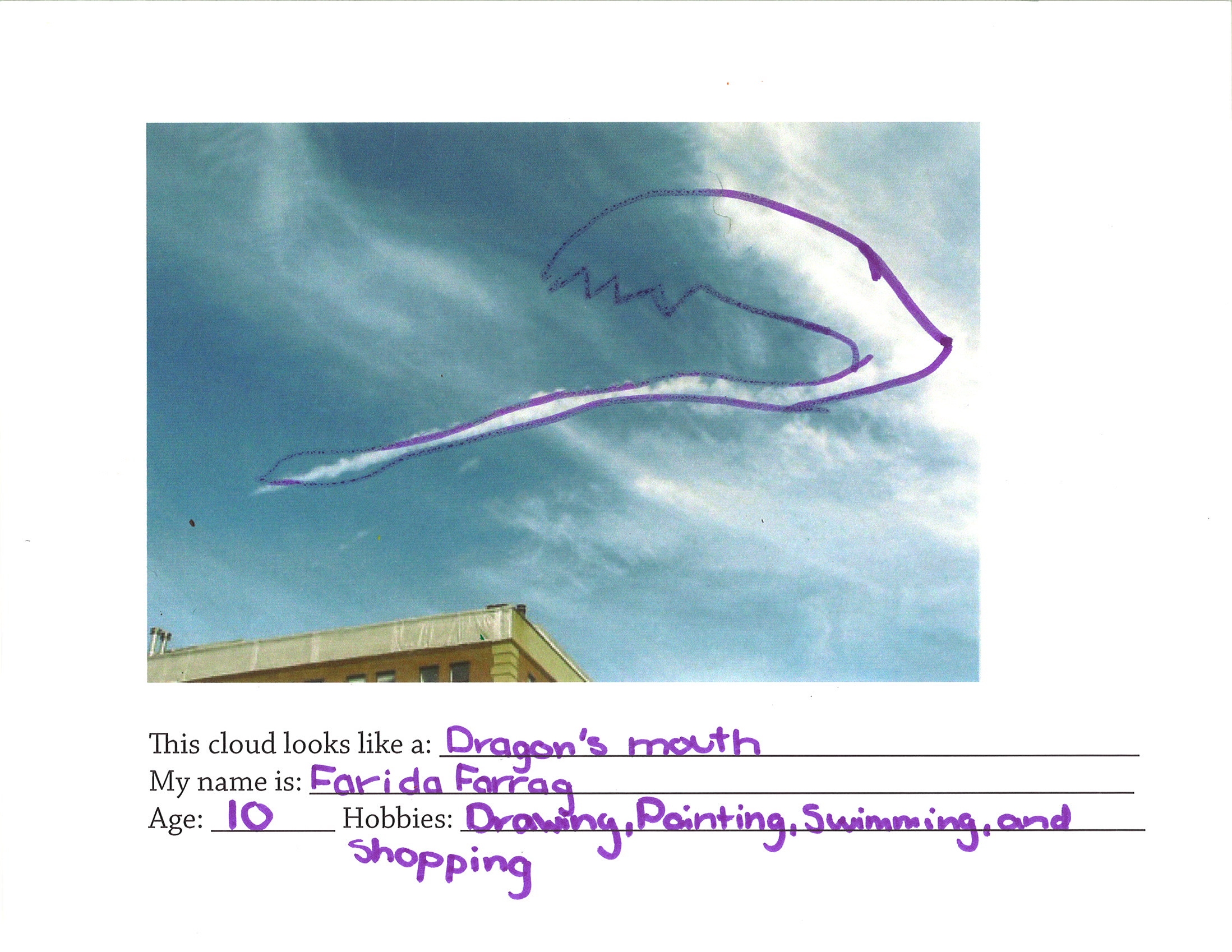
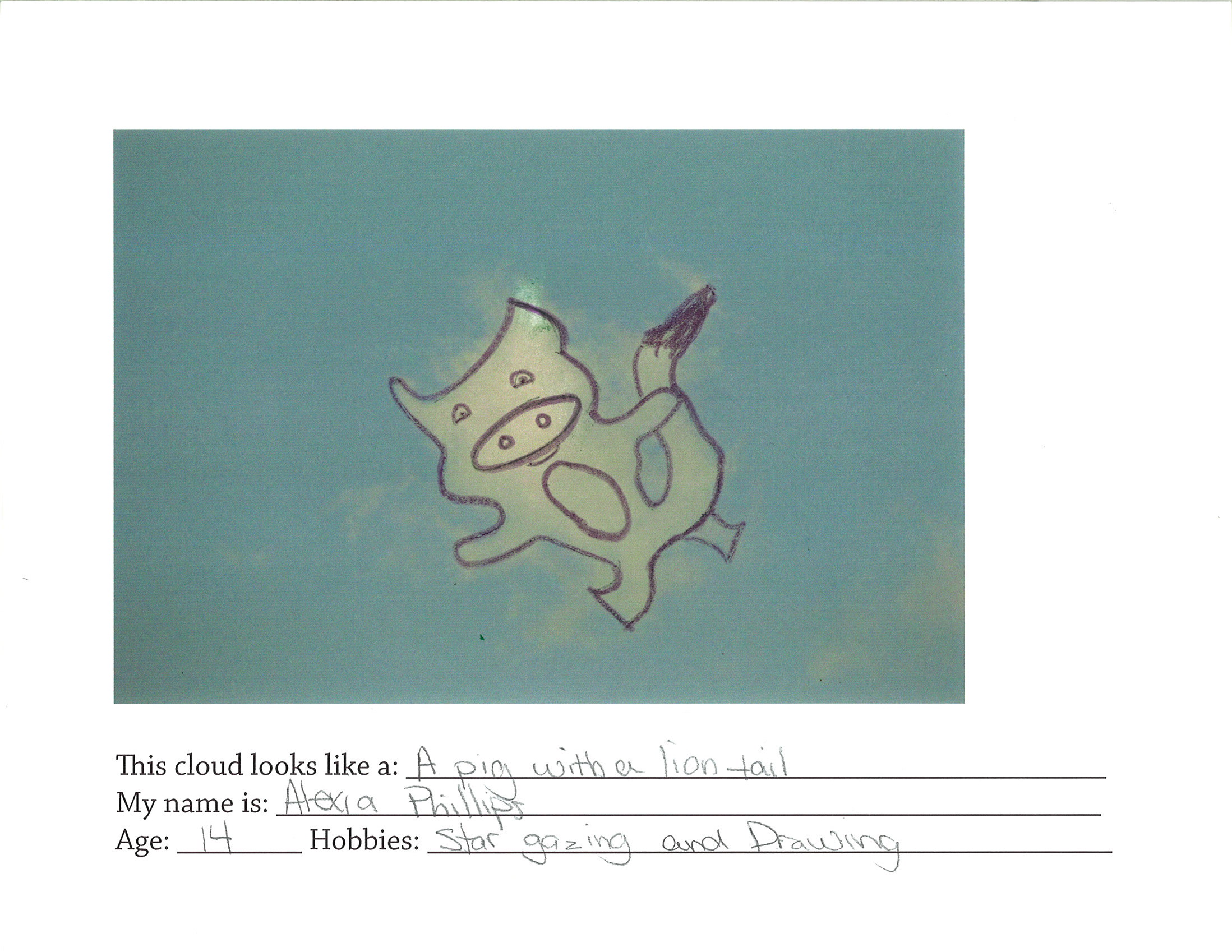
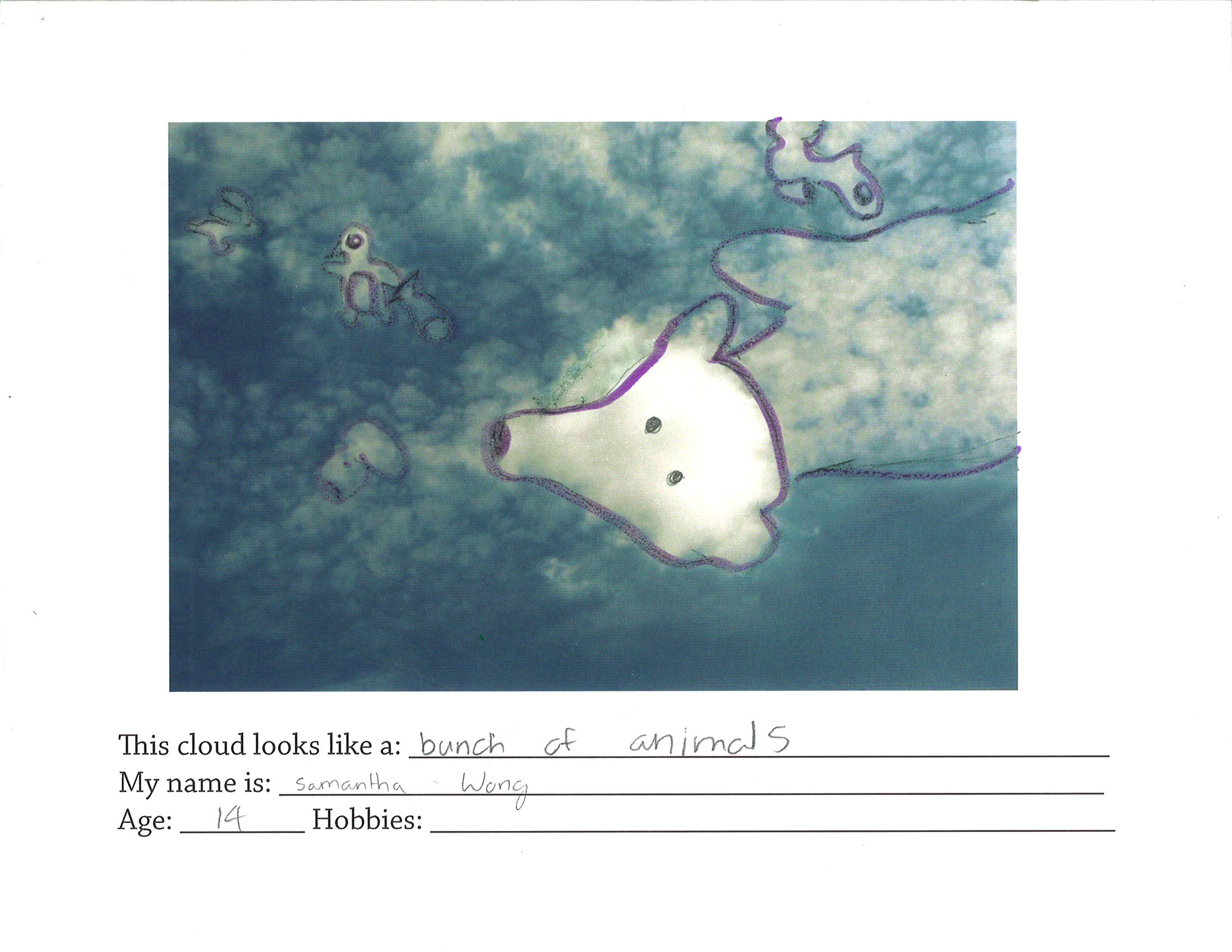
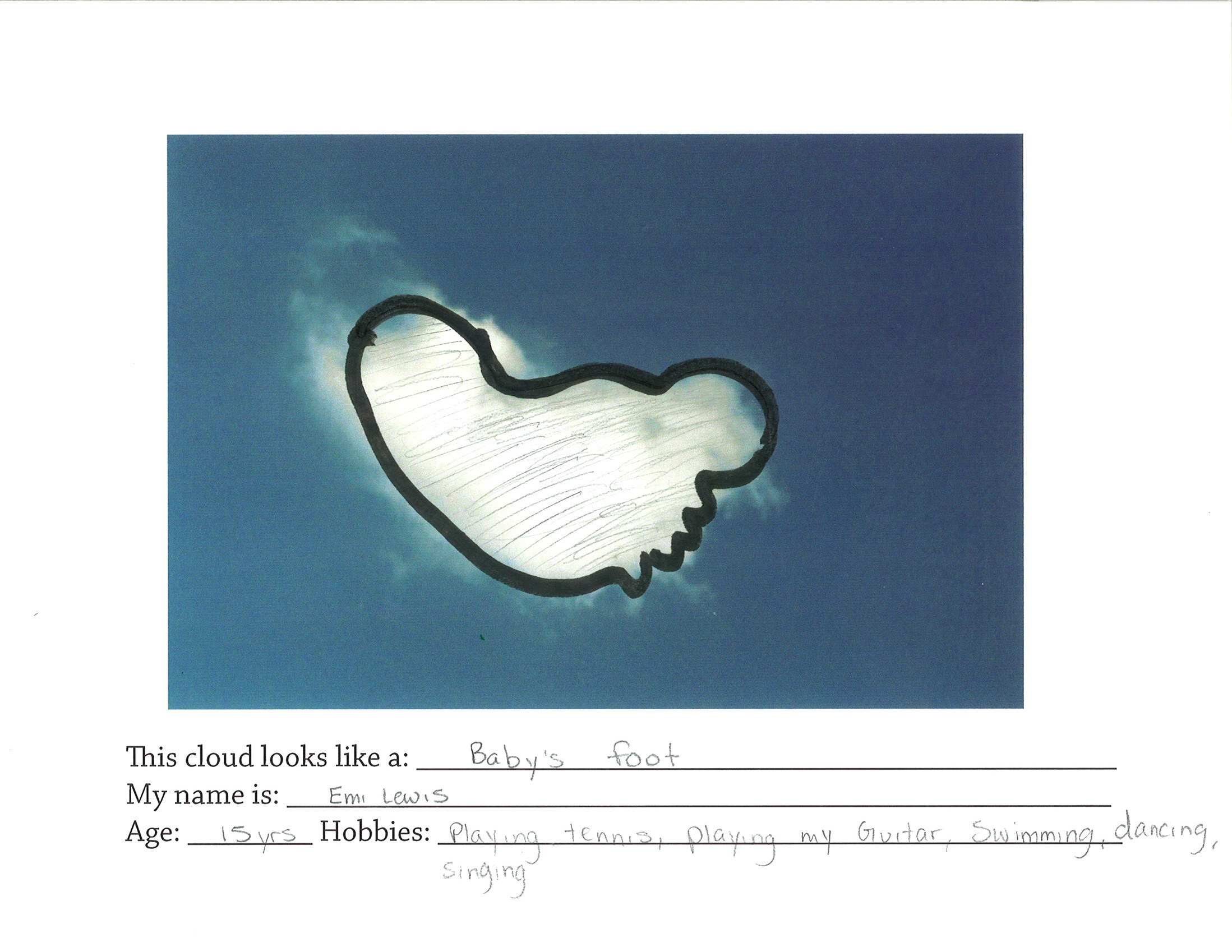
We walked back through the cleared path, with the sky now blue and the clouds making shapes of their own.

It was a good day.

In the Pixar movie, Up, one of my favorite scenes is the one you see below. Before Carl became the grumpy old widower whose house was lifted by balloons, he was a young man whose wife, Ellie, liked to watch clouds with him and point out what they looked like.

Carl and Ellie, from Up (Pixar, 2009), image courtesy of Pixar

“To see is to forget the name of the thing one sees,” was once stated by the French writer and philosopher Paul Valery (1871-1945). When Carl and Ellie were watching clouds, they didn’t just see an amorphous mass of water vapor; they went beyond the form of these objects, drawing shapes from memory and making them fit within the constraints of the cloud’s form.

In Proust was a Neuroscientist, Jonah Lehrer wrote about how the painter Cézanne showed the difference between seeing and interpreting. During his time, critics who derided his work said that his paintings were unfinished. Indeed, when you look closely at his work, he focused on form and color without objects being outlined. For Cézanne, our impressions required interpretation―to look is to create what you see. The way he painted was the way our eyes really saw the world. Our brains added the details after.

Like Carl and Ellie, I also look at clouds in different ways. Some of you may know that this has been keeping me happily occupied:

Rorsketch

An example:

Rorsketch, Cloud #17, A dragon obliviously glides past a church.

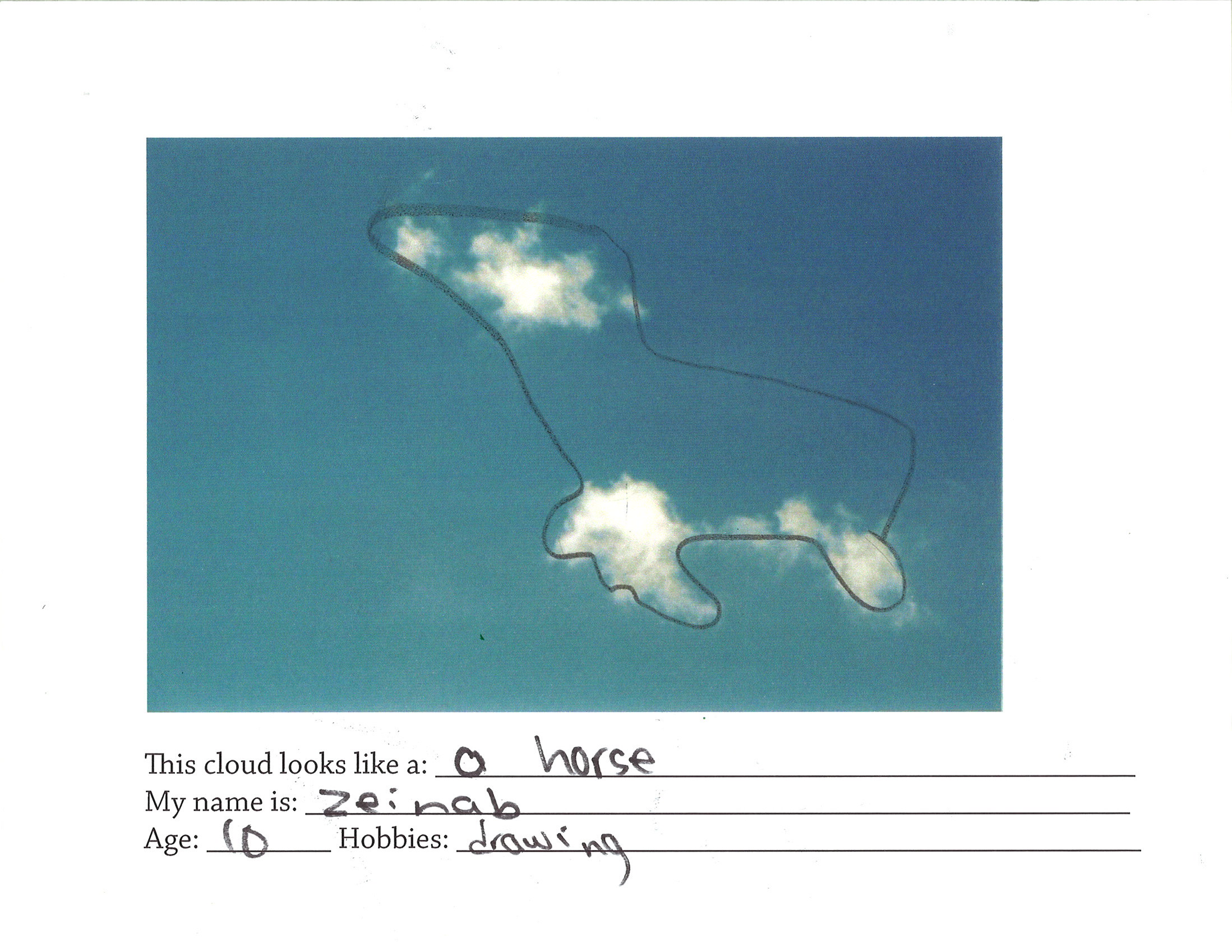
In the middle of doing a hundred of these, I began to see the multiplicity of interpretations people can have from one simple object. I realized that their perceptions are affected by things such as age, profession, and culture. Also, too many strangers have stopped me as I took yet another photo of the sky while jumping up and down with baffling excitement. Why was I so happy? Because I’m seeing a dinosaur! Aren’t you? I wanted the project to be more accessible to people by designing a public interface.

While parks would be the ideal place, I wanted something that would be secure and make the interface safe from vandalism. I decided to place it in MoMA PS1, which had an open area, a rooftop and two alcoves across the courtyard. Aside from parks, rooftops are a great way to see the sky; they lend a meditative, reflective state that is not unlike being on top of a mountain.

Although PS1 looks bare, it’s a popular place for certain events, especially their summer parties and the Young Architects Program. I wanted to transform it from this:

MoMA PS1

To this:

Rorsketch at MoMA PS1

An overview of the project:

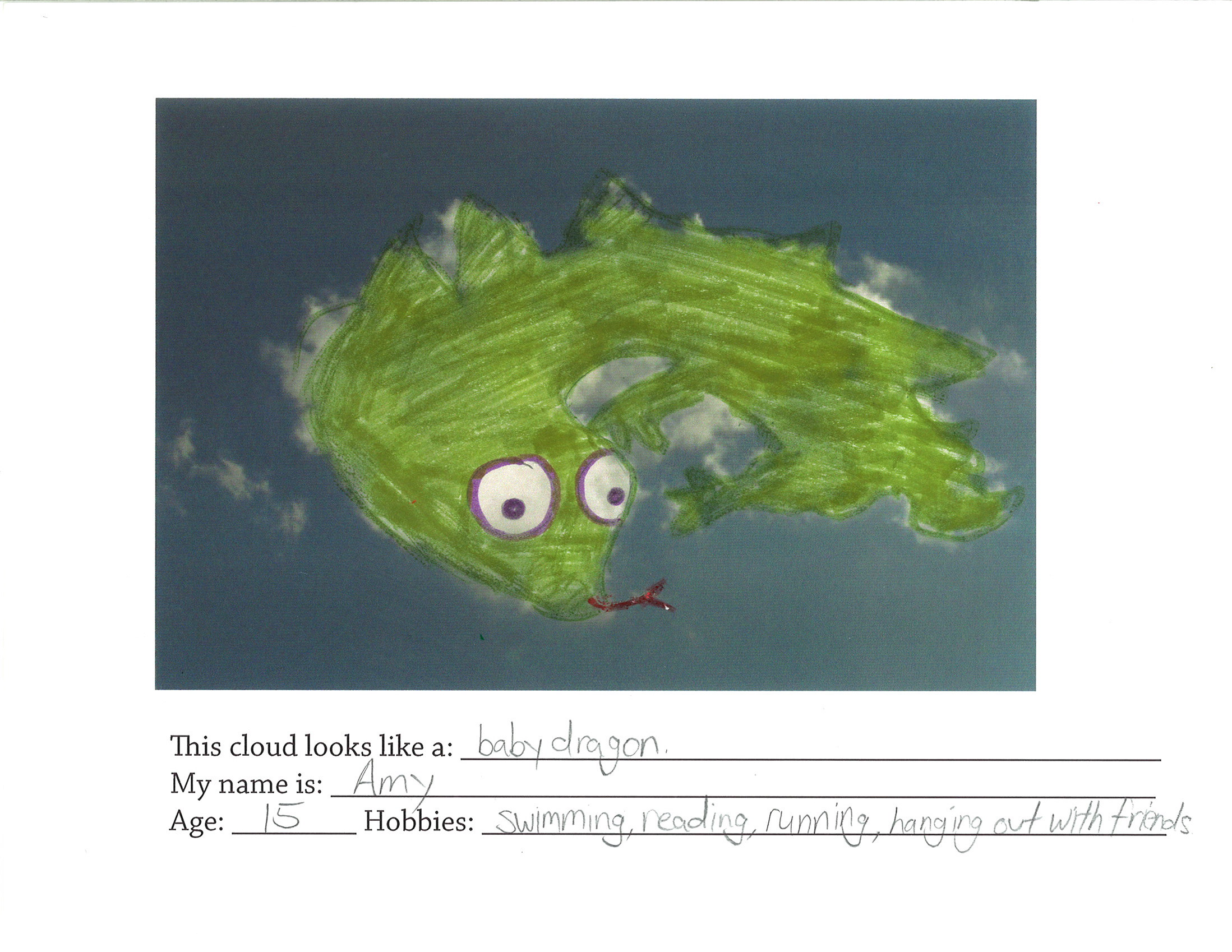
Rorsketch is a public collaborative art project that allows MoMA PS1 visitors to draw their interpretations of clouds on a digital interface on the rooftop. Using data gathered from visitors’ smartphones, the drawings will be automatically tagged with the sketcher’s name, age, profession, and country of origin. People can view the most recent interpretations in the courtyard. A gallery of these drawings with their metadata will be displayed in the two adjacent alcoves. These drawings will be documented online.

To gain admission to MoMA PS1 and to let the digital interface recognize the person creating the drawing, visitors will download an app on their smartphones:

Rorsketch, the mobile app

The mobile app will allow them to enter their information; namely, their name, age, profession, and country of origin. Alternatively, they can also sign in using their social networks:

The app will ask for some information that will be used to tag the visitors' drawings.

Next, visitors will also get a taste of what the project is about by requiring them to draw on a cloud:

The Rorsketch app requires you to draw on a cloud before you get your QR code.

When you submit your drawing, you get a unique QR code that will allow you access to PS1 as well as the digital interface.

The Rorsketch mobile app gives you a unique QR code that serves as your ticket.

When visitors are at the rooftop, they will encounter a 22-inch transparent LCD screen that will show a live video feed of clouds. On days where there are no clouds, a pre-recorded video will be shown.

Visitors will encounter the Rorsketch digital interface on the rooftop.

A visitor who wants to draw will have his QR code scanned to be identified. The visitor can pause the feed if he or she sees a cloud to be drawn.

A visitor who wants to draw on a cloud can pause the video feed.

After pausing, the visitor will see that a palette of brushes appears, as well as the option to save or delete:

A visitor can choose from a palette of brushes with which to draw.

In this case, she sees an elephant:

The Rorsketch Digital Interface allows you to freeze a live video feed of clouds, and draw on it.

When the visitor saves the drawing, which is automatically tagged with his or her metadata, the interface may show a drawing by another person who may have interpreted it in another way:

After a visitor submitted a drawing, the interface can show another drawing on the same cloud, if it so happens that another person interpreted it in another way.

Meanwhile, down in the courtyard, visitors can view the most recent drawings through large LCD screens:

In the PS1 courtyard, visitors can view recent drawings with paired LCD screens, one showing the cloud and another showing the cloud with the drawing.

Rorsketch in the MoMA PS1 courtyard and adjacent alcoves

For the two small alcoves just across the courtyard, visitors will encounter a gallery of clouds and their drawings, together with the metadata of the people who drew them:

Rorsketch gallery in the MoMA PS1 alcoves

The Rorsketch gallery in the PS1 alcoves

In the alcoves, the clouds and their drawings will be tagged with the sketcher's information.

Reflecting on this project, I wondered about this idea of recording humanity’s perception, similar to cave paintings made thousands of years ago, such as this one from the Chauvet cave, recently the subject of Werner Herzog’s documentary, Cave of Forgotten Dreams:

cave paintings at Chauvet, France (Image courtesy of the New Yorker)

I am fascinated by cave paintings because they are literally fragments of why our ancestors were the way they were; a record of what they saw. According to Michael Hofreiter, an evolutionary biologist at the University of York in England, whose team conducted research on cave paintings:

“It’s an enigma, but it’s also nice to see that if we go back 25,000 years, people didn’t have much technology and life was probably hard, but nevertheless they already endeavored in producing art. It tells us a lot about ourselves as a species.” (from an article in the NYTimes)

What if we had a way to record humanity’s perception over time? What will it say about the way we see?

Visit the project’s site here.

A postcript:

This was created as a final project for my class in Design for Public Interfaces at SVA’s Interaction Design program. Thanks to my instructors, Jake Barton and Ian Curry of Local Projects, as well as our guest panel for their valuable feedback.

Crayons rank among my favorite things. Few objects can delight as much as these little sticks of paraffin and pigment, externalizing a child’s imagination onto paper. The word ‘crayon’ goes back to 1644, a diminutive of the French word craie (chalk) and the Latin word creta (Earth). But the combination of wax and pigment goes back thousands of years ago. Ancient Egyptians used a technique called encaustic painting to bind color to stone. Similar methods also existed with the ancient Greeks, Romans, and even in the Philippines.

Contemporary crayons supposedly originated in Europe. Made of charcoal and oil, they were far from the easy-to-use crayons we know today. Colored pigments eventually replaced the charcoal. Eventually, wax replaced the oil after it was found that it made the crayon stronger and more manageable.

Although several companies manufactured wax crayons, it was arguably Binney & Smith Company, later named Crayola, that embedded crayons in our collective consciousness. In 1903, the company noticed a need for safe, inexpensive and quality crayons. They produced the first box of eight Crayola crayons. Each box sold for a nickel. In 1958, the 64-color box of Crayola crayons with a built-in sharpener was produced. By 1981, the company topped $100 million in sales for the first time. Currently, Crayola produces an average of twelve million crayons a day or nearly three billion in a year,  enough to circle the globe six times.

There are currently 120 colors, although 13 have been retired along the way, thus bringing the total number of colors to 133. (The 13 officially retired crayon colors are “Blue Gray”, “Lemon Yellow”, “Orange Red”, “Orange Yellow”, “Violet Blue”, “Maize”, “Green Blue”, “Raw Umber”, “Thistle”, “Blizzard Blue”, “Mulberry”, “Teal Blue”, and “Magic Mint”.)

I was able to buy some boxes of vintage crayons that date from the 1950s-1960s. When they came, I couldn’t help but feel the same excitement I did as a child when I opened up a box of unused crayons, just waiting for me.

Note that the boxes still contained the “Flesh” color, which was renamed to “Peach” since people have different colored complexions. “Indian Red, ” though named for a red pigment in India, was renamed “Chestnut” to avoid confusion with the skin color of Native Americans. Although crayons may have a specific use, each color is relative to the person perceiving it. Crayola itself uses the book, “Color:  Universal Language and Dictionary of Names” to name their crayons, and even asks consumers to name the crayons on occasion. Our memories are embedded in crayons, and thus, may require different names.

I am making crayons, you all. Brace yourselves.

References

1. Crayon. Wikipedia. Accessed 23 November 2011.
2. Crayola. “Our History.”  Accessed 14 November 2011.
3. Email communication with Crayola consumer affairs representative. 8 November 2011.

Cloud 95: A brain glides past.

This weekend, I’m glad to be able to say that I’ve done 100 illustrations for Rorsketch. From the project site:

Rorsketch is an art project where I draw my interpretations of ordinary objects.

The first part of the name comes from the Rorshach test, a psychological test in which people’s perceptions of inkblots are recorded and subsequently analyzed. While the Rorschach is used to examine a subject’s personality characteristics and emotional functioning, I intended for Rorsketch as a way for us to be mindful of the other things―the potential―that we can see in ordinary objects.

This is a project of imagination. I use it as a reminder to myself that things are not always what they seem, and that the world is replete with possibility. Inspiration can be mined from anywhere, especially from things we often take for granted or ignore. Meditating upon these images has allowed me to go beyond what I see and to find joy in the quotidian.

While this project is not (and will never be!) truly over, reaching that three-digit number feels quite fulfilling.

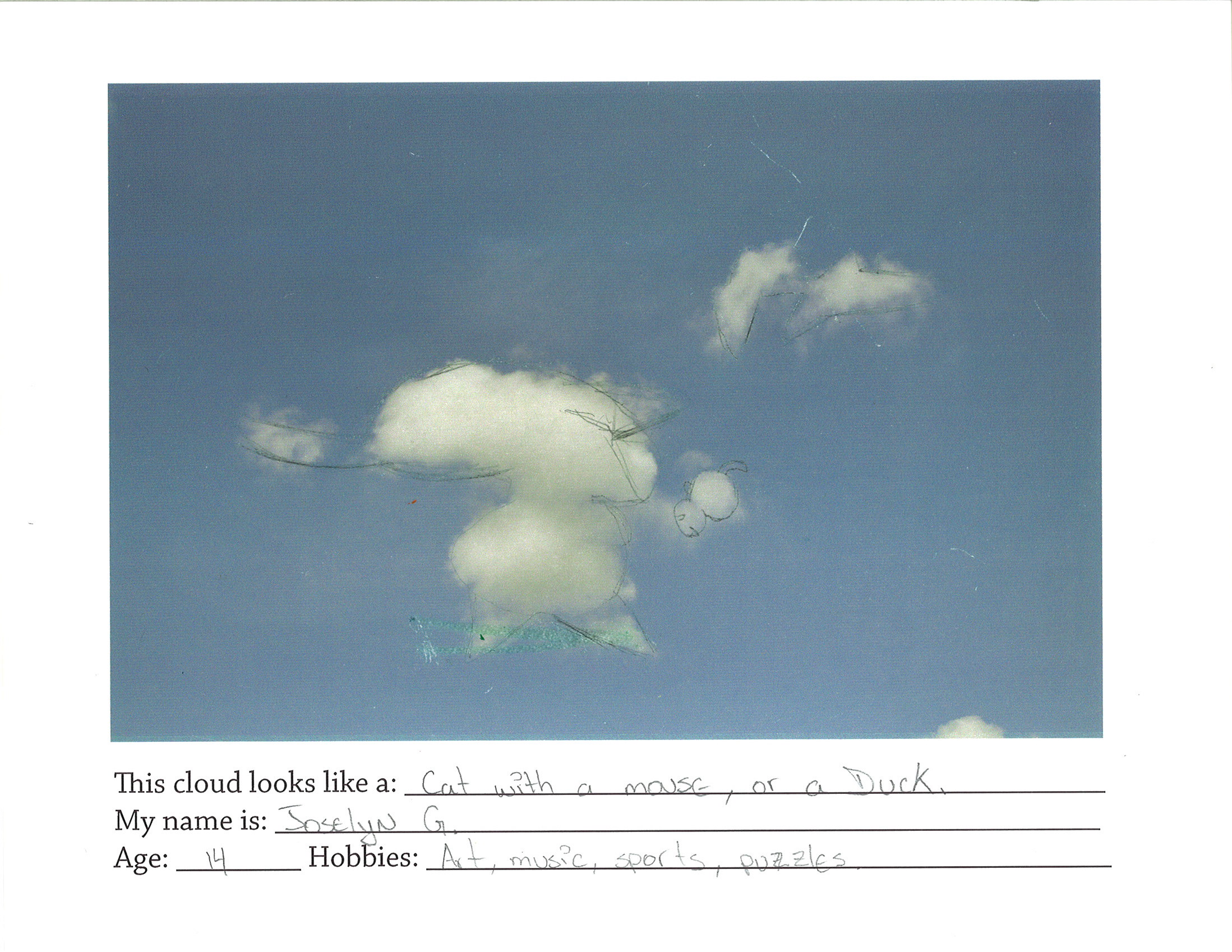
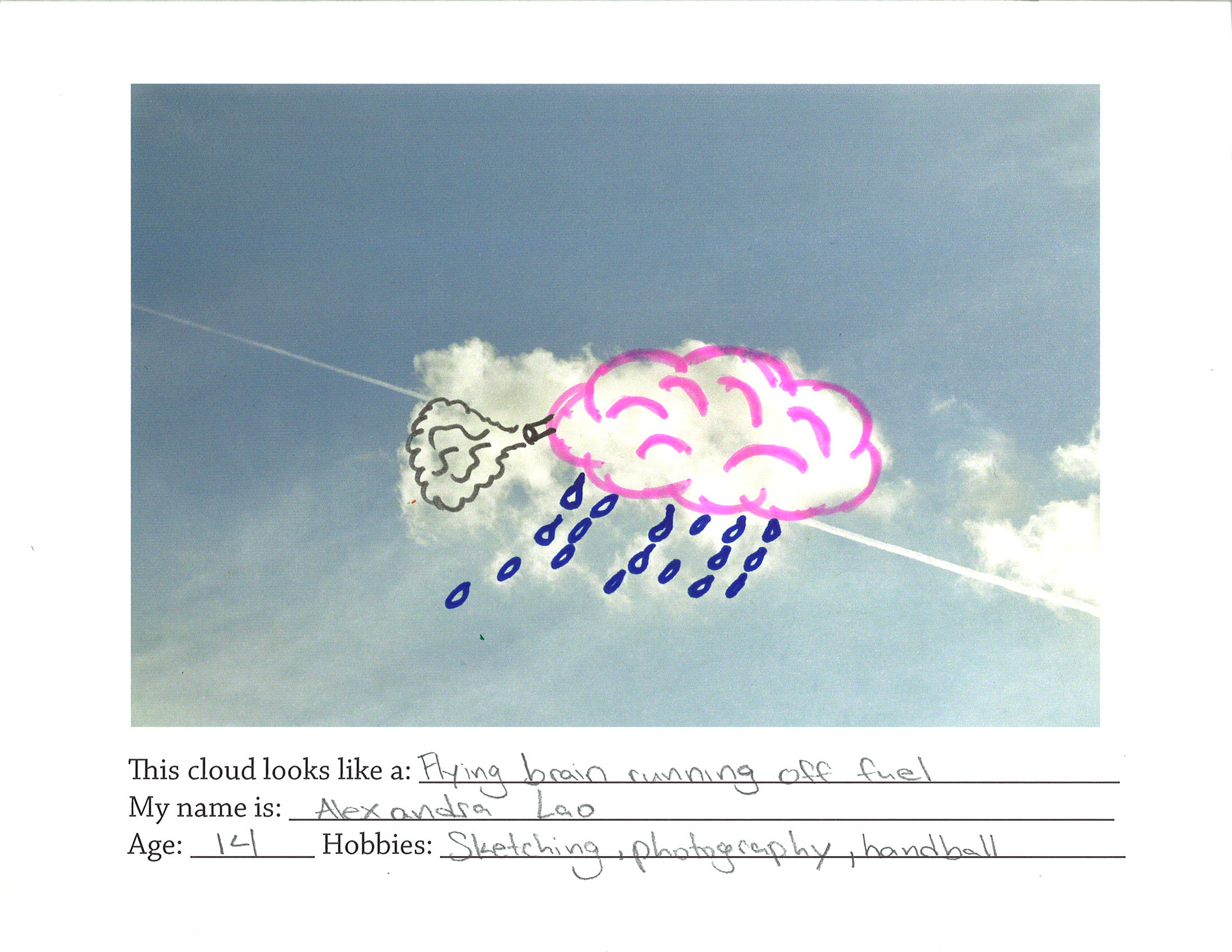
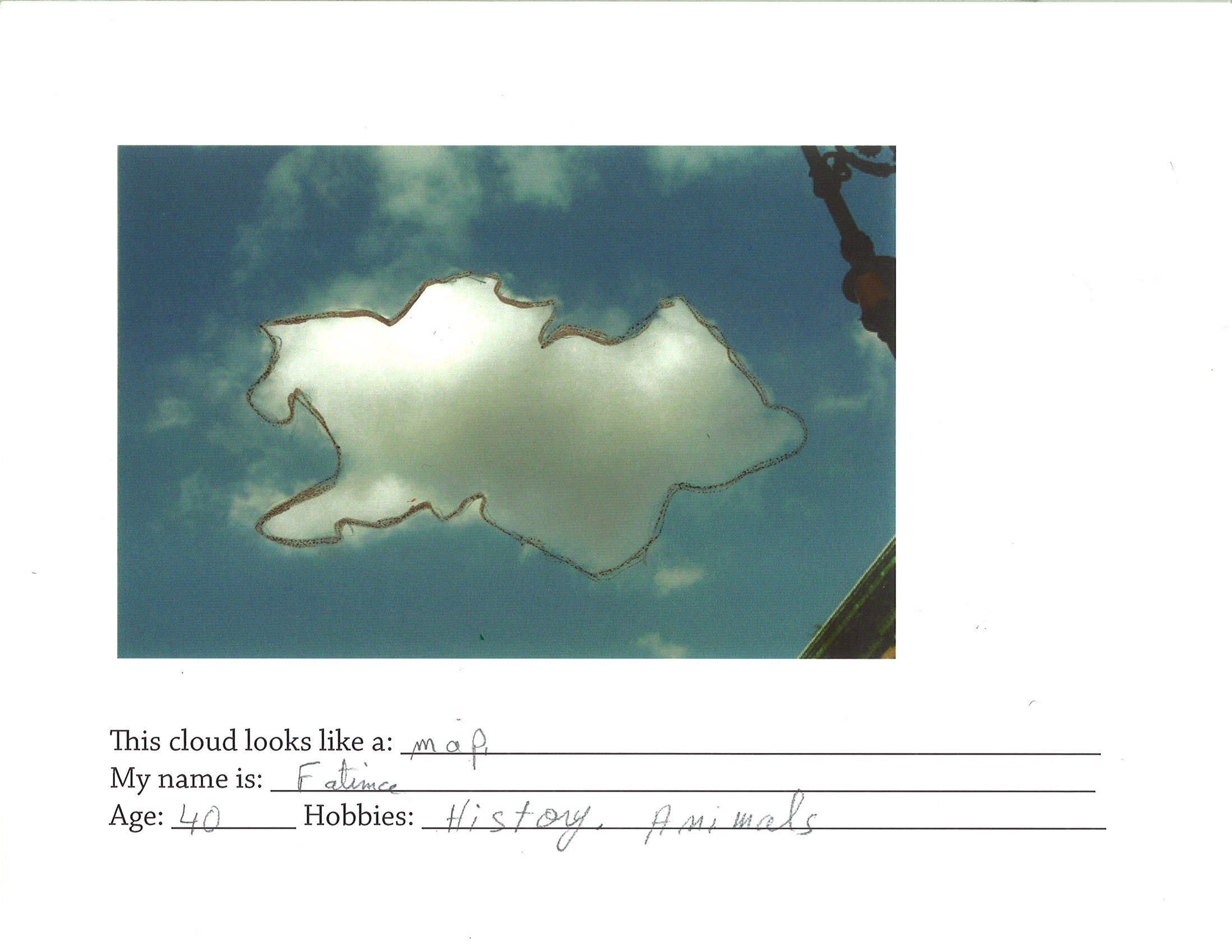
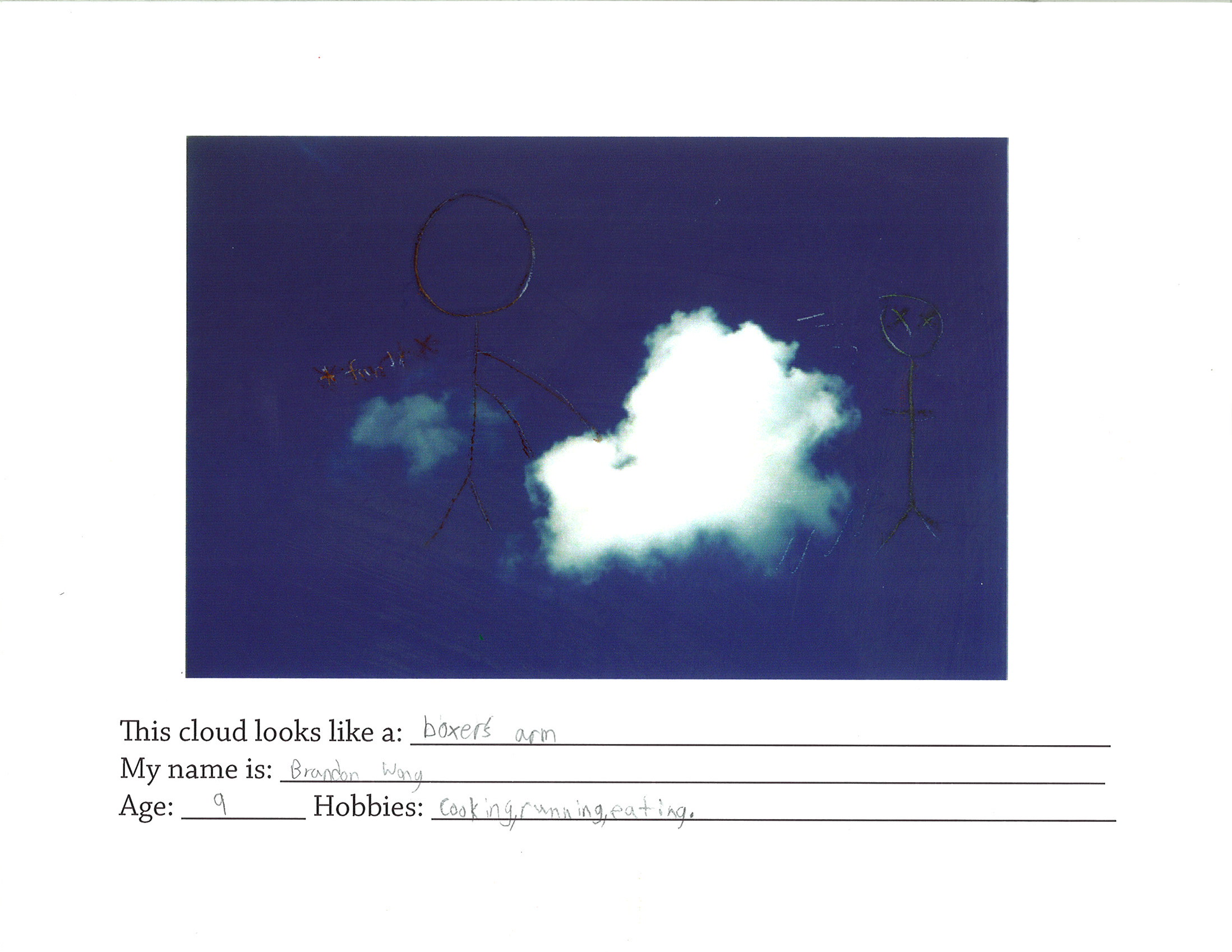
For the Rorsketch project, I’m starting to ask other people what they see in the clouds I’m drawing on. I profiled them based on where they were raised and what their professions were, because I think these are important factors in visual perception. I also told them they can look at the cloud in any orientation. I made all the illustrations out of what they saw.

Here is the cloud in question, which I featured during the early days of Rorsketch:

Viking ship | Julian, Spain, web developer

worm | Fran, Spain, works for an energy company

In my previous post, I wrote about the research that showed how different the Western and Eastern ways of seeing are. For instance, my friend Ana focused on the densest area and interpreted that, ignoring the other white smudges in the periphery.

crab | Ana, Spain and Venezuela, English teacher

On the other hand, I focused on the entire cloud formation and interpreted most of it:

paragliding mermaid | Catherine, Philippines, graduate student in interaction design

I also argued that aside from geography, one’s profession and hobbies affect visual perception. My friend Tom, who is a writer and graduate student of English literature, saw Friedrich Nietzsche’s moustache and eyebrow:

Nietsche's moustache and eyebrow | Tom, USA, graduate student in English literature

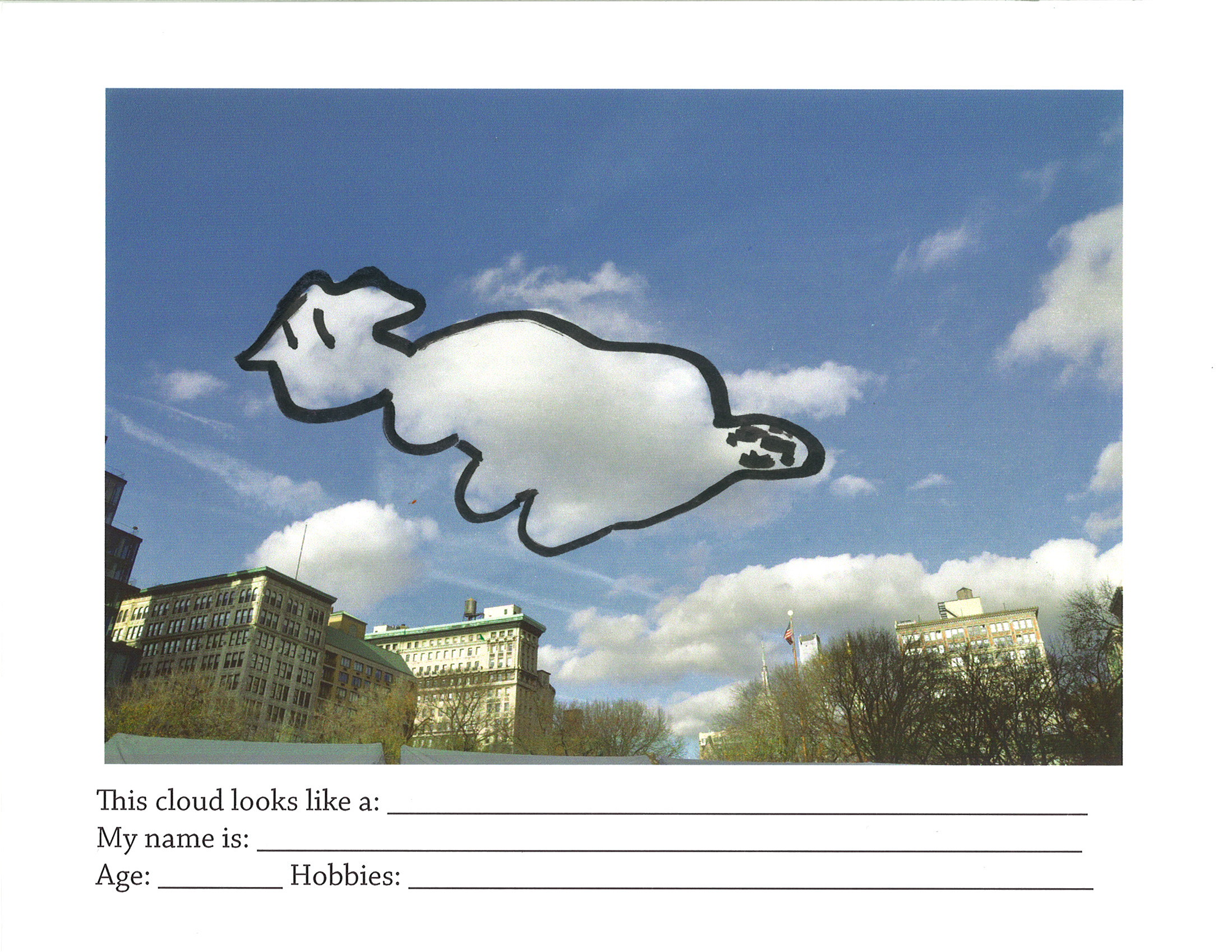
For about a month now, I’ve been taking photos of clouds and drawing the shapes I see in them. Here is an example:

Cloud 2 - A heart is broken. (Or a heart is about to be mended.)

The project is called Rorsketch. The first part of the name comes from the Rorshach test, a psychological test in which people’s perceptions of inkblots are recorded and subsequently analyzed. While the Rorschach is used to examine a subject’s personality characteristics and emotional functioning, I intended for Rorsketch as a way for us to be mindful of the other things―the potential―that we can see in ordinary objects.

This is a project of imagination. I use it as a reminder to myself that things are not always what they seem, and that the world is replete with possibility. Inspiration can be mined from anywhere, especially from things we often take for granted or ignore.

This is also a project of perception. An object can mean a wide variety of things to the same person on different days, and also to different people. Seeing is different from interpreting. It is always worthwhile to take a second look.

Each post consists of at least two photographs; the original and the one (or ones) that has been drawn over. There might be more than one interpretation per image.

Clouds are a particular favorite of mine because they are untouchable ephemera that morph into different shapes, coalesce, separate, and disappear within a short span of time. Their forms may be abstract, but observing them for some time can trigger shapes that we can recognize. Whatever figures I imagine in them vanish as quickly as I see them; one formless mass can recall many familiar shapes.


Geography and visual perception

When I show these photo-sketches to others, it strikes me how differently we see these shapes and how one thing can trigger a variety of metaphors in different people.

In a study done by University of Michigan researchers in 2005, they found key differences in visual perception between the West and the East.

The researchers, led by Hannah-Faye Chua and Richard Nisbett (the latter being the author of the 2003 book, The Geography of Thought) tracked the eye movements of 25 North American students of European background and 27 native Chinese students. They determined where they were looking in a picture and how long they focused on a particular area. 1

Shown a photograph, North American students of European background paid more attention to the object in the foreground of a scene, while students from China spent more time studying the background and taking in the whole scene, according to University of Michigan researchers.

“They literally are seeing the world differently,” said Nisbett, who believes the differences are cultural.

“Asians live in a more socially complicated world than we do,” he said in a telephone interview. “They have to pay more attention to others than we do. We are individualists. We can be bulls in a china shop, they can’t afford it.”

The key thing in Chinese culture is harmony, Nisbett said, while in the West the key is finding ways to get things done, paying less attention to others. 2

Sample pictures presented in the study. Thirty-six pictures with a single foregrounded object (animals or nonliving entities) on realistic backgrounds were presented to participants.

I would say that, in addition to culture, there are other factors that can contribute to people having a bias to what they see, such as profession and hobbies.

When I ask many people to interpret one cloud photograph, I see a variety of answers. I do relate to the results of the Michigan study. Being raised in Asia, I tend to see the abstract form as a whole, while my American and European friends see one focal point and may ignore the periphery.

For Rorsketch, I’m not as concerned with the geographical differences; rather, I am primarily interested in the multiplicity of people’s interpretations. While I do profile participants based on the country they were raised in, their professions and their hobbies, Rorsketch is an illustration project that aims to visually capture what people imagine from abstract forms.  Visit the project site as well as this blog, that will regularly keep track of them.

Icons, myths and urban legends

Reflecting on this project, it occurred to me that our collective visual perceptions have contributed to two things:

1. Iconography

An artist may have a unique way of seeing things, but there are objects that are (almost) universally the same for all. This is why we have icons.  Most people will agree that a stick figure is a person. A horizontal line with two straight ones attached to its right end and oriented diagonally is an arrow pointing to the right.

Icons lead to having universal standards that are agreed upon by all. They lead us to having a learned and automatic understanding of symbols, making it easier for us to navigate the world.

In Rorsketch, I was struck by how 4 out of 5 people (including myself) interpreted this as a dolphin.

Cloud 31 - Do you see the dolphin?

Could it be we have been exposed to enough dolphin shows, movies, cartoons, logos and other related visual media, that the sight of a fin sloping at an angle automatically recalls our memory of this marine mammal? Perhaps if the fin were more angular and perpendicular to the base of the photograph, people may think it were a shark.

2. Myths and urban legends

Our collective perceptions contribute to myths and urban legends that persist through time. Sailors report shapes that recall women with tails of fish, and voila, the legend of mermaids is still around. The stars that form Ursa Major still recall the shape of a Big Bear, and so that nickname persists and makes it easy for us to find it at night.


Drawing for clarity, communication, and concurrence

To document these visual perceptions, drawing has been the most logical way, as well as the easiest.

Why drawing? While I use photography to document the form, my camera does not capture my imagination; I need my own hand to do that.

A big part of me is an illustrator. I like to doodle. If I like you enough, I will likely doodle you. I draw to remember things—the act of committing a scene to paper, line by line, allows me to render it permanent in my mind more than photography ever could (though that helps, too, and I also like taking photographs.) I also like getting other people to draw.

Again, why drawing? In an age of apps, taps, and the instantaneous, of getting software to do everything for you, what is the point of turning to the slow, archaic, primitive act of using (gasp!) paper and pen?

I think the reason is clarity. To draw is to make clear what you mean. If I can’t draw what I think, the idea is probably still convoluted in my head. Drawing is a way of clearly embodying an abstraction using simple points and lines.

To draw is to communicate to another person what I am thinking. And on that note, it is an agency that leads to agreement. “Here is what I see. Do you agree?” or “Here is what I see. Are you seeing the same thing?” It’s different from text because language is cultural and the same word can mean different things.

Drawing can lead to revolutions. I love going back to the history of neuroscience.

While Purkinje found the first neurons in 1837, thanks to advances in microscopy, this was not enough to debunk the prevailing notion of the time, which is that the brain is composed of fibrous tissue and not cells. It was a debate between the reticularists (the researchers who believed that the nervous system consisted of a network of tissue, or reticulum), and the neuronists (the one who believed that it consistent of discrete entities, or cells).

In 1873, Camilo Golgi discovered a new way of staining tissue and showed clear pictures of the brain. Santiago Ramon y Cajal used Golgi’s staining methods to clearly show the neurons in the cerebral cortex. While they refuted each other—Golgi maintained that the brain is composed of fibrous tissue while Cajal declared that it was composed of cells—they shared the Nobel Prize in 1906.

Cajal was eventually proven correct in saying that the brain was composed of neurons, discrete entities that conducted electrical signals in only one direction. His method for communicating his ideas about the brain was drawing. When he was a young boy, Cajal liked to draw and paint, and was very skilful at it. As a grown man and a scientist, he would use his artistic skills to create detailed illustrations of his observations, and started a journal in which he published his findings. 3

Drawing of a pyramidal neuron by Santiago Ramón y Cajal, 1899

I find it hard to imagine neuroscience today without Cajal’s illustrations. Each time a modern neuroscientist tracks a brain cell using advanced time-lapse imaging, he hearkens back to the 19th century when Cajal and his fellow neuronists imagined the brain as composed of these individual units, to the time when Cajal sat down with a mere pencil and paper to communicate his view of the world of the brain. It is noteworthy that up until the 1840s, decades before the neuronists’ time, phrenology was quite popular. Thank goodness Cajal could draw.

References

1. Hannah Faye Chua, Julie E. Boland, and Richard E. Nisbett. “Cultural variation in eye movements during scene perception,” PNAS 2005 102 (35) 12629-12633; published ahead of print August 22, 2005, doi:10.1073/ pnas.0506162102

2. “In Asia, the Eyes Have It.” Wired Culture, 23 August 2005. Accessed 24 September 2011.  http://www.wired.com/culture/lifestyle/news/2005/08/68626

3. “The discovery of the neuron,” Neurophilosophy, 29 August 2006. Accessed 24 September 2011. http://neurophilosophy.wordpress.com/2006/08/29/the-discovery-of-the-neuron/