Over the years, I’ve come to be wary of labels. In past lives, I have been identified as “the scientist who writes,” “the artist who does science,” “the designer who’s an artist,” and a lot of other ostracizing phrases. These words, I have felt, have caused more exclusion than inclusion, and has served to contain a person’s identity into one silly box as dictated by someone else. Isn’t each world enriched by the knowledge of the other?

My mother was a genetics professor in a family of painters and photographers; thus I had childhood diet of Punnett squares and DNA sequences, and would often smell formaldehyde on Mom when her students learned about Mendelian genetics through crossing flies. (Her students secretly called her the Drosophila Queen). My summers were always spent in art school and piano lessons. I ended up doing my degree in molecular biology and biotech while working as a correspondent for a national newspaper. In between PCR reactions, dissections, and other tedious experiments, I would take photographs, write, and make. Later, doing art in Barcelona made me miss the lab; I would often always show work that had a scientific slant of some sort, which puzzled some of my colleagues. Even the poetry I was writing was geeky.

Why these two? I’ve often looked at things with wonder, and thought that artists and scientists pursued their paths with the same curiosity.  I realized that I wouldn’t have one without the other; I could not choose between two halves of myself*. I loved the rigor of science; to be able to discover things and arrive at exact answers. I also loved the looseness and profundity of the arts; it allowed me a lot of time and opportunities to play. Doing science alone was too tedious; doing solely art felt like I was floating aimlessly. At the same time, I found that many of the questions I was fascinated with were investigated by artists and scientists alike; it came to the point where it was difficult to tell where the boundaries lay.

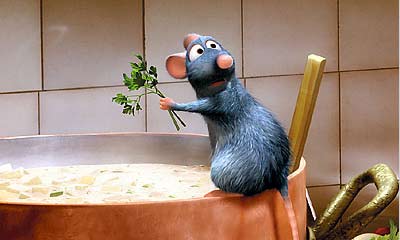
(*That line feels familiar. I believe I am quoting Remy from Ratatouille. Yes, a rat.)

Remy from Ratatouille. Copyright Pixar.

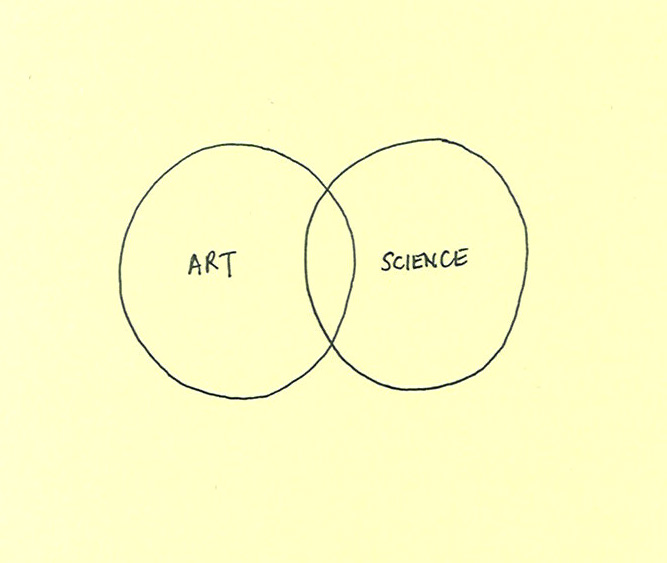
Admittedly, in the beginning of doing an MFA in Interaction Design, I had the notion that my own Venn Diagram of Personal Beliefs and Interests, which only had two circles…

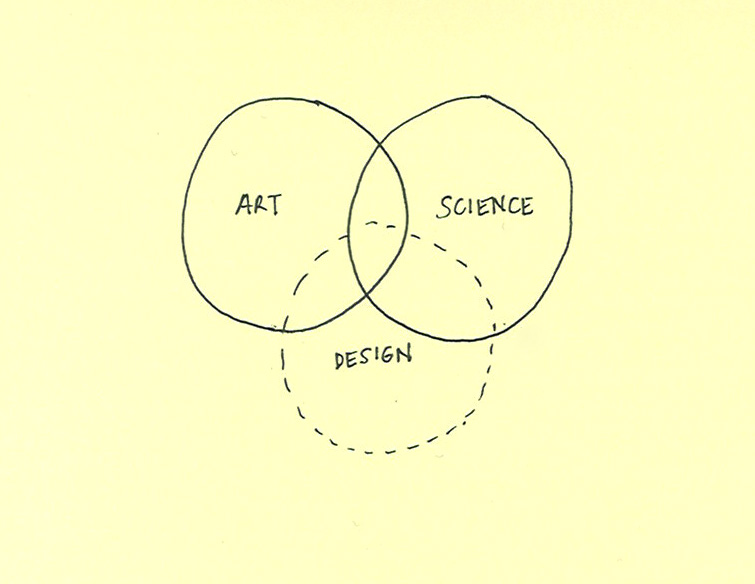
…would look like this after an MFA, adding design to it, because good things come in threes:

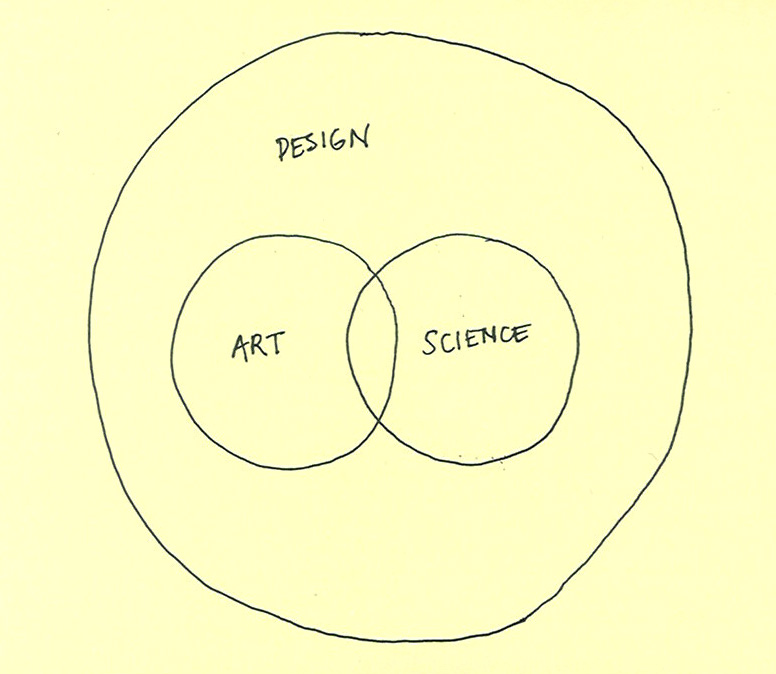
But now as nearly two years have passed and I inch slowly towards graduation, I find myself thinking that this is my point of view of Art, Science, and Design as I have used them, based on the common themes of what I have done so far:

I think that up to this point, I have used design to contain the concepts and questions I have grappled with in art and in science. Things like “What makes you happy?” or “What do clouds look like?” or “What do you remember in a smell?” are questions that have both scientific and artistic facets to them, albeit in varying degrees. When I think about design in this way, I’m really happy that I chose interaction design as the third thing I wanted to study. Art and science are always the two broad areas that interested me, but it was design that allowed me to see how I can articulate these concepts to others. More importantly, design is a way for me to get other people to participate in what I do. I don’t think this makes one field better than the other; but it reminds me which hat I have to put on and which language I have to speak depending on where and when I am.

I think this why I’ve struggled (i.e. drowned in ennui) with making things that are purely utilitarian. Design without the poetry of art and science at its core feels hollow and flat. I don’t think I will ever be truly happy by making living out of making things less inconvenient, or by satisfying people who just want to make more money—it seems like the stuff midlife crises are made of. It’s not that they aren’t important, because they are. It’s just that my happiest ideas and moments have been borne out of uncomfortable situations—getting the flu, waiting for hours in line, being stood up by someone. But I have always tried to make the best of them—I fill sketchbooks from cover to cover, I scribble poetry on napkins, I talk to a lot of strangers. I think that if everything were to run too smoothly for me, my life would be dull and flat, and I would never have had the happy accidents that have led to all these amazing opportunities and adventures.

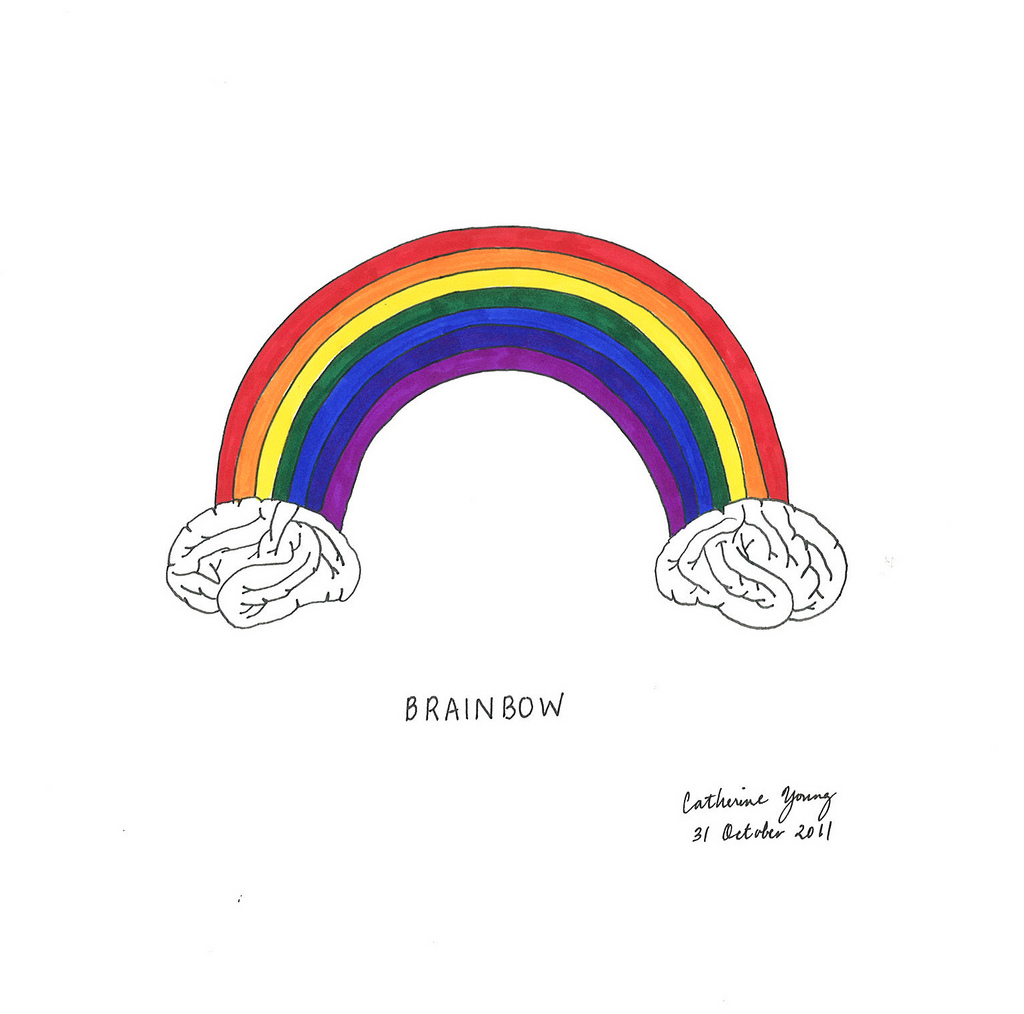
This reminds me of a pivotal conversation I had with one of my classmates, who said that I had to create a bridge between my mind and the mind of my audience.  This led to my joke about “brainbows“—a rainbow bridge between the mind of an artist (or scientist) and those whom they want to connect with. In art and in science, I usually worked by myself, secluded and uncaring about what other people thought. To care too much about other people was seen as a disadvantage if you wanted to do something authentic and brilliant.

But in design, it is imperative to care about other people, perhaps not everyone, but at least the user, the participant, or whatever word you wish to refer to the person you are designing for. And I think this is probably the best thing I have learned in the two years I have been in graduate school: to know how I can make my ideas as an artist or scientist accessible to everyone. The invisible walls I’ve seen that made art and science too abstruse and irrelevant to many are broken down by design, making these concepts available, relevant, and malleable by all, regardless of gender, language, education, and culture. And because of this, I like to think design creates bridges that people can walk on, so that they can allow the experience to be a part of their lives, thus enriching them. I’m hoping I will able to do that by posing simple, universal questions, and by coming from the point of view of joy and actual human contact, which I think is common for everyone, regardless of whether you have an MFA, or a PhD, or an MD, or no letters at all.

Part of writing this is because I have been perusing journals from five years ago, and man, one knows how much she’s grown when, upon reading, she alternates between “Aww” and “Yikes!” I’ve done the painful and hilarious rereading of events—I went through quite a blur of taekwondo belt tests, French classes, and mammalian dissections—back in the day when I still ate red meat and wrote on notebooks with lines. (I’ve since gone pescetarian, finally with a black belt, and now go for the blank Moleskines. Hurray for all of it.) I smiled when I saw familiar things—one of my earlier (and forgotten) entries in 2007 was entitled “Celebrating the Senses”—some things just persist from youth, I suppose.

I wonder then, if my future self would challenge this current view. Just as I am alternately charmed and exasperated at the naïveté of my 23-year-old self, perhaps my future self would read this post and smile knowingly at all the things she has yet to learn. Perhaps when we look at the totality of all our different identities, we will find that we are all of those things and none of those things at the same time.

And I think, isn’t that marvelous.

I’m a hugger. I can’t help it. When I see a friend, I just go for it without thinking.

There are perfectly good explanations for this. I was raised in the Philippines, land of extremely happy and friendly people. I also grew up with a lot of stuffed animals. I still sleep with a pillow I’ve had with me from the crib—it’s the only material possession that has been with me forever. And dang it, it feels good. Hugging releases oxytocin, the hormone that promotes love and trust.

But I do realize that not all people like to hug others. The idea of touching as a greeting is largely cultural, and I’ve had to adapt accordingly, depending on where I’ve lived and whom I was interacting with. In the Philippines, I hugged. In Spain, I kissed (both cheeks). Here in America, I shake hands. It is especially in the latter that I’ve felt that people respond the least positively to hugs. Many people, I’ve observed, have an invisible “wall” that illustrates their personal space. Touch may be considered as an intrusion, an interruption, or a threat. On the other hand, a hug can also be a sign of great physical intimacy that is only reserved for one’s closest family and friends.

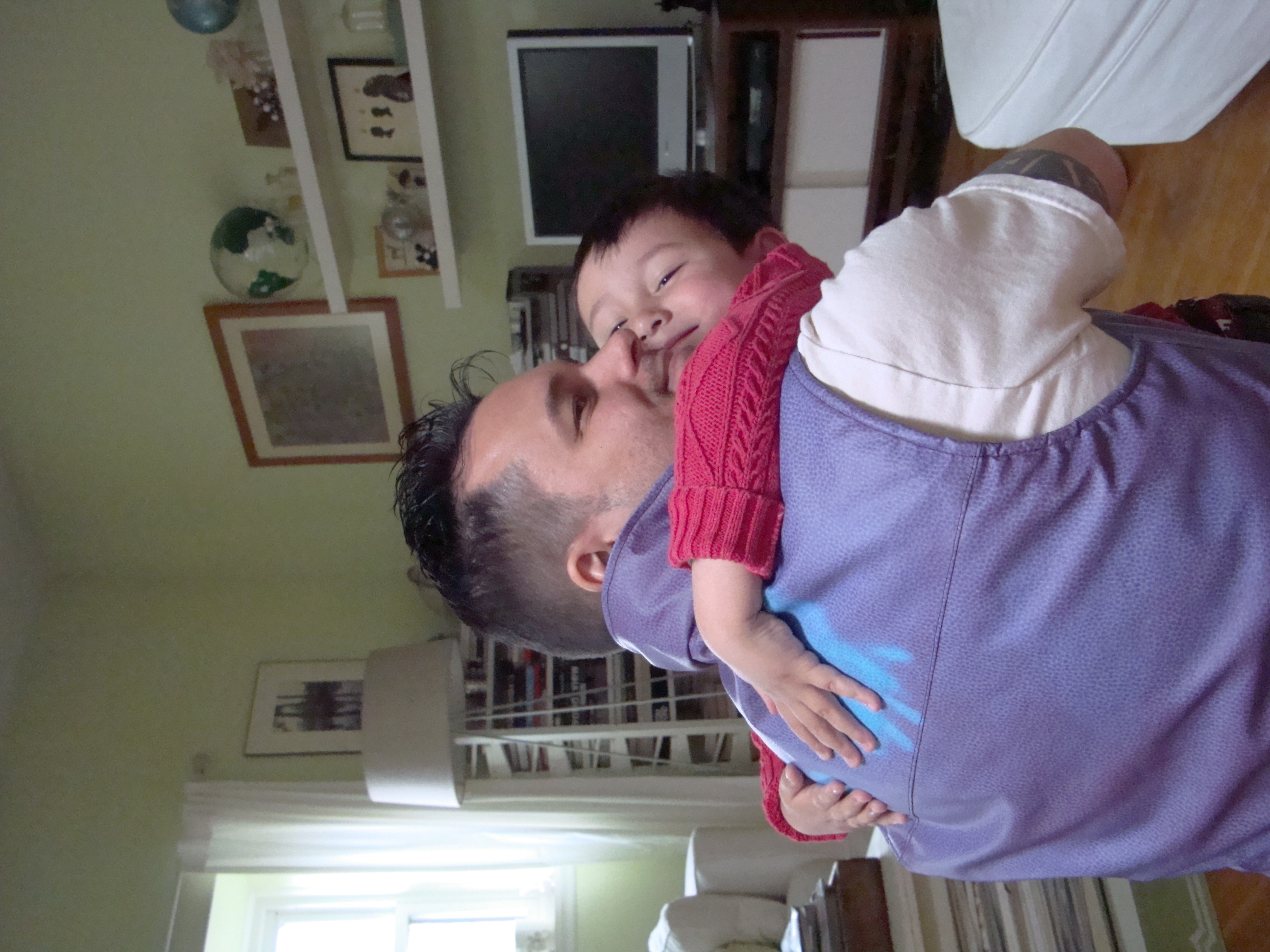
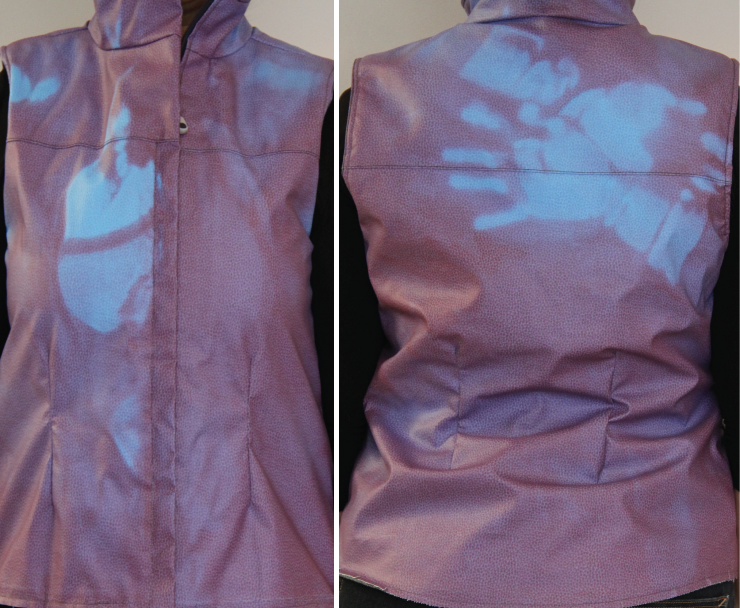
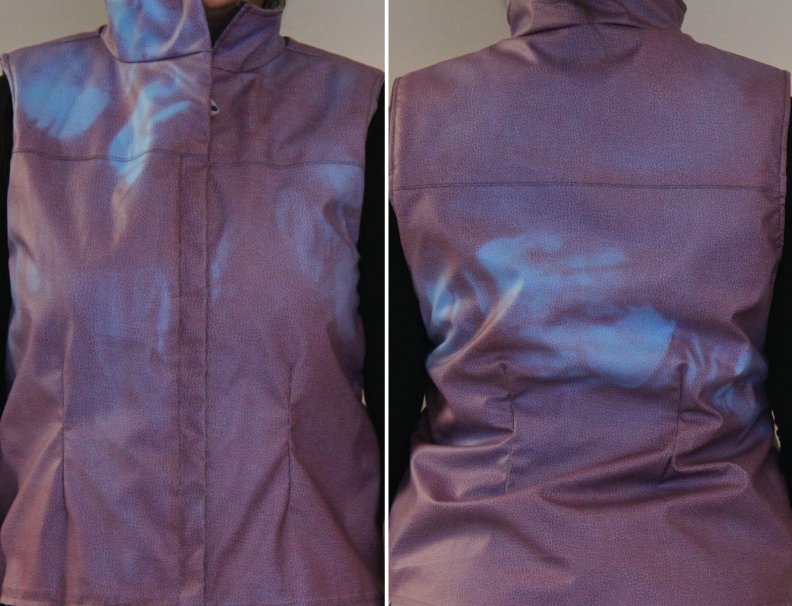
I wanted to investigate our perception of touch. In the past week, I’ve designed a vest made out of thermochromic fabric, which my dear friend and fashion designer Kate Russell expertly sewed. The purple color changes to blue at higher temperatures; if you touch it, your hand will leave a print. The color will change back to purple when the temperature is lowered again.

For this project, I’ve used it as a social experiment of a sort; I’ve initiated a “hug session” in the studio here in SVA’s interaction design department and hugged my fellow grad students. The goal was to find out where their impressions, or “hug prints” would lie, as well as to observe how they would interact with me while wearing a vest that was responsive to their touch. I’ve known these participants for at least a year, and we’ve shared hugs before.

While investigating materials, I noted that people’s skin responded differently to the fabric; some were very “warm” and immediately changed the color of the fabric. Others were “colder” and barely made any difference when they touched it. How much or how little the fabric changes also depends on what the person was doing right before. This made me expect diverse levels of color change.

The hug session was conducted in the studio on the same afternoon; hence the environmental temperature was the same. The participants had also been in the studio for some time; no one was “warmer” than others because of being outdoors.

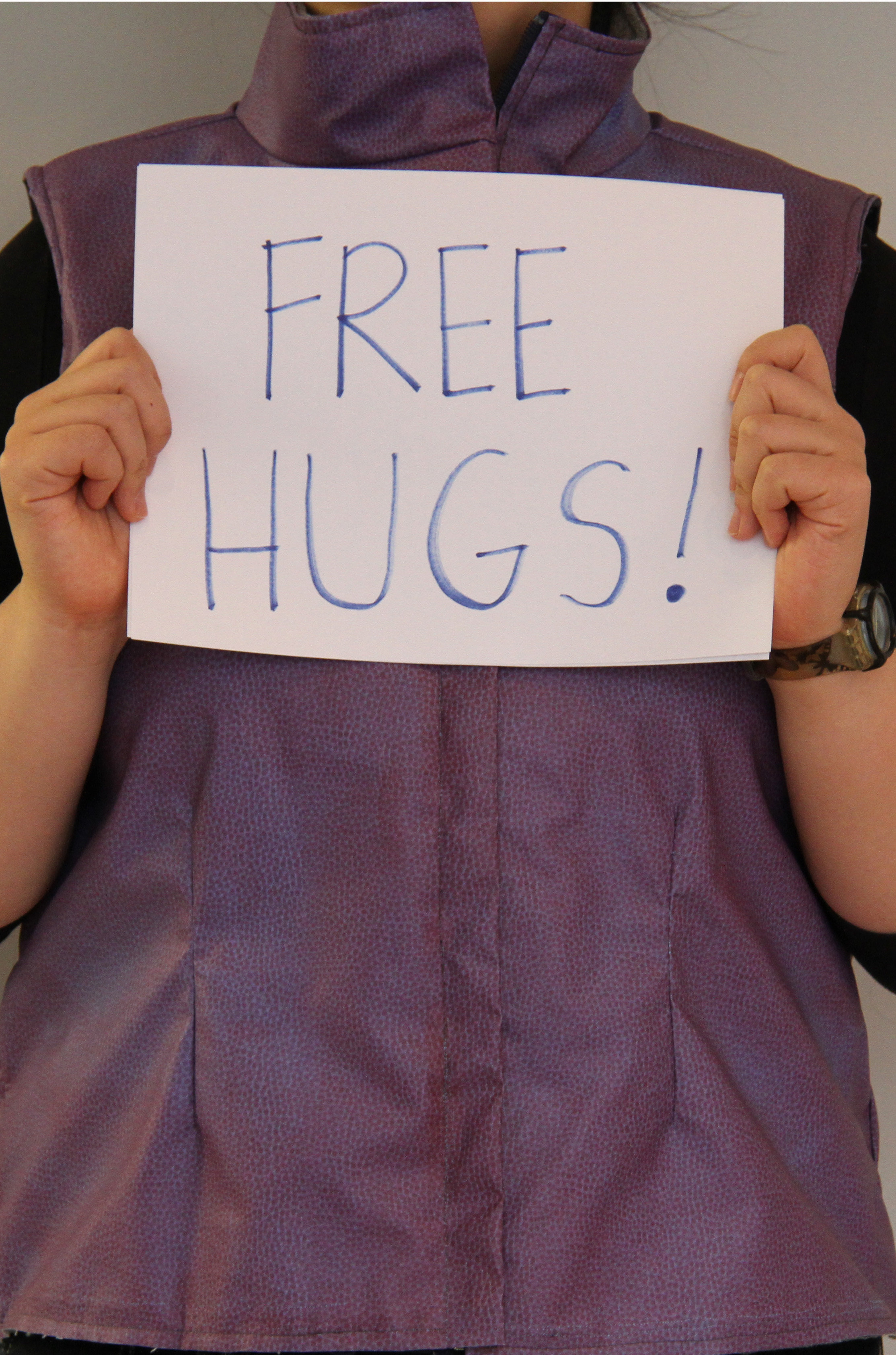
Free hugs!

The experiment was simple. Each person hugged me, and the front and the back of the vest were photographed right after each hug. The vest was returned to its normal (purple) color by sticking it for a few seconds in the freezer and afterwards letting it reach the studio temperature.

Hug then shoot. Photograph by Shanshan Gao.

For this session, there were seven willing huggers and here are the impressions they left.

Tina was extremely warm and left the darkest prints. The two of us tend to hug in the studio on a regular basis, so familiarity definitely played a role here. It also seemed as though she wanted to make her prints darker, as she hugged me the longest.

Hug prints – Tina

It seems obvious that one’s personality reflects how he touches, yet I am still taken by surprise during projects like these. My friend Min Seung is one of the most composed people I know. His hand print on the right looks radically different from the others, because it’s the area surrounding the fingers that turned blue instead. In the beginning, I hesitated because he doesn’t usually hug people yet was willing to help out with the project. (Thanks, Min Seung!)

Hug prints – Min Seung

Shanshan had this interesting impression on the front. (Doesn’t that look like an arrow pointing down?) It almost felt like she was drawing on the vest.

Hug prints – Shanshan

JoonSeo’s was interesting because when hugging, she wrapped both arms underneath, unlike the others who usually had one hand over one of my shoulders and the other one at my waist.

Hug prints – JoonSeo

Tony left these moderate impressions.

Hug prints – Tony

Chris, who sits next to me in the studio, pretended to be grumpy and growled, “How many times do I have to hug you every day?” His imprints, which were mild, seemed aligned with his quiet personality.

Hug prints – Chris

This idea of “epidermal warmth” being related to personality and temperament also seems applicable to Prachi, who is one of the most poised and calm people in the studio.

Hug prints – Prachi

At the end of the session, I had two conclusions:

1. A responsive garment made people pay attention to the act of hugging in the sense that they had the feedback of the vest to observe after the hug. In normal circumstances, people would just hug and then carry on. Here I felt that they were aware of the vest’s thermochromism, and thus affected the pressure and duration of the hug.

2. Having a garment that responds to touch can make the person want to hug the wearer more. But it can also turn people away; I had an incident where the person refused to hug (I was a sad puppy), even though we’ve hugged on other, more informal, occasions. I suspect that if I kept doing this, I would encounter people who would not like the idea of calling out this particular interaction.

There are two directions in which I can take this project:

1. Investigate how this vest can affect specific relationships, such as parent and child, or husband and wife, etc.

2. Investigate how this can play out with strangers in public spaces.

In any case, I have a lot of hugging to do.

Thank you to my huggers! Also a big thank you to interaction designer and ace photographer Prachi Pundeer, who very patiently took all the photos (except when she hugged me) and waited while we let the vest cool in the freezer for the color to return back to normal.

On a recent trip to New Orleans, I was without a plan and without a clue. And yet, on this plan-less and clueless visit, there were two things that captured my attention amidst the remnants of Mardi Gras beads, tourists with stale beer in their go cups, capybara sightings, and fascinating reptiles.

1. Puzzle animal sculptures by Peter Chapman

My absolute favorite store in New Orleans is undoubtedly The Idea Factory, a wonderful shop that sells interactive wooden toys in the French Quarter.

The Idea Factory is located on 838 Chartres Street in the French Quarter.

The Idea Factory in New Orleans sells wonderful interactive wooden toys.

The store carries works by several artists, and while I loved the trains, the puzzle boxes, and the animals on wheels, what made me so incredibly happy were these three-dimensional interlocking wooden animal puzzles by Peter Chapman.

3D wooden animal puzzles by Peter Chapman

The eyes of the animal serves as the “lock”—remove it and it becomes possible to dismantle the puzzle. What makes it even better is the surprise inside each animal. An egg lies inside the brontosaurus. A finger falls out of the piranha.

On the last day of my visit, I caved in and bought one (the dinosaur, naturally). His name is Max.

2. The Toaster Project by Thomas Thwaites

The Toaster Project by Thomas Thwaites

The book that held my attention during idle moments this week was Thomas Thwaites brilliant (!) book, The Toaster Project, the documentation of his MA project  at the Design Interactions program in the Royal College of Art. In it, he chronicles his misadventures of creating a toaster from scratch, showing how he obtained materials such as steel, mica, plastic, copper, and nickel. Apart from being a modern quixotic tale of a seemingly impossible and foolish task, it is also a poetic reflection of sustainability and global capitalism.

Thwaites' toaster. Image via the designer's website. Photo credit: Daniel Alexander

As a designer of a more speculative and conceptual kind, and one who is sometimes weary of seeing only apps, websites, and flowcharts, I feel encouraged at seeing projects like this. I think my favorite part was when Thwaites was writing his thank-yous:

“…for making the Design Interactions MA a place where toasters can be made from scratch, and saving me from a life as a bad web designer.”

Spot on.

***

I am not embarrassed to admit that when I see things like Chapman’s puzzles or Thwaites’ toaster, I jump up and down with glee and spread the joy by telling everyone in my path. I love being humbled and reminded that wonder can go beyond our digital devices and can actually reside in simple materials and objects such as wood and toasters. Wood isn’t just wood; it can stoke the fires of human imagination and hide delightful secrets. Toasters aren’t just toasters; they contain histories of our technology and consumption.

There is always the potential of poetry in everyday things.

A white alligator in New Orleans' Audubon Zoo

Back in the 80s, a nest with white alligator babies were discovered in Louisiana and instantly became reptilian celebrities. The gators are leucistic instead of albinic; the pigmentation is reduced and their eyes are blue.

Today, in the New Orleans’ Audubon Zoo, some of these white alligators, now fully grown, sit silently behind glass. It seems debatable whether they are waiting to pounce on prey or, like child prodigies that burned out, lie jaded and oblivious to the excited and perhaps startled viewers on the other side.

Up close, it looks as though it’s grinning.

A white alligator up close

White alligators. It’s almost like seeing a unicorn, no?

A confession: I can tell my entire personal history through smells—baby powder and shampoo, my parents’ laundry detergent, the sea while growing up in Southeast Asia, tea tree oil I used to treat teenage acne, old books, lab chemicals, studio paints, and the many kitchens and apartments in the cities I have lived in. Smell can transport me to space and time, and thus, can serve as my olfactory timeline.

Helen Keller, who could neither see nor hear, used smell as a portal, too:

“Smell is a potent wizard that transports you across thousands of miles and all the years you have lived.”

Smell is our oldest sense and is the most powerful. About 2% of our genes are devoted to olfaction; other genes that can compare to this quantity are those for the immune system, which as we know are important for our survival. Hence, scientists believe that smell is more important than we think it is.

Smell is important for memory; this sense is processed in the brain’s limbic system where emotions are also processed. Hence, smell can be a very sentimental one. Impairment of smell has been found to be linked to Alzheimer’s disease, Parkinson’s disease, and aging. In literature, Proust’s encounter with the madeleine is often referenced, where eating the biscuit unleashed memories. A similar scene in Pixar’s 2007 film Ratatouille involves the food critic Anton Ego being transported to his childhood while eating Remy’s ratatouille. (Note that while these episodes involve eating, it is the smell that evokes emotion; consider pinching your nose while eating a meal. You will not be able to properly taste it.)

Anton Ego in Ratatouille (copyright Pixar 2007)

This obsession with smell led me to conduct a blind smell experiment using smells that were printed via microencapsulation.

I asked the participants to close their eyes and to do two things: 1) Describe the smell (and if they could, guess what they are smelling), and 2) Talk about a memory that comes to mind. Their eyes were closed so that they would not be influenced by what the label on the card said. Their responses, which were usually streams of consciousness, were recorded. When appropriate, I prompted them with additional questions, such as when the episode occurred, or if they were stumped with identifying it, to focus on describing the smell (e.g. sweet, sour, etc.) or mention metaphorical associations with it (e.g. smells like a flower, a dish, etc). In between sniffing the cards, they had the option of smelling a hot cup of coffee to clear their sinuses, or to pause for a bit to take some fresh air.

The results of this experiment were quite astonishing. Here are some highlights and what I’ve learned from them:

Fresh air – Unsurprisingly, smells of what we buy do linger in our olfactory consciousness. This participant was interesting in that he could associate the smell with a product, recall a specific episodic memory, and associate the smell with a color.

“It smells like that freshening block you hang in a toilet …  Not that it seems like an air freshener. I definitely get that synthetic quality to it. I thought of this house that I went to once. It was with an ex-girlfriend—I was maybe 16 or 17. It was with her and her mother and it was her friend’s house, which I’ve probably went to once in my life. It reminds me of color as well—a pale pink peach color.”

Eucalyptus  – Some smells could not trigger a specific episodic memory, but concrete associations.

“It smells like a woman, some florally perfume … I guess i could smell a grandma, not mine but what I imagine … like a fat grandma with big boobs.”
Garlic – I was impressed by the associations of gender and abstract attributes.

“I don’t know what it smells like. But if it had a sex, it would be male, not female because for me it’s strong and a little cold.”

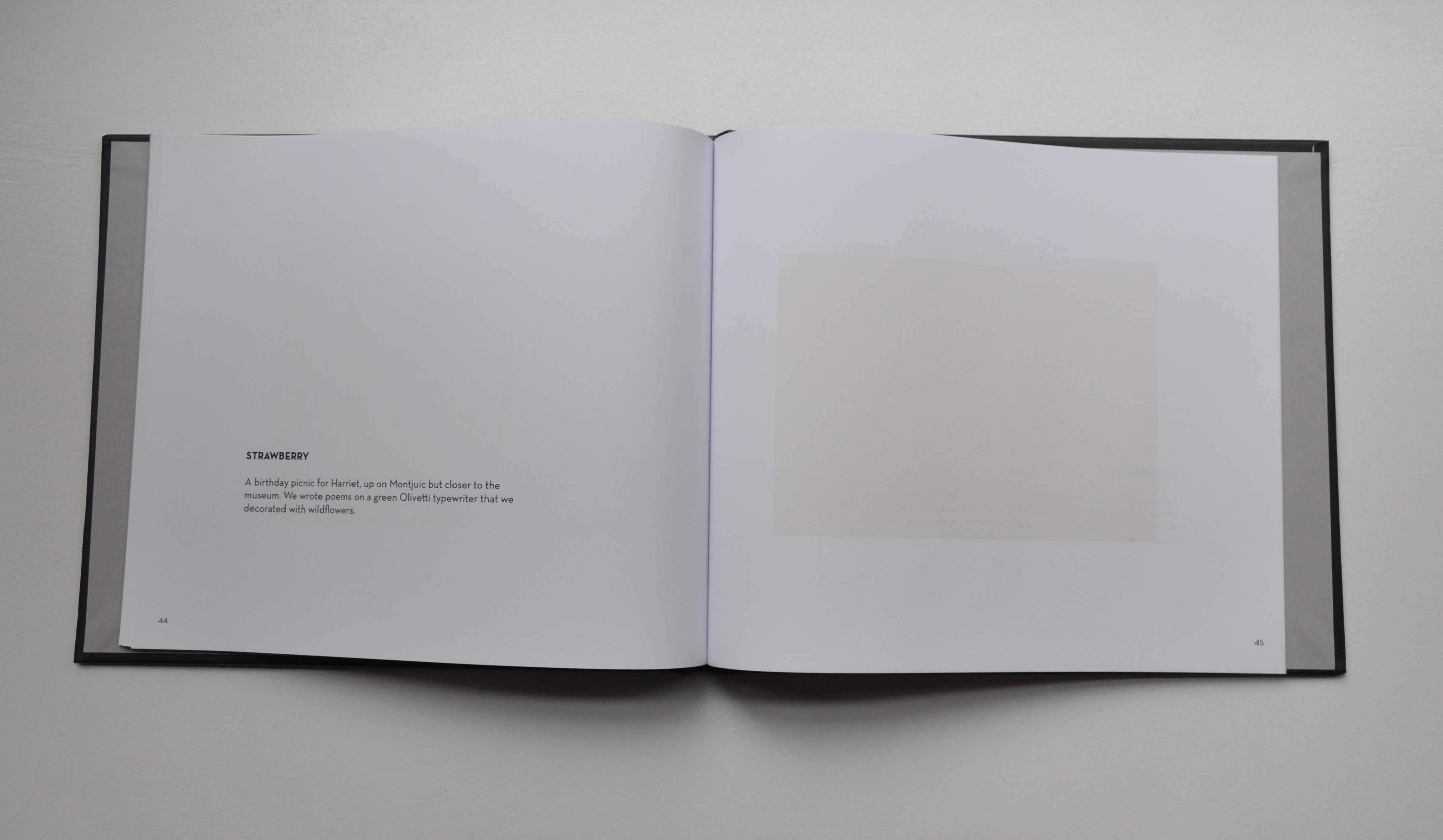
Strawberry – Some memories were specific to a particular event or interaction.

“It reminds me of Strawberry Shortcake, the doll. When I was in fourth grade, I had a friend… he had a younger sister who had one. We were in the playroom … Yeah, smells like strawberry, smells like neapolitan ice cream.”

Tea tree – This was striking because the smell on the card was very faint, and the participant had a minor cold. This made me think that smell can indeed be trained; the participant grew up in India, perhaps similar to my experience growing up in tropical Manila where the smells are more potent.

“It smells like winter, not in a plant way, because I’m usually sick in winter. smells like the cold balm I would use … some sort of a minty, oily smell. It’s [the balm] is strong; despite having a cold, I can still smell it. It also reminds me of a really famous clothing store in India because it uses organic dyes. Eucalyptus, tea tree oil or mint smell to it.”

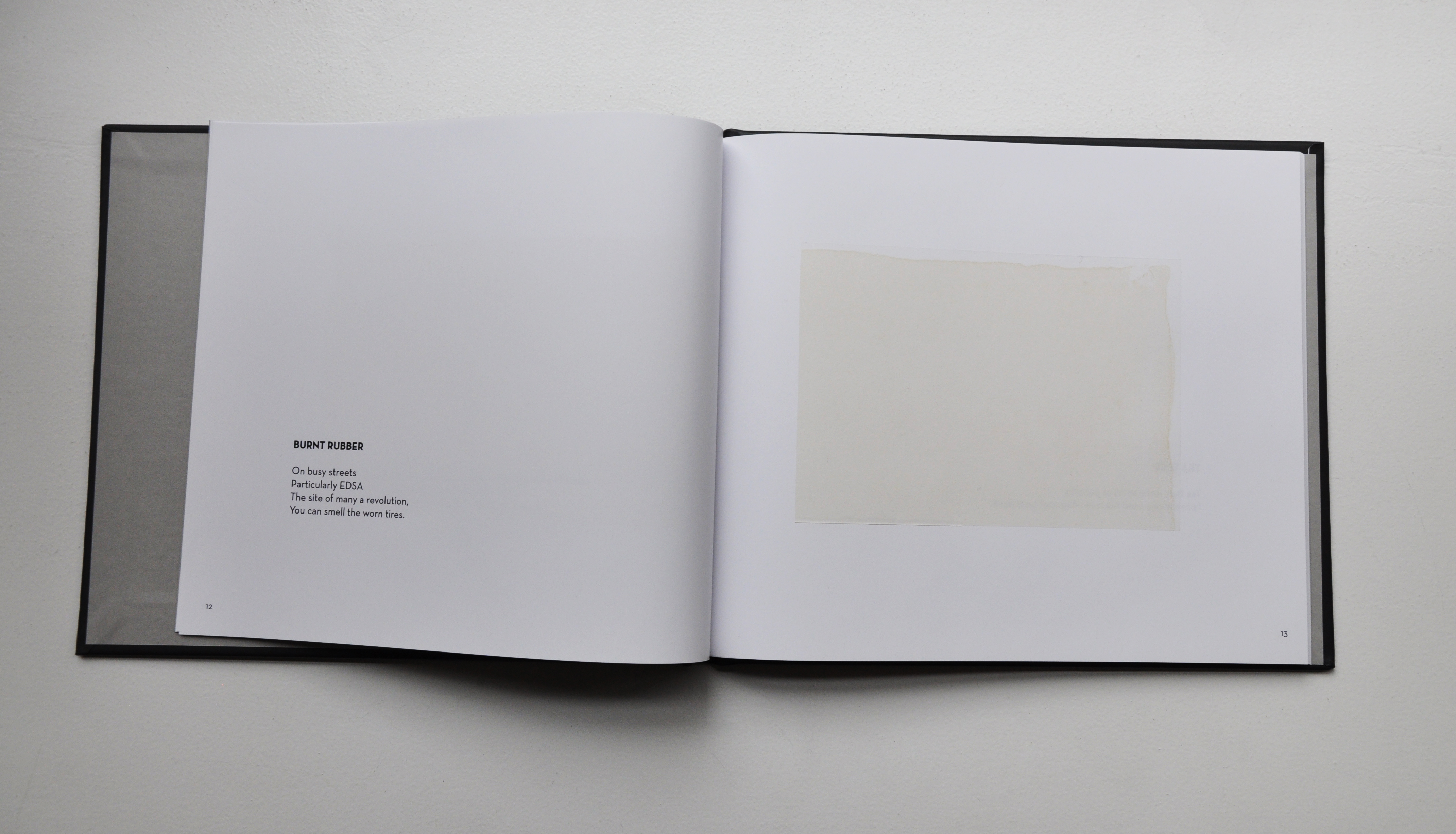
Burnt rubber – This was particularly interesting because of the divergent associations these two participants had. One had a traumatic incident involving this smell while the other did not and so picked up on the sweeter notes of the smell.

“Whoa. This reminds me of something. It reminds me of going to the dentist. The smell of rubber gloves maybe? Having a hand placed in my mouth. Getting braces … in the 6th-8th grade. Teeth started to hurt smelling this.”

“It reminds me of my grandfather’s old house they [grandparents] used to live in. It’s not a cooking smell, it’s not as fresh. It’s sort of a flowery smell close to parma violets. Lavender flower, I suppose. Maybe it’s something between flowers and sweets. It reminds me of a specific part of the house which is to the back of it … a cupboard that had sweet things and flowers. The memory made me smell the thing, but the smell itself didn’t remind me of these things.”
While memories and associations of these smells are diverse, smell is indeed transportive, and is strong enough to take a person back to a specific time and place, remembering actual people, objects, and interactions. What could we do with this underestimated sense? How can we improve our memories, our relationships, and ultimately, our lives, by consciously engaging with smell?

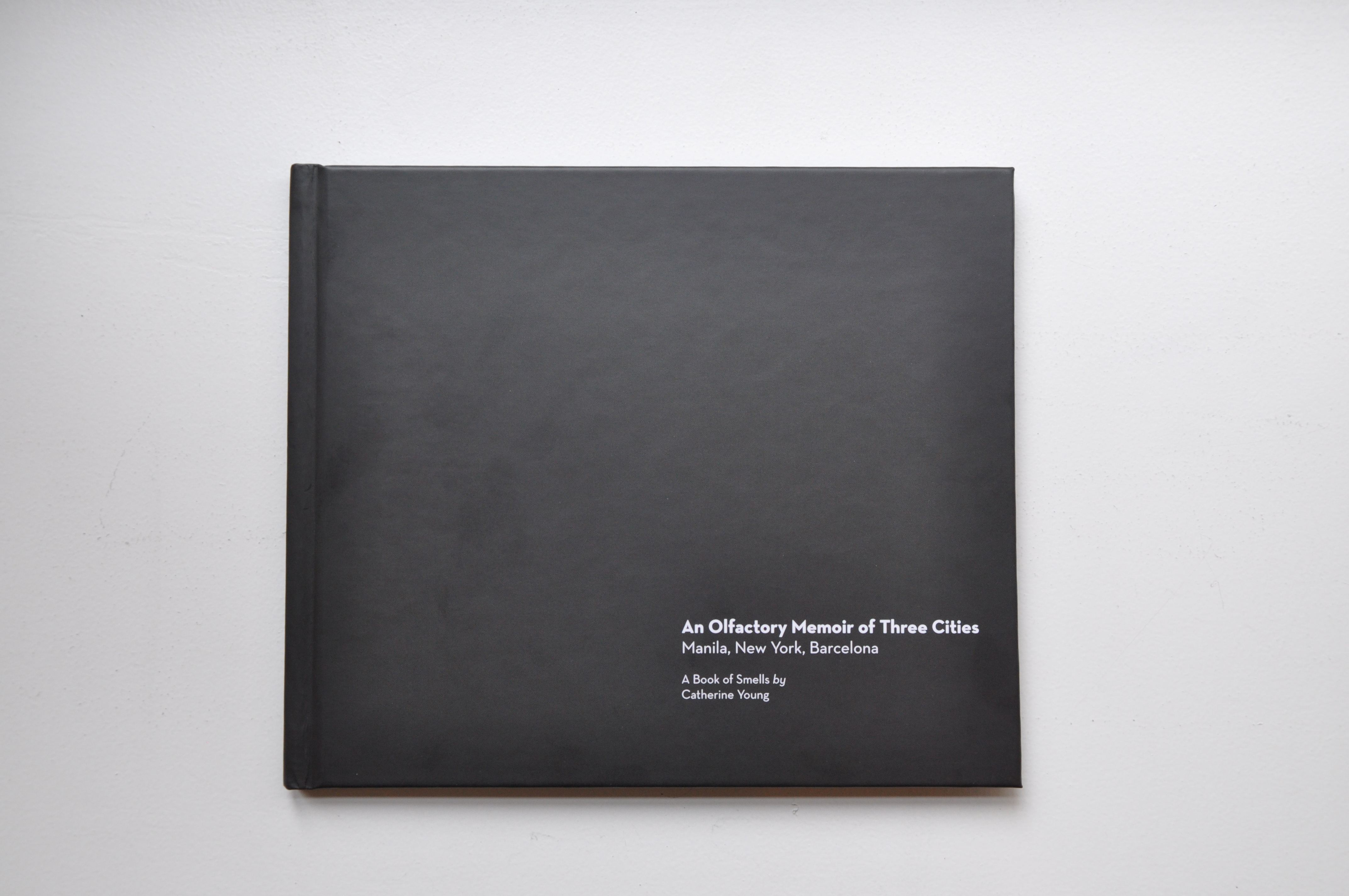
Update: The resulting project from this experiment is An Olfactory Memoir of Three Cities, a book of my smell memories.

Main References
Angier, Natalie. “The Nose, an Emotional Time Machine.” New York Times, 5 August 2008.
Herz, Rachel S. and Schooler, Jonathan W. A naturalistic study of autobiographical memories evoked by olfactory and visual cues. The American Journal of Psychology, Vol. 115, No. 1 (Spring, 2002), pp. 21-32.

The Translation Project, which marks a new beginning for The Poetry Society of New York, bridges the Poetry Brothel of New York and the Prostibulo Poetico of Barcelona. Poets from each poetry brothel were paired to translate each other’s work. Edited by Nicholas Adamski and Stephanie Berger of the Poetry Brothel in New York, and Kiely Sweatt of the Poetry Brothel in Barcelona (my lovely madame!), the book is a collection and translation of work by emerging poets from diverse cultures that is a valuable and lacking element of the culture at large.

The Translation Project, volume 1

Please support us! The book is now available on Amazon.

***

On another poetic note, this reminds me of last month’s BOWWOW poetry reading series at the Bowery Poetry Club where I read or listen to poetry once a month.

Bowery Poetry Club

At that time, writer Claire Basarich and I, who met as poets for the Poetry Brothel in Barcelona and have remained great friends, saw each other again after two years. I read the following poem and she read the French translation she wrote (blogged here with permission).

Euclid’s Lament, or the Infinity of Primes
by Catherine Young

Perhaps the only things that are greater
Than the lonely wanderers on earth
Are prime numbers. Are there more of them
Than the stars in the galaxy or the
Grains of sand on the shore? Stars can
Die, after all, while sand can be washed away.
Should we pity their solitude, or envy their
Indestructibility? It seems that we humans are the
Fragile products of shattered pieces that are
Easily divided with drunken inexactitude.
But nevertheless, to list them all is madness—
They will outlast us all.

La Lamentation d’Euclide
by Claire Basarich

Peut-etre que les seules choses qui sont plus
Importantes que les pauvres vagabonds sur terre
Sont les nombres premiers.
Sont-ils plus nombreux
que  les étoiles dans la galaxie ou les
grains de sable sur le rivage? Les etoiles peuvent
mourir, après tout, tandis que le sable peut etre emporté.
Devrions-nous plaindre leur solitude, ou envier
Leur indestructibilité? Il parait que nous les humains sommes
des produits fragiles de morceaux brisés qui sont
Facilement divisés avec une inexactitude ivre.
Néanmoins, en faire la liste est de la folie—
Ils nous survivrons tous.

Are you getting enough hugs a day? According to American psychologist and educator Virginia Satir, we need four hugs a day for survival, eight a day for maintenance, and twelve a day for growth.

Hugging triggers the release of oxytocin, which is important in human social behavior, bonding, and sexual response, among others. It promotes the feeling of contentment, calm and security, and also reduces anxiety. It is sometimes referred to as the “love hormone.” The inability to secrete oxytocin is linked to sociopathy, narcissism, and manipulativeness.

In 1983, Kathleen Keating published the book, Hug Therapy, which sent the message about the healing power of touch. She argued that hugging was important for both our physical and emotional well-being.

Watch this lovely video from Italy showing people giving free hugs:

Go hug your loved ones. It’s Valentine’s Day, after all.

In the wonderful If There Ever Was: A Book of Extinct and Impossible Smells, Robert Blackson commissioned some of the “finest noses in fragrance production” to design accords of things that were absent. For instance, smells of Hiroshima (inspired by the vibration of the atomic blast), surrender (as manifested through incense, which was burned as an indication of defeat in ancient Egypt), the space station Mir, and the sun, become blank pages of olfactory fascination. One of my favorite smell artists, Sissel Tolaas, created the scent of communism.

If There Ever Was: A Book of Extinct and Impossible Smells by Robert Blackson. Image via Amazon.uk

Currently, I think smell is, for lack of a better word, “trending” in design. Consider Tolaas’ work in MoMA’s Talk to Me exhibition last year, the delightful Olly by Mint Digital, or the slew of smell sensors that are or will be available on the market. And not a moment too soon for one of our most visceral and powerful senses. Blackson writes:

“Smell is an unlikely subject in the aesthetic discourse of contemporary art. The tendency to exclude our sense of smell from philosophical and art historical discussions began in the Age of Enlightenment. It was then that philosophers such as Kant and Descartes argued for the power of vision over our ‘lesser’ senses. These thoughts were further reflected in scientific advancements such as Louis Pasteur’s breakthrough that germs rather than miasma (foul stenches) were the carriers of disease.”

Thanks to designer Nikki Sylianteng who lent me this awesome book.

Last Sunday, I gave a talk / workshop about my work at the Intrepid Museum for Camp G.O.A.L.S. (Greater Opportunities Advancing Leadership and Science) for girls, a free six-week camp for 8th and 9th graders in New York City’s public schools. The intention of the camp was to help 50 to 55 accepted applicants build proficiency in math and science.

Excuse me while I ogle this fantastic flying machine:

Sara Chipps, a developer and co-founder of Girl Develop It, gave a great keynote speech about how the population of female developers has dwindled over time, encouraging the students to help build the Internet. (Yes!)

My workshop was entitled, “Wonder, Unlimited: A Speculative Workshop” after giving them a short talk about some of the things I’ve done. I asked them to take a piece of today and to imagine how it would be tomorrow. It could be it a city, an app (if we will still have apps), a piece of clothing, an organism, a gadget, etc. The kids were provided with clay, magic markers, crayons, and some activity worksheets that related to some of my projects so that they can experience them and get their creative juices flowing (which is not very difficult for kids).

The students were intelligent creative young ladies, aged 9 to 15, with some family members. They were prodigious and driven, asking questions on how to engage in science and technology, and professing their dislike for sparkly vampires. (That’s hope, right there.) I wasn’t allowed to photograph the kids, but here are some photos of their work, which included meta-looking apps, new animals, and futuristic flowers:

Thanks to Emma Nordin of the Intrepid’s Education Department, who assisted me through the whole event.