
Climate Change Couture: Colombia No. 1
Photos taken at Platohedro’s Manga Libre
Model: Jeferson
This residency at Platohedro and Casa Tres Patios was supported by Arts Collaboratory and the Ministry of Culture of Colombia.


Climate Change Couture: Colombia No. 1
Photos taken at Platohedro’s Manga Libre
Model: Jeferson
This residency at Platohedro and Casa Tres Patios was supported by Arts Collaboratory and the Ministry of Culture of Colombia.

Iconic photo of the first Earth Day (photo from Smithsonian Magazine)
The above is the most iconic photo of the first Earth Day. Held on April 22, 1970 in New York City, the first Earth Day manifested the emerging environmental consciousness of the US, largely due to the publication of Rachel Carson’s Silent Spring in 1962. On April 22, 20 million people marched to demonstrate for a sustainable environment. Currently, Earth Day is celebrated in more than 190 countries.
A black-and-white photograph of a man wearing a vintage gas mask and stretching his neck to smell some flowers became iconic of this day. The photographer is unknown; the credit simply read “Associated Press”, and AP identifies the person as a freelancer. In August 2010, Smithsonian Magazine reported his name as Peter Hallerman, then a sophomore at Pace College. Hallerman recalled that he was one of the 30 Pace students who held a demonstration in a park near City Hall. Hallerman wore a gas mask that he once belonged to his mother, Edith, who worked with Red Cross during World War II. The AP photographer told Hallerman to smell the flowers of a magnolia tree with his mask on.

This historic photograph is still relevant as we reflect on Anthropogenic climate change, and I used it as inspiration. After recreating the original photograph, I expanded it to reflect my current location. Medellin, Colombia is a city of rich history and culture. Once a hotbed of violence, it has emerged over the years as a city of innovation and urban design—a city of “cool”. Among other things, Medellin is known for winning the 2016 Lee Kuan Yew World City Prize and 2013 City of the Year Award, as well as emblematic and permissive graffiti culture, though it hasn’t completely shaken off its violent past. The photographs were taken near the Museo Casa de la Memoria, a museum dedicated to victims of armed conflict in Medellin. The city also faces environmental challenges as it works to modernize itself and in the context of the Anthropocene. These photographs are meant to reflect the city’s character, culture, and contradictions as it projects its identity into the future.


Title of Work: Earth Days
Deepest thanks to Platohedro and Casa Tres Patios, where I did a residency supported by Arts Collaboratory and the Ministry of Culture of Colombia.

On June 18th, I will be giving a talk on olfaction and climate change at the CISC + Laboratorio de Ideas in Medellin, Colombia, entitled “The Medellin Smell Lab”, or as it translates sexily in Spanish, “Lab de Aromas de Medellin”. Come, come!
(Medellin, Colombia)—On June 7th, my first Tuesday here in Medellin, the City of Eternal Spring, I gave an artist talk at Casa Tres Patios, one of my two hosting institutions for my residency here in Colombia.

Artist talk at Casa Tres Patios
I spoke about art and science, as well as how The Apocalypse Project came to be, as well as my residency project, The Apocalypse Project: Urban Harvest. Artist talks are always a walk of nostalgia, so kudos to all the previous residencies, grants, and collaborators whom I’ve met over the years!

Thanks to Estefania Piedharita and Tony Evanko of C3P for translating, and both C3P and Platohedro teams for organizing!
(Medellin, Colombia)—It’s my first time in Colombia (and actually, South America). For a week in Bogota, I sat terrified in the back seat of taxi drivers who went through the manic city as though they had a death wish. I stuffed myself with arepas, almojabanas, and pan de queso, without the usual reaction I get from wheat bread, because—whee!—these puppies are gluten-free. I walked through the cobblestoned streets of La Candelaria, full of history and stories and tourists and kitsch, feeling as though I were back in my birthplace of Manila.

Walking the streets of La Candelaria in Bogota
Colombia and the Philippines share very similar stories. Both countries were Spanish colonies, are very diverse in terms of landscapes, flora, food, and people, and have had histories of unfortunate violence. Filipinos are often considered to be the Latinos of Asia, and in fact many Colombians and Filipinos look a bit similar. Heck, they definitely look more Filipino than I, the apparent ambassador of Chinese, Korean, and Japanese faces. Food is similarly rich in meats and rice, though these people use way more avocados than I ever have.

Colombian graffiti
I stick out like a sore thumb with a neon Band Aid here. Perhaps I look Colombian from the back, since they mostly have black hair as well, but spin me around and wham, awkwardness ensues. The only Asians I have seen so far are the two Korean tourists I saw in a Juan Valdez Cafe across the street from the Museo de Botero in Bogota, their hiking clothes a dead giveaway; and the Taiwanese woman who works in the vegetarian restaurant across the street from Casa Tres Patios, one of my two hosting residencies, in Medellin. At least they only look and don’t touch, I tell myself silently, sending mental shade to other places where I experienced more harassment.

Are those Koreans I see behind my arepa? Wassup, guys!
Colombia is gritty, its winding streets filled with stories of past violence, old but not forgotten, with its gnarled fingers clinging to the skirts of the new and young wave of modern and forward-thinking attitudes. It has surprised me so many times, from the first day in Bogota where I saw people betting on guinea pigs, to the free admission of its beautiful museums, the varying climate of Manila-esque heat in the city of Medellin to the stark cold of its surrounding mountain villages. It feels like Manila, if Manila had better urban planning and more condoms available. I am obsessed with their indigenous cultures—these ancient tribes have adapted for centuries and are still here!— and I even bought myself a pet ocarina (a type of flute) from their archeology museum. His name is Puck, and I can’t wait to do this residency with this little guy.

Buenos dias, Puck! Vamos a trabajar!
I am won over by the warmth of the people here. At Casa Tres Patios, I average seven morning hugs a day. There is almost always cafe tinto on the stove; I will never complain about the coffee here! There are more bridges that connect us than walls that separate us; Tony, the director of Casa Tres Patios, was also a Fulbright scholar and has a third degree black belt in taekwondo (I have to prevent myself from bowing—good God, my tic of bowing all the time!), and Sonia, their general coordinator, speaks better Mandarin than I do, owing to two years in China. People have been very kind, in spite of the language barrier I am determined to bridge. Both Platohedro and Casa Tres Patios have been incredibly supportive, and the vibe of both residencies have been very homey for me, a nomad with a broken suitcase. Speaking with my Spanish, rusty and with a Castillian accent, feels like riding a bike (if I rode bikes, ha). If you want to make a Latino giggle, just thank him with a Muchas grathias. And if I finally succeed in rolling my r’s instead of gargling them, I will get back to you.

Hello, Medellin!
I can’t not tell you why it was important for me to be here: because I’ve never been. It was a logical nightmare to get me all the way here from Asia, but so many people have helped bring me here, and I dare not waste a minute. Well-meaning friends have cautioned against my coming here, fearing for my safety or because of ignorance against Colombians and Latinos in general. In a world full of increasing hate and higher walls, which is even more terrifying in light of the borders we build around ourselves and the environment (hello, climate change), the only way to cure one’s anxiety against his unknown fellow human beings is to get to know them.
It’s my first time in Colombia, and man, I’m thrilled to be here. The Apocalypse Project will have an amazing time.

(Medellin, Colombia)—From June 5th, I will be on an interdisciplinary residency together with Casa Tres Patios and Platohedro to develop a new body of work about The Apocalypse Project, with support from the international network Art Collaboratory and the Ministry of Culture of Colombia.
From Platohedro’s press release (in Spanish only):
Catherine Sarah Young es una artista de Manila (Filipinas) con formación en biología molecular, arte contemporáneo y diseño interactivo, y utiliza su práctica interdisciplinaria para aumentar la conciencia sobre las problemáticas del medio ambiente. Fundó el Proyecto Apocalipsis, una plataforma creativa sobre el cambio climático y los futuros del medio ambiente durante la residencia de arte y ciencia en el Laboratorio-ETH Zurich Future Cities Laboratory de Singapur en 2009. Con este proyecto ha viajado por Singapur, Manila, Seúl, Palo Alto, y Nueva York.
Desde el 5 de junio realizará una residencia interdisciplinaria conjunta entre Casa Tres Patios y Platohedro para desarrollar la nueva versión del Proyecto Apocalipsis, con el apoyo de la red internacional Arts Collaboratory y el Ministerio de Cultura de Colombia.
Para conocer más del proyecto Apocalipsis http://apocalypse.cc/ y su obra https://theperceptionalist.com/
Catherine estará realizando una serie de actividades interdisciplinarias y abiertas al público. Les compartimos la programación:
Martes 7 de junio: Presentación de la residencia/socialización
6:30 p.m. en Casa Tres Patios
Martes 14 y miércoles 15 de junio: Lab de Aromas de Medellín
¿Cómo sería el aroma de un perfume de Medellín? En este taller, las/os participantes van a formar parte de una Caminata de Aromas, en la que nos conduciremos por puntos escogidos de la ciudad para recolectar objetos con fragancia. Luego destilaremos la esencia de estos objetos y los convertiremos en perfumes. También reflexionaremos sobre la importancia de los aromas, cómo el cambio climático está provocando la desaparición de estas esencias y qué papel juegan en nuestras vidas.
14:00 a 17:00 p.m. en Platohedro
inscripciones >> en este formulario
Viernes 1 de julio: Exhibición y Cierre de la residencia
Muestra de los procesos de investigación y producciones realizadas durante la residencia.
6:30 p.m. en Casa Tres Patios.
Sábado 2 de julio: Banquete Futurista: Arte y Ciencia
Banquete Futurista: Arte y Ciencia es un evento público que abre un diálogo con artistas y científicos en relación al cambio climático y el futuro de nuestras ciudades. Júntese a diferentes creadores en este encuentro para discutir, ilustrar, y manifestar cómo podemos adaptarnos al Antropoceno.
4:00 a 6:00 p.m. en Platohedro
—
I’ll be blogging about my progress as I go along, as usual! Deepest thanks for being part of this journey so far!
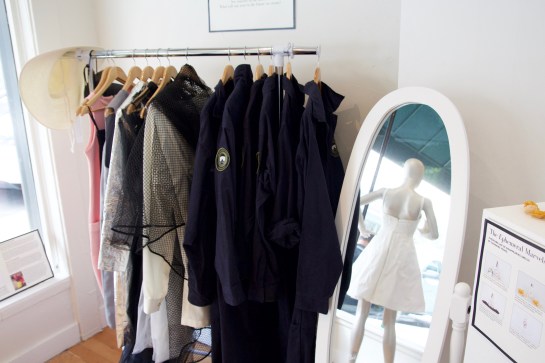
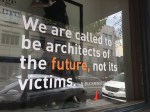
Simon Hirsbrunner, media researcher from University Siegen, Germany, visited The Apocalypse Project: House of Futures at the Institute for the Future and sent us these lovely photos. Many thanks for coming!















The Apocalypse Project on Art for the Planet’s Sake
Belgium-based IETM, International Network for Contemporary Performing Arts, featured The Apocalypse Project in their publication, Fresh Perspectives 4: Art for the Planet’s Sake! Thanks, guys!
Download the issue for free here.
Patterns. Our lives are ruled by these. By routines, by threads of familiar incidents that repeat themselves in some form.
Since 2013, I have noticed one grim thread: Once a year, I keep facing the possibility of death. I don’t think this is happening on purpose, or that anyone is after me. I think these events are just caused by an odd coupling of bad luck and not thinking clearly because of stress. They’ve happened enough to me that I’ve started to call them NTEs, short for Near Tragic Experiences. Here is a catalog of these so far:
NTE #1: A Close Call on a Mountain (2013)
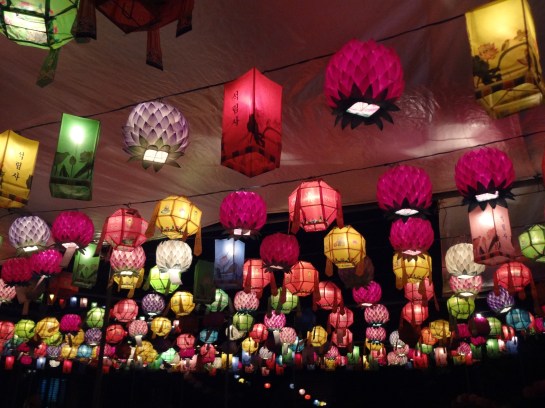
Thank you, Buddha. Really.
In 2013, I thought I was going to spend the last minutes of my life on a mountain. I was hiking for a project, and, thinking it was a day hike, packed accordingly. Unfortunately, it was a bigger mountain than expected and I didn’t beat the sunset upon my descent. I spent about 10 to 15 minutes blind in the pitch-black mountain. Branches scratched my face. My arms flailed wildly. I thought I lost the trail, but I knew there was a temple nearby. With my feet, I gauged where the trail was sloping down—surely it leads to an exit!—and saw a flickering light on the corner of my eye. It was too early in the year for fireflies. I followed it and saw that it was a lantern. And in fact, I had found the trail and the rest of it was lit by lanterns because the temple nearby, usually dark and closed at this time of the night (because hello who hikes at this time of the day), celebrated Buddha’s birthday on that day. It was May 17th, 2013.
(I previously wrote about this, which you can read here.)
NTE #2: Almost Burned (2014)
Last year, I moved to Manila and lived in a hotel. Pro: It was near my family’s house, it was convenient, it was near my dojang. Con: It was in the red light district, I would wake because of people next door getting busy or fighting, the infrastructure wasn’t fantastic. Manila is not the easiest city for me to live in, but I had to hit the ground running for an art residency and my first solo exhibition. At the end of six months, I was unhappy, felt completely voided of energy, and was wondering what to do next. One night, the cafe right below my room caught fire, and we had to evacuate. Hours later, I watched the old building burst into flames. We got out just in time. This was what was left of my room (actually, that’s the cafe; the room caved in and the bed went through the floor).
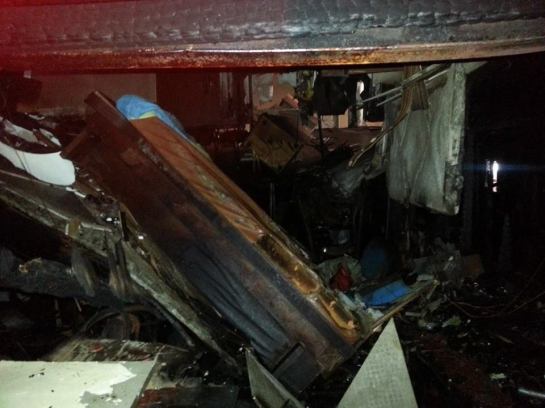
What could have been my coffin. It’s awesome to be alive.
Unfortunately, one thing I learned that year is that when you think you can’t feel any lower, you actually can.
NTE #3: Nearly Suffocating in a Public Bath (2015)
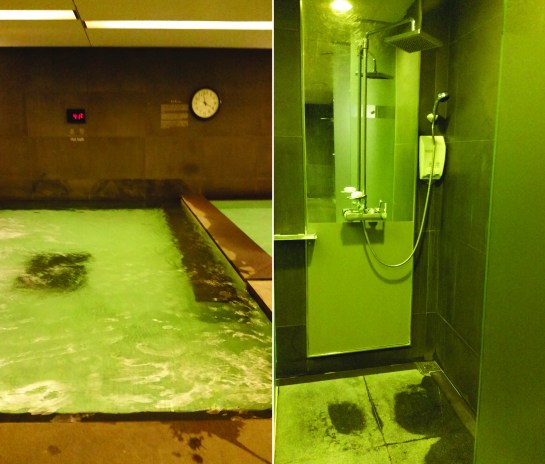
Everything was fabulous. Until my vision started blurring. On the left is the *amazing* public bath and on the right is the shower where I was puking my guts out.
In a visit to South Korea, I spent my last day in one of their public baths. It was a jimjilbang in an airport. How convenient! It was starting to freeze in Seoul, so I was immensely joyous at soaking in water that was heated to 41°C. Perhaps I was in there for too long or perhaps the sudden changes in temperature were too much for me, but when I went into the shower I started feeling faint. My vision started blurring, my chest started to tighten, and I had a seriously hard time breathing. Just before I passed out, I willed myself to breathe and to sit down. A few minutes of wheezing and vomiting passed before I finally left the shower where I met three Korean ajumma (middle-aged ladies), who looked annoyed at how long I stayed there. Still dizzy and nauseous, I bowed multiple times and apologized sheepishly while I tried to hold myself on a wall. They gave me the Unblinking Ajumma Death Stare. You Koreans know what I’m talking about.
I find the sauna story hilarious now but at that time, I really thought I was in deep shit.
—
Each time I faced these events, survival instincts kicked in. “I refuse to die in the dark on a mountain/in a hotel in the red light district/nude in a bath with all of these other naked people!” I think going through these things sucked, but all things considered I’m pretty satisfied—proud, even—of how I handled myself. No screaming or hysterical sobbing or anything. I just remember the realization in my head that “Shit, so this is how it goes down.” I also remember mentally telling myself, “Don’t panic. Breathe.” And what went through my head when I was out of danger: “Bitch I’m alive! Woohoo!”
Actually, during and in the immediate aftermath of nearly falling off cliffs, or burning to death, or asphyxiating, I remember some of my taekwondo teachers (in particular, their voices, especially when they were screaming commands), mainly because they’ve prepared me for situations like these, although ugly wheezing in a public bath probably wasn’t on their list of what-ifs. Martial arts is the life blood of everything I do; I can’t do my work without it. I was never the best in my classes—I was just the one who kept showing up. And hey what do you know? It actually does save my ass from time to time. Thanks, guys!
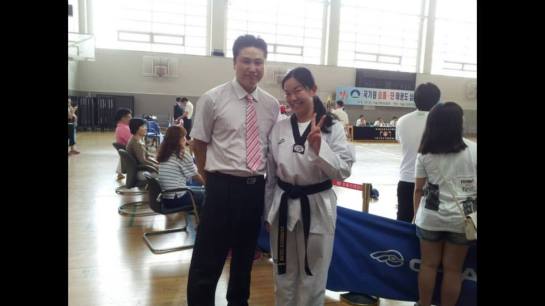
I’ve had over 30 teachers, but this is the only photo I have with any of them in uniform. Hmm. This was right after a test, which explains why I’m so sweaty.
—
Some things changed in me as a result of facing mortality every year. I give less time to things and people who don’t matter. I make decisions faster. I work on as many creatively fulfilling projects as possible because they might be the last. Facing tragedy gives a layer of clarity to one’s life and perspective. It brings a sense of urgency and purpose to my days. Each time I wake up, I want to make it count. (On a lighter note, I also feel it gave me heightened senses. Not like a spider sense or anything, but I pay more attention to the time of the day, how the air smells, my pulse, etc. I also felt that these events made me a better artist and writer, because there’s a greater range of human experience I can draw from. Bitch, I’m alive.)
Now I know close calls happen to lots of us, but in my case, as they happened to me for the past three years straight—the life-flashing-before-my-eyes bit and all—I’ve decided, surprise, surprise, to turn it into a project.
Anyway, one thing I started last year was to send cards to my friends during the holidays. It really helped to be in touch with my friends from all over the world, especially when I had a serious case of PTSD and depression after the fire. I had friends calling me from overseas and messaging me online because they were afraid for my mental health. (Frankly, so was I.) This was around November and so I got the idea of writing to them—sort of a thank you + Hey Happy Holidays in one go. I’m not much into gushy letters so I decided to let the physical form of the card reflect the time it took to make it.
Last year’s card was an origami Santa Claus on a velociraptor. But why not.

My fleet of Santas and velociraptors is complete.
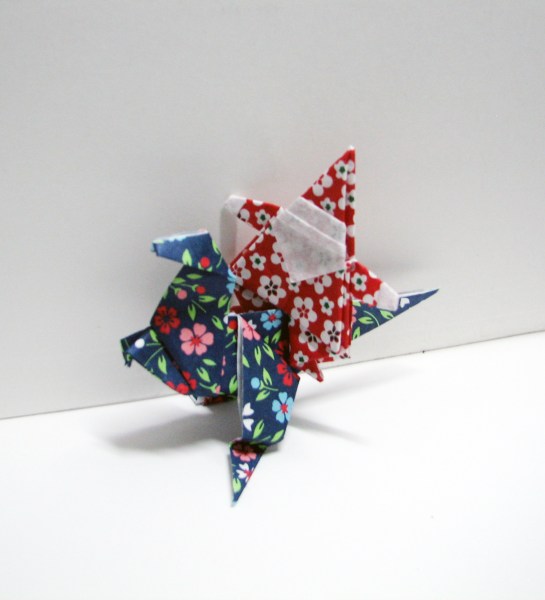
Ho, ho, ho… RAHR!
I sent special black belt Santas to some of my taekwondo teachers.
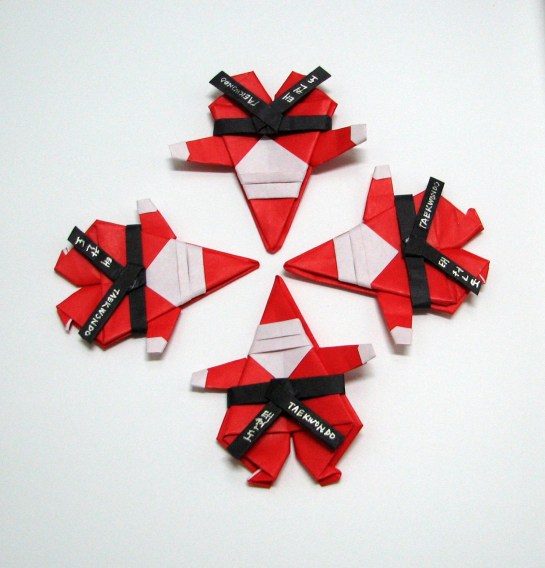
TAEKWONSANTAS. yeah!
When I got back from Seoul and after the sauna incident, I realized that thanking people every year for being in your life might not be the worst idea ever. Try it. It takes me about a day or two to do everything and I don’t feel like it’s such a burden. I actually felt lighter afterwards, and gratitude is one of the things that can make you happier and live longer. It’s also a good exercise in creativity; a small card is nonthreatening enough to be a fun canvas. Some of my friends don’t celebrate Christmas, so these (and succeeding cards) are meant to celebrate the New Year.
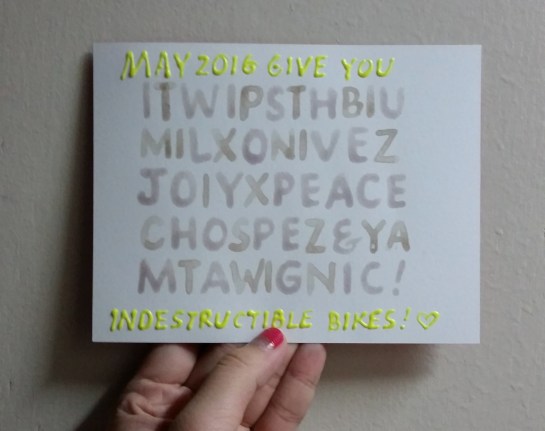
This year, it’s a card with messages written in UV-activated ink (so you have to place it under the sun for 10 to 20 minutes) and phosphorescent ink (so you can read it in the dark). On the front are instructions:
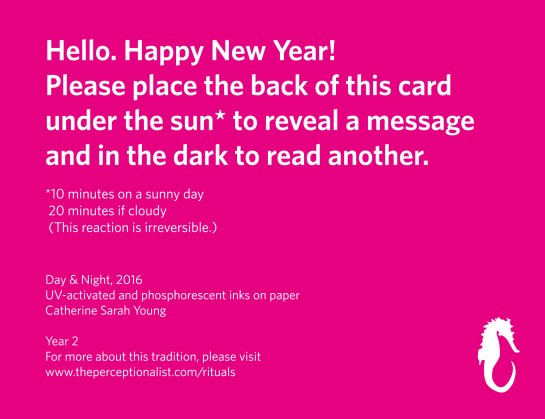
At the back of the card is a message in grey. When you place it under the sun, the UV-activated ink will turn purple. In this card, some of the letters are in plain watercolor so you can decipher the message after you give it a solar bath. The yellow letters glow in the dark.
—
So I do this to remember the people I’ve encountered the past year and to let them know that hey, it was good to know you. You know, just in case I lose the “Near” in Near Tragic Experience and one day I won’t have a chance to say it. It’s just a small thank you that I send out once a year. Don’t panic. It’s not like I’m in love with you or anything. Hello. It’s just a card.
To make it worth the postage and the carbon, I will make each year’s card really special and worth collecting. In ten years, if you’ve managed to collect at least 5, let me know and you win a prize! No, really. It’s good for nomads like myself to have relationships that last at least that long.
I’ll post them all on this page as I go along.
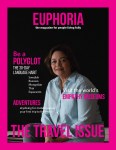
Human beings are steadily living longer. What could happen when we extend our lifespan? In this project, I design artifacts and tell the story of Emily, a fictional 148-year-old woman in a future.
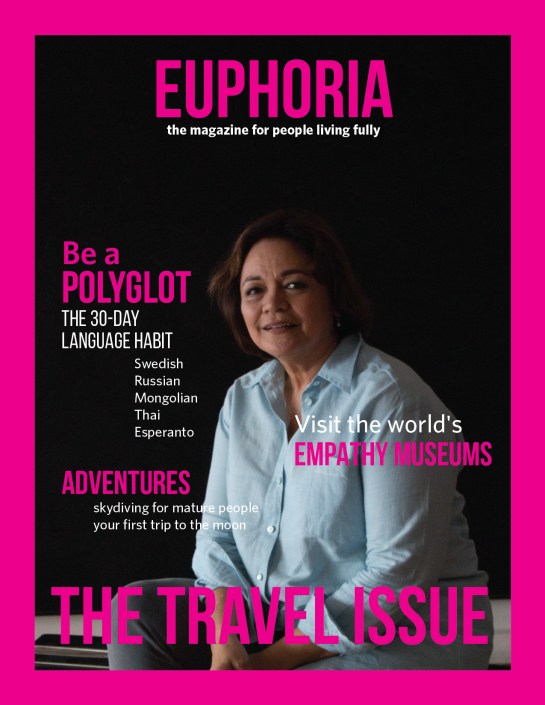
In the future, may we have more inclusive magazine covers that feature accomplished people of all ages.
If we can live to be 150 years old, I envision that we will have technologies that will allow people to achieve this maximum longevity. Perhaps we will have tattoos that can deliver hormones for telomere repair. Or wearables that can track the number of cell divisions. Maybe we will inject young blood into ourselves to extend our lives (and maybe this blood will come from younger family members)—a macabre possibility, for sure, but so are lots of what we do to ourselves now especially if our ancestors could see them!
I also think that living longer affords us time to pursue more interests. If we want to go back to school for the second or third time, then we can! We can learn more languages, change careers, perhaps have more lovers. If we have more time, I think most of us will devote this to developing ourselves and our relationships. There are pros and cons to this future.
Browse the gallery to view The Matriarch, a story of a 148-year-old woman and a day in her life.
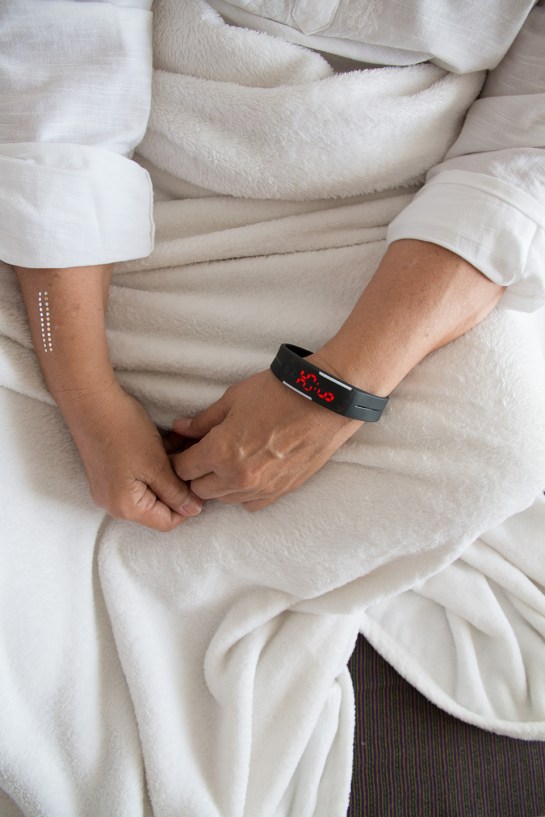
If we can live to be 150 years old, we might develop technologies to assist us as we age, such as tattoos to deliver hormones for telomere repair, or wearables that can tell us the number of our cell divisions.







Many thanks to Emily Abrera and her family, and Rjho De Guzman.

