Finland dreaming

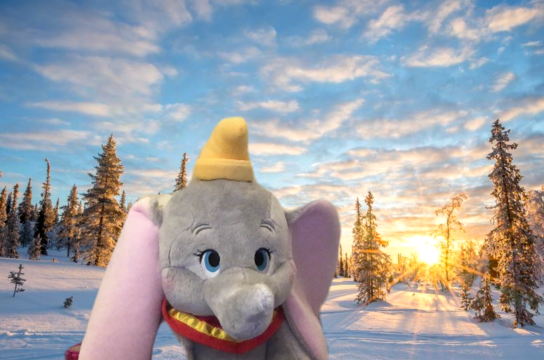
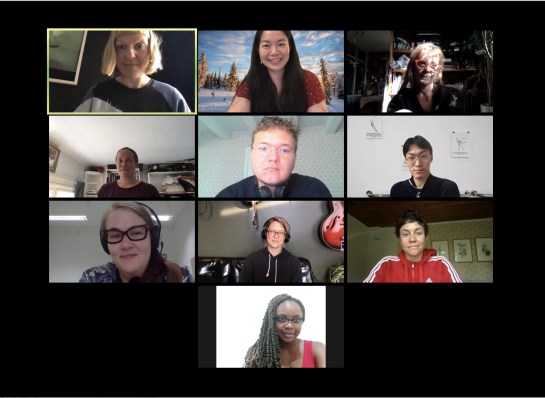
4 September 2020—Today marks the start of my time with the Saari Residence. Because of travel restrictions in these pandemic times, three of us have to stay at home. While I cannot express the disappointment of not being in Finland right now, I think this is an opportunity to find out how the art residency model can adapt to the new world. Great to virtually meet you all, and let’s see what magic we can make!

Saari Residents 2020

Out of the 698 applications, 26 residencies were chosen. View the article here on the Kone Foundation site.

Space Art Summer School 2020

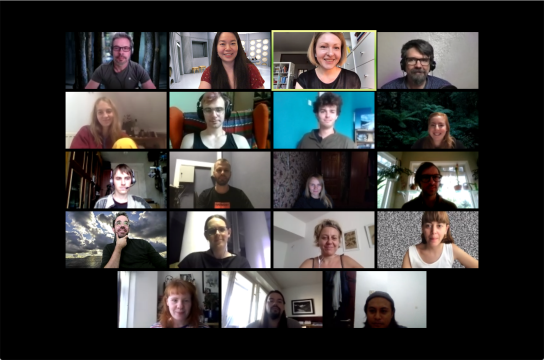
And that’s a wrap for likely the world’s first space art program held online! What a world-bending mind-exploding summer / Aussie winter. Thank you to our hosts, Natalia Fuchs and Peter Kirn @pkirn, and to our institutional host, the Moscow Museum of Cosmonautics and to my very inspiring co-participants. Looking forward to developing our projects and collaborations in this new world. Stay tuned for updates. Спасибо!

The full list of participants include:

1. Chad Eby / US
2. Fahmi Mursyid / Indonesia
3. Markus Schroll / Germany
4. Mami Mizushina / Japan / UK
5. Boris Shershenkov / Russia
6. Cody Sowerby / UK
7. Liudmila Siewerski / Germany
8. Nitzan Satt / Israel
9. Kris Pilcher / USA
10. Luke Hooper / Netherlands
11. Kristina Mikhailova / Kazakhstan
12. Adriana Knouf / USA
13. Catherine Sarah Young / Philippines / Australia
14. Afroditi Psarra / USA
15. Sasha Rindisbacher / USA
16. Louise Beer / UK
17. Alexey Yepishev / Russia
18. Daniil Posazhennikov / Russia
19. Fabiane Morais Borges / Brazil
​20. Hellen Boyko / Russia


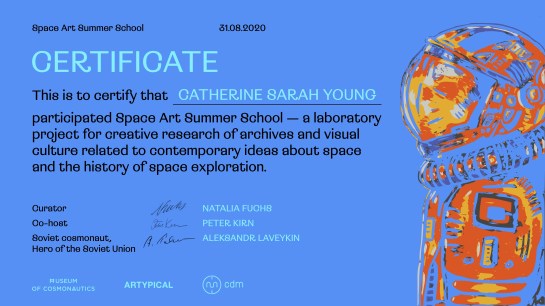
So cool, our certificates are signed by curator Natalia Fuchs, co-host Peter Kirn, and Hero of the Soviet Union, Aleksandr Laveykin, a retired Soviet cosmonaut who flew in the Mir EO-2, the second long duration expedition to the Soviet space station Mir, and was both launched and landed with the spacecraft Soyuz TM-2. He spent 174 days 3 hrs 25 minutes in space (ironically about the same time we’ve been living in a world where Covid-19 was declared a pandemic and borders started to close). I appreciate the rare cool things 2020 throws our way, thank you!

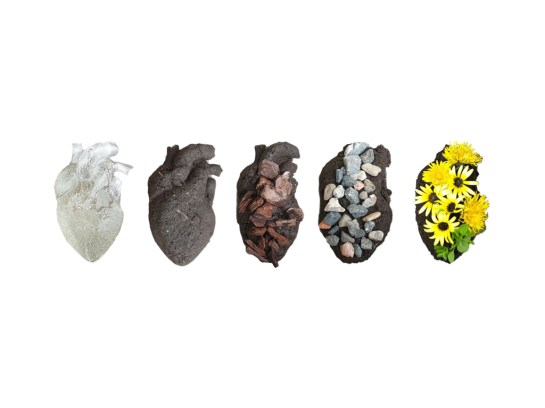
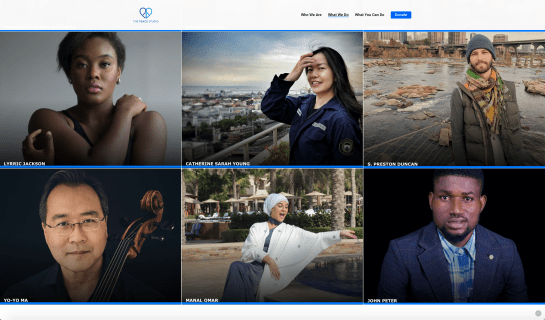
(USA and International)—The Peace Studio supports, trains, and unites the next generation of artists, journalists and storytellers to inspire people everywhere to become active peacebuilders. Earlier this year, they began commissioning creatives to generate peace offerings in response to the isolating COVID-19 pandemic in their 100 Offerings of Peace Campaign. I’m stoked to have contributed to this awesome and necessary campaign on Day 23; my piece is about the Australian bushfire crisis.

Human hearts cast out of resin, bushfire ash, soil, stones, flowers, etc.

“I moved to Australia in September 2019, and what I viewed initially as a move to a country that was relatively safe from climate catastrophes quickly turned into a move to ground zero because of the bushfire crisis. I decided to use the ashes to create art as a way forward for healing and regeneration. I reference the scene of the “Weighing of the Hearts” of the Egyptian Book of the Dead, in which the dead person’s heart is weighed against a feather. This peace offering asks us, what weighs our hearts down or makes them lighter?”

“One day I woke up and a piece of the planet was in my heart,” is how my art/sci/nature/sci-fi video offering starts. Check out the video here: https://thepeacestudio.org/day-23/

The Peace Studio is co-founded by Dr. Maya Soetoro, also consultant to the Obama Foundation and whom we in the Obama Leaders: Asia-Pacific cohort have the honor of being with. Let’s do what Yo-yo Ma (Day 25) says and to create art and post it online with the hashtag #OfferPeace. Please support their wonderful work on @the_peace_studio and www.thepeacestudio.org.

via Museum of Cosmonautics

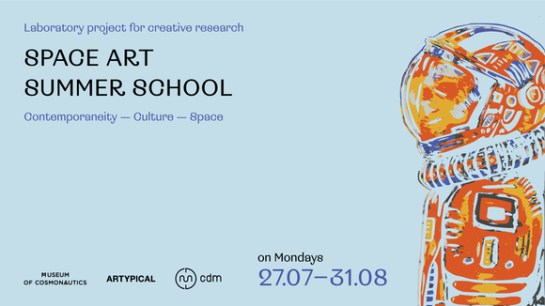
[Moscow and Zoom] I’m stoked to be one of the selected artists for this cool space art summer program hosted by the Moscow Museum of Cosmonautics and art practice ARTYPICAL. This is a laboratory project for creative research of archives and visual culture related to contemporary ideas about space and the history of space exploration. There are 20 of us selected after an international open call to create new sound and visual works across disciplines, from 3D animation and digital sculpture to new literature and music production. Topics include: space in cinematography and visual art, space in the work of music composers, sonification and audification of the cosmos and astronomy, media art in outer space, media archeology of space, philosophy of space and Russian cosmism, iconographies of human spaceflight, and more.

Space! Art! Russia! Can’t wait to meet and learn from my fellow participants. See you soon!

Full list of artists and public program here.

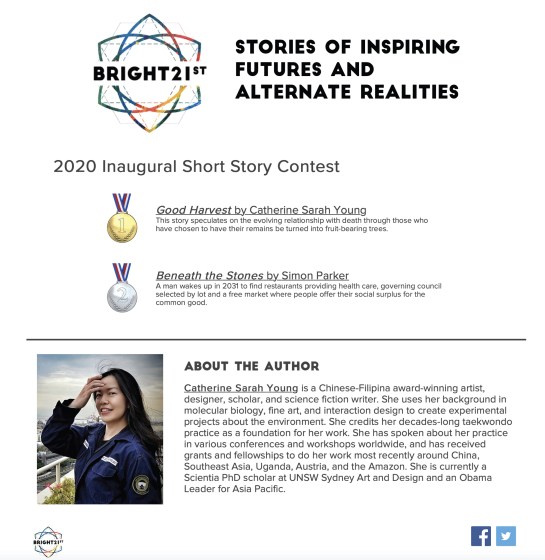
(USA)—I’m very honoured for one of my speculative short stories, Good Harvest, to win first place at the inaugural Bright21st solarpunk short story contest. My story speculates on our evolving relationship with death through those who have chosen to have their remains be turned into fruit-bearing trees.

Bright21st focuses on inspiring, optimistic futures:

Stories shape our culture. With an over saturation of gloomy dystopic narratives streaming throughout our screens, it is no wonder why so many of us feel paralyzed by the inevitability of war, poverty, climate disaster, or AI overlords.

While those stories can be an important tool for staying informed and presenting dark futures to consider based on current events, there are few stories engaging the public imagination with possibilities of inspiring new social norms, shared values, or systems for organizing society to uplift humanity. 

What would happen if the dominant narratives in society seeded our imaginations with inspiring futures and positive alternate realities? Would our culture change?  We think so. That’s why we created Bright21st.

I believe in the power of the arts—in all forms—to imagine better futures and to get us to be emotionally invested in designing these positive, inclusive, and sustainable futures. This was fun to write; I’m happy this story paid its rent in my brain. I’m also appreciative of how these speculative and non-dystopic communities are popping up all over. Future-oriented fiction is becoming increasingly important as we navigate all the challenges of today. Redesigning our world takes a lifetime and needs a lot of work—let’s put our reps in, one story and project at a time.

Thank you to the jury and congratulations to all the other winners. You can read the stories on the website (registration required), or just my story here.

Dismantling the Apocalypse: Speculative Futures in Pandemic Times

[Bangkok and Zoom] June 10, 2020: For the FuturesX series of Speculative Futures Bangkok, I was invited to do an online talk on my work in the context of these pandemic times:

𝗙𝘂𝘁𝘂𝗿𝗲𝘀𝗫 𝘀𝗲𝗿𝗶𝗲𝘀

How can we use speculative futures to think about systems and enterprise in the COVID-19 era? In this part-science, part-art, part-design talk, Catherine Sarah Young elaborates on her experimental practice that explores our environmental and collective futures, and how using a systems-led way of thinking and global perspectives can help shape the new world emerging from the pandemic.

My favorite thing about today aside from talking art, science, design, and taekwondo: finally being able to do my first acknowledgement of country as this is my first talk in Australia: I am on Gadigal Land of the Eora Nation, traditional custodians of this land. I pay my respects to elders past, present, and future.

Drawing from my martial arts experience, I also talk about how dismantling the apocalypse is a way of life and how we should train for this for the foreseeable future:

Dismantling the apocalypse is a way of life. Let’s train!

Thanks, Speculative Futures Bangkok!

While in lockdown, I’ve been giving virtual classes via Zoom for some of the Obama Leaders’ kids and their communities. I’ve called this project “Supercharge: Creativity in Confinement”, a way to turn lockdown into a chance for growth and learning. During our pandemic times, I’m increasingly concerned about how confinement is and will continue to affect our mental health, particularly that of children.

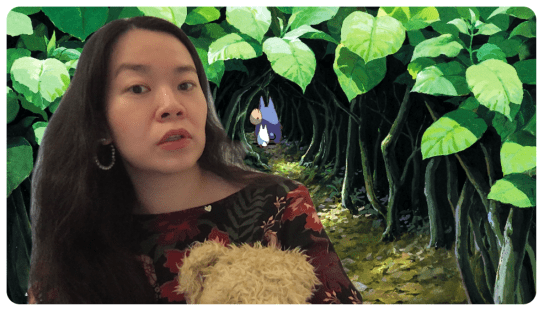
I need backup. I need Totoro! Zoom background by Studio Ghibli

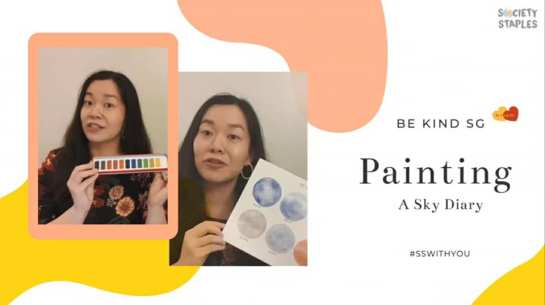
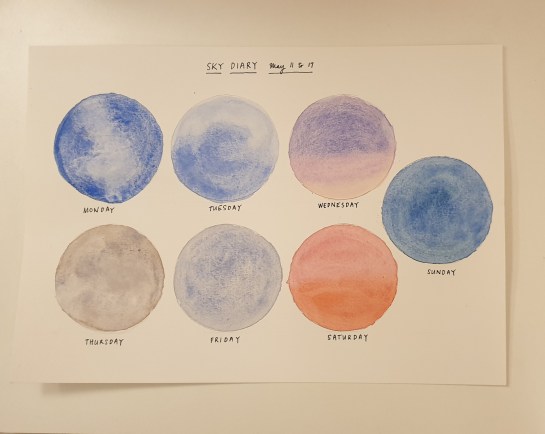
One of the activities I’ve used a lot is making a Sky Diary, where I get people to stand outside and record a part of the sky every day for at least a week. This is a mindfulness experience where we can be grateful for every day and also distinguish Monday from Tuesday from Wednesday, as the days and weeks can sometimes blur.

Sky Diary with Society Staples and Be Kind SG


Sky Diary Sydney

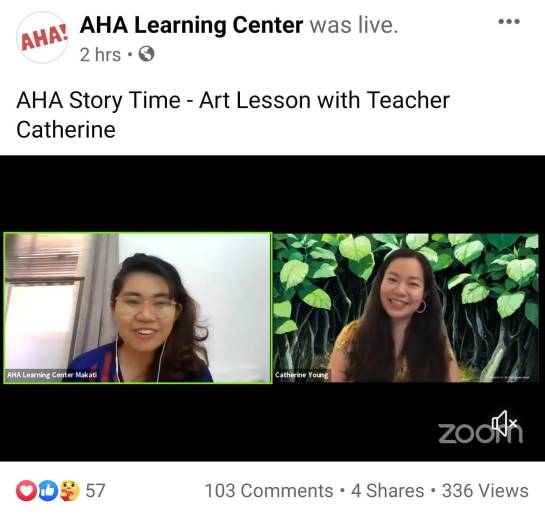
It was great to do classes particularly with the communities of Obama Leader Sherry Soon of Be Kind SG from Singapore and Jaton Zulueta of AHA Learning Center from the Philippines.

Supercharge with AHA Learning Center

I either volunteer or was invited to do this and I don’t say no because it’s bad karma to refuse to help children for an hour from the comfort of my Sydney flat and in any case, what a fun break from my PhD research. If you need an art class, do reach out and I’m happy to help. I will likely expand this so everyone has access so stay tuned!

Tvergastein Issue 14: The Arts and the Environment. Image by cChange


[OSLO]—Dr. Karen O’Brien and Nicole Schafenacker, editors of the cli-fi anthology “Our Entangled Future” write about the book in the Oslo-based journal, Tvergastein, for Issue #14, Art & Environment! “Can climate fiction help us engage with a new paradigm for social change?”. Read the issue for free here.

p. 82
For example, author and artist Catherine Sarah Young describes her approach to The Ephemeral Marvels Perfume Store as follows: “I use the abstract yet scientific relationship between scent and memory as a way for humans to redefine their relationship between scent and memory as a way for humans to redefine their relationship with nature through remembering their personal histories and reinforcing their identities, which can facilitate quantum social change.”

p. 82-83
The stories in Our Entangled Future explore characters who connect with reality through non-linear time, collective consciousness, and multi species sentience….Emilia, the main character in Young’s short story, The Ephemeral Marvels Perfume Store, is a perfumer with a keen sense of smell — which is, in fact, considered by some biologists to be an example fo a quantum phenomenon (McFadden and Al-Khalili 2016). Her sense of smell provides her with important information when she meets a trespassing strange — a hulk of a man who could easily overpower her: “She sniffed the air and smelled his fear”. Together, these short stories suggest that we are entangled through our senses, experiences, and consciousness. .

Thanks, guys! Virtual hugs from Sydney!


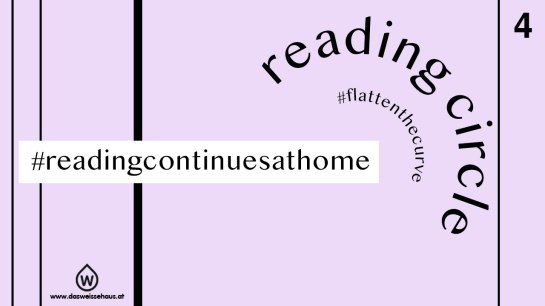
Reading Circle 4 by studio das weisse haus curated by Malou Solfjeld. Image by studio das weisse haus.


[VIENNA]—Our friends from studio das weisse haus have created a weekly reading circle curated by the wonderful Malou Solfjeld! I read an excerpt from my story, The Ephemeral Marvels Perfume Store from the anthology, Our Entangled Future. Thanks for having me!  Listen to it here.

Readers this week (text by Malou Solfjeld)

Åse Versto Langesæter reads
“Der bor en ung pige i mig som ikke vil dø”, written by Tove Ditlevesen
“Ensomhedens have”, written by Inger Christensen
“Coming to Writing” and Other Essays, written by Hélèn Cixous
First we’re reading about the journey back in time to one’s younger self, learning how to use the poem as a mirror of self-reflection, expectations and realizations.

Mie Hybschmann reads “Momo and the time thieves”, written by Michael Ende
Secondly we travel along the journey of the moon as a magic mirror one can use in times where we’re really longing to see someone that we can’t be with.

Catherine Sarah Young reads “The Ephemeral Marvels Perfume Store”, written by Catherine Sarah Young

Jeremy John reads “Some Thoughts on the Common Toad”, written by George Orwell
Then we question the nature of memories through smells and sounds of the past or the future – with a particular focus on longing for spring to come after a winter that appears endless.

Florian Conrad Eybesfeld reads
“Anywhere out of this world”, written by Charles Baudelaire
Our fifth reading takes us into the deepest part of our soul, all the way to the place where it really hurts. And from here we learn how connecting with pain can be healing, through the power of poetry, imagination and in memory of loved and lost ones. .

Maxime Grausam and Philipp Krummel read
Pippi in the South Seas, written by Astrid Lindgren
Finally we travel to the south seas with the strongest girl in the world, who reminds us of homeschooling and the value of playing with our friends.

https://soundcloud.com/dasweissehaus/reading-circle-04

#readingcontinuesathome

[SIARGAO, THE PHILIPPINES] From January 27 to February 2, I participated in ColLaboratoire 2020, a week-long Research Residency program in multiple-disciplinary research and sustainability, especially in the context of Philippines. During the residency, ColLaboratoire Fellows explored applying imaginative, methodologically innovative, and radically multiple-disciplinary approaches to six Research Challenges related to the UN Sustainable Development Goals. For one week on the island of Siargao, a Protected Landscape and Seascape that is home of the largest marine protected area in the Philippines and is famous for its surfing, ColLaboratoire Fellows looked at innovative ways to address the Research Challenges that combine teaching with applied and multiple-disciplinary research practice.
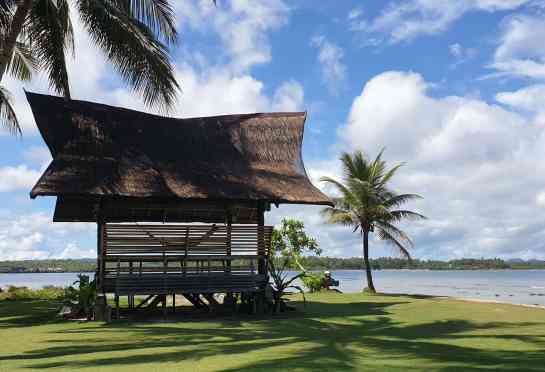
Inspired by the successful ColLaboratoire 2016 research summer school, ColLaboratoire 2020 is a collaboration between the University of the Philippines Open University, the University of Plymouth, the CogNovo Foundation for Cognitive Innovation, and local and international partners from industry and civic society.
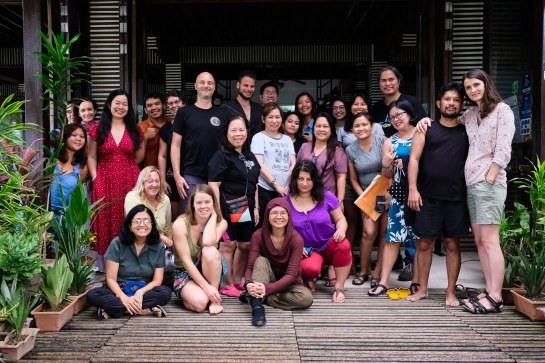
ColLaboratoire 2020 fellows and facilitators. Image courtesy of ColLaboratoire 2020

Having chosen the sixth Research Challenge, Reimagining Sustainability, this is what the brief included:

Different definitions of sustainability have been offered, and many of these emphasize the idea of development without compromising the needs of future generations. We start from the premise that like all conversations, the one around sustainability is a product of its time. To what extent are the UN Sustainable Development Goals shaped by current dominant ideologies, and how have ideology and language historically shaped the way people have thought and talked about sustainability? What happens when we consider the related notions of deep time, deep history, deep future, and geological thinking in our understanding of the problem? To what extent do current definitions of sustainability promote an endless perpetuation of life as we know it? What happens when we look at provocative or radical ideas surrounding sustainability to build a reconceptualization of it that pushes the boundaries (such as Angelo Vermeulen’s notion of “molecular sustainability”)?

Because sustainability is generally predicated on concern for multi-generational well-being, how might we bridge the gaps in priorities across populations and sectors, given that the most marginalized sectors–who comprise the majority of the world–are often concerned with pressing concerns of daily survival? To what extent can we leverage popular activities (such as digital and mobile games and esports) and arts-based practices as potential research tools or interventions, in order to develop critical perspectives and interventions on sustainability?
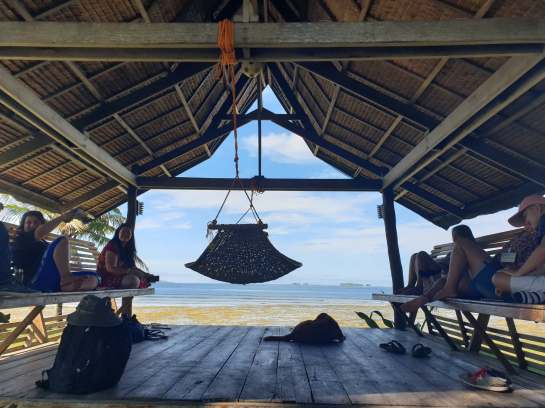
 

Image by Pam Cajilig

Working with other fellows from different disciplines and guided by facilitators, we focused on identifying gaps in sustainability and mapping out frameworks on what these are and what projects we could create around them. I appreciated how we spoke about our work and everyone in my group were given an opportunity to give feedback from their own perspective, which gave me a lot more ideas to keep moving forward. We were also mixed with the other groups sometimes in order to cross-pollinate ideas.
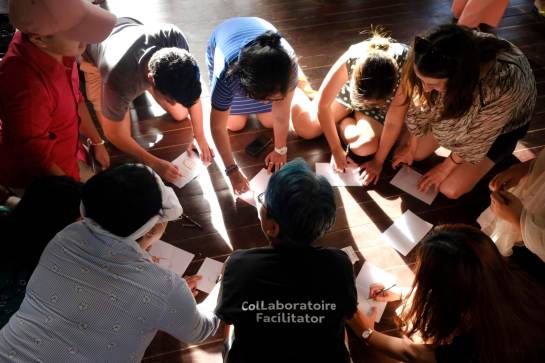
Image courtesy of ColLaboratoire 2020

I was happy to share what I have learned from all my art residencies and fellowships, especially from The Apocalypse Project series. As my audience for that morning had a lot of younger people, I emphasised an attitude of continuing despite logistical or personal challenges, and how I was able to build a body of work over time despite initial failures and rejections.
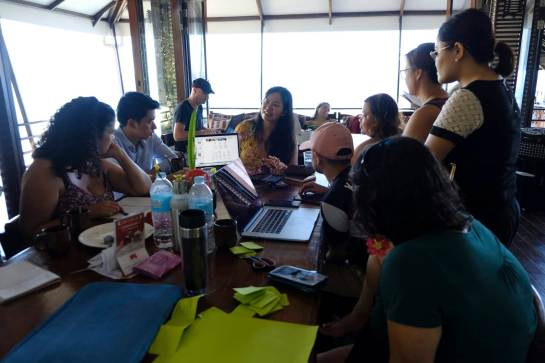
Artist talk! Image courtesy of ColLaboratoire 2020

One thing that I stood out to me in our discussions was talking about the divide between academic thinking and what actually goes on in the real world. I have always felt that academic jargon, while helping to unify concepts into a discipline, have also served to exclude a lot of people and further, to make things less clear. The English language is lacking when it comes to articulating indigenous concepts, and even the Filipino “translation” of sustainability—”likas-kayang-pag-unlad” feels like a forced concatenation of Filipino words of “nature”, “capability”, and “development” that still feels off the mark. We reflected on how local words like “pakikiramay” (“to grieve with”) or “kapwa” (“the self in the other”) are more understandable to local communities and feel like more authentic translation of academic terms such as “staying with the trouble” or “multispecies entanglement”.
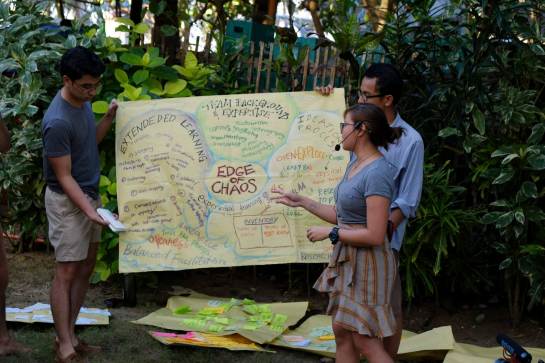
The Environmental Empathy group discusses Environmental Embodied Cognition. Image courtesy of ColLaboratoire 2020

Gaps in Sustainability

Looking at gaps in how sustainability has been defined and discussed, here are some gaps the Reimagining Sustainability group noted:

  • Redefining Prosperity: post-consumerist resignification of well-being, mental well-being
  • Questioning the Growth Dogma: post-growth paradigm for the SGDs
  • Affective Education: Integration of cognitive and somatic knowledge (senses, emotion)
  • Scale: Integrating techno-scientific and indigenous knowledge (ritual, liminality, connectedness
  • Temporality: Deep history, space, time
  • Revolution as a movement not as strife and chaos
  • Need for chaos and disruption
  • Multi-agency perspective
  • Cosmologies
  • Enveloping dynamic membrane
  • Decolonizing sustainability
  • How to avoid a “prison” – excess?, systems that open and close as required
  • Commons/emergence – top-down monopolies
  • Complex systems
  • Thriving arts and culture
  • Media literacy
  • Council to oversee
  • Only top-down management
  • Lack of expertise, knowledge, co-creation, education, disaster recovery plan / budget, long-term planning, basic needs
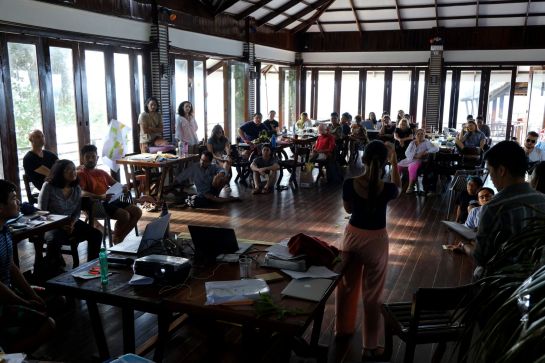
The group on Transforming Education for All discusses their project. Image courtesy of ColLaboratoire 2020

Project Proposal

At the end of the week, each group proposed a project to do for the next few months. Here is what we came up with:

A Creative Sustainability Policy that allows for the issuance of a Kapwa Certificate (“self in the other”) when a person goes through Liminal Space Training that Culminates in Padayon Fiesta (“to continue”) that aims to educate and empower the community on sustainability through arts and sciences

  1. A sustainability council that comprises different sections of the SDGs with members from marginalized communities such as women, etc. that issues a Sustainability Compliance Certificate that we call a Kapwa Certificate. This certificate allows them to design products and run businesses etc.
  2. The Kapwa Certificate can be earned by a Liminal Space Training or a Shamanic Somatic training that occurs year round.
  3. Experiential Role Play – disaster gym, aging simulations, environmental empathy, planetary renewal spa
  4. Floating evacuation center that functions as a community center when not in use
  5. Art classes in school where outcomes are to be exhibited in the fiesta, mangrove nurseries,
  6. The Padayon Fiesta (padayon means “to continue”) is a one-week fiesta that happens before the rainy season that serves as a culminating event to the training as a way for people to look forward to discussing these gaps in sustainability and as a tool to evolve a thriving community. Apart from base funding, the fiesta operates through a barter system where people can contribute their time and resources in exchange for knowledge and food throughout the fiesta.
  7. Citizen science scavenger hunts to get people on fact finding missions to generate knowledge for the community
  8. Hackathon
  9. Tourists who come can barter their skills
  10. Disaster gym
  11. Teleserye that educates people on sustainability concepts
  12. Poetry workshops to define sustainability concepts in their language
  13. Cook-a-thon of ingredients that are remaining after a disaster to get people creative with their recipes
  14. Intergenerational talks to share resilience stories, design their community’s future, etc.

Biomodd Reunion

Beyond these five days, one of my favorite moments last week was reconnecting with some members of Biomodd, a socially engaged art installation that creates symbiotic relationships between plants and computers, and ignites conversations among the community around them. I was the Internal Communications Coordinator 11 years (11! My triplet cousins are this old!) ago in the Philippines before I moved to Barcelona. I checked the website and our old bios (and photos, lol) are still on it! Glad to reconnect with Diego Maranan, Collaboratoire 2020 project co-lead and Angelo Vermeulen, Biomodd founder, senior TED fellow and Collaboratoire 2020 Reimagining Sustainability co-facilitator, an Al Librero, assistant professor at the University of the Philippines Open University. Oh, you rockstars.
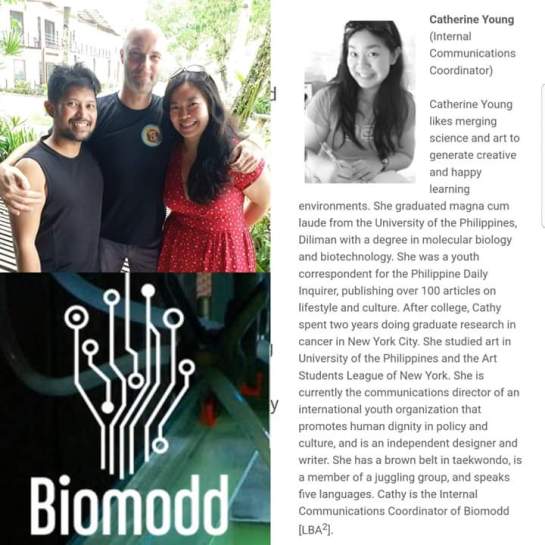
Image by Pam Cajilig

Final Thoughts

Reflecting on this week now that I’m back in Sydney, ColLaboratoire 2020 took me away from my usual ideate-as-fast-as-you-can thinking that years of being an artist-in-residence has developed in me. While thinking fast on one’s feet is a useful skill to have, I think this type of big-picture meta thinking is refreshing and definitely necessary in world with very integrated systemic challenges—something that short periods away from the studio such as ColLaboratoire and the Obama Leaders convening have given me. Thinking like this allows me, as an artist with very specific projects that can continue on indefinitely, to see how these connect with larger issues and what impact they can possibly have. I realise the utopia we were in, being in the amazing island of Siargao, while the bushfires, Taal volcano eruption, and coronavirus outbreak happened around the world, and it was quite a privilege to be able to be in a space like this. I look forward to what’s next.

Many thanks to the ColLaboratoire 2020 team, especially Project Co-Leads Diego Maranan and Mona Nasser, and Reimagining Sustainability facilitators Mona Nasser and Angelo Vermeulen. ColLaboratoire 2020 gave me a scholarship to attend the residency, while the UNSW Scientia scholarship facilitated my travel from Sydney to Manila.