Archive

Technology

Alas, science museums in Korea have proven disappointingly bland (in a word, meh), although perhaps I had such high expectations. Designing for interactivity in a conservative Confucian society poses some challenges, perhaps one that can be easily seen by someone from the outside. But there are pockets of joyful wonder in the sometimes poorly lit rooms that reeked of overuse of audio-visual media and text. My favorite parts of the Seoul National Science Museum are in the second floor. Specifically, rainbow-colored hands wave hello at the wax station where you can cast your own hands for 8,000 won:

Rainbow hands

Rainbow hands

It’s awesome to see Marie Curie flashed on a screen. After being here for just a few weeks, seeing visible recognition for any female with strong, intellectual, and independent roles in such a rigid Confucian system as Korea’s make me do cartwheels inside (and sometimes, outside).

Marie Curie!

Marie Curie!

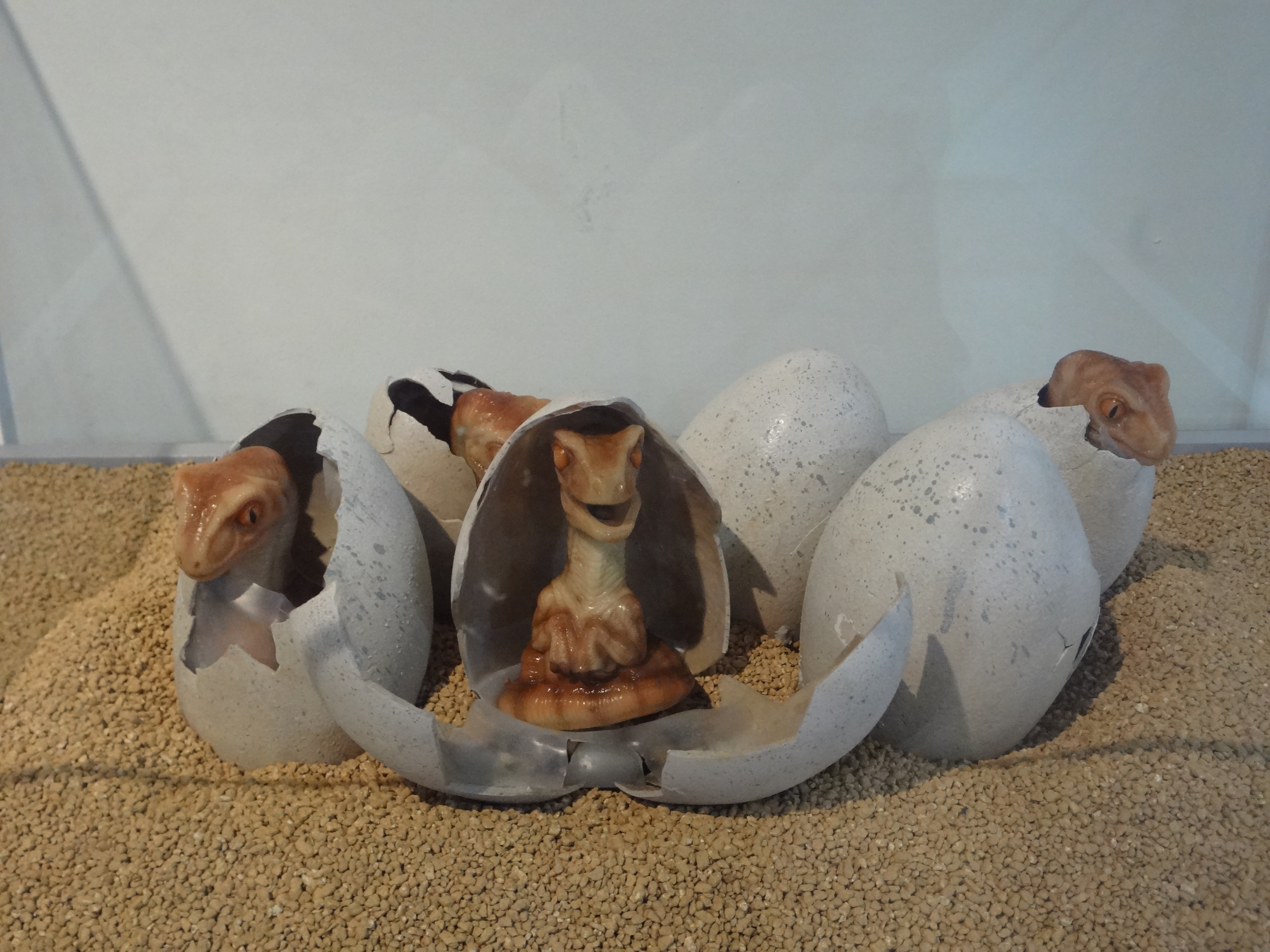
In the middle of a set of dinosaur eggs, one in the middle turned out to be mechanical and opened up to reveal a yawning dinosaur:

Hello, world.

Hello, world.

And in the enormous Gwacheon National Science Museum, my favorite parts were on the outside, such as the Funny Bicycling Center:

funny bikes

funny bikes

There are bikes with odd parts, bikes built for two, and bikes you can ride sideways:

riding a bike sideways

riding a bike sideways

This would have been a perfect bike in graduate school.

This would have been a perfect bike in graduate school.

The Narae-Seobuk (“the bell of hope”) is a traditional Korean bell made out of 3,080 speakers—quite a beautiful symbol of art, science, and tradition:

Narae-Seobuk. The Bell of Hope.

Narae-Seobuk. The Bell of Hope.

Hello. My name is Catherine and I would like to give everyone in the world a hug.

I’m a hugger. I can’t help it. When I see someone I know, I just go for it as a greeting with barely a thought.

There are perfectly good explanations for this. I was raised in the Philippines, land of extremely happy and friendly people. I also grew up with a lot of stuffed animals. I still sleep with a pillow I’ve had with me from the crib—it’s the only material possession that has been with me forever. And dang it, it feels good. Hugging releases oxytocin, the hormone that promotes love and trust. In fact, studies have shown that a lack of human interaction, such as touching, is detrimental to growth and development. Touch ranks up there with food and water as a basic need.

But I do realize that not all people like to hug others. The idea of touching as a greeting is largely cultural, and I’ve had to adapt accordingly, depending on where I’ve lived and whom I was interacting with. In the Philippines, I hugged. In Spain, I kissed (both cheeks). Here in America, I shake hands. It is especially in the latter that I’ve felt that people respond the least positively to hugs. Many people, I’ve observed, have an invisible “wall” that illustrates their personal space. Touch may be considered as an intrusion, an interruption, or a threat. On the other hand, a hug can also be a sign of great physical intimacy that is only reserved for one’s closest family and friends.

I wanted to investigate our perception of touch. Moreover, I want this project to be a personal reminder of being physically connected to people.

Thus comes HugPrints. I designed a thermochromic (temperature-sensitive, color-changing) vest, so that it was possible to see evidence of the hug. The purple fabric temporarily turns to blue when touched. Right after each hug, photos of the front and the back of the vest are taken, showing where I was touched and how warm (literally) the person is. The patterns people intentionally and unintentionally make have been an interesting exploration of human contact.

I also record the ambient temperature of the environment. Hugging people indoors versus outdoors would give different intensities of color change.

I would love to give you (yes, you!) a hug. But hey, I would love it more if you give your loved ones and perhaps that sad-looking stranger next to you one, too! Visit the project site for more details.

Ready? Go!

I’m thinking deeply about who I want to use the Hug Vest that I’m designing, and while I can always wear it to hug friends and strangers alike (which I will do eventually), one specific audience I am looking at would be parents and their young children (roughly aged 3 to 7). The reason is that the desire to hug varies drastically among adults; witness the reactions I got with prototyping the vest. There were those who readily hugged, those who refused to, and those who reluctantly did it for the sake of helping the project.

Ah, but parents and kids! According to American psychologist and educator Virginia Satir, we need four hugs a day for survival, eight a day for maintenance, and twelve a day for growth. But for working parents, it may be difficult to find the time to hug their child, let alone get a young one to sit still to receive or to give a hug.

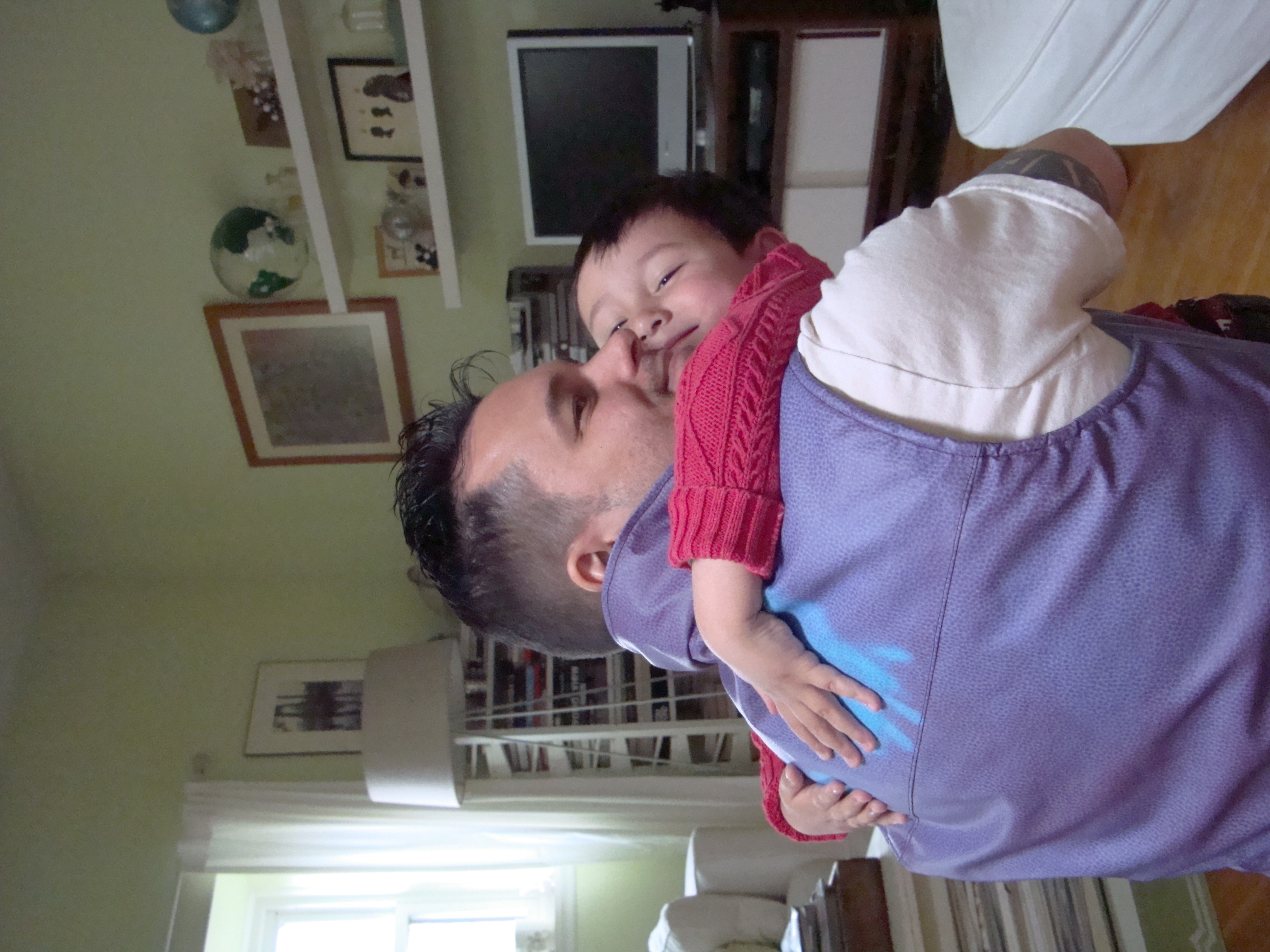
I wanted to find out how parents and children will interact with the thermochromic vest. I loaned the vest over the weekend to my friend and studio seatmate, Chris Cannon, who has a son, Alex, who is almost four. The vest was ill-fitting for both father and son; it was designed to fit a well-endowed girl or a large man, and neither of them fit these descriptions. I was interested specifically in how the material would affect their interaction. Chris, who has been in the clutches of graduate school for two years, says that he has made hugging important:

“Hugs are very important to us, especially since I don’t see much of him these days. I ask him for hugs everyday. We also bond in countless other ways: singing silly songs, making fart jokes, playing with his toys, sitting on my shoulders when we go out for walks, riding the subway together (he loves the G train), bedtime reading, etc.”

I doubted that Chris and his family would be the ideal audience for the vest. They already hug a lot, and I’ve seen Alex on many a day or event in school enough not to doubt that Chris and his wife, Yong, put family first in spite of how busy life can get. I was curious about how Alex would interact with the reactive material and how this can affect his manner of touching, as I knew his attention span was short based on what Chris has told me over the years.

As many of my friends with children have told me, the thing about hugging and young children is that they don’t hug the way adults do. The “standard” hug I’ve observed is putting one arm over the receiver’s shoulder and the other one around the waist. Or both arms over the shoulder or around the waist, depending on the height difference of the hugger and the huggee. But kids are less structured in how they hug or touch. Chris tells me about how Alex hugs him:

“It depends on whether I’m sitting or standing. I guess he hugs me in anyway imaginable, including head butts to the groin (hey, it counts as a hug!) and climbing up my back and putting me in a chokehold.”

The good thing about the thermochromic vest is that the entire vest is reactive. Thus, it didn’t matter how Alex hugged or touched the vest because it would change color despite what type of touch he gave it.
Below are the results, and further proof that I should always get my friends involved in my project. (So great!)

Chris Cannon and son, Alex
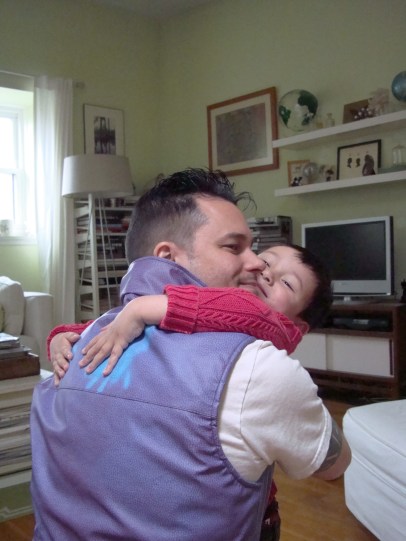
Hug Daddy, come on!

When I asked Chris if Alex enjoyed it, he says:

“He liked it. He didn’t want to hug me as much as just slap my back with his hand repeatedly to see his handprints. I enjoyed watching him experience something new, even if it was just for a few seconds before he got bored and moved on. He liked wearing it, probably because he likes wearing our clothes in general.”

Alex wearing (or perhaps a better term would be 'swimming in') the Hug Vest.

The bit that struck me was how Alex played with the material. Why he didn’t necessarily see the vest as a way to hug his Dad, he paid more attention to what the vest could do.

I liked how in the middle of playing and touching the vest, Alex ultimately plays with Chris, who is wearing it.
I loved this interaction, though I am mindful of who this vest is primarily for. As I said earlier, a well-bonded family like the Cannons wouldn’t have as much use for something like this. When I asked Chris frankly about whether he would buy one, he said:
“No, because we hug enough as it is (or at least I threaten to take away all of his toys until he hugs me!). Besides, then it’s a hug motivated by something other than enjoying a hug for its own sake. I’m sure he’d enjoy lights and sound added to it since a lot of his toys have that effect when he interacts with them.” [Note: italics mine]
I would be interested to see how this can play out in families where hugging is a chore. What about working parents who can’t squeeze time for a hug? Or children who need a sensorial “hook” to be sufficiently engaged in human contact? I am mindful of children’s short attention spans, especially in this video where Alex throws the vest on the couch and runs away when asked by his parents to show them how the handprints worked:
More to come, and soon.
A HUGE thank you to the Cannon family for agreeing to participate in this! Especially to Chris, who is repetitively awesome.

Last Sunday, I gave a talk / workshop about my work at the Intrepid Museum for Camp G.O.A.L.S. (Greater Opportunities Advancing Leadership and Science) for girls, a free six-week camp for 8th and 9th graders in New York City’s public schools. The intention of the camp was to help 50 to 55 accepted applicants build proficiency in math and science.

Excuse me while I ogle this fantastic flying machine:

Sara Chipps, a developer and co-founder of Girl Develop It, gave a great keynote speech about how the population of female developers has dwindled over time, encouraging the students to help build the Internet. (Yes!)

My workshop was entitled, “Wonder, Unlimited: A Speculative Workshop” after giving them a short talk about some of the things I’ve done. I asked them to take a piece of today and to imagine how it would be tomorrow. It could be it a city, an app (if we will still have apps), a piece of clothing, an organism, a gadget, etc. The kids were provided with clay, magic markers, crayons, and some activity worksheets that related to some of my projects so that they can experience them and get their creative juices flowing (which is not very difficult for kids).

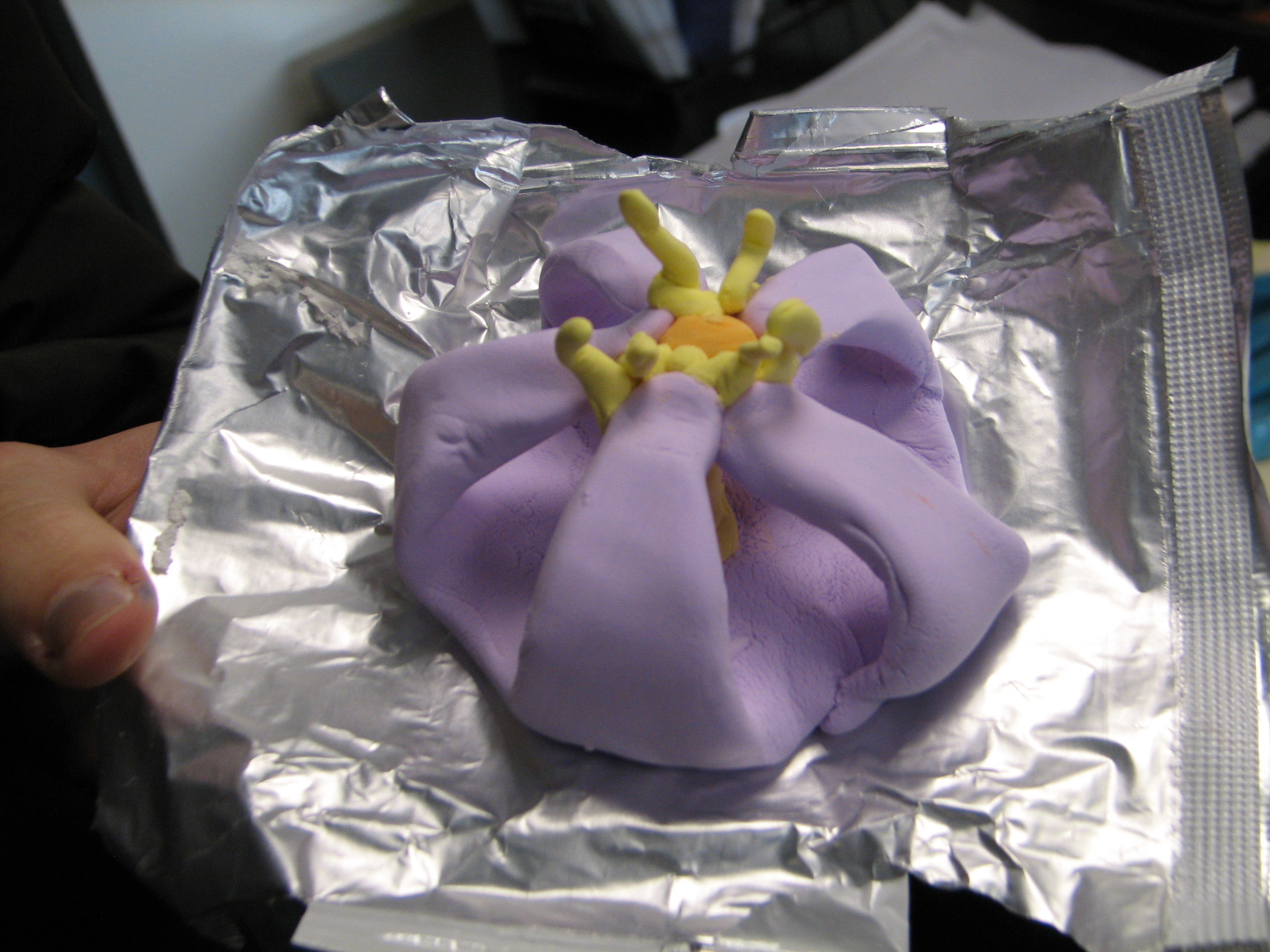
The students were intelligent creative young ladies, aged 9 to 15, with some family members. They were prodigious and driven, asking questions on how to engage in science and technology, and professing their dislike for sparkly vampires. (That’s hope, right there.) I wasn’t allowed to photograph the kids, but here are some photos of their work, which included meta-looking apps, new animals, and futuristic flowers:

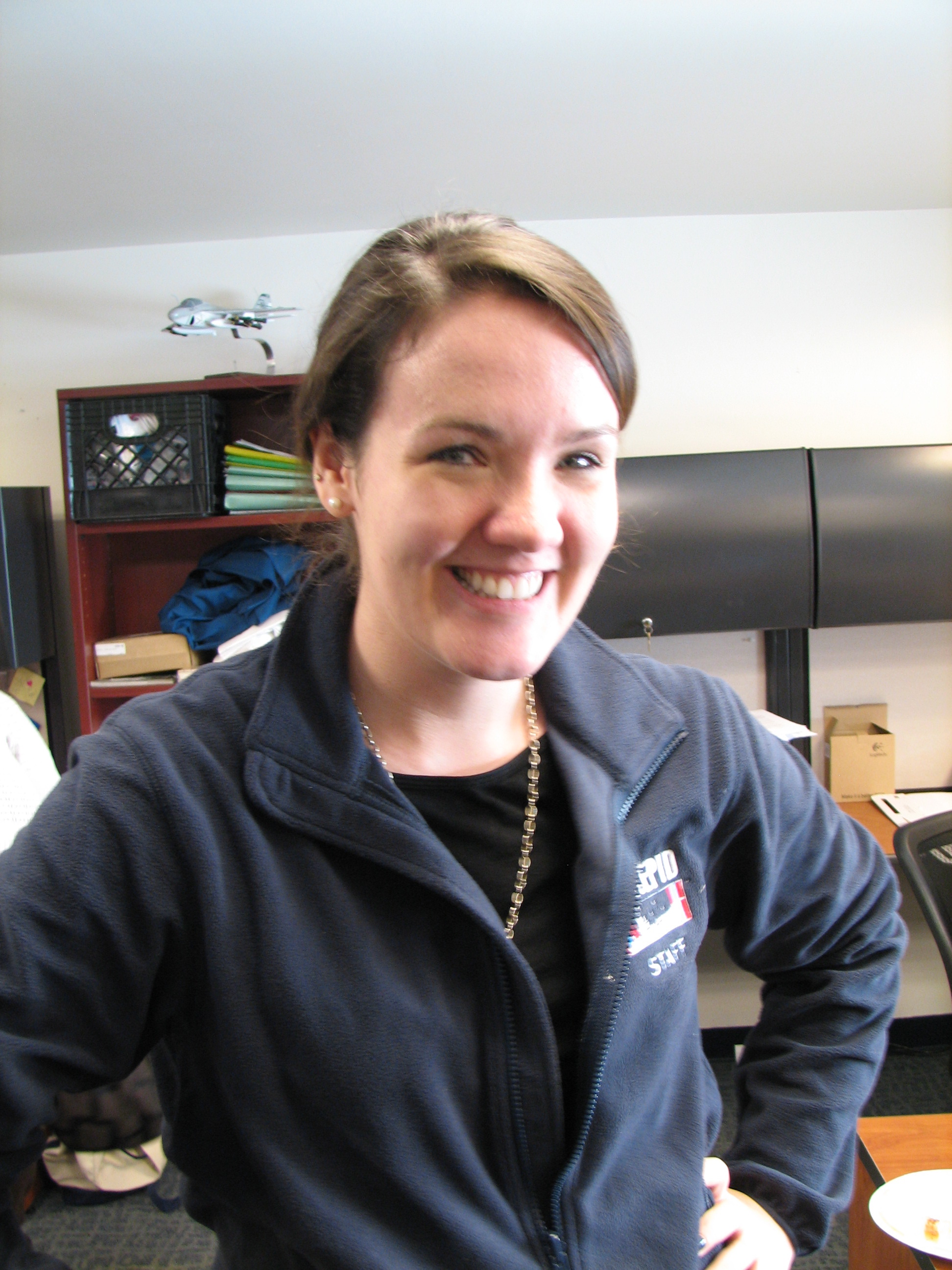
Thanks to Emma Nordin of the Intrepid’s Education Department, who assisted me through the whole event.