When one wakes up in another world, the previous one seems like a dream. Korea, magical as it is for me, seems like it ended a year ago instead of just last month. I’m now in Singapore for the 2013 Art Science Residency Programme in partnership with ArtScience Museum™ at Marina Bay Sands, Tembusu College National University of Singapore (NUS) and the Singapore-ETH Centre’s Future Cities Laboratory.
It is such a wonderful opportunity, and a very timely one as well. I am very grateful. Because of the Seoul43 project, I realized that one potential application of my work is the environment. The things I saw while I was in the mountains made me care about what humans are doing to nature in a more visceral way. Don’t get me wrong; I’ve always cared about recycling, global warming, and polar bears, but having my hikes directly affected by what humans were doing to the environment (and ultimately affecting the direction of the project) was very unnerving. That project wasn’t too long ago, and I still have more questions than answers. (Visit the project site here.)
Climate Change and Environmental Futures
I am working on the theme, Climate Change and Environmental Futures. My project is about a potential “apocalypse” that may ensue in the future because of climate change. I aim to design objects that examine our perceptual lifestyles when that occurs. So. How will we see, hear, smell, touch, taste, etc. when we need to adapt to a less habitable earth? And on the other side of the spectrum, what can be designed along the lines of perception when we are able to mitigate climate change? These are questions that intrigue me and will keep me happily preoccupied in the next four months of this residency.
This project is also an experiment for myself and the direction of my work. I suppose this is why despite my excitement, I want to proceed with caution. This is definitely my science background talking. There are enough people misleading others about climate change; I don’t want to be one of those. I’m happy to have scientists and humanists in the college to give me their perspectives and share their research, thus informing my work.
Cousteau
I never thought I would work along the lines of climate change. And yet, I did kind of foresee this last year. Because of my passion for nature and exploration (and flying up in an ultralight), I came across the works of Jacques Cousteau, marine explorer and conservationist. In his book, The Human, the Orchid, and the Octopus (Bloomsbury, 2007, co-authored with Susan Schiefelbein), he said that “Had I known where I was going, I would not have gone.” This resonated with me, along with him quoting Albert Szent-Gyorgyi’s distinction between Apollonians and Dionysians. I fear applied research sometimes, because when one drops a product into the real world in the hopes of solving something, oftentimes there are consequences you did not account for. That, plus I think my best ideas and projects are those when I was just in states of play.
The Anthropocene
In the past few weeks, I’ve done a lot of research on recent findings and ideas in our Anthropocene. I am encountering a lot of very interesting work by artists, scientists, journalists, etc. I will be updating this site frequently, so check it out for my progress.
Goals
There are specifics of this project I will be working out within the next few weeks. But now that I am here and have seen the labs and met with the staff, I have a better idea of what I can and cannot do. But just like my previous projects, I aim for these qualities:
1. Inclusivity—I hope to engage not just people from within the field of climate change, architecture, sustainability, and urban design, but also the people outside of it. I want to reach out to those who have no professional stake in my project, because I believe that climate change is a human issue that affects all of us.
2. Interactivity—I intend to create pieces that people can have an experience with and engage their senses, instead of just making something people will look at.
3. Empathy—I aim to collaborate with both the sciences and the humanities. The former is to ground my work in facts, and the latter is to allow for profound human connection. I hope for the audience to move from mere awareness of environmental issues to mindfulness where they are spurred to act and maintain positive environmental habits for the long-term.
The Weekend with the Eameses
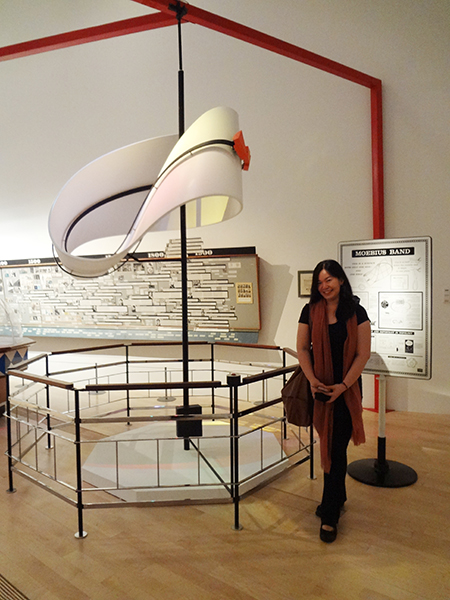
This past Saturday, as part of my research, I visited the wonderful ArtScience Museum, where we artists-in-residence are supposed to give a talk and be part of their Sunday Showcase sometime in November. I loved the Mummy exhibition and the National Geographic’s 50 Greatest Photographs, but it was the Eames exhibition that made me rejoice and gave me some level of encouragement as I begin this admittedly crazy project.
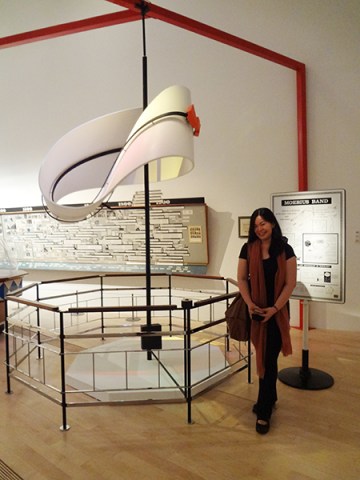
I loved seeing the Mobius Band from their Mathematica exhibition:
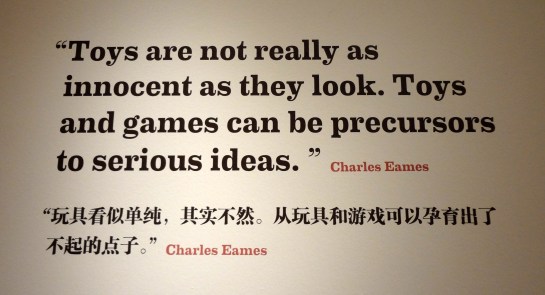
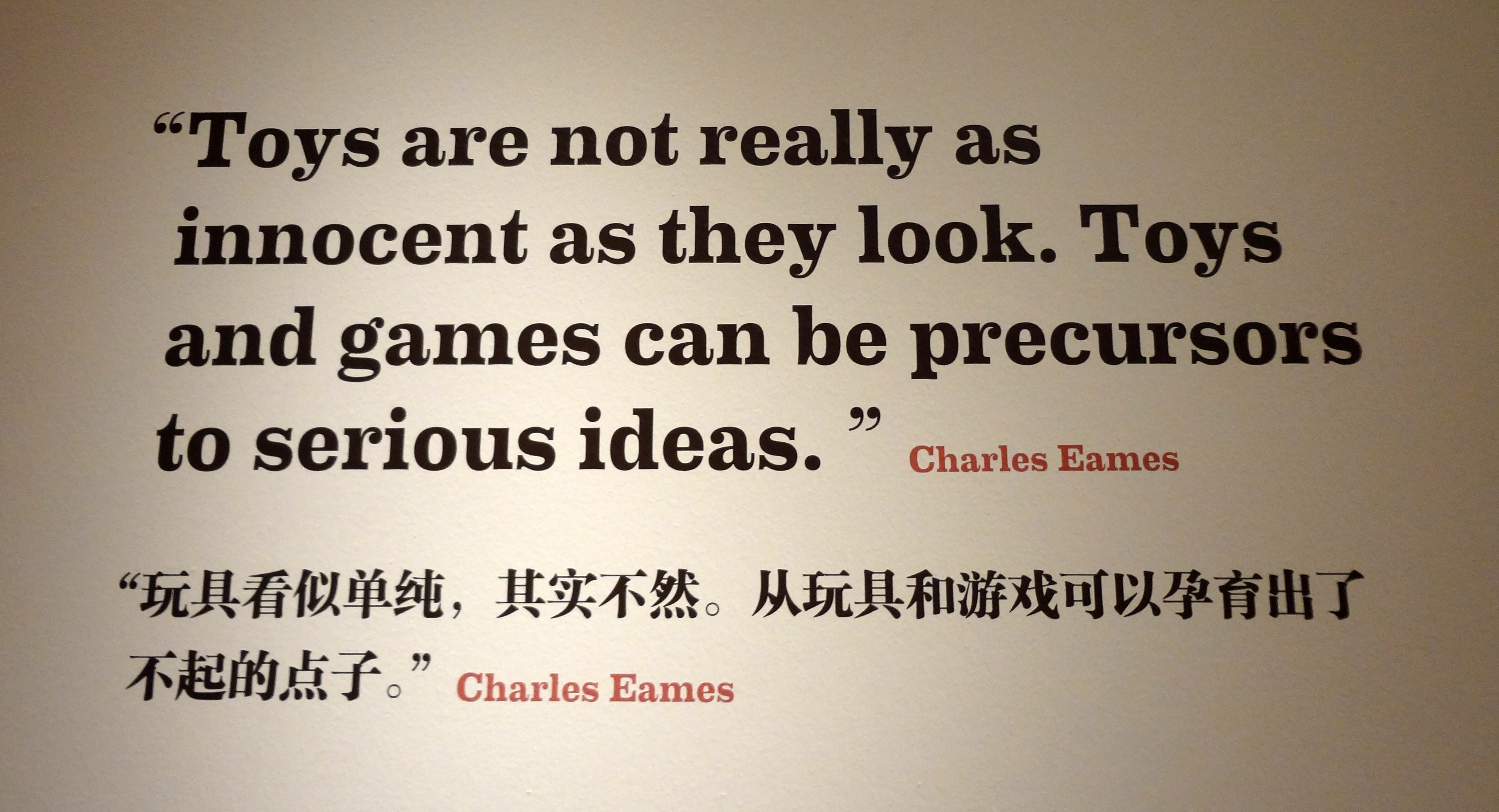
And thanks, Charles, for this:
Oh well, as always, here goes nothing.

 Catherine Sarah Young