Archive

Korea

In the middle of an exhibition opening, climbing 43+ mountains, and recovering from said mountains, I turned thirty years old last week. I almost forgot about it, until the studio surprised me with fruit and cake after another long hiking day. While it is a big number, perhaps due the hysteria and excitement that I’ve seen people my age show with this milestone, I felt that with everything that has happened in the past years, it was absolutely time to turn 30. Finally! The level of growth and travel that transpired made the passage of time very natural.

I also realized that I reached certain milestones in the cities I have lived in. Not just traveled to as a tourist, but lived in, for at least six months. For practical reasons, six months is usually a time when most receiving countries require you to get an alien registration card that states why you are living in that country. You are meant to declare your goals, and as such, you engage in activities that define your identity while in that place. This is in contrast to being a floating tourist for several weeks or a few months, having “fun” and getting inebriated. When you are an official resident of a country, you come out with something tangible, be it a degree, an exhibition, a portfolio. For personal reasons, well, growth just takes time. And with time often comes silence and reflection.

Now that I’m thirty, I would like to take some time from post-project recovery and thank the four cities that defined my twenties, and why:

1. Seoul, South Korea
For being the city I am happiest in (for now)

What could be better than turning thirty in one of my favorite cities in the world! In the six months of living here, I did the hardest project I have ever done, I have made some of my dearest friends, I do my favorite sport everyday, and I’ve broken a lot of personal boundaries. I love the people here,  I’m constantly challenging myself with doing new things, and I love visiting new places in the country. Because Seoul is the safest and most efficient city I’ve lived in, I can feel lost in my thoughts and let creativity take form. Perhaps it’s because this is the country where taekwondo was born, perhaps because I look like a local, or perhaps it’s because Korean and Chinese cultures have many similarities, but I feel least alien here. Go figure.

2. New York, USA
For training me to go forward

New York, without a doubt, trained me to go against anything. Five years in the City that Never Sleeps made me keep going because no one was going to do it for me. As the hardest city I lived in, it taught me not to sit on my ass and to keep working hard. There is no time for self-pity in New York. I think my years at graduate school were very formative, and started what I hope will be the trajectory of my life’s work. Oh, and I got my black belt there, so I’ll always remember it. But New York wasn’t just about the harshness or the push-ups—I also loved seeing the most diverse people, which I haven’t encountered in any other city I’ve lived in or visited.

3. Barcelona, Spain
For showing me beautiful things everyday

I ran away to Spain after one of the most difficult times in my life, and there was no better city for rejuvenation than Barcelona. You can eat the city with your eyes—it was just so beautiful in ways both small and big. I will always remember going through the old city, feeling the bullet holes in the walls and then coming across a guerilla art piece by Space Invader. I read many of the books that I still reference in my work, discovered poetry, saw some of the most astounding art and architecture in the world, and made some wonderful friends.

4. Manila, Philippines
For letting me dream

I only realize it now, but I am extremely grateful for the Philippines for having such outspoken women. I deliberately write this in a city where I feel that women do not have as many rights. Here in Seoul, I am constantly being gawked at as an Asian woman who can be very assertive with few inhibitions. I think most of the women in the Philippines, particularly my mentors, are among the toughest women I have ever encountered. Most people reference the Philippines for its beaches and natural wonders (which are better in person), or for the other extremes, such as gates-of-hell poverty (also true), but I see it as the city that allowed for the incubation of my dreams.

So that’s four cities in my twenties. I write this in gratitude, but also as a reminder to myself that the world is huge and there are more places to explore and languages to learn.

As I said, there is no momentous “whoa-I’m-30” occasion—in Korea, I’m already 32.
DSC06562

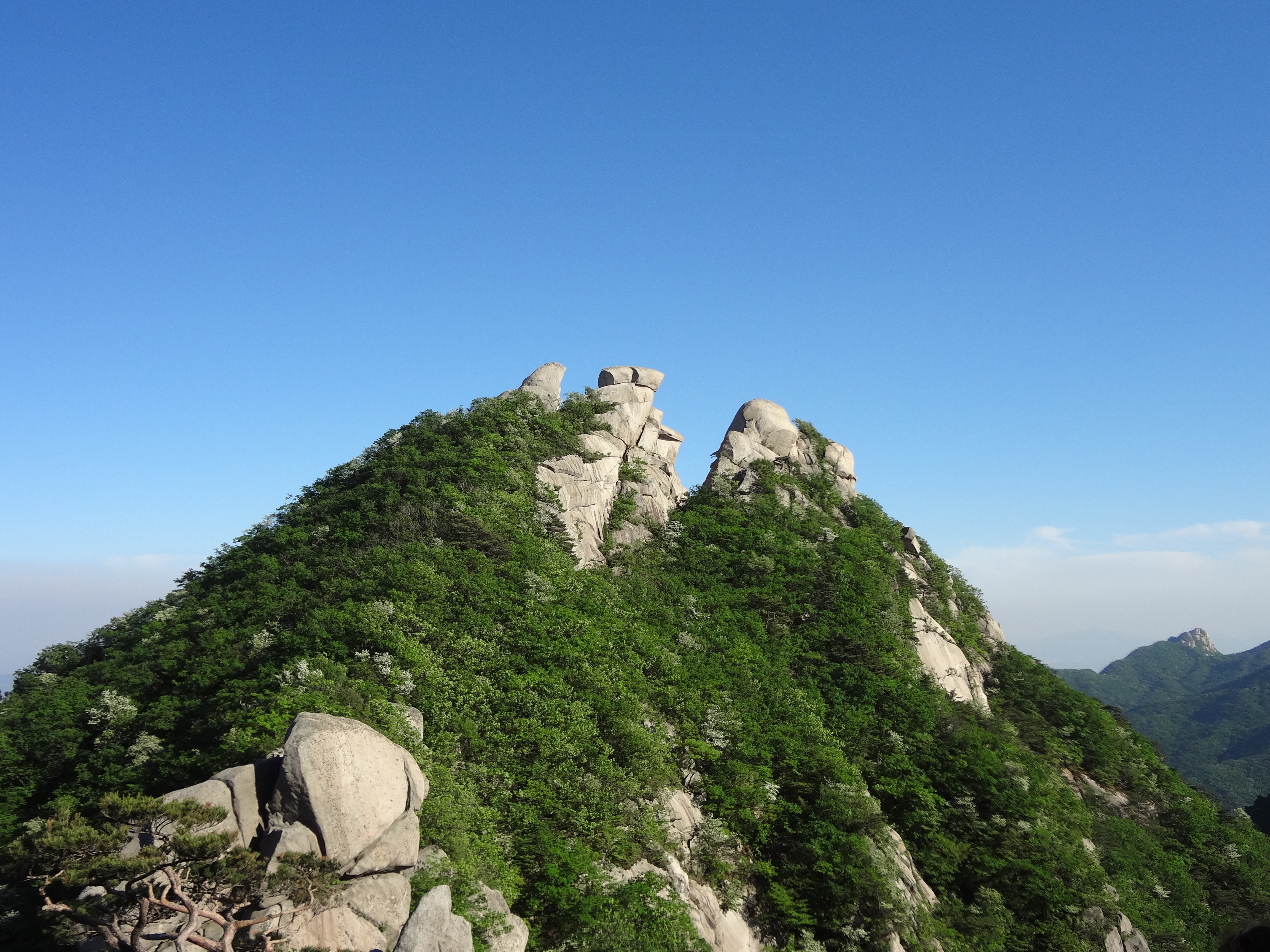
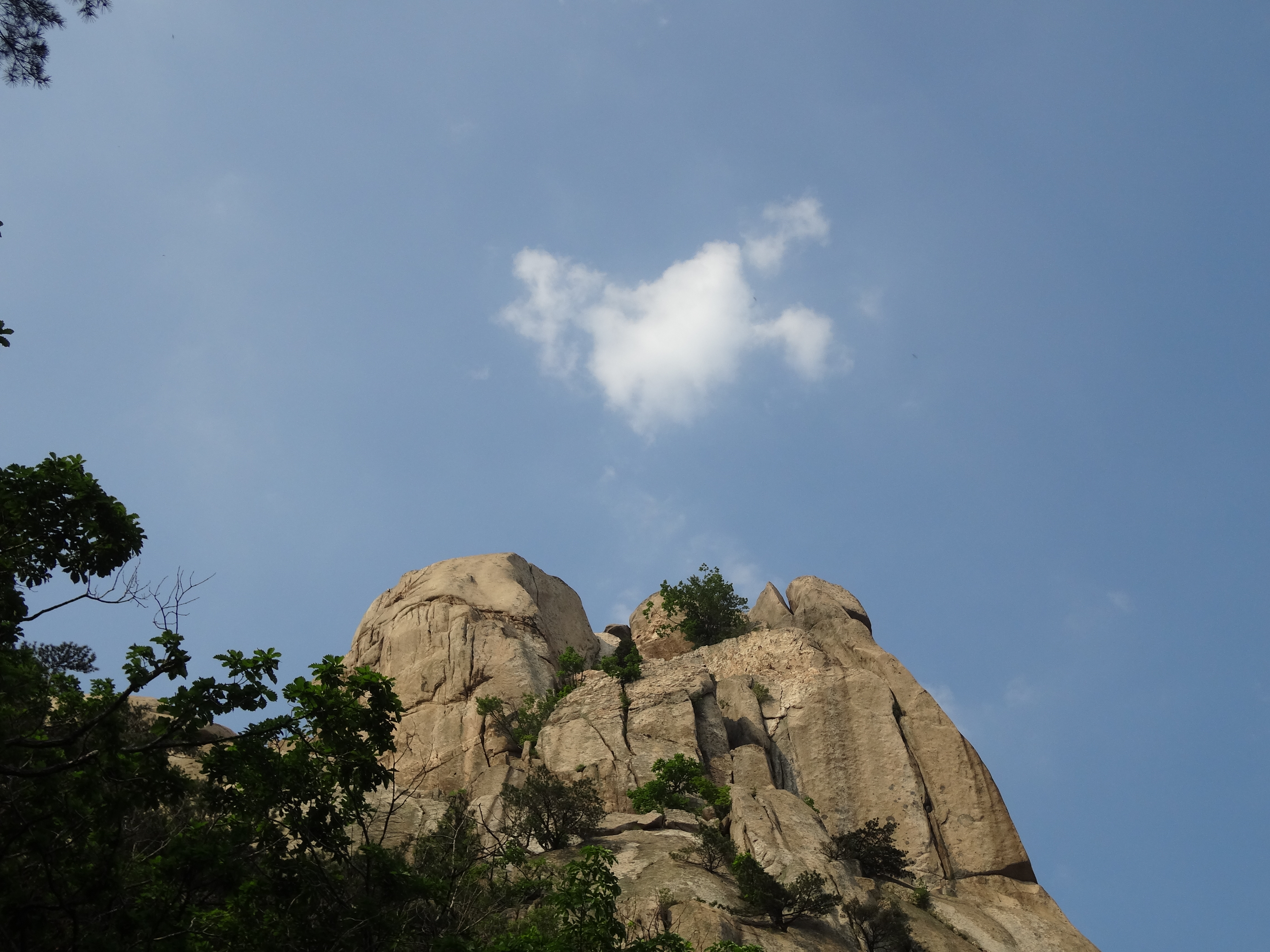
Yesterday, I hiked Dobongsan, my final mountain in Seoul. I have hiked a total of 154 km (~77 miles) in 60 hours. (Perhaps this is extreme fatigue talking, but I think that cloud looks like the Ghostbusters logo, don’t you? Something to Rorsketch.) I’ve hiked all 43 mountains (and then some) of this city for a project called Seoul43. Today, I present it in our group exhibition, “Seoul Seoul Seoul” at The National Art Studio of Korea in Changdong.

DSC06581

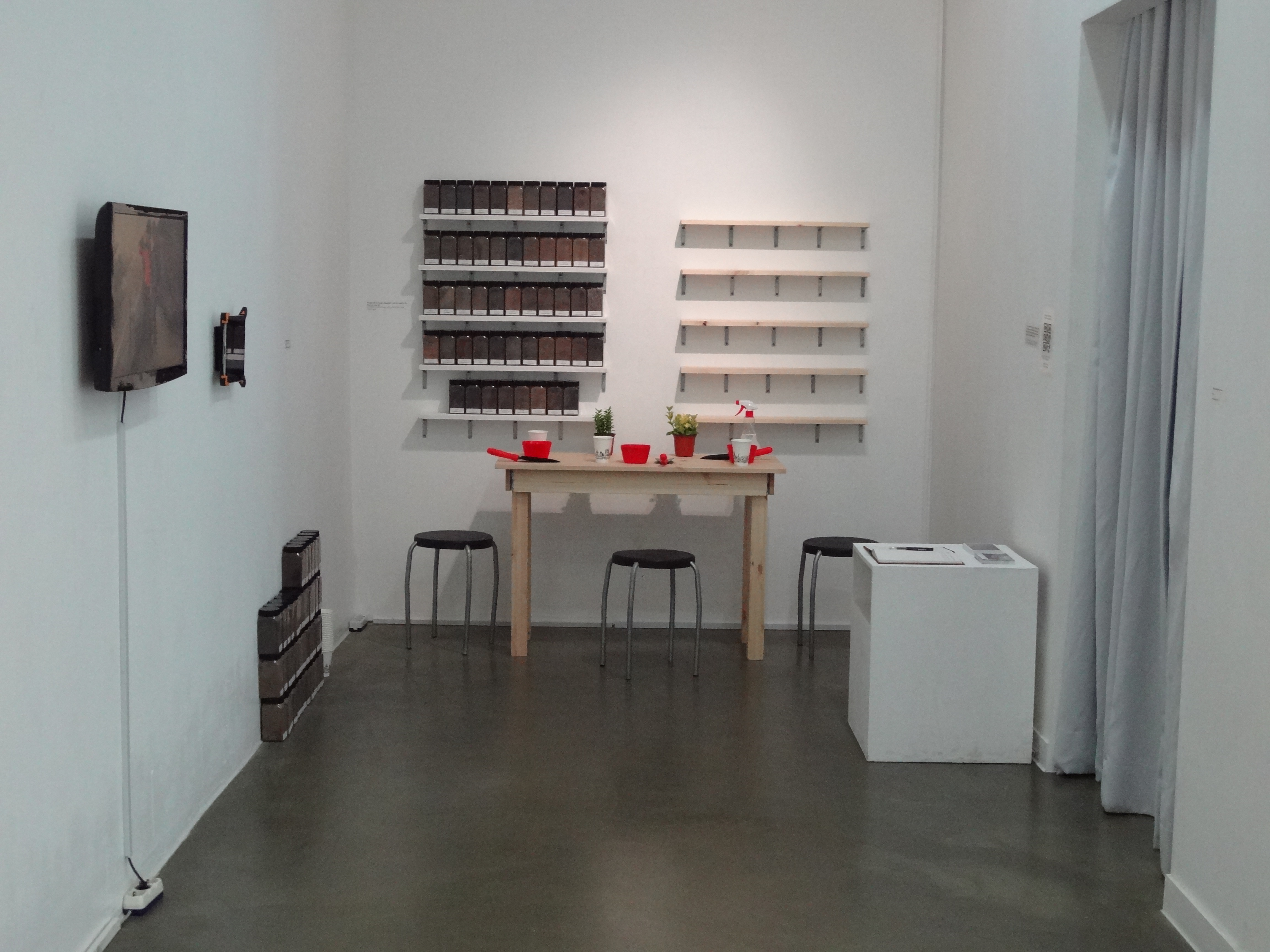
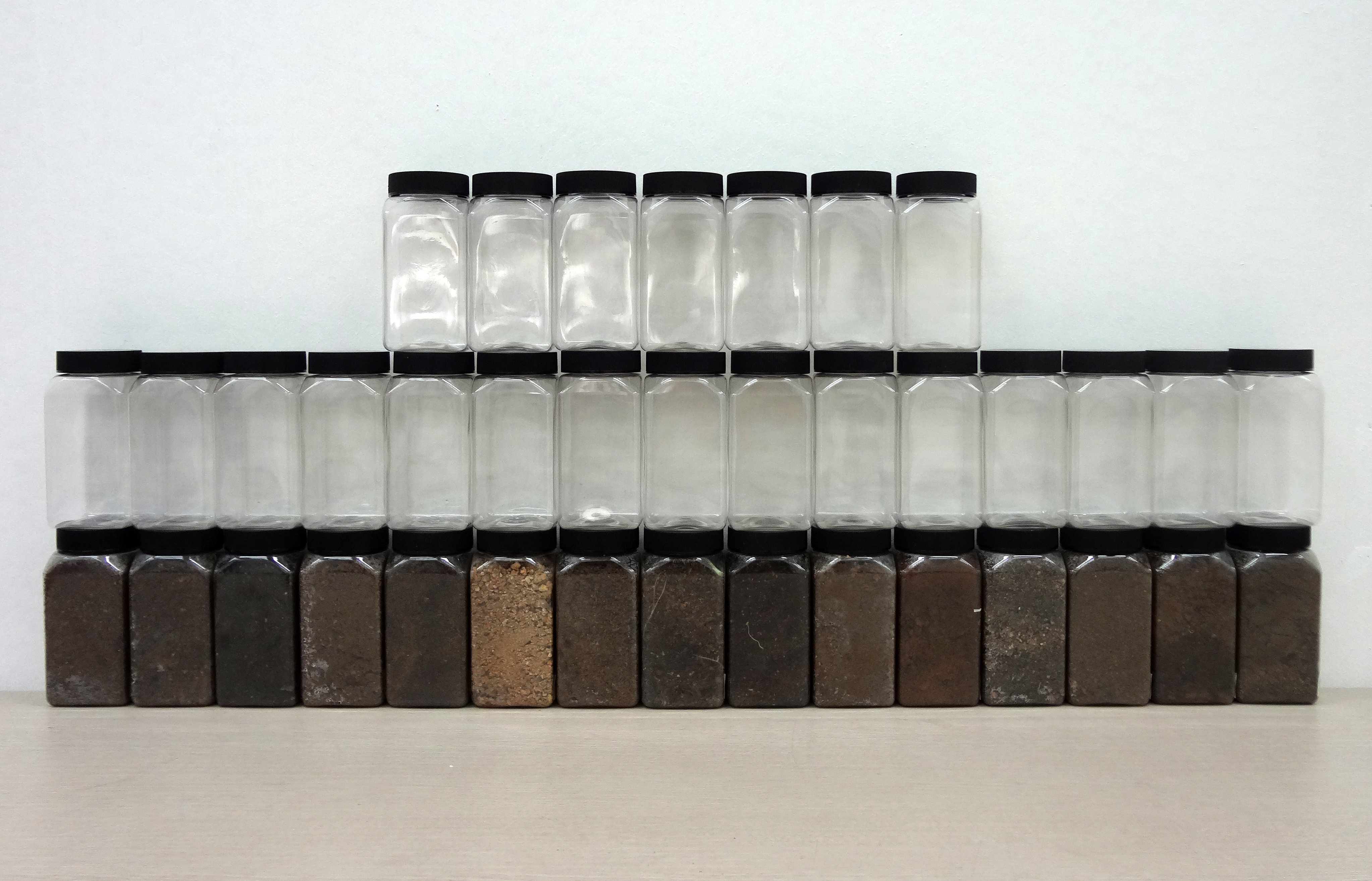
On display is a multimedia interactive piece. The main parts are jars that contain soil samples from all the mountains I hiked, which were taken at the end of each hike at the bottom of the mountains. The table in the middle has shovels, mixing bowls, small outdoor plants, and other gardening equipment. Participants are invited to plant using any mixture of soil.  When they finish planting, they can place the paper cup containing the plant with the soil, now a mixture of soil from different mountains, on the shelves on the right. On the left is a video in both English and Korean that explains the project, and an iPad showing the website that contains more photos, information about the mountains, data from the hikes, etc.

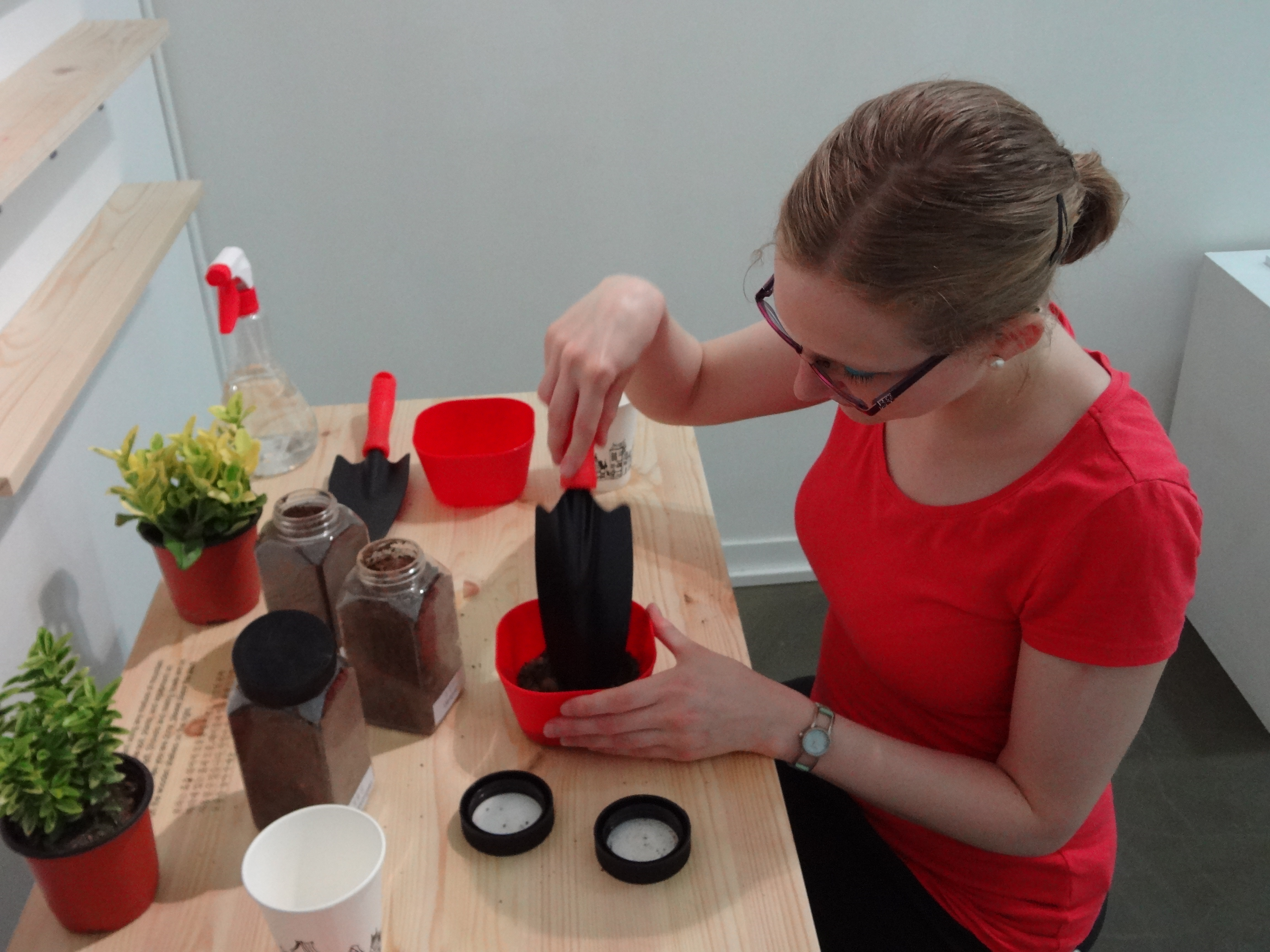
Here is my friend Kate assembling the first plant, after helping me get the entire display finished in time for the opening:

DSC06599

After the exhibition, I will invite people to go to the mountains on individual scavenger hunts to return both soil and plant to the mountains, and to do fun tasks while at it.

Although I am grateful to have finished all the treks with no mishaps whatsoever, this piece is far from over. My next step is to continue with the website to add the data I have gathered during my hikes, which was recorded by the MyTracks app. I will also have to design the scavenger hunts and get enough people to participate in them.

But that’s it for now. Our opening is in two hours, and tomorrow I plan on going to a jimjilbang (Korean sauna). Because dang it, my feet are killing me.

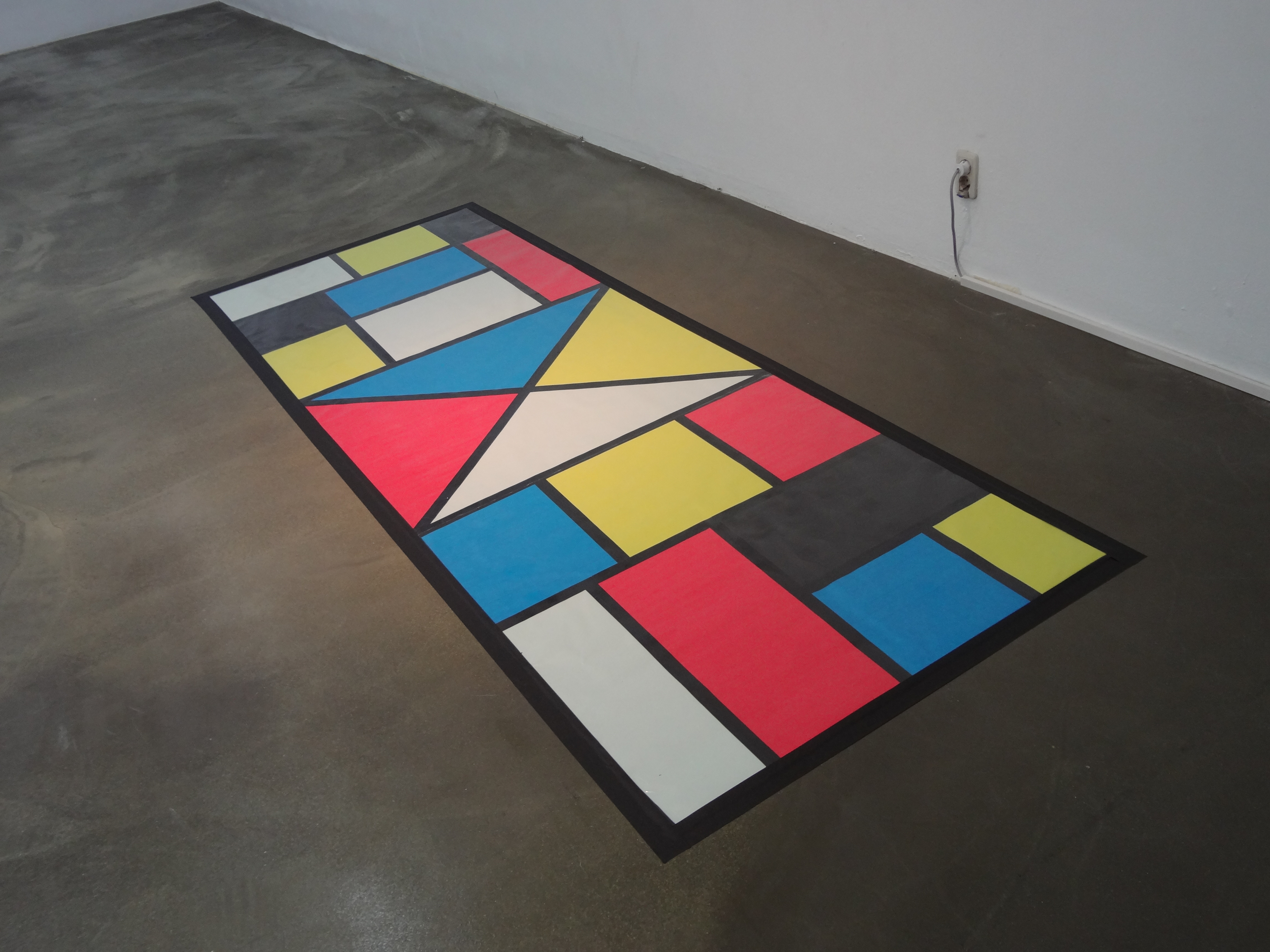
Oh, and I made another hopscotch board for the Mondrian Hopscotch series, this time with a Korean twist (the X in the middle is how they create their boards here):

DSC06595

The link to the Seoul43 site is here.

Each year, Eumseong, a city in Chungcheongbuk-do, South Korea, holds a Pumba Festival. (Fun fact: this is where United Nations Secretary-General Ban Ki-moon is from.) “Pumba,” which doesn’t relate to The Lion King ( you will hear this joke ad nauseum from the expat community), means “beggar” or “vagabond.” Historically, back when Korea was poor, pumbas would roam the country.

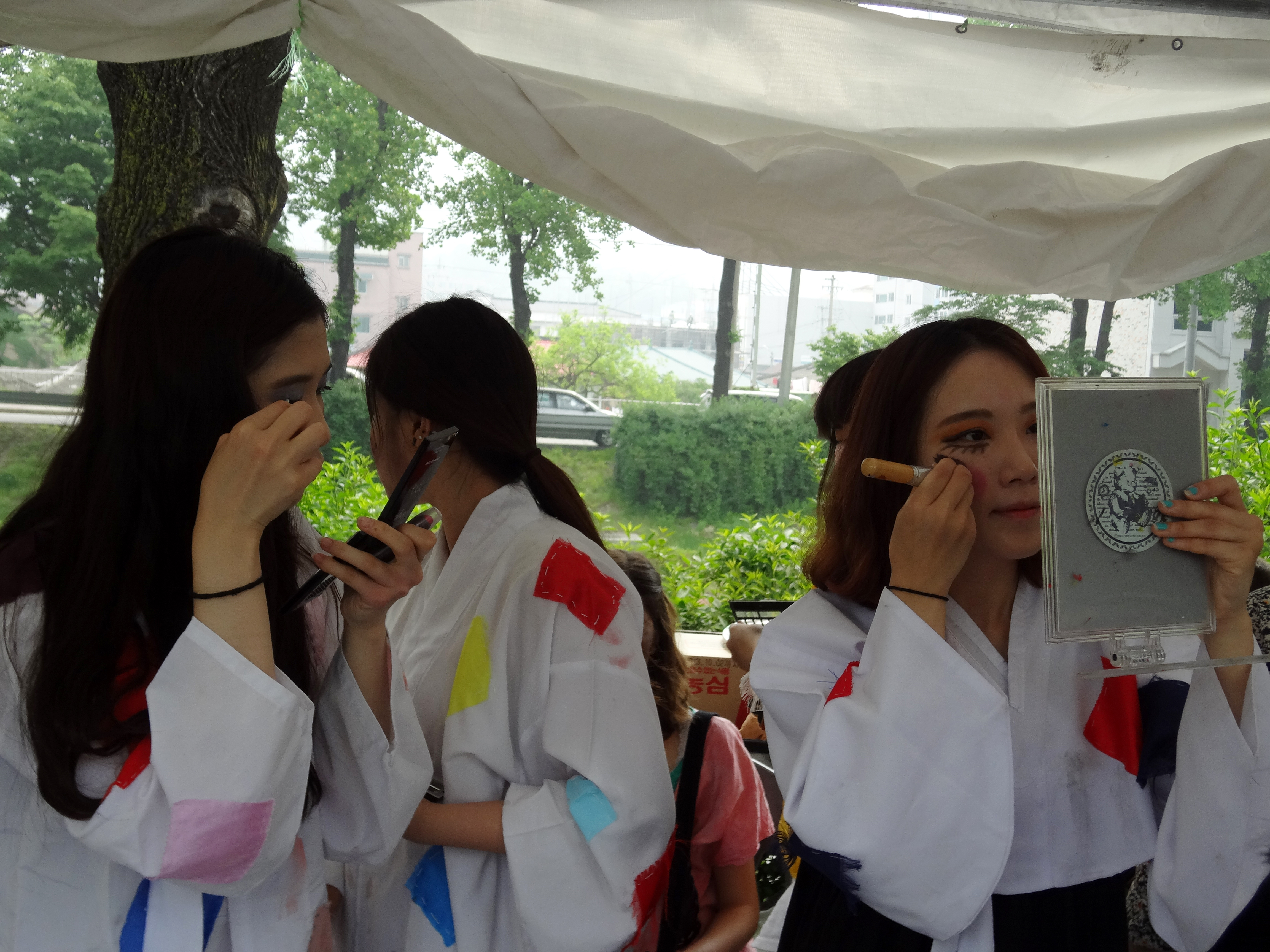
They let us pick our costumes.

They let us pick our costumes.

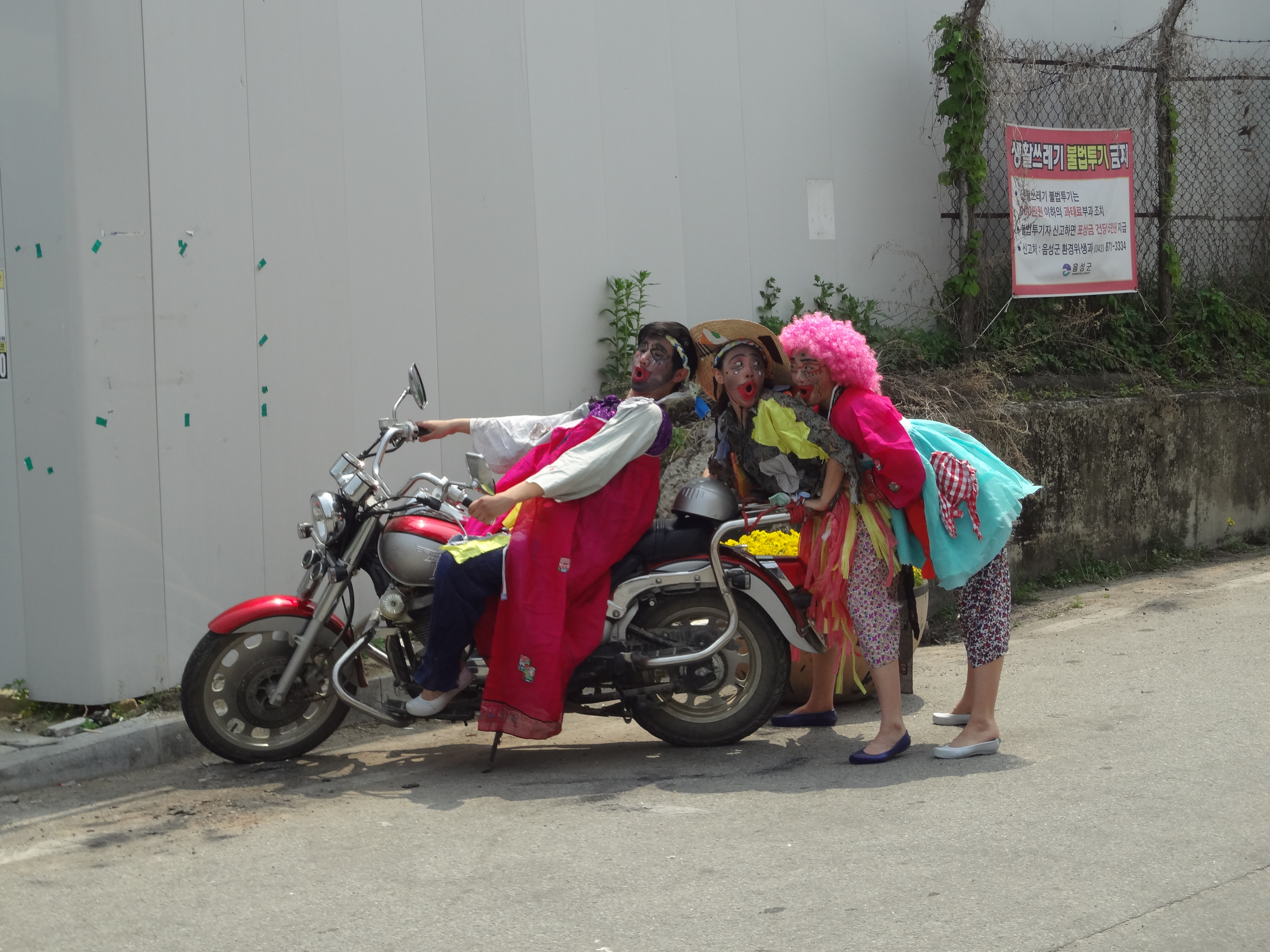
As with most festivals in Korea, there is a parade with people dressed in very colorful, almost clown-like outfits, with their faces painted. There were gakseori, people who perform traditional dances and play musical instruments. There was also a “beggar opera” in an open-air auditorium that was packed with people.

Locals painting themselves.

Locals painting themselves.

In the beginning, I confess I had misgivings, because having lived in and visited developing countries and impoverished areas, I had no inclination to “celebrate” poverty. But during the festival, I realized that it was really more of a joyful occasion that got everyone in the province together, young and old alike. And like most festivals in Korea, it has to hearken back to something historic. As South Korea is one of the most developed countries in the world, this is a tradition that to me resembles a cross between a mime festival and Mardi Gras. In a country that celebrates perfect porcelain skin, it was refreshing to see brightly colored faces.

Ajummas: always the best dressed anywhere and anytime in Korea.

Ajummas: always the best dressed anywhere and anytime in Korea.

Also, as a modern “vagabond” myself, I do kind of relate to this idea of moving around and having to entertain people and struggling to survive.

These kids were among the best part.

These kids were among the best part.

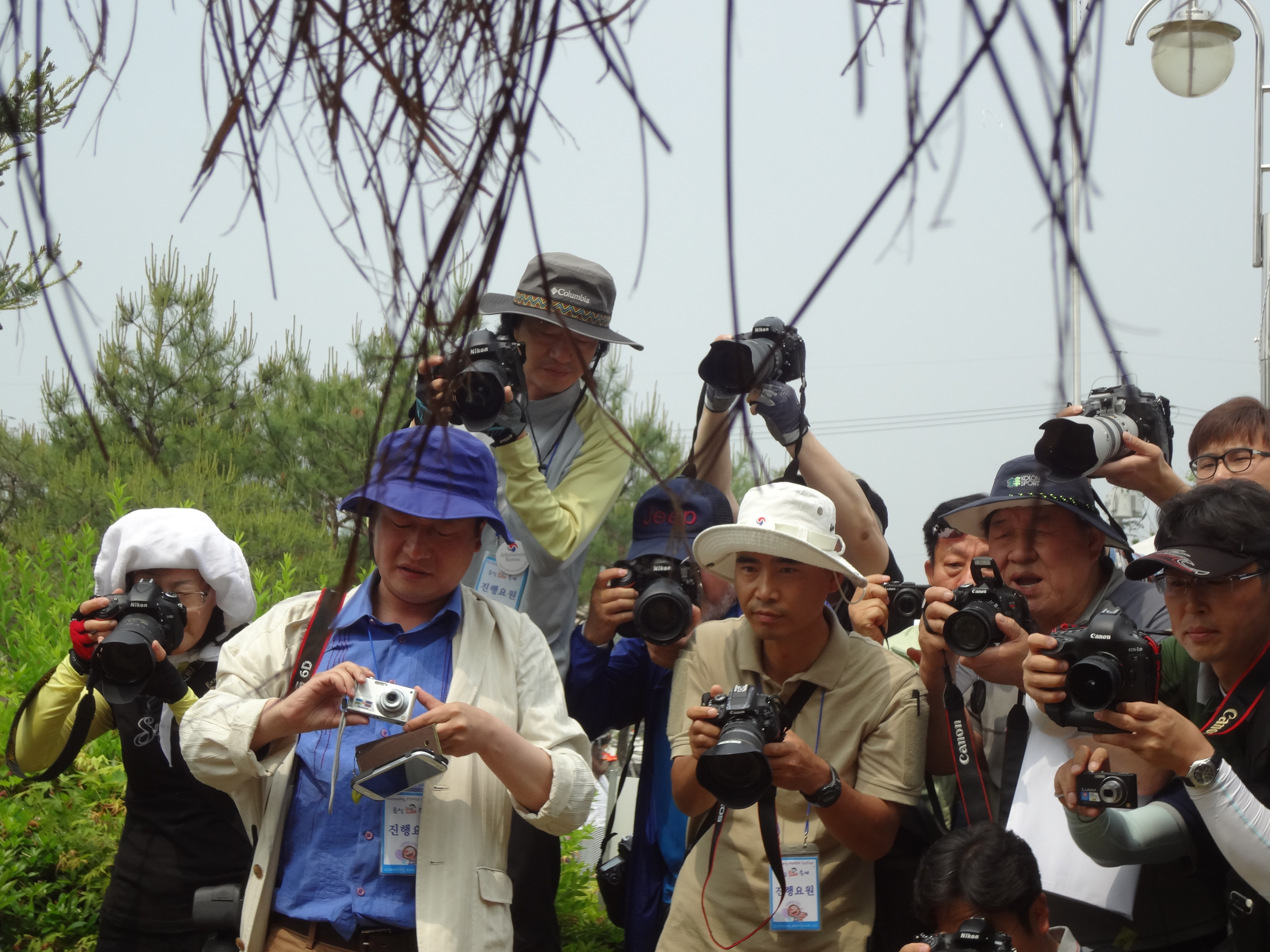
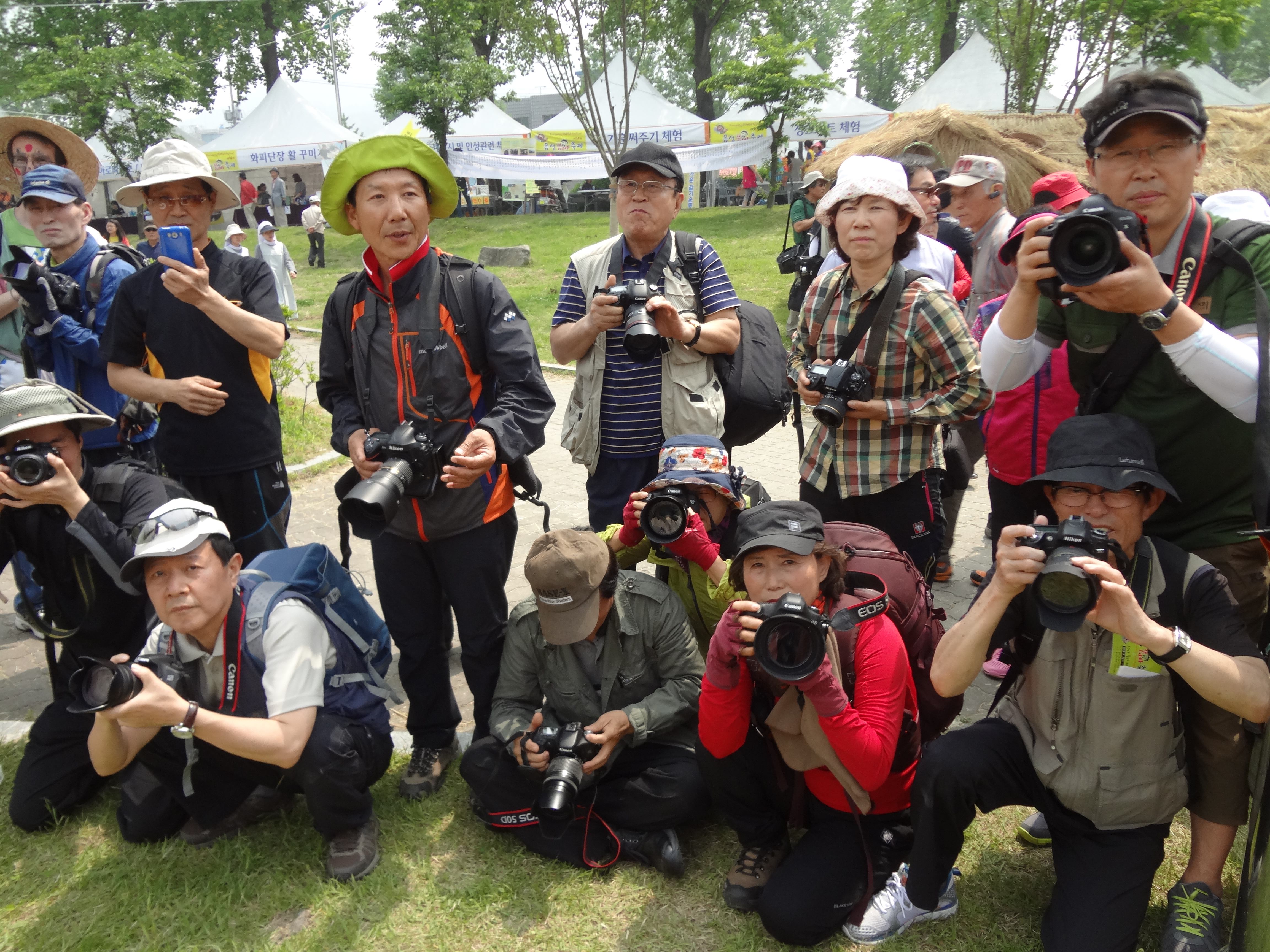
If anything, the most unsettling part of the experience was this army of ajusshi and some ajumma who were decked in hiking gear and DSLR cameras, taking photos of the costumed people who were mostly foreigners like me. Apparently, there was a 1-million won prize for the best photograph. And so we were followed by paparrajusshi all afternoon.

Yikes. Paparajusshi.

Yikes. Paparajusshi.

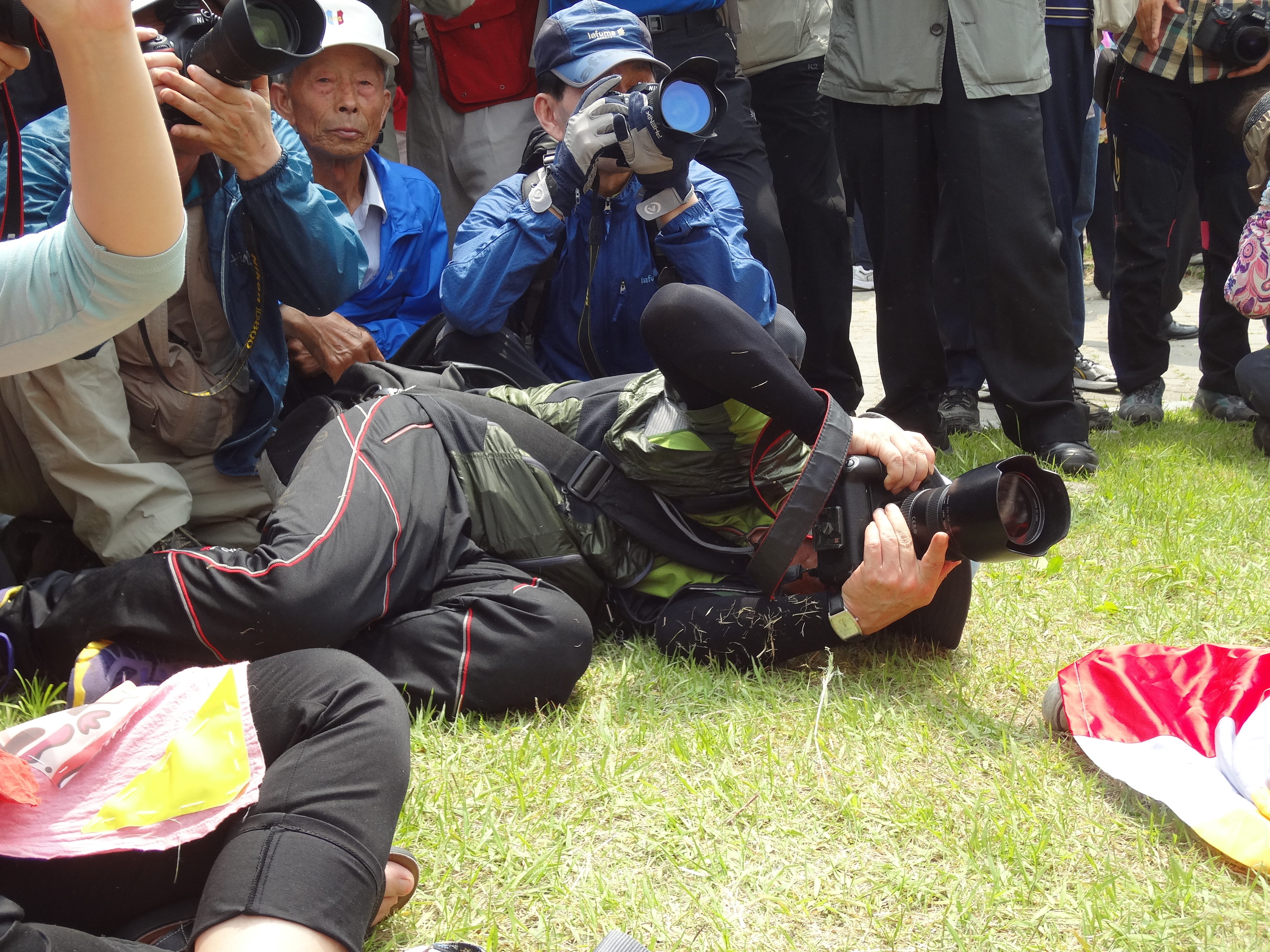
They could get quite aggressive and would dive in the strangest positions that I believe yielded the most unflattering shots. I mean, come on.

I kid you not.

I kid you not.

And so I wanted to turn the tables and took a lot of photos of them. Like so.

DSLR heaven.

DSLR heaven.

I didn’t really mind, since most were friendly. However, I only posed for one. An ajumma. I don’t get the impression that women here have a lot of rights. I hope she wins the million won.

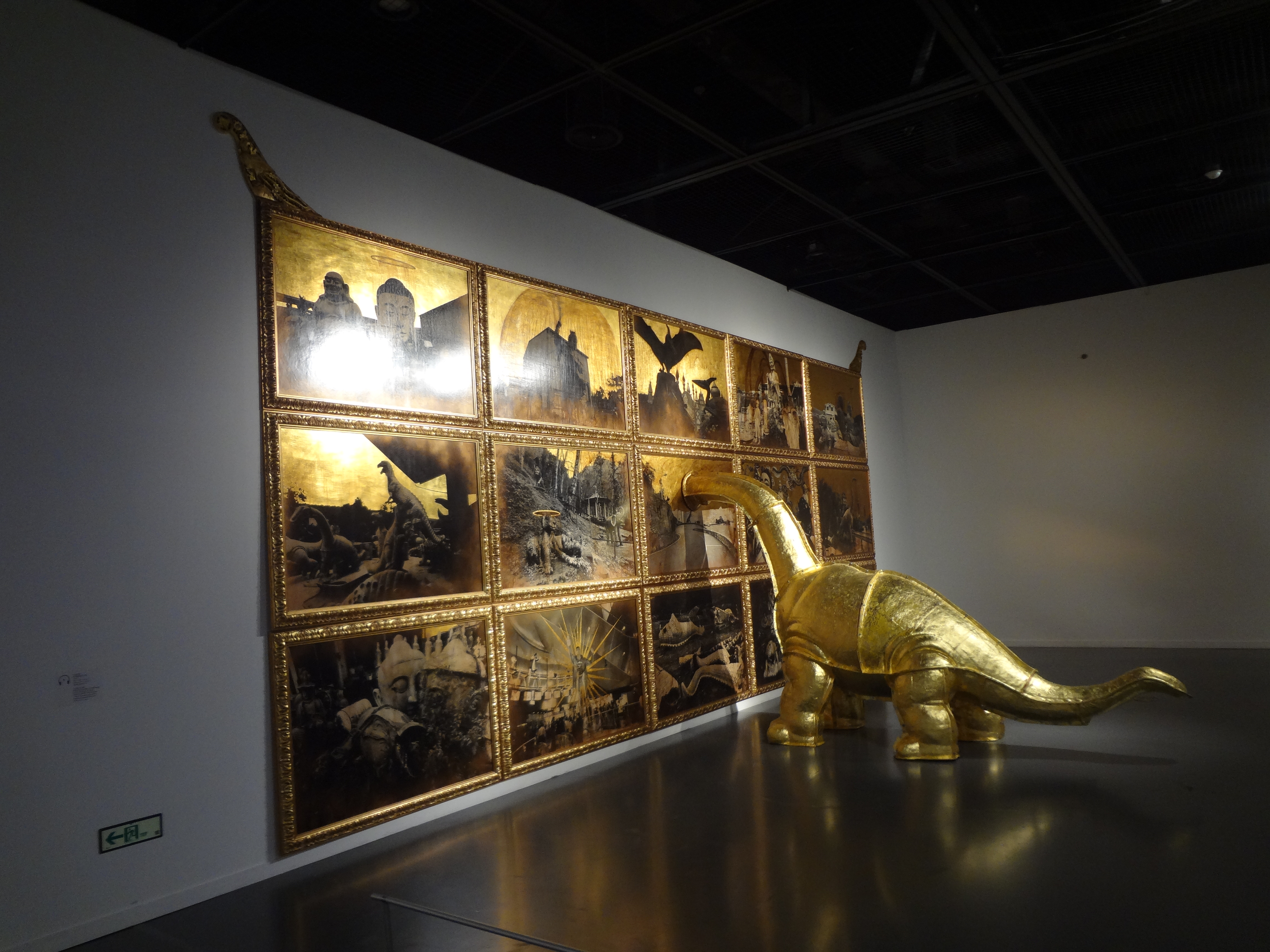
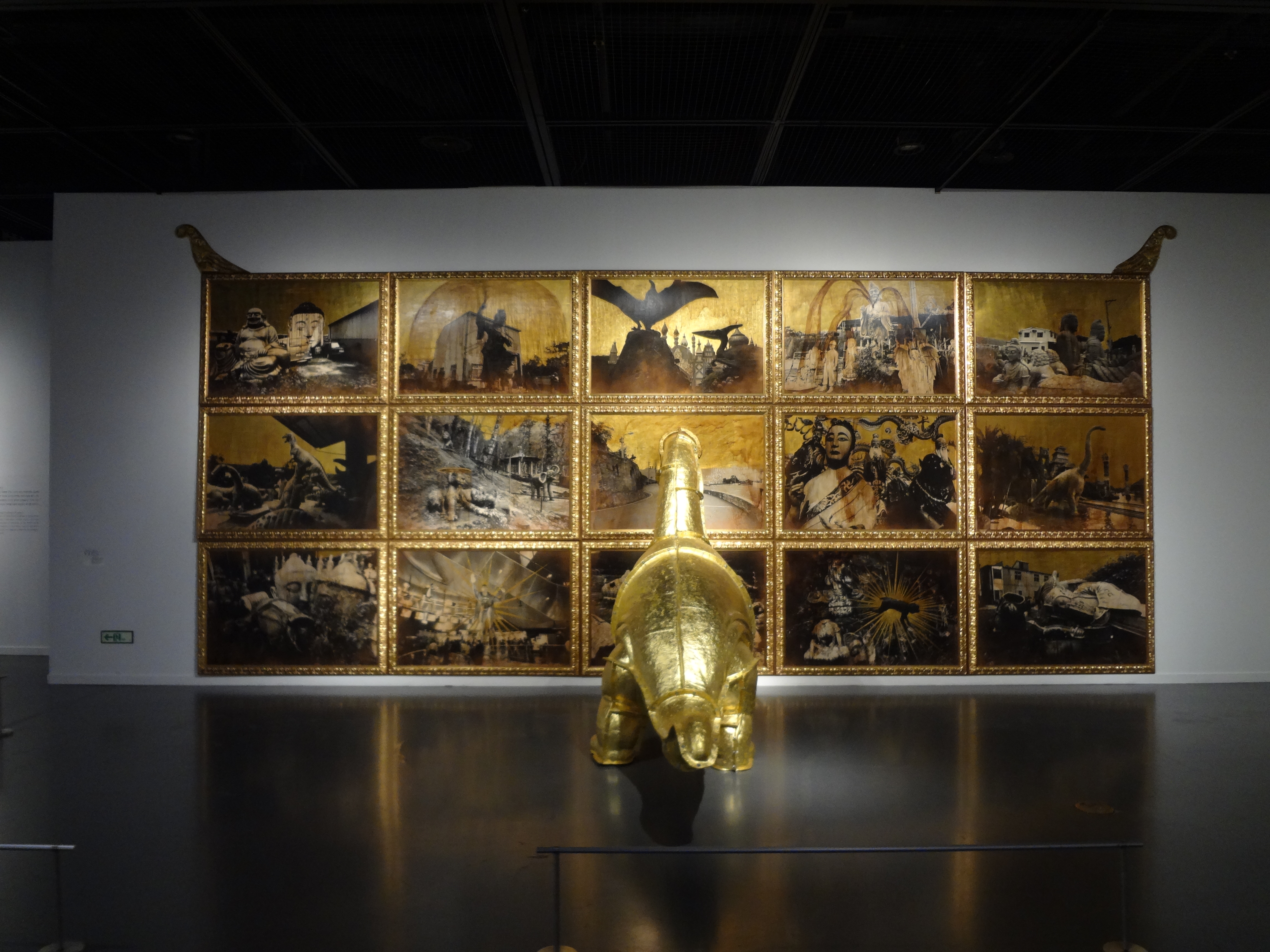
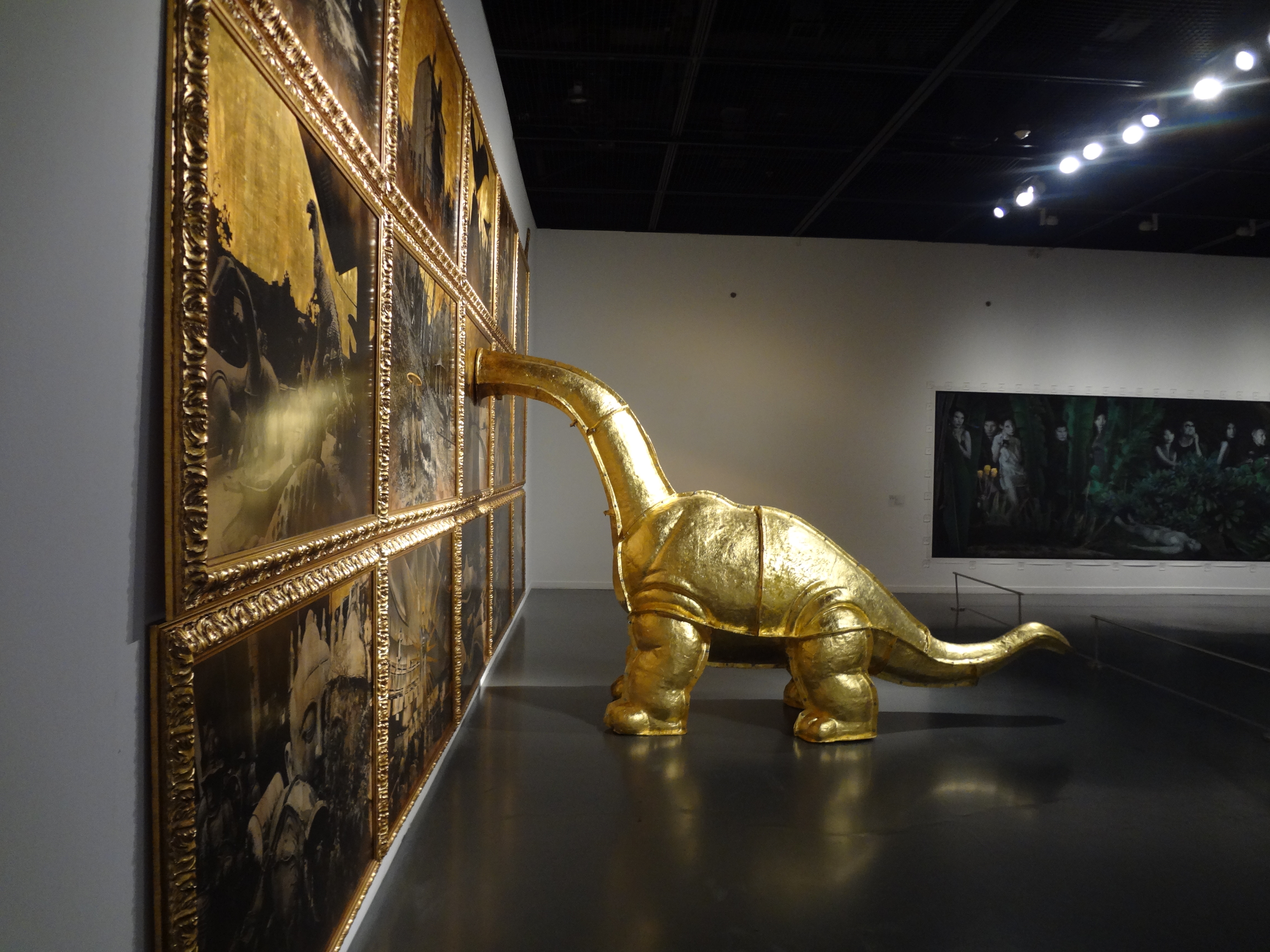
In Rolling! an ongoing exhibition about visual art in Taiwan at the Seoul Museum of Art, this piece was impossible to miss. In Barbarians Celestine: The Monuments with the Sacrifices of the Faunas, the Yao Ruei-chung reflects on Taiwan’s consumer culture and materialism, using images of Taiwanese civil ceremonies.

DSC06028

DSC06030

DSC06032

I love art with layers of meaning, and even more, a golden headless dinosaur. A golden headless dinosaur!

Yesterday, I hiked Suraksan, my 27th mountain in Seoul. Like an idiot, I miscalculated the time, and ended up speeding down the mountain to beat the sunset. The remaining 10% of my hike was pitch black, and because it was a rocky stream, I lost the trail, was close to sheer panic, and was even closer to concussions, sprains, and—I wince thinking about this—death.

The top of Suraksan

The top of Suraksan

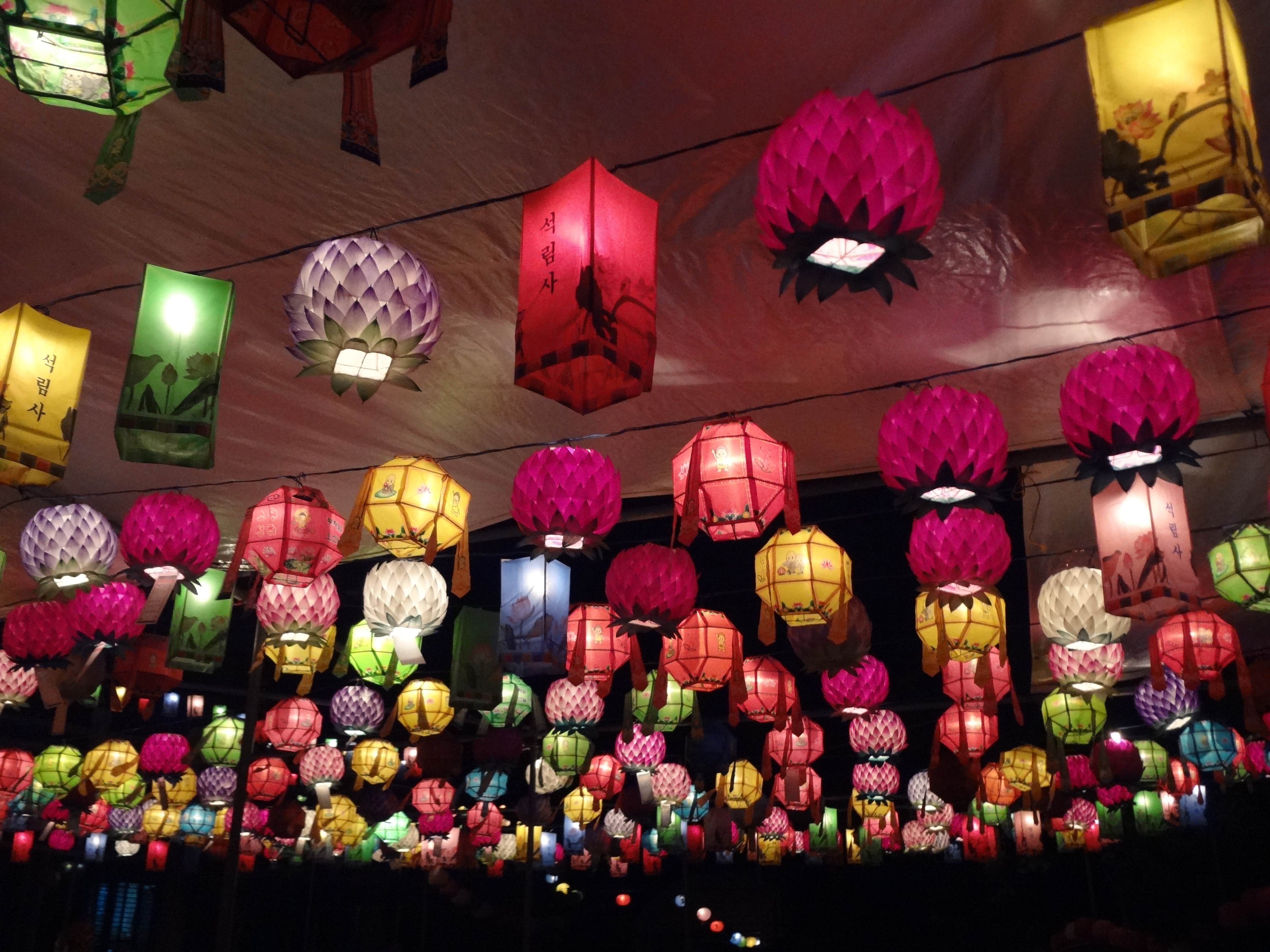
I stumbled over dry leaves and through sharp branches. Thank goodness for GPS and the flashlight on my phone. But most of all, thank goodness it was Buddha’s birthday, because the temple at the end of my hike had these glowing paper lanterns, helping me find my way.

Thank you, Buddha. Really.

Oh bless these monks.

On the way down, I vividly remember passing by two ajusshi on separate occasions. They didn’t look like they cared about the time. I really hope they made it back.

I am extremely grateful for well-kept traditions, modern technology, and friends who would come over to give you ice cream and remind you to hike smarter. I have 10 more mountains to go, you know.

Happy birthday, Buddha. And many, many thanks.

Last May 5th, I gave an artist talk entitled Art, Science, and Interactivity at the Hangaram Art Museum in Seoul Arts Center for the International Sculpture Festa for a small audience. I and my friends from the National Art Studio were in the category “What Can Sculpture Be?” As an interactive artist, while some of my work can be classified as sculpture, I don’t really consider myself one in the most traditional sense of the word. Unlike most sculpture where Do Not Touch is written beside the piece, my work usually comes with a set of “experience instructions”—such as “Please Smell This Wall,” “Please wear this vest and hug someone,” etc. etc.

These are my notes and slides from the talk:

Art, Science, and Interactivity

CatherineSarahYoung_ISFtalk.001

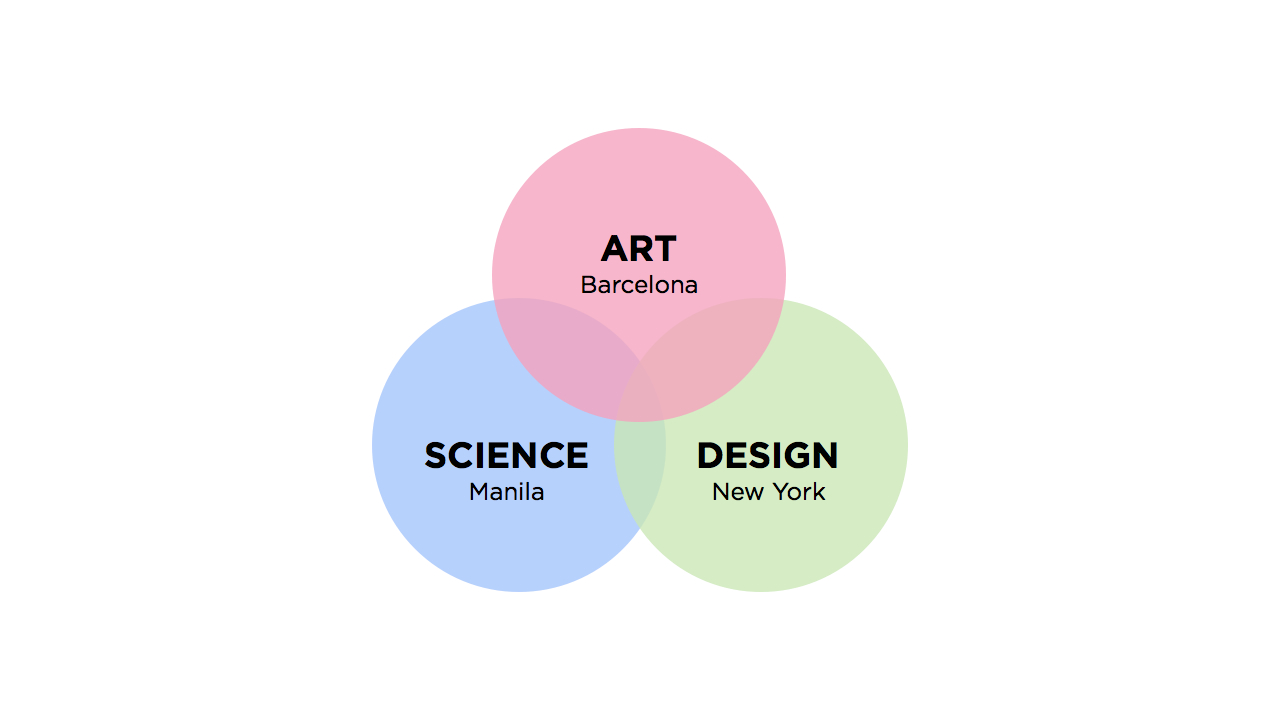
Annyunghaseyo. My name is Catherine, and I’m an interactive artist from the Philippines. I come to you from three fields of study, and from three cities around the world. The first is science, where I studied molecular biology and biotechnology in Manila. The second is Barcelona, where I studied contemporary art and poetry. The third is New York City, where I lived for five years and did my MFA in Interaction Design at the School of Visual Arts.

CatherineSarahYoung_ISFtalk.002

Coming from many different worlds, I often asked myself what was the core of my interests? Finally, I realized that it was human perception. Our senses, or how we perceive the world. More specifically, I investigate perception and how it can bridge memory and play. The more aware we are of the world, the more we can explore and go beyond what we know, and the more we go beyond, the more we add to our storehouse of memories.

CatherineSarahYoung_ISFtalk.003

1. Sculpture can facilitate human connection

CatherineSarahYoung_ISFtalk.004

The Hug Vest
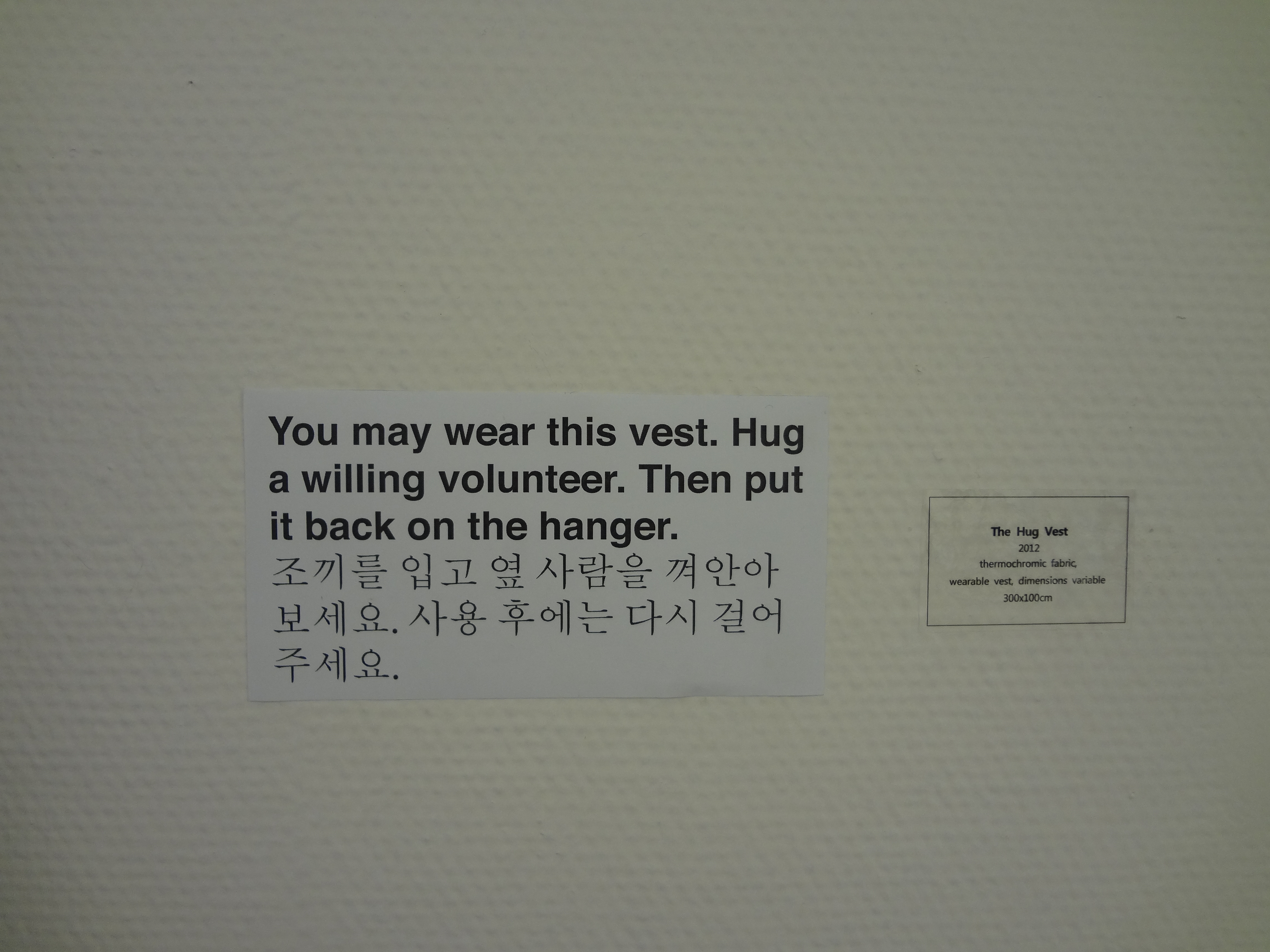
This is a vest made out of thermochromic fabric, so it changes color, from purple to blue when you touch it. For the past two years, I have been wearing this, and other versions of this vest, and hugging people with it. In these exhibitions, I invite people to hug me, and invite them to wear it and hug other people as well. Being able to tangibilize the hug through a color change seems to make hugging more fun, and gets people to touch more. What this project has taught me is that sculpture can facilitate human connection.

CatherineSarahYoung_ISFtalk.005

2. Sculpture can go beyond sight
An Olfactory Memoir of Three Cities
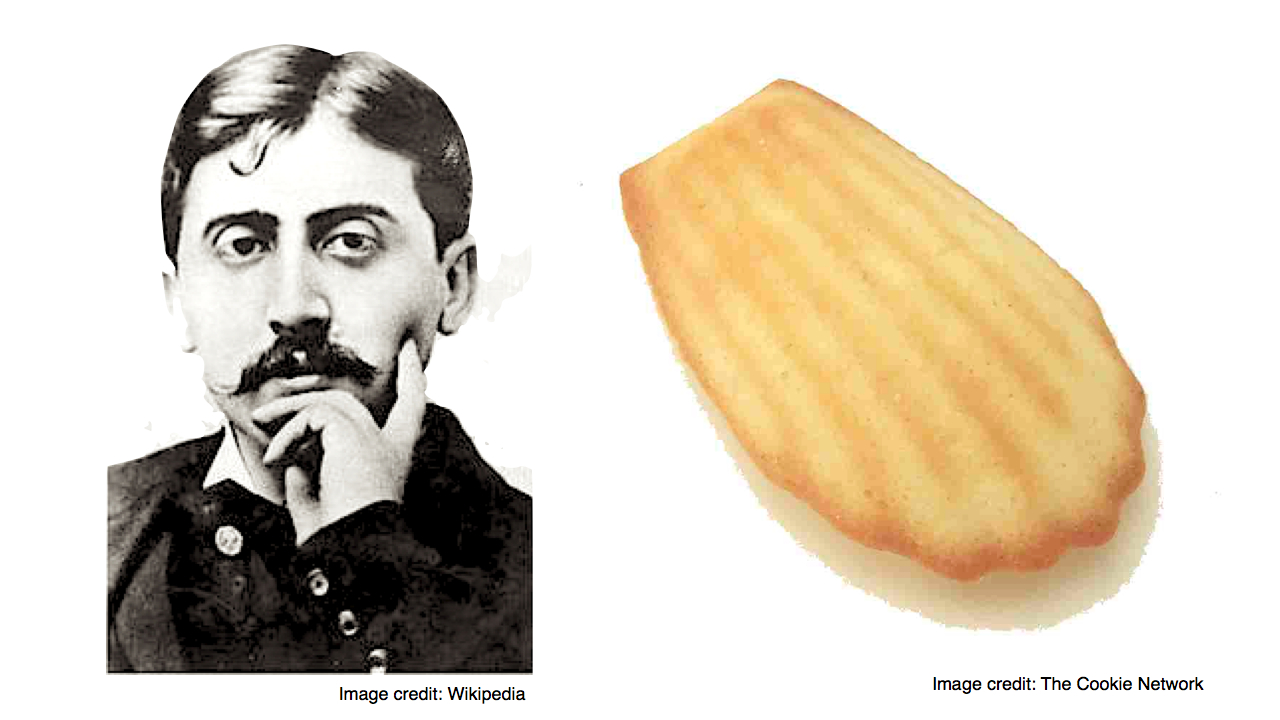
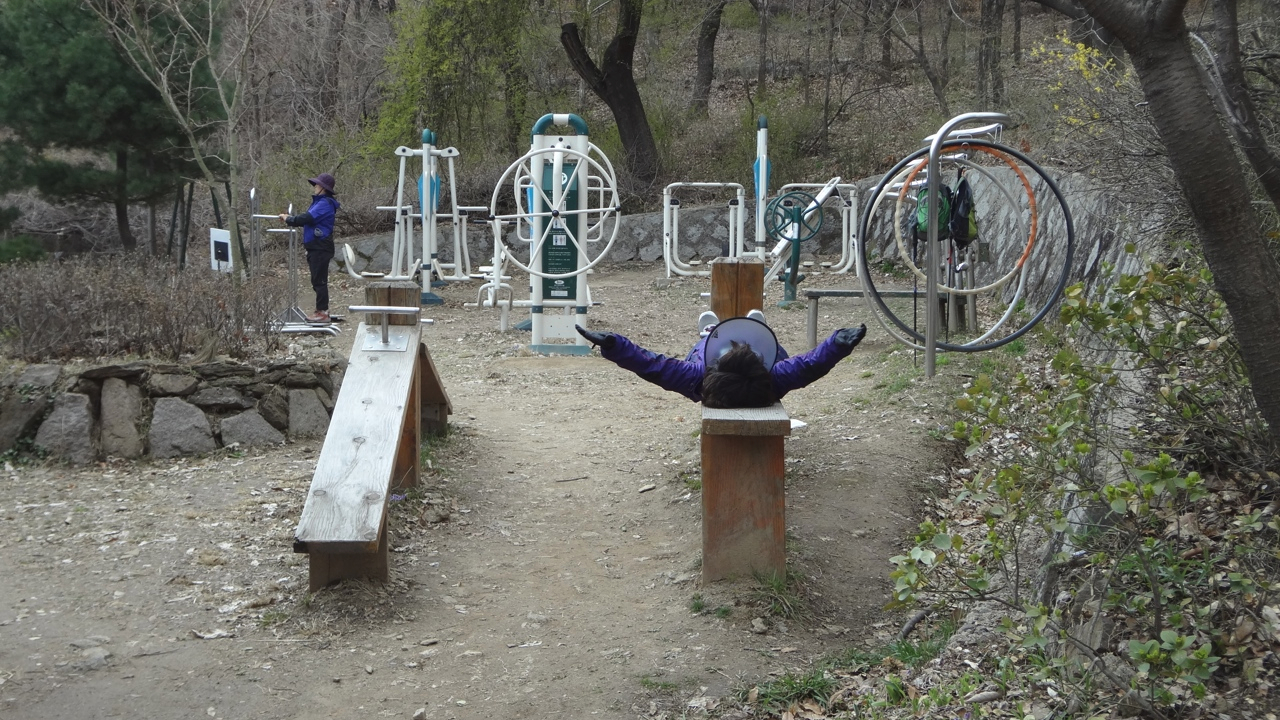
For the next project, I want to first show you this image. Who can tell me what was going on here?
CatherineSarahYoung_ISFtalk.006

Smell and memory are closely interlinked. In neuroscience, we learn that smell is processed in the region of the brain where memory is also processed. This explains why we can unearth deep-seated memories from decades back.

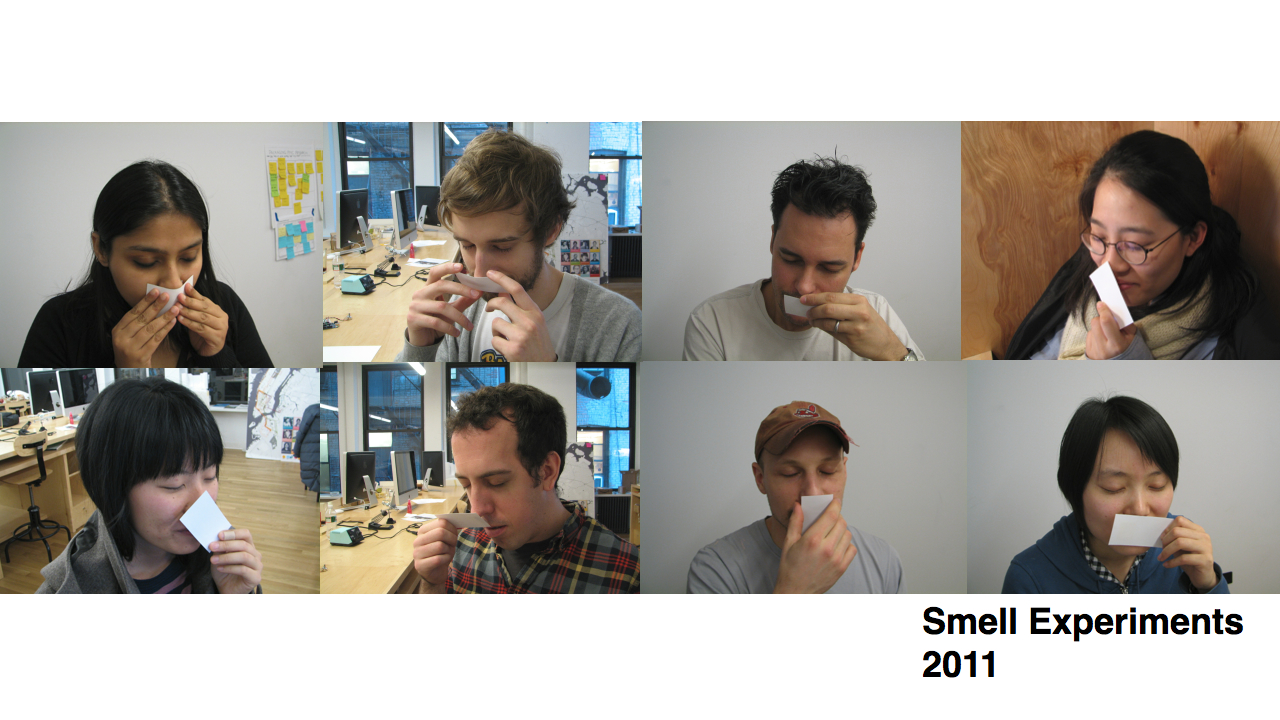
I’ve been doing experiments on olfaction, where I ask people to smell these pieces of paper with microencapsulated smells, so they’re very concentrated. Afterwards, I ask them what memory came to mind. The results were very surprising, because many of them recalled memories from a long time ago, as far back as twenty years.

CatherineSarahYoung_ISFtalk.007

I was inspired by the results, so I created an Olfactory Memoir of Three Cities I’ve lived in – Manila, New York and Barcelona.

CatherineSarahYoung_ISFtalk.008

It contains printed smells with my memory of the place. Of course, if you smelled this book, you have your own memories of the smell, and this creates a conversation among those perceiving art.

CatherineSarahYoung_ISFtalk.009

So from this project, I learned that sculpture can go beyond sight, which is the most overused and oversaturated sense, at least for us who are not visually impaired. With smell, sculpture can be remembered longer, and the memory of the art persists.

CatherineSarahYoung_ISFtalk.011

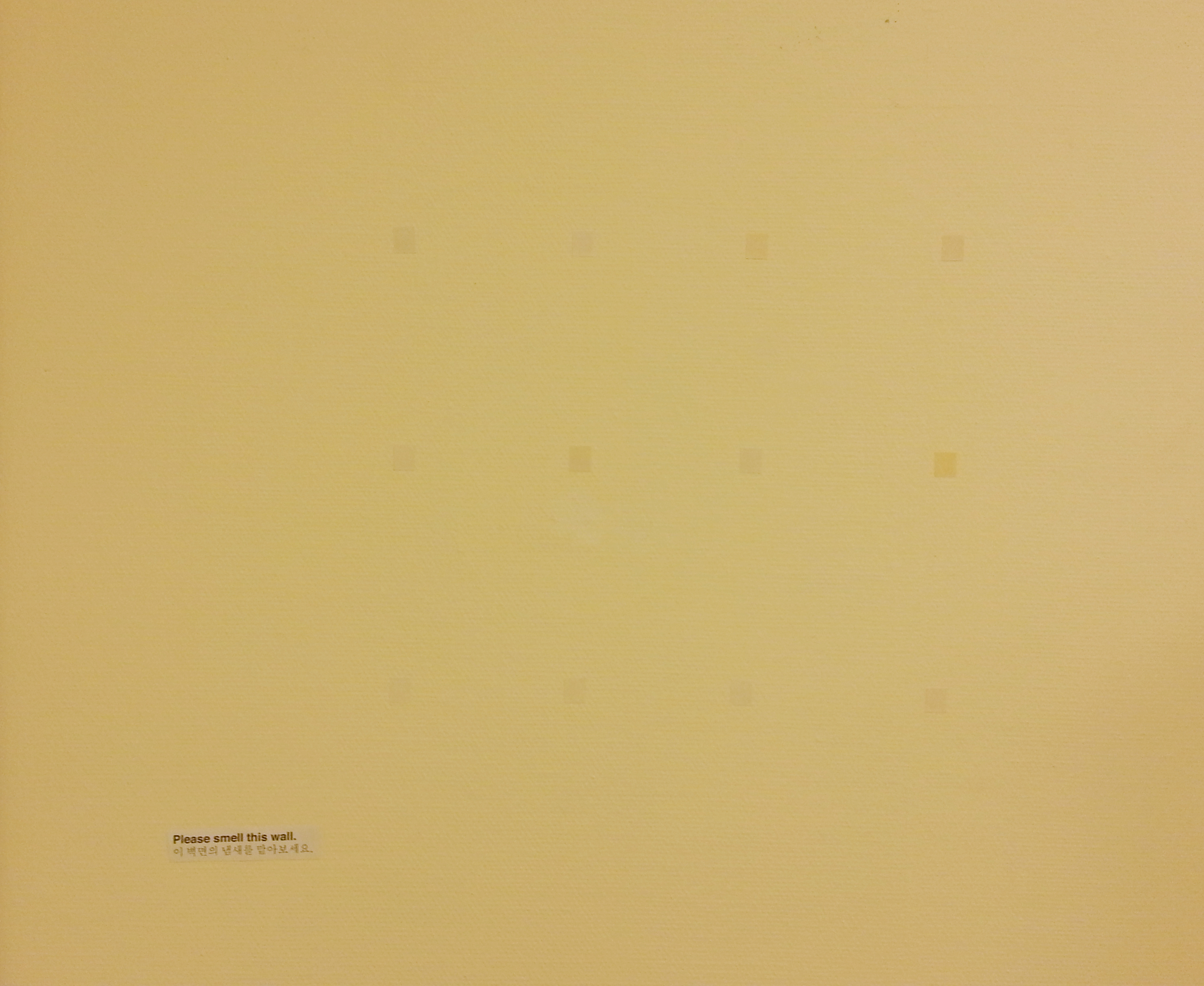
For this exhibition, there is a little wall of smells with twelve different smells on it, which you can sniff.

3. We can enable the audience to create his own experience with art.

Mondrian Hopscotch II
During my residency in Changdong, one question I wanted to explore was, Can you play with art?
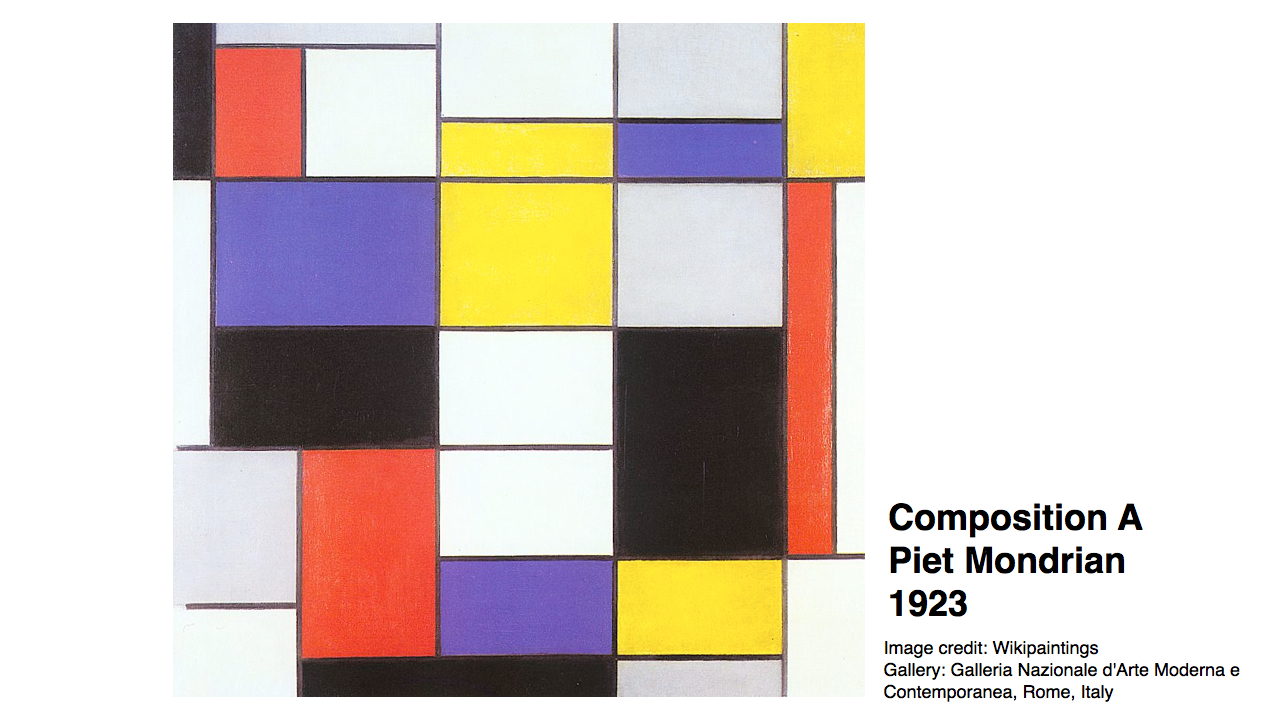
So I created this hopscotch board in the style of Piet Mondrian, whose aesthetic is well-known and almost lends itself to the framework of a hopscotch board.

CatherineSarahYoung_ISFtalk.012

CatherineSarahYoung_ISFtalk.013

I believe that my primary audience is children, so I invited some elementary schoolkids near the studio to play with the art.

CatherineSarahYoung_ISFtalk.014

CatherineSarahYoung_ISFtalk.015
This taught me that sculpture can be played with, and in the course of playing, each person creates his own experience with art.

CatherineSarahYoung_ISFtalk.016

4. Sculpture can build communities

Seoul37
I’m in my fourth month of my residency here in Korea, and among the many things that fascinate me is this.

CatherineSarahYoung_ISFtalk.018
The hiking culture in Korea is truly mind-blowing to me, and has led me to investigate the people doing it—mostly your elderly, the economics behind it—the fashion industry from high end places such as the North Face to the cheaper ones like those in Dongdaemun markets, to the exercise machines I see.

CatherineSarahYoung_ISFtalk.019 CatherineSarahYoung_ISFtalk.020

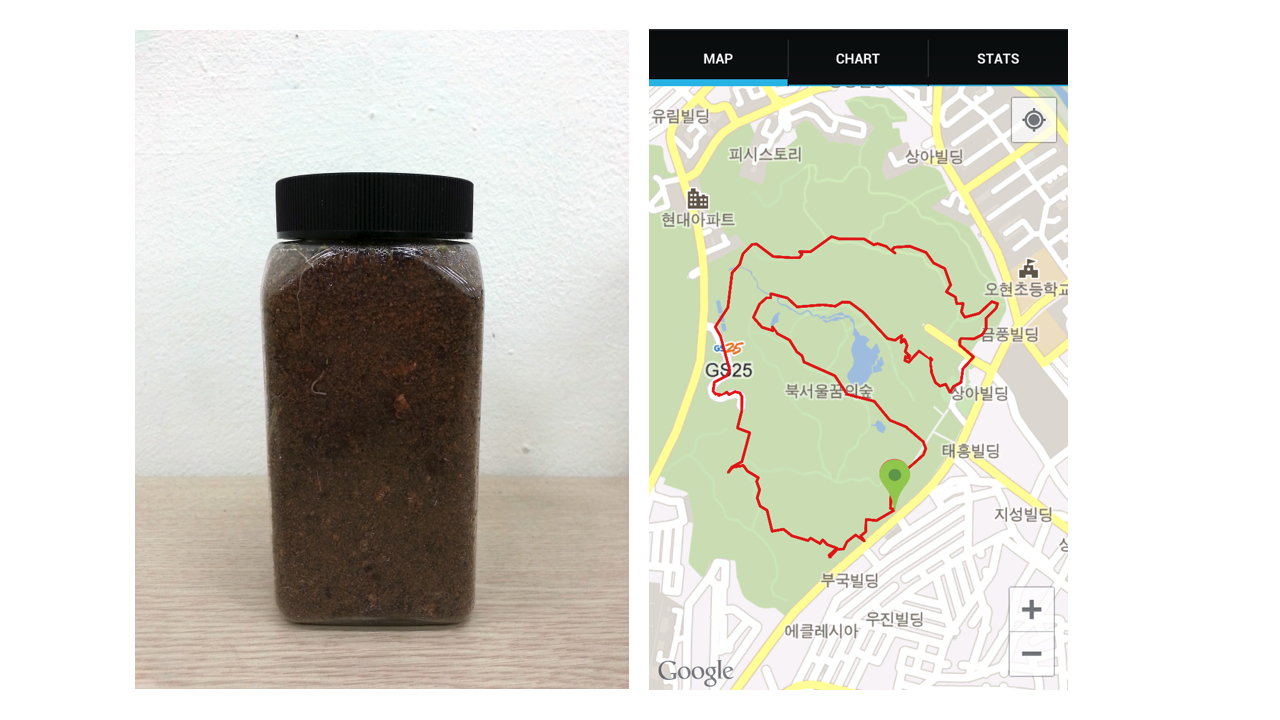
Midway through my residency, I learned that there are 37 mountains in Seoul, and I decided to hike all of them. During each hike, I borrow a small jar of soil and track my hike with a smartphone app.

CatherineSarahYoung_ISFtalk.021

The goal here is to hike all 37, take soil, and for the next time I exhibit this piece, get the audience to plant using any mixture of soil from all these mountains. After the exhibition, I hope to get 37 volunteers to plant these flora back to all the mountains, thereby returning the soil to where it came from.

CatherineSarahYoung_ISFtalk.025

I’m interested in the idea of the earth giving me material, and instigating this human intervention that does something positive to a community and also to the earth. I’m also interested in doing a big project that is ephemeral. From this project, I see potential in sculpture that can help build communities, with consequences even after the exhibition.

CatherineSarahYoung_ISFtalk.026

Thanks very much.

CatherineSarahYoung_ISFtalk.027

Growing up on dragon and lion dances during Chinese New Year, I love looking at the often modern footwear of these traditional practices. During this year’s Lotus Lantern Festival in Seoul held the week before Buddha’s birthday, this dragon’s feet caught my eye:

Odd pair out

Odd pair out

Spot the colored ones in the middle!

This festival would be incomplete without lions frolicking about:

DSC05177

Besties.

Roar!

Roar!

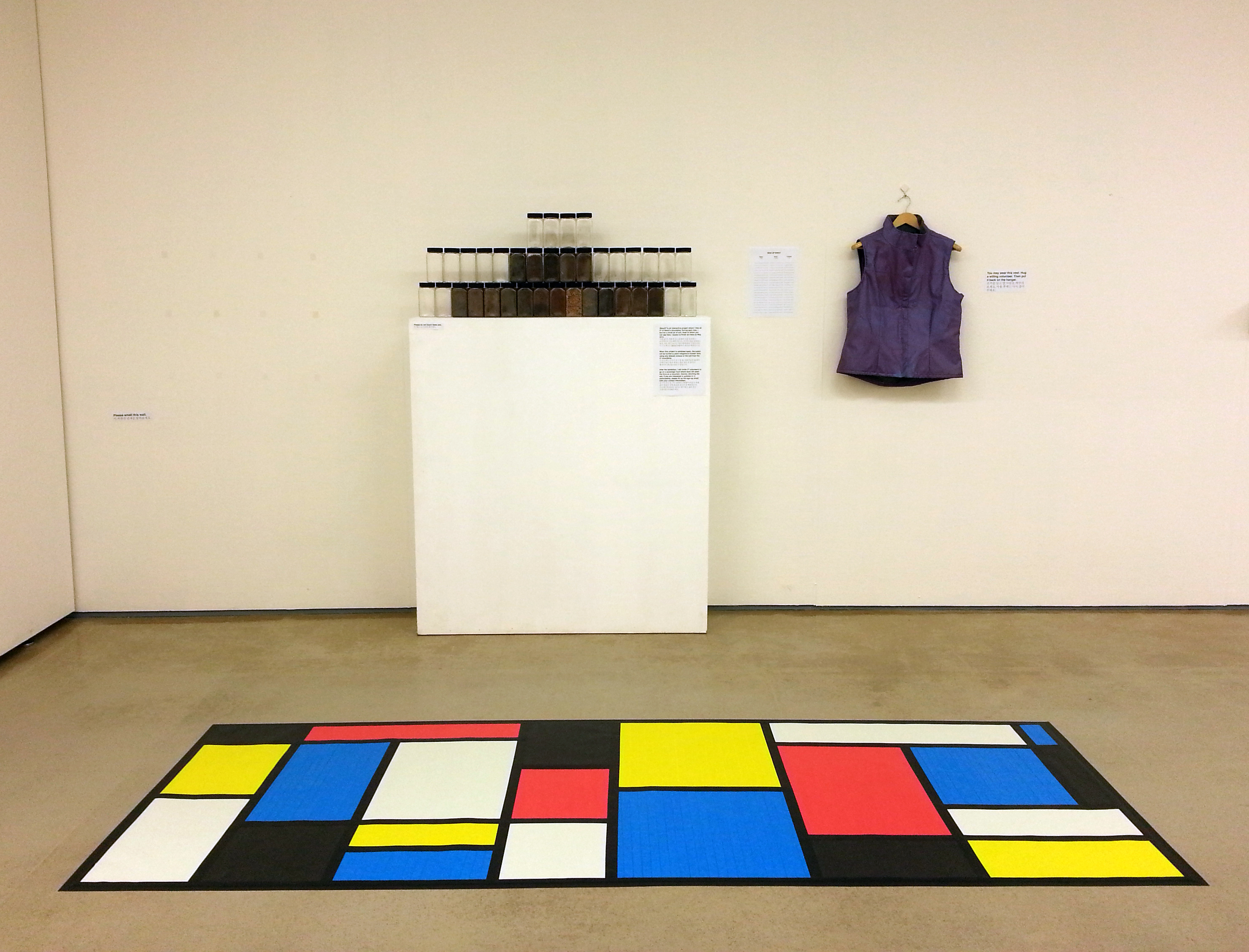
It’s post-exhibition at the International Sculpture Festa 2013 in Seoul. While installing my exhibit took hours, taking it down last Wednesday took a mere 30 minutes. Here was how it looked:

Oh hey, you.

Oh hey, you.

I exhibited four pieces:

1. Seoul37

This is the main project I’m doing in my residency at the National Art Studio in Korea. This country has quite a lot of mountains, and they have been its foundation. Despite Korea, especially Seoul, changing so much in the past centuries, these mountains have withstood the test of time. I became fascinated with them (there’s quite a strong hiking culture here), and, upon learning that there are 37 mountains (or hills) in Seoul, decided to hike them all. Yes, ALL. I track each hike with a smartphone app and borrow a jar of soil. During our exhibition here at the National Art Studio, I will invite people to plant using these soil samples I have collected, and will ask 37 volunteers to plant them back to the mountains.

An earlier image of the piece

An earlier image of the piece

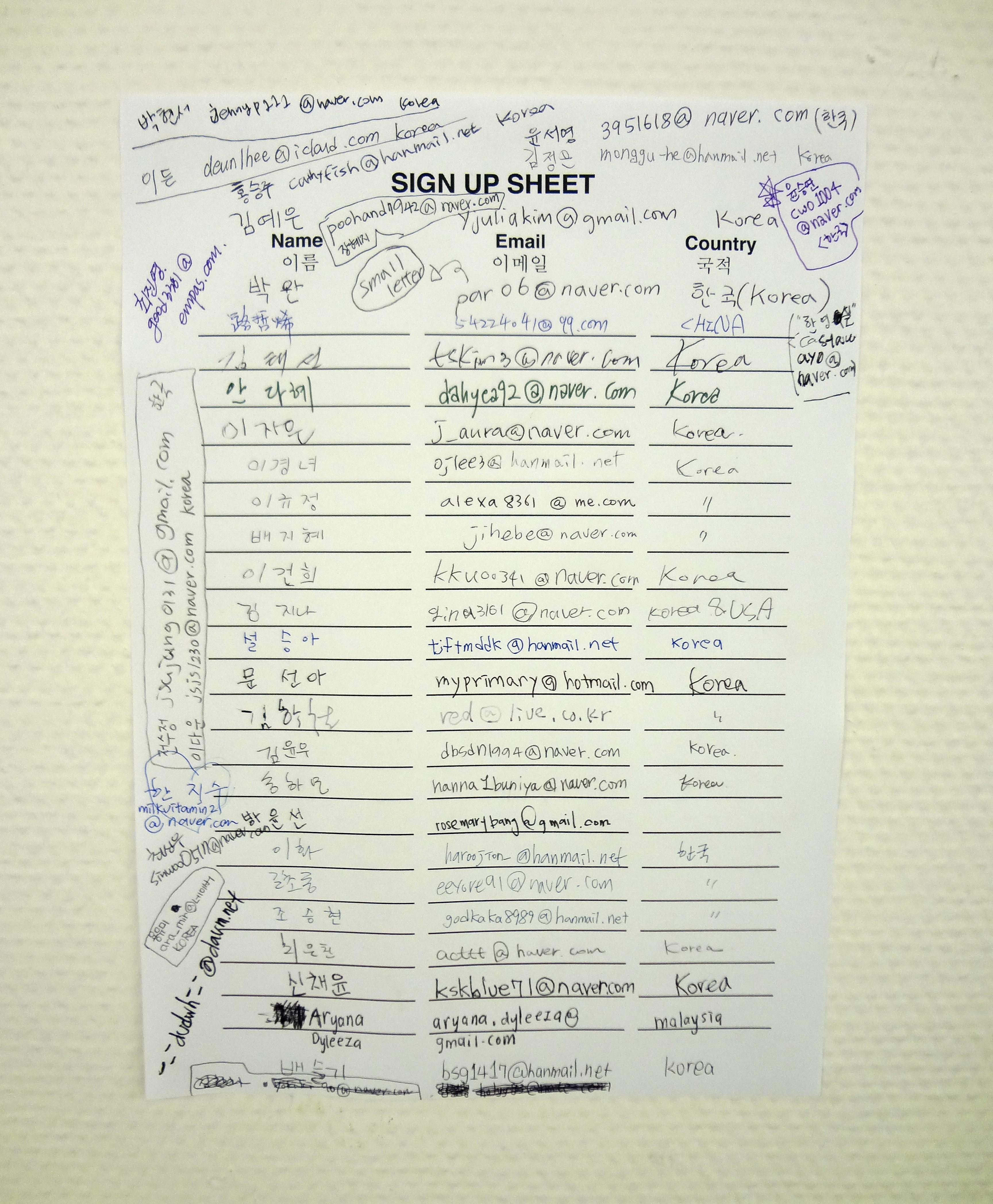
I was about midway through the hikes, and exhibited 18 soil samples, with 19 empty jars to show the ones I still have to hike. (As of this writing, I have hiked 27 mountains and nearly died from two.) More information to follow, and no, I don’t usually exhibit things that are not finished, but here I wanted to ask for future participation. I’m very happy that Seoulites seem interested in signing up (I posted a sign-up sheet beside the piece and so many emails were written on it.)

I... whoa! I'm speechless. Thanks, everyone!

I… whoa! I’m speechless. Thanks, everyone!

2. The Smell Wall

I glued twelve squares of different smells on the wall and invited people to smell them. It looked almost invisible, but I suppose that’s the point.

Can you see twelve squares?

Can you see twelve squares?

3. Mondrian Hopscotch II

I made another interactive hopscotch board that would fit my exhibition space. I loved seeing people, especially children, jump on it. On May 5th, which was Children’s Day, it was incredibly rewarding seeing parents with their dressed-up children playing with it. Aww!

Cutie on the board!

Cutie on the board!

It’s quite fun having to write down instructions for every piece.

Art with instructions.

Art with instructions.

4. The Hug Vest

This is a vest made of thermochromic fabric that changes from purple to blue when you touch it. This feels a bit vintage to me now, since this was designed during my grad school years. However, people always get a kick out of seeing it change when it’s touched. Oh, the history this vest has had—from the nights in SVA IxD, to the conferences and lectures, to me using it on the streets of New York as protection from the cold that week when I was freezing and desperate, to being exhibited here in Seoul. This never gets old.

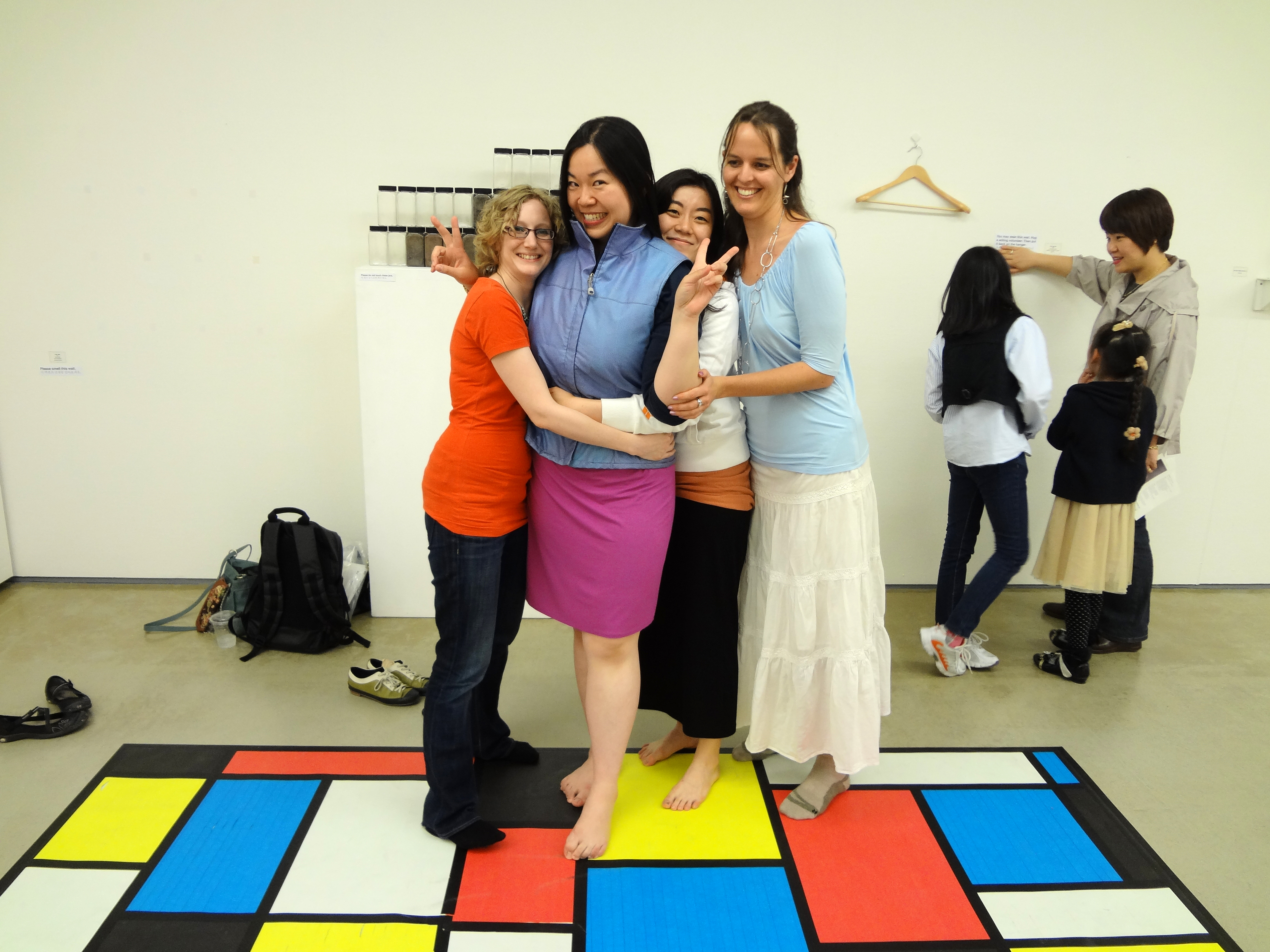
Hugging! With my friends Hyomin and Amy in the background.

Hugging! With my friends Hyomin and Amy in the background.

My friends were laughing at the phrase “willing volunteer.”

"Willing" being the operative word.

“Willing” being the operative word.

Very happy to have my friends there:

Group hug!

Group hug!

Thanks for coming, unni! <3

Thanks for coming, unni! ❤

Fun times. Now back to work.