Archive

Journal

(Medellin, Colombia)—It’s my first time in Colombia (and actually, South America). For a week in Bogota, I sat terrified in the back seat of taxi drivers who went through the manic city as though they had a death wish. I stuffed myself with arepas, almojabanas, and pan de queso, without the usual reaction I get from wheat bread, because—whee!—these puppies are gluten-free. I walked through the cobblestoned streets of La Candelaria, full of history and stories and tourists and kitsch, feeling as though I were back in my birthplace of Manila.

Walking the streets of La Candelaria in Bogota

Walking the streets of La Candelaria in Bogota

Colombia and the Philippines share very similar stories. Both countries were Spanish colonies, are very diverse in terms of landscapes, flora, food, and people, and have had histories of unfortunate violence. Filipinos are often considered to be the Latinos of Asia, and in fact many Colombians and Filipinos look a bit similar. Heck, they definitely look more Filipino than I, the apparent ambassador of Chinese, Korean, and Japanese faces. Food is similarly rich in meats and rice, though these people use way more avocados than I ever have.

Colombian graffiti

Colombian graffiti

I stick out like a sore thumb with a neon Band Aid here. Perhaps I look Colombian from the back, since they mostly have black hair as well, but spin me around and wham, awkwardness ensues. The only Asians I have seen so far are the two Korean tourists I saw in a Juan Valdez Cafe across the street from the Museo de Botero in Bogota, their hiking clothes a dead giveaway; and the Taiwanese woman who works in the vegetarian restaurant across the street from Casa Tres Patios, one of my two hosting residencies, in Medellin. At least they only look and don’t touch, I tell myself silently, sending mental shade to other places where I experienced more harassment.

Are those Asians I see behind my arepa?

Are those Koreans I see behind my arepa? Wassup, guys!

Colombia is gritty, its winding streets filled with stories of past violence, old but not forgotten, with its gnarled fingers clinging to the skirts of the new and young wave of modern and forward-thinking attitudes. It has surprised me so many times, from the first day in Bogota where I saw people betting on guinea pigs, to the free admission of its beautiful museums, the varying climate of Manila-esque heat in the city of Medellin to the stark cold of its surrounding mountain villages. It feels like Manila, if Manila had better urban planning and more condoms available. I am obsessed with their indigenous cultures—these ancient tribes have adapted for centuries and are still here!— and I even bought myself a pet ocarina (a type of flute) from their archeology museum. His name is Puck, and I can’t wait to do this residency with this little guy.

2016-06-07 09.24.30

Buenos dias, Puck! Vamos a trabajar!

I am won over by the warmth of the people here. At Casa Tres Patios, I average seven morning hugs a day. There is almost always cafe tinto on the stove; I will never complain about the coffee here! There are more bridges that connect us than walls that separate us; Tony, the director of Casa Tres Patios, was also a Fulbright scholar and has a third degree black belt in taekwondo (I have to prevent myself from bowing—good God, my tic of bowing all the time!), and Sonia, their general coordinator, speaks better Mandarin than I do, owing to two years in China. People have been very kind, in spite of the language barrier I am determined to bridge. Both Platohedro and Casa Tres Patios have been incredibly supportive, and the vibe of both residencies have been very homey for me, a nomad with a broken suitcase. Speaking with my Spanish, rusty and with a Castillian accent, feels like riding a bike (if I rode bikes, ha). If you want to make a Latino giggle, just thank him with a Muchas grathias. And if I finally succeed in rolling my r’s instead of gargling them, I will get back to you.

2016-05-31 11.01.25

Hello, Medellin!

I can’t not tell you why it was important for me to be here: because I’ve never been. It was a logical nightmare to get me all the way here from Asia, but so many people have helped bring me here, and I dare not waste a minute. Well-meaning friends have cautioned against my coming here, fearing for my safety or because of ignorance against Colombians and Latinos in general. In a world full of increasing hate and higher walls, which is even more terrifying in light of the borders we build around ourselves and the environment (hello, climate change), the only way to cure one’s anxiety against his unknown fellow human beings is to get to know them.

It’s my first time in Colombia, and man, I’m thrilled to be here. The Apocalypse Project will have an amazing time.
Patterns. Our lives are ruled by these. By routines, by threads of familiar incidents that repeat themselves in some form.

Since 2013, I have noticed one grim thread: Once a year, I keep facing the possibility of death. I don’t think this is happening on purpose, or that anyone is after me. I think these events are just caused by an odd coupling of bad luck and not thinking clearly because of stress. They’ve happened enough to me that I’ve started to call them NTEs, short for Near Tragic Experiences. Here is a catalog of these so far:

NTE #1: A Close Call on a Mountain (2013)

Thank you, Buddha. Really.

Thank you, Buddha. Really.

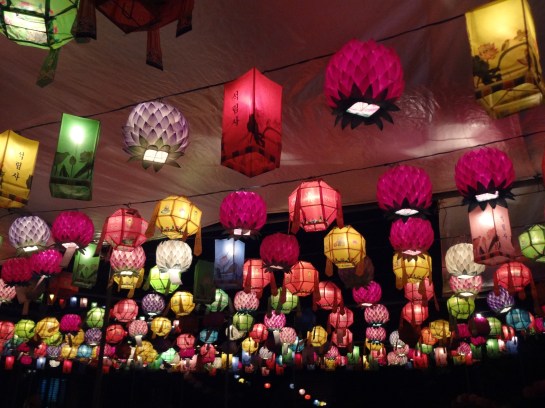
In 2013, I thought I was going to spend the last minutes of my life on a mountain. I was hiking for a project, and, thinking it was a day hike, packed accordingly. Unfortunately, it was a bigger mountain than expected and I didn’t beat the sunset upon my descent. I spent about 10 to 15 minutes blind in the pitch-black mountain. Branches scratched my face. My arms flailed wildly. I thought I lost the trail, but I knew there was a temple nearby. With my feet, I gauged where the trail was sloping down—surely it leads to an exit!—and saw a flickering light on the corner of my eye. It was too early in the year for fireflies. I followed it and saw that it was a lantern. And in fact, I had found the trail and the rest of it was lit by lanterns because the temple nearby, usually dark and closed at this time of the night (because hello who hikes at this time of the day), celebrated Buddha’s birthday on that day. It was May 17th, 2013.

(I previously wrote about this, which you can read here.)

NTE #2: Almost Burned (2014)

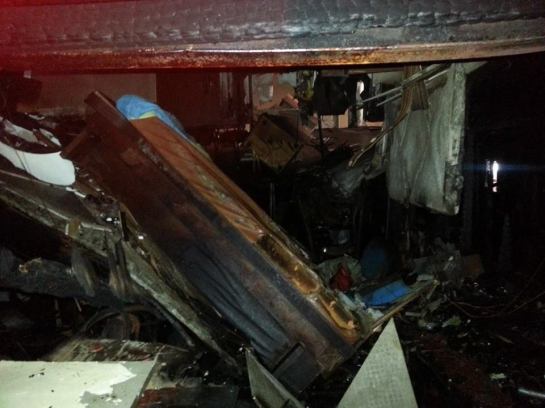
Last year, I moved to Manila and lived in a hotel. Pro: It was near my family’s house, it was convenient, it was near my dojang. Con: It was in the red light district, I would wake because of people next door getting busy or fighting, the infrastructure wasn’t fantastic. Manila is not the easiest city for me to live in, but I had to hit the ground running for an art residency and my first solo exhibition. At the end of six months, I was unhappy, felt completely voided of energy, and was wondering what to do next. One night, the cafe right below my room caught fire, and we had to evacuate. Hours later, I watched the old building burst into flames. We got out just in time. This was what was left of my room (actually, that’s the cafe; the room caved in and the bed went through the floor).

What could have been my coffin. It's awesome to be alive.

What could have been my coffin. It’s awesome to be alive.

Unfortunately, one thing I learned that year is that when you think you can’t feel any lower, you actually can.

NTE #3: Nearly Suffocating in a Public Bath (2015)

Everything was fabulous. Until my vision started blurring.

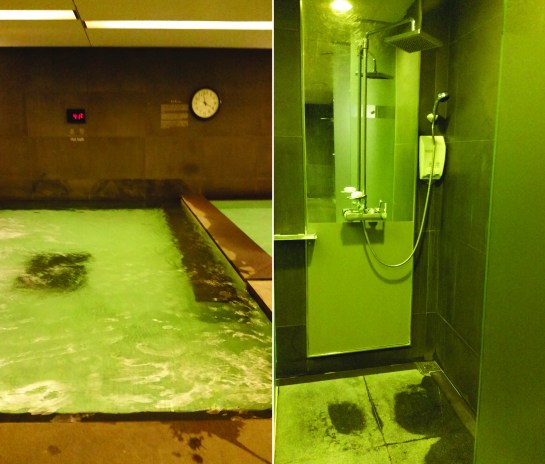
Everything was fabulous. Until my vision started blurring. On the left is the *amazing* public bath and on the right is the shower where I was puking my guts out.

In a visit to South Korea, I spent my last day in one of their public baths. It was a jimjilbang in an airport. How convenient! It was starting to freeze in Seoul, so I was immensely joyous at soaking in water that was heated to 41°C. Perhaps I was in there for too long or perhaps the sudden changes in temperature were too much for me, but when I went into the shower I started feeling faint. My vision started blurring, my chest started to tighten, and I had a seriously hard time breathing. Just before I passed out, I willed myself to breathe and to sit down. A few minutes of wheezing and vomiting passed before I finally left the shower where I met three Korean ajumma (middle-aged ladies), who looked annoyed at how long I stayed there. Still dizzy and nauseous, I bowed multiple times and apologized sheepishly while I tried to hold myself on a wall. They gave me the Unblinking Ajumma Death Stare. You Koreans know what I’m talking about.

I find the sauna story hilarious now but at that time, I really thought I was in deep shit.

Each time I faced these events, survival instincts kicked in. “I refuse to die in the dark on a mountain/in a hotel in the red light district/nude in a bath with all of these other naked people!” I think going through these things sucked, but all things considered I’m pretty satisfied—proud, even—of how I handled myself. No screaming or hysterical sobbing or anything. I just remember the realization in my head that “Shit, so this is how it goes down.” I also remember mentally telling myself, “Don’t panic. Breathe.” And what went through my head when I was out of danger: “Bitch I’m alive! Woohoo!”

Actually, during and in the immediate aftermath of nearly falling off cliffs, or burning to death, or asphyxiating, I remember some of my taekwondo teachers (in particular, their voices, especially when they were screaming commands), mainly because they’ve prepared me for situations like these, although ugly wheezing in a public bath probably wasn’t on their list of what-ifs. Martial arts is the life blood of everything I do; I can’t do my work without it. I was never the best in my classes—I was just the one who kept showing up. And hey what do you know? It actually does save my ass from time to time. Thanks, guys!

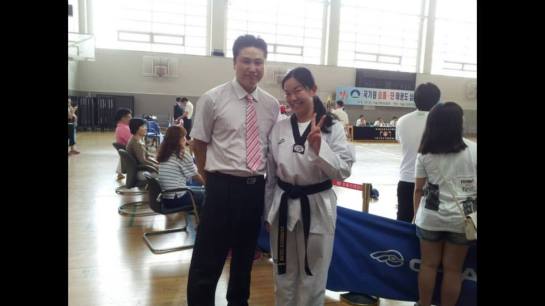
I've had over 30 teachers, but this is the only photo I have with any of them in uniform. Hmm.

I’ve had over 30 teachers, but this is the only photo I have with any of them in uniform. Hmm. This was right after a test, which explains why I’m so sweaty.

Some things changed in me as a result of facing mortality every year. I give less time to things and people who don’t matter. I make decisions faster. I work on as many creatively fulfilling projects as possible because they might be the last. Facing tragedy gives a layer of clarity to one’s life and perspective. It brings a sense of urgency and purpose to my days. Each time I wake up, I want to make it count. (On a lighter note, I also feel it gave me heightened senses. Not like a spider sense or anything, but I pay more attention to the time of the day, how the air smells, my pulse, etc. I also felt that these events made me a better artist and writer, because there’s a greater range of human experience I can draw from. Bitch, I’m alive.)

Now I know close calls happen to lots of us, but in my case, as they happened to me for the past three years straight—the life-flashing-before-my-eyes bit and all—I’ve decided, surprise, surprise, to turn it into a project.

Anyway, one thing I started last year was to send cards to my friends during the holidays. It really helped to be in touch with my friends from all over the world, especially when I had a serious case of PTSD and depression after the fire. I had friends calling me from overseas and messaging me online because they were afraid for my mental health. (Frankly, so was I.) This was around November and so I got the idea of writing to them—sort of a thank you + Hey Happy Holidays in one go. I’m not much into gushy letters so I decided to let the physical form of the card reflect the time it took to make it.

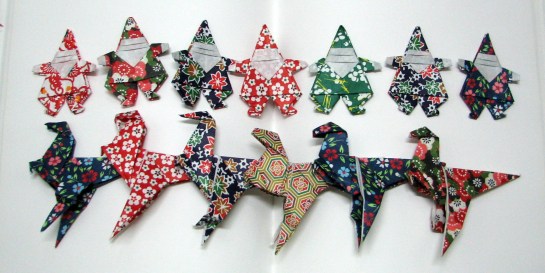
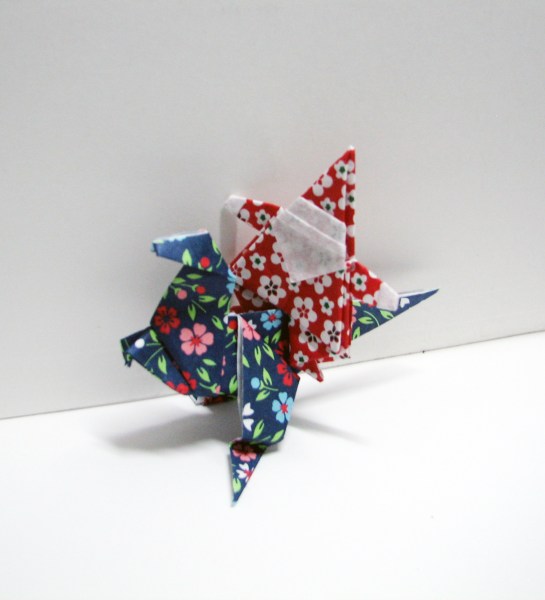
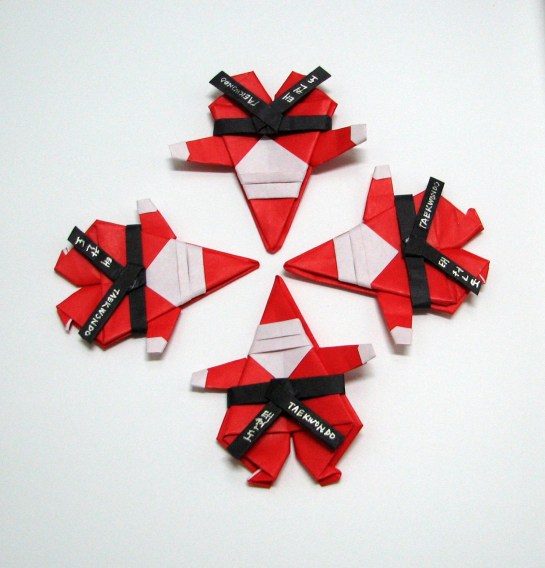
Last year’s card was an origami Santa Claus on a velociraptor. But why not.

My fleet of Santas and velociraptors is complete.

My fleet of Santas and velociraptors is complete.


Ho, ho, ho... RAHR!

Ho, ho, ho… RAHR!

I sent special black belt Santas to some of my taekwondo teachers.

TAEKWONSANTAS. yeah!

TAEKWONSANTAS. yeah!

When I got back from Seoul and after the sauna incident, I realized that thanking people every year for being in your life might not be the worst idea ever. Try it. It takes me about a day or two to do everything and I don’t feel like it’s such a burden. I actually felt lighter afterwards, and gratitude is one of the things that can make you happier and live longer. It’s also a good exercise in creativity; a small card is nonthreatening enough to be a fun canvas. Some of my friends don’t celebrate Christmas, so these (and succeeding cards) are meant to celebrate the New Year.

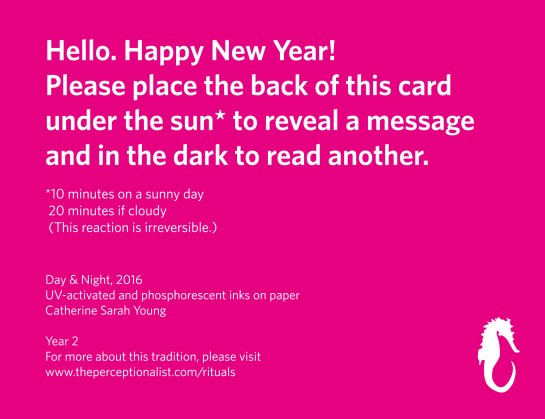
This year, it’s a card with messages written in UV-activated ink (so you have to place it under the sun for 10 to 20 minutes) and phosphorescent ink (so you can read it in the dark). On the front are instructions:

New Year Card revised outlines-01

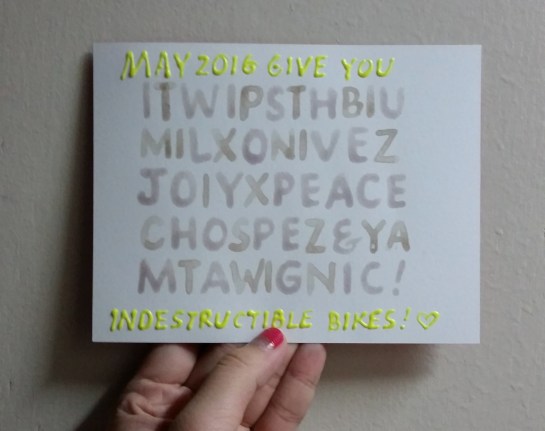
At the back of the card is a message in grey. When you place it under the sun, the UV-activated ink will turn purple. In this card, some of the letters are in plain watercolor so you can decipher the message after you give it a solar bath. The yellow letters glow in the dark.

newyearcardback

So I do this to remember the people I’ve encountered the past year and to let them know that hey, it was good to know you. You know, just in case I lose the “Near” in Near Tragic Experience and one day I won’t have a chance to say it. It’s just a small thank you that I send out once a year. Don’t panic. It’s not like I’m in love with you or anything. Hello. It’s just a card.

To make it worth the postage and the carbon, I will make each year’s card really special and worth collecting. In ten years, if you’ve managed to collect at least 5, let me know and you win a prize! No, really. It’s good for nomads like myself to have relationships that last at least that long.

I’ll post them all on this page as I go along.

The past year or so has seen me venturing into the mysterious field of “speculative design.” In The Apocalypse Project, I’m trying to see possible futures under climate change, which are generally not pretty visions of tomorrow.

There are lessons I’ve learned as well as experiences whose lessons I’m still trying to find. Here they are:

1. Stories rule.

When it comes to something as dry and political as climate change, the best way to get people to care is to let them find a personal story. Climate change is humanity’s story, not just a few individuals’. It is also complex and multilayered; a photo of a melting glacier might trigger the emotions of people living near them, but it might not be as effective to a person who has never experienced a winter. Here in Southeast Asia, I notice that people paid more attention to stories about rising sea levels, extreme heat or supertyphoons, because those are the things that they have personally experienced and have something to say about.

However, this isn’t to say that people in the tropics will never care about polar bears. I think that another property about the climate story is that so many things are connected—a melting glacier may further alarm people who are experiencing drought, for example—and there are opportunities to connect these dots that people never realized existed.

2.  The power belongs to the people.

When people want to buy these hypothetical products, I’m taken aback and get a conscience attack of sorts. My goal was to show people how bad it could get, but instead people’s consumerist tendencies prevailed.

But then, why wouldn’t they want to buy these? I had made them so real that they only thing that was missing was a PayPal button.

I realized the power of people as consumers; the exchange of money for product allows for the existence of these objects. These transactions keep these products—and the ideas behind them—alive. If people refuse to buy the product, then it marks the end of it.

What does this mean for futures? For me, it gives me a barometer to see what types of people are out there. I’ve realized that the point of speculative design is to ignite debate. By making these projects, people have the opportunity to talk about these issues. There are so many opinions out there that

Should I sell these? This is something I keep thinking about. Perhaps letting people buy them allows for even greater awareness, as long as they know the intentions behind it. Let me get back to you.

3. The true test is converting a denier.

The bulk of the people who have emailed me or tweeted about how the like the project are usually futurists, artists, or other people who are already aware of climate change to begin with. While I’m extremely grateful for this, especially for the future collaborations that it could ensue, to put it bluntly these people are already smarties. The next cohort of people that I’ve impacted are the “laymen”—those whose work has nothing to do with design or sustainability, but are folks who can see their personal stories in these projects. I think this is wonderful because I’ve always wanted my designs to exist beyond, well, design. Children have always been among my primary—and usually the sharpest—audience and I usually prototype my ideas on them to see if I’m being too unnecessarily confusing.

Perhaps the pinnacle of “success” in doing projects like this is when I am able to convert a climate change denier. This is the final cohort of people who are going to be the hardest to convert but are those who will give me the greatest pleasure to impact. When the initial wave of press for my projects hit, I get trolling tweets from climate change deniers literally seconds later. It’s usually how I know that my projects are being written about. I would often joke to my friends about how they’re usually just a bunch of old white guys, usually in the US, who’ve never experienced the scale of a tropical typhoon and probably don’t get out much anyhow so who cares. I never engage in them, but the more I think about it, these are the ones that, if converted, means that I was extremely effective in conveying ideas.

But I just think they’re so gross. What to do, hmm. Any ideas?

4. Everyone can contribute to this.

In Future Feast, I got a bit floored towards the end because I truly felt that it was transformative for a lot of people. Having multiple talents together—musicians, artists, designers, scientists, etc.—can feel like high school because they have very different personalities, and I as the one behind this was a bit anxious that the dots wouldn’t connect because everyone had their own vested interest in the project. However, I realized that it was in this multilayered experience that gave people a meaningful experience. In the end, it was great to feel that it wasn’t just my project anymore—it was everyone’s, which was the point.

I’m still evaluating the impact of the work I’ve done in the past few months. Stay tuned here for updates on what’s next, and thanks so much for keeping up with the projects!


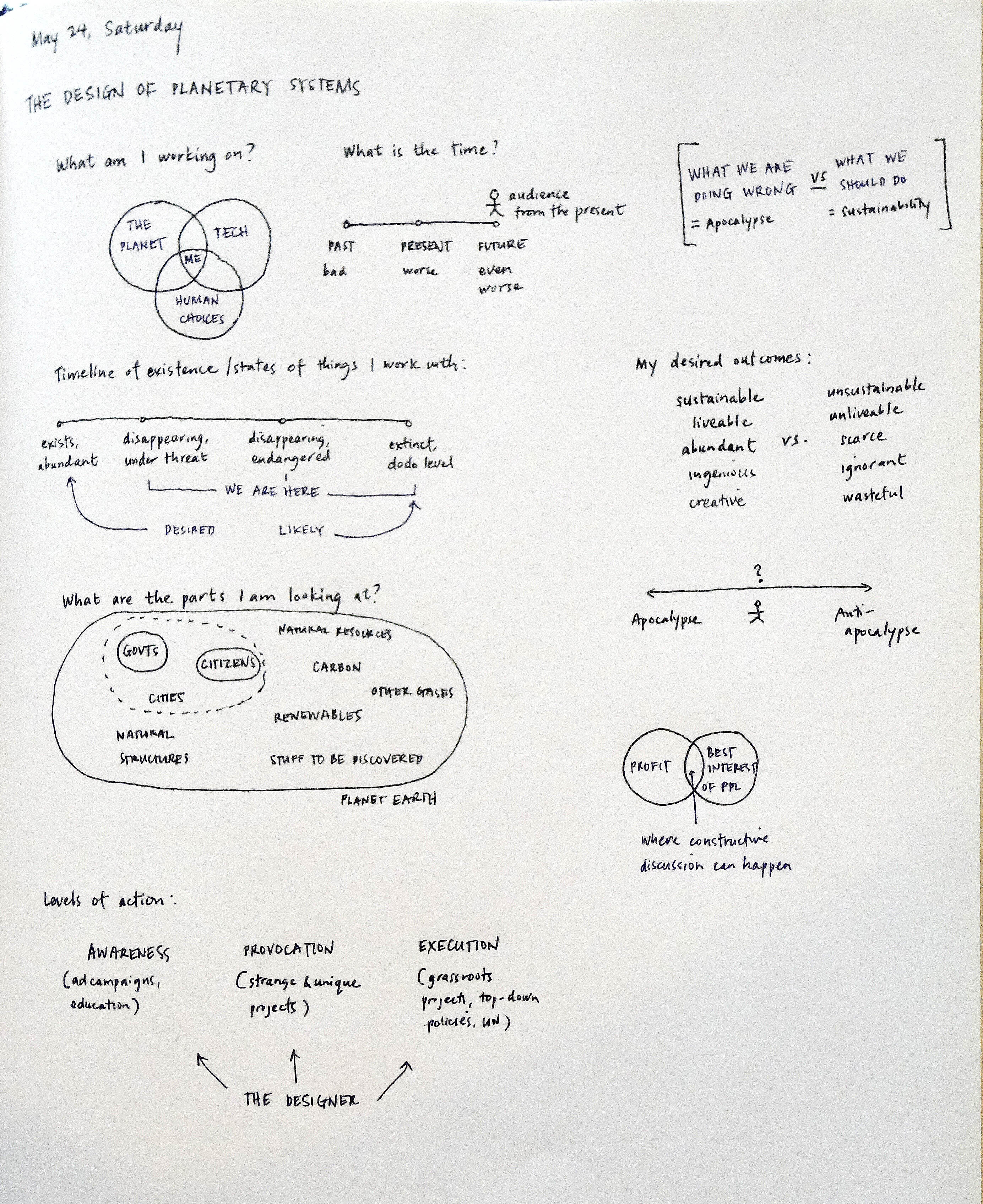
In line with The Apocalypse Project and my future environmental / technology projects, today I doodled diagrams and lines and other things to make sense of what I did, what I’m currently doing, and what I plan to do:

doodling on a Saturday

doodling on a Saturday

Hmm.

DSC08751small

I snapped this photo from Books Actually, a lovely independent bookstore in Singapore.

2013 was the year I turned 30. I feel wise, or perhaps to be more specific, wizened, and thus a recap of “lessons learned.” Ha. Working in the intersection of art, science, and design, I have learned many things both enriching and hilarious from the three primary groups of people I work with. And thus a blogpost to remember. (I identify with all of these groups, so this isn’t a judgy list; I am part of this, too).

1.Everyone desires meaningful work.

2. Everyone desires to be with family and loved ones and to do what really matters to them.

3. Things would work so much better if one person can speak the “language” of at least two disciplines.

4. Artists in black (or clothes stained in their chosen media) and scientists in lab coats (the cool ones would have interesting hair) and designers in plaid shirts and special mention of architects in crisp white shirts. Because fashion.

5. At the end of the day, people are just afraid of messing up and looking like a fool. (Hello, Impostor Syndrome.)

6. Vanity. #Facebook #TrueStory

7. People ranked in increasing order of empathy: scientists<artists<designers

8. People ranked in increasing order of engaging Powerpoint presentations: scientists<<artists <<<<designers. Also: favorite fonts. Scientists: Verdana. (Oh dear.) Artists: Arial. Designers: Gotham, Helvetica, Proxima.

9. People ranked in increasing order of prompt and well-thought-of email I receive: artists<scientists<designers.

10. Every saint has a past, every sinner has a future.

(Note that I only use scientists, artists, and designers to define what people project on the outside. I think many of the scientists I’ve met are also artists—they just don’t have a chance to show that side very much—and many artists are designers, and designers are artists and scientists, and so on. And yes, I suppose this only applies to the artists, scientists, and designers I have met.)

My graduate school alma mater, the MFA Interaction Design program of the School of Visual Arts, recently published 20 Lessons in Interaction Design, inviting alumni to share insights about design and their careers, with some lovely quotes from the faculty. I was Lesson #19. Here is what I wrote, which I will be the first to admit was an episode of me talking to myself:

When I was a student, my self-doubt came from not wanting the same things as my peers. I wanted a life primarily of adventure, of immersing myself in the unknown, and getting through it a stronger person.

You are the architect of your dreams—do not waste any time focusing on what other people want. Make sure that your accomplishments as a student pale in comparison to your accomplishments as an independent adult. I still learn this every day, a year out of school. I experienced a lot of growth in SVA IxD, which prepared me for my present challenges that are making me break even more personal barriers. Two years of graduate school were a valuable stepping-stone; they were a way of filling up my creative arsenal as I venture even further into the unknown.

As I write this, I am on my fourth passport, learning my sixth language, and will soon be living and working in my fifth country. As you enter the real world, if you feel that you are not growing any further—and if this makes you unhappy—it probably means you need to dream bigger.

Visit the IxD blog for more.

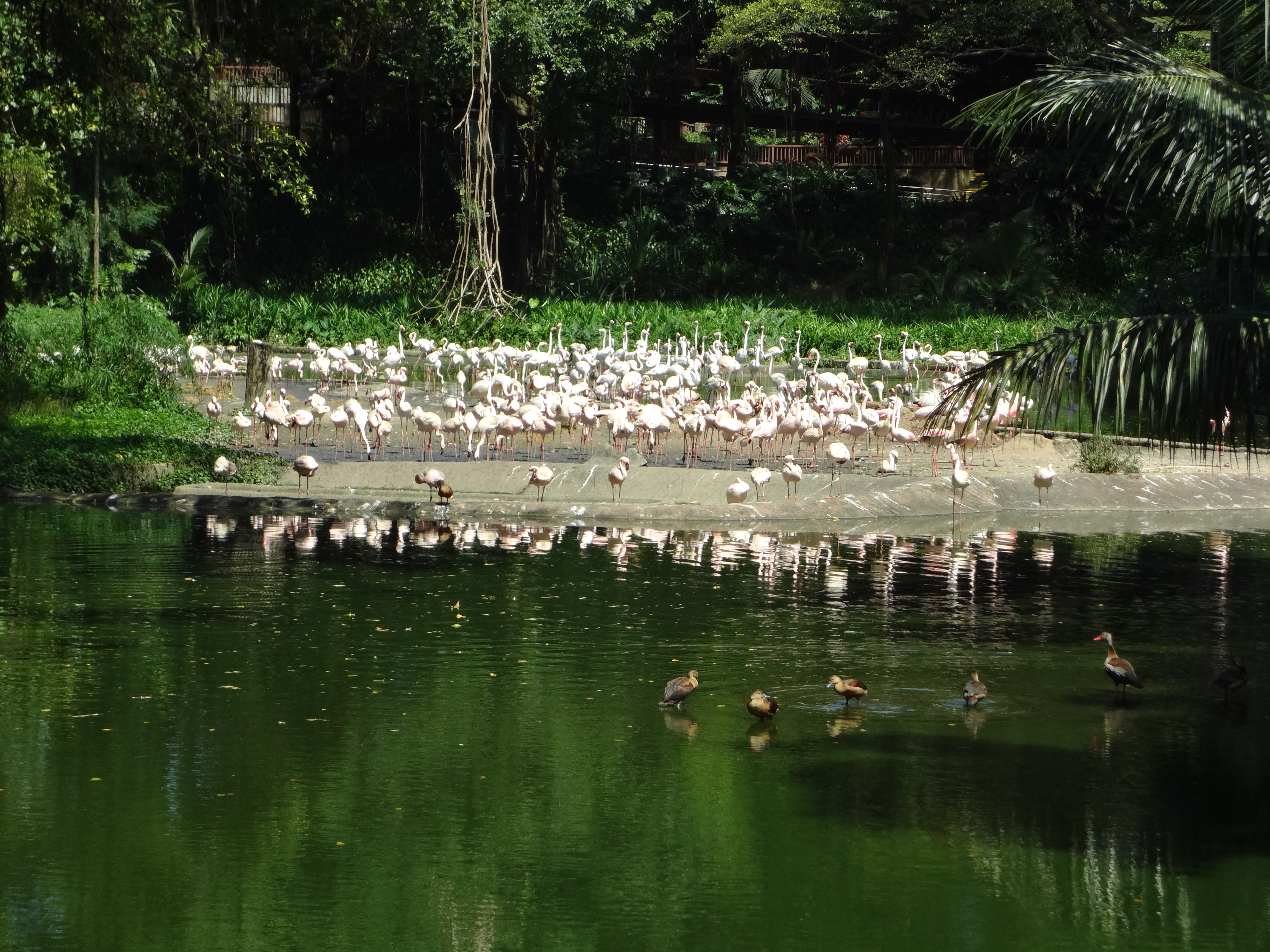
The Holiday Hackathon is an excellent excuse to do all the touristy things in Singapore I’ve always wanted to do but never had the time. Today was a trip to Jurong Bird Park, Asia’s largest aviary.

I had a great afternoon surrounded by beautiful birds and three iguanas sunning themselves. I learned new things—a group of pelicans is a squadron, ostrich only have two toes, scarlet ibises get their color from the carotene in their diet, etc.

DSC09619

DSC09633

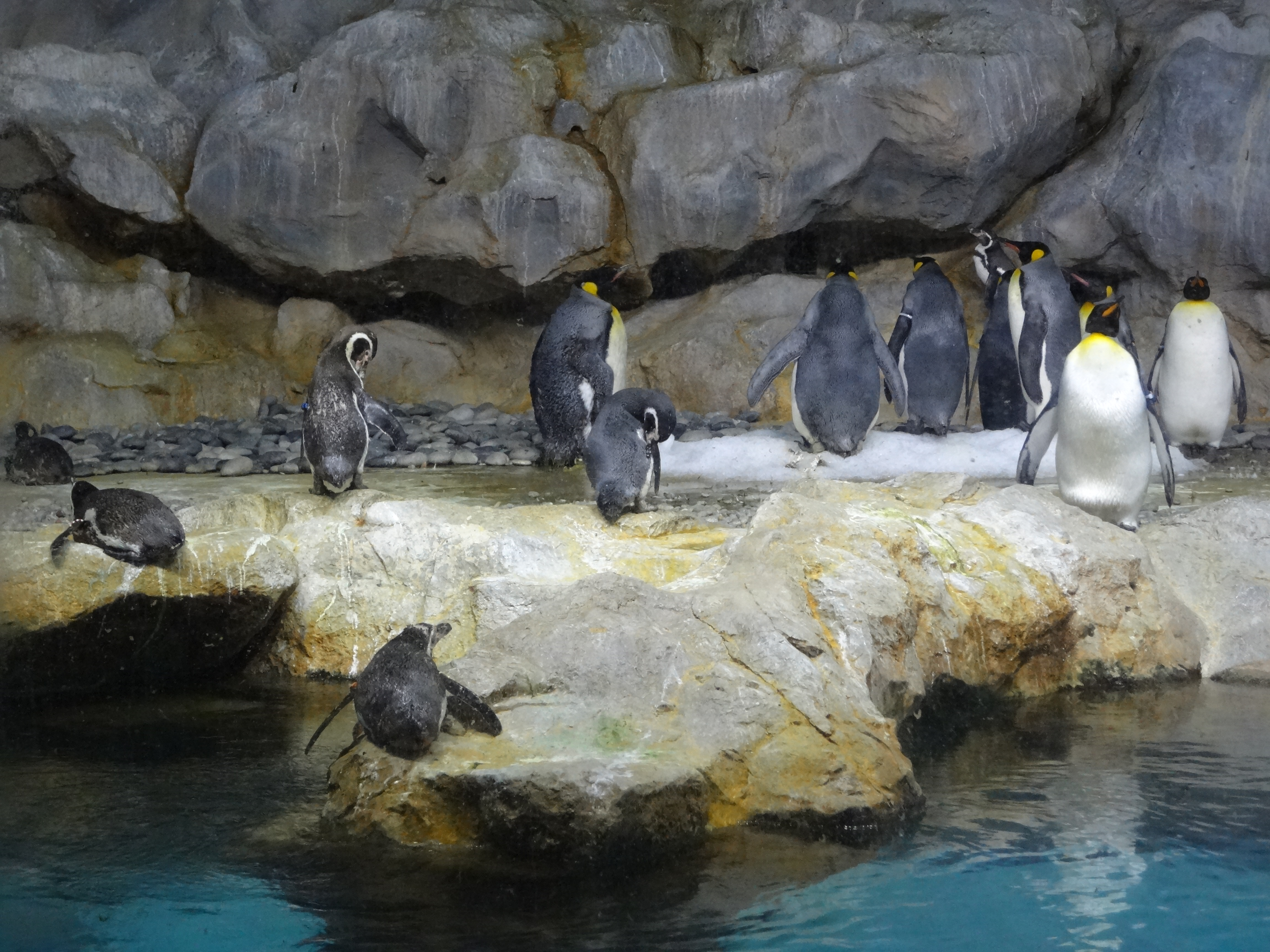
I love penguins, but I do wonder about animals kept in climates obviously not meant for them. This isn’t the first time; in Seoul’s Children’s Zoo, I saw a polar bear and a camel. But if their original habitats are disappearing, is it justifiable that they’re here, fed and watered at least? People who may never get a chance to go to polar regions only have places like these to go to. And maybe it would inspire some kids to be conservationists. I’d love to hear your thoughts in the comments. I just hope these animals are happy.

Penguins. In the tropics. Hmm.

Penguins. In the tropics. Hmm.

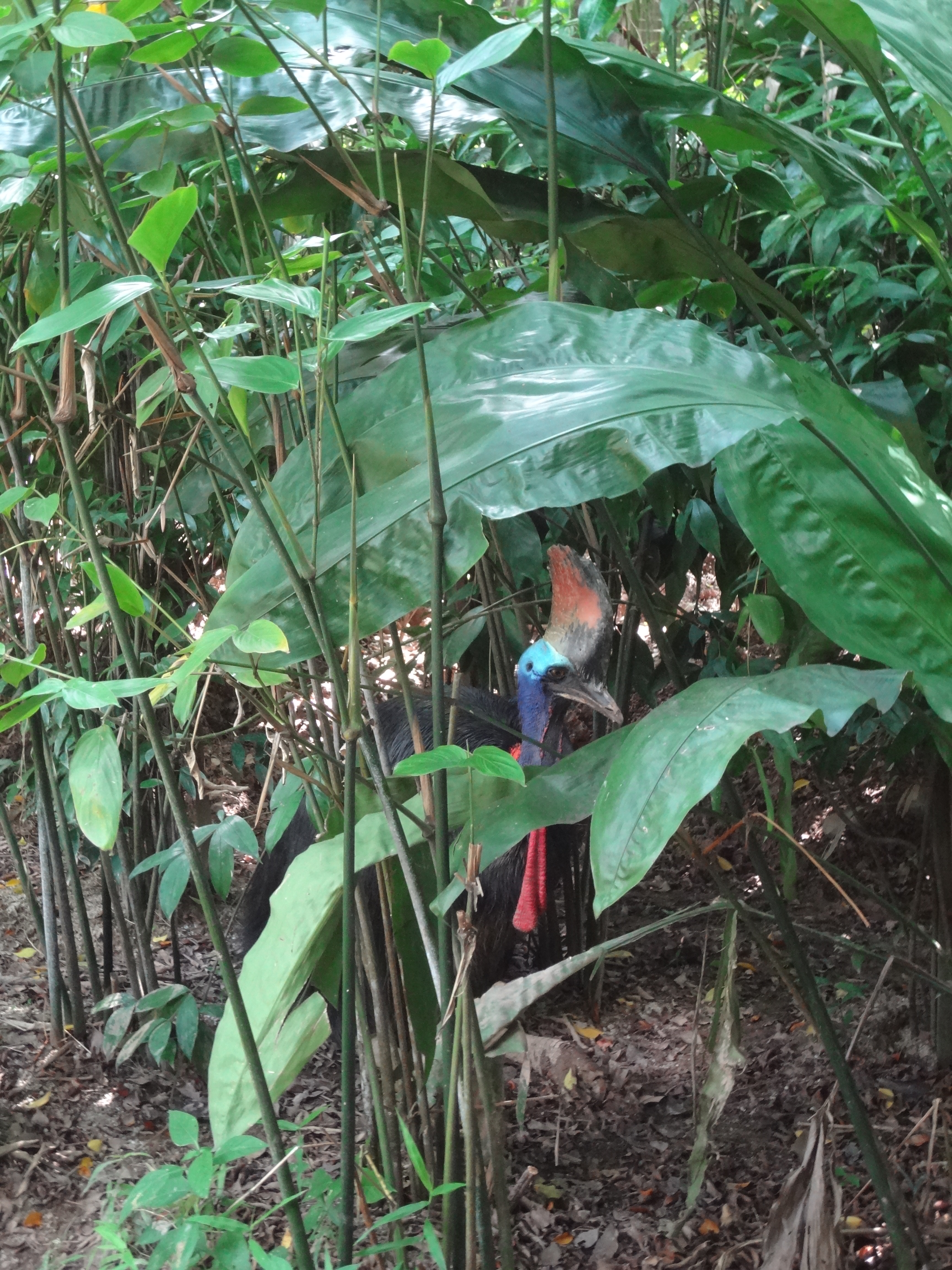
I loved seeing birds I didn’t know existed, such as a cassowary, which is a descendant from the dinosaurs. (Or as I like to call it, a rainbow turkey.) This one was a bit shy. Or perhaps because it was a really hot afternoon and needed the shade.

My first cassowary!

My first cassowary!

Another bird I had no idea existed. Here is a rare shoebill from Sudan. There was only a fence between it and me. It did not look happy to see me. Or did it?

A rare shoebill.

A rare shoebill.

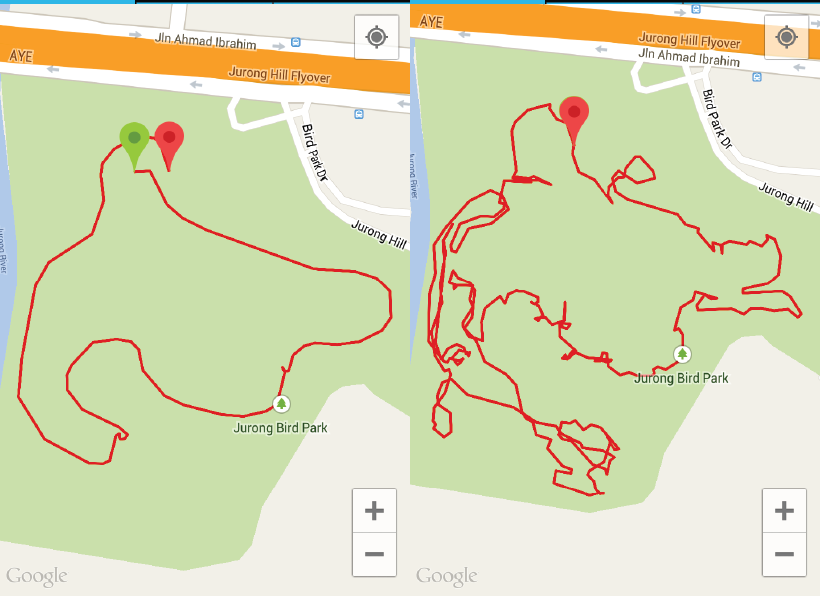
And for the heck of it, I tracked my trail around the park when I was: A. In the tram, and B. Walking.

Happy Trails. (L) Track made by riding the tram. (R) Track made by walking.

Happy Trails. (L) Track made by riding the tram. (R) Track made by walking.

Obviously, the latter made me look at more things, but by how much? The tram ride was about 15 minutes and walking and mindful looking took me about two hours, walking more than twice the distance the tram covered. The experience designer in me is taking notes.

The Holiday Hackathon is an exploration/discovery project of me spending my last couple of weeks in Singapore. I just finished an art/science residency, and I’m hoping that asking questions and going to new places will help me figure out that next step/project. 


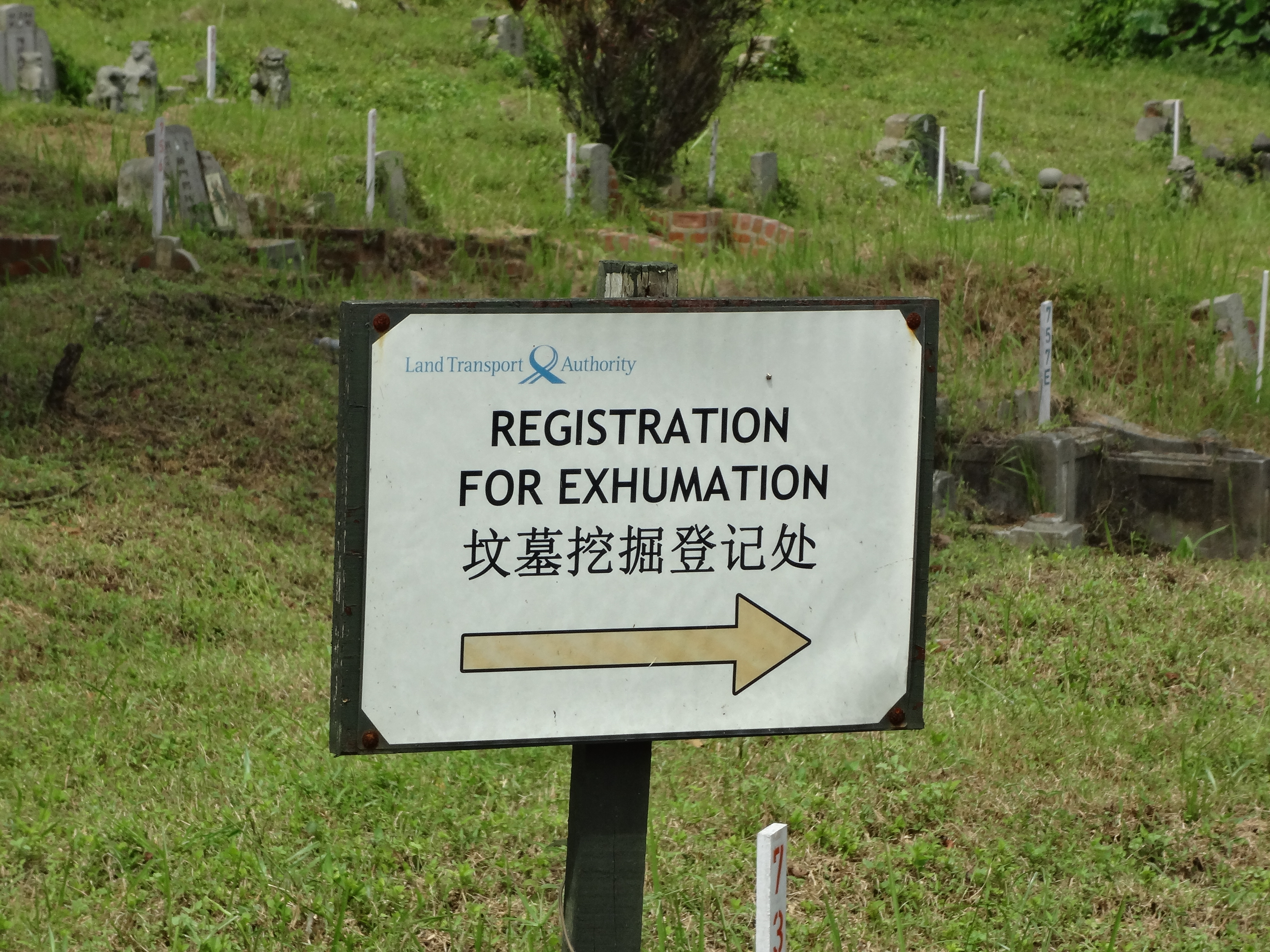
Today, I headed out to Bukit Brown, a Chinese cemetery here in Singapore that is going to be torn down to make way for a road. It is the first Chinese cemetery in colonial Singapore—lots of pioneers are buried here. It has been listed as at risk site on the 2014 World Monuments Watch.

I really hope I never have to do this to any of my dead relatives.

DSC00012

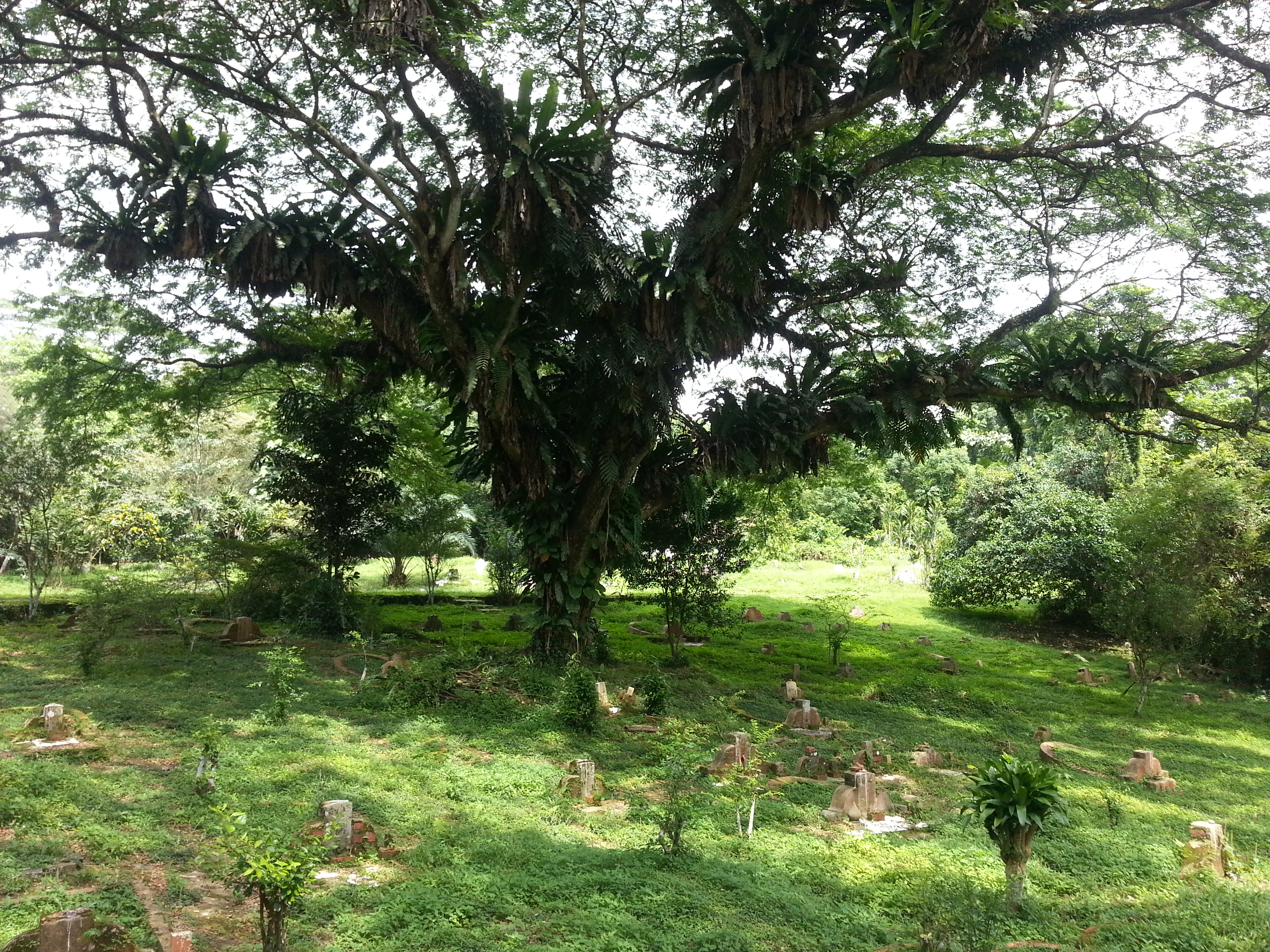
It is such a lovely cemetery. I like coming across the ones under huge trees. It was a very peaceful oasis, surrounded by a country club and homes for rich people.

20131214_134726

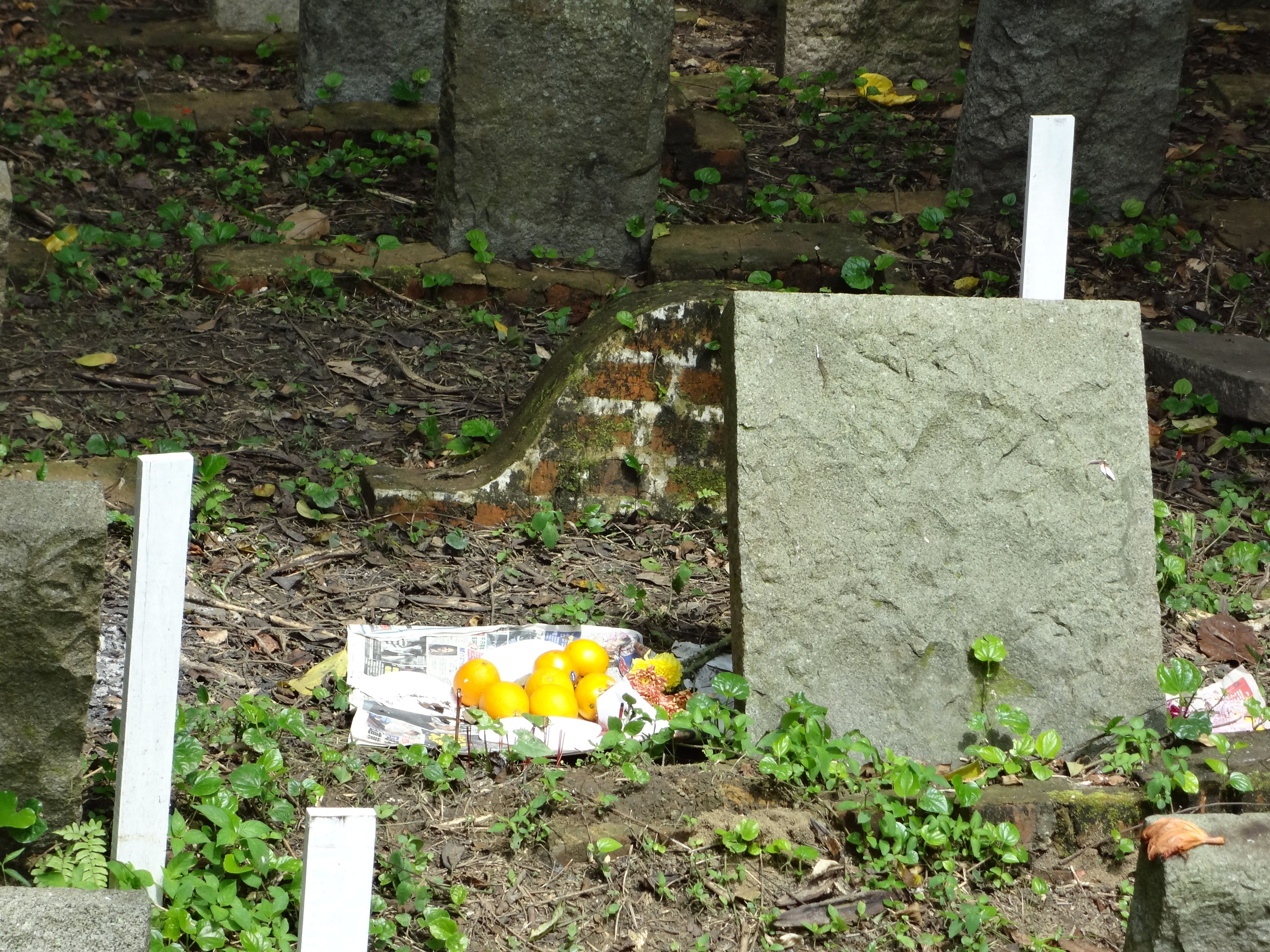
There were many graves where I saw recent offerings of food, as though an apology to those who were to be exhumed. The unclaimed ones, I read on the signs, were to be cremated and the ashes cast into the sea.

DSC00032

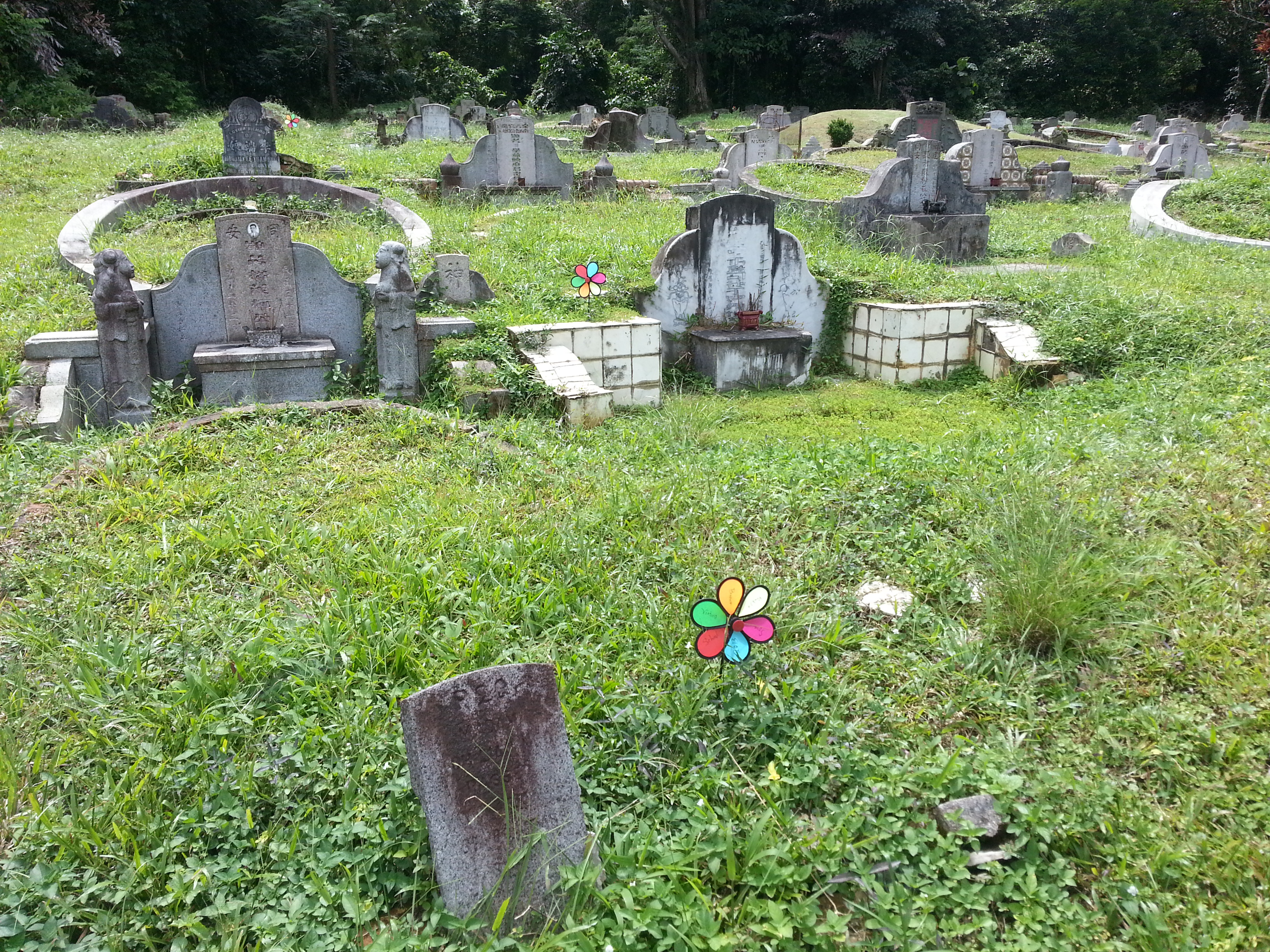
I loved these pinwheels in this graveyard.

20131214_135857
There is something about walking that untangles my thoughts and gives me clarity. Such a beautiful place! Go see it before it’s gone.

Due to strange circumstances in the past 24 hours, my flight tonight from Singapore has been moved to December 31. After the last few weeks of being on full throttle—giving talks, doing photo and video shoots, running around Singapore getting materials, storyboarding, prototyping, packing, and vainly figuring out what my next step is—I just hit the brakes.

I am quite relieved. No, excited! My exhaustion from this residency was from a managerial standpoint, as this was project where I had a lot of collaborators. This was unlike the last one, where the stress was more from physical sources: I still can’t believe I hiked more than 43 mountains in less than 2 months. Still, in both cases, exhaustion bordered on nausea. But hey, I regret nothing.

I can’t believe it—two weeks of hermetic silence, completing The Apocalypse Project and prototyping new ones while avoiding the holiday rush. Now this is my version of a holiday miracle. To make this retreat a bit more fun, I will try to see this as the Great Holiday Hackathon. Unlike most hackathons, I’m still not sure what I’ll have in the end. My goal is to do certain tasks all over Singapore, asking specific questions or turning some urban expeditions into a photographic data gathering session of a sort. I want to know some things I’ve been mildly curious about in the past months I’ve lived here. Perhaps in this short time of experimentation, I will be able to see what I’m supposed to do afterwards.

So for Holiday Hackathon Day One, I wanted to ask the question, What happens when you go through all of the subway stops in Singapore’s Circle Line?

The Circle Line of Singapore MRT comprises 28 stations. I started at Harbourfront (on the lower left) and went clockwise. Sadly, GPS doesn’t work at this underground level, so the only data I have is the time of the journey. It’s not a complete circle, so to get back to Harbourfront, I got off (well, “alighted” as they say here) at Dhoby Ghaut station and transferred to the North East line (the purple line), riding 4 stations to go back to my original point. I killed time by reading a book. You can see my route via the black dots:

CircleLineExpedition-01

So, 32 stations, 0 displacement, and a few dozen pages later,  I learned that this journey takes 1 hour and 22 minutes, and that it costs 0.78 cents. I’m sure my transit card doesn’t know I rode all those—I imagine I’d be charged the same if I accidentally entered the station and left it again, thinking it was a mistake.

I have no clue when this information will be useful, but I was just itching to know.