Archive

Field Trips

I have been invited as a speaker at the inaugural TEDxNewHaven conference at Yale University. The theme of the conference is “The Art and Science of Happiness”, and it will take place on April 28th from 10am to 6pm. I will give four talks / exercises of most of my thesis projects as well as some other projects I’ve made in my two years here at SVA, along with 12 other speakers who will explore the theme of happiness through the lens of their respective research and work. Topics will be drawn from a diverse set of disciplines, ranging from positive psychology, entrepreneurship, education, politics, media, culture, technology, and art.

This conference is designed to inspire people and make them happy. Its primary goal is to foster connections among the diverse audience which will consist of Yale students and professors, New Haven residents, and a global online audience. To that end, the primary aim of the conference is to spark a deep conversation about individual as well as the community’s collective well-being. It is the first time that a TED event specifically presents the theme of happiness, so this conference promises to be very interesting!

I hope you will be able to join me! It will take place in the Sudler Hall auditorium, in William L. Harkness Hall (WLH) on 100 College Street, on the Yale University campus in New Haven, CT. You can apply for a ticket here.

Currently, I am neck deep in my thesis and making 200 sense kits for the TEDxNewHaven audience. This week, I’m defending my thesis on Friday, then catching the train to New Haven to get some sleep in a hotel then wake up to do my talks and learn more about a subject I hope to be fascinated with for the rest of my life. Did you catch all that caffeine in that run-on sentence? I’m excited for it all; I hope you do come!

A rainy, chilly Saturday and there is only one thing to do: head uptown to one of my happiest, most wonderful place in the world—the American Museum of Natural History.

It was the opening of Creatures of Light, an exhibition that explores bioluminescence—its functions, its mechanisms, the organisms that have it, and how scientists study it.

Just inside, the exhibition greets you with a giant (!) glowing mushroom. Like so:

Creatures of Light opens with a giant glowing mushroom.

Immersive environments will instantly transport you. You can climb into a model of a New Zealand cave with magical looking strands of glowworms. You can pretend you are in a bioluminescent bay in Puerto Rico with tiny lights following your movement. You can gaze at giant glowing jellyfish from the Pacific Ocean.

Inside the New Zealand cave with glowworms

I love this:

Admittedly, I forget what this is. A worm? A firefly larva? Let me get back to you.

I think my favorite was this gorgeous dinoflagellate model.

A dinoflagellate model at Creatures of Light

You can even participate in the fun; if you tire of watching the fireflies glow, then pretend you are one by trying to match their mating patterns. Check out the interactive of a fluorescent coral wall that you can explore with one of the exhibit’s iPads. There are also live bioluminescent creatures, such as flashlight fish that are so tiny but fascinating to watch. As always, the immersive 3D models and the interactivity are the key strengths of the AMNH. Although packed with a lot of concepts, it was a joy to get through.

This exhibition is especially memorable for me because I helped research for it during my internship with the exhibitions department last summer, cataloging the bioluminescent creatures that were known and helping to explain to some of them the process of bioluminescence, which I studied in university. This is probably why I recognized most of the creatures there. My boss also very nicely allowed me to play somewhat, which led to me making this tiny encyclopedia of bioluminescent animals. We never got to use it, but it was fun, regardless.

On that note, some stills here, back in the day when I had a clay fetish. This was also one of my projects for my prototyping class.

You’ll have time to see the exhibition, as it runs until January 6, 2013. I, however, will likely see it over and over again.


On a recent trip to New Orleans, I was without a plan and without a clue. And yet, on this plan-less and clueless visit, there were two things that captured my attention amidst the remnants of Mardi Gras beads, tourists with stale beer in their go cups, capybara sightings, and fascinating reptiles.

1. Puzzle animal sculptures by Peter Chapman

My absolute favorite store in New Orleans is undoubtedly The Idea Factory, a wonderful shop that sells interactive wooden toys in the French Quarter.

The Idea Factory is located on 838 Chartres Street in the French Quarter.

The Idea Factory in New Orleans sells wonderful interactive wooden toys.

The store carries works by several artists, and while I loved the trains, the puzzle boxes, and the animals on wheels, what made me so incredibly happy were these three-dimensional interlocking wooden animal puzzles by Peter Chapman.

3D wooden animal puzzles by Peter Chapman

The eyes of the animal serves as the “lock”—remove it and it becomes possible to dismantle the puzzle. What makes it even better is the surprise inside each animal. An egg lies inside the brontosaurus. A finger falls out of the piranha.

On the last day of my visit, I caved in and bought one (the dinosaur, naturally). His name is Max.

2. The Toaster Project by Thomas Thwaites

The Toaster Project by Thomas Thwaites

The book that held my attention during idle moments this week was Thomas Thwaites brilliant (!) book, The Toaster Project, the documentation of his MA project  at the Design Interactions program in the Royal College of Art. In it, he chronicles his misadventures of creating a toaster from scratch, showing how he obtained materials such as steel, mica, plastic, copper, and nickel. Apart from being a modern quixotic tale of a seemingly impossible and foolish task, it is also a poetic reflection of sustainability and global capitalism.

Thwaites' toaster. Image via the designer's website. Photo credit: Daniel Alexander

As a designer of a more speculative and conceptual kind, and one who is sometimes weary of seeing only apps, websites, and flowcharts, I feel encouraged at seeing projects like this. I think my favorite part was when Thwaites was writing his thank-yous:

“…for making the Design Interactions MA a place where toasters can be made from scratch, and saving me from a life as a bad web designer.”

Spot on.

***

I am not embarrassed to admit that when I see things like Chapman’s puzzles or Thwaites’ toaster, I jump up and down with glee and spread the joy by telling everyone in my path. I love being humbled and reminded that wonder can go beyond our digital devices and can actually reside in simple materials and objects such as wood and toasters. Wood isn’t just wood; it can stoke the fires of human imagination and hide delightful secrets. Toasters aren’t just toasters; they contain histories of our technology and consumption.

There is always the potential of poetry in everyday things.

A white alligator in New Orleans' Audubon Zoo

Back in the 80s, a nest with white alligator babies were discovered in Louisiana and instantly became reptilian celebrities. The gators are leucistic instead of albinic; the pigmentation is reduced and their eyes are blue.

Today, in the New Orleans’ Audubon Zoo, some of these white alligators, now fully grown, sit silently behind glass. It seems debatable whether they are waiting to pounce on prey or, like child prodigies that burned out, lie jaded and oblivious to the excited and perhaps startled viewers on the other side.

Up close, it looks as though it’s grinning.

A white alligator up close

White alligators. It’s almost like seeing a unicorn, no?

The following is a post where I look back at DrawHappy, project I’ve been doing for a year. This article also appears in the project’s main site.

Looking back on this project, I remember how my heartbeat would begin to race every time I received an email with “DrawHappy submission” or “My happy drawing” in the subject line, when I would get a package in the mail, or when I approached a stranger and left that interaction with a sketch in my hand. Here are a few drawings with my own vivid memories attached to them.

The Iceland 100

1. Kindness by Arnar Snær

“When I see people do an act of kindness, that makes me feel truly happy.”

When one does a project, she will always remember the first stab at it, mainly because of the memory of feeling like a complete idiot, that the project wasn’t good, that the objectives weren’t thought out, that I should probably just go on being yet another tourist in Iceland and go hunt for the Northern Lights. But this kid was so nice and accommodating in spite of my unpracticed spiel. Moreover, “kindness” was something I did not expect and remains one of the most touching drawings I have ever received.

2. Family by Maria Sigurdordottir

It was closing time for most stores in Laugavegur, one of the big commercial streets in Reykjavik, and naturally I was turned away by most shopkeepers. This sketch, however, was from a girl who didn’t need to be forced into drawing; she held the sketchbook as a drill sergeant would hold a clipboard, and drew in the very precise strokes of a fashion designer. I walked back to my hostel feeling very accomplished and cold to the bone.

3. Stillness by Barbara

Earlier on in the project, I was in a bookstore’s cafe in downtown Reykjavik, trying to catch another stranger’s eye when I felt her staring at me. When I shyly asked her if she wanted to draw, I was almost apologetic, but she nodded understandably and said, “But all of life is a project!” I also appreciated her sketch especially because she wrote about the difficulty of drawing due to the intangibility of happiness.


4. Me on a sailing cheese by Swantje

Points for sheer imagination! This was in Iceland, and I left my Moleskine with her, went upstairs to take a shower. When I came back to the lobby, this is what she had. It’s one of the best uses of a pencil I have ever seen, done in less than two hours.

5. Control and attention by Rosa R.

I realize that having a stranger come up to you and being physically identified with your sketch may make people be extra-mindful of what they drew.  Sketching what arguably seems to be the darker side of our human desires was refreshingly raw and honest.

Post-Iceland

6. Moving forward by Humberto Martinez

Not only is it a gorgeous sketch, but the subjects of graphic designer and illustrator Humberto Martinez’s work, hummingbirds, is replete with symbolism. Hummingbirds are a symbol of love, joy, beauty, and resurrection. It is also the only bird that can fly backwards, and is therefore a reminder of looking back on one’s past. Did I mention it’s so gorgeous?

7. Jiu jitsu with my friends by Marta Ássimos

I loved this sketch because I do taekwondo and like her, martial arts is one of the things that make me so, so happy!

8. Godzilla by Jamiel Pridgen

I remember this drawing very clearly for the method in which I acquired it. Back when I was an intern at the American Museum of Natural History, I was line in the cafeteria when this extremely hyperactive guy in front of me started telling us a story. I told him about this project and left, thinking it was the end of it. A few days later while getting tickets for the planetarium, a security guard stared at me and asked, “Is your name Catherine?” He called Jamiel on his radio and he arrived, bearing three copies of this sketch and telling me he’s been looking for me everywhere. Quite fitting for someone who works in a natural history museum. Remind me to start making business cards.

9. Joy on sneakers by Brian Foo

I often receive gloriously imaginative drawings. On rare occasions, I get gloriously imaginative drawings by a joy evangelist. This has always been one of my favorite sketches.

10. Sun is joy! by Ilana Paterman

According to media art student and designer Ilana Paterman, this is a six-year-old sketch done during her first winter in Germany. I can relate, it being winter here in New York.

11. We still have options by Timothy J. Reynolds

I am always impressed by what can be done with a Moleskine. Very inspiring!”

12. A letter from Samah El Hakim

I love getting things in the mail, and this one from Lebanon made my day.

(I wrote this post as an update to DrawHappy, an ongoing art project where I ask people to draw what makes them happy. The full text of it is below.)

Well, almost. I returned from my trip to Iceland on January 10th, bringing with me a hundred sketches, a sea of stories, and a now-heightened tolerance of the cold that is quite useful for one who grew up in the tropics. I never thought I’d continue DrawHappy, as I’m usually doing other projects and have a really short attention span. But the post-Iceland sketches came in sporadically, and I’ve realized that it was the occasional email or package with a happy drawing that helped sustain me—and I hope those who follow the project—throughout 2011. It didn’t even have to be a fancy sketch; many I’ve received were beautifully simple. But I think it was this simplicity that made these drawings a joy to behold. Others were more elaborate, and I’ve been speechless at the amount of time and effort it must have taken to do some of them.

But first, hurray, we have a logo!

(A little late, but grad school has kept me busy.)

I used a stick figure jumping for joy, since in Iceland quite a lot of people drew that, handing their sketch tentatively and apologetically because their drawings weren’t a da Vinci. But I think the simplicity of it brought about clarity, which was the reason I asked you all to draw instead of write. I loved the sketches, stick figures and all. Thank you for all of them.

Remember the visualization I made after the 100 sketches? Honestly, I did that to pass a class, as I felt I had no other interesting data to use for my final project. But I loved what I learned from the analysis of these sketches, especially where happiness may be plotted on other standards of happiness. It made me ask questions. Why draw? Why record the moment of drawing? So what? Now what?

Why draw?

Drawing is one of the earliest skills we learn; its basic elements are comprehensible to people of all ages, cultures and nations. No one is judging how good the drawing is; the lone requirement is that you embody your definition of happiness by taking a pencil to paper. To draw is to make clear to yourself. The project forces you to dig deep into your memory and pull from its recesses that which sustains you as a human being.

I believe most of us lose opportunities to draw. Our lives are run on devices, which I love and use eagerly; this project would never have had this global reach without technology. But while we can externalize some abilities to our machines, I hope that we don’t forget some of the basic skills that are not just universal, but critical for self-reflection and growth. I consider it a minor triumph to get people unplugged, if only for a few minutes.

A more practical reason for drawing is that while the aspiration for happiness seems to be universal (although I suppose there will always be a lot of masochistic grumps in the world), our definition of it is not. Moreover, there are times when it is difficult to label it; this is why the labeling of the sketch was not required. (I still believe it shouldn’t, though it might help me entitle your post! In these cases, I’ve done my best to simply describe what I saw, and not interpret them.)

Why the moment?

I am a scientist by training; this has given me an analytic stance when doing any project. Our definition of happiness as well as the quantification of how happy we are is dependent on what we are doing in that specific point in time. If you were riding horses that day and were still feeling exhilarated, then naturally you will draw horses. What makes other human beings happy also affected what we think makes us happy; hence, the company you kept at the time of your sketching was also recorded. I recall a time when two friends I asked both drew food. One sketched pie and the other, Pinot noir and grapes.

What I wished for

I hope that this project has made the participants want to pursue their happiness because of this brief moment of having to have considered it. There were some people who told me no one ever asked this of them before, which made me both do a double-take (Seriously?) and a cartwheel (Yes! About time!) I, too, have learned so much about the universality of happiness and how, despite our different zip codes, we all aspire for similar things in life.

Other things I’ve learned

1. Brazil is a very happy country. I hope to physically take this project there one day. Obrigado for the shout out, Super!

2. Beauty comes from boredom. Another reason why it was interesting to examine the moment of drawing:  many drew while they were bored in school, a meeting, a conference.  It must feel very satisfying to take that moment back for oneself. I loved it.

3. One should participate and not just observe one’s projects. I drew my own happiness, too!  It also inspired a lot of sketching projects, such as this and now this. It has also been a great reference to my lifelong obsession with human perception.

Now what?

I really want this project to go on forever. It would be interesting how this would look like in 5, 10, 20 years. I’m not expecting to receive hundreds of submissions a day (though that would be awesome!). I am  fully aware that drawing is asking a lot from people. I hope to take this project many steps further. It’s not just because it’s such a joy to do; more broadly, I want to ask, “Is it possible to have a record of what sustains humanity?” And once we know what does, will we take steps to ensure that we, our community, and our society make it easier for us to grasp them?

Thank you for supporting this project! In the meantime, please do keep sending me your sketches. Or  let me know how this affected you, if it has.

More updates soon!

Yes, it is a blurry picture. I took it while I was riding  a horse.

It was my first horse ride after almost twenty years, after a minor fall from one as a child left me traumatized. But one should get back on eventually. As a kid, I fantasized of owning a stable full of unicorns and lions, whom I would ride to school every day.

This photo taken just about a year ago.

Icelandic horses are a hardy bunch; the laws of Iceland prevent horses from being imported and exported horses are not allowed back in. Developed from ponies taken from Scandinavia in the 9th and 10th centuries, these horses are mythology personified—one can imagine Vikings riding them through the punishing snow and terrain. While these horses may look like ponies because their legs are shorter than other breeds’, it is considered bad manners to comment as such, so don’t say I didn’t warn you. Besides, their endurance to the cold, especially in comparison to mine, makes them a worthy adversary to the toughest of stallions.

Astride a horse on Laxnes Horse Farm, a wonderful family-owned business who love what they do, I found it easy to see the wonder that is the Icelandic landscape. My horse, Leiri, was a quiet yet sometimes spirited one. It is a remarkable experience to tour the earth with a living being beneath you with its own temperament, instead of a car where one has full control. Leiri would go off on a trot despite my pleas to slow down, and once when a horse got scared, she wouldn’t go anywhere as well. It was definitely one of the most exhilarating experiences, to be riding a horse whose ancestors probably gave warriors a ride, on the dried lava and rocky plains of Iceland, where the sun would wake up and make the sky bleed pink and purple.

It was just what the Vikings would have done.

Two days before a Christmas with no snow, some friends and I drove to the ends of Brooklyn, past Avenue V and through other streets I did not even know existed after five years of living in New York City to the lonely marshlands of Dead Horse Bay.

Dead Horse Bay was named for what it used to be—a place with horse rendering plants from the 1850s to the 1930s where dead horses were sent to Barren Island to be turned into glue and fertilizer. When the number of dead horses decreased as more automobiles were manufactured, the city began using it as a landfill to connect Barren Island to the Brooklyn mainland in the 1920s. The Barren Island Airport, New York’s first airport and later renamed to Floyd Bennett Field, opened in 1927. In the 1950s, one of the containers of the landfill burst open, allowing garbage, particularly bottles and ceramics, to wash ashore and turning it to the scavenger’s paradise it is today.

Despite the absence of snowflakes, it was a cold, cold day, with the wind cutting through my coat and my tights a poor, ill-considered choice for the weather.  The bottles themselves, unperturbed by the cold after years of waiting, lay immobile, some resigned to being crushed under our boots, while others already leading second lives as homes and anchors for various sea organisms. Near the shore where the landfill used to be, bottles jutted out like roots, and you could easily pick one out, intact. Dead Horse Bay was its own ecosystem and its own wonderland—gray, chilly, alive, and frozen in time.

The sand was both a keeper of treasures and of lies. While I loved the big bottles my friend Sarah collected, I was more intrigued by the toys I picked up, such as old plastic guns, blocks, and a toy whistle.

More often, we would find bottles and teacups that looked fit for scavenging, only to pull them out and realize they were missing half of themselves.

On the way back, I realized to my dismay that I lost an earring because of the harsh winds. I hope someone finds it, believes it to be a hundred years old, and creates a story about it. And now I wish I threw the other one in.

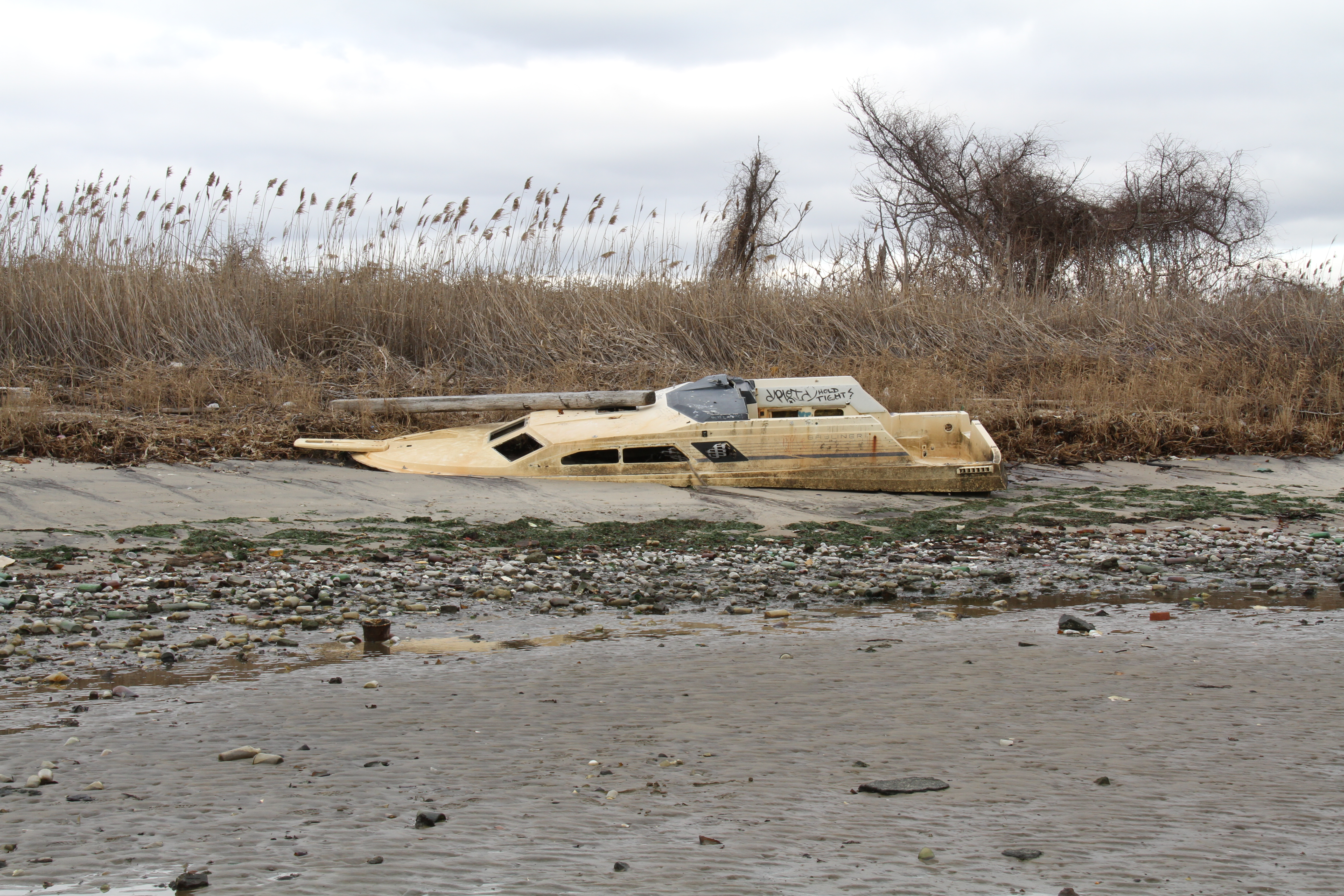
While we were disappointed the bottles didn’t come from a shipwreck, there was a decrepit old boat that definitely had seen better days.

If you look closer at this marooned boat, you will find our names signed with a Sharpie, at my insistence—the only tangible trace of our presence, as all footprints were washed away and all glass we left remained silent, holding the secrets of horses long dead and rubbish from another time.

Two hours later, the sun finally peered out, and we gathered our treasures and left, safe and dry with no need for a tetanus shot.

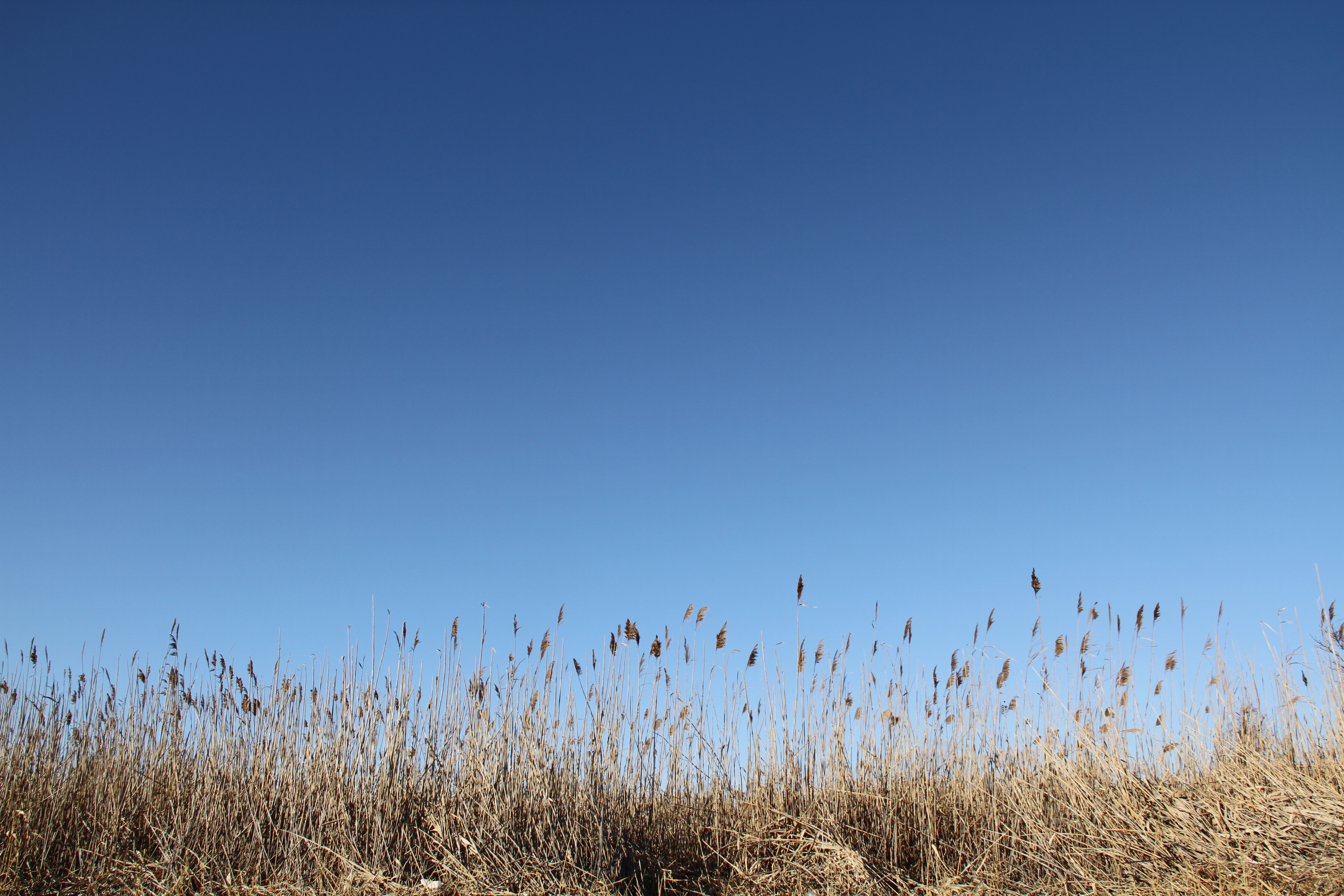
We walked back through the cleared path, with the sky now blue and the clouds making shapes of their own.

It was a good day.