Archive

Creative Learning

Here at my art residency in Singapore, I’m busy this week giving workshops to students at Tembusu College, National University of Singapore. Before the workshop, I gave a short intro talk on The Importance of Talking to Strangers.

Having done participatory art for years now, I discovered that it’s imperative to engage people in these kinds of activities (workshops, experiments, etc) in the development of a project. The things that come out of these things are always insightful.
TembusuWorkshop.002

For this week, I didn’t want to give another artist talk, as I wasn’t going to be the artist for the night. Instead, I talked about the things I learned while talking to strangers. Because these students are, after all, strangers to me. I gave two example projects and the lessons I learned from them.

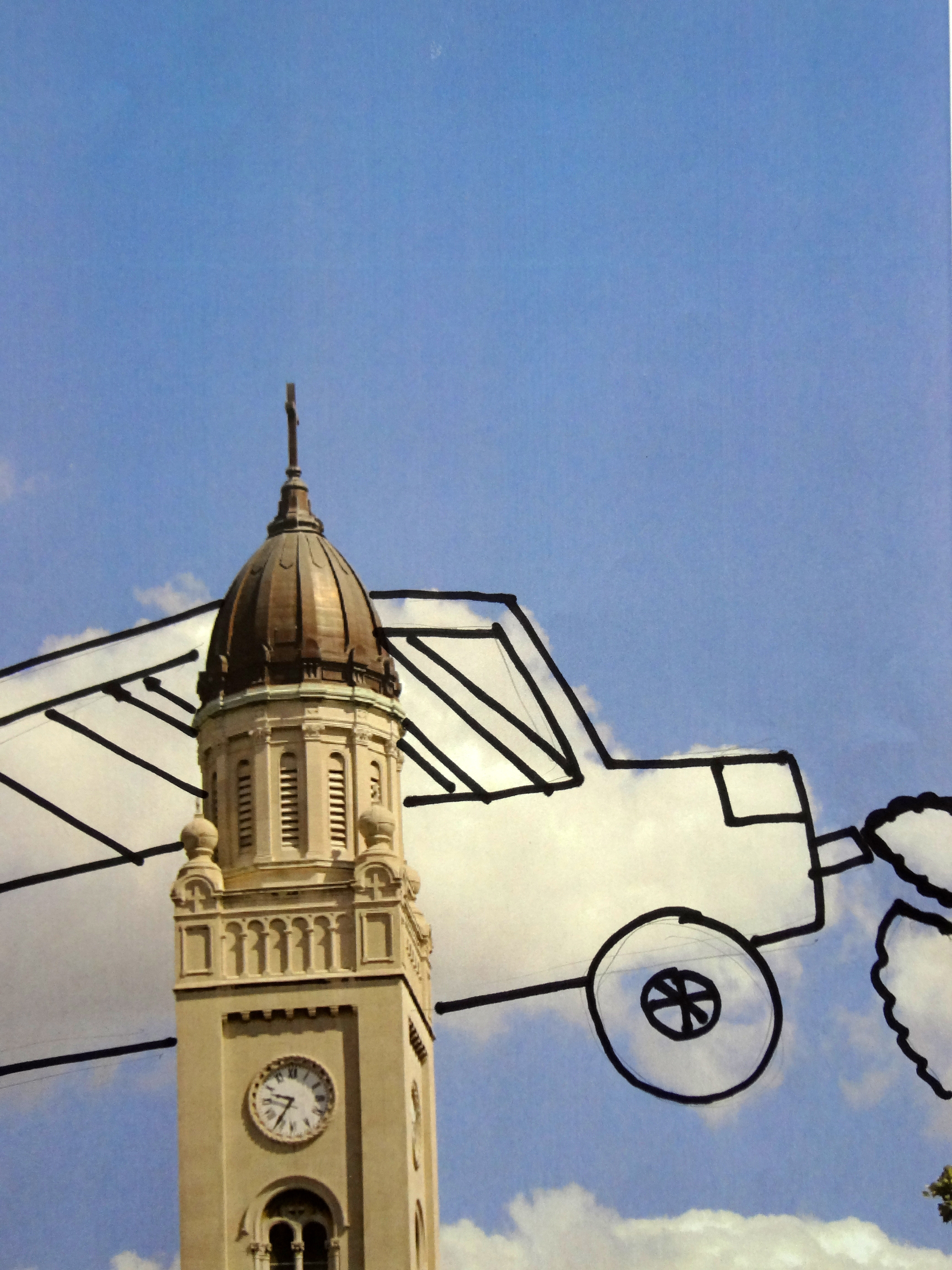
The first project is Rorsketch. This project became more enlightening for me because strangers saw things I did not see. (Visit the project site here.)
TembusuWorkshop.003

(Yes, the never-ending drawing-what-you-see-in-clouds project.)
TembusuWorkshop.005

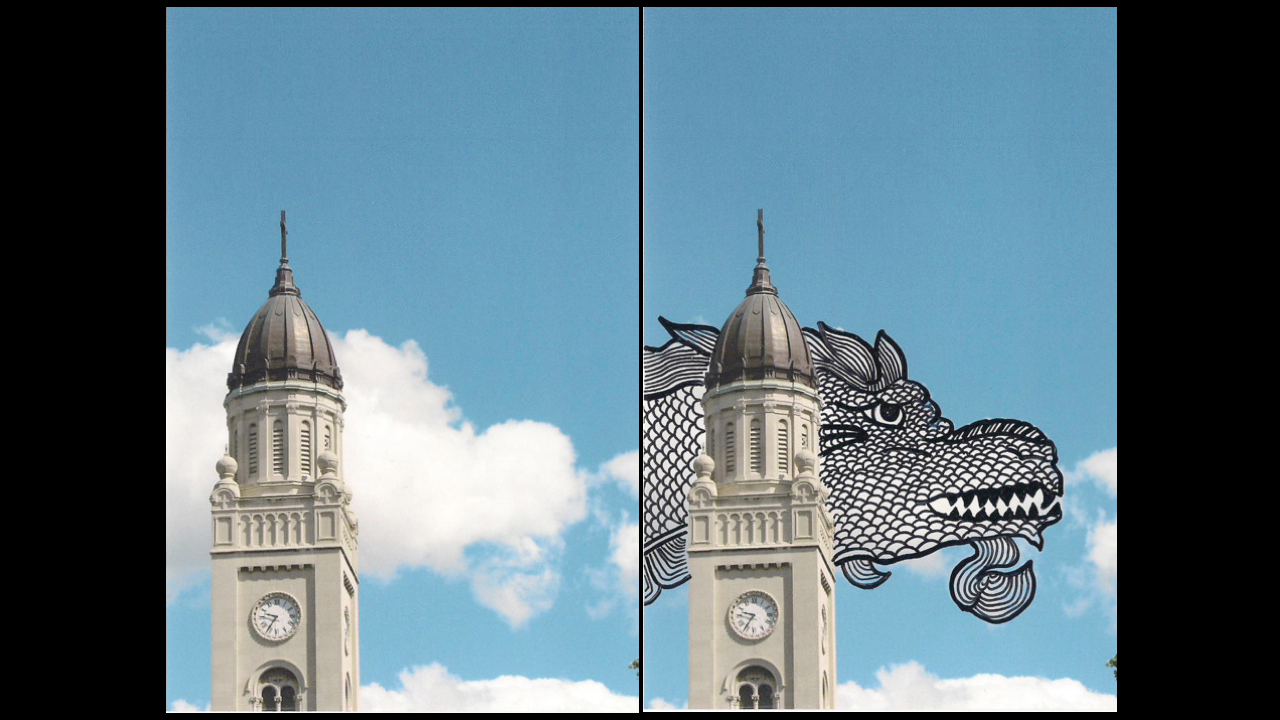
From this, which was initially something I did for myself, expanding it to include other people. Asking four people what they saw in this image will yield four different interpretations. I ended up embracing the inclusivity of the project—nothing was right or wrong.

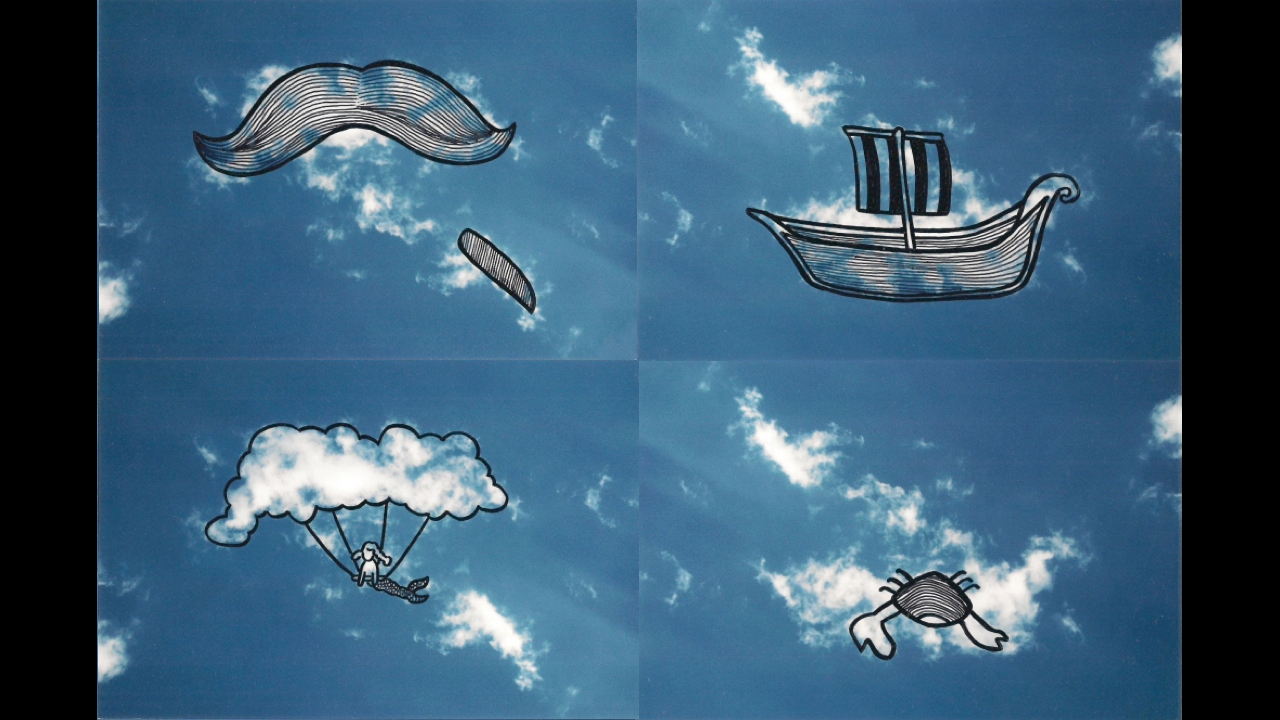
TembusuWorkshop.012 TembusuWorkshop.016 TembusuWorkshop.017

For the second project, I learned that strangers can extend my project beyond what I set out to do.
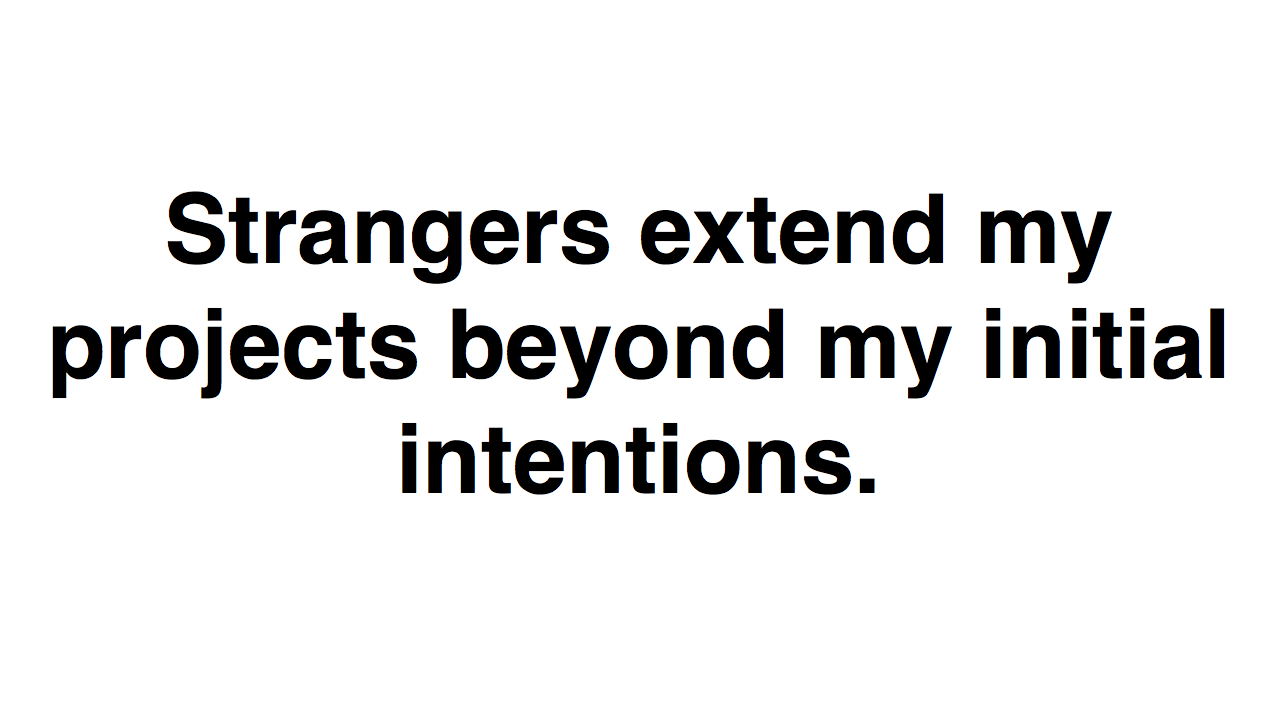
TembusuWorkshop.019

I tried, but this project just won’t die. Viva drawing your happiness! Check out DrawHappy’s site here.
TembusuWorkshop.021

Beyond the sketches people have sent me, what became additionally interesting were the comments left on the site, most of which are submitted months or years after I uploaded the drawings—a good case for putting everything online. I was already emotionally finished with the project, or was I? These comments made me think otherwise.

Here is one that made me think DrawHappy should be turned to DateHappy:TembusuWorkshop.030
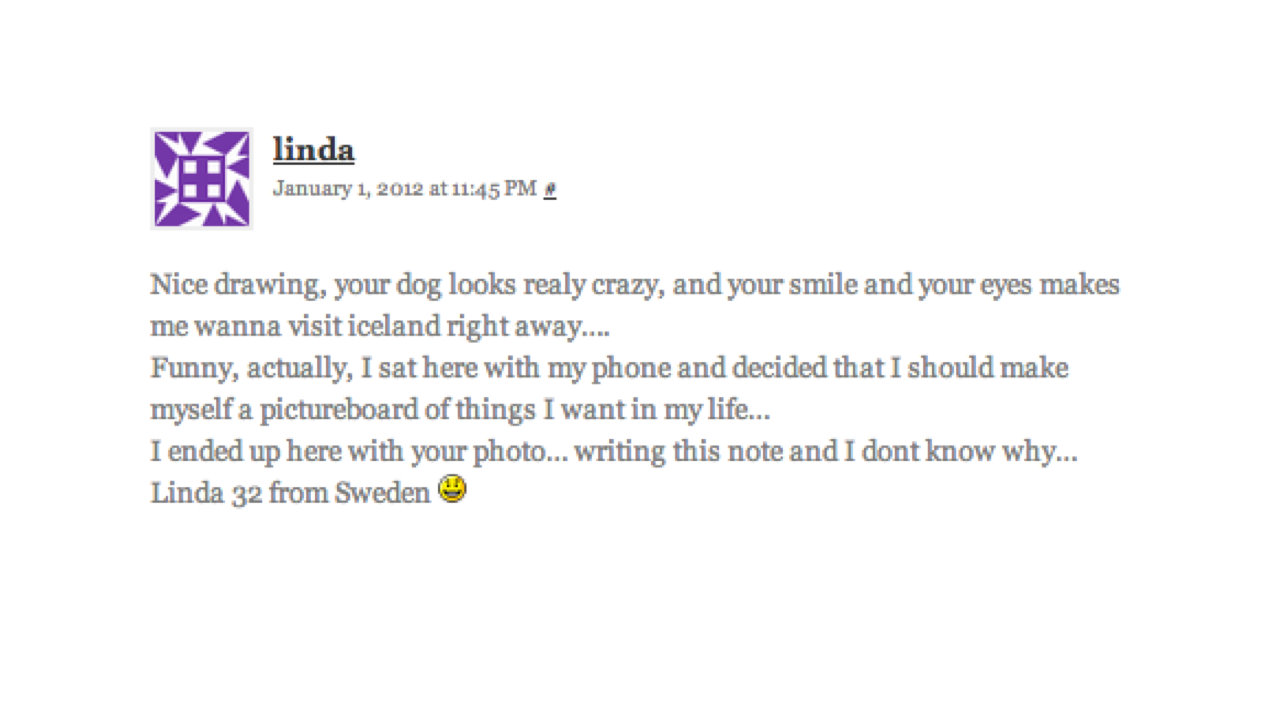
And here is another that made me think of Craigslist Missed Connections (names are protected because by now, I’ve learned that the world is so small):
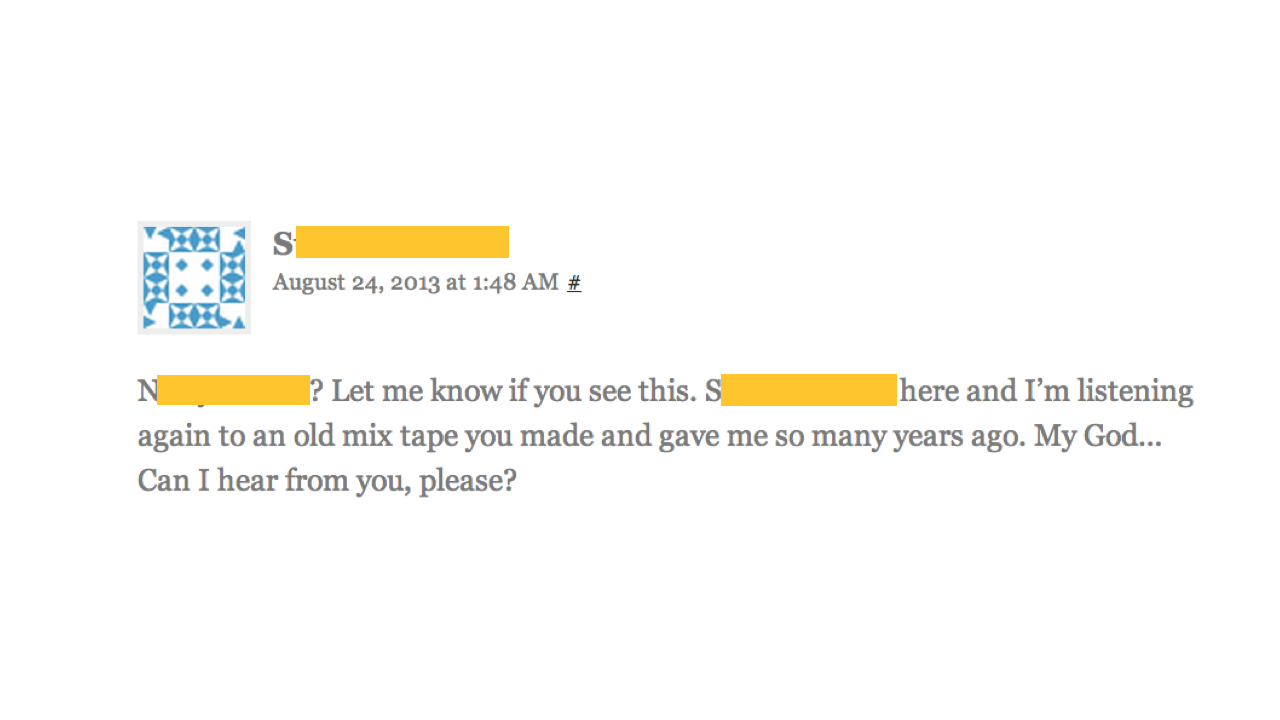
TembusuWorkshop.032

As the one who actually administers the site and monitors and publishes the comments, I can’t tell you how I had to pick up my jaw from the floor when I get notified by email. I can’t wait what this apocalypse project gives me. Stay tuned.
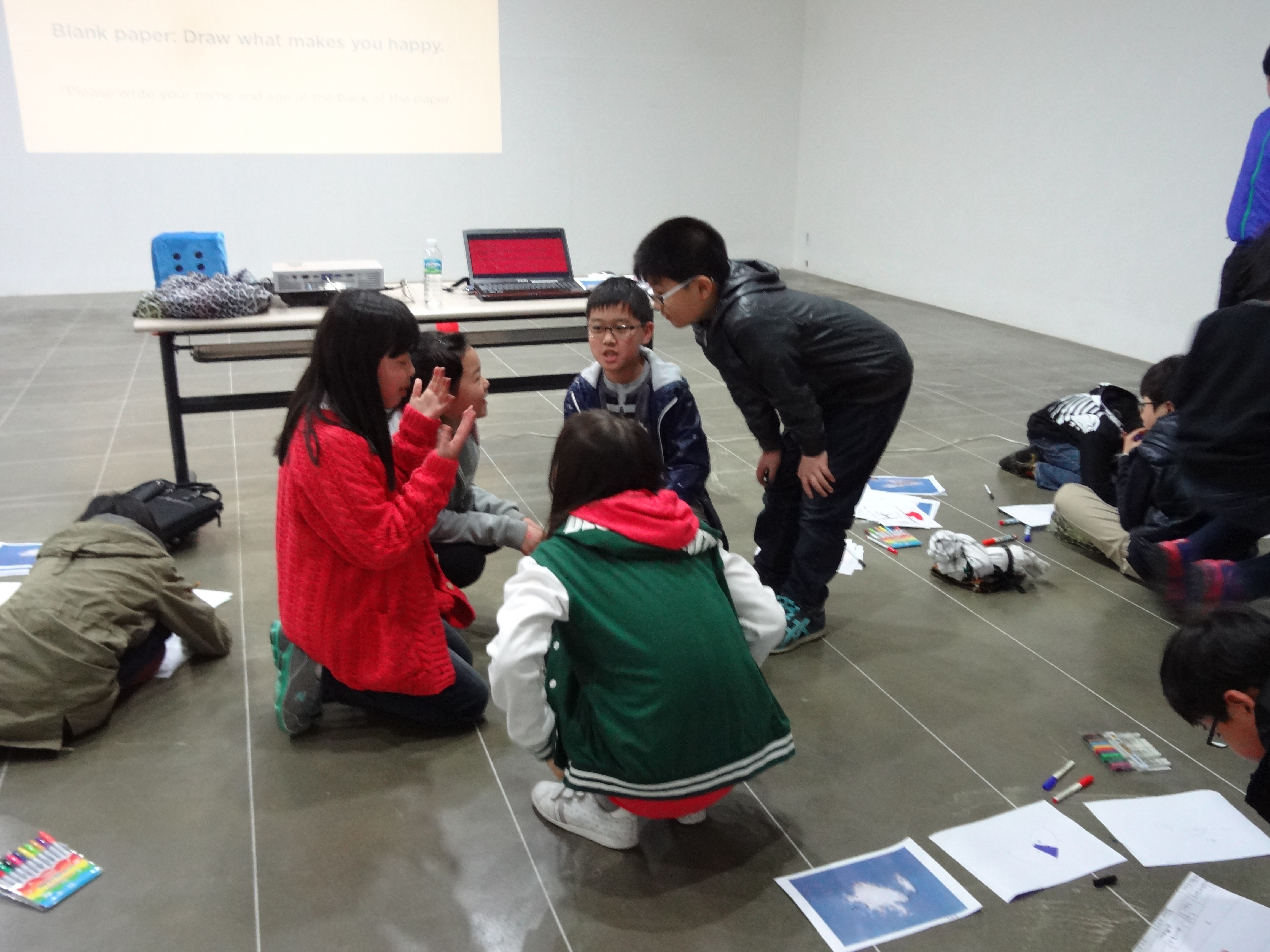
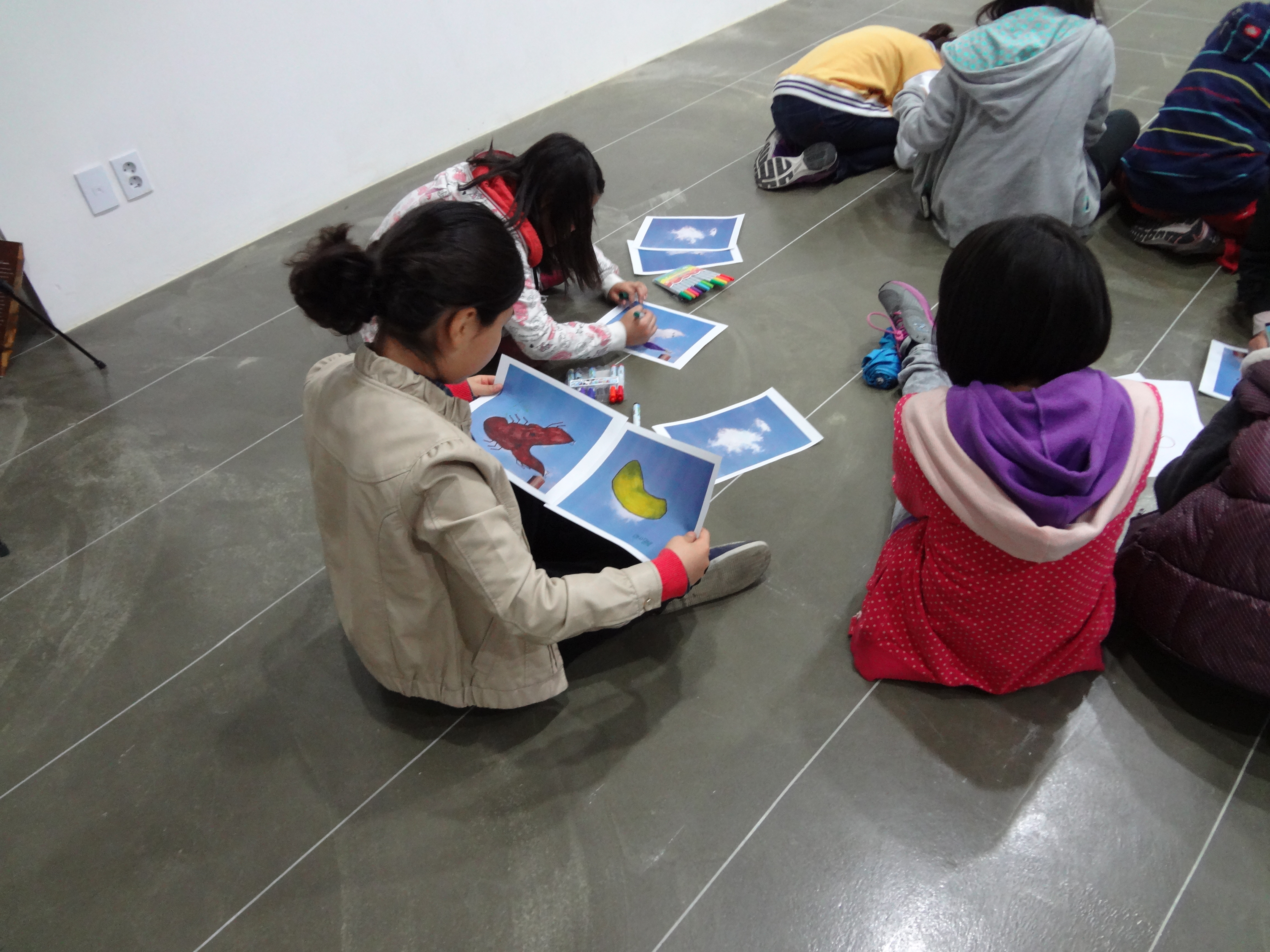
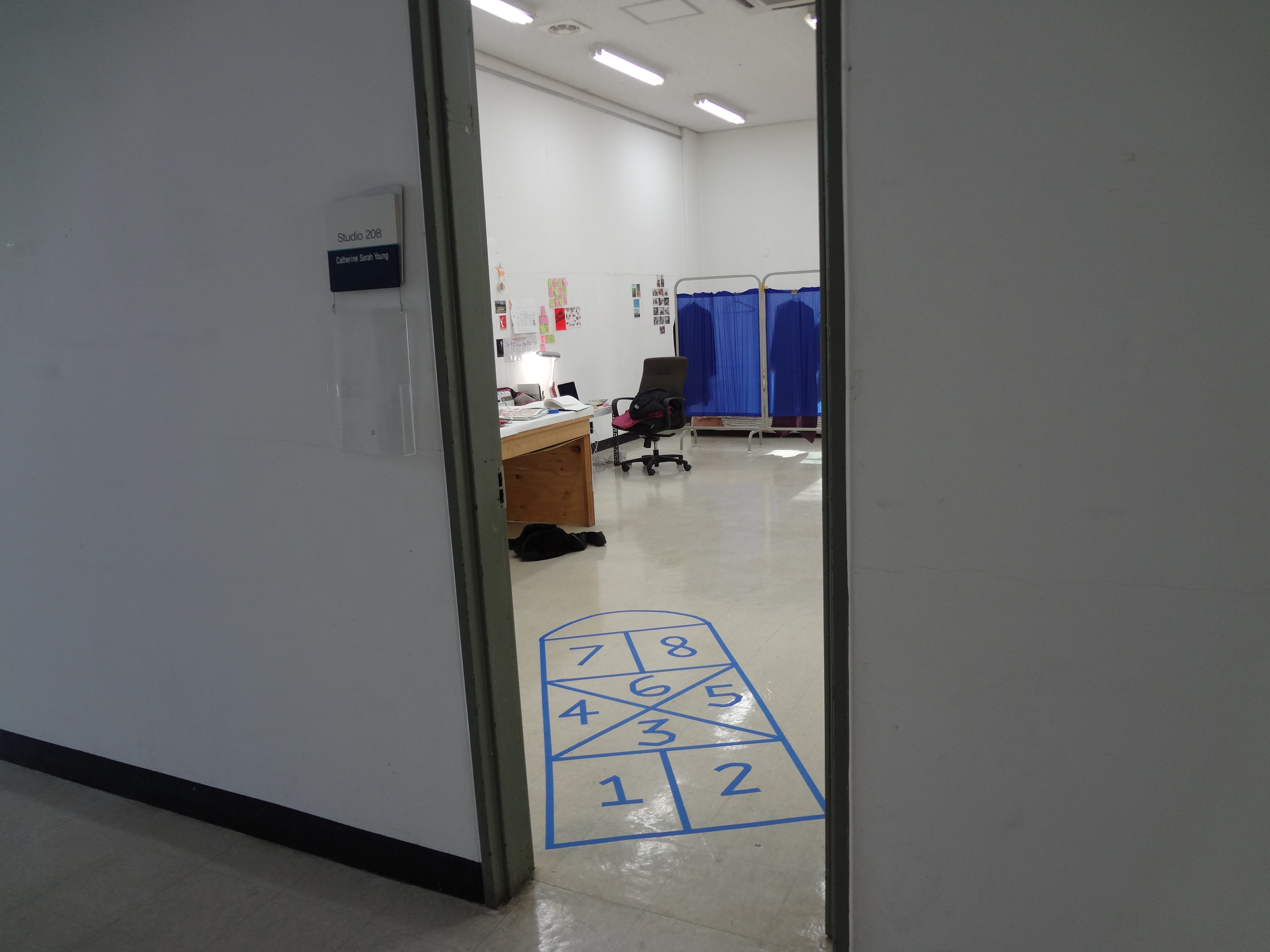
Recently, a teacher of one of the classes to whom I gave a workshop during my residency here in Korea asked me if I benefited from the visit as much as the students did. On that day, I gave a short talk in the exhibition hall, and the children drew, created their own games, and together we went through my studio upstairs. I suppose that for most people, these would fall into the category of Favors You Don’t Really Want to Do But Feel Forced To—”occupational hazards” that goes with the territory.

But as one who operates on interactivity, and one who is still in the “emerging” process, I think I actually need these visits. I’ve done three talks/workshops in Korea in the five months I’ve been here, and for one of those, I was actually the one who asked the program manager to find young people who would want to visit the studio. This doesn’t apply to all artists, of course, and quite a lot of my favorite artists prefer to be left alone, as I do most of the time. Creativity for me thrives on solitude, and anything that takes me away from my primary goals is an interruption.

But visits, particularly of the workshop-py kind and particularly from children, are special to me. (Personally, I prefer kids who are 12 years old or younger, and with at least one chaperone, thanks!) Giving a Keynote presentation is just 20% of the experience. The other 80% is about the conversation that goes on between them and me, between them and my work, and among themselves. Here are five reasons why I think I should make a conscious effort to get out of the confines of my studio and make sure I keep bringing people below five feet tall to see both process and finished piece.

1. Children bring me back to the essence of the work by asking the toughest questions.

DSC03702

Thankfully, children do not ask me any pseudo-intellectual academic queries. I also know they probably don’t care  (at least directly) about the institutional strings that come with my work, such as the artist statement, the photos, the website, the design, the branding, the talks, the tweets, the blog posts, and all the administrative work I have to do in the background. Apart from the fun they have during those few hours, they will likely not care about my work or me once they step out of the studio—it’s just another day for them, and they have no ulterior motives. I think this is why they ask me questions that make me go, “Yikes, I didn’t think of that.” It makes me think more deeply and objectively about my work.

2. Children ask questions of themselves and of each other.

DSC03599

When children use my projects as frameworks for self-discovery, it is incredibly rewarding. I remember telling a friend after one workshop that the peak of a project’s “happiness curve” (yes, I have that for all the things I have done) was that day, seeing excited kids jump on my work and doing drawings, instead of the exhibition that came soon afterwards.

3. Children are great prototype testers.

DSC03852

…because they know what to do and they don’t even have to ask questions and it’s faster to get results and oh my god with adults sometimes you have to FORCE that window of childlikeness and wonder open with a metaphorical monkey wrench and geez at the end we’re both exhausted. Happy, but exhausted. With children, it’s just easier. There, I said it.


4. Children make me admit my mistakes without shame.

DSC03883

This is something I had to admit to myself only after discussing my work a number of times to different people, but I discovered that with children for an audience, my intention is to delight, while with adults as an audience, my intention is usually to impress. Guess which one is a lot more fun?

5. I am forced to clean up.

DSC03736

This seems like a silly thing to add, but it’s good to be forced to make sure the studio is tidy, that I have sensible presentations on hand, and that I am showered and presentable. Before, you know, I go down that rabbit hole.


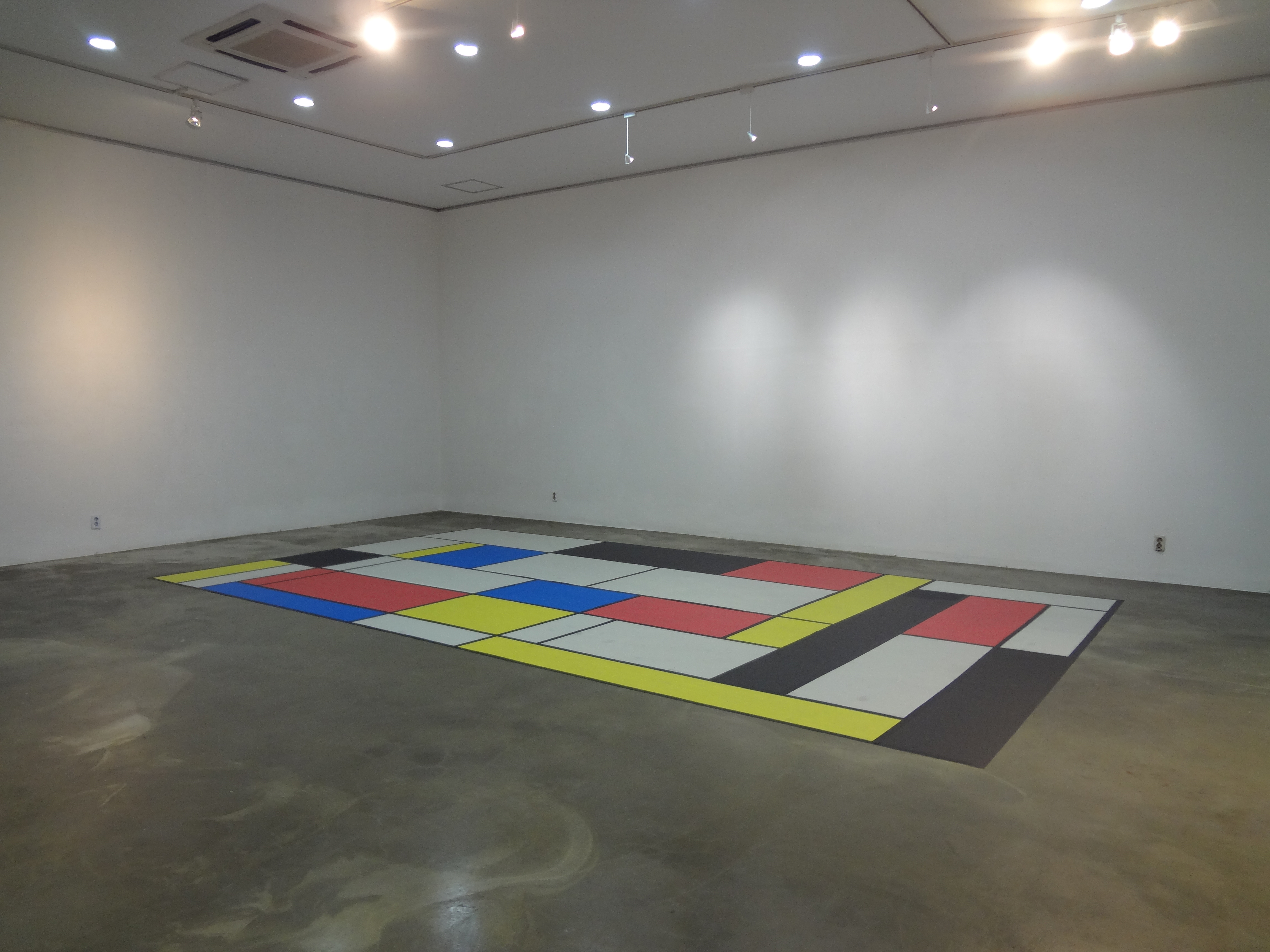
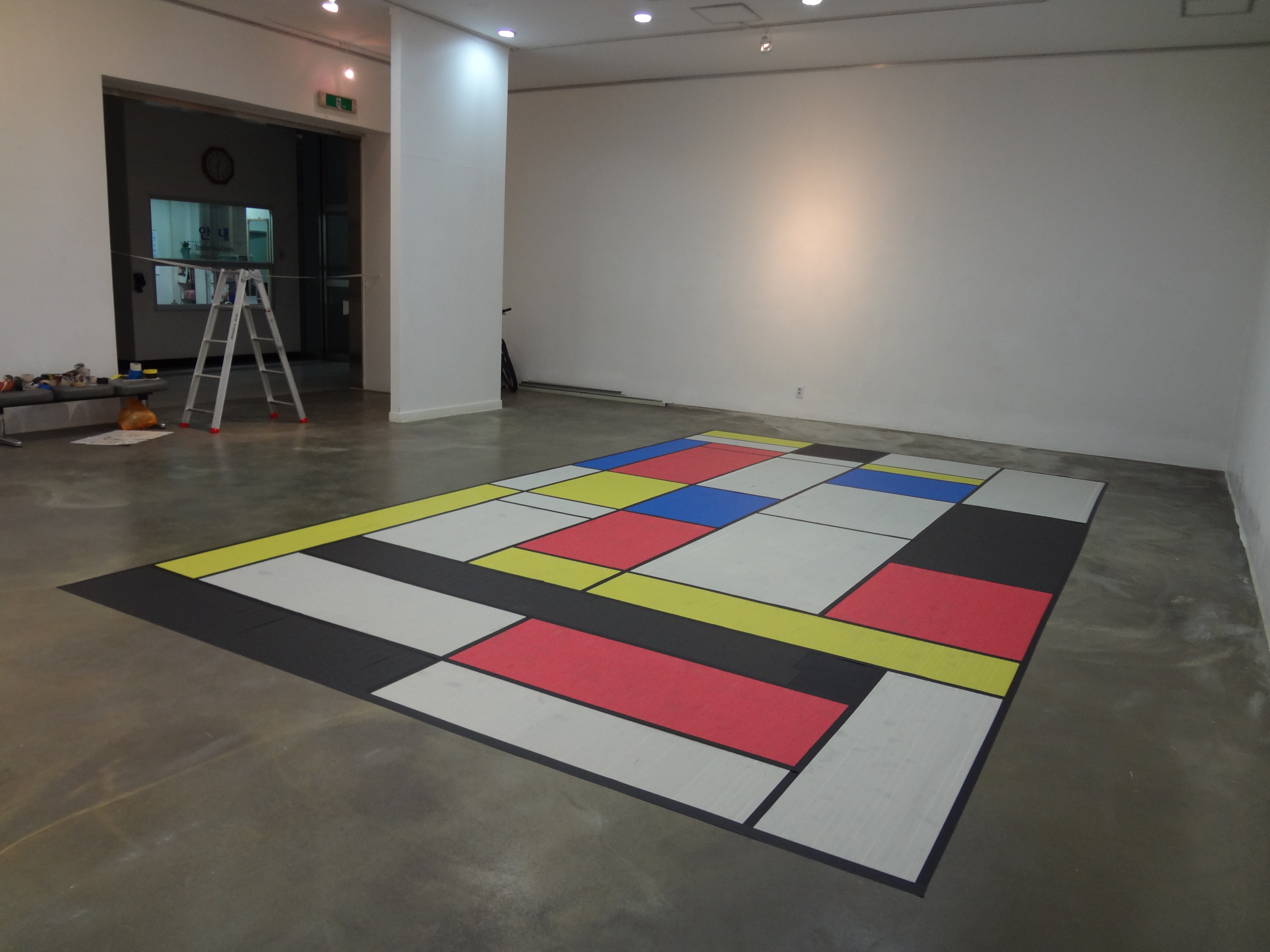
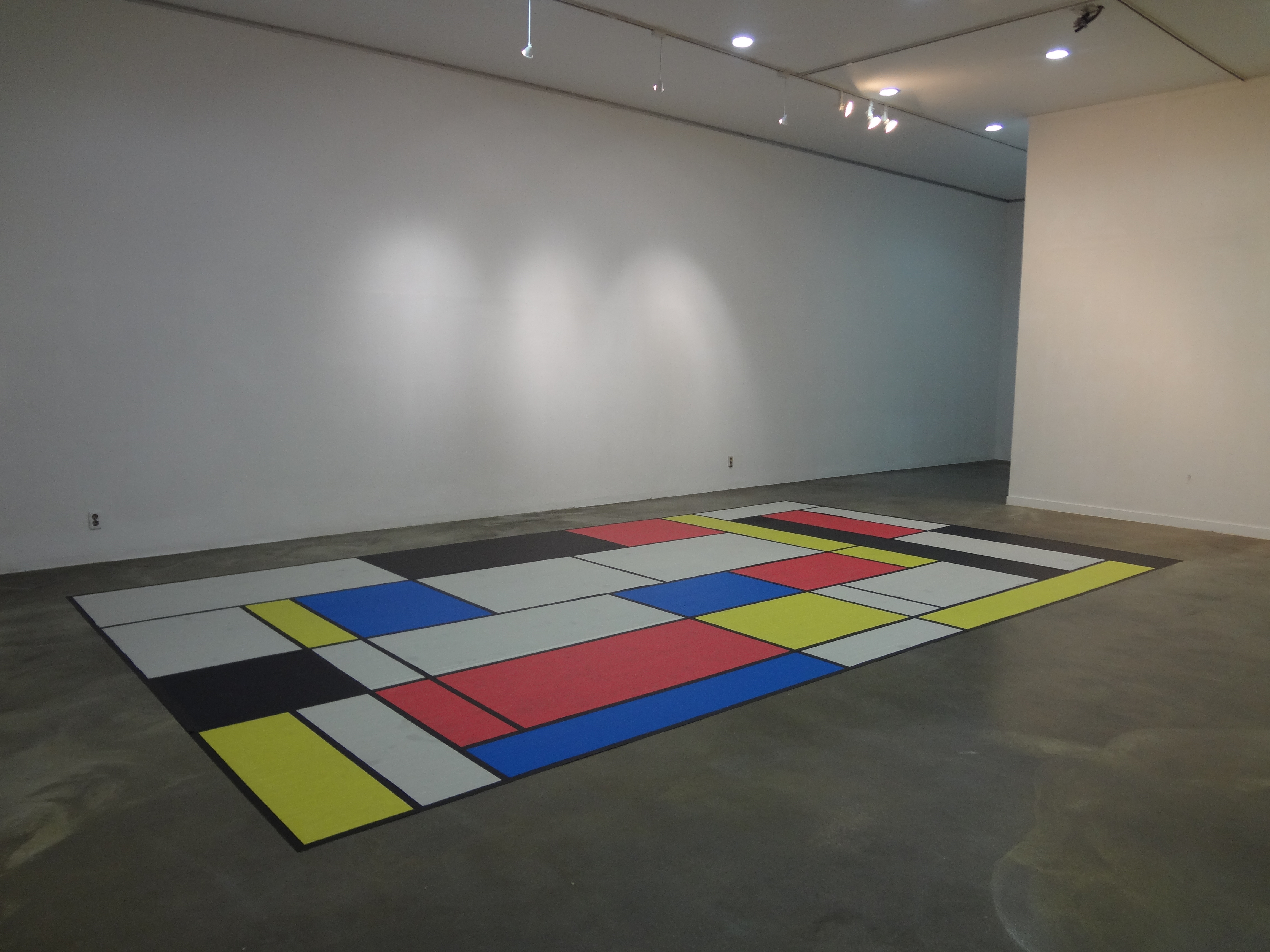
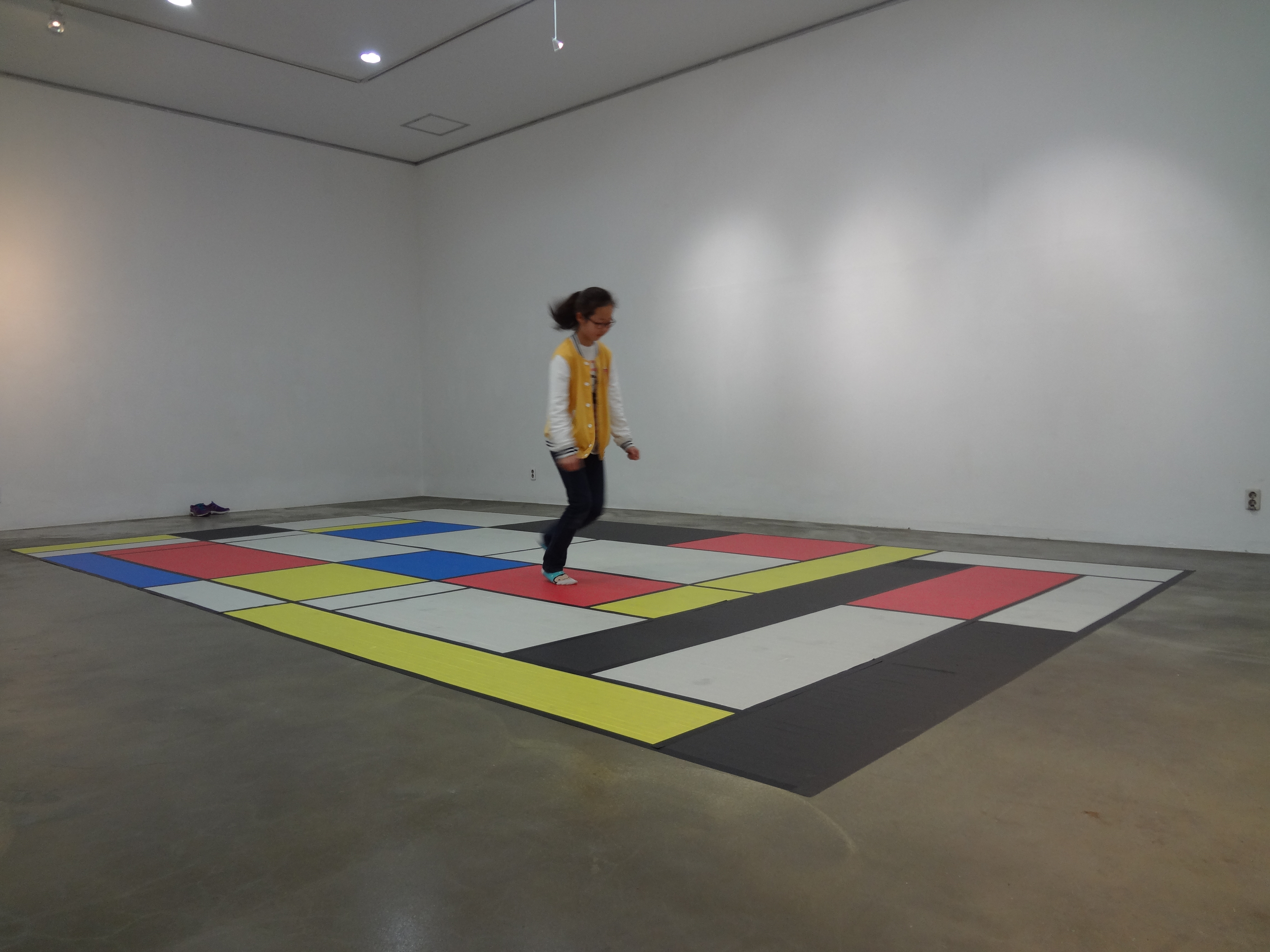
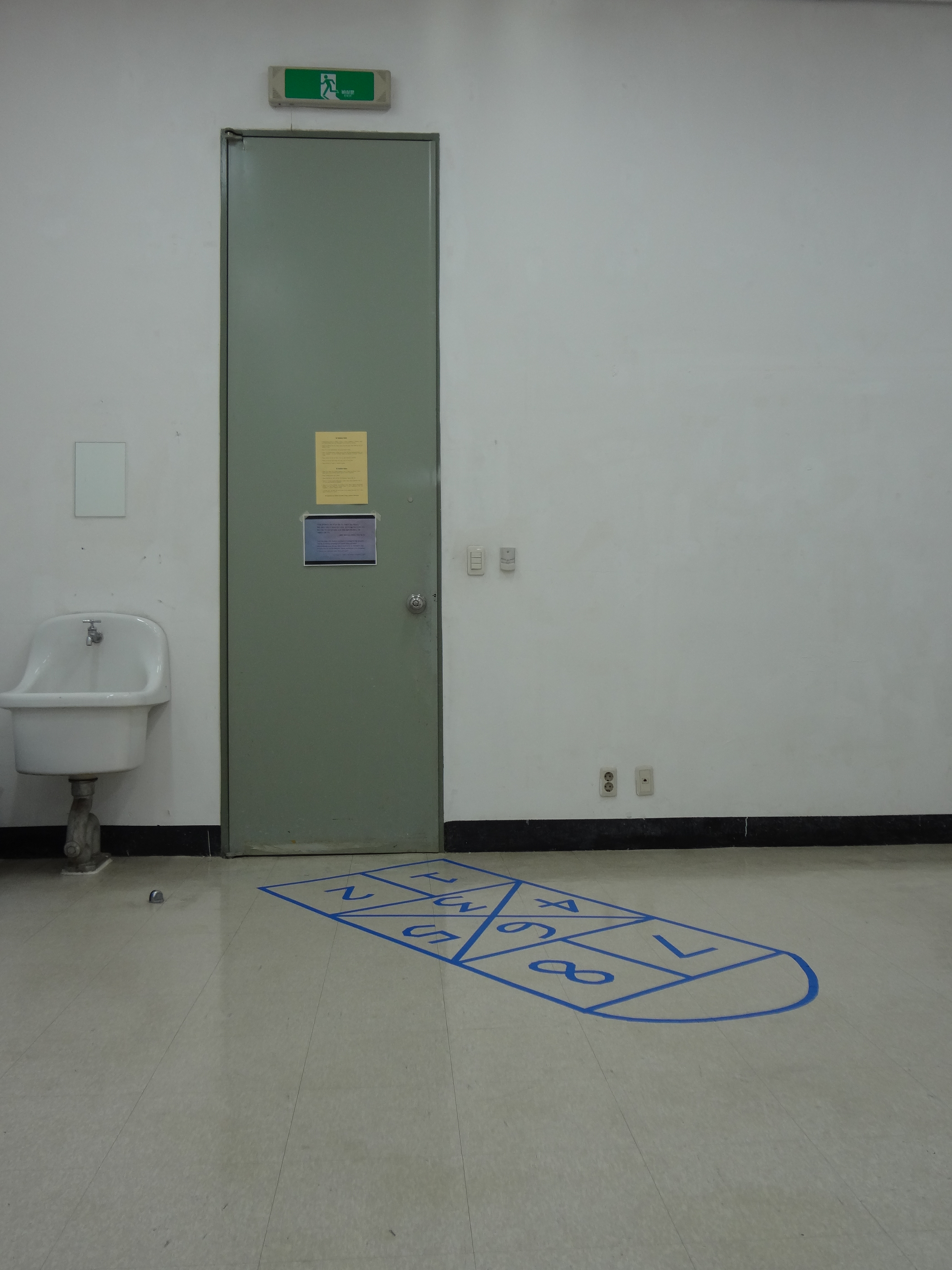
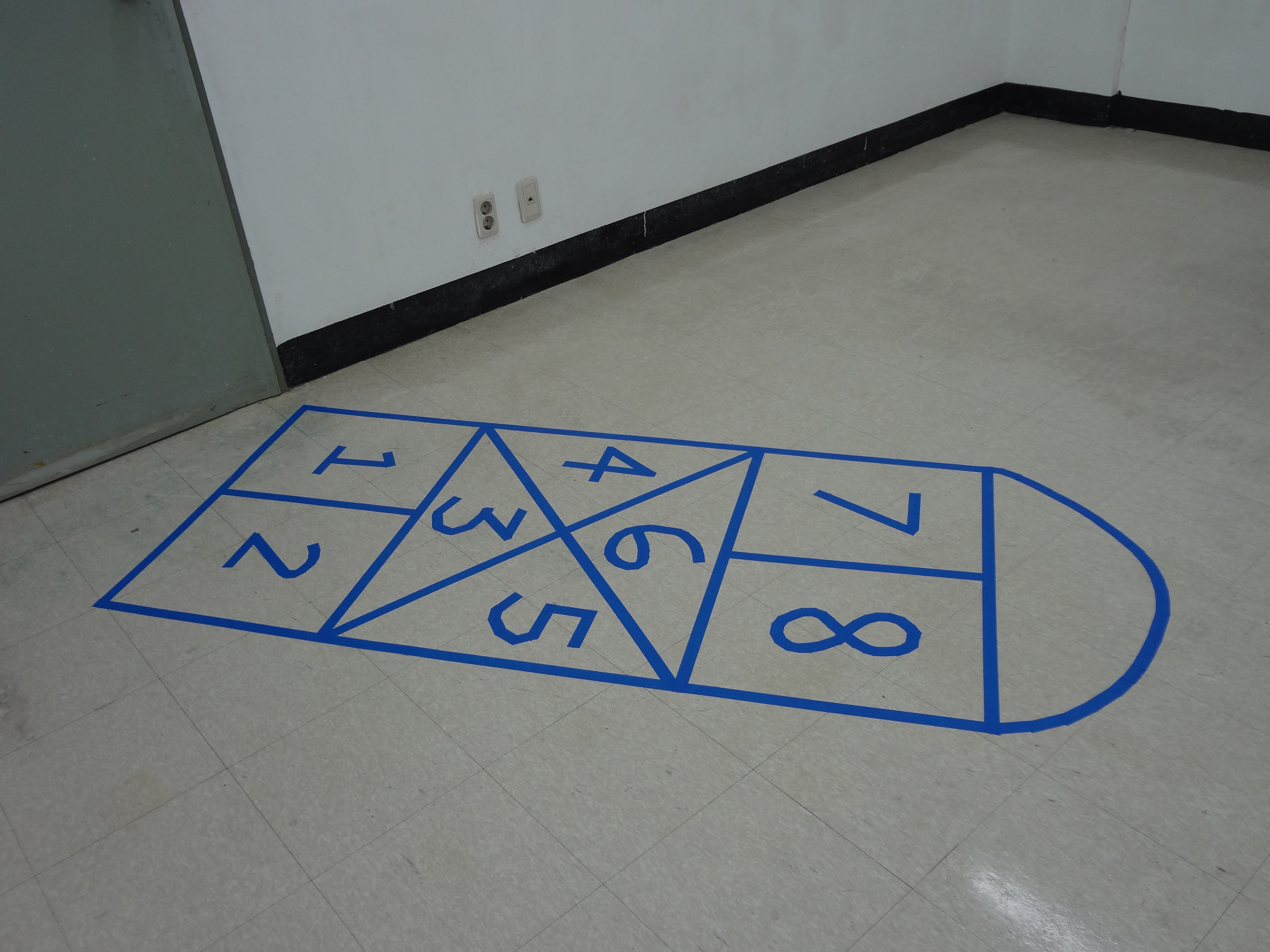
Mondrian Hopscotch I

Mondrian Hopscotch I

Child’s Play: Mondrian Hopscotch I
April 2013
installation
140 x 300 inches (3.6 x 7.6 meters)
tape

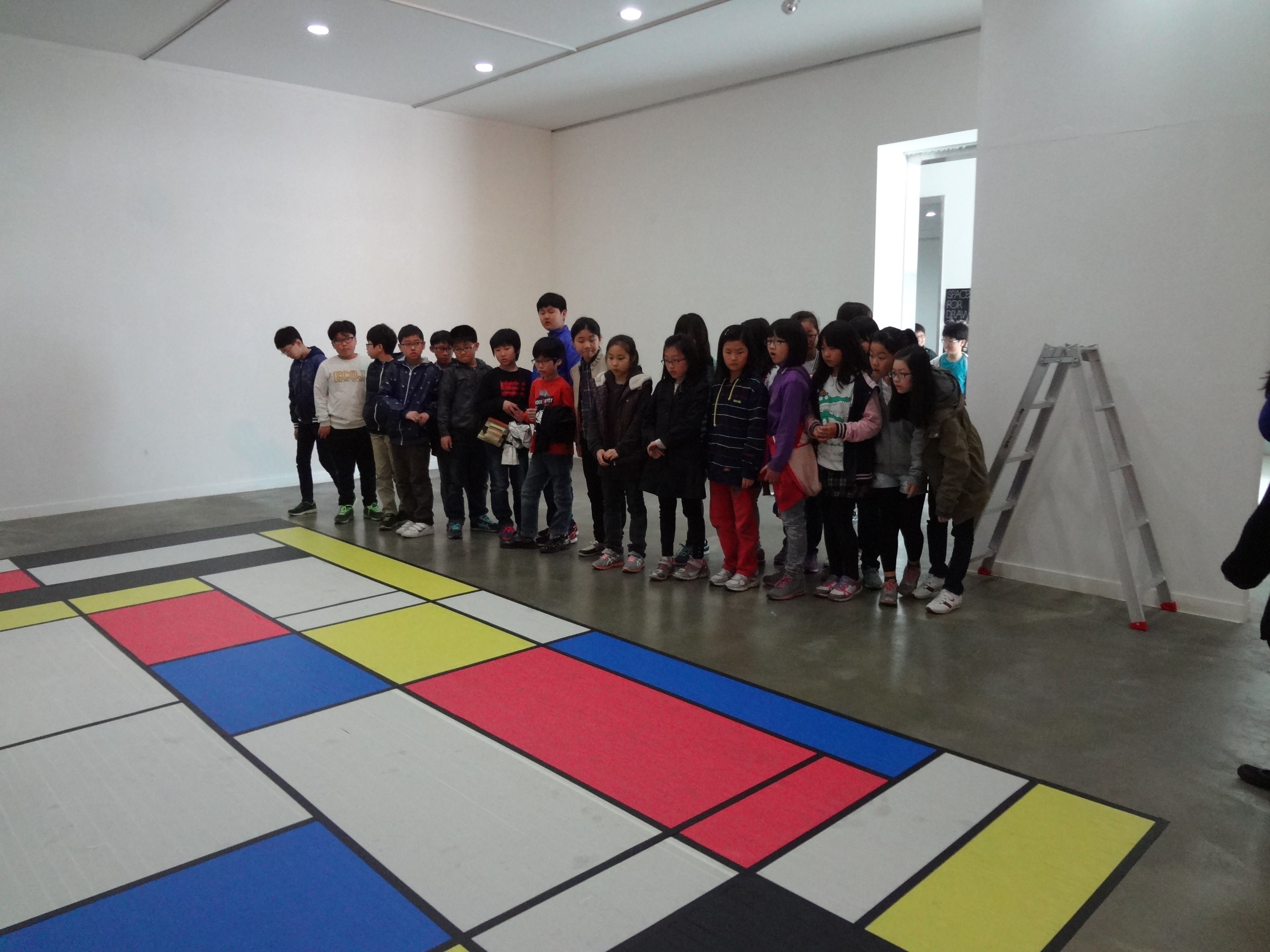
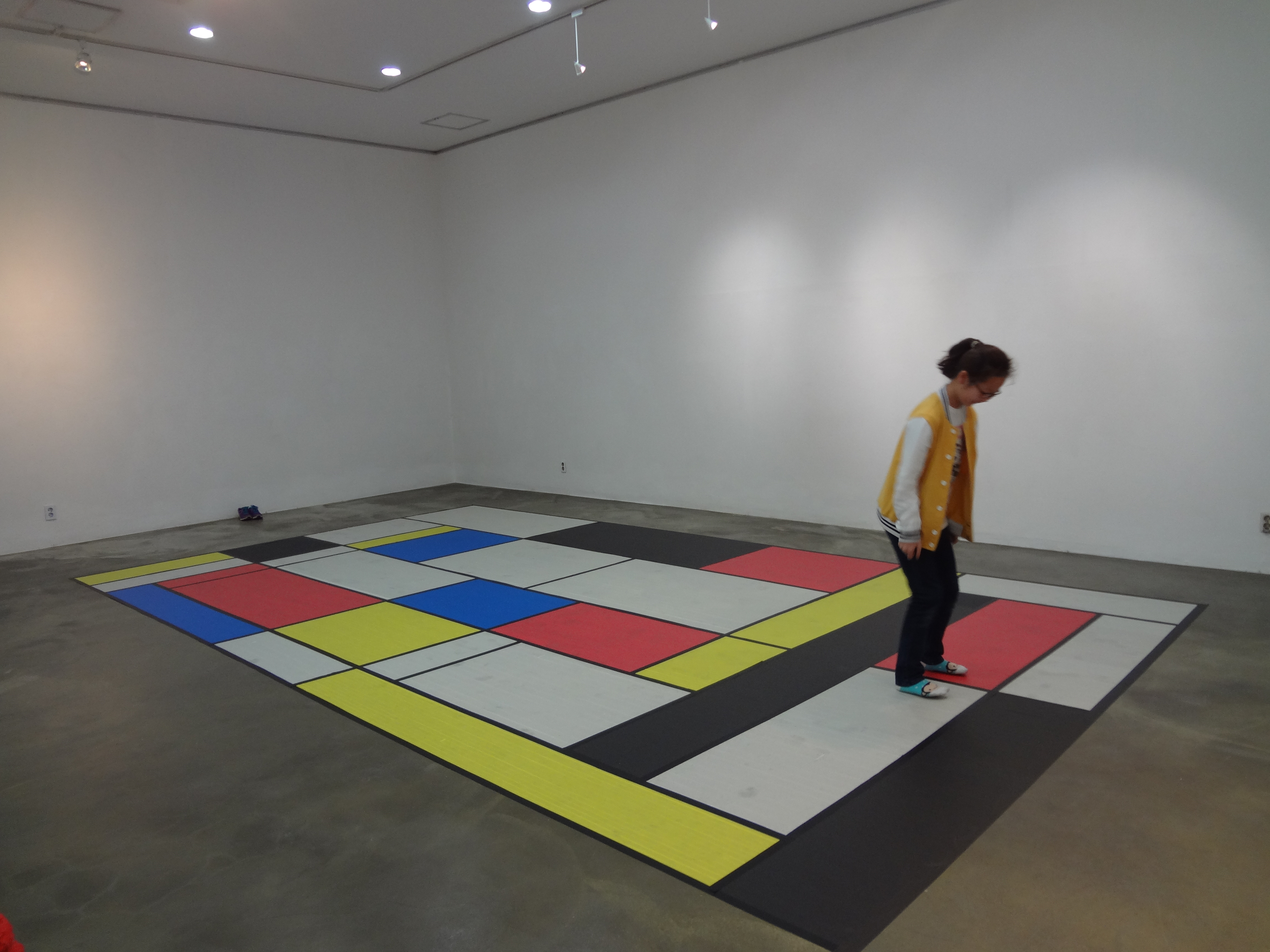
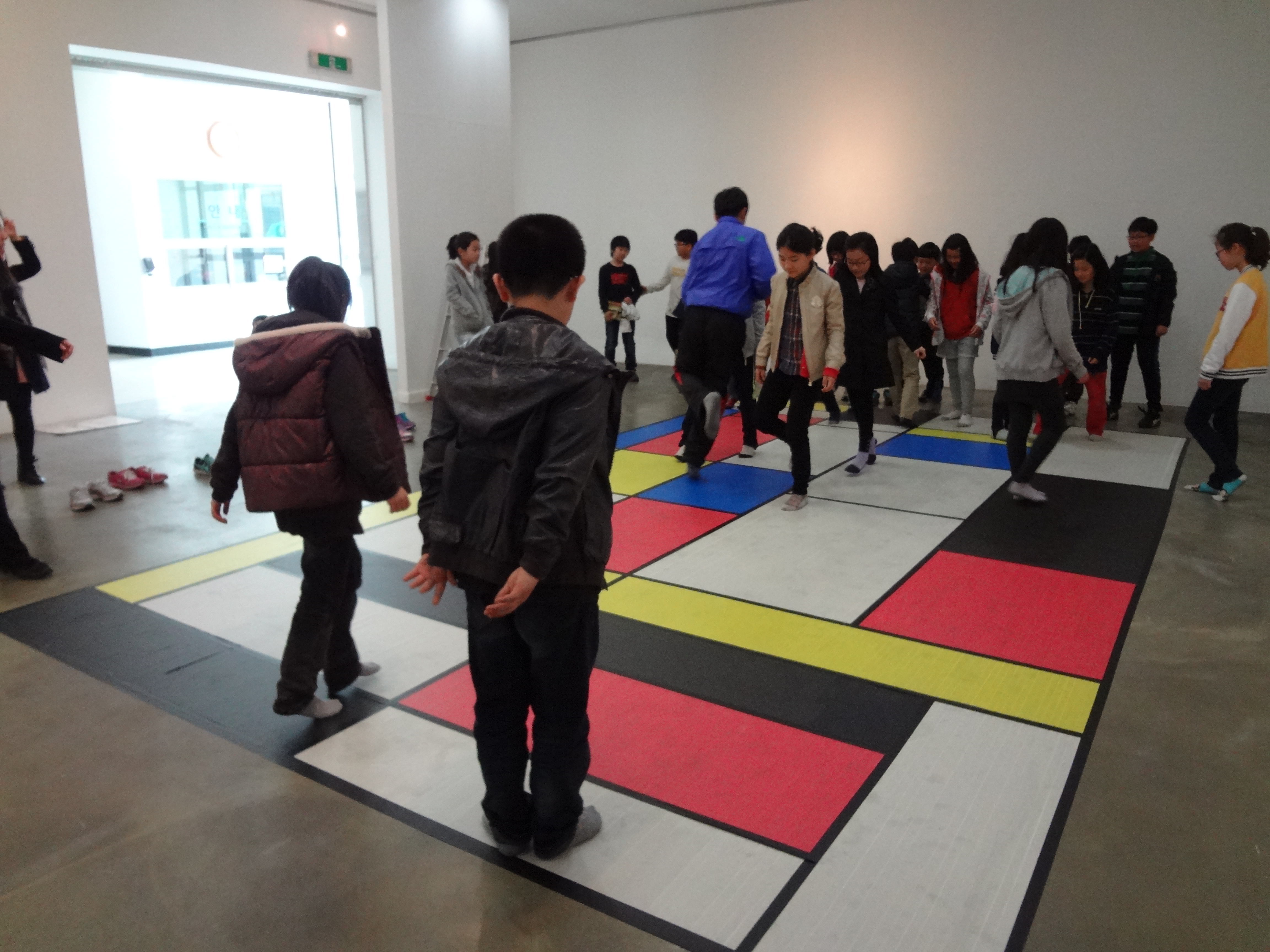
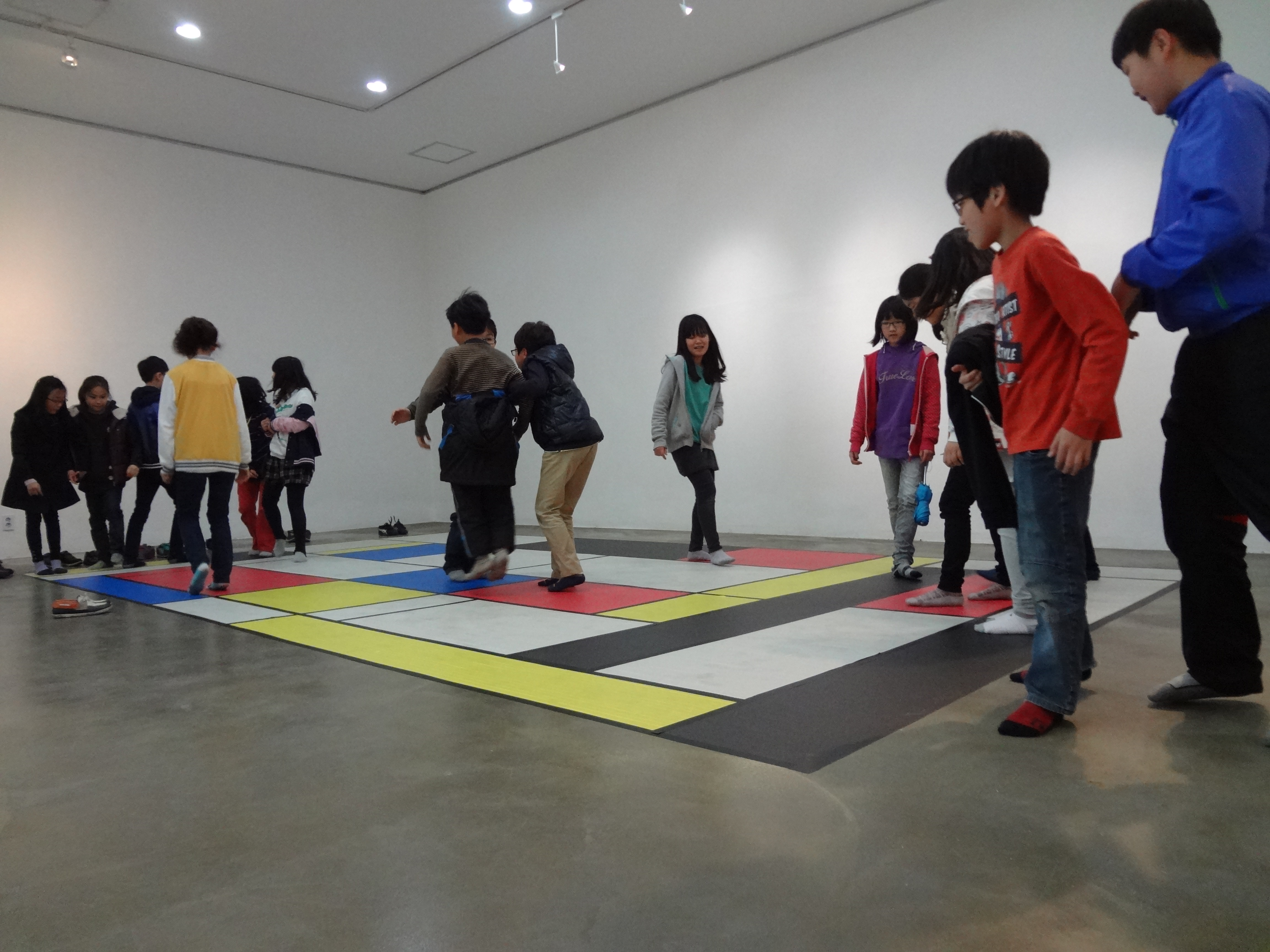
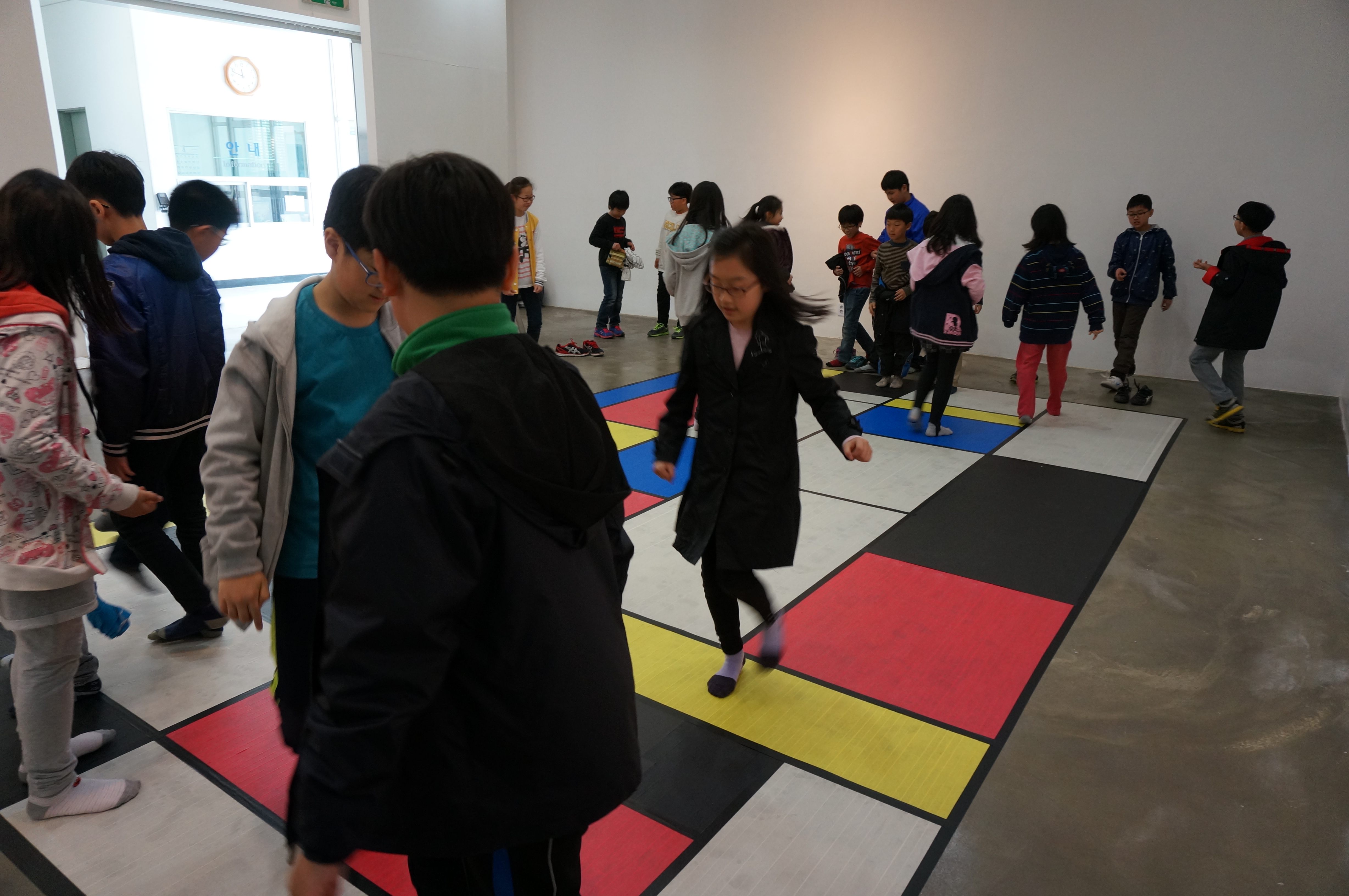
Can we play with art? In this piece, I explore this idea by creating a hopscotch board using the aesthetic of Piet Mondrian, one of my favorite painters. The primary intention was similar to The Grid, in that I wanted the participant to create his own interaction with it. The secondary intention was to use a well known art aesthetic and extend the idea of “viewing” the art (such as one would do with an actual painting of Mondrian’s), and instead be required to touch it (or jump on it) to have the experience.

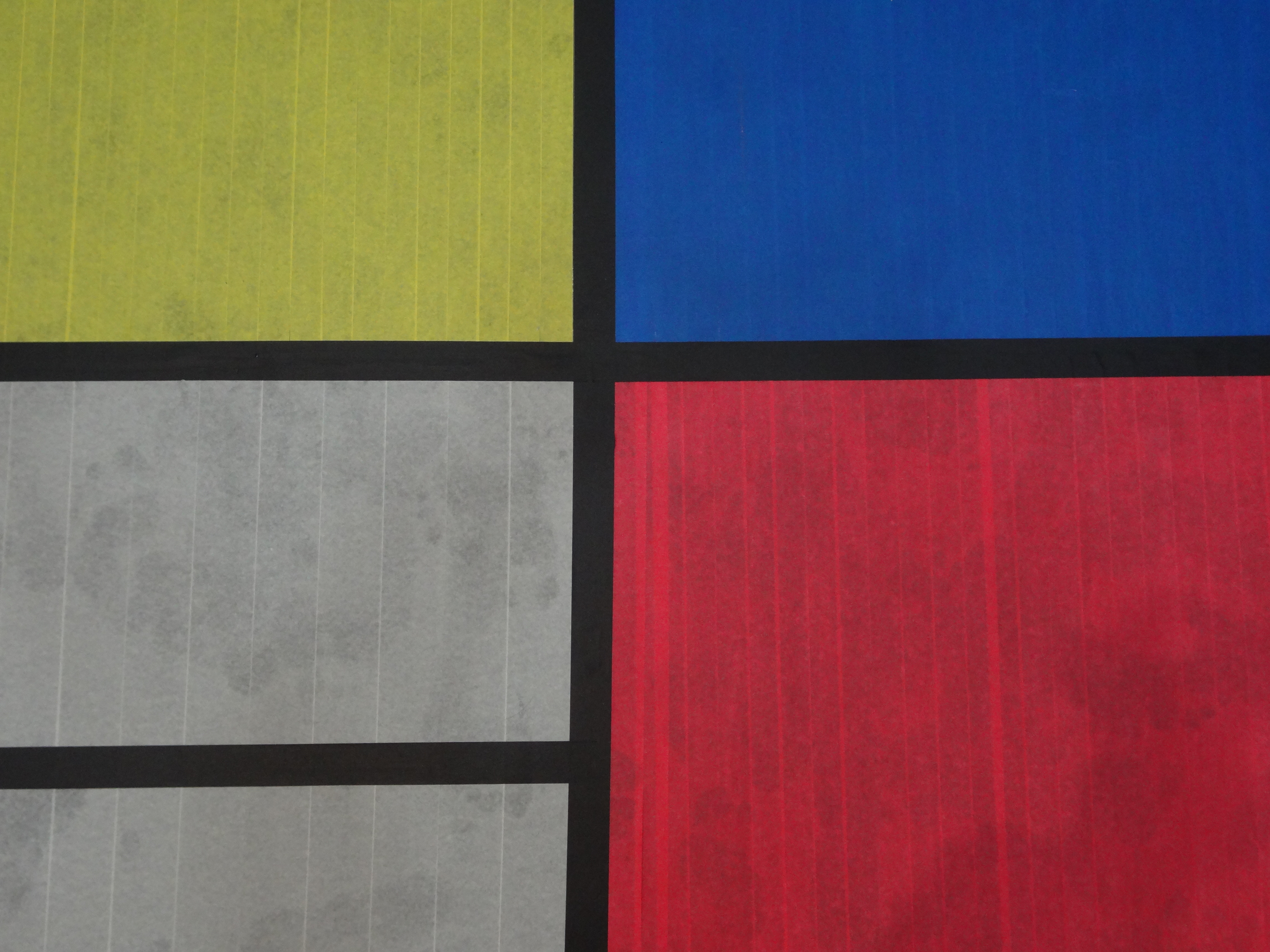
The material I used was tape. It was a decision based on utility—since people will be jumping on it, I needed a material that can withstand all the footsteps. It was also a decision based on culture; in Korea, Mondrian’s aesthetic reminds me of the stripes on Korean hanbok, and looking closely, each square is made of several tape “stripes.”

DSC03500

DSC03501


DSC04083

I am intrigued by the idea of having the audience be a part of the art to complete the piece, not unlike most of new media art, but here, using the cheapest of materials.

DSC04009

DSC03996

Here is a short video showing a person interacting with it.

I used it for a talk/workshop with some children here at the National Art Studio of Korea, and invited them to interact with the work, too.

DSC04026

DSC04042

last


Many thanks to Ms. Ju-Eun Lee of Changdong Elementary School, their awesome students (special thanks to Anna Lee for participating in the video and still shots), and to the staff of The National Art Studio of Korea who assisted with organization and translation.

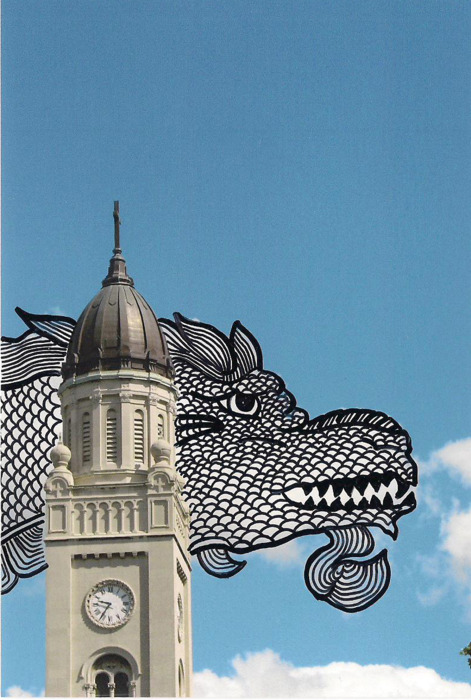
I finally had some time to gather together the images from the workshop I did several weeks back. It’s nice to see them properly categorized and truly see the different perceptions of one cloud. Here is an example:

original cloud

original cloud

I saw a dragon!

I saw a dragon!

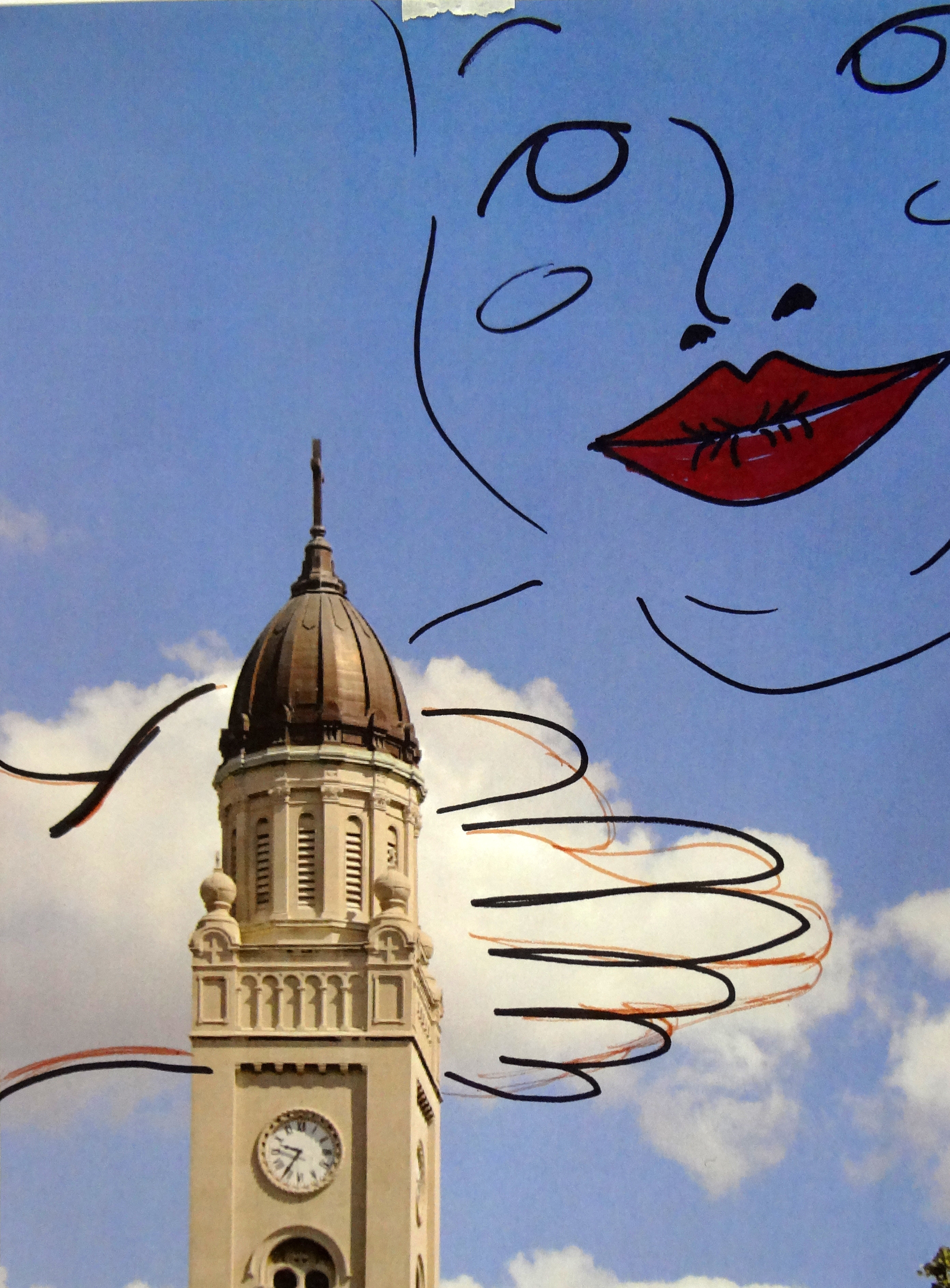
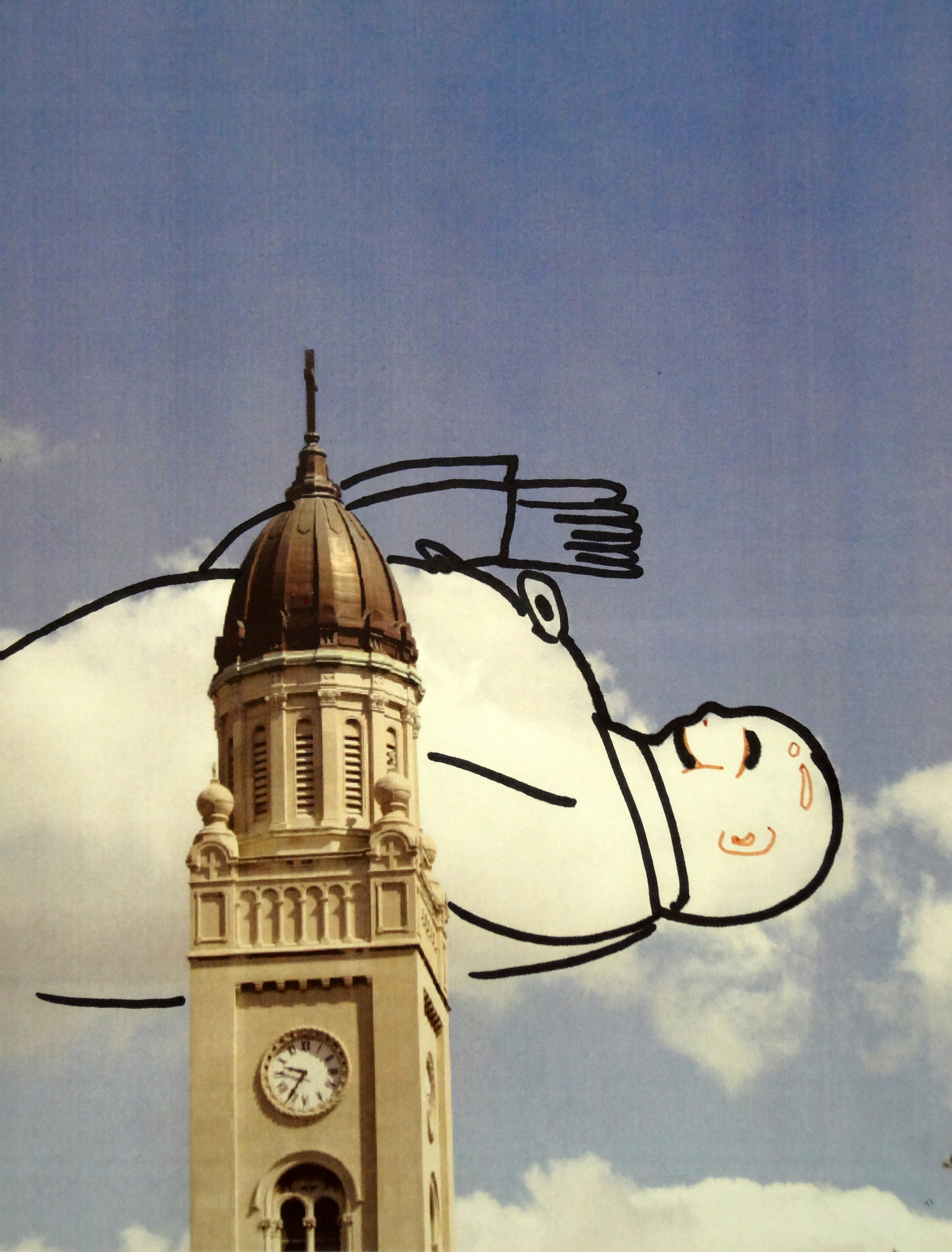
Here are the other things these art students saw in this cloud:
DSC02069 DSC02070 DSC02073 DSC02108 DSC02113 DSC02130

Head over to the Rorsketch website to see more of them, or follow the project’s Facebook and Twitter accounts. This project just won’t die. Woo!

Alas, science museums in Korea have proven disappointingly bland (in a word, meh), although perhaps I had such high expectations. Designing for interactivity in a conservative Confucian society poses some challenges, perhaps one that can be easily seen by someone from the outside. But there are pockets of joyful wonder in the sometimes poorly lit rooms that reeked of overuse of audio-visual media and text. My favorite parts of the Seoul National Science Museum are in the second floor. Specifically, rainbow-colored hands wave hello at the wax station where you can cast your own hands for 8,000 won:

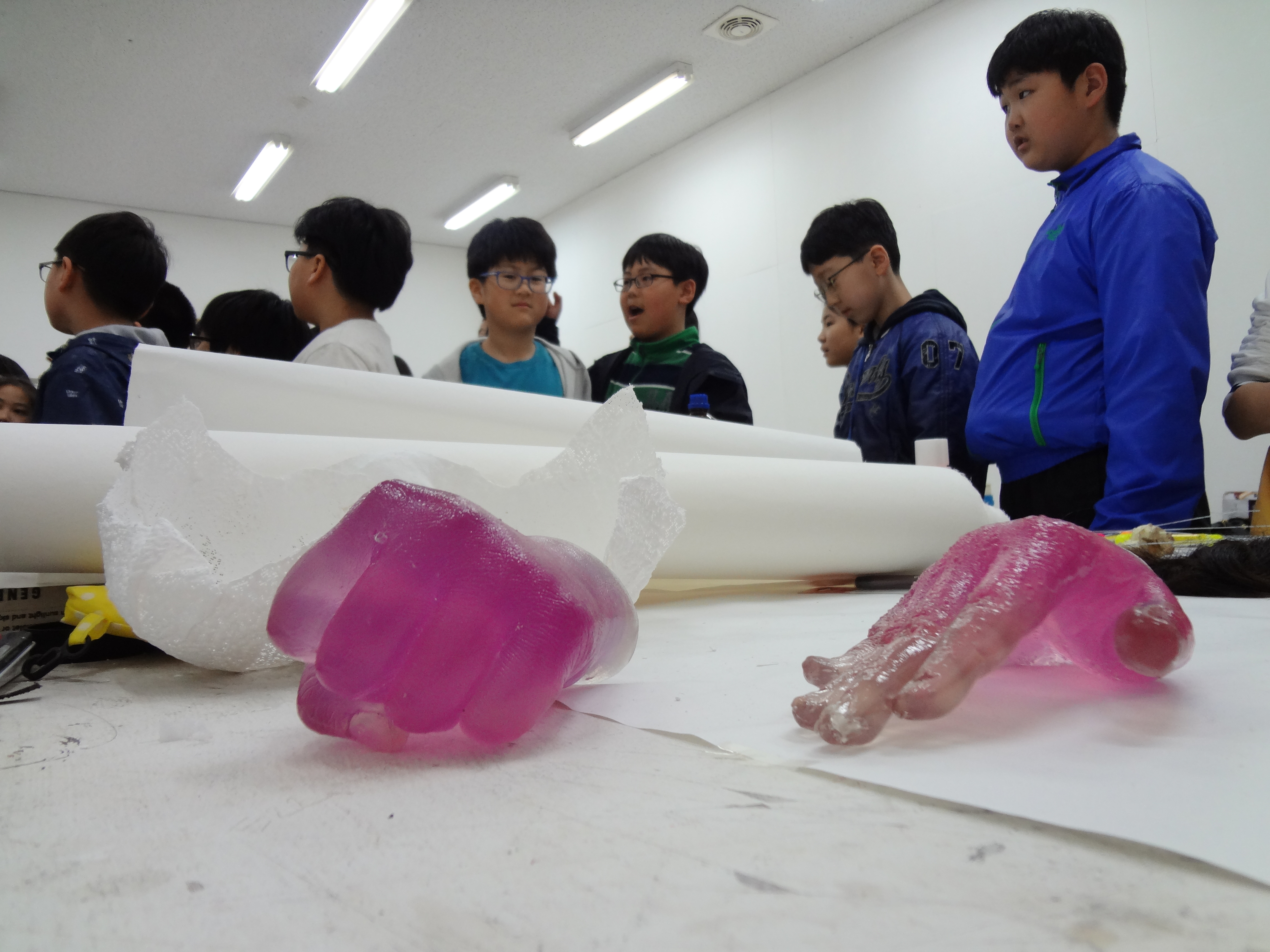
Rainbow hands

Rainbow hands

It’s awesome to see Marie Curie flashed on a screen. After being here for just a few weeks, seeing visible recognition for any female with strong, intellectual, and independent roles in such a rigid Confucian system as Korea’s make me do cartwheels inside (and sometimes, outside).

Marie Curie!

Marie Curie!

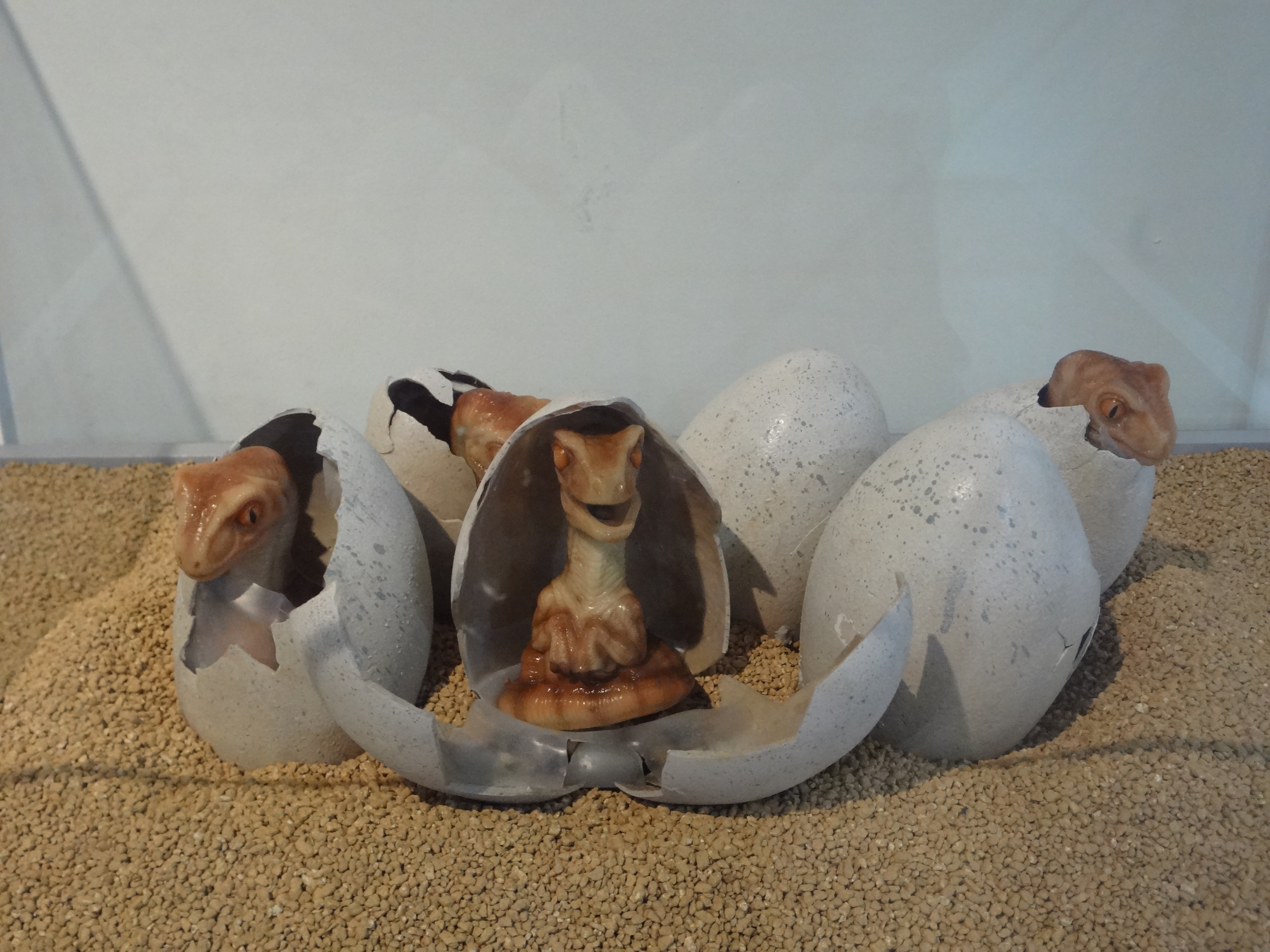
In the middle of a set of dinosaur eggs, one in the middle turned out to be mechanical and opened up to reveal a yawning dinosaur:

Hello, world.

Hello, world.

And in the enormous Gwacheon National Science Museum, my favorite parts were on the outside, such as the Funny Bicycling Center:

funny bikes

funny bikes

There are bikes with odd parts, bikes built for two, and bikes you can ride sideways:

riding a bike sideways

riding a bike sideways

This would have been a perfect bike in graduate school.

This would have been a perfect bike in graduate school.

The Narae-Seobuk (“the bell of hope”) is a traditional Korean bell made out of 3,080 speakers—quite a beautiful symbol of art, science, and tradition:

Narae-Seobuk. The Bell of Hope.

Narae-Seobuk. The Bell of Hope.

Barcelona-based poets Harriet Sandilands and Alena Widows (known here as poetry technicians Bert and Frank), bring you The Poetry Machine, a project that allows you to create spontaneous poetry through random prompts. It started as an analog project during Nadivada, a Christmas Dada event in Barcelona , and now, the digital version is brought to you by designer Sebastian Vidal.

The interactive website launched this Valentine’s Day and asks you to type in your answers to creative questions.

Screen Shot 2013-02-16 at 1.40.08 PM
I tried it today, and this is what I came up with:

How to use The Poetry Machine

How to use The Poetry Machine

Hurray for poetry! Check out the project here.

The mixing of the traditional with the modern and the foreign have been a consistent source of fascination for me, as a waegukin (foreigner) living in Seoul. And so this official video of an excellently produced version of Les Miserables by the South Korean military hit home (from the official Youtube channel of the Republic of Korea Air Force):

This video is emblematic of my experiences here in taekwondo, which is used in the Korean military. While it is a daily 90-120 minute class of grueling militaristic training, there are some exercises that initially seemed to be a peculiar amalgam of tradition and Westernization.

In my class here (dojang #14 and masters #29 and #30), the language barrier is higher than the Namsan Tower, leading me and my teachers to communicate via our smartphones. They are quite patient with the first foreigner they have ever had in class (and for many, in their lives). While I’ve trained in other countries before, I have never experienced doing jump rope and taekwon dance until now. Two weeks ago, I remember laughing when the grandmaster mentioned Gangnam Style, without realizing he actually meant for us to dance it.

I thought he was kidding. He was not.

I suspect they didn’t think a waegukin will want to do it, but perhaps to their surprise, I did. (Hey, it’s still cardio.) So for the past few weeks, most of the cognitive load in my class have been devoted to learning how to dance K-pop with taekwondo moves, and learning how to jump rope to the beat of Gangnam Style and its parodies. It is quite a huge change from the traditional military-style training I’ve been exposed to. Instead of thinking it ridiculous, I actually feel that it contributes a lot to coordination and rhythm. And it shows. I see these nine-year-olds to be so disciplined, with side kicks past the level of their faces. They even gave me my own jump rope, which I need to practice with by myself as this is something I haven’t done since I was a little kid.

Here is a video of taekwon dance by Youtube user cOOlfren77:

A more extreme version of taekwondo jump rope is here in this video from Korea’s Got Talent by Youtube user taekwonropegirl:

Needless to say, I am absolutely transfixed at a rigid Confucian society making way for jaw-dropping creativity such as these. Especially for taekwondo, I like to imagine that such rigidity might have caused someone to snap and just do it to K-pop. Great fun.

For reasons I will write about later, I have decided to learn the Korean language and culture. More specifically, I have decided to pack as much useful Korean phrases as possible into my head (and know how to say them in context) in the next few weeks.

I didn’t think that open source courseware from universities was the way to go. I love using online resources such as Khan Academy, Udemy, and Coursera, but they don’t really specialize in languages and cultures. In addition, with the timeframe I was giving myself, I didn’t want to feel like I was taking a class.

To my surprise, it wasn’t easy to find good online courses that teach Korean, perhaps because a lot of Korean people already speak English. Still, I believe that learning a people’s language is one of the best ways to understand them. When I lived in Barcelona, it was only when I started learning Spanish and Catalan that the locals started opening up to me. (Not that they weren’t nice to me before, but you get the idea.)

Learning a new language and culture always gives me what I refer to as a “brain massage”—I can feel my cerebral cortex almost groaning under all that cognitive load. Incorporating language classes into a busy schedule isn’t easy, and it was important to find learning material that were easily packaged into digestible pieces that are easy to recall.

Looking at the relatively small landscape of Korean culture and language videos, here are the two that are keeping me up at night (both from Youtube):

1. Professor Oh and Friends (SweetAndTasty on Youtube)

I’ve never come across better styled and more entertaining language and culture videos than those of Professor Oh’s. Her first video caught my eye, and I remembered her because her mnemonic for Korean consonants was to sing them to the melody of Twinkle Twinkle Little Star. This was something that we used to do in high school, but to remember all the Chinese dynasties. (It’s quite a versatile song, yes?) It’s also really helpful that she points out common mistakes in pronunciation. She’s come quite a long way from that endearingly shy first video, and now she’s morphed into several characters. As someone with many alter egos as well, I totally relate to her. Keep going!

(Also check our her other alter ago as Ramona Champion.)

Professor Oh and Friends: Making the Korean language unforgettable. No kidding.

Professor Oh and Friends: Making the Korean language unforgettable. No kidding. (Photo from their Facebook page)

Because desperate times call for desperate measures, my Korean language notebook has frantically wriitten notes in the five languages I know, to highlight similarities and make me learn faster. Some Korean consonants were very similar to Mandarin, for example. It’s also funny that some words were the same in lots of languages. Banana is, well, pretty much banana in several countries.

2. Eat Your Kimchi with Simon and Martina

It’s impossible not to talk about Korean culture blogging without writing about Eat Your Kimchi. Canadians Simon and Martina Stawski came to South Korea in 2008 to teach English and started doing video blogs about their experiences as expats. They blog about the K-pop industry, but it’s their videos on culture that’s helping me. Now hugely popular, they have more than 260,000 subscribers on their Youtube channel. They even surpassed their Indiegogo goal to register EYK as an actual business.

Simon and Martina of Eat Your Kimchi. Prepping expats for Korean living (and K-pop) since 2008. Whatup, nasties!

Simon and Martina of Eat Your Kimchi. Prepping expats for Korean living (and K-pop) since 2008. Whatup, nasties! (Photo from the Eat Your Kimchi Facebook page)

From what I’ve learned from both Professor Oh and Eat Your Kimchi is this—having that human connection where the speaker is looking at you is a plus. Having well-defined characters or personalities allow for more contextualization, and when I remember the words and phrases, I hear the characters speaking them in my head together with their idiosyncracies. It also helps that they seem to be genuinely nice people with normal lives. Thoughtfully written scripts also work well in helping me remember. I switch back and forth from these channels because it’s great to have both Korean and non-Korean perspectives.

These people all feel familiar to me, and I might instinctively give them high fives if I ever see them. Seriously, thank you, for making this process wonderfully entertaining and useful.